Decoding Modern Mental Health

Decoding Modern Mental Health

In a world where stress, digital overload, and rising expectations shape our everyday lives, mental well-being has become more crucial than ever. Experts like Dr. Sarthak Dave and Dr. Era Dutta break down the modern pressures affecting our minds and offer clear, science-backed ways to cope.

Understanding Anxiety Today
Dr. Sarthak Dave Breaks Down Myths, Warning Signs & Everyday Coping Tools

Dr. Sarthak Dave, MBBS, MD (Psychiatry), is one of India’s most trusted voices in mental health. Based in Ahmedabad, Gujarat, he is the founder of Vibha Healing Center, a safe, accessible space for individuals seeking support and guidance.  In this conversation, he sheds light on anxiety what people misunderstand most, when stress becomes a clinical concern, and how simple, science-backed tools can help restore balance.

1. What’s the most misunderstood aspect of anxiety today?

Two misconceptions stand out. First, many people believe their level of anxiety is the only “real” version of anxiety. So they often struggle to understand or accept that someone else might experience it far more intensely. Second, people assume anxiety must always have an external cause. But clinical anxiety often arises from internal factors hormonal changes, genetics, or neurotransmitter imbalances. In such cases, changing your environment won’t fix the issue. Addressing the biological changes is what helps.

2. When does “normal stress” turn into a clinical concern?

Stress is a natural human response. But it becomes a clinical issue when it causes socio-occupational or socio-academic dysfunction meaning your ability to function in daily life is affected. If you’re unable to eat, sleep, concentrate, work, study, or connect with people the way you used to, that’s a red flag. Additionally, if symptoms persist for more than 2 weeks and continue to worsen rather than resolve, they should be taken seriously. In such situations, stress is no longer “normal” it requires clinical attention.

3. Can you share practical coping tools people can practice at home?

When the mind feels overwhelmed, turn to the body. Engaging your physical senses helps break the spiral of thoughts and emotions.
You can:

  • Move your body exercise, stretch, activate muscles and bones
  • Eat something with a strong taste
  • Smell something pleasant or intense
  • Listen to grounding sounds or music
  • Watch something visually stimulating

Stimulating multiple senses at once anchors you in the present moment and reduces emotional overwhelm.

4. How important is sleep in managing anxiety and mood?

Sleep is your mind’s daily holiday. When the system “shuts down,” repair and healing begin. Everyday emotional wear and tear gets restored during sleep. Good sleep not only reduces anxiety, stress, and depression, but also helps predict when something is wrong. Early sleep disturbances are often the first warning sign that someone may be developing anxiety or depression. Conversely, when sleep improves during treatment, it’s one of the strongest indicators of recovery.

5. What role does therapy play compared to medication?

Therapy and medication work together they are not competitors. If emotional distress is due to external factors life events, relationships, past trauma therapy usually takes the lead, with medication playing a supportive role.
If the root cause is internal genetic, hormonal, or neurotransmitter-based medication becomes the primary treatment because chemical changes within the body need to be addressed. In such cases, therapy enhances the healing process. Ultimately, both are equally important, and each supports the other in helping the person fully recover.

Thriving in a Fast-Changing World
Dr Era Dutta on Burnout, Digital Overload & Building Everyday Mental Strength

With modern life moving faster than ever and digital overwhelm quietly shaping our thoughts, habits, and self-worth mental well-being has become a daily challenge for many young adults. Consultant Psychiatrist and four-time TEDx Speaker Dr. Era Dutta, Founder of Mind Wellness, breaks down how today’s lifestyle impacts our emotional health, why burnout is becoming increasingly common, and the simple, science-backed habits that can help us stay grounded while still pursuing ambition.

How have lifestyle changes in recent years impacted overall mental well-being?

The modern lifestyle is a paradox: we’re more connected yet more isolated, more informed yet more overwhelmed, and surrounded by more food options but doing less movement. This has created a mixed impact on mental health unfortunately, with more negatives than positives.

We now see rising rates of major depressive disorder, anxiety, substance use, chronic stress, and burnout. Sedentary routines, shrinking social interactions, always-on work culture, and blurred home work boundaries play a significant role.
On the positive side, awareness is growing. Therapy is normalized, information is accessible, and people are consciously trying to build healthier habits. The real challenge is learning how to lean into these positives without being consumed by the pressures.

What early signs of emotional burnout should people watch out for?

Burnout is complex not an official diagnosis so it shows up differently for everyone. Yet common early warning signs include:

Physical: constant fatigue, headaches, poor sleep, frequent illnesses
Cognitive: difficulty concentrating, forgetfulness, reduced problem-solving
Emotional: irritability, numbness, detachment from things once enjoyed
Social: withdrawal, feeling burdened by fundamental interactions

Catching burnout early is crucial once it solidifies, recovery often takes longer than expected.

How does digital overwhelm or constant connectivity affect our minds?

Digital overload rewires the mind in subtle but powerful ways. When we constantly process information most of it unimportant we experience:

  1. Cognitive overload and fragmented attention
  2. Sleep disruption from screen exposure
  3. Comparison-driven insecurity
  4. Social media envy and FOMO
  5. Posting fatigue performing your life online
  6. Chronic validation-seeking
  7. A persistent background of anxiety from notifications

This leaves the brain feeling busy but not fulfilled, connected but not grounded, entertained but not nourished.

What simple daily habits can significantly improve mental health?

Go back to basics care for yourself as you would care for a child.

  • Routine is key: Predictable wake times, meals, and wind-down cues signal safety to the nervous system.
  • Physical care: Even 20 minutes of daily movement can reset stress hormones and boost mood. Better sleep and balanced meals amplify clarity.
  • Emotional check-ins: Pause a few times a day to name what you’re feeling. Labeling emotions helps the brain process them instead of drowning in them.
  • Digital boundaries: No-phone mornings, device-free meals, nightly screen cut-offs these protect attention and sleep.
  • Rest pockets: Allow real rest, not productivity disguised as rest.
  • Social connection: A few minutes of genuine conversation releases oxytocin and grounds you.
  • Micro-joys: Sunlight, music, hydration, mindful breaths small and powerful mood stabilizers.

Daily habits may look small, but they’re the tiny steps that create long-term transformation.

How can young adults balance ambition with emotional stability?

Ambition and emotional health can coexist when ambition is designed, not chased blindly. Growing fast shouldn’t come at the cost of breaking internally.

Start with structured self-awareness:

  • Daily check-ins to monitor stress and energy
  • A Not-To-Do list to cut noise
  • Avoiding imitation of society’s “success templates.”
  • Matching ambition to your personal capacity
  • Staying in the adaptive zone challenged, but not overwhelmed
  • Staying aligned with personal values
  • Prioritizing rest, recovery, and rejuvenation

Emotional stability isn’t the opposite of ambition it’s the foundation that keeps ambition sustainable, creative, and long-term.


Leave a comment

Your email address will not be published. Required fields are marked *

Wedding Wellness with Luke Coutinho: Starting the Journey

Luke Coutinho, India’s leading Integrative Lifestyle Expert, believes that true wedding prep goes far beyond fitting into an outfit or chasing picture-perfect looks. For him, it’s about building strength, balance, and inner calm that lasts well beyond the wedding day. Here, he shares his holistic wellness guide for brides and grooms stepping into this new chapter. From a holistic health perspective, how early should brides and grooms start preparing their bodies for the wedding? I’ve always believed that wedding prep should start with the inside. If we’re talking about sustainable energy, balanced hormones, strong immunity, or calm emotional states it’s not a 15-day crash course. It’s a rhythm you build. Ideally, I encourage couples to begin six to 12 months in advance. That gives us space to work on the deeper layers like gut repair, sleep cycles, metabolic health, and emotional resilience. Even three months can make a real difference if done right. But more than timelines, I believe in intention. Whether you start 12 months or six weeks before, ask yourself: Am I just trying to look good for a day, or do I want to feel well through all the days that follow? How can couples set wellness goals that go beyond just looking good in wedding photos?It’s easy to get caught up in aesthetics wanting to fit into a certain outfit or chase a number on the scale. But real wellness is about how you feel your energy, your digestion, your mood, your ability to stay calm amidst the chaos. I always tell couples: Don’t make the goal about shrinking your body. Make it about strengthening your health, supporting your hormones, and building the emotional resilience to actually enjoy your wedding. When you feel good inside, it shows up outside on your skin, in your eyes, and

Eating Right, Feeling Bright: How to Stay Healthy and Happy This Festive Season

As the festive season arrives, it’s easy to get swept up in the celebration and sometimes, overdo it. Between rich sweets, back-to-back parties, and emotional highs (and lows), maintaining your health both physical and emotional can become challenging. SINDURI VUPPALA speaks to two experts Dietician Vidhi Chawla, Founder of FISICO Diet & Aesthetic Clinic, and Rajvir Kohar, a seasoned Mental Health Clinician to bring you a guide on how to eat mindfully and feel emotionally balanced this season. “It’s okay not to feel festive. Honour your emotions.” – Mental Health Clinician Rajvir Kohar While cultural celebrations and holidays offer opportunities for connections and joy, they also come with increased expectations and responsibilities. Research indicates that mental health symptoms such as stress, anxiety, disrupted sleep, and emotional eating often rise during the festive season. Many individuals experience heightened stress around the holidays, primarily due to factors such as financial strain, time pressures, and family dynamics. Financial challenges can be particularly overwhelming, as people feel the burden of purchasing gifts, hosting gatherings, and keeping up with social expectations. For individuals already managing financial constraints, these demands can deepen feelings of inadequacy or guilt. Additionally, the festive season can bring emotional pain for those grieving the loss of a loved one. Others may experience a profound sense of loneliness, especially if they lack close family or social networks, making the celebratory atmosphere feel isolating rather than inclusive. Common mental health symptoms during this period include disturbed sleep, changes in appetite (either overeating or under-eating), increased irritability, fatigue, and social withdrawal. While these feelings are common, they often go unnoticed amidst societal expectations to “stay cheerful.” Despite these challenges, it is possible to approach the festive season with mindfulness and care. By adopting practical strategies, you can protect your mental health and still engage

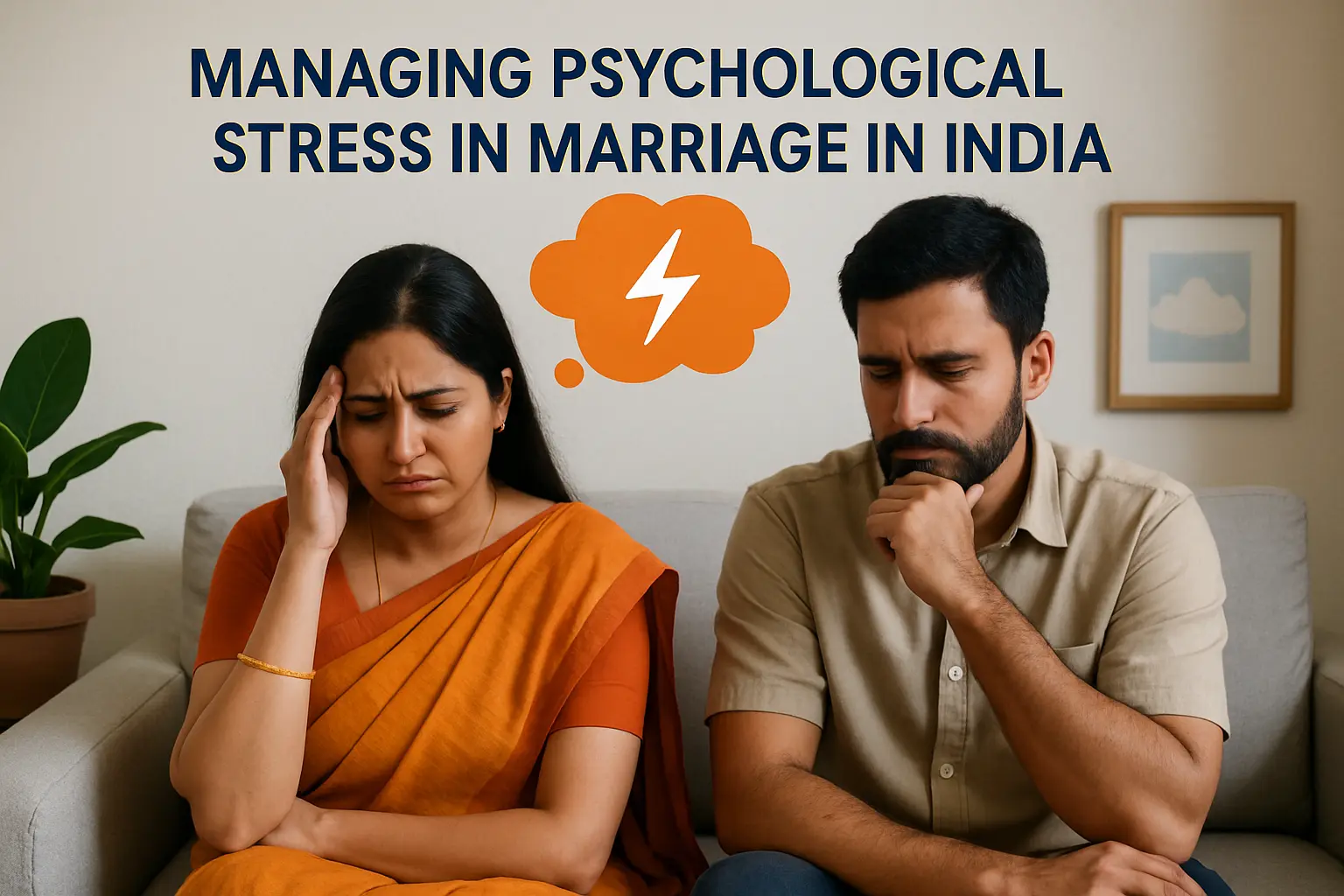
Managing Psychological Stress in Marriage in India

Marriage, while often seen as a sacred bond in India, is also a complex partnership that involves emotional investment, societal expectations, and continuous adaptation. In the Indian context, marriage isn’t just a union between two individuals it’s often a confluence of families, traditions, and social norms. While love and companionship are central, psychological stress can quietly build over time due to unmet expectations, communication gaps, external pressures, and the lack of personal space. Managing this stress effectively is crucial for a healthy and fulfilling marital life. Understanding the Sources of Stress Recognizing the Signs of Stress Psychological stress in marriage often doesn’t manifest dramatically. Instead, it appears in small, persistent ways: If left unaddressed, this stress can escalate into anxiety disorders, depression, or even marital breakdown. Strategies to Manage Marital Stress 1. Open, Non-Judgmental Communication The cornerstone of any successful marriage is healthy communication. Couples must learn to express themselves openly, without fear of being judged. Schedule “talk time” to share your thoughts, concerns, or even simple day-to-day feelings. Use “I feel” statements rather than blame-focused language to prevent defensiveness. 2. Set Realistic Expectations Bollywood and societal portrayals of “perfect marriages” create unrealistic standards. Accept that no marriage is without flaws. Understand each other’s limitations and strengths, and be willing to compromise without losing your core identity. 3. Establish Boundaries with Extended Family While respecting elders and family traditions is important, couples must create healthy boundaries. This includes making joint decisions independently, especially on matters like finances, parenting, or living arrangements. A united front reduces external interference and strengthens the couple’s bond. 4. Seek Professional Help Therapy is still stigmatized in parts of India, but counseling individuals or couples can be transformative. A trained therapist helps you identify patterns, improve communication, and resolve conflicts constructively. Many Indian metro cities and

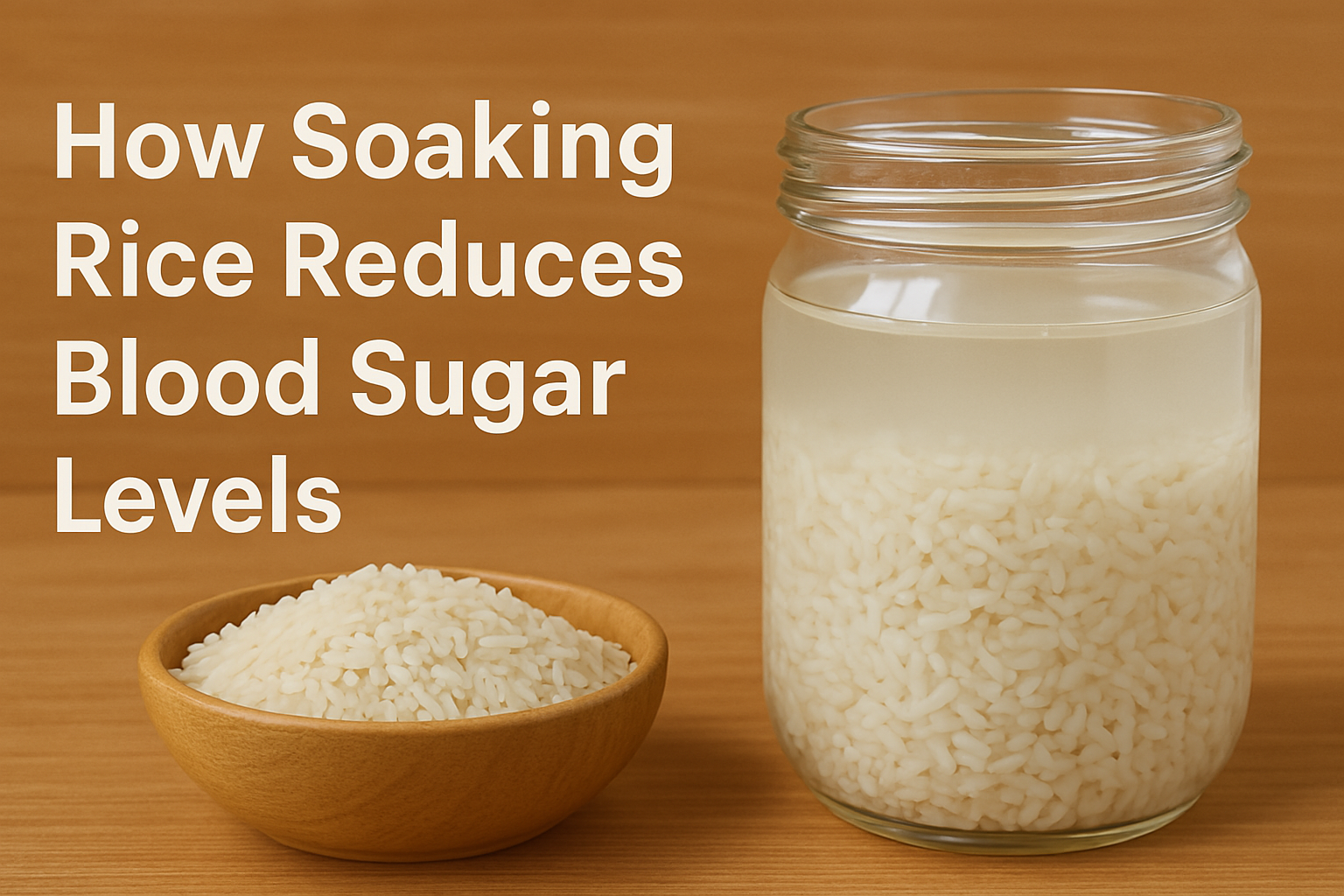
Why Soaking Rice Reduces Glucose: Science, Steps, and Stats

Rice is a staple food for millions across the globe, but it’s also often blamed for raising blood sugar levels—especially white rice due to its high glycemic index (GI). However, a simple, age-old practice can help: soaking rice before cooking. This traditional method doesn’t just make rice softer and faster to cook—it also offers a science-backed way to reduce its glucose content and make it healthier. Hashtag Magazines gives you a lowdown…  The Science Behind Soaking Rice When you soak rice, several things happen: Supporting Research and Statistics  A study published in Food Chemistry (2015) found:  Another study from The American Journal of Clinical Nutrition noted:  A 2022 clinical trial in India showed: How to Soak Rice to Lower Glucose  Step-by-Step Method:  Glycemic Index Reduction – Before & After Soaking Type of Rice GI (Unsoaked) GI (After Soaking) White rice 72 60–65 Brown rice 68 55–60 Basmati rice 58 45–50 Red rice 55 40–48 Additional Tips to Reduce Sugar Spike from Rice Why This Matters for Diabetics and Health-Conscious Eaters Blood sugar spikes can lead to fatigue, weight gain, insulin resistance, and long-term complications like diabetes or heart disease. Making simple changes like soaking rice helps:  Conclusion Soaking rice is a simple, no-cost step with massive health benefits. Whether you’re managing diabetes, watching your weight, or just aiming for better gut health, soaking rice before cooking can significantly lower its glucose impact. It’s one of the best-kept secrets in Indian kitchens, now backed by science.

You May Also Like

Connect with us