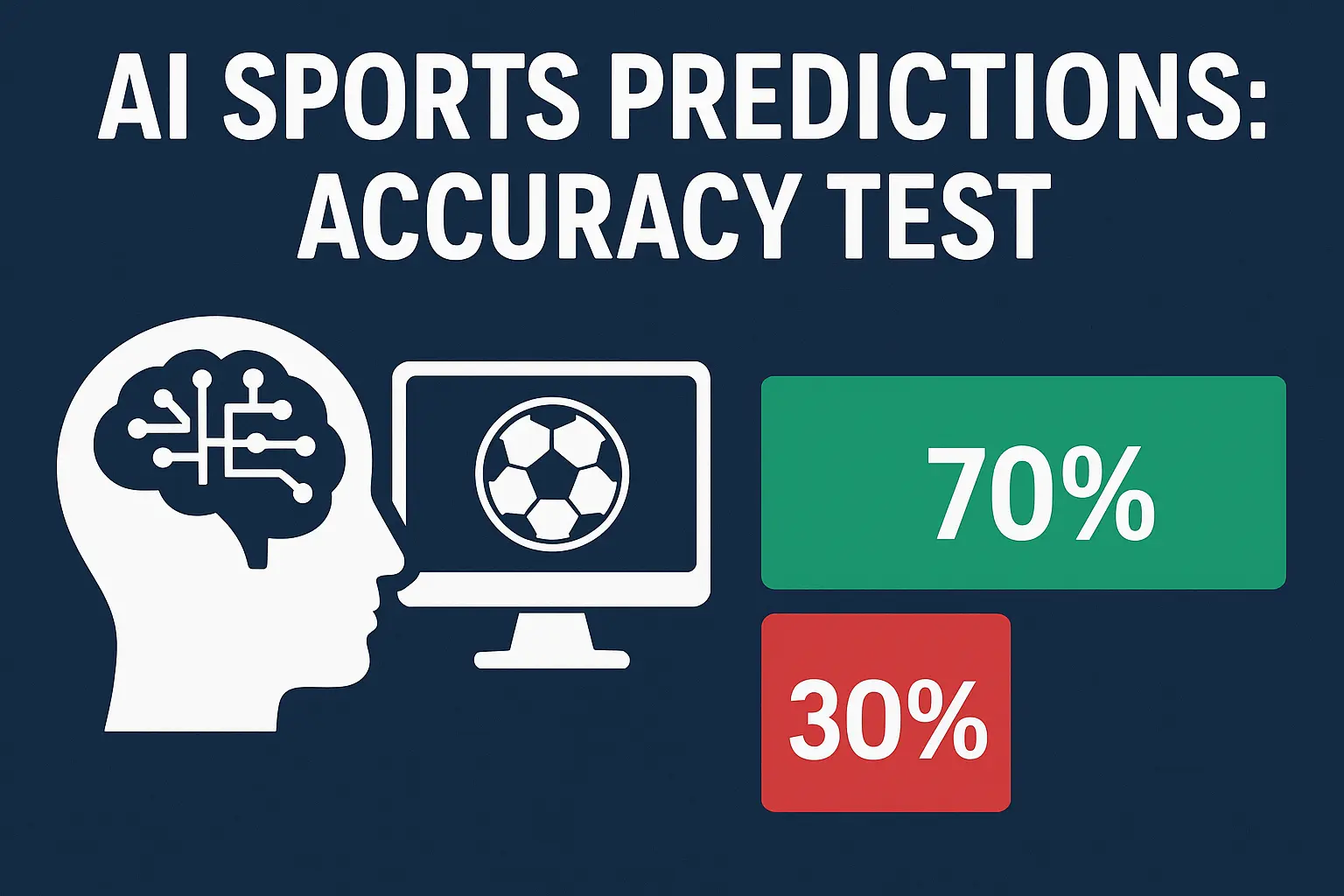
AI Sports Predictions: Accuracy Test

What are the odds of AI winning the prediction game? Way better than your home boy’s gut feeling but still not quite fortune-teller level. Can an algorithm outthink a seasoned sports analyst? Well, it doesn’t drink beer while watching the game, so that’s a plus. 

In the billion-dollar world of sports betting, AI is hyped as the ultimate game-changer. But does it truly predict, or just make educated guesses with a fancy calculator? We put it to the test, comparing its accuracy across sports, stacking it against human experts, and checking if platforms like N8Casino truly benefit from AI-driven predictions.

Or old-school instinct still holds the upper hand? Spoiler: AI is good, but it still can’t predict a referee’s bad day.

Analytical Intelligence vs. Human Instinct

The battle between AI-driven sports predictions and human expertise is like watching an old-school coach argue with a stats nerd: both have their strengths, but only one can crunch millions of data points without a coffee break. 

Research suggests that AI models have a slight but significant edge over human analysts, thanks to their ability to process terrifyingly large datasets and spot patterns invisible to the human eye. 

A study by Beal et al. (2020) found that machine learning models reached 63.18% accuracy in predicting match outcomes. Apparently, knowing how many times a team sneezed during warm-ups does matter. 

Meanwhile, Huynh (2024) pushed AI even further, achieving a 61.54% accuracy rate—still leagues ahead of random guessing at 33% , which, let’s be honest, is how some people bet. But, 

before you throw your favorite pundit out the window, human analysts still bring intuition, gut feeling, and an uncanny ability to smell an upset brewing. Just something AI struggles with.

Predictor

Prediction Accuracy (%)

AI Model 1

67%

AI Model 2

72%

AI Model 3

69%

Human Analysts

65%

While AI confidently spews numbers, it still can’t predict a referee’s bad mood, a sudden injury, or that one crazy play nobody saw coming. That’s why the N8casino gaming platform cleverly mixes AI analytics with human insights. 

Even the best algorithm doesn’t know when a team’s star striker had a rough night. So, who wins? AI is getting dangerously good, but until it can predict that one player suddenly deciding to do a Maradona,we’ll still need those gut-feeling gurus.

AI’s Achilles’ Heel

Sports are beautifully chaotic, like a last-minute goal ruining your accumulator bet or a referee deciding the game with a single, questionable whistle. AI loves logic, but sports often decide to make it weird.

Injuries, referee mistakes, unexpected weather these unpredictable elements expose AI’s biggest weakness. We analyzed five sporting moments where the universe laughed at statistics and crushed AI’s confidence.

  1. 1980 Winter Olympics – “Miracle on Ice”. The underdog U.S. hockey team defeated the heavily favored Soviet Union, a result few analysts saw coming.
  2. 2002 Winter Olympics – Steven Bradbury’s Gold. Bradbury won gold in speed skating by doing literally nothing. All his competitors crashed in the final turn. AI could run a billion simulations and never predict win by standing still.
  3. 2003 NLCS – Steve Bartman Incident. The Chicago Cubs were set for glory until a fan (not a player, a fan) interfered, shifting the momentum and leading to their downfall. Try coding that into an algorithm.
  4. 1983 Cricket World Cup Final. The dominant West Indies were supposed to crush India. Instead, India pulled off a historic upset, proving that AI still can’t factor in underdog energy.
  5. 1990 Boxing – Tyson vs. Douglas. Mike Tyson was an undefeated monster, and Buster Douglas was a nobody. AI would’ve bet the house on Tyson, but Douglas had other plans like knocking him out cold.

Each of these cases left AI models sitting in a corner, questioning their existence. Let’s take a look at just how badly it miscalculated these historic moments:

Event

AI Confidence in Favorite (%)

Actual Outcome

Miracle on Ice (1980)

90% (Soviet win)

USA wins

Bradbury’s Gold (2002)

0.1% (Bradbury win)

Bradbury wins

Cubs-Bartman Incident (2003)

85% (Cubs win)

Cubs lose

1983 Cricket World Cup

88% (West Indies win)

India wins

Tyson vs. Douglas (1990)

99% (Tyson win)

Douglas wins

The lesson? AI is great for number crunching, but it still can’t predict a skater winning by simply not falling over. Sometimes, the best prediction is simply: Anything can happen.

Where AI Truly Excels

Despite its occasional faceplants in forecasting match results, AI has an almost eerie ability to predict individual player statistics. 

By analyzing extensive datasets that encompass player biometrics, in-game performance metrics, and historical data, AI models can generate forecasts that closely align with actual performances. ​ Here’s how AI accurate in predicting player performance:

  • NBA Player Statistics: A study comparing AI-generated predictions from models like ChatGPT and Google Bard with actual NBA player statistics found that while these models provided reasonable forecasts, their accuracy varied, highlighting both the potential and limitations of AI in this domain.
  • Volleyball Player Actions: Researchers trained AI to predict volleyball players’ next moves with over 80% accuracy. Meaning? If you thought you were unpredictable on the court, an algorithm knew you were about to fumble that serve before you did.
  • eSports Performance: Even in eSports, where reflexes are king, AI has cracked the code. Advanced machine learning models correctly predicted top-tier player performance with a ROC AUC score of 0.73. Which, in nerd terms, means AI is better at predicting gaming skills than most backseat gamers.

If you’re looking to place smarter bets, player-specific prop bets might be your goldmine. AI can’t always predict if a team will crumble under pressure, but it sure knows when Messi is due for a goal or LeBron is about to go nuclear on the court. So next time your friend says, “I just have a feeling,” show them an AI-backed prediction instead. Because gut feelings are fun—but data rarely gets emotional.

Conclusion

AI can predict sports outcomes, but with limitations. It excels at forecasting individual player statistics but struggles with game unpredictability. In the battle between AI and human analysts, there’s no clear winner yet. 

Perhaps the future of sports analytics isn’t AI replacing humans, but a hybrid approach where machines provide data-driven insights while humans add intuition, context, and the ability to foresee the unexpected.

Leave a comment

Your email address will not be published. Required fields are marked *

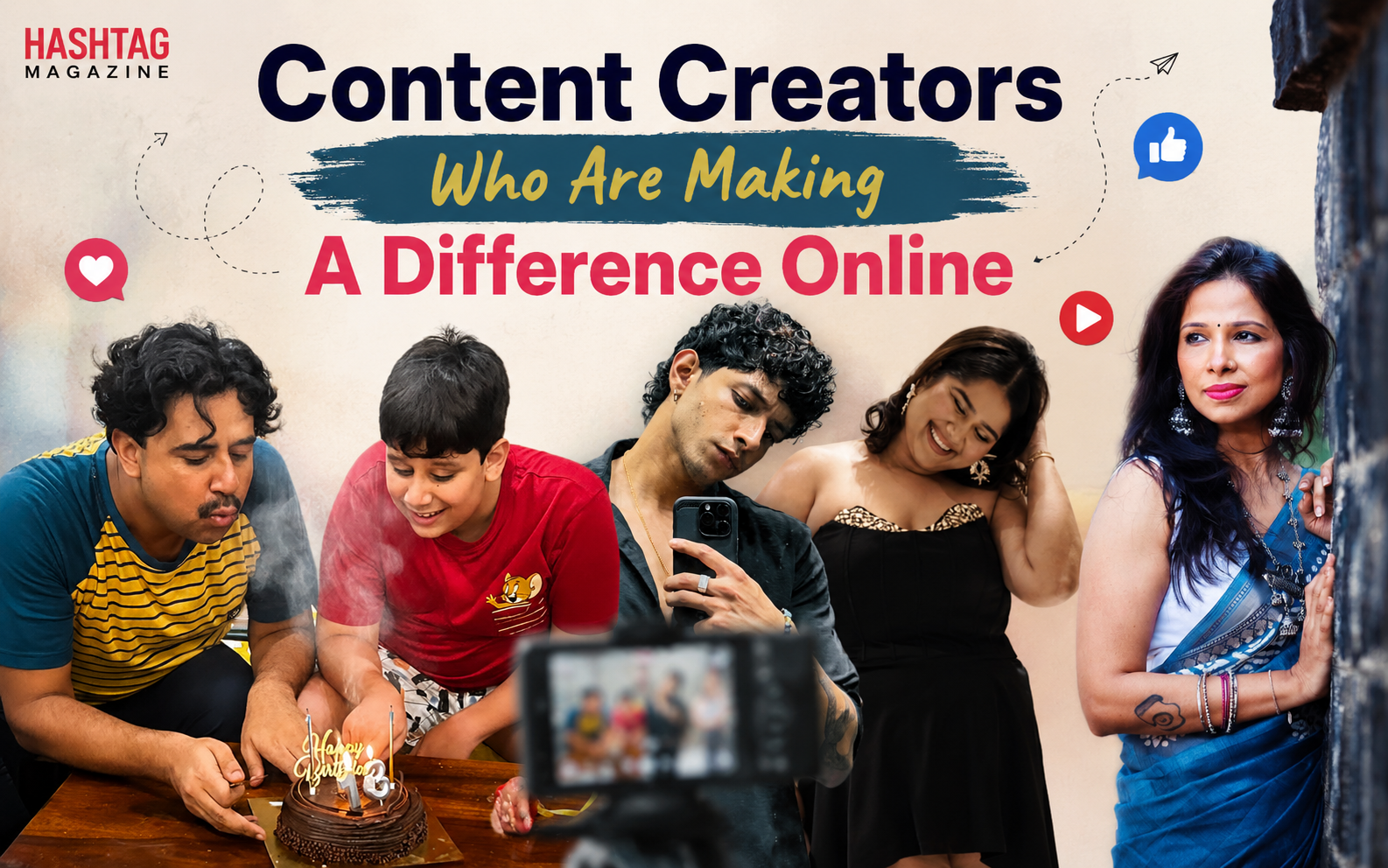
4 Content Creators Who Are Making A Difference Online

Social media often gets a bad reputation for endless trends, fleeting virality, and mindless scrolling. But beyond the perfectly curated feeds and viral challenges, a new generation of creators is proving that the internet can also be a force for empathy, education, and genuine connection. They’re using their platforms not just to entertain, but to spark important conversations, build supportive communities, and remind people that they are not alone. From a father reshaping India’s understanding of autism and an ASMR artist helping millions find comfort at the end of the day, to a creator championing body confidence and another offering refreshingly honest life advice, these voices are creating impact far beyond likes and views. In a digital world where attention is currency, they’re choosing to spend it on something meaningful. Meet four creators who are making the internet a kinder, more thoughtful place, one post at a time. 4 Creators Changing Conversations, One Post at a Time Indian Girl ASMR: The Voice putting India to sleep For Vedashree Pendharkar, better known online as Indian Girl ASMR, creating content has always been about offering people a moment of calm in an increasingly noisy world. One of India’s pioneering ASMR creators, she produces immersive roleplays, guided relaxation sessions, and soothing sound experiences designed to help viewers sleep better, manage stress, and unwind. Having been an avid ASMR viewer herself for nearly six years, Veda decided to try creating videos during the COVID-19 lockdown in 2020. What began as a creative outlet soon evolved into something much bigger. “As viewers began sharing stories about how the videos helped them sleep better, relax after stressful days, or cope with anxiety, I realised that ASMR had the power to make a genuine difference in people’s lives,” she says. Being among the early creators in the

One Swipe Doesn’t Fit All: Dating Apps for Every Relationship Goal

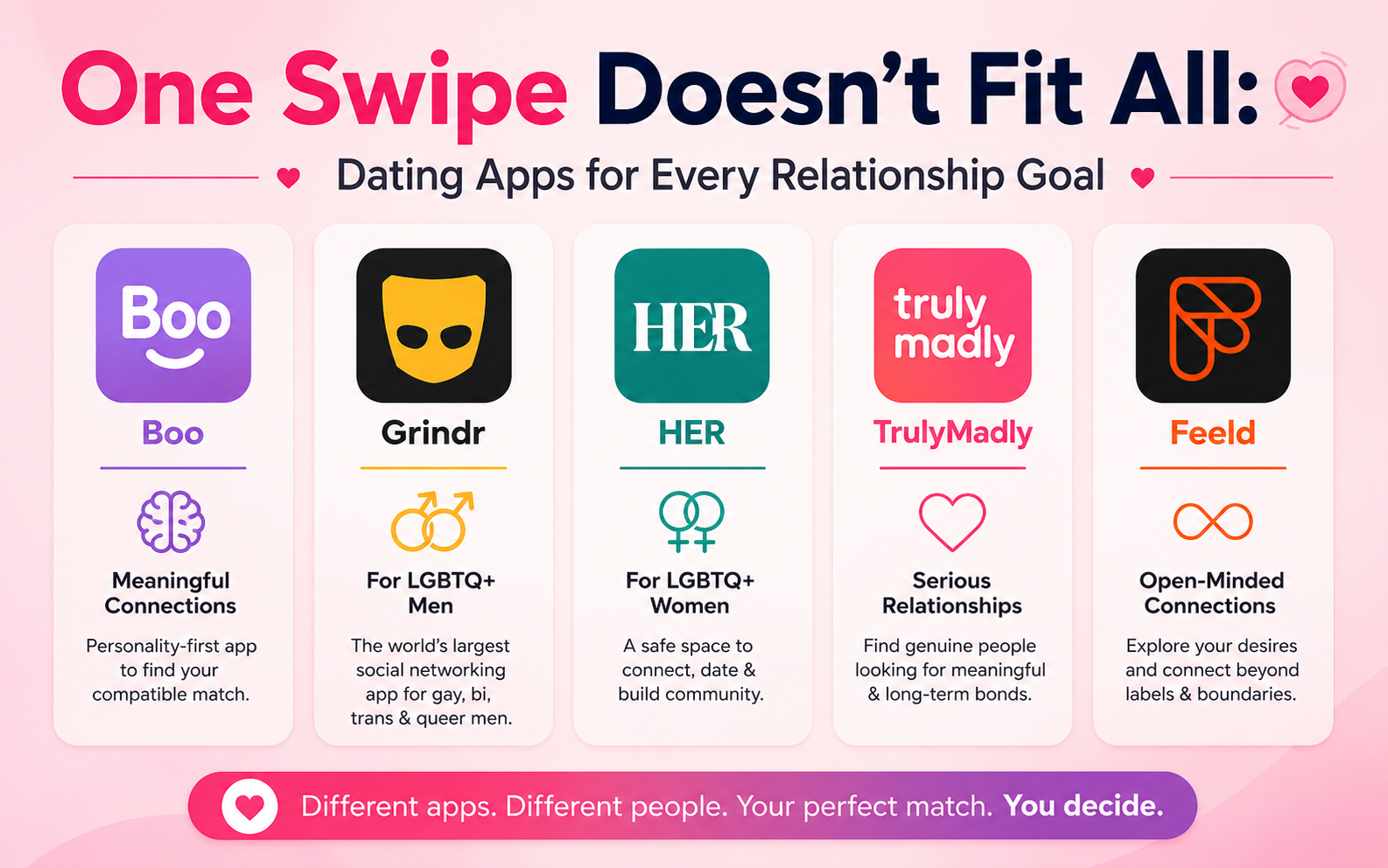
For years, online dating in India was largely synonymous with a handful of familiar names. But as conversations around love, companionship, and identity evolve, so are the ways people choose to connect. Today’s users aren’t all looking for the same thing, and they don’t expect one app to deliver it all. While some are searching for long-term relationships, others are seeking friendships, queer communities, meaningful conversations, or simply people who share their interests and values. As modern dating becomes more intentional, a new generation of platforms is stepping in to cater to these different needs. From apps built for serious commitment and LGBTQIA+ users to those helping people find friends or connect over common passions, there’s no longer a one-size-fits-all approach to finding meaningful connections. Here are the platforms redefining how India dates, befriends, and builds relationships in 2026. Boo: For Introverts Seeking Deeper Connections Small talk isn’t everyone’s love language, and Boo knows that. Designed around personality compatibility, the app uses the Myers-Briggs framework and shared interests to help users connect beyond appearances. Instead of endless swiping, Boo encourages people to build relationships based on values, communication styles, and common passions. It has become especially popular among introverts and those looking for slower, more intentional connections. For people who would rather discuss books, movies, or personality types than exchange generic pickup lines, Boo offers a refreshing alternative to traditional dating apps. Grindr: For Gay, Bi, Trans, and Queer Dating Long before many mainstream apps began prioritising inclusivity, Grindr was creating a space for queer connections. The location-based app remains one of the world’s most recognised platforms for gay, bi, trans, and queer people, allowing users to meet others nearby and build everything from friendships and communities to romantic relationships. In countries like India, where safe queer spaces can still

Top Dashcam and Car Safety Tech Products Every Driver Should Have in 2026

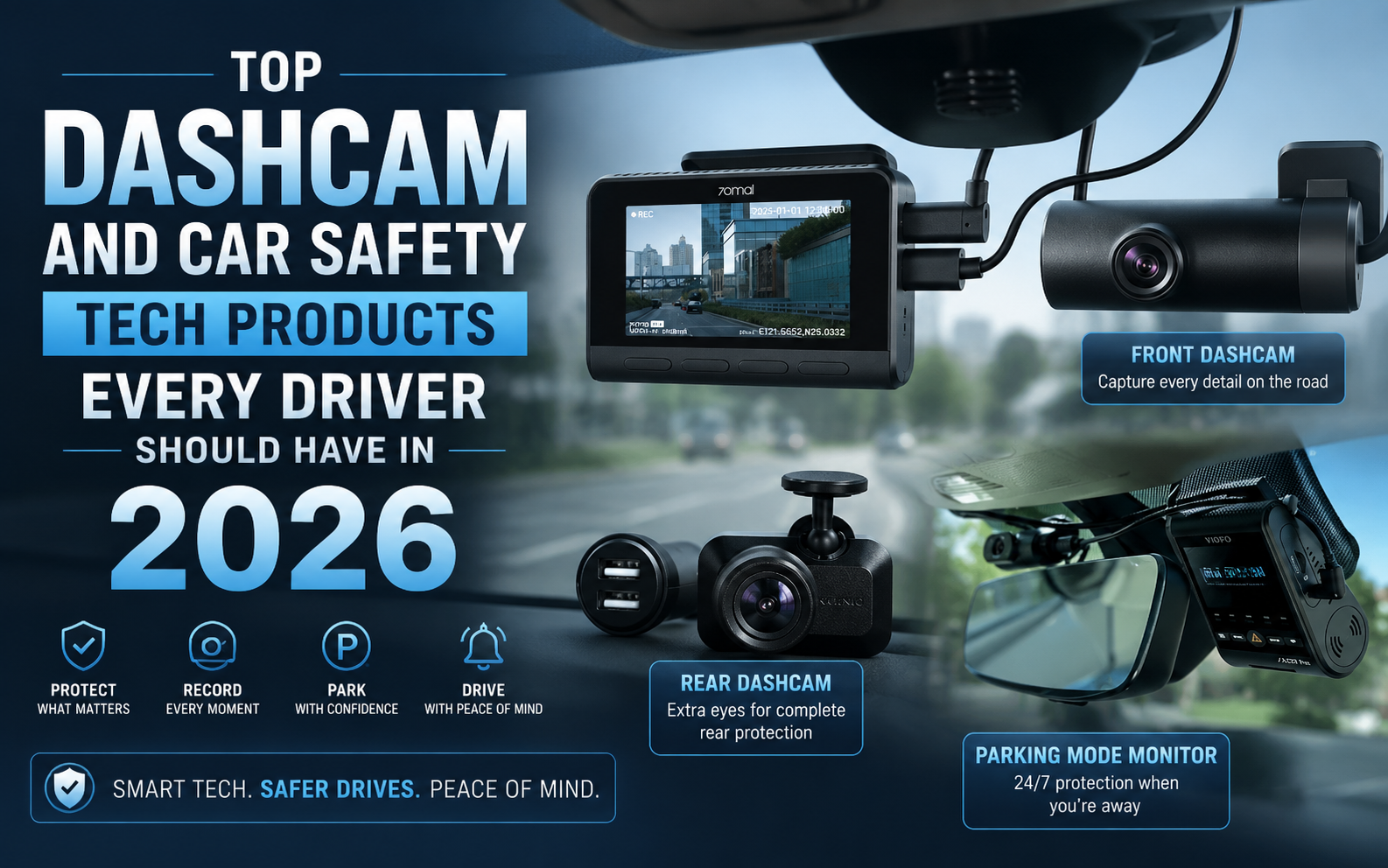
Best dashcams and car safety tech every driver needs in 2026, from AI collision alerts to tyre monitors. Drive smarter, drive safer. Think about the last time you were on a highway at night. Trucks overtaking from the left. Potholes with no warning signs. Someone running a red light at a junction you thought was clear. Indian roads are not forgiving. They are among the most unpredictable in the world, and that is not an exaggeration. In 2024, India recorded over 1.7 lakh road accident deaths, which is roughly one every three minutes. But here is what is changing. In 2026, the technology available to ordinary drivers, not just luxury car owners, is genuinely remarkable. Dashcams that record everything and call for help automatically. Tyre sensors that warn you before a blowout happens. Blind spot monitors: systems that keep you awake on long drives. Viofo A229 Pro 3-Channel If there is one dashcam built for Indian road reality, this is it. The Viofo A229 Pro covers three angles simultaneously: front, rear, and the cabin interior. So whether someone rear-ends you, you have a dispute at a toll booth, or a passenger causes trouble, it is all on record. The 4K front camera footage is clear enough to read number plates even at night. And night is when most serious accidents happen on Indian highways. The Sony STARVIS 2 sensor inside handles low light better than most cameras twice the price. It also has built-in GPS, which stamps your exact location and speed onto every clip, making it incredibly valuable as evidence in insurance claims or legal disputes.The parking mode is genuinely useful too. Park on a busy street, and if anyone bumps your car or breaks in, the camera wakes up and records it. In cities like Bengaluru and Mumbai,

How PMS Portfolios Perform During a Market Crash | Risk Management Guide

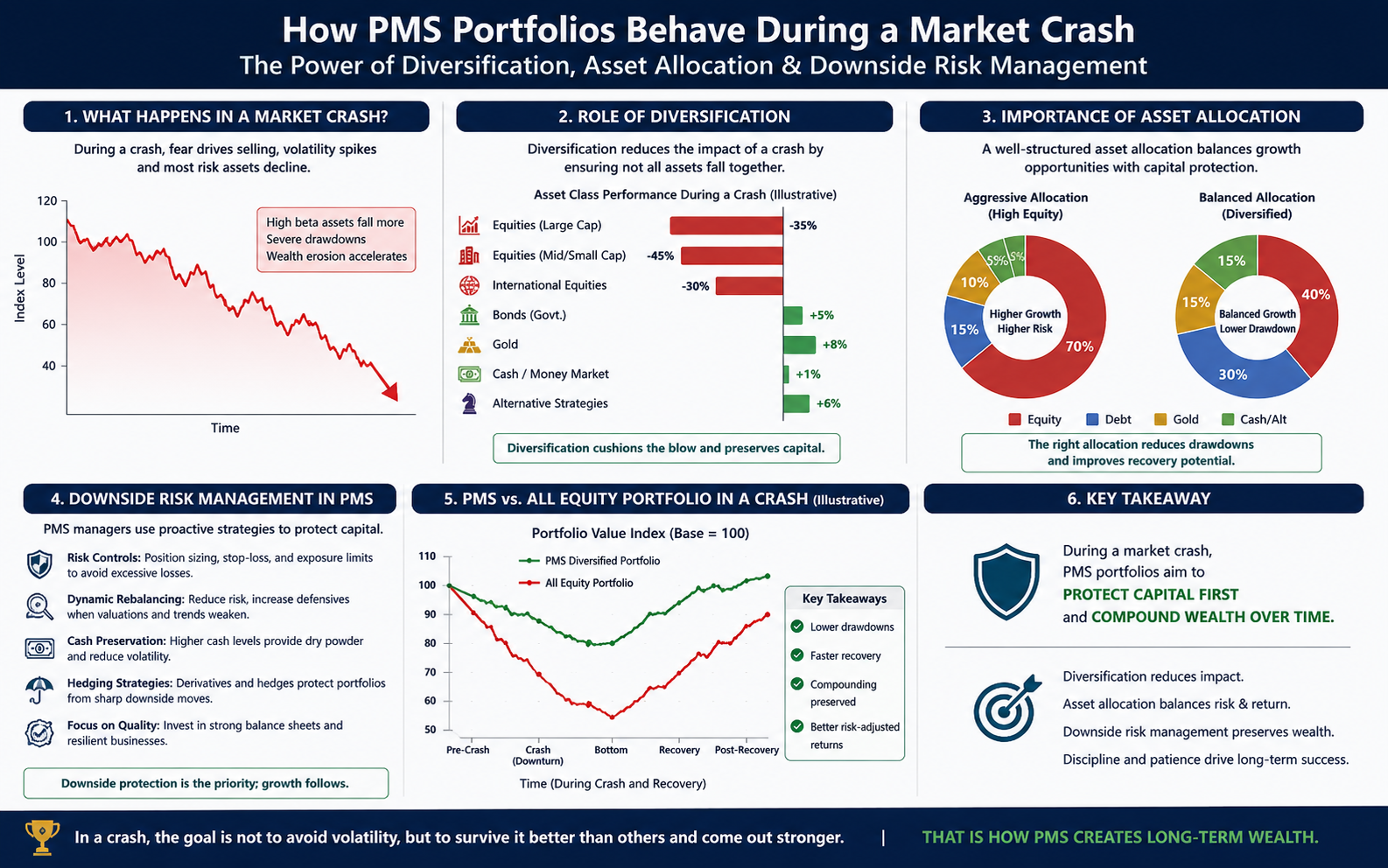
Market crashes are the ultimate stress test for any investment strategy. While returns dominate conversations during bull markets, it is during downturns that the true structure and resilience of a PMS portfolio become visible. Many investors assume that all portfolio management services portfolios behave similarly in a crash. In reality, outcomes can vary significantly depending on how the portfolio is constructed. 1. What a Traditional PMS Looks Like A traditional equity PMS is typically built as a concentrated portfolio of 15–30 individual stocks. This structure is intentional: Managers aim to generate alpha through high-conviction bets Capital is allocated meaningfully to each idea Diversification is limited compared to mutual funds However, during a market crash, this concentration becomes a double-edged sword. What happens in a crash? If a few key holdings fall sharply, the overall portfolio can decline disproportionately Single-stock risk gets amplified Liquidity issues in mid and small caps can worsen drawdowns For example, if a PMS holds 20 stocks and 3–4 of them fall 40–50%, the portfolio impact can be severe. This is the structure most investors picture when they think “PMS in a crash” — and it is also what has given PMS an unfair reputation for being high-risk by default. But concentration in direct stocks is a choice, not a requirement of the PMS structure. What sits inside the portfolio is what determines crash behaviour. 2. Not All PMS Portfolios Are Built the Same It is a common misconception that all PMS providers only buy direct stocks. In reality, a PMS is simply a personalized account managed by a professional. The strategy inside can vary wildly. While many providers stick to equities, others take a multi-asset approach. These providers build portfolios using a mix of mutual funds, direct bonds, gold, REITs (Real Estate Investment Trusts), and InvITs

You May Also Like

Connect with us