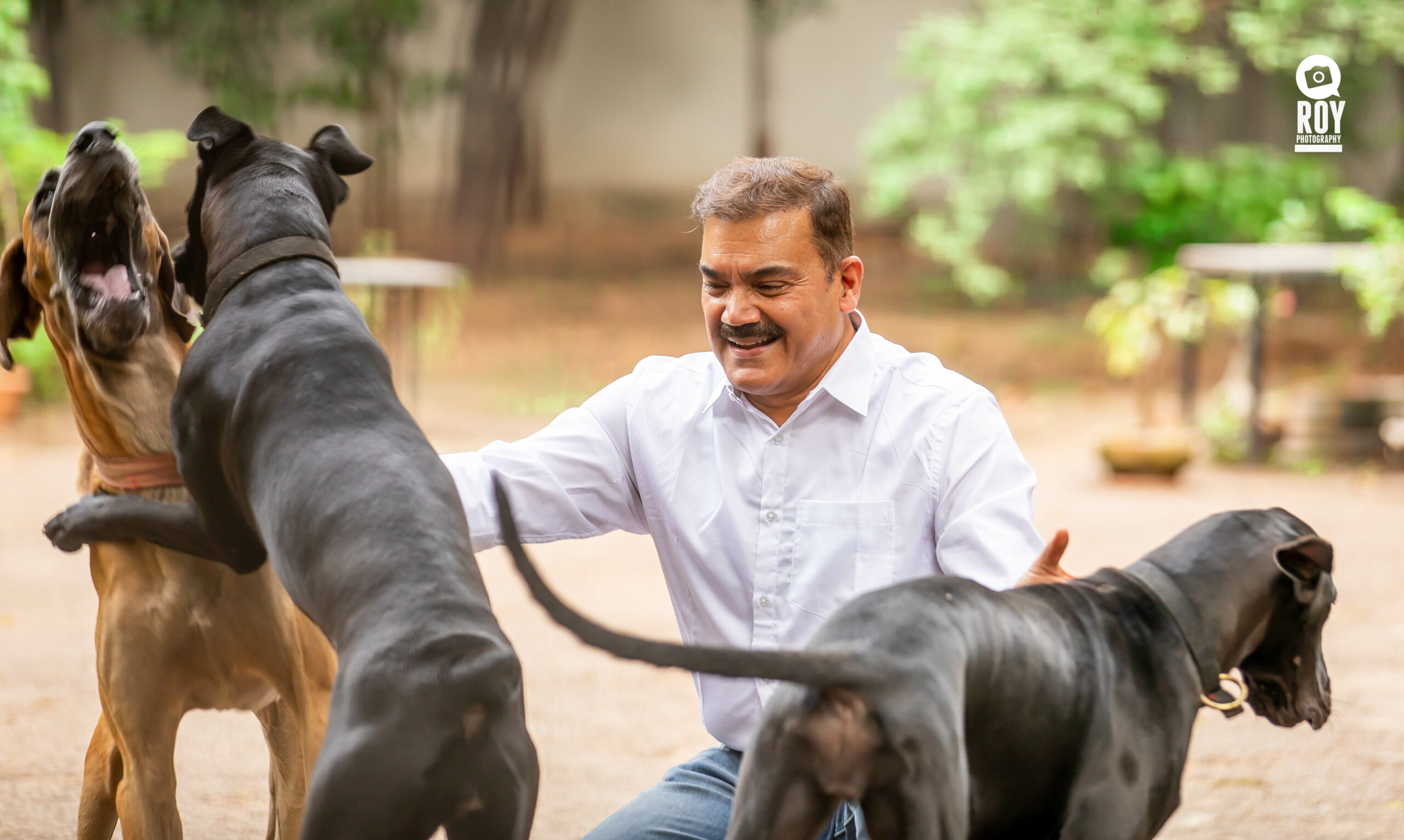
Having served as Police Commissioner of Hyderabad until recently IPS officer ANJANI KUMAR wears many hats. Currently the Director General of Anti Corruption Bureau he witnessed the growth of the Indian police force, right from the time it was heavily reliant on manpower to its current scenario, where the police can deploy technology to a great effect, he has seen and done it all! In an exclusive interview with MALLIK THATIPALLI, the decorated officer talks openly about the pressures and demands of such a job and position. The newly appointed Director General of Police articulates on his journey and reveals his humorous side in this unfiltered interaction.
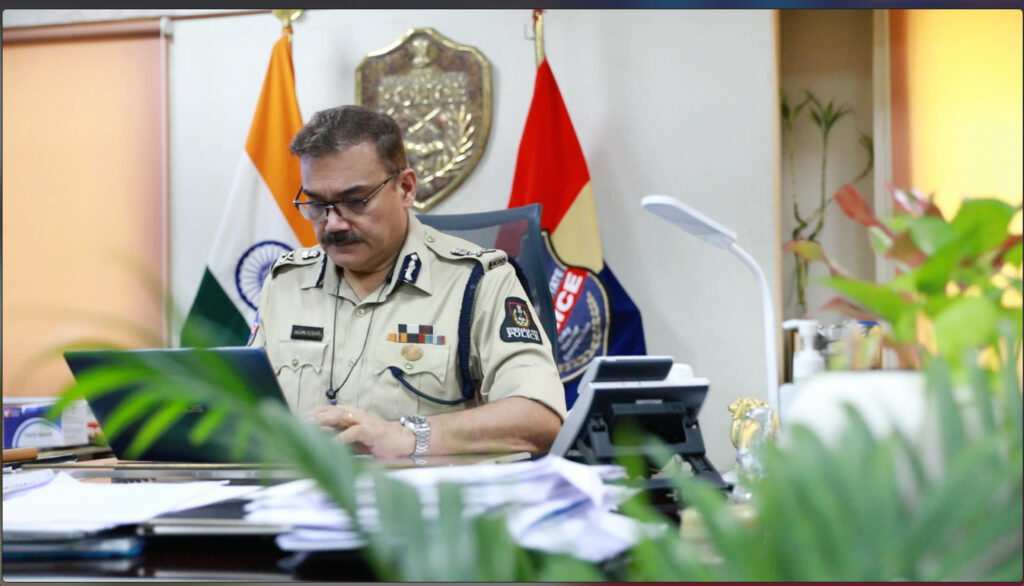
As the Police Commissioner of a city as diverse and varied as Hyderabad, whose population is an astounding one crore people, life is never easy. IPS officer Anjani Kumar however, handles it with the ease of a pro, be it elections, floods, or cybercrime. As the face of Hyderabad Police, Kumar is the very representation of modern-day police: savvy, sensitive and successful.
An IPS officer of the 1990 batch, Kumar agrees that it has been an interesting journey. “It has been a very eventful journey and at every stage I’m thankful to all those who helped me, from my parents to my teachers. In life, on many occasions, one faces twists and turns that push you to take a decision, I feel that, at those junctures, the decisions that I took were correct. For any person, this decision making is very crucial,” he states.
Born in Bihar, he received his schooling in Patna. Kumar attended the University of Delhi where he studied History and which he credits for his joining the IPS. “Delhi at that time had the best students in the humanities courses.” he recalls and adds, “I was lucky to get good teachers in college. Those days, there was a passion for everyone to opt for the civil services. I sat for the IPS in 1990. Since then, I have been serving the people of my country.”
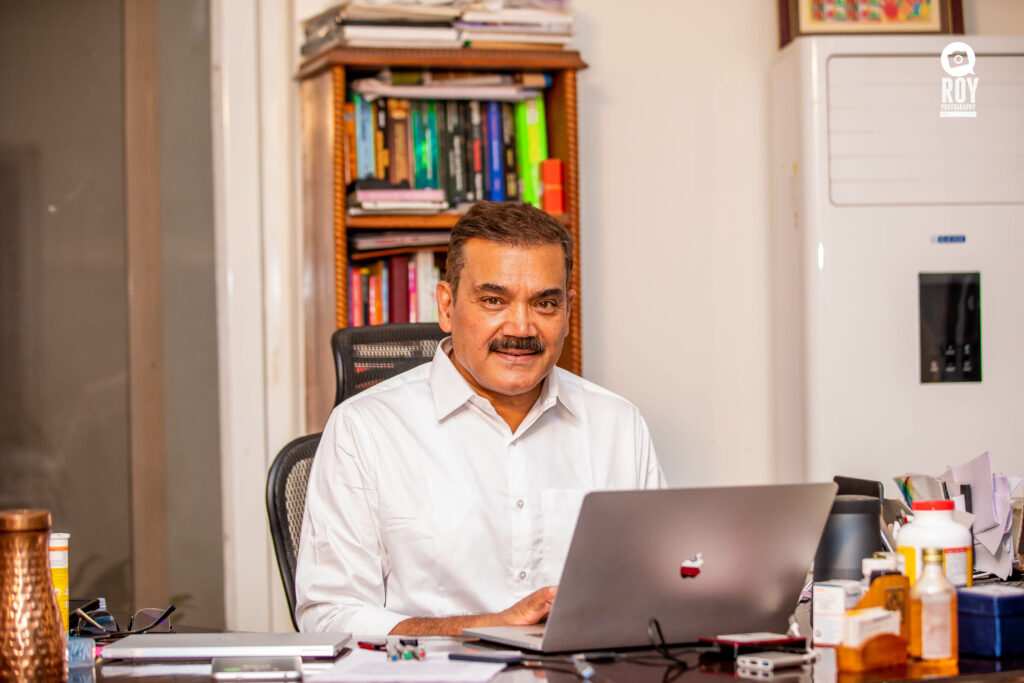
“We are expected to deliver, and we deliver it well. That’s why this profession is matchless.”
A popular story goes that when Kumar was seven years old, he donned the police uniform for the first time. He laughs and reminiscences, “My mother tells me this story quite often. She had bought me a khaki uniform when I was in school, and I was very fascinated by it. I didn’t get out of it for two to three days. I don’t know if it was destiny which was foretelling something or the glamor of the uniform but yes, I did always like the police force. No job can be more satisfying than the job of the police in India.”
Most jobs have well defined contours and timings, save for the police force, which can be challenging. Kumar agrees and says, “The sheer number of different situations we face is staggering. Be it a natural disaster or the pandemic, every year something or the other happens for which society and even the police department isn’t prepared. Still, we are expected to deliver, and we deliver it well. That’s why this profession is matchless.”

“The force needs to be competent in handling extremes of both the traditional and modern crimes.”
Anjani Kumar’s first posting was as the Assistant Superintendent of Police in the Jangaon region of the Warangal district. The early 90s was a hotbed for the Maoist movement and saw the district emerge as a flashpoint in which many civilians, police, and Maoists themselves were killed. “It was baptism by fire,” he recalls, “I remember those days when were on our guard every moment, concealing our presence, and doing tactical things in order to bring things to normalcy. It was a tough posting, but there was a lot to be learnt and today, after the creation of Telangana, the state is peaceful, with tremendous development all-round. So, all our hard work was worthwhile.”
A Career Full Of Challenges
With over three decades spent in the police force, there is a wealth of experience which has been accumulated. Kumar has been awarded the United Nations Peace Medal twice, while serving with the United Nations at Bosnia in 1998-99. He is also an accomplished swimmer.
Has any posting been the hardest, one wonders? Kumar answers that each posting has its own challenges and adds, “In the rural areas. we see issues like caste conflicts and factional violence. When I was posted in urban areas, there were different nuances of crime – be it crimes against women, drug menace, or cyber issues. I have seen the evolution of police and can say that whatever the posting, the job of the police is never easy.”
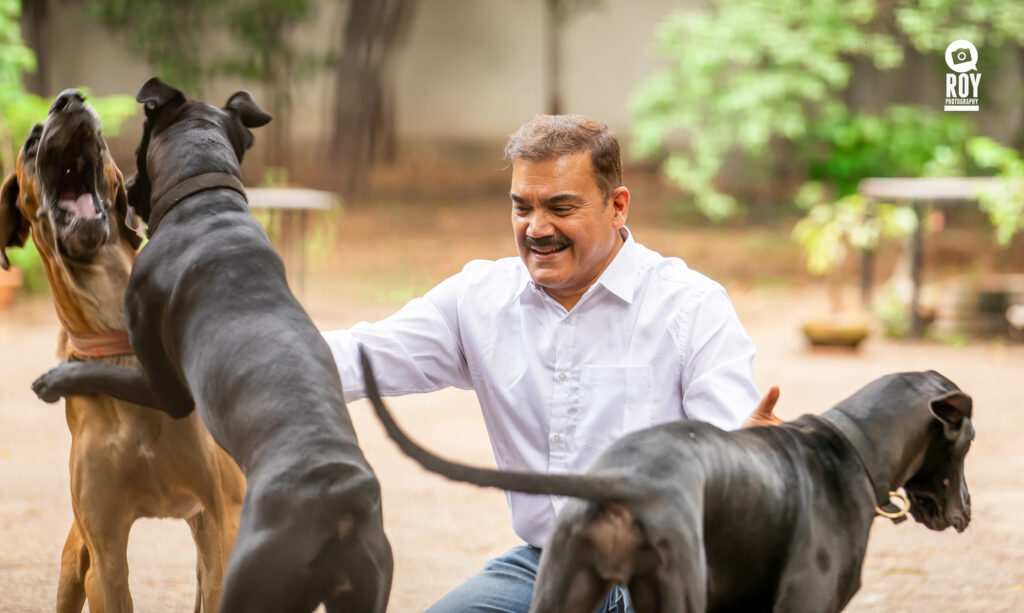
Today, we are at the cusp of the traditional meeting the modern and the police needs to be always on the alert. Kumar agrees, “Hyderabad is an old city where traditional crimes like rowdyism and theft still happen while the hi-tech cities face issues like credit card fraud and use of dark net. The force needs to be competent in handling extremes of both the traditional and modern crimes. We have to see that there is no delay in handling justice.”
Do the police have it tough on all fronts? They are condemned for both reacting and not reacting to a situation. The Police Commissioner ponders and answers, “The Police and the Army are the only two forces in service uniform where the visibility is high. While the Army saves the country from external aggression, they are deployed at borders where perhaps the people around them are either an enemy or is one among them. The Police department works from within the heart of the society where we can say that the opponent is one among us, so it is difficult to identify them. Hyderabad has a population of one crore, so even if one percent has criminal intentions, it is very difficult to monitor.”
The Journey So Far
Criticism is part and parcel of every job and Kumar surprises us in saying that criticism is always welcome; there no improvement in an individual or an organization without it. He explains, “Criticism comes from the fact there is expectation. If society is criticizing us, it means that they are expecting something from us. It only spurs us to do better.”
Having taken over the reins in 2018, the Commissioner has overseen both state and central elections, as well as the local GHMC elections. He adds, “The tough part was when the Musi river was overflowing due to sudden rains, and 20,000 people were evacuated overnight. We did it in a smooth manner and with help from the community. Any energy remaining was spent on COVID contact tracing and in enforcing the lockdown.”
It was during COVID that the police force really showed the extent of their work. From working in the Gandhi hospital where constables were posted inside the COVID ward, to providing help to migrants, they were involved in a gamut of activities. Of a robust force of 15,000, nearly half were infected with COVID while nearly sixty others lost their lives.
Two incidents which have put the spotlight on the Hyderabad police were the Disha encounter case and the recent news of police randomly checking the phones of youngsters. Kumar answers, “The first matter is sub judice and under the scrutiny of law, so I cannot discuss it. In the latter, it was blown out of proportion due to social media. All we were checking were cases of cell phone snatching.”
As we draw the interview to a close, one wonders how Kumar and his wife, who is an IRS officer, unwind. He starts by sharing that the last movie he watched was Baahubali five years ago and adds, “We are like any other family. There are no taboos, and we discuss society, our departments. and other family matters. Police officers have no private time, so my phone is always ringing. Demarcation of private and public life is not possible for us, but I have no regrets as my work gives me the highest thrill.”
QUICK TAKES
Favourite reads: Books on history. I love reading scriptures of all religions and on diverse subjects.
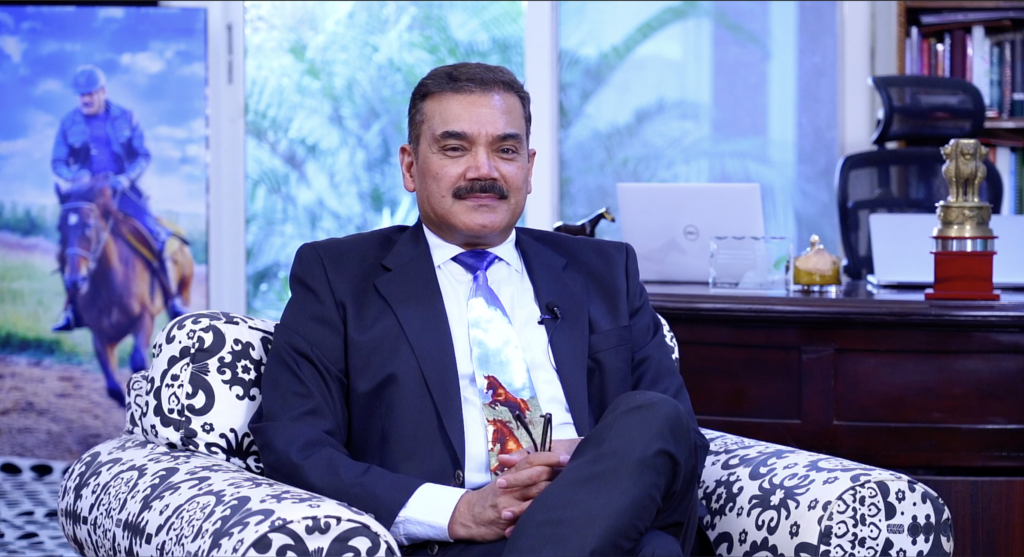
Favourite pastime: Riding horses. I have always been a big lover of horses.
Do you ever party: No, I don’t! I attend social dos, but otherwise I am not a party person!
On my checklist: Travel. In the last two years, I have taken just two leaves.
Who does your shopping? (Laughs) I just wear what I like!
“Criticism comes from the fact there is expectation…It only spurs us to do better.”