The Glory Of Ramappa Temple

The Glory Of Ramappa Temple - Hashtag Magazine

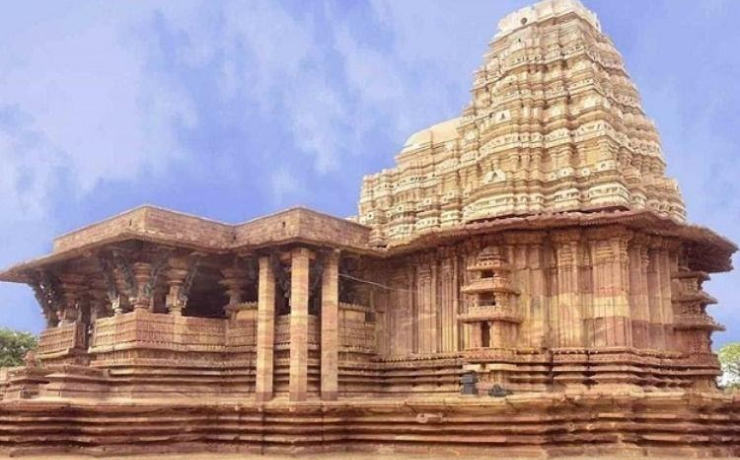
On June 25th, 2021, UNESCO declared the Ramappa temple a World Heritage site, making it the 40th UNESCO site in India. The Ramappa Temple is a prime example of the superb craftsmanship produced by the iconic Kakatiya dynasty. When Marco polo visited the Kakatiya empire, he called the temple “The brightest star in the galaxy of temples.” 

History of Ramappa Temple

It is located at the foothills of the forested area amidst agricultural fields, close to the shores of Ramappa Cheruvu. This choice of setting for the temple is sanctioned in the dharmic texts that temples are to be constructed to form an integral part of a natural setting that includes hills, forests, springs, streams, and agricultural lands.

The magnificent structure of Ramappa is dedicated to Lord Shiva, and it is located right in the heart of Warangal which was the ancient capital of the Kakatiya dynasty. The temple construction began in 1213 AD and finished in 1253 AD. The temple was built by the chief commander Rudra Samani under the leadership of Kakatiya ruler Ganapathi Deva.

The temple derives its name from the sculptor Ramappa who built the statue of Lord Shiva. This is the only temple in India that is named after its craftsman. Even though there were many wars and natural disasters the temple has managed to remain intact to this date. 

The temple is also called Kakatiya Rudreshwara Temple, and the Shivling inside the temple is placed at a height of 9 feet. Sitting in front of the Shivling is the majestic Nandi vigraha carved out of a single black basalt rock.

The architecture of Ramappa Temple

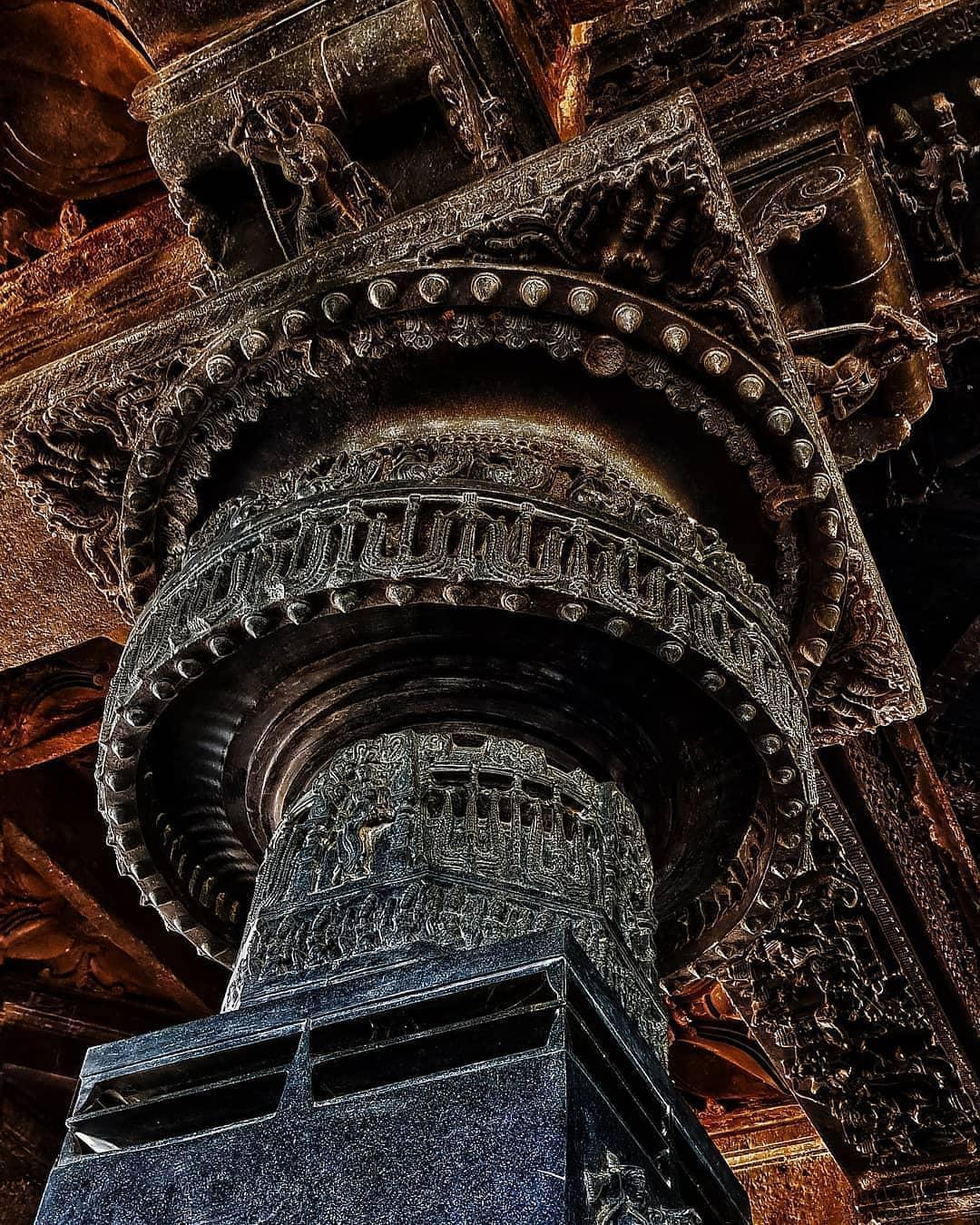
The Architecture of Ramappa Temple is an example of the Kakatiya style of architecture. There are lotus motifs, and elephants carved on the pillars in different poses. The prominent designs amongst them are sculptors of Hindu mythology that cover the temple from its base to its wall panels and ceilings.

The temple is constructed with light bricks that can float in water. The temple is divided into three different places that are garbhagriha, maha mandapam, and antarala. The walls of the temple showcase complex carvings. Every pillar and ceiling has been engraved beautifully. The three entrances have a total of 12 sculptures of madanikas that are marvellously carved in different poses. 

When you visit this temple, you will be awestruck by the amazing art of the temple. There are carvings on the walls near the Garbhagriha entrance that show off various dance styles and musical instruments. The ceilings consist of various carvings, depicting scenes from Shiva Purana, Mahabharata, and Ramayana. The work is so precise and exquisite because the sculptures in the temple are sharply chiselled. The temple’s chamber is crowned with Shikharam, and it is surrounded by pradakshinapatha

Along with the Ramalingeswara Swamy, there is the Kameswara temple which is in ruins and the Kateswara temple. It is said that if you hit a pillar or a stone in this temple, you can hear musical sounds (Sa Re Ga Ma Pa Dha Ni Sa). 

After UNESCO has recognized this magnificent temple as a heritage site, the temple will get financial assistance to maintain it. There are some cottages set up by the Telangana tourism department where you can sit and soak in the magnificence of this temple. Maha Shivaratri is grandly celebrated for three days at this temple. The timings of the temple are 6 AM-6 PM.

Conclusion: Ramappa Temple is a grand historic temple with amazing sculptures and architectural work. You can also visit the thousand pillar temple, Bhadra kali temple, and pakal lake which are also popular tourist spots with historical significance in Telangana.

Leave a comment

Your email address will not be published. Required fields are marked *

The 5 Most Expensive Private Islands You Can Rent For New Year’s

There’s celebration, and then there’s arrival. New Year’s Eve isn’t meant to be lost in crowded parties or noisy resorts. It’s a moment that deserves space, serenity, and a horizon wide enough to hold your dreams for the year ahead. As India’s luxury travel scene steps into 2026, the idea of escape has transformed. No longer just vacations, private island rentals have become portals where time slows down, sea wind feels like scripture, and silence heals in ways noise never can. Dhanush Kumar writes about the five most extravagant private islands you can rent for the New Year in and around India. 1. Munjoh Private Island- Andaman & Nicobar Islands, India Tucked deep within the turquoise cradle of the Andaman lies Munjoh Private Island, a sanctuary carved for those who prefer whisper over crowds. This ultra-luxury island offers private beaches, palm-lined coves, and villas that blend barefoot simplicity with refined indulgence. At night, the sky becomes a cathedral of stars. At dawn, the island wakes in a golden hush.  Private chefs craft ocean-fresh menus, spa therapists arrive at your doorstep, and your very own yacht stands ready. 2.Fregate Island- Seychelles Just a few hours from India by air, the Seychelles unfold like a dream, and Fregate Island is its crown jewel. This is luxury at its most uncompromised. Only a handful of villas exist on the entire island, each carved into the landscape with an artist’s touch. Think infinity pools suspended above the sea, private butlers who know your preferences before you speak, and beaches so untouched they look ancient. Fregate is where billionaires and Hollywood royalty choose to vanish. A perfect place to let the New Year rise without the world watching. 3.Sirai Island, Zanzibar, Tanzania Far across the Indian Ocean, but spiritually close to India’s sense of coastal

Healing Temples: Where Faith Meets Alternative Medicine In India

In India, the divine and the medicinal have never lived apart. Here, faith isn’t just a prayer; it’s a pulse. It flows through temple corridors scented with camphor, rises with mantras at dawn, and lingers in the herbal smoke of age-old rituals. Long before laboratories and hospitals defined health, Indians sought balance between the physical and the spiritual, between body, mind, and the cosmos. Today, as the modern world burns out in its search for healing, these healing temples stand quietly, bridging belief and therapy, mysticism, and science. They remind us that medicine need not always come in a bottle; sometimes, it’s found in devotion, energy, and sacred tradition. Dhanush Kumar takes us on a journey through the heart of India, where faith and alternative medicine walk hand in hand. 1.Vaitheeswaran Koil, Tamil Nadu Tucked in the heart of Tamil Nadu lies Vaitheeswaran Koil, named after Vaidyanatha Swamy, a form of Lord Shiva known as the Divine Healer. For centuries, devotees have arrived here with faith in the temple’s sacred waters and rituals for their curative powers. The temple’s theertham is believed to have medicinal properties, infused with herbs used in ancient Siddha medicine even the priests here know the old healing chants and herbal combinations. From skin diseases to chronic pain, this temple is seen as a place where faith amplifies natural healing, where medicine is both prayed for and practiced. 2.Kottiyoor Shiva Temple, Kerala Deep within the lush forests of Kerala’s Kannur district, the Kottiyoor Shiva Temple blooms every year during its monsoon festival. What makes it extraordinary isn’t its architecture but its elemental simplicity. Built near natural springs, it turns into an open-air altar of mud, water, and air, the original Ayurvedic ingredients. Devotees bathe in the spring believed to balance the body’s doshas, Vata, Pitta, and

Hidden Gems I Can’t Stop Talking About

Who: Dimpi Sanghvi – Travel & Lifestyle Creator, Storyteller, and Curator of Slow Travel Experiences With a lens that finds beauty in the simplest of details, Dimpi Sanghvi is redefining mindful travel. A creator with a love for storytelling and design, she transforms ordinary journeys into visual poetry evoking nostalgia, warmth, and curiosity in every frame. Through her platform, she brings together her twin passions travel and slow living encouraging her audience to pause, wander, and feel. Whether she’s exploring Cuba’s colourful streets or uncovering hidden gems around the world, Dimpi’s storytelling reminds us that travel isn’t just about distance it’s about depth. Featured Destination: Cuba Why Dimpi Recommends It:“Cuba is like stepping into another era,” Dimpi says. “Havana’s pastel-hued buildings, cobblestone lanes, and beautifully preserved vintage cars feel like a living time capsule. What makes it special is the rhythm the music that flows through the streets, the impromptu dancing, and the locals’ warmth that instantly makes you feel at home. Cuba isn’t just a destination; it’s a mood, a melody, an emotion.” Top 3 Must-Do Experiences: Take a ride in a classic vintage car through the vibrant streets of Havana the city’s most iconic experience. Witness the cannon shot ceremony at La Cabaña, a fascinating ritual that’s been performed nightly since the 18th century. Visit a Cuban cigar and Havana rum factory to experience the meticulous artistry behind the island’s most famous exports.Best Local Dish or Drink: “Order a Daiquiri at El Floridita the birthplace of the cocktail and Ernest Hemingway’s favourite haunt,” Dimpi says. “It’s the perfect way to cool off after a day under the Cuban sun.” One Thing Travellers Should Know: Vegetarian options can be limited, so carrying some essentials or snacks is a good idea. “But honestly, the charm of Cuba more than makes

Places I’d Go Back to in a Heartbeat

Who: Roop Verma Travel Creator, Storyteller, and Seeker of Global Magic Meet Roop Verma, a creator who finds joy in both quiet European mornings and electric Asian nights. Whether it’s sipping espresso on a sun-drenched street in Paris or chasing neon reflections through Tokyo’s midnight rain, Roop travels to feel alive to find beauty in hidden corners and capture fleeting moments that make the world pause. Through his lens and words, Roop brings his audience along for the ride every trip feels like a shared heartbeat, a collective discovery. “Travel changes you,” he says. “Each place leaves me a little more in awe and a lot more in love with this crazy, beautiful world.” Featured Destination: Provence, France Why I Recommend It: “Provence feels otherworldly,” Roop says with a smile. “It’s a place where lavender fields stretch forever, sunsets look hand-painted, and every village feels like a dream you never want to wake up from.” What Makes It Special: “There’s a calm magic here a rhythm that makes you slow down and just exist. In Provence, time doesn’t rush; it breathes.” Top 3 Must-Do Experiences: Wander through endless lavender fields at sunrise.2. Sip rosé in a café in Gordes, watching the village come alive.3. Explore local markets in Aix-en-Provence overflowing with cheeses, pastries, and vintage trinkets. Best Local Dish or Drink: “Freshly baked tarte aux fruits paired with a chilled glass of rosé it’s Provence on a plate,” says Roop. “And my favourite thing? Losing myself in the farmers’ markets of Aix-en-Provence they’re pure sensory bliss.” One Thing Travelers Should Know: “Provence moves at its own pace slow, intentional, and full of wonder. So, don’t rush it or you’ll miss the magic.” Insider Tip: “Rent a car and drive through the lavender hills. Every turn is a postcard, every stop

You May Also Like

Connect with us