
Looking around your networks of co-workers who are enjoying their romantic-candle-night meals might make you feel alone on Valentine’s Day, which can be stressful. Singlehood, on the other hand, is a time for us to explore our space, establish some healthy boundaries, and focus on ourselves. Relationship coach Hritik (@yourrelationshipschool), talks to Bidisha Barik on how the path of singlehood is based on building a stronger and healthier foundation of self-worth, which influences all of our good relationships.
“All the changes in perspective come from the growing on the path of singlehood,” Hritik explains.
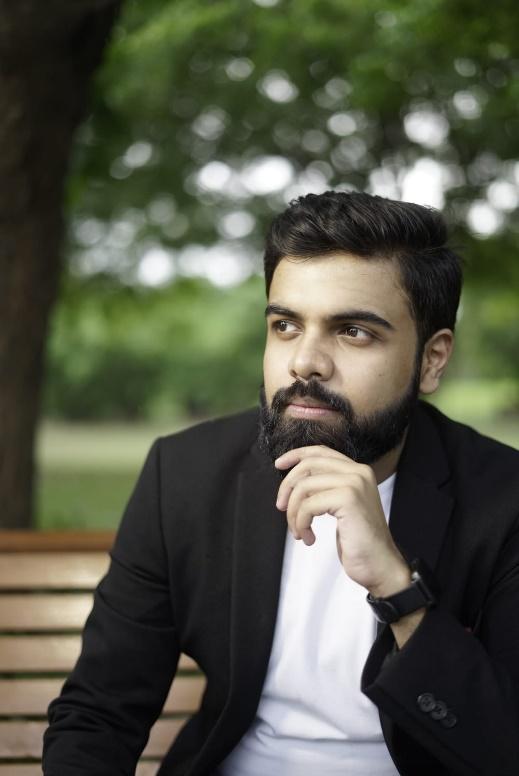
“It was difficult to accept being single after being in a relationship for half a decade. Accepting myself as an individual maturing in my own space presented hurdles, and establishing a secure border of self-worth and self-respect was difficult. However, embracing singlehood has been a beautiful experience that has taught me to be conscious of the boundaries that must be set and to constantly return to self-analysis”,says Bidisha
Hritik is an ICF-accredited relationship coach who has coached over 600 individuals to date. His focus is assisting people who are having difficulties with dating/relationships and examining their self-worth. Hritik feels that when we don’t comprehend our value and respect, we allow people to violate harmful boundaries, causing harm to our pleasure and tranquilly, which is ultimately our responsibility. He says, “Because my goal isn’t to keep people in relationships, but to help them get into/find/keep the proper relationships, I’m just as glad for the break-ups that have occurred as I am for the partnerships that have formed as a result of my counselling.”
We’ve been conditioned to believe that people in relationships are the happiest, and that being single equals being ‘lonely.’ Most of this is conveyed through ‘happily ever after’ endings in movies, or by seeing our family and friends in perfect relationships, which causes us to stress about finding the perfect one for ourselves before we’ve taken the time to acknowledge ourselves and our preferences. Hritik goes into further detail about this.
How can “singlehood” be embraced without feeling depressed?
If I give you a hammer, you can use that hammer to either build a house or hurt someone. A hammer is just a tool. It is neutral in and of itself, how you utilise that tool is entirely dependent on you. The same goes for singlehood. If you view singlehood as a punishment that has been inflicted upon you or as evidence of your unworthiness as a human being, you will be inviting disconnection, loneliness, anxiety, insecurity, and depression. However, if you genuinely see (and believe) that singlehood is your opportunity for personal development and introspection, you will transform beyond all measures. It’s not the event that shapes our reality, it is our perception of the event that does. So, singlehood can either be your opportunity for construction, transformation, and empowerment or it can be a pathway to cynicism, nihilism, and self-destruction. You control the narrative.

Why is it that people are so opposed to the notion that single individuals may be really happy? Do they believe that happy singles think of themselves as ‘too good to be in a relationship’?
Firstly, I don’t think that mature, conscious, and emotionally intelligent people are opposed to the notion that single individuals can be happy in their own company. People who are opposed to that notion are usually the ones who are immature and naive. They are either influenced by the ideas born out of romanticism/movies or are encouraged by the codependent conditioning that is largely promoted in the name of love and happiness. It is usually a projection on their part. They might feel incapable of being happy alone, and hence, they project that on people who are truly happily single.
I don’t think they believe that happy singles think of themselves as ‘too good to be in a relationship,’ rather they think of themselves as too incapable of being happy without a relationship. Every judgement is a self-judgement.
When we are single, why does society make us feel awful, inferior, or less?
Because society equates relationship status (commitment) with competence, happiness, and worthiness. It sees getting into a relationship as an end goal/final destination for achieving happiness. Now, commitment in a healthy romantic relationship is important as it gives meaning to our lives and it is one of the great adventures of our lives. The problem starts when we are willing to accept just about any form of connection/commitment even at the expense of self-abandonment. That becomes toxic to our self-worth and self-image. Since many people in our society have given in to the notion that relationship = happiness, they force judgements on people who don’t comply with their vision. In my opinion, the goal isn’t to find a partner, the goal is to CHOOSE happiness, with or without a partner.
Do you have any suggestions for those who have recently become single?
Yes. Take this time to know and grow yourself. Singlehood provides fertile soil for growth. Get to know who you are, what do you want out of life, why do you choose what you choose, what are your dysfunctional traits, how do you mess up in dating/relationships, what do you want in a partner, what are your boundaries, how will you ensure that you make healthy choices in life and love, what is your purpose in life. Singlehood is the time when you go all-in on your personal development. It is the time for cultivating self-esteem and self-respect. But to access the superpower of singlehood, you, firstly, have to fix your mindset about it, and secondly, make the necessary daily choices that create incremental improvement in your self-esteem. Singlehood is the time when you strengthen your identity so that if and when you choose to enter into the dating realm, you can date from a position of power. When you don’t have the constant distraction of someone else, you are forced to examine yourself. And through that process, you can develop your relationship with yourself and crush your fear of being alone.
What kinds of activities are appropriate for singles who aren’t searching for a relationship?
Everything, as long as you are not hurting yourself (or avoiding yourself) or other people (through unhealthy coping mechanisms). Singlehood is your time to explore the breadth of life and the depth of yourself. Go to new places, get in touch with your old friends, make new friends, discover new hobbies, re-discover your childhood hobbies, pursue your interests, get to know yourself on a deeper level and forge a solid individual identity. All of these things build your self-confidence, enrich your life, and make yourself immensely attractive. The only caveat is, do not use activities to completely escape feeling your uncomfortable emotions/numb yourself.
How can Valentine’s month be enjoyable for singles?
When you are focused on your personal development and grounded in your self-worth, you won’t even give a damn whether it is Valentine’s month or Christmas month. So, my first advice would be to pursue meaningful goals that you truly value so that you don’t have the unnecessary time to stay preoccupied with Valentine’s month. Secondly, stay away from social media. You will be bombarded with loads of images from your friends/family who would be celebrating love, so to avoid unnecessary self-doubt or judgement, you should avoid social media during that phase. Thirdly, go out and have fun with your other single friends. Just because it is Valentine’s month doesn’t mean singles should lock themselves inside their homes. Have fun and do not assign too much weight to Valentine’s month.
What is the most prevalent issue that today’s singles face?
Single-shaming. People constantly ask singles questions like, “Why are you still single?” or people assuming that just because someone is single, they must be unhappy/less than. Questions like these can trigger feelings of worthlessness, inferiority, and self-doubt within singles. Having said that, I strongly believe that other people’s opinions get to us only when we don’t have a strong opinion about ourselves. So, it isn’t the shaming that is coming from the outside that hurts us, it is the shaming that is coming from the inside that devastates us. And that’s something that we must control and manage by challenging the meaning that we are assigning to love/relationships/singlehood because we cannot control other people but we can (and should) control our faulty perceptions/unhealthy mindset.
“So, last year, I wanted to get out there and have some nice dates along the way, but after having little luck with men, I decided to just give back. I found a bunch of small businesses that had a Valentine’s Day collection and put together a guide for all the couples out there trying to gift something to each other. Aside from that, I recall not wanting to see other people in relationships since it cut me off from my social life almost entirely. That day, I planned a 24-hour hackathon with strangers. It was a lot of fun. I felt so successful after participating in that hackathon, and I met new acquaintances, and I almost enjoyed and embraced my singlehood.”
Data Analyst Intern at Myntra, Pune
“There’s no evidence that those in partnerships are happier than those who are single. I always like to be alone. My pals intend to play an important role in my life. I make the most of my time. I don’t think Valentine’s Day would have any effect on me because I love everyone and accept love from others. This doesn’t imply I have to receive love from one person or even be in a relationship to receive love.
Self-love/care activities include food, sleep, and a healthy lifestyle that includes happiness and physical activities in particular. Trekking and cycling have made me more functional and energetic. Since the beginning. I’ve never had a romantic relationship. I have no intention of remaining single. Love may strike at any time and with anybody. I’ll be waiting for mine as well.”
Private Employee, Hyderabad
You can also follow Hritik here: