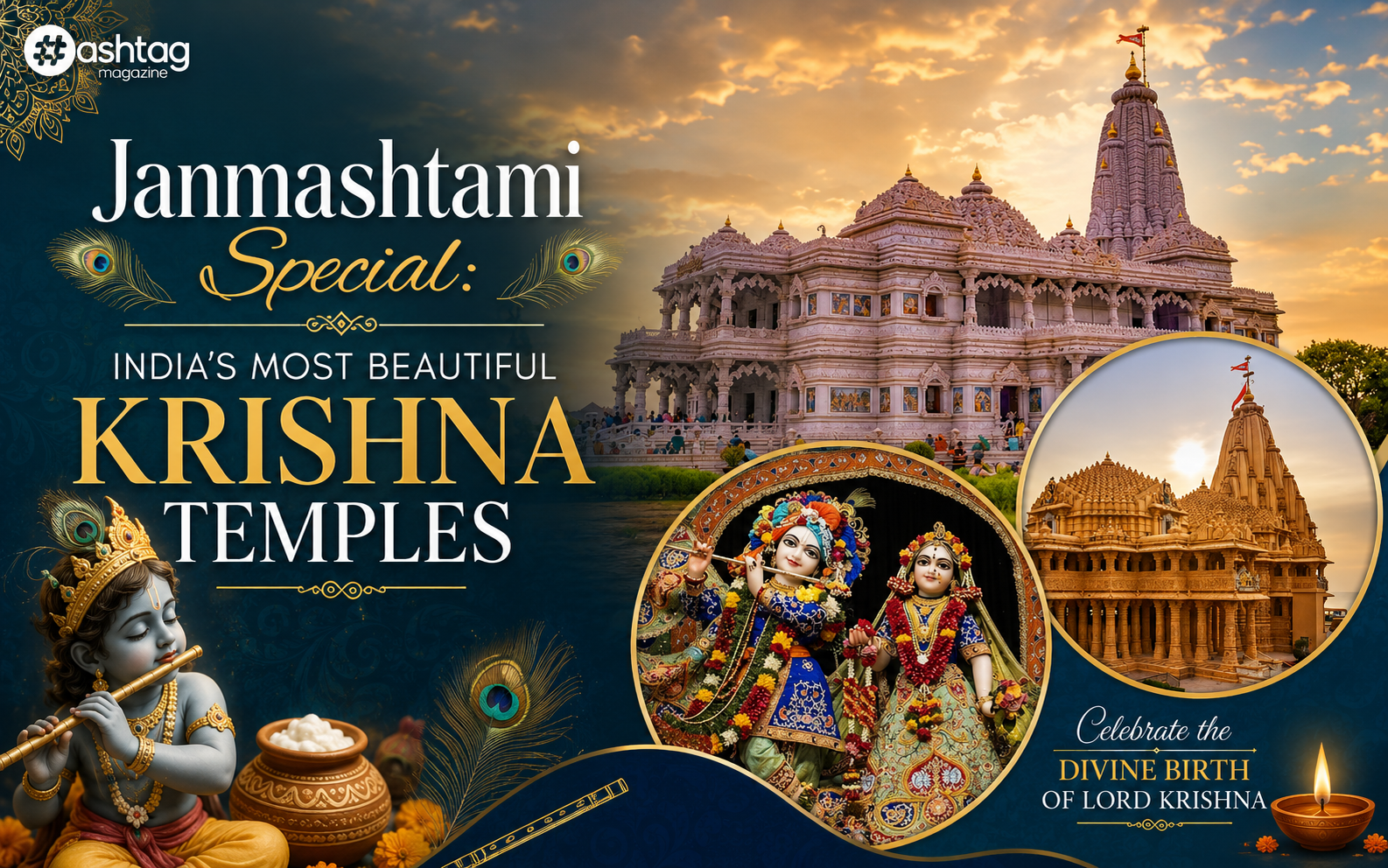
Janmashtami Special: India’s Most Beautiful Krishna Temples

Janmashtami Special: India’s Most Beautiful Krishna Temples

Every year, as the monsoon clouds part and the fragrance of tulsi and jasmine fills temple courtyards across India, millions of devotees prepare to celebrate the birth of Lord Krishna, the playful cowherd, the divine statesman, the eternal beloved, Janmashtami is more than a festival, it is a nationwide outpouring of devotion, music, and midnight joy, marking the moment Krishna was born in a Mathura prison cell over 5,000 years ago.

While Krishna’s story unfolds across the length and breadth of India, a handful of temples stand out not just for their spiritual significance, but for their sheer visual splendour. Marble carvings that seem to breathe, gold-plated domes that catch the sunrise, silver windows through which only a sliver of the deity is visible. This Janmashtami, Dhanush Kumar writes about eight of India’s most beautiful Krishna temples worth adding to your pilgrimage list.

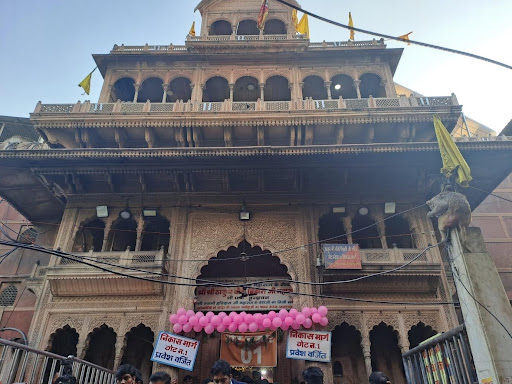
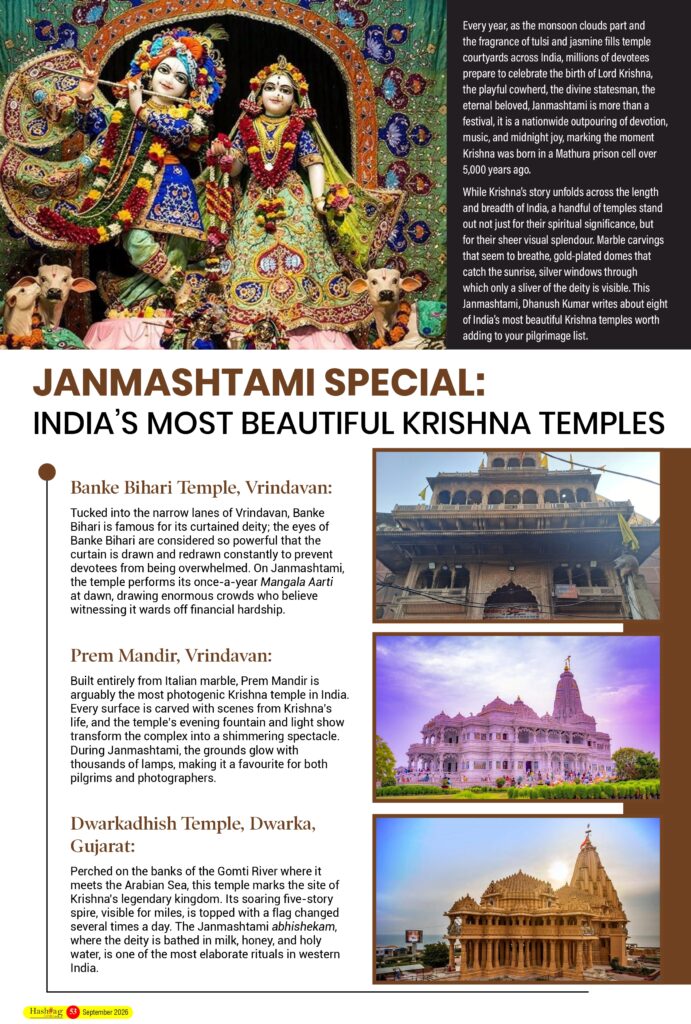
Banke Bihari Temple, Vrindavan: Tucked into the narrow lanes of Vrindavan, Banke Bihari is famous for its curtained deity; the eyes of Banke Bihari are considered so powerful that the curtain is drawn and redrawn constantly to prevent devotees from being overwhelmed. On Janmashtami, the temple performs its once-a-year Mangala Aarti at dawn, drawing enormous crowds who believe witnessing it wards off financial hardship.
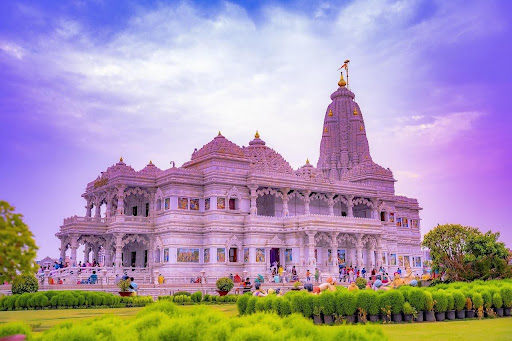
Prem Mandir, Vrindavan: Built entirely from Italian marble, Prem Mandir is arguably the most photogenic Krishna temple in India. Every surface is carved with scenes from Krishna’s life, and the temple’s evening fountain and light show transform the complex into a shimmering spectacle. During Janmashtami, the grounds glow with thousands of lamps, making it a favourite for both pilgrims and photographers.
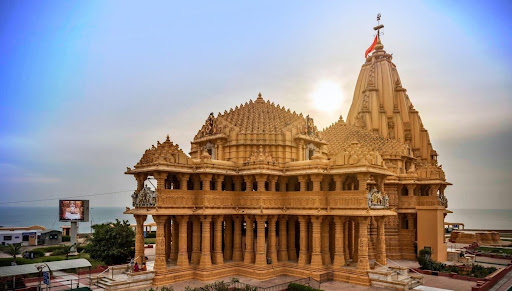
Dwarkadhish Temple, Dwarka, Gujarat: Perched on the banks of the Gomti River where it meets the Arabian Sea, this temple marks the site of Krishna’s legendary kingdom. Its soaring five-story spire, visible for miles, is topped with a flag changed several times a day. The Janmashtami abhishekam, where the deity is bathed in milk, honey, and holy water, is one of the most elaborate rituals in western India.
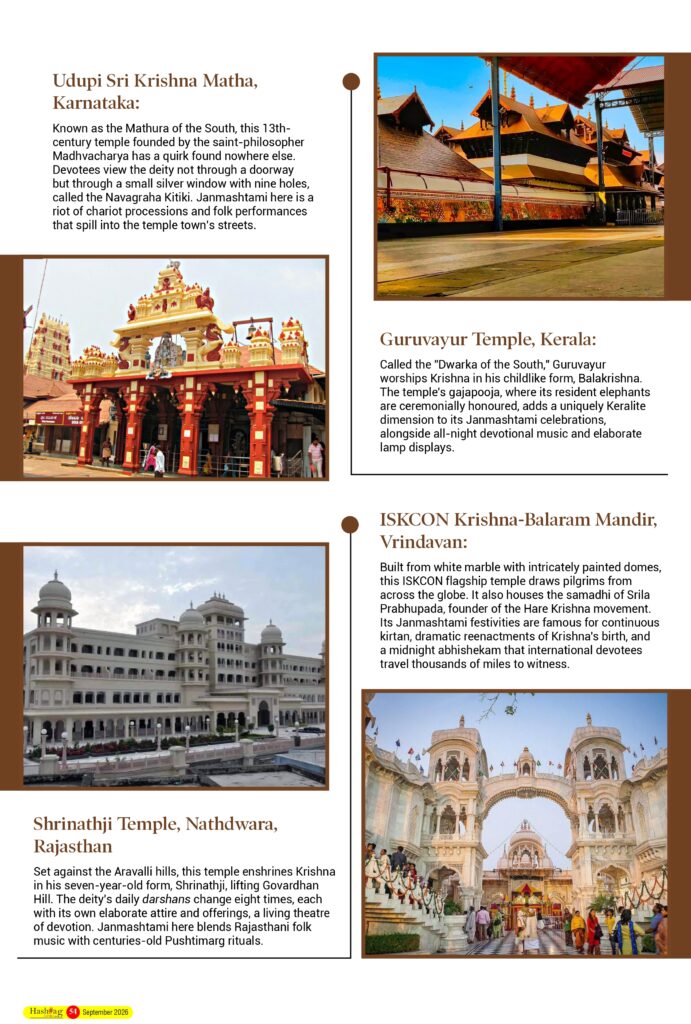
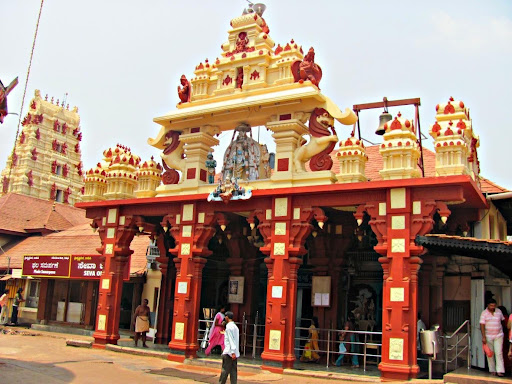
Udupi Sri Krishna Matha, Karnataka: Known as the Mathura of the South, this 13th-century temple founded by the saint-philosopher Madhvacharya has a quirk found nowhere else. Devotees view the deity not through a doorway but through a small silver window with nine holes, called the Navagraha Kitiki. Janmashtami here is a riot of chariot processions and folk performances that spill into the temple town’s streets.
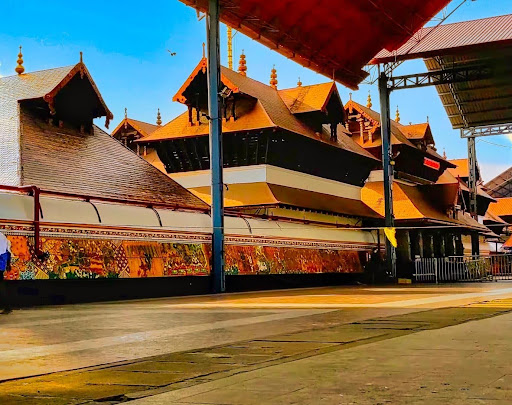
Guruvayur Temple, Kerala: Called the “Dwarka of the South,” Guruvayur worships Krishna in his childlike form, Balakrishna. The temple’s gajapooja, where its resident elephants are ceremonially honoured, adds a uniquely Keralite dimension to its Janmashtami celebrations, alongside all-night devotional music and elaborate lamp displays.
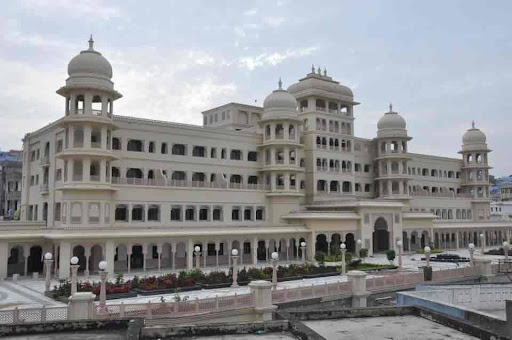
Shrinathji Temple, Nathdwara, Rajasthan- Set against the Aravalli hills, this temple enshrines Krishna in his seven-year-old form, Shrinathji, lifting Govardhan Hill. The deity’s daily darshans change eight times, each with its own elaborate attire and offerings, a living theatre of devotion. Janmashtami here blends Rajasthani folk music with centuries-old Pushtimarg rituals.
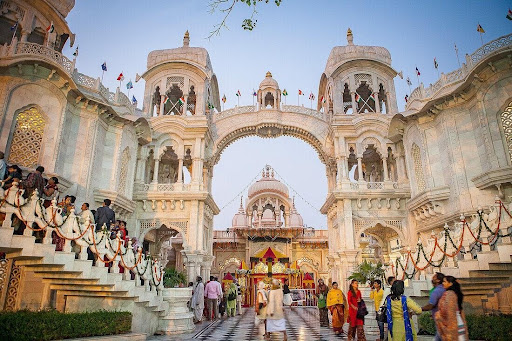
ISKCON Krishna-Balaram Mandir, Vrindavan: Built from white marble with intricately painted domes, this ISKCON flagship temple draws pilgrims from across the globe. It also houses the samadhi of Srila Prabhupada, founder of the Hare Krishna movement. Its Janmashtami festivities are famous for continuous kirtan, dramatic reenactments of Krishna’s birth, and a midnight abhishekam that international devotees travel thousands of miles to witness.
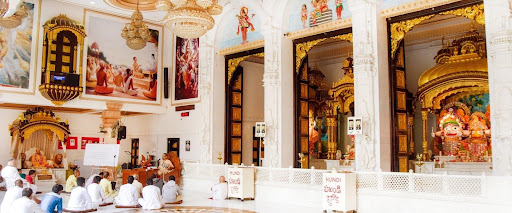
ISKCON Sri Sri Radha Madhamohan Mandir, Hyderabad: Tucked behind the bustle of Nampally Station Road and right opposite the iconic G.Pulla Reddy sweets, stands one of South India’s earliest ISKCON centres, established in the late 1970s. Its architecture blends a lotus-inspired modern design with traditional South Indian temple elements. The temple’s daily aartis and soulful kirtans have made it a spiritual anchor for the city, and Janmashtami transforms its courtyards into a glowing hub of devotional music, decorated swings for the infant Krishna, and long queues for prasadam that stretch late into the night.
From the marble grandeur of Vrindavan to the silver-windowed sanctity of Udupi, and from the sea-facing spires of Dwarka to the quiet lotus-shaped courtyard in Hyderabad’s Abids, Krishna’s temples across India tell the same story in wonderfully different architectural languages. Each is a reminder that devotion, at its most beautiful, is never just heard or felt; it is also seen. This Janmashtami, whether you make the pilgrimage to Mathura or simply walk into your neighbourhood ISKCON temple, you’re stepping into a tradition of beauty and belief that has drawn devotees for centuries,  and will likely draw many more for centuries to come.
 

Leave a comment

Your email address will not be published. Required fields are marked *

Top 10 Destination Wedding Locations for 2026

Explore the top wedding destinations in India and abroad, from the royal palaces of Udaipur and Jaipur to the beaches of Goa and the serene backwaters of Kerala. International favourites including Thailand, Bali, Dubai, Turkey and Sri Lanka offer spectacular settings for multi-day celebrations, luxury experiences and memorable ceremonies. This guide highlights the unique vibe, appeal and estimated budget ranges for each destination, helping couples and families compare options based on style, guest experience and overall wedding vision. Top Indian Destinations – Box Destination Vibe & Appeal Estimated Budget Range Udaipur Palaces, lakes, and royal heritage; Wedding Capital of India ₹50 lakh to ₹70 lakh (palace venues range from ₹70 lakh to ₹2.5 crore) Goa Beachfront luxury, sunset backdrops, and coastal resorts ₹40 lakh to ₹1 crore Jaipur Pink City fortresses, historic courtyards, and grand heritage properties ₹30 lakh to ₹70 lakh Jaisalmer Golden dunes and majestic desert fortress properties like Suryagarh Palace ₹50 lakh to ₹1.2 crore Kerala Peaceful backwater houseboats and palm-fringed lakeside resorts ₹35 lakh to ₹80 lakh Top 5 International Destinations: Destination Vibe & Operational Appeal Estimated Budget Range (100–150 Guests) Thailand (Phuket / Hua Hin) Tropical Beach Luxury: Easiest logistics, massive inventory of seasoned Indian caterers, and a highly optimised system for multi-day South Asian rituals. ₹50 lakh to ₹1.2 crore (Highly flexible packages) Bali, Indonesia (Uluwatu / Nusa Dua) Exotic Clifftops & Jungles: Breathtaking ocean backdrops and Hindu cultural synergy, though specialised Indian buffet menus often require bringing in outside culinary teams. ₹75 lakh to ₹1.8 crore (Luxury resorts command premium rates) Dubai / UAE (Ras Al Khaimah) Glamour & Ultra-Luxury: Unmatched skyline or desert resort backdrops. Phenomenal flight connectivity from all major Indian transit hubs makes guest transit completely seamless. ₹80 lakh to ₹2.5 crore+ (Can scale exponentially for ultra-luxe properties) Turkey (Bodrum

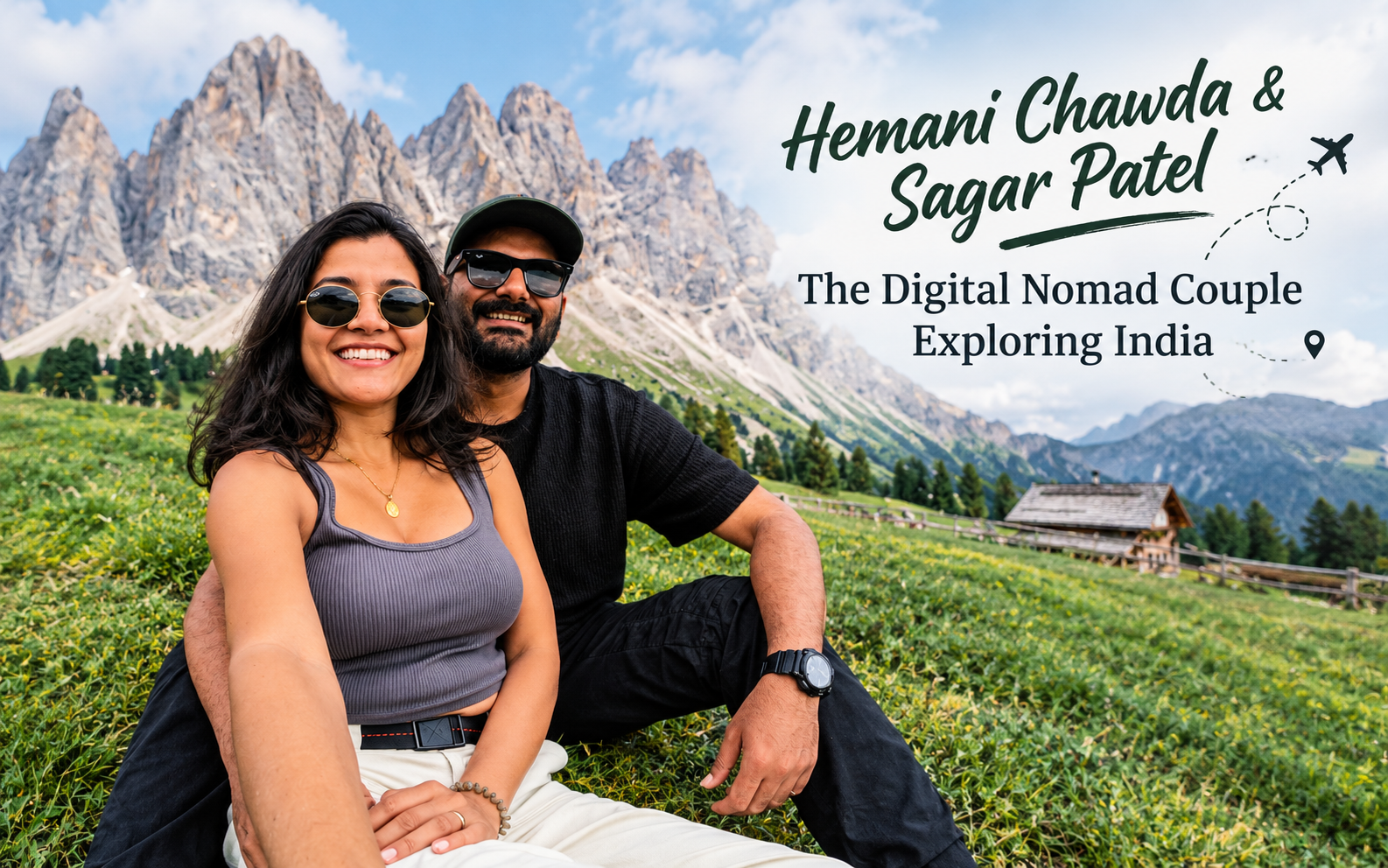
Hemani Chawda and Sagar Patel

Hemani Chawda and Sagar Patel are a travel-content-creator couple and digital nomads who chose a life of exploration over convention. Based between Jhabua, Madhya Pradesh, and Raipur, Chhattisgarh, the duo has built a journey around discovering new places, embracing different cultures, and sharing authentic travel stories. Hemani, a former Radio Jockey, left her career seven years ago to follow her passion for travel and storytelling. Sagar, a post-graduate engineer, later stepped away from the corporate world to join her in creating a life centred around experiences rather than routines. Through their content, they go beyond showcasing destinations to capture the emotions, challenges, connections, and everyday moments that shape life on the road. From ancient traditions to untouched landscapes, here are three countries that have left the deepest impression on their journey. 1. Japan — Where Tradition Meets Tomorrow “Japan holds a special place in our hearts for its incredible balance of ancient traditions, modern innovation, and breathtaking landscapes.” From the peaceful streets of Kyoto and its centuries-old temples to the vibrant energy of Tokyo, every experience feels like discovering a new story. What we love most about Japan is the way it preserves its cultural roots while embracing the future. Whether it is experiencing a quiet tea ceremony, exploring traditional neighbourhoods, or discovering local cuisine, Japan constantly inspires us with its attention to detail, warm hospitality, and endless storytelling possibilities. 2. Philippines — A Tropical Paradise Filled With Human Connections “The Philippines is a destination that feels magical at every turn, with turquoise waters, stunning islands, and some of the warmest people we have met during our travels.” From swimming alongside marine life and exploring hidden lagoons to discovering local communities and untouched beaches, the country offers the perfect blend of adventure and relaxation Beyond its natural beauty, what makes

Mehzabin Shaikh (Maahie) | Mumbai

Meet Maahie, a Mumbai-based travel content creator who transformed her passion for storytelling into a full-time career. After stepping away from engineering to follow her creative calling, she has spent the last 3.5 years building a journey around travel, exploration, and meaningful connections. For Maahie, travel goes beyond popular destinations; it is about discovering lesser-known places, meeting people, understanding their lifestyles, and experiencing cultures through local food, conversations, and everyday moments. Supported by her best friend and travel partner Rahul Yadav, Maahie continues to create stories that inspire people to step beyond their comfort zones and discover that every journey has a story worth sharing. 1. Bhadarwah, Jammu — A Hidden Paradise Beyond the Usual Kashmir Trail “When people think of snowfall and breathtaking Himalayan landscapes, Kashmir is often the first destination that comes to mind. But for me, Bhadarwah in Jammu is one of the most beautiful places I have ever experienced.” What makes Bhadarwah special is its untouched beauty. The snow-covered landscapes feel peaceful, personal, and far away from the crowds and commercialisation of popular hill stations. However, the real magic of Bhadarwah lies in its people. During my first visit, we stayed at a small homestay run by a family of three a husband, wife, and their young daughter. We instantly connected, and by the end of the trip, saying goodbye felt impossible. Over time, they became more than hosts; they became family. Today, visiting Bhadarwah has become an annual ritual. It is a place that reminds me that travel is not just about destinations; it is about the people and relationships you discover along the way. 2. Thailand — The Journey That Introduced Me to Freedom “Thailand will always hold a special place in my heart because it gave me a feeling I had never experienced

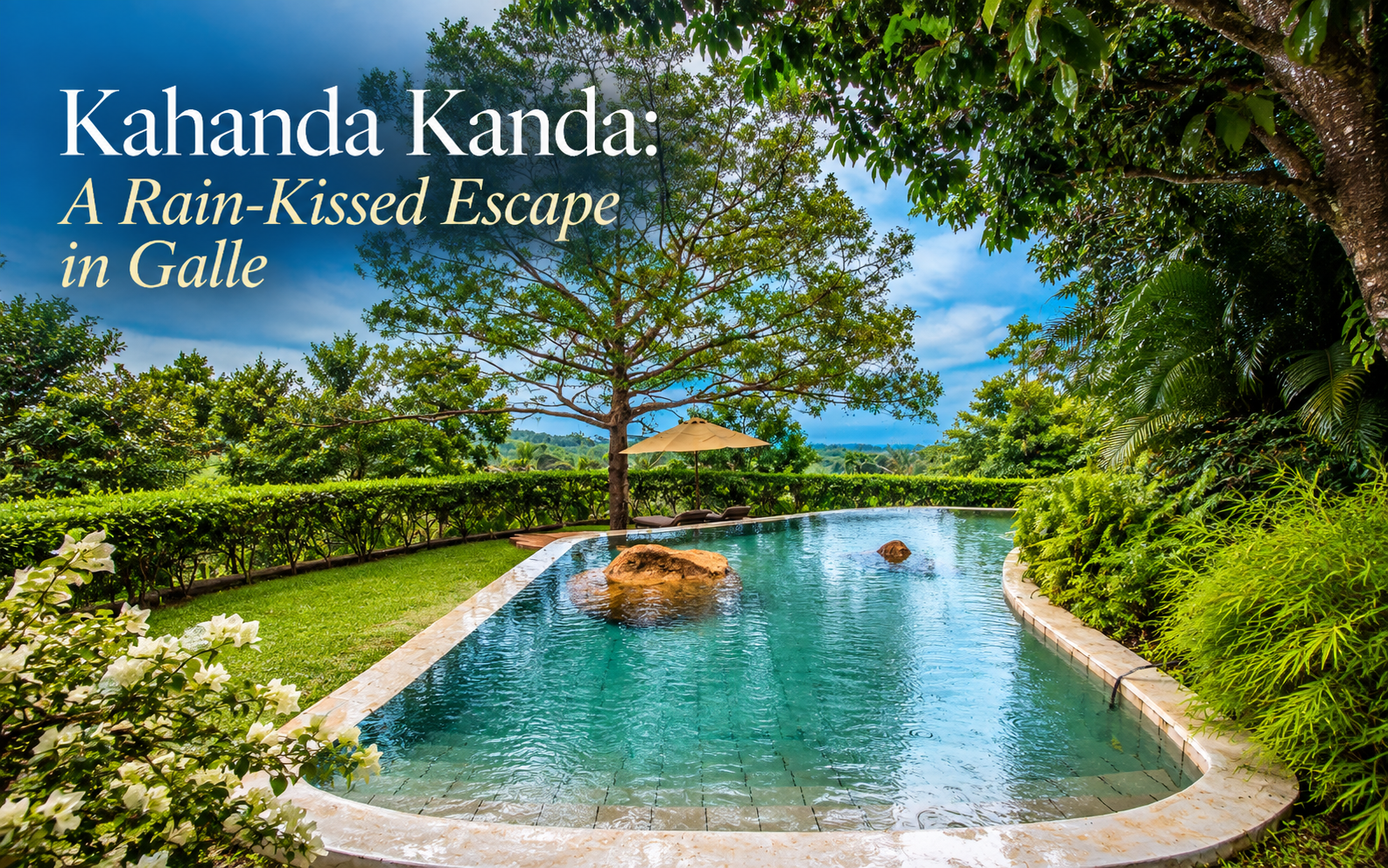
Kahanda Kanda: A Rain-Kissed Escape in Galle

Rain, mist and 17 villas that don’t look alike. Kahanda Kanda is a hidden gem above Koggala Lake in Galle, Sri Lanka. Spread across 14 acres of tea-fringed grounds, this intimate retreat is built around one simple idea: slowing down. Sinduri Vuppala spends a few unhurried days at the estate, discovering its distinctive design, fascinating history and the quiet luxury of doing very little. There’s a particular kind of luxury that has nothing to do with thread counts or infinity pools, and everything to do with being left alone in the best possible way. That’s the feeling that defines a stay at Kahanda Kanda, a boutique estate tucked into the hills above Koggala Lake in Galle, Sri Lanka. The journey there is part of the story. After a stint in the busier coastal town of Bentota, the drive inland feels like a decompression, roads turning greener and quieter, the pace of the island slowing with every mile. By the time the gates swing open onto a sweep of tea bushes, garlands, and a welcome glass of estate-grown lemongrass cordial, you’ve already left the “resort” mindset behind. We arrived off-season and were the only guests on the property. There’s something disorienting about having a place this beautiful entirely to yourself, mist over the tea plantation, no queue for breakfast, just birdsong somewhere in the canopy. When the rain came, it didn’t spoil anything; it turned the estate into something softer and more private. The Villas Kahanda Kanda comprises 17 stand-alone villas, and the property’s defining trick is that none of them looks alike. Rather than the interchangeable rooms you’d find at a larger resort, each villa here has its own layout, its own mix of antiques, and its own mood, a blend of European and Asian pieces alongside contemporary art, none

You May Also Like

Connect with us