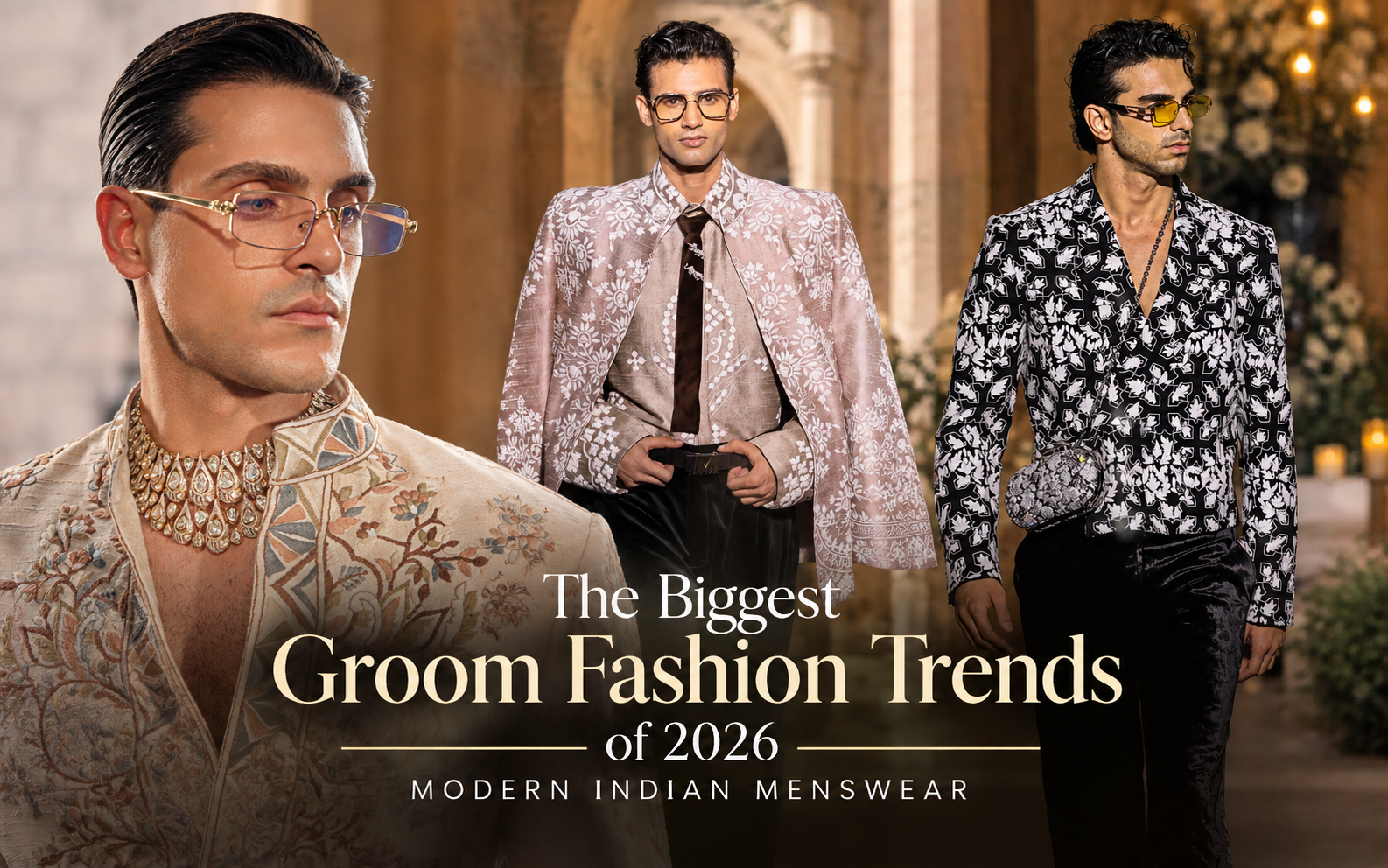
The Biggest Groom Fashion Trends of 2026: Modern Indian Menswear

The Biggest Groom Fashion Trends of 2026: Modern Indian Menswear

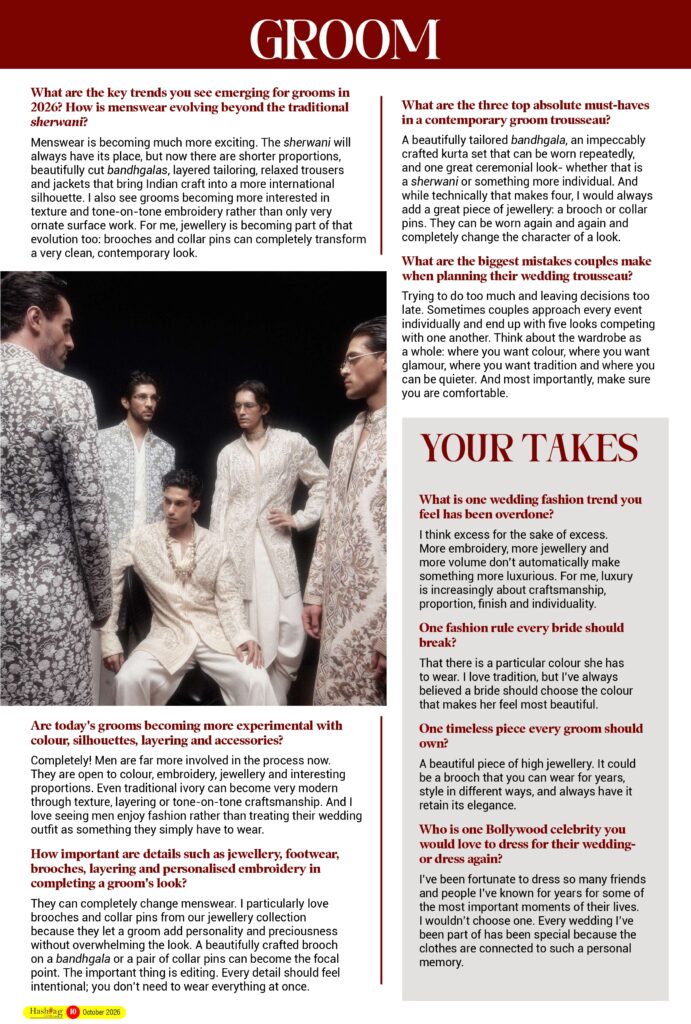
What are the key trends you see emerging for grooms in 2026? How is menswear evolving beyond the traditional sherwani?

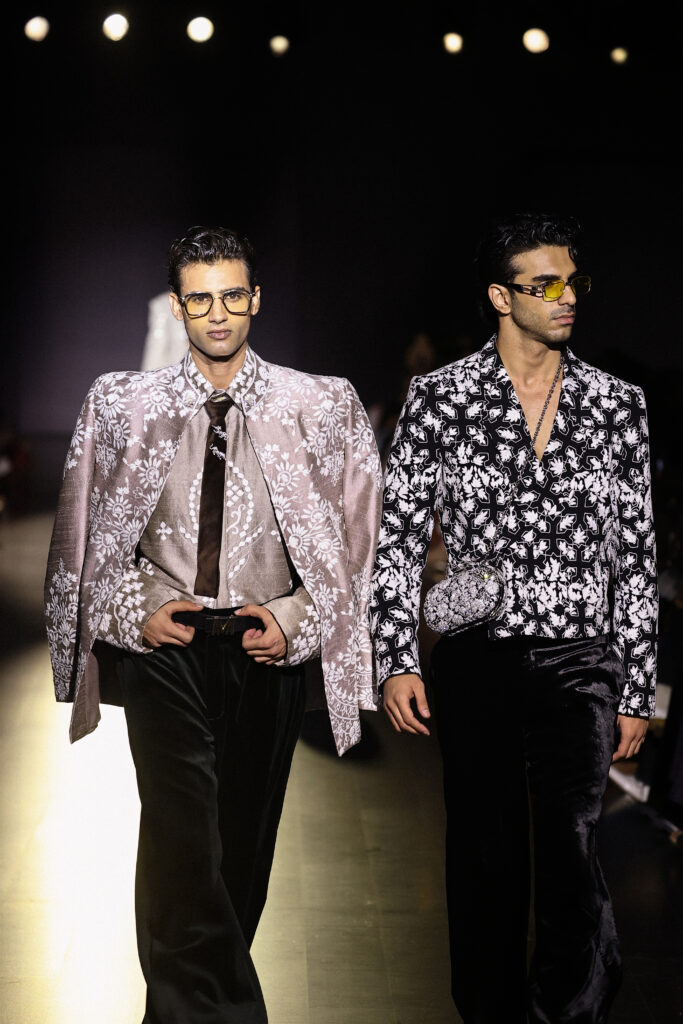
Menswear is becoming much more exciting. The sherwani will always have its place, but now there are shorter proportions, beautifully cut bandhgalas, layered tailoring, relaxed trousers and jackets that bring Indian craft into a more international silhouette. I also see grooms becoming more interested in texture and tone-on-tone embroidery rather than only very ornate surface work. For me, jewellery is becoming part of that evolution too: brooches and collar pins can completely transform a very clean, contemporary look.

Are today’s grooms becoming more experimental with colour, silhouettes, layering and accessories?

Completely! Men are far more involved in the process now. They are open to colour, embroidery, jewellery and interesting proportions. Even traditional ivory can become very modern through texture, layering or tone-on-tone craftsmanship. And I love seeing men enjoy fashion rather than treating their wedding outfit as something they simply have to wear.

How important are details such as jewellery, footwear, brooches, layering and personalised embroidery in completing a groom’s look?

They can completely change menswear. I particularly love brooches and collar pins from our jewellery collection because they let a groom add personality and preciousness without overwhelming the look. A beautifully crafted brooch on a bandhgala or a pair of collar pins can become the focal point. The important thing is editing. Every detail should feel intentional; you don’t need to wear everything at once.
What are the three top absolute must-haves in a contemporary groom trousseau?

A beautifully tailored bandhgala, an impeccably crafted kurta set that can be worn repeatedly, and one great ceremonial look- whether that is a sherwani or something more individual. And while technically that makes four, I would always add a great piece of jewellery: a brooch or collar pins. They can be worn again and again and completely change the character of a look.

What are the biggest mistakes couples make when planning their wedding trousseau?

Trying to do too much and leaving decisions too late. Sometimes couples approach every event individually and end up with five looks competing with one another. Think about the wardrobe as a whole: where you want colour, where you want glamour, where you want tradition and where you can be quieter. And most importantly, make sure you are comfortable.

Your Takes

What is one wedding fashion trend you feel has been overdone?

I think excess for the sake of excess. More embroidery, more jewellery and more volume don’t automatically make something more luxurious. For me, luxury is increasingly about craftsmanship, proportion, finish and individuality.

One fashion rule every bride should break?

That there is a particular colour she has to wear. I love tradition, but I’ve always believed a bride should choose the colour that makes her feel most beautiful.

One timeless piece every groom should own?

A beautiful piece of high jewellery. It could be a brooch that you can wear for years, style in different ways, and always have it retain its elegance.

Who is one Bollywood celebrity you would love to dress for their wedding- or dress again?

I’ve been fortunate to dress so many friends and people I’ve known for years for some of the most important moments of their lives. I wouldn’t choose one. Every wedding I’ve been part of has been special because the clothes are connected to such a personal memory.

If you could change one thing about the Indian fashion industry today, what would it be?

I would like to see Indian craftsmanship valued even more globally for what it truly is: luxury at the highest level. Our Paris Haute Couture Week debut reinforced that belief for me. We have extraordinary techniques and generations of knowledge in this country, but what excites me is not only preserving them- it is experimenting with them and taking them somewhere new. 
Leave a comment

Your email address will not be published. Required fields are marked *

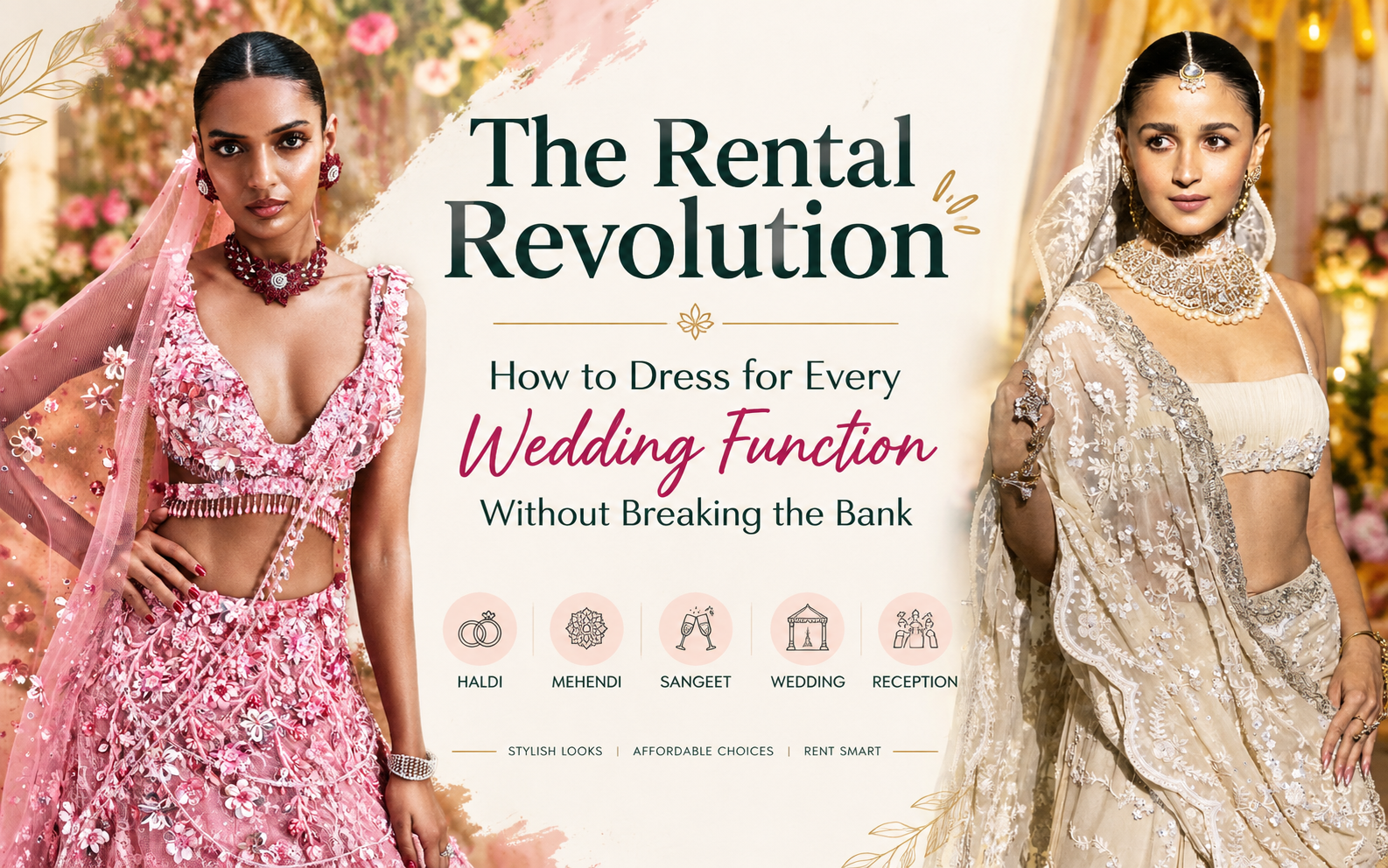
The Rental Revolution: How to Dress for Every Wedding Function Without Breaking the Bank

Buying a bridal lehenga or a groom’s sherwani for a single-day wear can burn a serious hole in your wedding budget, but it doesn’t have to. From bridal couture to groom’s sherwanis and guest outfits, renting wedding wear is fast becoming a smart, sustainable way to look your best without the steep price tag. Stage 3One of the most well-known names in the rental space, Stage 3 deals specifically in high-fashion, designer-label outfits. If you’ve had your eye on a Sabyasachi bridal lehenga or a Varun Bahl sherwani but can’t justify the purchase price, this is where you’d find it: a way to wear real designer couture for a fraction of the retail cost, without it sitting in a cupboard afterwards. Rent It BaeBeyond ethnic wear, Rent It Bae also stocks Western outfits and wedding accessories, so it works well if you’re dressing for a cocktail party or reception gown as much as a traditional ceremony. Grooms can rent sherwanis and tuxedos, and the brand runs a subscription-style ordering model with delivery across a wide network of cities. Rent An AttireWith physical stores in Pune, Delhi and Dehradun, this one stands out for its menswear depth: sherwanis, bandhgalas, tuxedos and other groom essentials sit alongside a full bridal and bridesmaid line. It also carries designer names like Sabyasachi, Amit Aggarwal, Dolly J, Pallod, Kalki and Kora, and extends rentals to groomsmen blazers and pre-wedding shoot outfits. Style on Rent (Pune)Based in Shivajinagar, this store keeps a large in-house inventory of over 500 outfits, spanning premium bridal lehengas, designer sherwanis, gowns and general ethnic wear. It’s a solid pick if you want to try on options in person rather than order sight unseen, and it caters to both brides and grooms under one roof. Jain Collections (Mumbai)Located in Borivali, this showroom

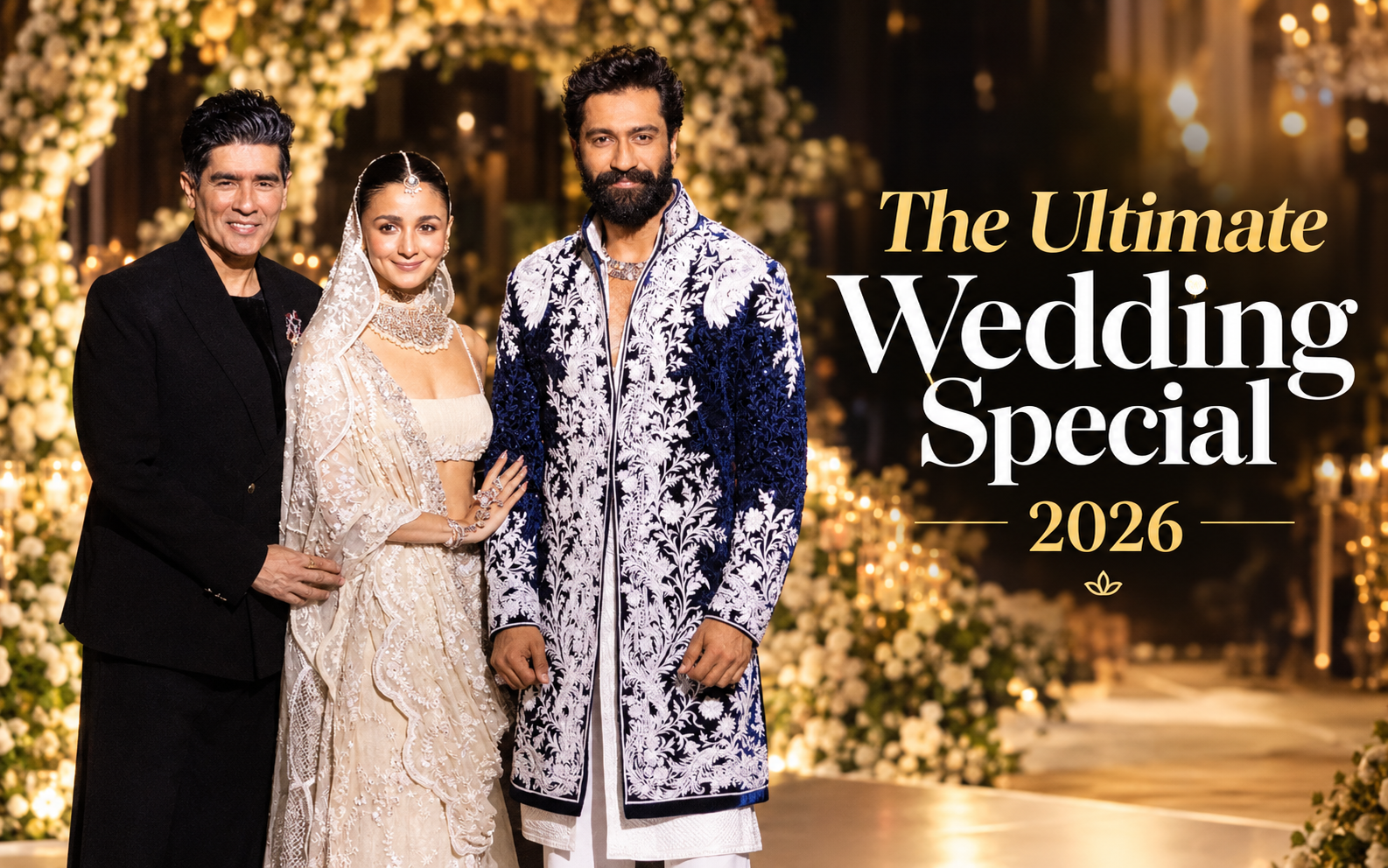
The Ultimate Wedding Special 2026

From bridal fashion to photography, décor to the trends defining 2026, this special edition is your complete guide to planning a wedding that’s uniquely yours. Weddings today are no longer just a ceremony; they’re a story told across months of planning, a hundred little decisions, and moments meant to be remembered forever. In this special edition, we bring you everything you need to plan a celebration that’s uniquely yours, from the latest bridal and groom fashion trends shaping 2026, to the photographers capturing love in ways that go beyond the traditional frame, to décor, venues, beauty, and the details that make a wedding unforgettable. Whether you’re the one walking down the aisle or helping someone else plan theirs, consider this your one-stop guide to getting it all right. Bridal Fashion As Indian wedding fashion moves towards a more individual, contemporary expression, Manish Malhotra sees 2026 as a moment to embrace tradition without being bound by it. From reimagined drapes and evolving bridal silhouettes to more experimental menswear and jewellery, the designer shares his vision for a wedding wardrobe that feels personal, considered and distinctly modern. 1.Wedding fashion is constantly evolving. What do you think will define the Indian wedding aesthetic in 2026? I think 2026 is about individuality rather than one defining bridal look. Brides and grooms are much more confident about mixing tradition with their own sense of style. You’ll see beautiful Indian craft interpreted through cleaner silhouettes, interesting drapes, lighter constructions and very considered styling. There is still glamour, but it feels more personal and effortless. For me, that is where Indian wedding fashion is going: rooted in who we are, but completely of today. 2.You have continually reinvented the language of Indian occasion wear. What inspires you to keep pushing the boundaries? I’ve always enjoyed pushing myself

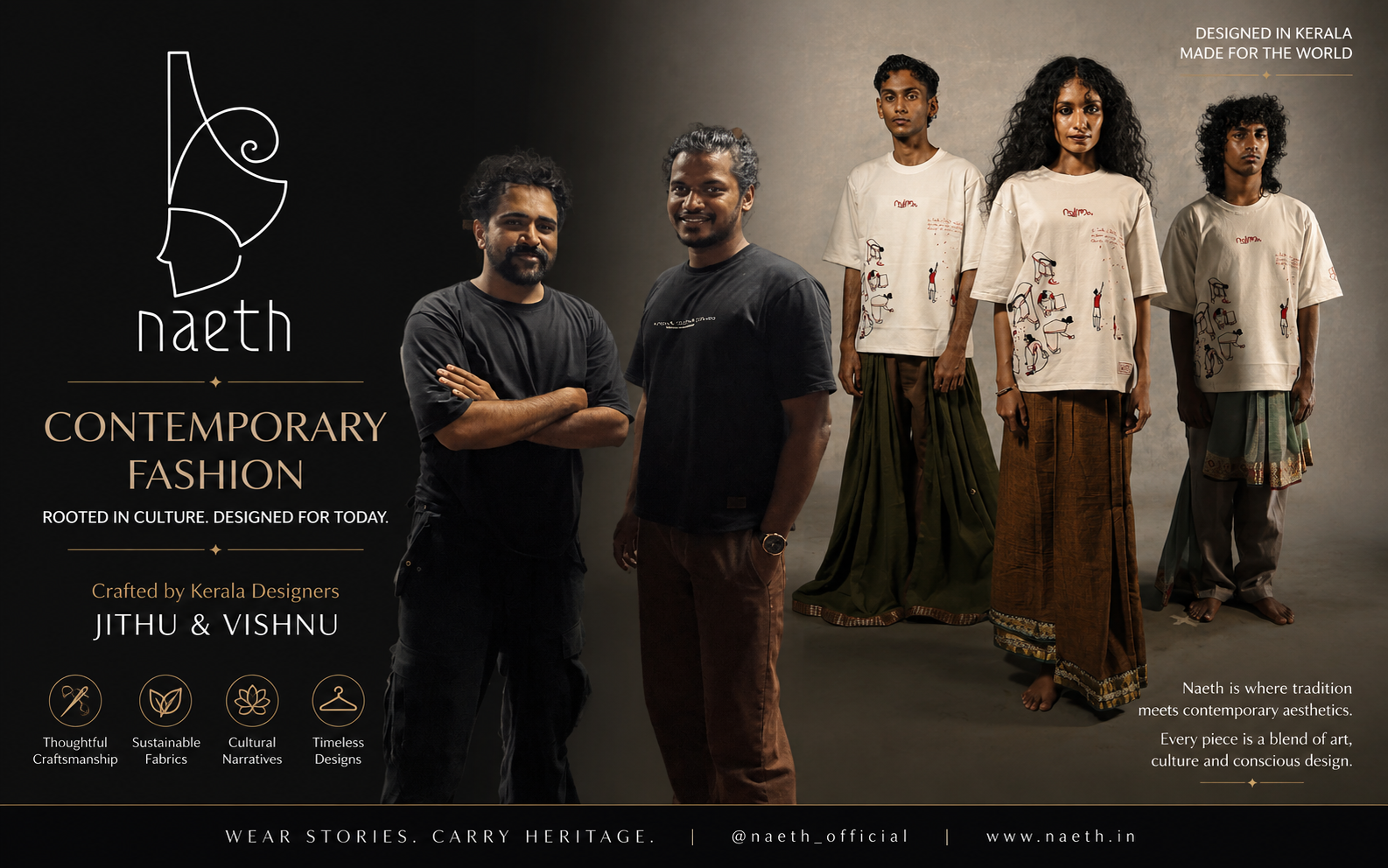
Naeth: Contemporary Fashion by Kerala Designers Jithu & Vishnu

Founded by mechanical engineering graduates and classmates Jithu Gopakumar and Vishnu Girija Gopal, Naeth is a contemporary fashion label from Kerala that bridges heritage with modern design. Inspired by the state’s rich textile traditions, the duo transforms handloom into contemporary silhouettes through innovative fabrics, technical textiles, and thoughtful craftsmanship. Their vision is simple yet powerful: to make India’s weaving traditions relevant for today’s generation while preserving the stories behind every thread. 1.Tell us about your brand and how it is helping preserve and promote India’s rich handloom heritage. At Naeth, we reinterpret traditional handloom through contemporary fashion. Our collections transform heritage textiles into modern, wearable silhouettes that appeal to younger audiences while preserving the craftsmanship, stories, and cultural significance woven into every fabric. 2.Which weaving traditions or artisan communities do you work with? We work closely with the weavers of Balaramapuram, Kerala, a community renowned for its centuries-old weaving tradition. Their handcrafted sarees and mundus are celebrated for their precision, purity, and exceptional craftsmanship, making every textile a reflection of Kerala’s rich cultural legacy. 3.How does your brand support sustainability and responsible craftsmanship? Sustainability is central to our design philosophy. We upcycle traditional handloom textiles into contemporary garments, reducing waste while extending the life of these fabrics. Alongside direct collaborations with artisans and limited-batch production, we also experiment with eco-conscious materials such as bamboo fibres and recycled PET fabrics. 4.What is the biggest challenge facing India’s handloom sector today? One of the biggest challenges is changing the perception that handloom belongs only to traditional wear. We believe handloom deserves a place in contemporary fashion. At the same time, we’re working towards creating greater value for artisan communities by reducing dependence on intermediaries and promoting fair recognition for their craftsmanship. 5.What does National Handloom Day mean to Naeth? For us, National

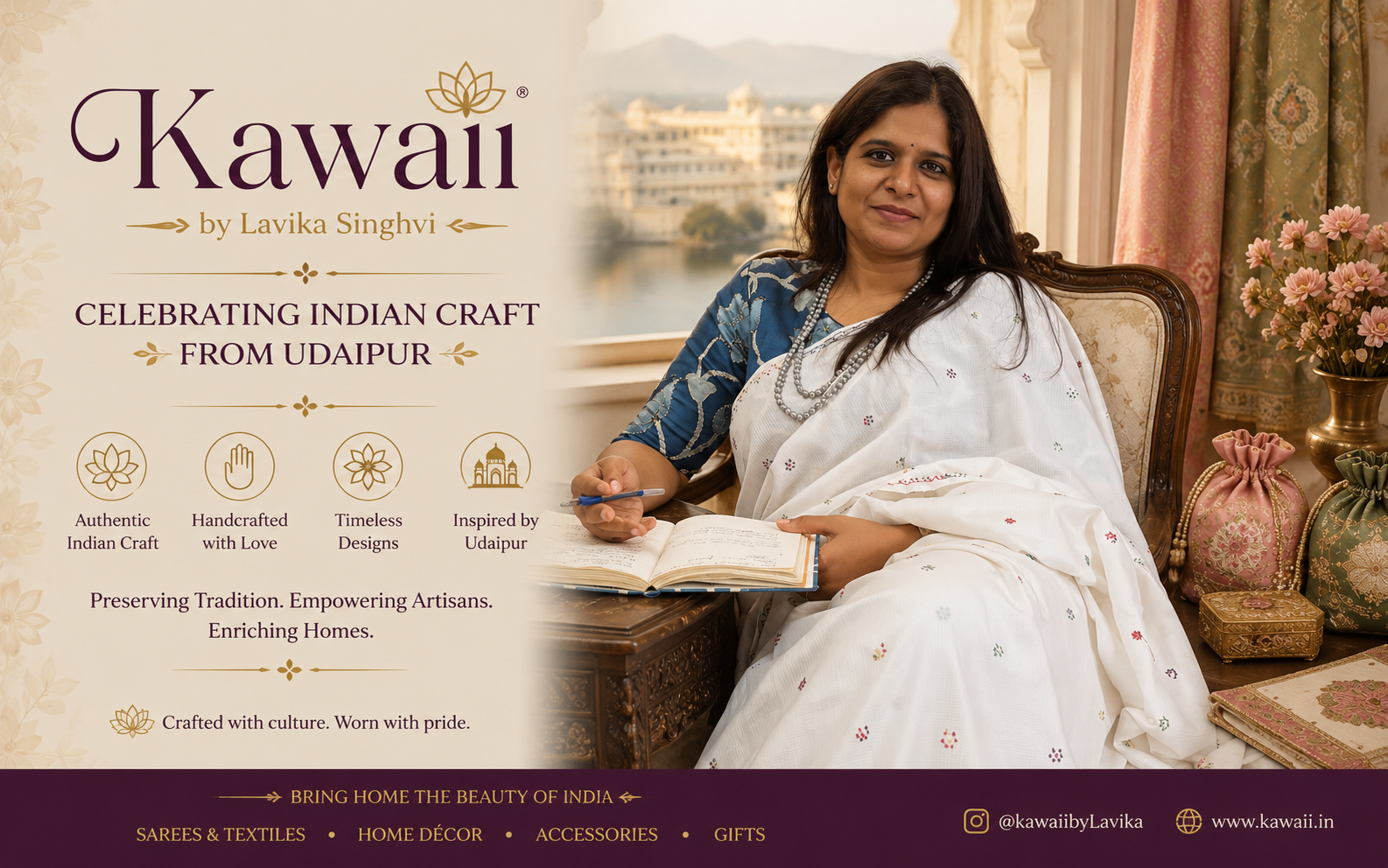
Kawaii by Lavika Singhvi | Udaipur

Founded by Lavika Singhvi, a Udaipur-born entrepreneur with a deep connection to India’s artistic heritage, Kawaii is redefining luxury sarees through the lens of wearable art. Inspired by Rajasthan’s rich cultural legacy, Lavika brings together rare handcrafted traditions from across India, including Pichwai, Ajrakh, Madhubani, Batik, and Bandhani. As a Pichwai Certified and ODOP Verified brand, Kawaii works directly with master artisans to preserve authenticity and support traditional craftsmanship. Each saree is envisioned as a timeless heirloom, celebrating heritage, artistry, and the stories woven into every creation. 1.Tell us about your brand and how it is helping preserve and promote India’s rich handloom heritage. Kawaii was born from my desire to transform India’s rich artistic heritage into wearable art for the modern woman. Growing up in Udaipur, a city surrounded by art, culture, and royal traditions, I developed a deep appreciation for the craftsmanship and stories behind Indian textiles. Through Kawaii, we bring together diverse Indian art forms such as Pichwai, Madhubani, Batik, Ajrakh, and Bandhani on luxurious handloom fabrics. Our focus is on preserving authenticity while presenting these traditional crafts in a contemporary format. As a Pichwai Certified and ODOP Verified brand, we work closely with original artisans and artists, ensuring their skills are recognised, valued, and carried forward to future generations. 2.Which weaving traditions or artisan communities do you work with, and what makes their craftsmanship unique? We work with artisan communities across India, including Pichwai artists from Udaipur, Madhubani artists from Bihar, Ajrakh craftsmen from Gujarat and Rajasthan, Bandhani artisans, Batik artists, and traditional handloom weavers. Each craft represents generations of knowledge and storytelling. Pichwai is deeply connected to Rajasthan’s cultural and spiritual heritage, with artists creating intricate hand-painted narratives. Madhubani celebrates symbolic storytelling through detailed motifs, while Ajrakh and Batik showcase complex dyeing techniques perfected over

You May Also Like

Connect with us