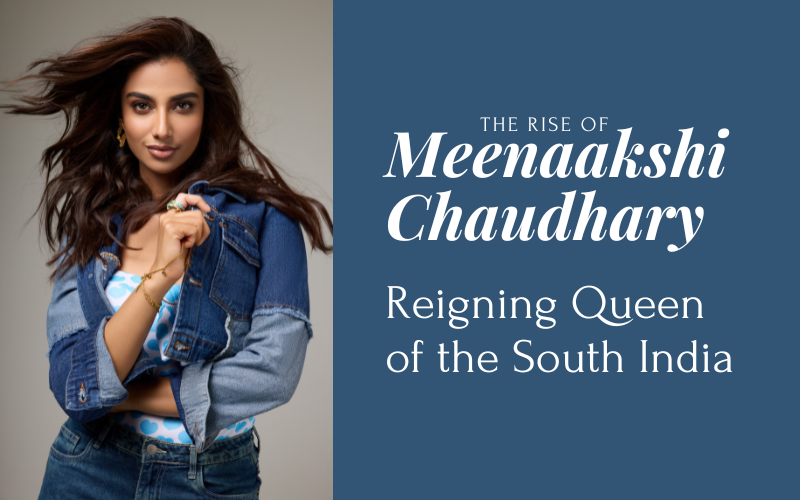
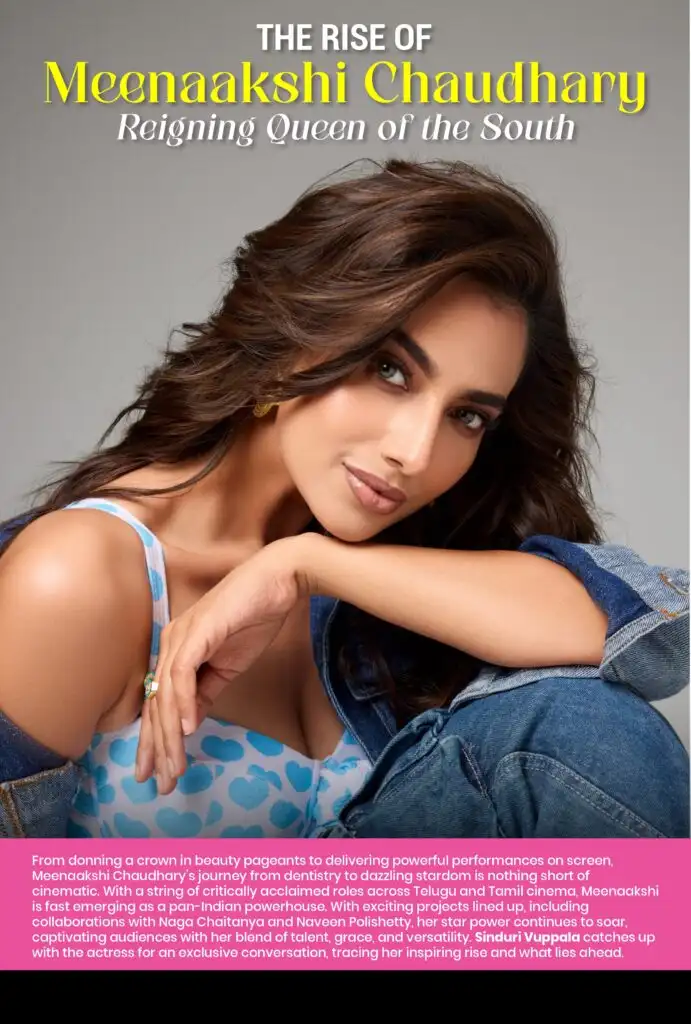
From donning a crown in beauty pageants to delivering powerful performances on screen, MEENAAKSHI CHAUDHARY’S journey from dentistry to dazzling stardom is nothing short of cinematic. With a string of critically acclaimed roles across Telugu and Tamil cinema, Meenaakshi is fast emerging as a pan-Indian powerhouse.
With exciting projects lined up, including collaborations with Naga Chaitanya and Naveen Polishetty, her star power continues to soar, captivating audiences with her blend of talent, grace, and versatility. SINDURI VUPPALA catches up with the actress for an exclusive conversation, tracing her inspiring rise and what lies ahead.


Let’s start from the beginning—what drew you to acting, and how did your journey into Telugu cinema begin? Was the transition from pageants and dentistry to movies something you planned, or did it unfold organically?
I believe it was a destiny move for me, because I never thought of becoming an actor. I grew up wanting to be Miss India for sure, a doctor and probably in civil services. After I joined Miss India, I got a lot of other opportunities, which I never thought that I could possibly foray into. So, I gave everything a try because whatever comes my way, I never just let it go, and I thought I might as well try it. If I don’t like it, I can continue doing what I’m doing, and I think that’s how my journey began. The transition from pageantry, modelling, dentistry to getting into acting was truly something that just happened and I think when something’s meant to happen, it just finds its own way and that’s truly what happened in my case as well.
What inspired you to leave your dental career behind and pursue acting? Was there a specific moment that made you feel this is where I belong?
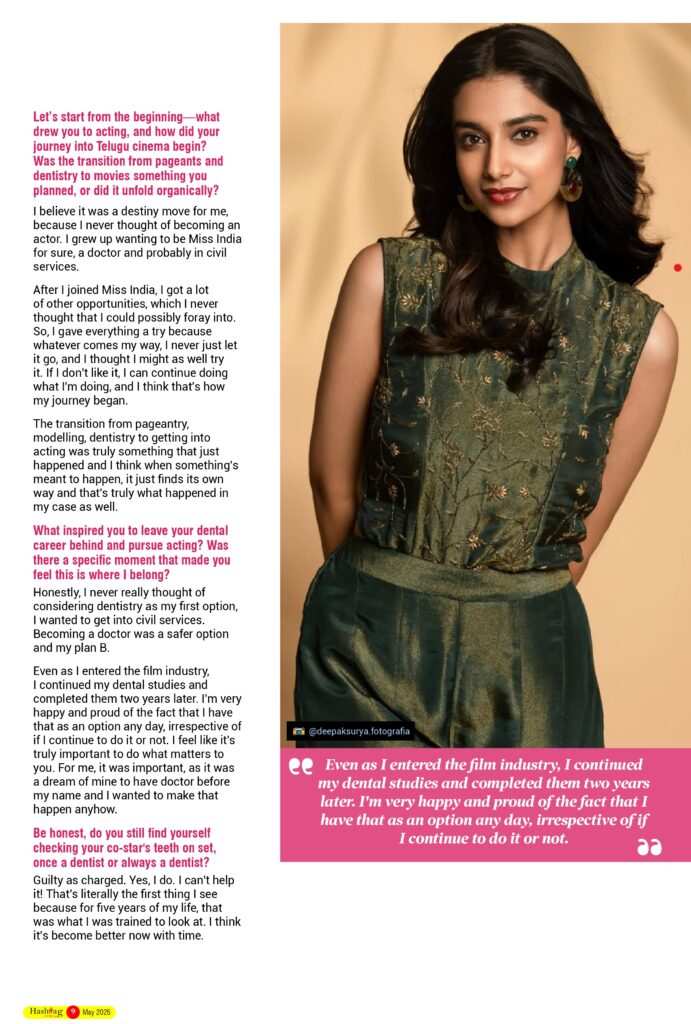
Honestly, I never really thought of considering dentistry as my first option, I wanted to get into civil services. Becoming a doctor was a safer option and my plan B. Even as I entered the film industry, I continued my dental studies and completed them two years later. I’m very happy and proud of the fact that I have that as an option any day, irrespective of if I continue to do it or not. I feel like it’s truly important to do what matters to you. For me, it was important, as it was a dream of mine to have doctor before my name and I wanted to make that happen anyhow.
Be honest, do you still find yourself checking your co-star’s teeth on set, once a dentist or always a dentist?
Guilty as charged. Yes, I do. I can’t help it! That’s literally the first thing I see because for five years of my life, that was what I was trained to look at. I think it’s become better now with time.
You’ve worked in both Tamil and Telugu films. How has the experience differed across these industries, and what’s been the biggest learning curve for you?
I think the only difference between the two industries is the language. Honestly, everything else is just the same, the dedication people have, the passion, is in the industry in terms of cinema, the craft. Everything is the same. And I’m so grateful to be a part of some of the greatest cinematic projects that have come out in the last few years in both the industries. And I hope to work more and more in both Telugu and Tamil.

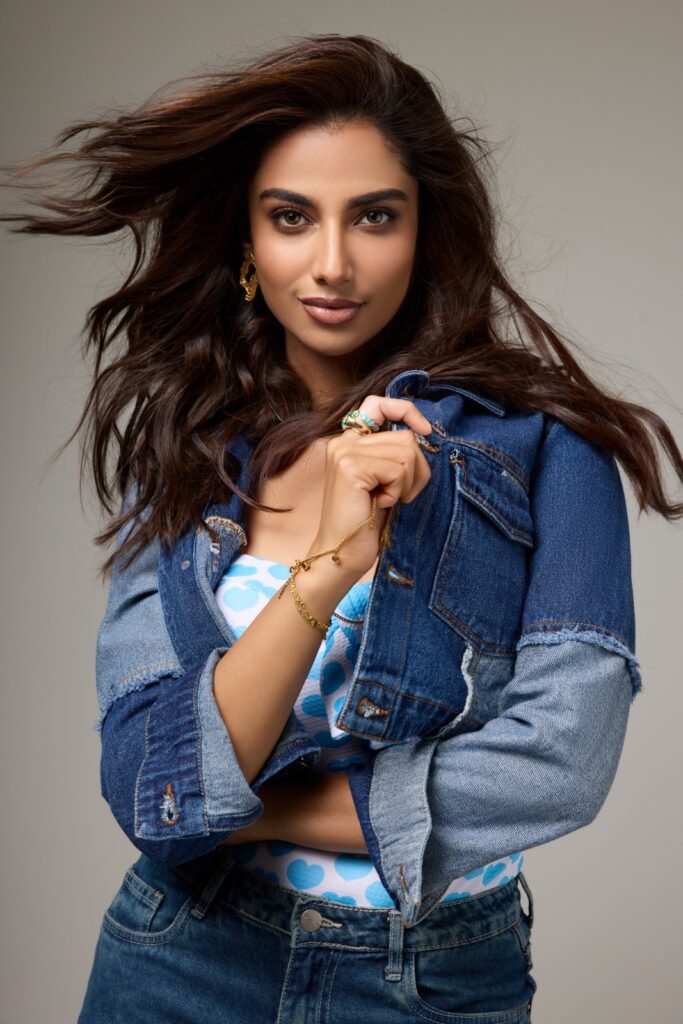
With back-to-back commercial successes and critical acclaim, many are calling you the reigning queen of the South. How do you react to such a title—and does it come with pressure?
I think I’m honestly grateful for all the love and appreciation that has come my way because as an actor and as an individual, that’s literally what I strive to do every day when I go on sets, when I do what I must do. I believe success is earned every day, as no position is ever fixed, and no success is ever going to determine the lifelong title that comes with it. I think you have to be your best, and be at your top form every single day, to perform better. Eventually, it does show in your work, in your personal life, in the balance that you try and maintain.
You worked with some phenomenal co-actors and directors along the way. Are there any on-set memories or turning points that really shaped your growth as an actor?
Oh, I completely honestly feel like I’m one of the blessed ones to be getting the opportunity to work with one of India’s finest actors, so early on in my career. I’ve learned so much from these experiences. All of them are so amazing at what they do, and rightfully so, with the love and appreciation that they have from the audiences. But the one thing that I will say that is common in all of them is the dedication and the persistence that they have. No matter what, they’ll give their 100% towards the work and the film that they are a part of, which I think is same in all the actors that I’ve worked with so far.
Your performances have consistently shown growth. From playing a domestic homemaker in Lucky Bhaskar to your vibrant role in Sankranthiki Vasthunam, you’ve explored a range of characters. How do you prep for a role, and has your approach changed over time?
The best part about being an actor is to experiment as many genres as I can, with as many characters as I can. I do not put myself in one particular box, that this is the one thing that I’m going to stick with. I’ve been very, very lucky to be able to get certain films that help me get that side of my acting and my characters that I get to explore. In terms of prepping, I think it comes with the director’s vision, whatever they have in mind for the character that I’m playing. And I think a major part of it is seeing through their eyes because when they write a character, they build an entire world and an entire person. And I just try and get as close as I can to their imagination of what the character and the personality of that character is going to be like. So, I think more or less it’s just about sitting with the director, doing readings, understanding what they expect from the character, what do they see it like. That’s the process I follow for every role.
Speaking of Sankranthiki Vasthunam, what was it like sharing screen space with Venkatesh garu? Any stories from the set you’d love to share?
He’s one of the best people that I’ve worked with. He is so amazing, cool, and so young at heart. In terms of how active he is on set, I think all of us have so much to learn from him. But I think the best part about having to share the screen space with him was getting to learn so much about spirituality, about personal growth from him, which I got a firsthand experience of by discussing in between shots about what he thinks, what his ideologies are, which were very inspiring and refreshing to look at. And I think that has definitely shaped me into a better human, for sure.
You’ve also worked with Dulquer Salmaan and Mahesh Babu. What was your takeaway from those experiences? Any lessons or impressions that stayed with you?
Absolutely. I think both of them are such amazing actors, such wonderful human beings. They are so inclusive of everybody, of every actor on set, which is so amazing. You don’t feel left out at all at any point. And the best part that I learned from both of them, I think, was the dedication towards the craft that they have, like they’re constantly trying to give inputs in every scene that they do, when they’re performing. And that’s so amazing to see. So, I really got to learn a lot from them on the sets.
You’ve dabbled in action, romance, drama—do you have a favourite genre or character type that you feel especially drawn to? Or does the thrill lie in switching things up?
Oh, I would say bring it all. I love it all. I would love to try and explore everything! There’s nothing as such that I would want to try, but definitely something like a superhero character is very exciting to play because I haven’t had the opportunity to do so, yet. And a lot more of action, a lot more of romance, a lot more of drama, a lot more of thriller, basically a lot more of everything!
Looking Ahead
What’s next for you? Can you share anything about your upcoming projects? Are there new roles, collaborations, or genres you’re especially excited about?
Yes, absolutely! I am currently shooting for two films. Both are completely different from each other. And the characters are so contrastingly different from what I’ve done so far and from each other as well. One is with Naga Chaitanya and the other is with Naveen Polishetty. And they both are amazing scripts, amazing stories. I’m very excited for the audiences to see me in this new avatar in both films. And there are a lot more that are happening this year, which I think you’ll get to know with time.
Bollywood is often seen as the next big step for South actresses. Do you see yourself stepping into Hindi cinema anytime soon, or are you focused on building your legacy in the South for now?
I don’t really see anything as a stepping stone because I feel like every industry is so prestigious in its own way. I don’t really consider that they’re all different in any way. I hold them all in equal regard, to be very honest, because I love the work from all the industries. And as an actor, I feel like I’m very greedy to be a part of as many great stories as I can be. So, if something comes my way in the Hindi space, I’ll be more than happy to do it. However, I am so grateful and happy to be getting the kind of work I’m getting here as an actor, to be able to explore my own ability and to even just be a part of great cinema and storytelling formats. So, for me, it’s nothing like one language holds importance over the other. I’m very happy to do as much as I can in whatever language it may be.
Rapid Fire
A. One movie you watched and wished you had been a part of?
Oh, can’t really decide, there’s so many! Also, I feel like whichever character was played by an actor, has been completely apt. So, I can’t really think of anything!
B. One beauty secret Meenaakshi swears by?
Drink a lot of water and eat good food on time, literally!
C. Last thing you Googled?
Last thing I googled was recent released movies.
D. Your go-to mantra when you want to unwind?
Sleep, maybe go out, play some sport, hang out with friends, or do something different maybe read a good book, or watch a good movie.
Finally, your biggest guilty pleasure.
I love food, and I love to try all types of food. I try and maintain a healthy diet, but, sometimes on my cheat days, I go all out.