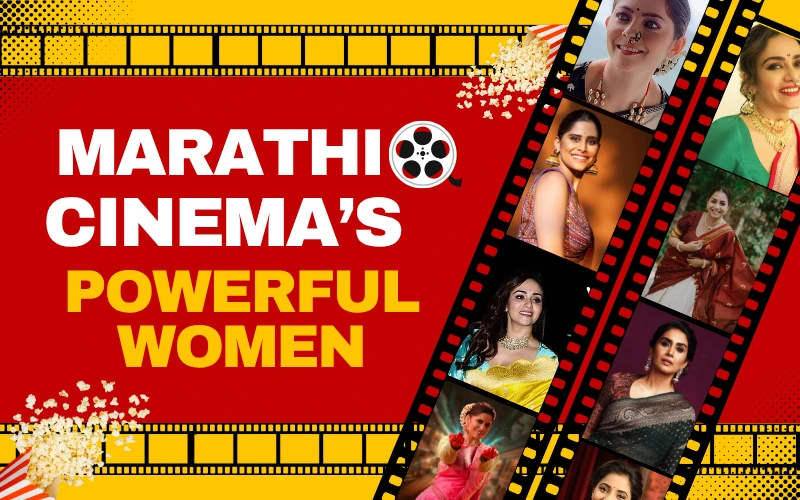
Leading Ladies of Marathi Cinema: Celebrating Top Actresses

Leading Ladies of Marathi Cinema: Celebrating Top Actresses

The Marathi film and television industry has seen a powerful resurgence in recent years, bolstered by a fresh wave of storytelling and a host of talented actresses who have breathed life into complex, memorable characters. These women have not only redefined the portrayal of female roles on screen but have also become cultural icons. Hashtag Magazine highlights five of the most prominent Marathi actresses today and explores their journeys, work, and influence.

1. Sai Tamhankar

Sai Tamhankar is one of the most versatile and commercially successful actresses in Marathi cinema. Hailing from Sangli, she began her career on television before moving into films. Known for her natural screen presence and nuanced performances, Sai has worked across multiple languages, including Marathi, Hindi, and Tamil.

Her breakout roles in films such as DuniyadariHunterrr, and Dhurala showcased her depth as an actress. In addition to mainstream success, she has delivered critically acclaimed performances in independent cinema. Her ability to portray strong, independent women with authenticity has made her a favourite among audiences and directors alike.

Sai is also a popular face in the OTT space, with performances in web series like Samantar 2 and Pet Puraan. Her career reflects a conscious mix of experimental and commercial projects, helping bridge the gap between art and popular cinema.

2. Amruta Khanvilkar

Amruta Khanvilkar embodies glamour, talent, and resilience. She first came into the limelight through a national talent show and quickly established herself as a performer to watch. Her performance in Natarang particularly the dance number “Wajale Ki Bara”  remains iconic in Marathi film history.

Amruta has balanced her career across both Marathi and Hindi industries, with roles in films like Katyar Kaljat GhusaliRaazi, and Malang. A trained dancer, she brings grace and intensity to both dramatic and musical roles.

Apart from acting, Amruta has participated in and hosted multiple reality shows, further increasing her popularity. With a strong social media presence and a sharp sense of fashion, she has also become a style icon for many young fans across Maharashtra.

3. Sonali Kulkarni

Sonali Kulkarni is widely respected for her intelligent and emotive performances. With a career spanning decades, she has worked in Marathi, Hindi, and international films. Her roles are often deeply layered, and she has never shied away from portraying flawed, real women.

Her standout performances include films like DoghiDeoolGulabjaam, and Mukta. In Hindi cinema, she has been seen in acclaimed works such as Mission KashmirSingham, and Dil Chahta Hai. Her classical training in theatre gives her performances a rare depth.

Sonali is not only an actress but also a writer and speaker, known for her articulate views on women’s rights, cinema, and societal change. Her career has been marked by a commitment to quality storytelling and meaningful cinema.

4. Sonalee Kulkarni

Often referred to as the “Apsara of Marathi cinema” due to her iconic performance in Natarang, Sonalee Kulkarni is known for her powerful screen presence and exceptional dancing skills. She began her journey in modelling before transitioning into acting, quickly gaining recognition for her expressive eyes and graceful movements.

Her filmography includes hits like AjinthaClassmatesHirkani, and Poshter Girl. Sonalee has also ventured into Bollywood, appearing in Grand Masti and Singham Returns. She is appreciated for choosing roles that combine commercial appeal with emotional weight.

Sonalee continues to evolve as an actress, choosing projects that challenge her and push her beyond her comfort zone. Her recent roles reflect a maturing screen persona and growing versatility.

5. Sayali Sanjeev

Sayali Sanjeev represents the new generation of Marathi cinema. With her girl-next-door charm and grounded performances, she has quickly become a beloved figure on screen. Her television debut in Kahe Diya Pardes made her a household name, and she transitioned smoothly into films.

Her work in JhimmaGoshta Eka Paithanichi, and Har Har Mahadev has been praised for its sincerity and emotional depth. Sayali’s strength lies in her ability to connect with the audience, often portraying characters that are rooted in the everyday lives of Marathi women.

Apart from acting, Sayali is actively involved in social and political causes, reflecting a keen awareness of the world beyond cinema. Her growing popularity signals a bright future in both the artistic and public spheres.

The Broader Picture

These five actresses each bring something unique to Marathi cinema. Sai’s risk-taking, Amruta’s charisma, Sonali Kulkarni’s intelligence, Sonalee’s elegance, and Sayali’s relatability have together contributed to a renaissance in regional filmmaking.

What sets them apart is not just talent, but the courage to experiment and evolve. Whether through path-breaking roles, powerful performances, or their work outside the screen  including activism, hosting, and writing  these women are shaping the narrative of modern Marathi cinema.

As the industry continues to grow in scale and ambition, actresses like these are not just participants but leaders. They inspire a new generation of artists and audiences, redefining what it means to be a female star in Indian cinema.

Leave a comment

Your email address will not be published. Required fields are marked *

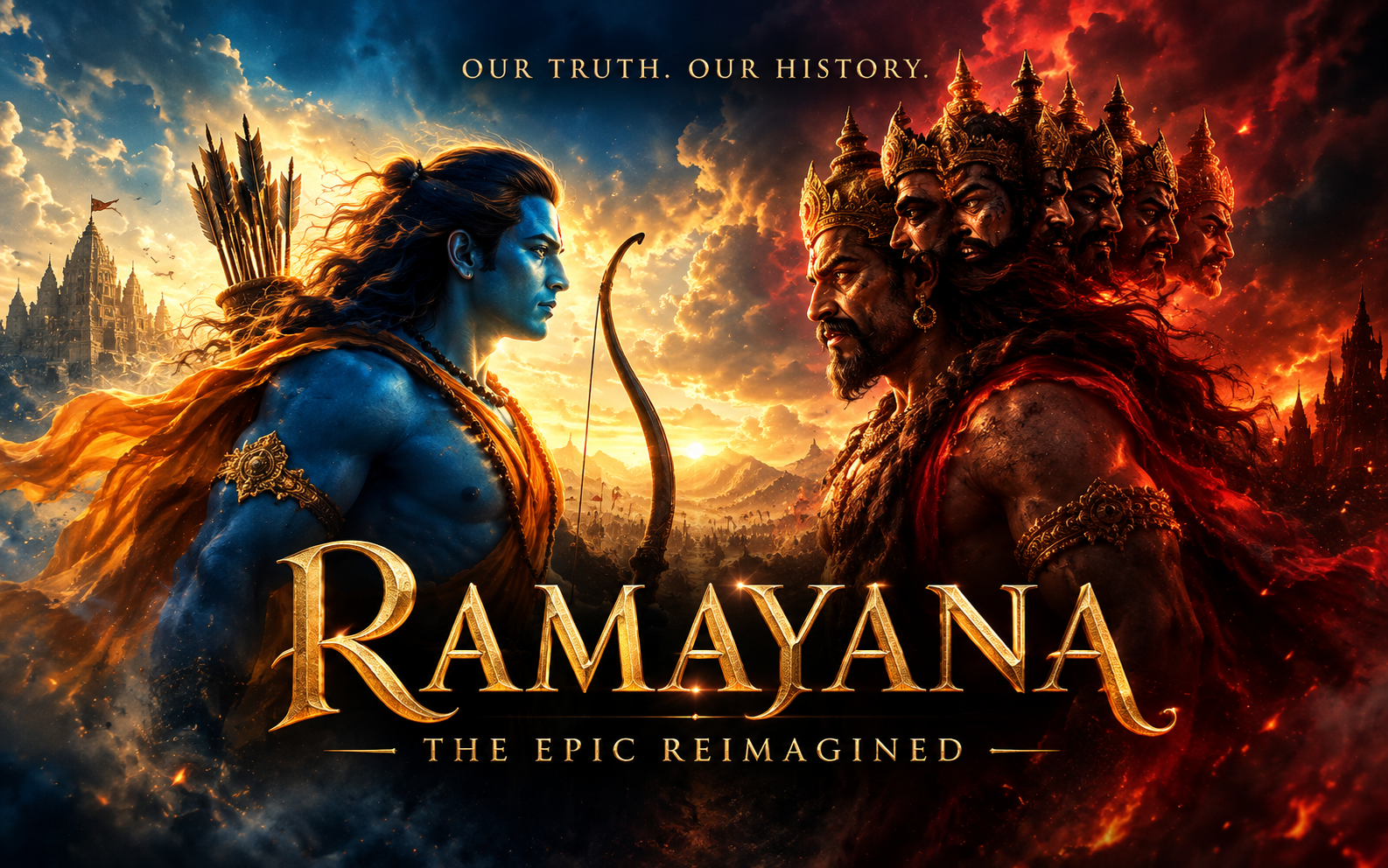
RAMAYANA: THE EPIC REIMAGINED

Ramayana: The Epic Reimagined is shaping up to be one of Indian cinema’s most ambitious productions, bringing together a star-studded cast and an international creative team. From its two-part format and reported ₹4,000-crore budget to its cutting-edge visual effects and global release plans, here are 10 things to know about the epic cinematic spectacle. 1.Two films, one epic Ramayana is planned as a two-part cinematic project. The first instalment is scheduled for release during Diwali 2026, with the second chapter planned for Diwali 2027. The films are directed by Nitesh Tiwari and produced by Namit Malhotra. Ranbir Kapoor has revealed that the team shot around six hours of footage for the first film before editing it down. A Chinese listing reportedly indicates a runtime of about 166 minutes for Part One. 2.Ranbir Kapoor as Rama: The first choice Ranbir Kapoor plays Lord Rama, amid years of speculation over other names. Mahesh Babu, Hrithik Roshan and Ram Charan were among the actors linked to various versions of the project. However, director Nitesh Tiwari and producer Namit Malhotra have clarified that Ranbir was always their first choice for their current Ramayana. Tiwari cited his physicality, screen presence and ability to convey emotion through his expressions. Interestingly, Yash, who plays Ravana, was also reportedly considered for Rama before taking on the antagonist. 3.Sai Pallavi is Sita Sai Pallavi plays Sita opposite Ranbir Kapoor’s Rama. The role marks a major Hindi-film project for the acclaimed South Indian actor and adds another prominent South Indian star to the cast alongside Yash. 4.A large ensemble cast An extensive ensemble supports the three leads. Sunny Deol plays Hanuman, Ravi Dubey plays Lakshman, Arun Govil plays Dasharath, Lara Dutta plays Kaikeyi, Indira Krishnan plays Kausalya, Kajal Aggarwal plays Mandodari, Rakul Preet Singh plays Shurpanakha, Kunal Kapoor plays Indra

Exclusive Interview: Nikhil Siddhartha on Swayambhu, Family and Politics

After the pan-India success of Karthikeya 2, Nikhil Siddhartha finds himself at a pivotal phase in his career. The actor is currently gearing up for the release of Swayambhu, one of the most ambitious projects he has undertaken to date, a historical action drama that demanded nearly two-and-a-half years of dedication, extensive physical transformation, and months of post-production work. In a candid conversation with Priyanka Goud, Nikhil opens up about the challenges of mounting a large-scale period film, why he prioritises quality over quantity, how fatherhood has changed his outlook on life, and his belief in using cinema as a tool for social awareness. A Two-and-a-Half-Year Commitment Describing Swayambhu as a project unlike any other in his career, Nikhil revealed that he dedicated nearly two and a half years exclusively to the film.“Some films are easy to make, and some are difficult. Swayambhu falls into the category of films that demand complete commitment. I underwent a significant transformation for the role, growing my hair long, maintaining a specific physique, and immersing myself in the character and story throughout the production period,” he said. A Historical Story with Universal Appeal One of the aspects that attracted Nikhil to Swayambhu was its historical backdrop. Nikhil plays Krishnan Raman, a historical figure whose name appears on ancient copper plate inscriptions that have recently gained attention. “This story is rooted in history, but its themes are universal,” he said. “It’s not confined to one region; audiences across India will be able to connect with it.” The actor also highlighted the growing importance of visual effects in modern filmmaking. Swayambhu reportedly contains nearly 2,700 VFX shots, making post-production one of the most demanding phases of the project. “We completed principal photography in December 2025, but for the last five to six months it has been

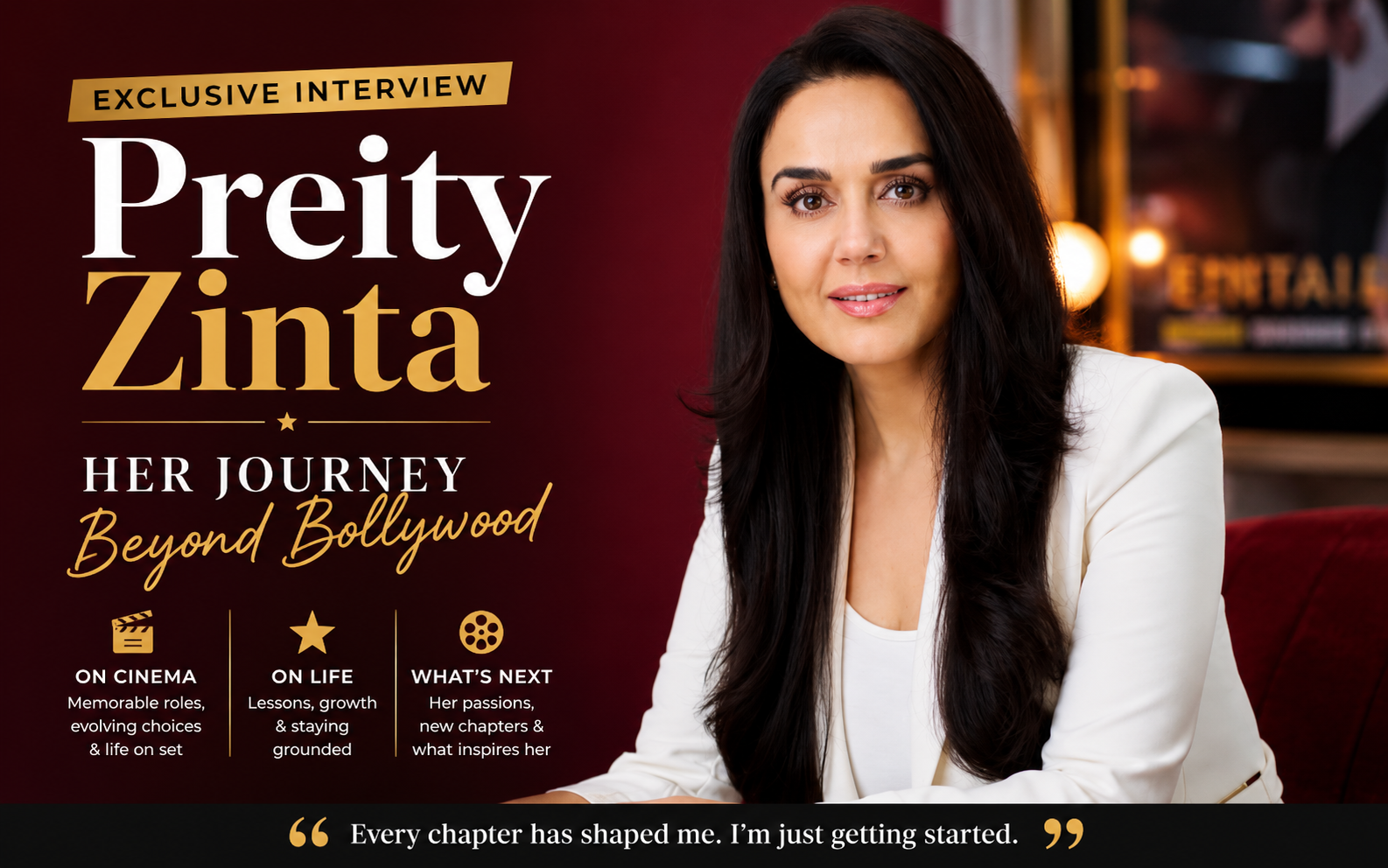
Preity Zinta on Batwara 1947, Motherhood and Finding Her Way Back to Cinema

For Preity Zinta, returning to the screen with Batwara 1947 is about more than making a comeback. The period drama allowed her to explore a chapter of India’s history, work with director Rajkumar Santoshi for the first time, and step into a world far removed from her own. But the film also made her reflect on how much life has changed since she began her career, from the freedoms available to women today to the perspective that comes with becoming a mother. For Zinta, Batwara 1947 is ultimately a story about family, resilience and hope, as she tells Lipika Varma in an exclusive conversation. Why did you say yes to doing this film? What touched you the most? There were a couple of things. First, I really wanted to work with Raj ji. I had never worked with him before, so working with him was always on my bucket list. I had also always wanted to do a period film. Beyond that, I genuinely loved the story. What touched me most was that even in the darkest of times, there is always a ray of hope. People may see this as a story about two countries, but for me, it is essentially about a family. I was also deeply affected by stories of families who believed they were leaving their homes temporarily, even burying their jewellery and valuables, thinking they would return. They never imagined they would lose everything forever. Since this is my first period film, I spent time researching and understanding that era. After such a long break from films, why did you choose this project? I was enjoying my personal life, focusing on my family and raising my children. Professionally, I had always wanted to work with Raj ji and also wanted to do a period film.

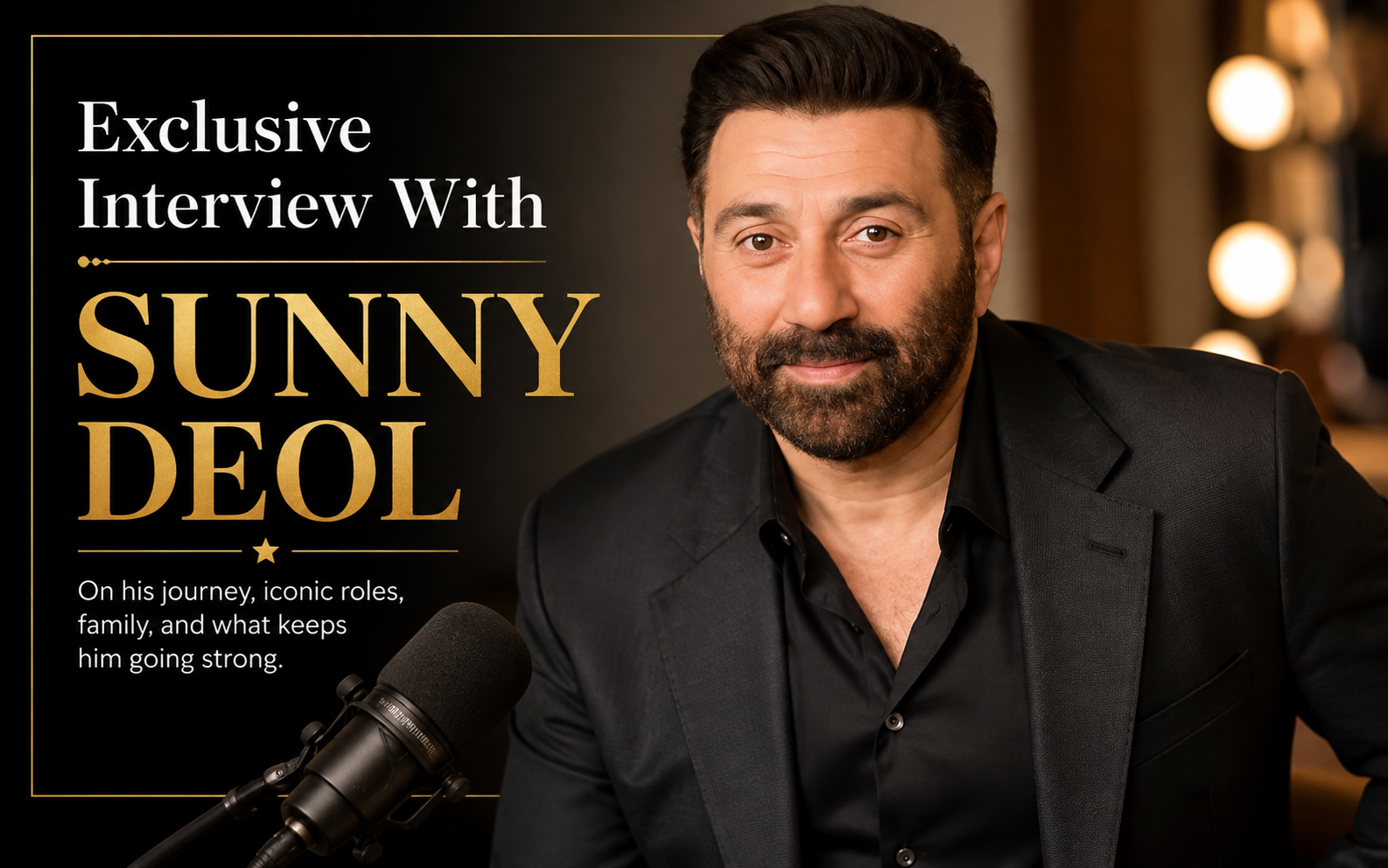
Exclusive Interview with Sunny Deol: Life Beyond Bollywood

Sunny Deol: “Every Film Leaves Some Kind of Impact” With Batwara 1947, Sunny Deol returns to a story rooted in Partition, family and the human cost of one of the most defining moments in Indian history. The actor reflects on why he sees the film as fundamentally different from Gadar, his long-standing association with director Rajkumar Santoshi, his father Dharmendra’s connection to their shared cinematic history, and the responsibility actors carry when their work leaves a lasting impact on audiences. In conversation with Lipika Varma, Sunny Deol also opens up about playing a character outside the action-driven image audiences often associate with him and working alongside his son Karan. How did you approach the character in this film? For me, it was the subject, the story and the character that I had heard about, and I approached it accordingly. I don’t know exactly what was tweaked. I didn’t read the original play or see it. Vivek Raj had read it, and we had been working on this story since 2010. Unfortunately, we couldn’t make it back then, so we had been waiting all these years. As soon as we got the opportunity, we jumped into it. Sunny, are you happy that your fans, including those in Pakistan, will get to see you in a completely different kind of role this time, without the iconic hand-pump moment or typical action scenes? Actually, I don’t think it’s about that. Fans are always there, and they love you no matter what. Sometimes journalism and politics come into the picture and change the colours of things. But the actual viewer, the person sitting in the theatre and watching the film, doesn’t necessarily look at things that way. They simply watch the film. I’ve met a lot of fans across the country and around the