India’s New Digital Leisure Trends: From Streaming to Interactive Gaming

India is increasingly going digital in every facet imaginable. That should not be super surprising given that the country now has close to a billion Internet users and more than six hundred and fifty million active smartphone ones. According to many, the digital revolution in the world’s most populous nation began in the mid-2010s, when the Digital India platform launched, spreading fiber optic infrastructure across the nation, Reliance Jio activated 4G while lowering data transfer rates, and Chinese smartphones entered this market.

These three things, along with the rise of UPI-powered payments, fueled a wave of digital adoption in The Golden Sparrow, which dramatically increased during the start of the 2020s, amidst the COVID pandemic and stay-at-home government-imposed measures. This was a time when people had to look for more modern forms of entertainment, and OTT streaming platforms posted record user numbers. People also turned to playing mobile games and enjoying sites like Casino Days in India.

Hence, the 2020s marked a new era in leisure activities in this part of the world, and below, we explore the trends that have defined this new age characterized by novel ways to have fun.

The JioHotstar and OTT Streaming Explosion

At the start of this decade, India saw a massive expansion of OTT users, with the number of individuals subscribing to these platforms continuing to grow throughout today. As noted above, COVID-19 spurred many Indians to test streaming video entertainment. Because movie theaters were closed for months during the pandemic, some film studios decided they could not wait for them to open back up and chose to release their movies directly on streaming platforms. This further boosted the visibility of Over-the-Top services, as they are called here, which skyrocketed their subscriber counts.

The fact that more people than ever had smartphones that could enjoy what these services had to offer, thanks to mobile apps, along with fast and affordable Internet bandwidth, OTT viewing quickly became all the rage, and was primarily consumed via smartphones, rather than through TV screens.

Going by an Ormax OTT Audience Report, the Indian OTT market had 547 million users in 2024. In 2026, the country’s leading streaming service, JioHotstar, claims to have somewhere in the neighborhood of 500 million users, far overshadowing its two top competitors, Amazon Prime and Netflix. This figure shows just how quickly Indians have adopted streaming video content, and how infrastructure changes have dramatically affected India’s entertainment arena as a whole.

The Booming Popularity of Short-Form Videos

Many thought that following India’s ban of TikTok, which was a fast-spreading global phenomenon around this time, short-form videos would not take off in India the same way they had around the globe. Boy, was that prediction wrong. Not only did Instagram Reels and YouTube Shorts fill the TikTok gap, but homegrown apps like Josh and Moj, which launched as an answer to TikTok’s absence in this robust market, carved out their own niche. This duo is now worth billions each, and they produce billions of daily views.

Without question, short-form videos have become the dominant daily time killer for younger demographics and for individuals who prefer mobile-first content. Going by an IPSOS study whose results went public in September 2025, commissioned by Facebook and Instagram parent company Meta, Instagram Reels are the most-watched short-form content format in India. Generation Z users especially seem to love them, and 97% of study respondents note that they watch at least one per day.

In a way, this format has become a cultural sensation of sorts, as Reels are riddled with viral challenges, beauty tutorials, and lifestyle transitions that have greatly affected not only online culture but the nation in general. They have also influenced people’s buying habits and how products get marketed in India to quite an impressive degree.

Mobile Gaming Dominating

Niko Partners, a leading game market data firm, claims that India has now exceeded half a billion mobile gamers, and its annual mobile gaming spend has gone over a billion dollars. Today, women represent 40% of the country’s total gamer pool, which is an impressive percentage by itself, but it becomes even more impressive when one learns that this figure stood at 22% in 2020.

eSports, or competitive gaming, is too a top sector driver, with 60% of people into gaming watching eSports events, or competing in them. Battle Royale ranks as the top genre, with PUBG Battleground, Call of Duty Mobile, and Free Fire Max being the most-enjoyed titles, all multiplayer arena-style options.

All that said, India still trails behind China, which is the slice of Earth with the most substantial player base at over seven hundred and thirty million. Nevertheless, according to some projections, India is on its way to hit this number by 2029, and in a few more years, it may confidently take over the number one spot. This market has the distinction that it is chiefly a mobile-first one, and because of this, most of the population focuses on games that do not have heavy hardware demands.

The Proliferation of Interactive Gaming

Teen Patti and Andar Bahar have a long history of getting used for betting in India, and in the late 2010s and the early 2020s, gaming platforms saw a rapid influx of Indian players. The country has a very limited gambling landscape, as only three of its states allow gaming fun. These have experimented with the Internet kind, but only a bit. Therefore, Indians mainly partake in games of chance for money at internationally regulated platforms that accept Indian customers, which are widely accessible.

Social media influencers advertise these sites freely, and they have distinct games that cater to Indians, such as the mentioned Teen Patti and Andar Bahar, in both the RNG and live dealer formats. The Digital India Foundation, in March 2025, reported that four popular gaming and betting platforms recorded 1.6 billion visits over three months from Indian IPs. That is evidence enough that these hubs and interactive gaming are now a well-established pastime in the birthplace of yoga.

Leave a comment

Your email address will not be published. Required fields are marked *

Best Dating Apps in India for Every Relationship Goal

For years, online dating in India was largely synonymous with a handful of familiar names. But as conversations around love, companionship, and identity evolve, so are the ways people choose to connect. Today’s users aren’t all looking for the same thing, and they don’t expect one app to deliver it all. While some are searching for long-term relationships, others are seeking friendships, queer communities, meaningful conversations, or simply people who share their interests and values. As modern dating becomes more intentional, a new generation of platforms is stepping in to cater to these different needs. From apps built for serious commitment and LGBTQIA+ users to those helping people find friends or connect over common passions, there’s no longer a one-size-fits-all approach to finding meaningful connections. Here are the platforms redefining how India dates, befriends, and builds relationships in 2026. Boo: For Introverts Seeking Deeper Connections Small talk isn’t everyone’s love language, and Boo knows that. Designed around personality compatibility, the app uses the Myers-Briggs framework and shared interests to help users connect beyond appearances. Instead of endless swiping, Boo encourages people to build relationships based on values, communication styles, and common passions. It has become especially popular among introverts and those looking for slower, more intentional connections. For people who would rather discuss books, movies, or personality types than exchange generic pickup lines, Boo offers a refreshing alternative to traditional dating apps. Grindr: For Gay, Bi, Trans, and Queer Dating Long before many mainstream apps began prioritising inclusivity, Grindr was creating a space for queer connections. The location-based app remains one of the world’s most recognised platforms for gay, bi, trans, and queer people, allowing users to meet others nearby and build everything from friendships and communities to romantic relationships. In countries like India, where safe queer spaces can still

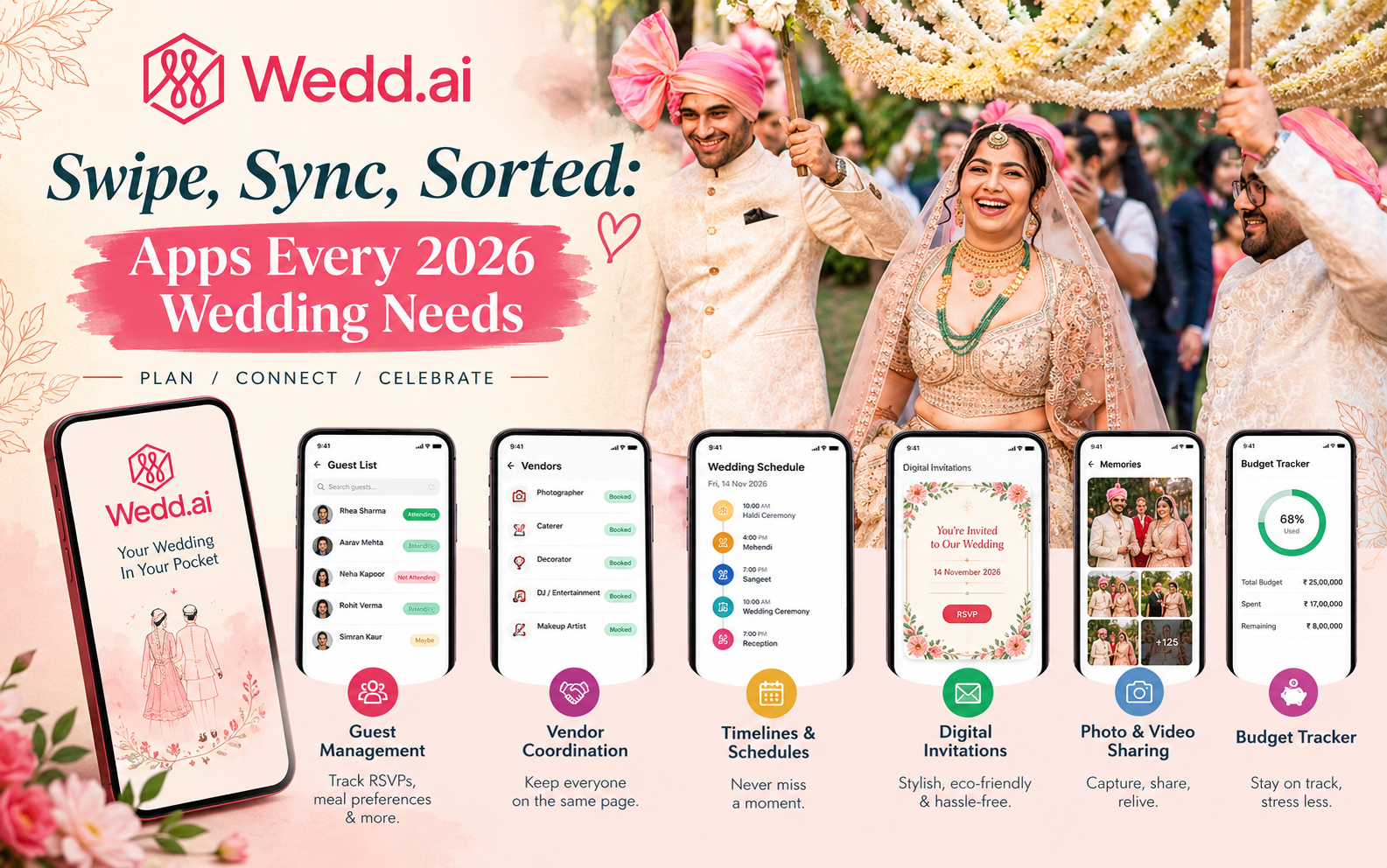
Best Wedding Apps for Indian Weddings in 2026

The “big fat Indian wedding” has officially gone digital. Between multi-city guest lists, five-day event calendars, and family WhatsApp groups that never sleep, today’s couples are trading paper diaries and Excel sheets for smarter tools built specifically for the chaos of Indian shaadis. Hashtag Magazine shortlists apps worth adding to your wedding toolkit this season. WedMeGoodOften described as the love child of Pinterest and a wedding planner, WedMeGood is one of India’s most trusted wedding platforms, offering an extensive range of vendor listings, reviews, real wedding showcases, and inspiration galleries. Beyond browsing, the app doubles as a functional planner covering vendors, e-invites, checklists, and ideas, positioning itself as the one app every Indian bride or groom needs. It’s the best starting point for couples still in the inspiration-gathering phase. WeddingWire IndiaFor the planner who loves structure, WeddingWire India is the go-to. It combines the reliability of a global planning network with an understanding of Indian wedding nuances, offering price estimates, checklists, and vendor reviews for a comparison-driven experience. Having joined forces with ShaadiSaga, it now brings global planning standards to the Indian market, making it ideal for spreadsheet-and-checklist-loving “Type A” planners. Wedd AiThis is where things get futuristic. Billed as India’s first AI-powered wedding command centre, Wedd Ai is designed for both professional planners and families, capable of managing hundreds of guests or syncing multi-day, multi-city celebrations with precision. Its standout feature is automated RSVP handling: the app sends invites via WhatsApp, SMS, and email with one-click confirmation links, tracks responses in real time with colour-coded status, and sends smart follow-ups to guests who haven’t replied, cutting out the manual chasing entirely. It also lets planners import guest contacts via spreadsheet, auto-detect duplicates across bride and groom lists, and group guests by individual functions like Haldi, Mehendi, or Reception. WeddingkartFor

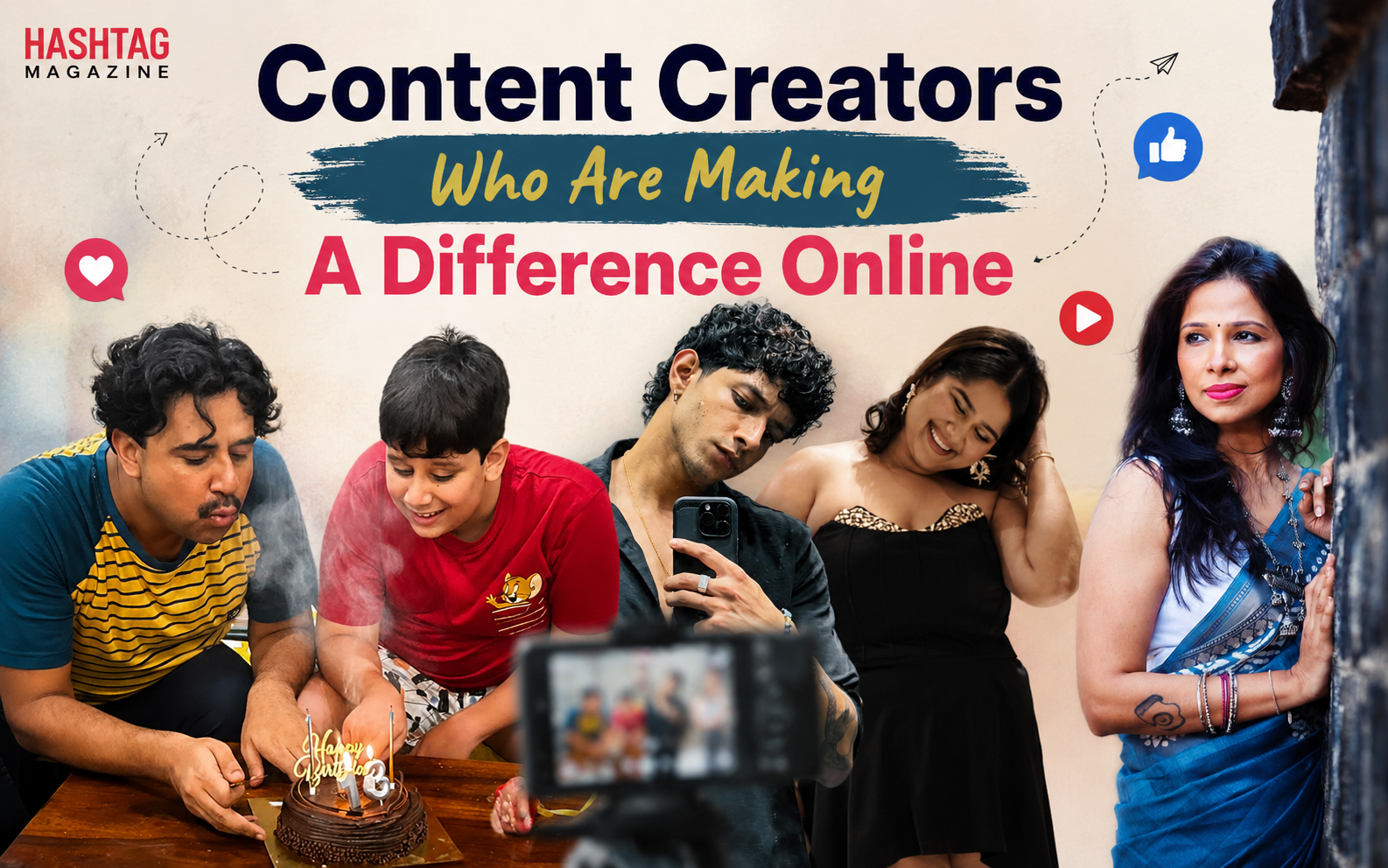
4 Content Creators Who Are Making A Difference Online

Social media often gets a bad reputation for endless trends, fleeting virality, and mindless scrolling. But beyond the perfectly curated feeds and viral challenges, a new generation of creators is proving that the internet can also be a force for empathy, education, and genuine connection. They’re using their platforms not just to entertain, but to spark important conversations, build supportive communities, and remind people that they are not alone. From a father reshaping India’s understanding of autism and an ASMR artist helping millions find comfort at the end of the day, to a creator championing body confidence and another offering refreshingly honest life advice, these voices are creating impact far beyond likes and views. In a digital world where attention is currency, they’re choosing to spend it on something meaningful. Meet four creators who are making the internet a kinder, more thoughtful place, one post at a time. 4 Creators Changing Conversations, One Post at a Time Indian Girl ASMR: The Voice putting India to sleep For Vedashree Pendharkar, better known online as Indian Girl ASMR, creating content has always been about offering people a moment of calm in an increasingly noisy world. One of India’s pioneering ASMR creators, she produces immersive roleplays, guided relaxation sessions, and soothing sound experiences designed to help viewers sleep better, manage stress, and unwind. Having been an avid ASMR viewer herself for nearly six years, Veda decided to try creating videos during the COVID-19 lockdown in 2020. What began as a creative outlet soon evolved into something much bigger. “As viewers began sharing stories about how the videos helped them sleep better, relax after stressful days, or cope with anxiety, I realised that ASMR had the power to make a genuine difference in people’s lives,” she says. Being among the early creators in the

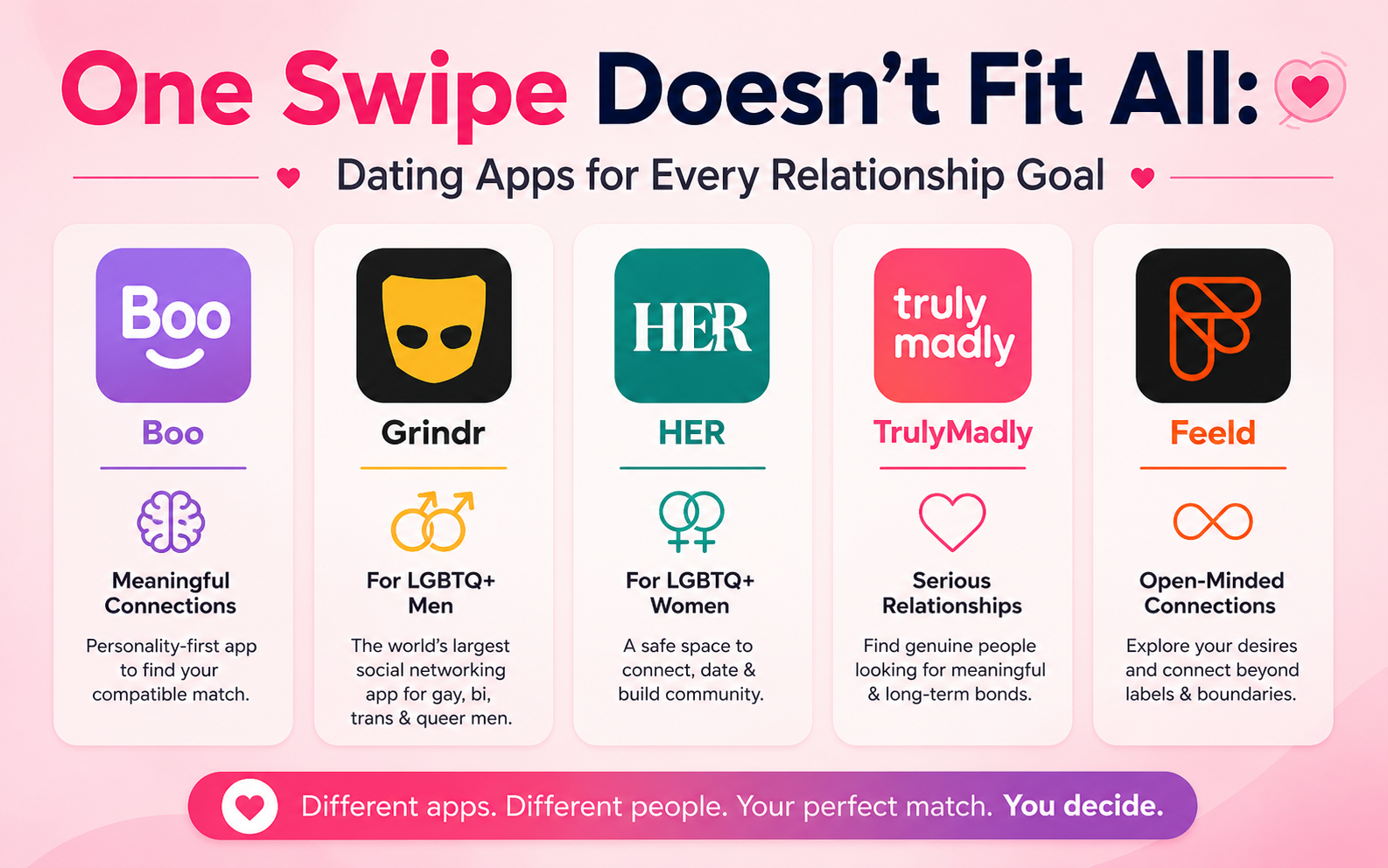
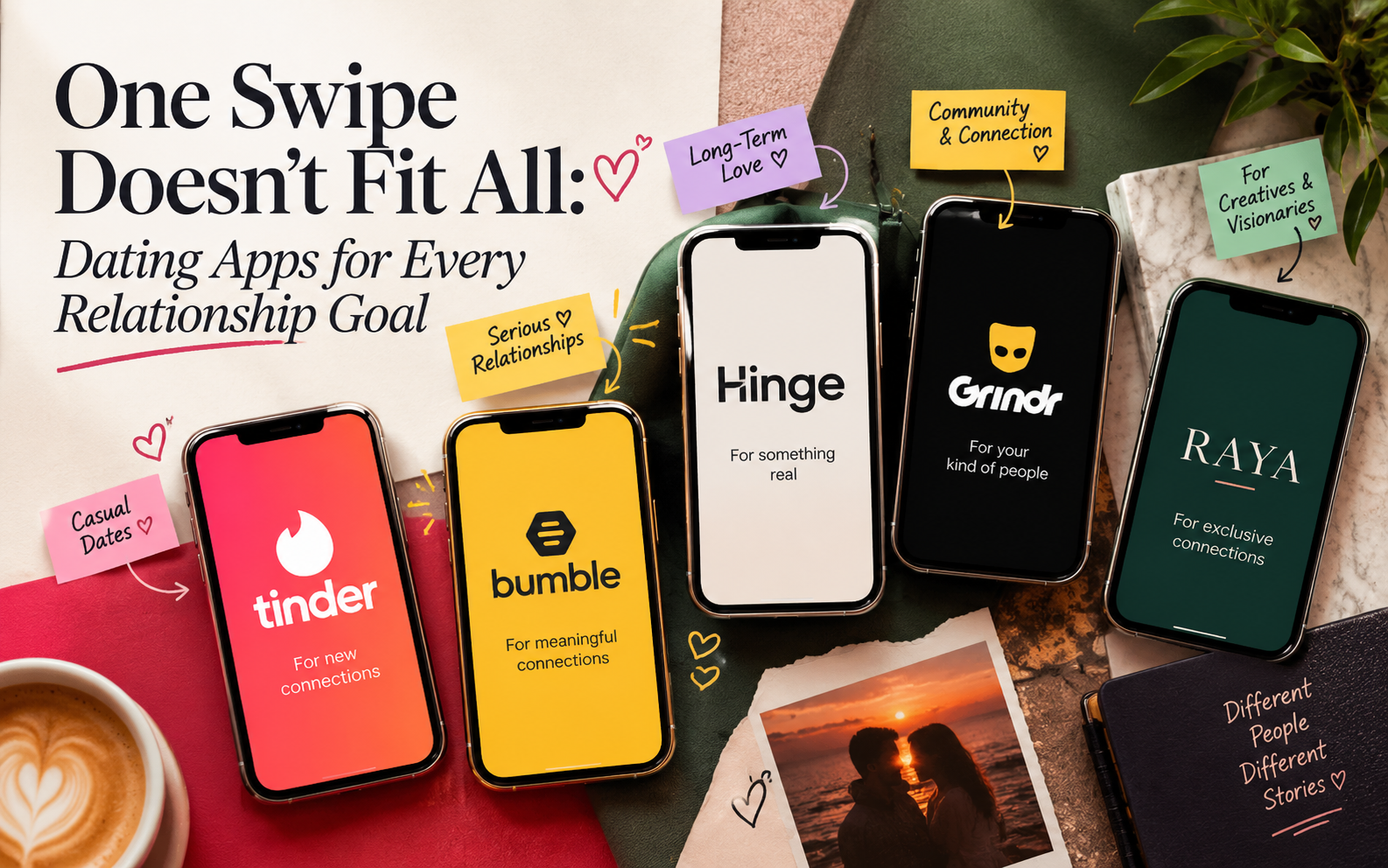
One Swipe Doesn’t Fit All: Dating Apps for Every Relationship Goal

For years, online dating in India was largely synonymous with a handful of familiar names. But as conversations around love, companionship, and identity evolve, so are the ways people choose to connect. Today’s users aren’t all looking for the same thing, and they don’t expect one app to deliver it all. While some are searching for long-term relationships, others are seeking friendships, queer communities, meaningful conversations, or simply people who share their interests and values. As modern dating becomes more intentional, a new generation of platforms is stepping in to cater to these different needs. From apps built for serious commitment and LGBTQIA+ users to those helping people find friends or connect over common passions, there’s no longer a one-size-fits-all approach to finding meaningful connections. Here are the platforms redefining how India dates, befriends, and builds relationships in 2026. Boo: For Introverts Seeking Deeper Connections Small talk isn’t everyone’s love language, and Boo knows that. Designed around personality compatibility, the app uses the Myers-Briggs framework and shared interests to help users connect beyond appearances. Instead of endless swiping, Boo encourages people to build relationships based on values, communication styles, and common passions. It has become especially popular among introverts and those looking for slower, more intentional connections. For people who would rather discuss books, movies, or personality types than exchange generic pickup lines, Boo offers a refreshing alternative to traditional dating apps. Grindr: For Gay, Bi, Trans, and Queer Dating Long before many mainstream apps began prioritising inclusivity, Grindr was creating a space for queer connections. The location-based app remains one of the world’s most recognised platforms for gay, bi, trans, and queer people, allowing users to meet others nearby and build everything from friendships and communities to romantic relationships. In countries like India, where safe queer spaces can still

You May Also Like

Connect with us