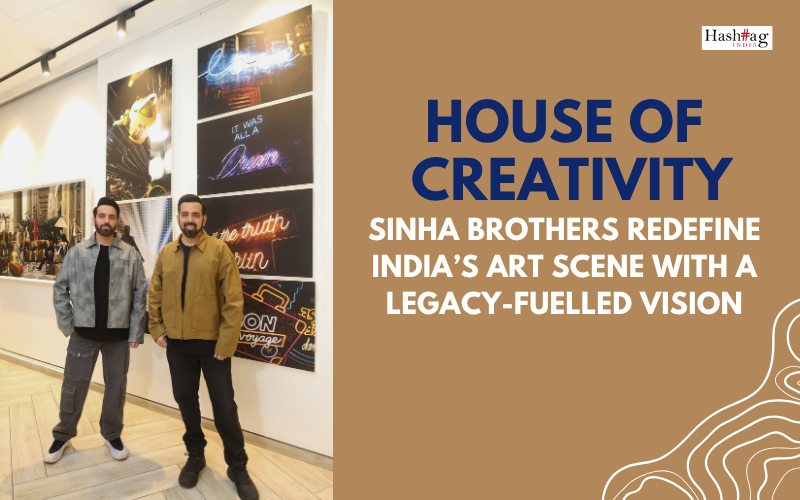
House of Creativity: Sinha Brothers Redefine India’s Art Scene with a Legacy-Fuelled Vision

Sinha Brothers Redefine India’s Art Scene

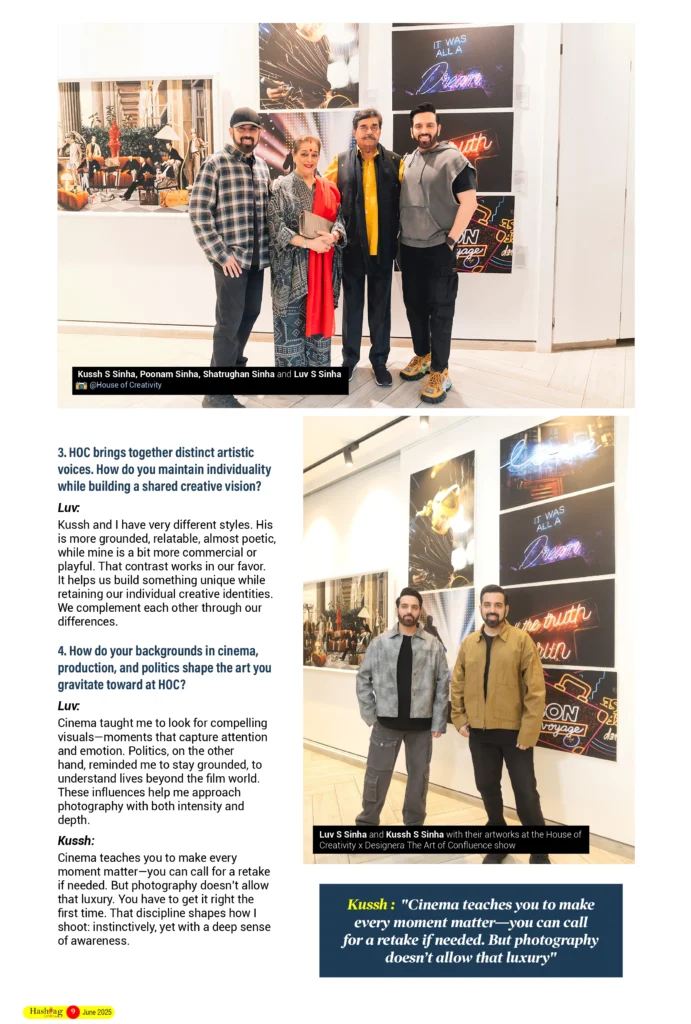
In a world where creativity often competes with commerce, LUV and KUSSH SINHA are merging both purpose and passion. Drawing from their rich cinematic heritage and a lifelong connection to the arts, the Sinha twins have launched The House of Creativity (HOC) a platform dedicated to showcasing and supporting contemporary Indian artists. Their goal is to democratize access to visual art, giving emerging talents a space to thrive while also expanding the reach of Indian artistry on a global stage.

In conversation with SINDURI VUPPALA, the duo shares how their entrepreneurial journey is not just about art, but about creating a movement that celebrates originality, honours legacy, and nurtures the future of India’s creative community.
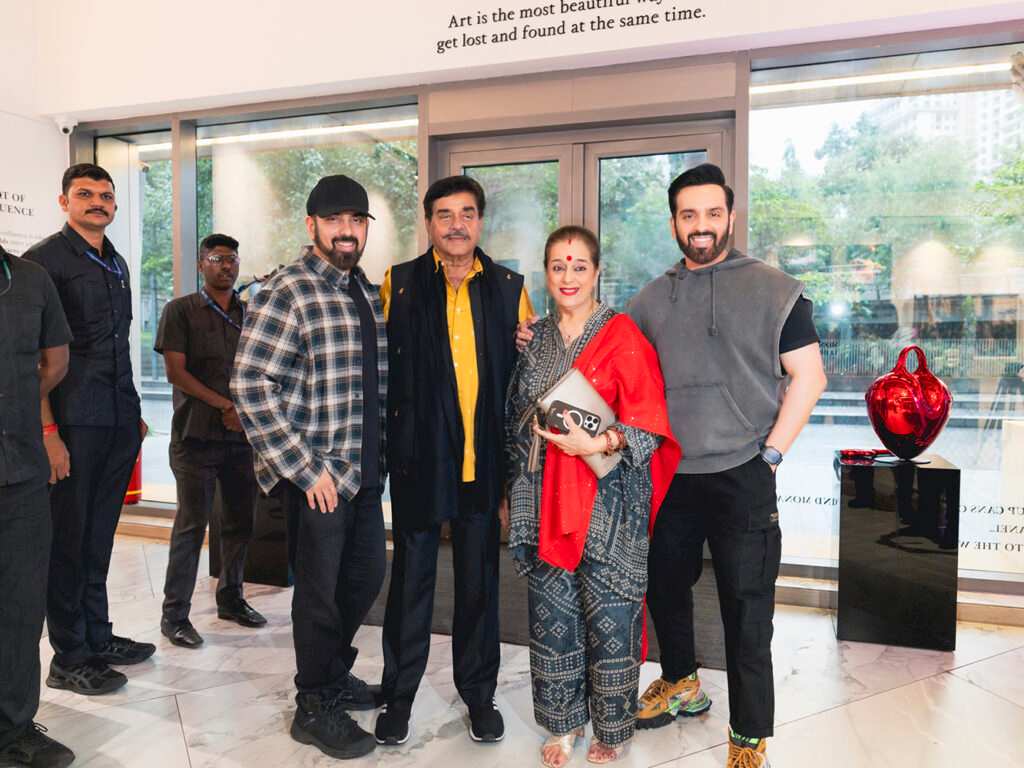
sinha brothers

1. Can you take us back to when your relationship with visual art truly began?

Luv: My relationship with visual art began at a very young age. I was deeply influenced by Hindi cinema the films my father acted in, those of Mr. Bachchan, and other legends. As I grew older, Japanese animation, video games, and comic books also left a huge impression on me. Each artist, every inker, has their own style those differences fascinated me. Film too, being a moving image, played a huge role. Pause it, and it becomes a photograph. That connection influenced me tremendously.


2. What led to the birth of the House of Creativity? Was there a defining moment or conversation?

Luv: It started with conversations at home during the lockdown. I kept thinking about the number of immensely talented artists who just don’t have a platform. Art can be an exclusive world, but coming from the film industry, I felt we could help expand its reach. The idea of starting digital-first made sense due to restrictions, but our long-term vision is definitely to open physical galleries and make art more accessible.


3. HOC brings together distinct artistic voices. How do you maintain individuality while building a shared creative vision?

Luv: Kussh and I have very different styles. His is more grounded, relatable, almost poetic, while mine is a bit more commercial or playful. That contrast works in our favor. It helps us build something unique while retaining our individual creative identities. We complement each other through our differences.
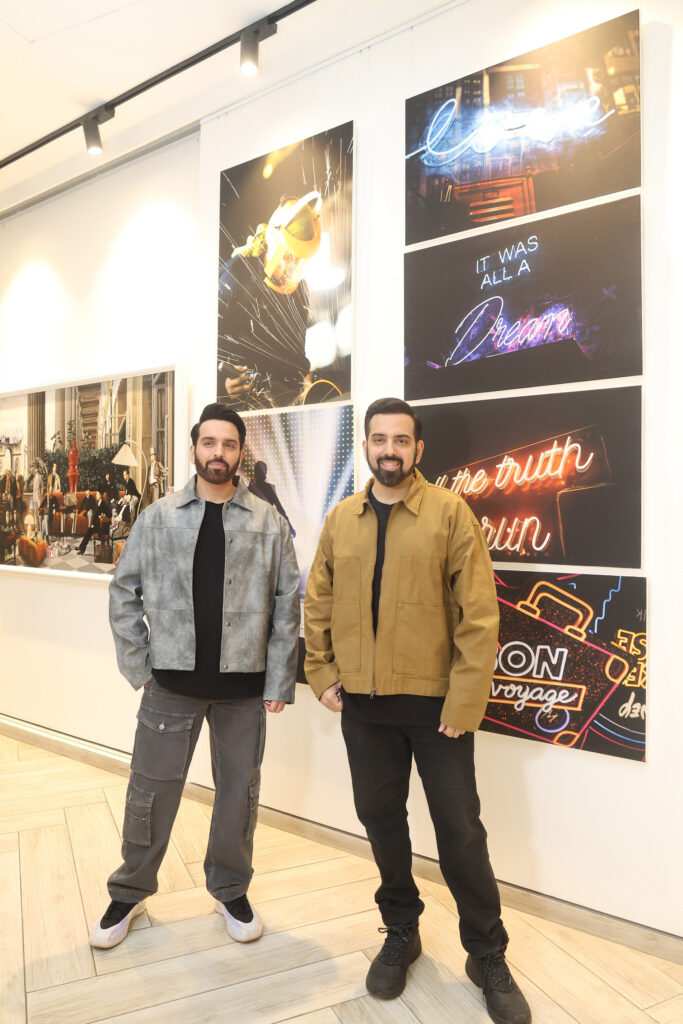
sinha brothers

4. How do your backgrounds in cinema, production, and politics shape the art you gravitate toward at HOC?

Luv: Cinema taught me to look for compelling visuals moments that capture attention and emotion. Politics, on the other hand, reminded me to stay grounded, to understand lives beyond the film world. These influences help me approach photography with both intensity and depth.


Kussh: Cinema teaches you to make every moment matter; you can call for a retake if needed. But photography doesn’t allow that luxury. You have to get it right the first time. That discipline shapes how I shoot: instinctively, yet with a deep sense of awareness.


5. The Art of Confluence marks a major physical showcase for a digital-first platform. How did that transition shape your curatorial approach?

Luv: It’s been a rewarding step. We collaborate closely with gallery partners on every decision, blending our perspective with theirs. The physical show is a milestone for us and for the artists, giving their work a tangible, immersive presence beyond screens. Working with the Design Era team was smooth and insightful.


6. The show presents both traditional and digital art. What excites you about this intersection?

Luv: It’s a reflection of how art has evolved. Traditional art is the foundation that teaches us craftsmanship. But digital tools are the future, enabling more people to create. That blend of brushes and screens is what excites me most. It shows how inclusive art can be today.


7. How has the response been to the exhibition so far?

Luv: The response was phenomenal. The preview night had a great turnout, and we saw genuine interest not just from art lovers, but from collectors. Still, I always want to push the bar higher. Every show teaches us something new. But this one, with Amrita and the Designerra team, was a real highlight.


8. Luv, your photos feel cinematic are they spontaneous captures or carefully composed stories?

Luv: A bit of both. I do shoot spontaneously, but I’m always prepared. My camera is with me wherever I go because I never want to miss a moment. So while the moments are real, the intent behind capturing them is definitely planned. You have to be ready for the story before it unfolds.


9. Kussh, your photography was largely private until now. What made you decide to share it publicly?

Kussh: Photography has always been personal, something I do to observe and explore the world. But I’ve come to see the value of feedback. Honest critique helps you grow. So I decided to include my work in The Art of Confluence to open up that conversation and evolve as an artist.


10. What is it like working creatively with your sibling? Do disagreements ever lead to breakthroughs?

Luv: Working with Kussh is straightforward. He knows what he wants. I give him options, he picks what resonates. We respect each other as artists first. If I tried to dictate his vision or if he did the same it would take the soul out of the art. Creative freedom is non-negotiable for both of us.


Kussh: We work well because our styles are different. I’m drawn to street photography capturing fleeting, human moments. Luv brings a more cinematic lens. That contrast creates a diverse visual language. We don’t need to agree all the time. That’s part of what makes it interesting.


11. Are there plans to take HOC global, or into more offline/physical spaces? What kind of impact do you hope to make on emerging Indian artists and collectors?

Luv: Absolutely. We already have an international partner in Dubai Paintbrush Art Company and we’re looking to expand further. I want to open a gallery space in India too. But beyond infrastructure, our impact should be emotional and cultural. We’re not just offering exposure, we’re building a family of artists. The name House of Creativity reflects that. Our artists support us as much as we support them. It’s a shared journey and we’re just getting started.
Leave a comment

Your email address will not be published. Required fields are marked *

Grazing Tables: The Party’s New Centrepiece

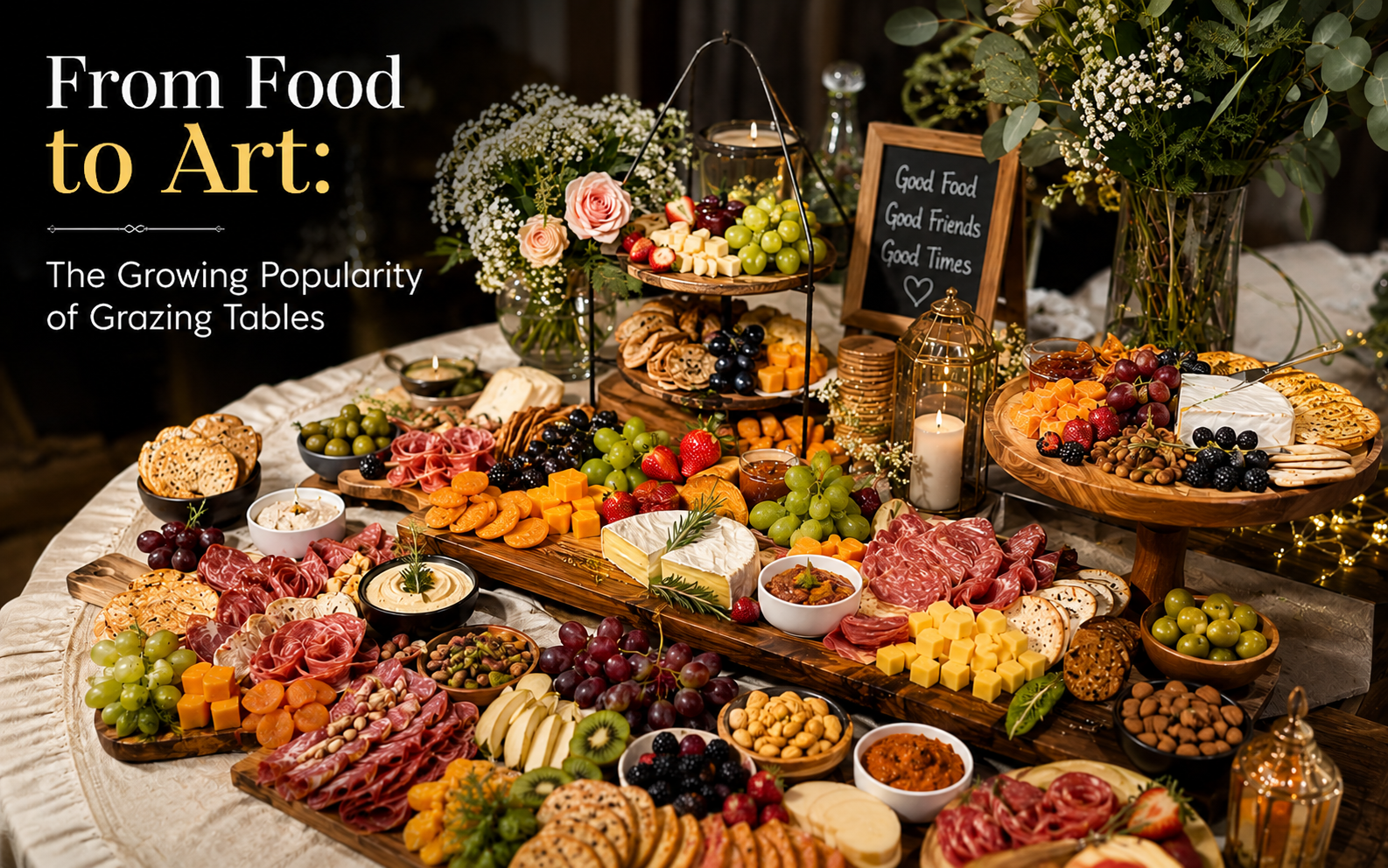
Move over traditional buffets; grazing tables are taking centre stage at celebrations. Budda Swecha explores the rise of this entertaining trend and speaks to grazing-table experts about how they create these edible works of art and why they’re becoming a must-have at parties. Casere: Tanya Tarang Agarwal | Hyderabad For Tanya Tarang Agarwal, founder of Hyderabad-based premium food and gifting brand Casero, grazing tables are about much more than food; they are about creating an experience. With a love for food, aesthetics and entertaining, Tanya brings together thoughtful curation and beautiful presentation to create celebrations that feel effortless, personal and memorable. “Casero has always been about creating an experience around food,” she says. “I love how a beautifully curated grazing table allows conversations to flow freely, accompanied by good food.” Relaxed and social, the format allows guests to eat, talk and enjoy themselves without the formality of a sit-down meal. Tanya believes this ease is what has made grazing tables a favourite at celebrations. “You can simply walk up, pick a bite or two, move around, continue your conversations and come back to the table whenever you want.” With no waiting to be served, the grazing format keeps the party moving naturally. For the perfect visual impact, Tanya swears by height and elevation. “A grazing table should never feel flat,” she says. Different levels, beautiful serving pieces and layers create dimension, abundance and an instant wow factor. FESTIVE FAVOURITES CHIP + DIP A great pairing to start the spread. WOW ELEMENT Something that gets everyone talking. DESSERT A delicious sweet finish. FESTIVE TOUCH An Indian chaat-inspired bite, a flavourful cheese ball with crisps and a refreshing drink to cleanse the palate. Crumble Royale: Saakshi Sabharwal | Delhi For Saakshi Sabharwal, Founder and Head Chef of New Delhi-based Crumble Royale, grazing

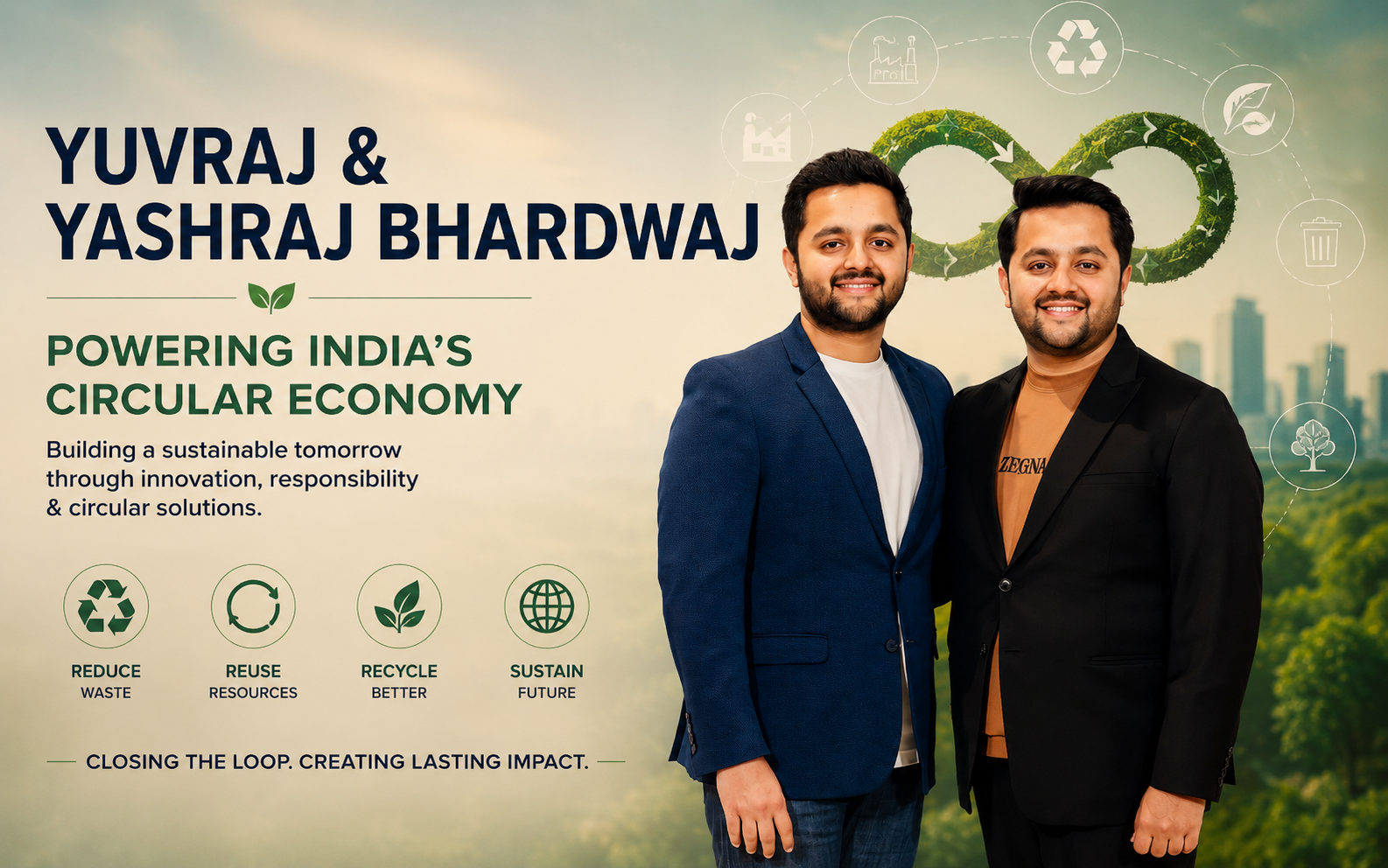
Yuvraj & Yashraj Bhardwaj | Powering India’s Circular Economy

Twin brothers Yuvraj Bhardwaj and Yashraj Bhardwaj are the co-founders of Plannex Recycling, a Gurugram-based circular economy company transforming waste management through technology and innovation. Both entrepreneurs began innovating at the age of 14, filing patents and undertaking research projects long before launching their ventures. Today, while Yuvraj, Co-Founder & CEO, leads operations, technology, and execution, Yashraj drives strategy, policy, partnerships, and global expansion. Together, the Forbes 30 Under 30 Asia honourees have built one of South Asia’s leading recycling platforms, processing over 500,000 metric tonnes of waste annually across 18 facilities in seven countries, proving that sustainability and scale can go hand in hand. 1. Tell us about your venture and how the idea first came to life. What made you decide to build it together as siblings? Yashraj: We’ve been building things together since we were 14, so becoming co-founders wasn’t really a decision; it was the natural next step. We saw India’s waste sector as a fragmented industry with enormous potential but very little technological intervention. While most people saw waste, we saw an opportunity to build infrastructure for the future. Yuvraj: Today, Plannex processes over 500,000 metric tonnes of waste annually across categories such as e-waste, PET plastics, batteries, tyres, and industrial waste, while creating employment for more than 2,000 people. Being twins gave us something every founder hopes to build: complete trust. We couldn’t imagine creating this business any other way. 2. How do your personalities and strengths complement each other? Yuvraj: Although we’re twins, we think very differently, and that’s our biggest advantage. I focus on operations, technology, and execution, making sure every facility runs efficiently and every process delivers on its promise. Yashraj: I spend more time on strategy, partnerships, policy, and investor relationships, helping Plannex expand globally. One of us imagines what’s

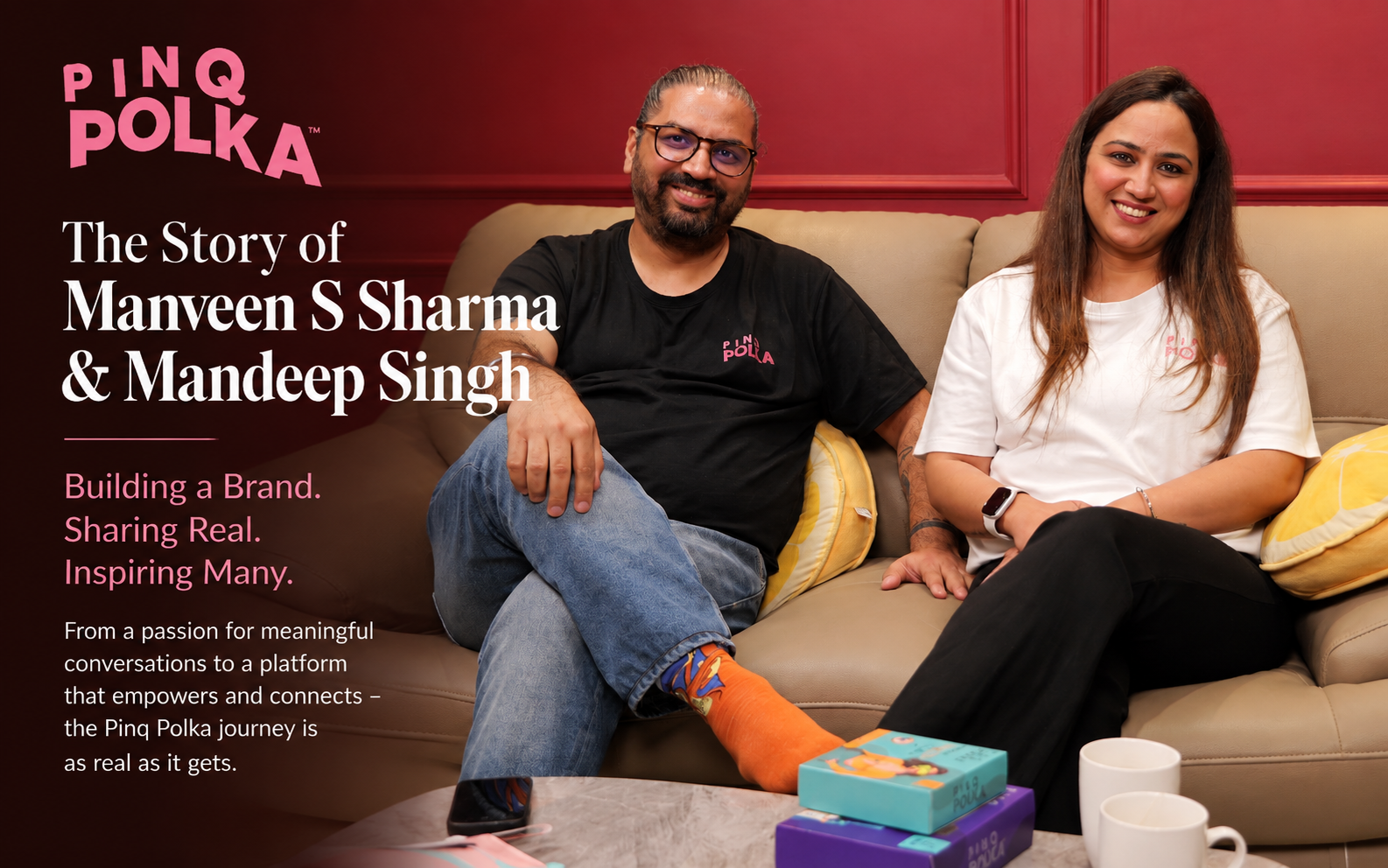
Pinq Polka: The Story of Manveen S Sharma & Mandeep Singh

Manveen S Sharma, CEO of Pinq Polka, brings over nine years of leadership experience across the automotive, mobility, and business sectors, with expertise in business strategy, operations, and customer-centric innovation. Alongside her is her brother, Mandeep Singh, Co-Founder, an entrepreneur with extensive experience in business development, sales, operations, and scaling businesses within the automotive and electric mobility ecosystem. Together, the sibling duo has transformed a simple consumer insight into one of India’s emerging women-first intimate wear and shapewear brands, combining strategic leadership with a shared commitment to creating products that prioritise comfort, confidence, and functionality. 1. Tell us about your venture and how the idea came to life. What made you decide to build it together as siblings? Manveen: Pinq Polka was born out of a personal experience. I often found myself buying women’s personal care products from abroad, because I couldn’t find the same quality in India. During a conversation with my brother, we realised there was a genuine gap in the market. Before launching, we spent months researching, speaking to women, testing products, and gathering honest feedback. That process confirmed we were solving a real problem. Building the brand together happened naturally; we trusted each other’s strengths and shared the same vision of creating products that genuinely improve women’s everyday lives. 2. How do your personalities and strengths complement each other? Manveen: I stay closely connected to our customers, spending time understanding their needs and translating those insights into better products. Many of our innovations have come directly from conversations with women who use our products every day. Mandeep: I focus on business strategy, partnerships, and sustainable growth. While Manveen leads product innovation and customer experience, I ensure we build a business that’s scalable and future-ready. We may approach challenges differently, but we’re united by one principle: never

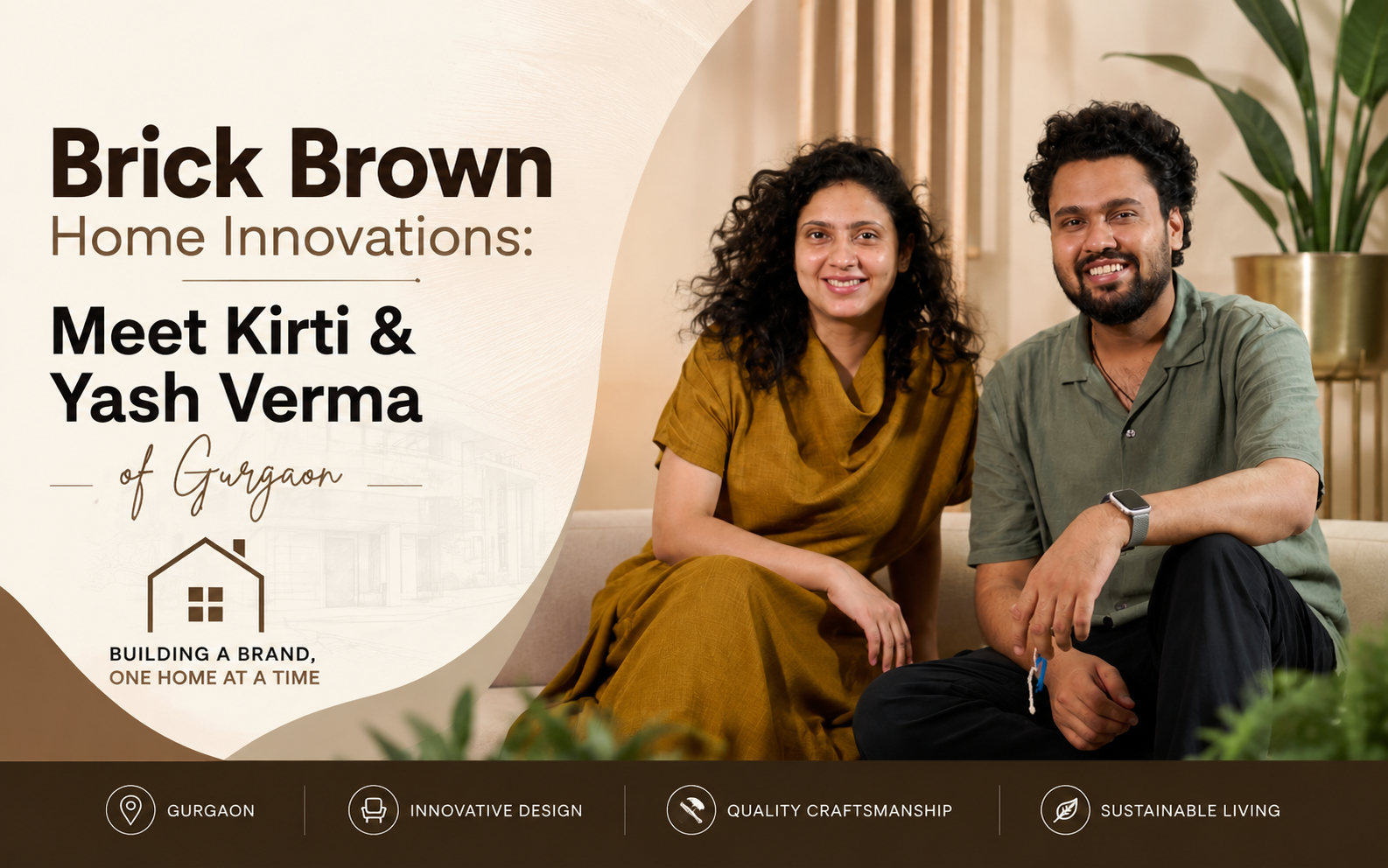
Brick Brown Home Innovations: Meet Kirti & Yash Verma of Gurgaon

Sibling duo Kirti Verma and Yash Verma, founders of Brick Brown Home Innovations, are redefining modern living through thoughtfully designed home décor that blends traditional Indian craftsmanship with contemporary aesthetics. Based in Gurgaon, the brand creates handcrafted solid wood storage solutions, organisers, and home essentials that celebrate functionality, sustainability, and timeless design. Yash Verma leads product innovation, artisan collaborations, and technology-driven operations, while Kirti Verma shapes the brand’s creative vision, design language, and business strategy. Together, they have built Brick Brown into a contemporary homegrown brand that seamlessly blends heritage craftsmanship with modern design. 1. Tell us about your venture and how the idea first came to life. Why did you decide to build it together as siblings? Brick Brown began with a simple belief that homes should feel warm, personal, and lived in. We wanted to create handcrafted wooden pieces that people would cherish for years instead of following short-lived trends. Building the business together wasn’t a planned decision; it happened naturally. Having grown up with similar values and design sensibilities, we instinctively understood each other’s way of thinking, making us natural partners. 2. How do your personalities and strengths complement each other? We bring very different strengths to the table, and that’s what makes the partnership work. I (Yash) focus on product design, manufacturing, and working closely with artisans to perfect every detail. Kirti leads branding, creative direction, storytelling, and business growth. One of us builds products worth talking about, while the other ensures their story reaches the right audience. 3. Has your sibling bond made entrepreneurship easier or more challenging? It has definitely made the journey easier because trust was never something we had to build; it already existed. One moment we’ll always remember is opening our own studio in Gurgaon. Standing in that space, we realised