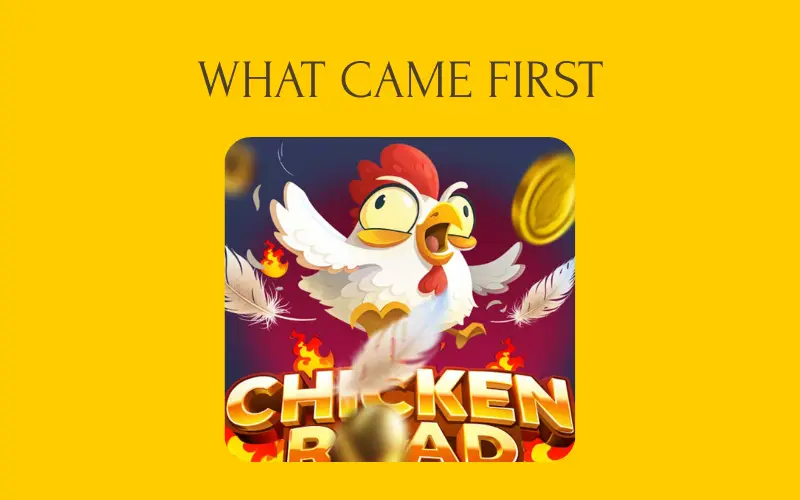
What Came First: The Chicken or the Road

You know what’s genuinely bizarre about crash games? They shouldn’t exist. I mean, think about it: someone looked at gambling  already the most dopamine-hijacking activity humans have invented  and thought, “What if we made this “faster” and added a chicken crossing a road?” 

Here’s the thing about innovation that nobody really talks about: the best ideas often sound completely unhinged when you first hear them. Crash games are like that. They’re this perfect storm of terrible ideas that somehow created something weirdly compelling. A multiplier that goes up. You cash out whenever you want. But wait too long and you lose everything. Oh, and there’s usually some ridiculous animation a rocket ship, a plane, or yes, a chicken trying to cross a road while dodging traffic.

It’s stupid. It’s genius. It’s both, and that’s exactly why it works.

Nobody Planned This Revolution

Here’s what really happens when industries evolve: it’s never the clean narrative you read about later. The creation of crash games wasn’t some masterstroke of game design. It was basically a bunch of developers trying to solve a problem that traditional casino games had created.

See, regular slots are “slow”. Painfully slow if you’re used to the pace of modern digital life. You hit spin, watch some reels go round, wait for the paylines to calculate, collect your win (maybe), and repeat. The whole cycle takes what, 5-10 seconds? For people raised on TikTok and instant everything, that’s an eternity.

Crash games said “screw all that.” The entire game happens in real-time, continuously. You’re not waiting for anything you’re actively deciding, every millisecond, whether to keep going or bail out. It’s like the difference between turn-based combat and a fighting game. One makes you wait your turn; the other never stops moving.

(And honestly, isn’t that what we all want now? To never stop moving? To always be in the middle of something rather than waiting for it to start?)

The Paradox Nobody Wants to Discuss

Okay, so about that chicken crossing the road in some crash games it’s actually the perfect metaphor for what these games really are. Think about it: Why does the chicken cross the road? To get to the other side. But in crash games, there “is” no other side. There’s only how far you’re willing to let it go before you chicken out.

That’s some twisted poetry right there.

The visual metaphors these games use are fascinating when you really look at Chicken Road game. Rockets that might explode. Planes that might crash. Chickens that might get hit by cars. They’re all about pushing your luck until disaster strikes. But here’s the twisted part: the disaster is predetermined. The algorithm already knows when that rocket will explode. You’re not actually affecting anything, you’re just deciding when to stop believing in your own luck.

It’s weirdly honest, in a way that traditional gambling never is. Slots dress everything up in bonus rounds and special features, creating this elaborate theater of chance. Crash games just put the raw mechanism right in front of you: number goes up, number might stop, choose wisely.

Your Brain on Crash: The Part That Should Worry You (But Won’t)

Here’s something that’ll mess with your head: crash games are basically training wheels for day trading. Same exact psychological profile. Same dopamine pattern. Same “I should have cashed out at 3.5x” regret.

The similarity isn’t accidental. Both involve watching a line go up, trying to predict when it’ll stop, and making split-second decisions based on nothing but gut feeling and pattern recognition that doesn’t actually exist. Your brain “thinks” it’s seeing patterns  “It hasn’t crashed before 2x in five rounds, so this one’s going higher” but it’s all randomness wearing a costume.

What makes crash games particularly insidious (and I use that word deliberately) is how they gamify loss aversion. In a slot machine, you either win or lose. Simple. In crash games, you watch your potential winnings grow in real-time. That $10 bet becomes $20, then $30, then $50, and your brain is screaming two things simultaneously: “Take it now!” and “But what if it goes to $100?”

You know what that feeling is? It’s the exact same thing that makes people hold onto losing stocks or failing relationships. The inability to cut your losses because “maybe” things will turn around. Except in crash games, it all happens in about 30 seconds instead of 30 years.

The Speed Revolution 

Remember when online casinos first appeared and everyone thought “that” was fast? Cute. Crash games make traditional online gambling look like watching paint dry in slow motion.

The average crash game round lasts maybe 10-20 seconds. But here’s the kicker: you can place your next bet while the current round is still going. You can literally be gambling continuously, without pause, forever. It’s the Amazon Prime of gambling: no waiting, no friction, just endless immediate gratification.

And this speed changes everything about how people gamble. Traditional slots players might do 500 spins in an hour. Crash game players can easily hit 200+ rounds at the same time. The decision points come so fast that you stop thinking and start “feeling” your way through it. Which, if you know anything about gambling psychology, is exactly when things get dangerous.

But here’s what’s genuinely interesting: the speed also caps your losses in a weird way. Each round has a defined end point. You can’t chase losses within a single round like you can with slots bonus buys or blackjack double-downs. It’s portion-controlled gambling, if you will. Destructive in aggregate, but weirdly manageable in individual doses.

Why Everything Else Feels Slow Now

You want to know the real impact of crash games? They’ve basically ruined regular gambling for an entire generation. It’s like giving someone a sports car and then asking them to go back to a bicycle.

I’ve watched people try to go from crash games back to regular slots, and it’s painful. They look “bored”. Physically uncomfortable with the pace. They start playing multiple games simultaneously just to approximate the stimulation level they’re used to. The industry created a monster it doesn’t fully understand yet.

This is the paradox of innovation in gambling: every new format doesn’t just add to the ecosystem; it fundamentally changes what people expect from the experience. Crash games have reset the baseline for what “exciting” means in online gambling. Everything else now has to compete with that immediacy, that constant decision-making, that pure mainline of risk-reward calculation.

The Uncomfortable Truth About Where This Goes

Here’s the thing nobody in the industry wants to say out loud: crash games are probably what all gambling will look like eventually. Not literally chickens crossing roads (though honestly, who knows), but this model of continuous, high-speed, decision-based betting.

Think about it: every successful innovation in gambling has been about removing friction and speeding up the experience. Mechanical slots to video slots. Physical casinos online. Desktop to mobile. Each step made it faster, easier, more immediate. Crash games are just the logical endpoint of that evolution gambling stripped down to its absolute essence.

And you know what’s really wild? They’re actually more honest than most gambling. There’s no pretense of skill, no elaborate mythology about hot machines or lucky numbers. Just pure, distilled chance with a timer on it. It’s gambling without the costume, and maybe that’s why it feels both more dangerous and somehow more fair.

The chicken didn’t come first, and neither did the road. They emerged together, each creating the need for the other. That’s crash games simultaneously the problem and the solution, the evolution and the devolution, the most honest and most manipulative form of gambling we’ve created yet.

(Oh, and if you’re wondering whether you should try them? That’s the wrong question. The right question is whether you can handle seeing exactly how your brain responds to pure, unfiltered risk. Most people can’t, and that’s probably for the best.)

Leave a comment

Your email address will not be published. Required fields are marked *

Best Dating Apps in India for Every Relationship Goal

For years, online dating in India was largely synonymous with a handful of familiar names. But as conversations around love, companionship, and identity evolve, so are the ways people choose to connect. Today’s users aren’t all looking for the same thing, and they don’t expect one app to deliver it all. While some are searching for long-term relationships, others are seeking friendships, queer communities, meaningful conversations, or simply people who share their interests and values. As modern dating becomes more intentional, a new generation of platforms is stepping in to cater to these different needs. From apps built for serious commitment and LGBTQIA+ users to those helping people find friends or connect over common passions, there’s no longer a one-size-fits-all approach to finding meaningful connections. Here are the platforms redefining how India dates, befriends, and builds relationships in 2026. Boo: For Introverts Seeking Deeper Connections Small talk isn’t everyone’s love language, and Boo knows that. Designed around personality compatibility, the app uses the Myers-Briggs framework and shared interests to help users connect beyond appearances. Instead of endless swiping, Boo encourages people to build relationships based on values, communication styles, and common passions. It has become especially popular among introverts and those looking for slower, more intentional connections. For people who would rather discuss books, movies, or personality types than exchange generic pickup lines, Boo offers a refreshing alternative to traditional dating apps. Grindr: For Gay, Bi, Trans, and Queer Dating Long before many mainstream apps began prioritising inclusivity, Grindr was creating a space for queer connections. The location-based app remains one of the world’s most recognised platforms for gay, bi, trans, and queer people, allowing users to meet others nearby and build everything from friendships and communities to romantic relationships. In countries like India, where safe queer spaces can still

Best Wedding Apps for Indian Weddings in 2026

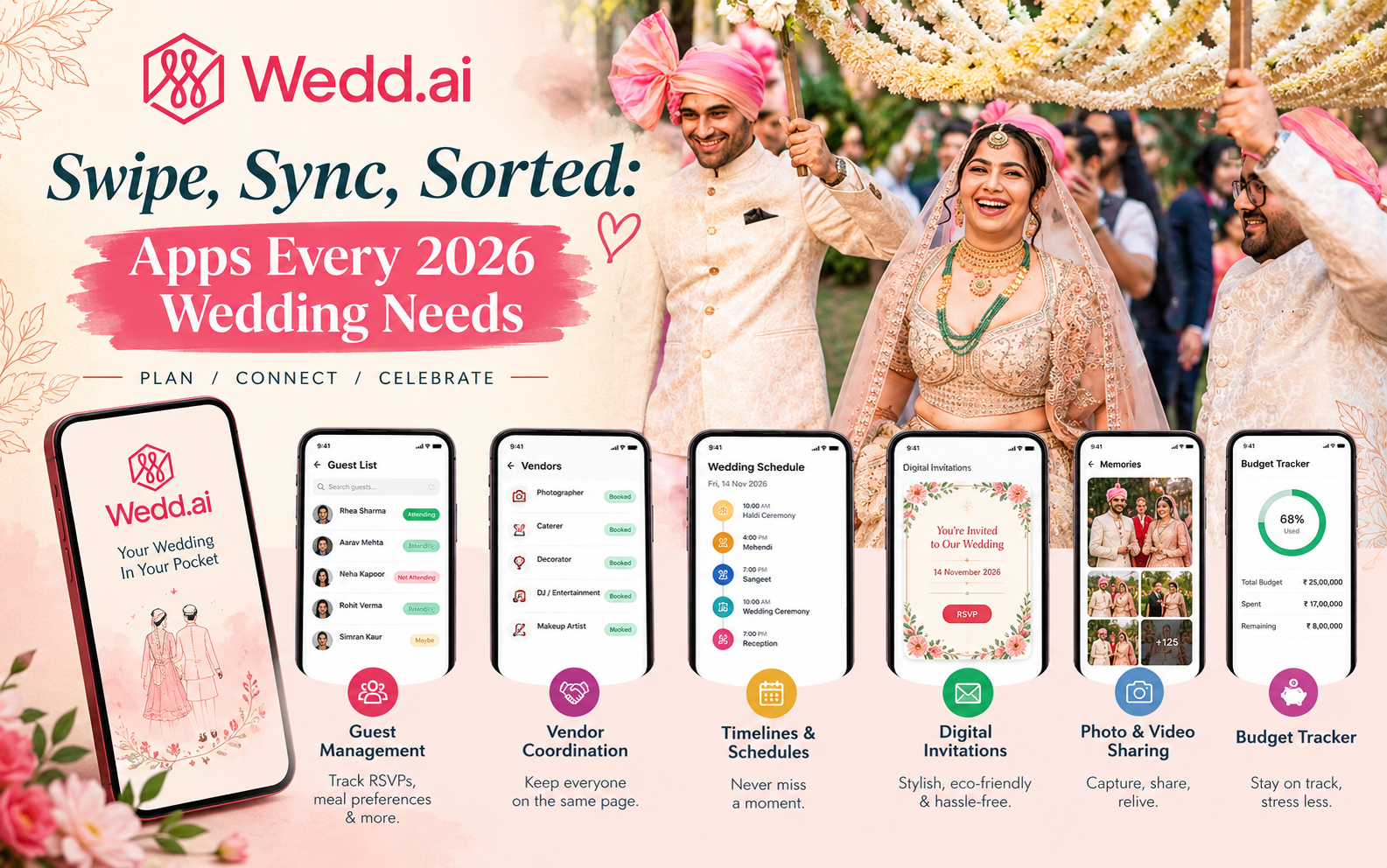
The “big fat Indian wedding” has officially gone digital. Between multi-city guest lists, five-day event calendars, and family WhatsApp groups that never sleep, today’s couples are trading paper diaries and Excel sheets for smarter tools built specifically for the chaos of Indian shaadis. Hashtag Magazine shortlists apps worth adding to your wedding toolkit this season. WedMeGoodOften described as the love child of Pinterest and a wedding planner, WedMeGood is one of India’s most trusted wedding platforms, offering an extensive range of vendor listings, reviews, real wedding showcases, and inspiration galleries. Beyond browsing, the app doubles as a functional planner covering vendors, e-invites, checklists, and ideas, positioning itself as the one app every Indian bride or groom needs. It’s the best starting point for couples still in the inspiration-gathering phase. WeddingWire IndiaFor the planner who loves structure, WeddingWire India is the go-to. It combines the reliability of a global planning network with an understanding of Indian wedding nuances, offering price estimates, checklists, and vendor reviews for a comparison-driven experience. Having joined forces with ShaadiSaga, it now brings global planning standards to the Indian market, making it ideal for spreadsheet-and-checklist-loving “Type A” planners. Wedd AiThis is where things get futuristic. Billed as India’s first AI-powered wedding command centre, Wedd Ai is designed for both professional planners and families, capable of managing hundreds of guests or syncing multi-day, multi-city celebrations with precision. Its standout feature is automated RSVP handling: the app sends invites via WhatsApp, SMS, and email with one-click confirmation links, tracks responses in real time with colour-coded status, and sends smart follow-ups to guests who haven’t replied, cutting out the manual chasing entirely. It also lets planners import guest contacts via spreadsheet, auto-detect duplicates across bride and groom lists, and group guests by individual functions like Haldi, Mehendi, or Reception. WeddingkartFor

4 Content Creators Who Are Making A Difference Online

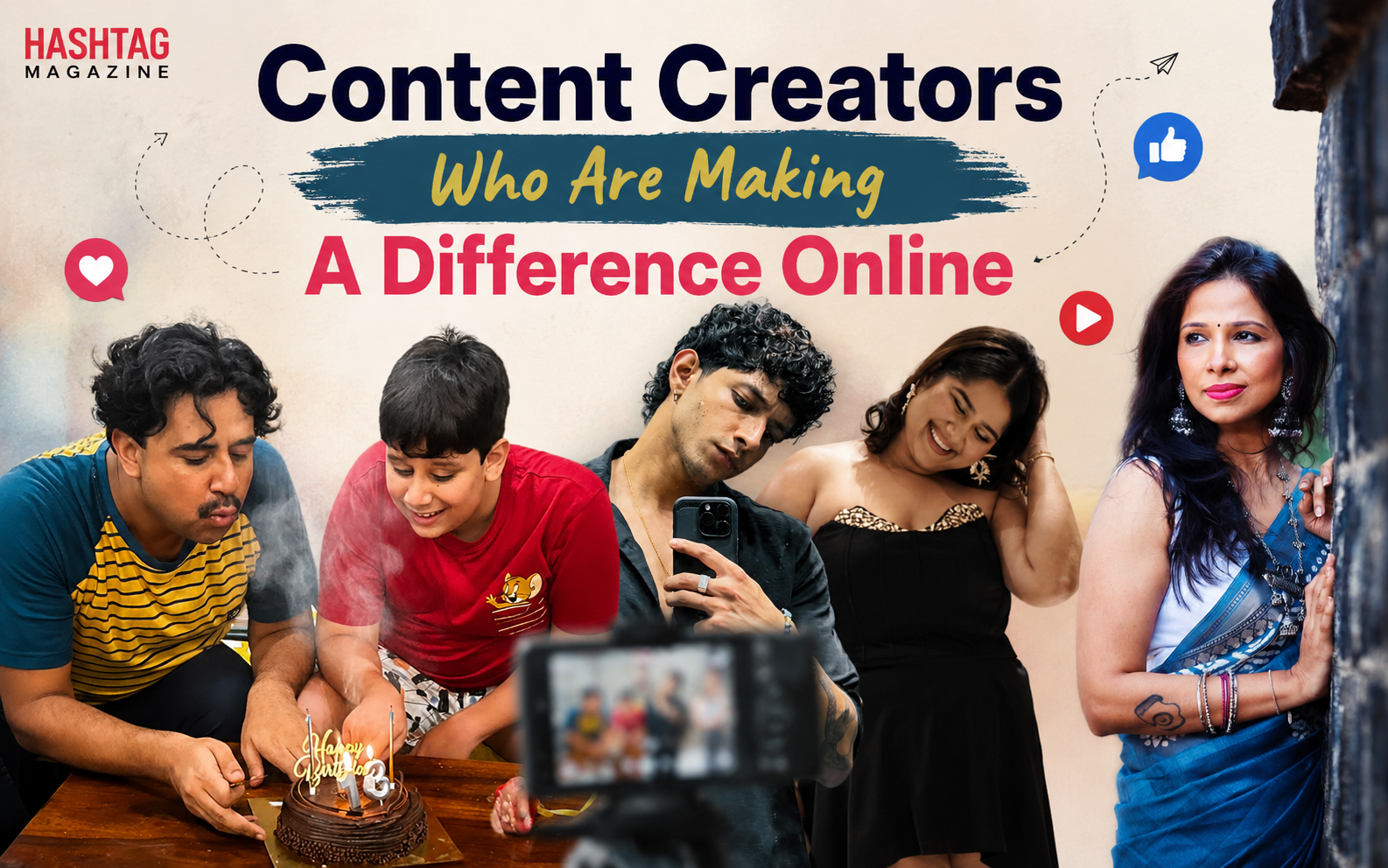
Social media often gets a bad reputation for endless trends, fleeting virality, and mindless scrolling. But beyond the perfectly curated feeds and viral challenges, a new generation of creators is proving that the internet can also be a force for empathy, education, and genuine connection. They’re using their platforms not just to entertain, but to spark important conversations, build supportive communities, and remind people that they are not alone. From a father reshaping India’s understanding of autism and an ASMR artist helping millions find comfort at the end of the day, to a creator championing body confidence and another offering refreshingly honest life advice, these voices are creating impact far beyond likes and views. In a digital world where attention is currency, they’re choosing to spend it on something meaningful. Meet four creators who are making the internet a kinder, more thoughtful place, one post at a time. 4 Creators Changing Conversations, One Post at a Time Indian Girl ASMR: The Voice putting India to sleep For Vedashree Pendharkar, better known online as Indian Girl ASMR, creating content has always been about offering people a moment of calm in an increasingly noisy world. One of India’s pioneering ASMR creators, she produces immersive roleplays, guided relaxation sessions, and soothing sound experiences designed to help viewers sleep better, manage stress, and unwind. Having been an avid ASMR viewer herself for nearly six years, Veda decided to try creating videos during the COVID-19 lockdown in 2020. What began as a creative outlet soon evolved into something much bigger. “As viewers began sharing stories about how the videos helped them sleep better, relax after stressful days, or cope with anxiety, I realised that ASMR had the power to make a genuine difference in people’s lives,” she says. Being among the early creators in the

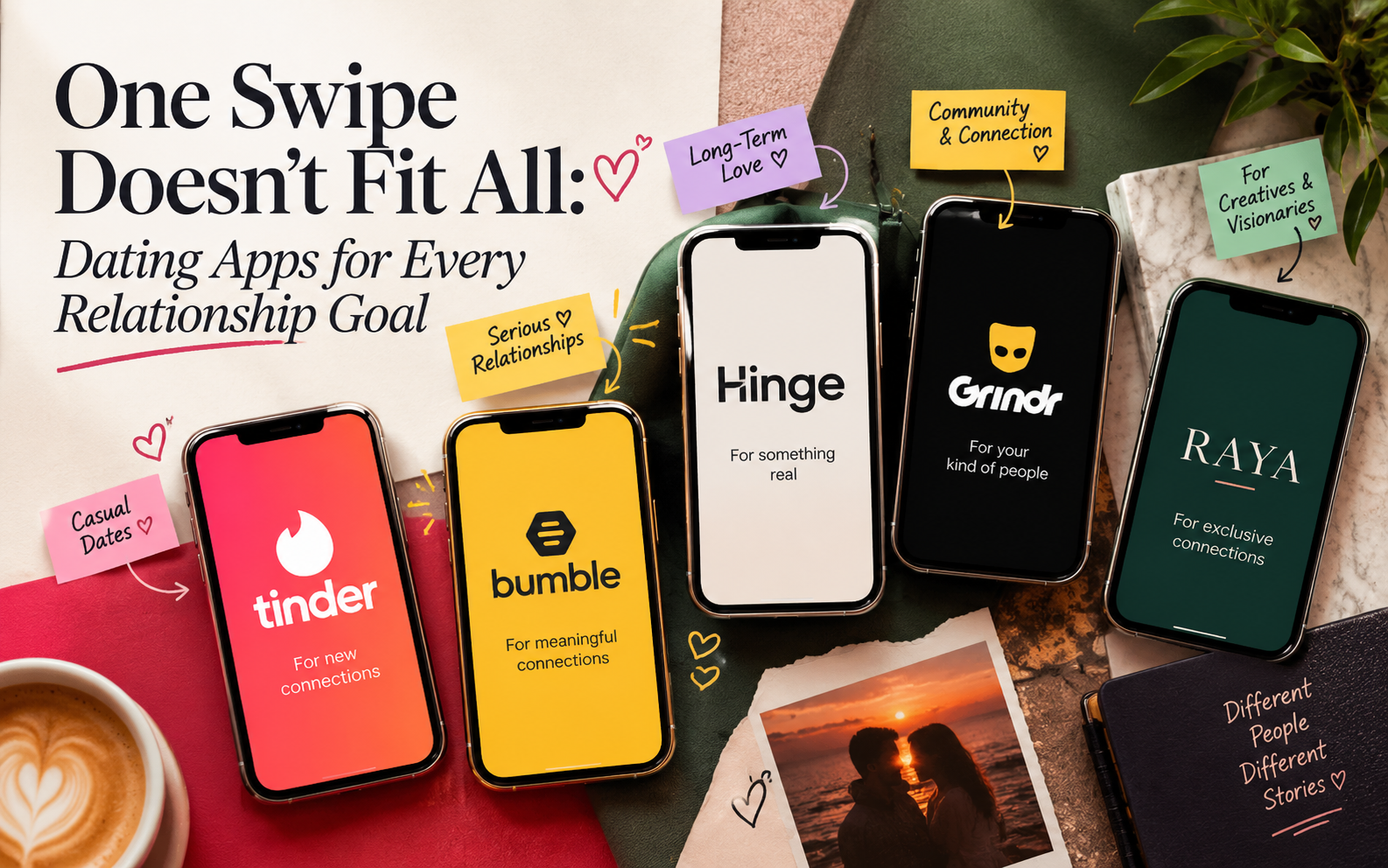
One Swipe Doesn’t Fit All: Dating Apps for Every Relationship Goal

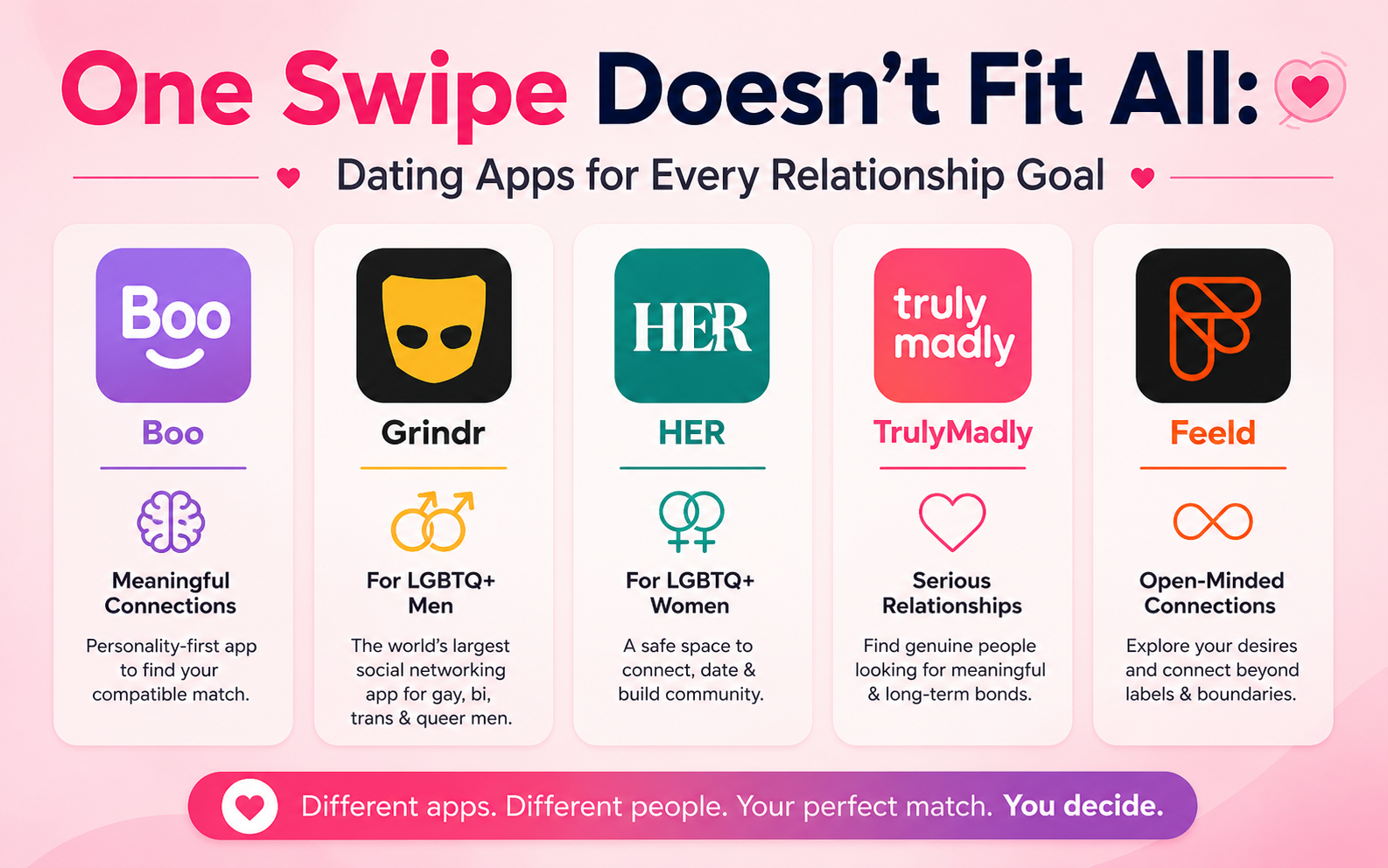
For years, online dating in India was largely synonymous with a handful of familiar names. But as conversations around love, companionship, and identity evolve, so are the ways people choose to connect. Today’s users aren’t all looking for the same thing, and they don’t expect one app to deliver it all. While some are searching for long-term relationships, others are seeking friendships, queer communities, meaningful conversations, or simply people who share their interests and values. As modern dating becomes more intentional, a new generation of platforms is stepping in to cater to these different needs. From apps built for serious commitment and LGBTQIA+ users to those helping people find friends or connect over common passions, there’s no longer a one-size-fits-all approach to finding meaningful connections. Here are the platforms redefining how India dates, befriends, and builds relationships in 2026. Boo: For Introverts Seeking Deeper Connections Small talk isn’t everyone’s love language, and Boo knows that. Designed around personality compatibility, the app uses the Myers-Briggs framework and shared interests to help users connect beyond appearances. Instead of endless swiping, Boo encourages people to build relationships based on values, communication styles, and common passions. It has become especially popular among introverts and those looking for slower, more intentional connections. For people who would rather discuss books, movies, or personality types than exchange generic pickup lines, Boo offers a refreshing alternative to traditional dating apps. Grindr: For Gay, Bi, Trans, and Queer Dating Long before many mainstream apps began prioritising inclusivity, Grindr was creating a space for queer connections. The location-based app remains one of the world’s most recognised platforms for gay, bi, trans, and queer people, allowing users to meet others nearby and build everything from friendships and communities to romantic relationships. In countries like India, where safe queer spaces can still

You May Also Like

Connect with us