
Rooted in tradition, India is a country that has survived cultures and crafts. The beauty of the country is personified in many of its cultural heritages and crafts enhancing the ambience and aesthetics of both the man and the locale. Be it the smooth shawls of Kashmir or the lovingly embroidered Gujarat Kutch work, there is love, skill and essence of the nation in every work of art it produces. The best preservers of memory of India are recognized by the World through the Geographical Indicators (GI) of the country’s multi-diverse states and territories.
Kerala’s Coconut Shell Crafts
Originating in the Land known as God’s own country, the coconut shell craft is a technique of crafting technically skilful and aesthetically beautiful brass embroidered objects from coconut shells. Centred in the regions of Thiruvananthapuram and Kozhikode Districts, this craft moulded the abundantly available coconut shells of the region into exquisite artifacts that bring the ambience of the coast into your living and drawing rooms.
Transforming the coconut shells into cups, flower vases, snuff boxes, nut bowls, powder boxes and intricate jewellery, this craft is an exclusive expertise of Kerala. Borrowing the techniques of woodcraft and the convenience of modern tools, the coconut shell craft modifies the naturally available coconut shells into beautiful handiworks of artisans that stand as an epitome of skill and allure. To the connoisseurs of art, coconut shell crafts are worthy collectables and a great mantlepiece to the common man.

Rajasthan’s Blue Pottery
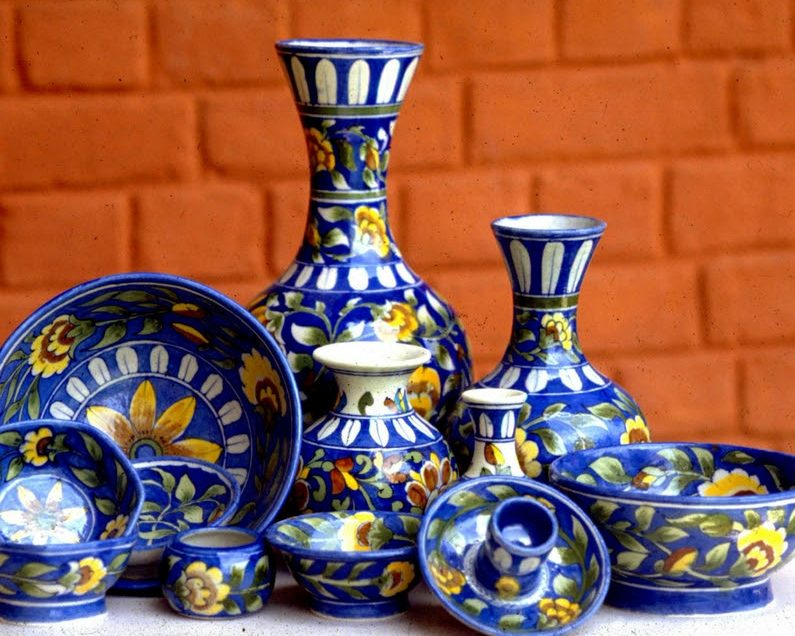
Draped in stunningly cobalt blue colours, Jaipur in Rajasthan is home to skilful pottery and artistry. This elegant art can be traced back to the 14th century to the period of the Mughals. Known for its distinctive blue and white glaze, blue pottery is an art that unquestionably stands out from any connoisseur’s collection.
The unique glaze of the pottery is achieved through a remarkable production process, made from a mixture of powdered glass, borax, and cobalt oxide and with a touch of the artist’s own hand through hand-painted elaborate and beautiful designs using natural colours.
Influenced by Persian designs and motifs, Jaipur pottery is made from ceramic materials and holds a delicate and royal ambience around the art of pottery. Apart from elegant pottery, several decorative items like tiles, door knobs, pots, vases and plates are also made in this royal category for the consumers to enjoy.
Andhra’s Leather Craft
Popularly made for the vanishing craft of Tholu Bommalaata from the Deccan region of India–Andhra Pradesh, the leather puppets have transformed into traditional and exotic house decorations. Traditional craft that has been practised from times immemorial, the leather craft has the technique of the artisan and the perfection achieved from the tools of stamps, knives, and punches. The culture, dating back to the 12th century, originated by depicting the epics of Mahabharata and Ramayana through leather puppets. The tradition slowly evolved from leather puppets to make its mark on the modern materials like lamps, wall hangings and more.
Kakinada and Nirmala Kunta are currently the centres of this artform keeping the art, tradition and the artisans alive. Embracing the nativity and presenting both epic and contemporary scenarios and characters, these exquisite decorations are one of the most sought after crafts of India.

West Bengal’s Madukarthi
Practised in the Sundarbans of West Bengal, the home to the world’s largest mangrove forest, this is the traditional art of West Bengal defined by the distinctive honeycomb or beehive-shaped structures using dried leaves. The art form that enjoyed the royal patronage of the Persians as well as the Muslim rulers, evolved itself to include mats weaved from fine silk.
In the present times, weaved from a reed local to the Indian State of West Bengal, Madur Kottir–Madukarti mats are a famous utility in most Indian households that make an intimate cultural connection. Also widely used for religious purposes, this craft has diversified into many products that include bags, purses, curtains, table runners, jackets and pen holders.

Karnataka’s Chanapatna Wood Craft
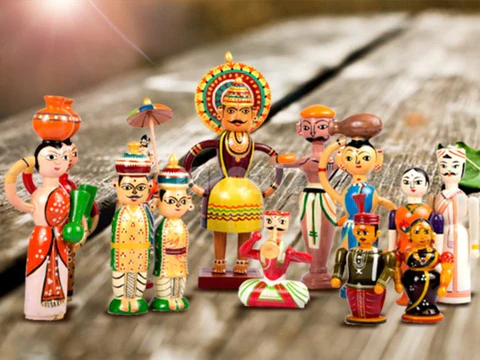
An authentic and thoughtful wood crafting technique unique to the Chanapatna region of Karnataka, this craft has influences of Persian and Japanese apart from Indian, introduced by Tipu Sultan. This century’s old craft with many layers and several stages, which include woodturning, lacquering, and painting, is especially famous for child-friendly wooden toys, though the craft’s utility extends to home decors and household utilities.
The techniques most prominently used to make toys, have now evolved to make more utilities like jars, wooden horses, abacus and more. Made with great thought towards safety using organic colours and blunt & smooth surfaces, Chanapatna woodcraft has carved its way into the hearts of art enthusiasts.
Varanasi Stone Jali Work
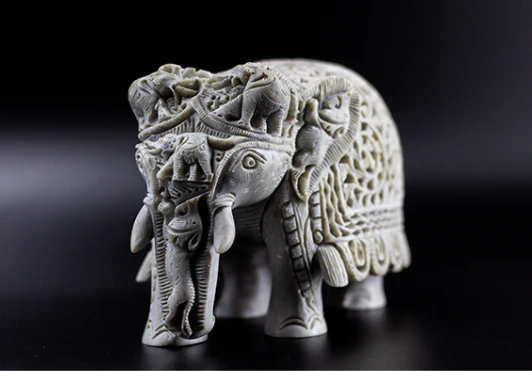
Keeping the craft alive from centuries ago, the Varanasi Stone Jali work craft involves the creation of intricate lattice or perforated screens made from stone, which include marble, sandstone, and granite. Using chisels, hammers and other tools, the artists specialize in carving out decorative and complicated yet beautiful designs out of stone. Floral motifs, geometric patterns and other traditional symbols are created by the magical and expert hands of the artisans producing awe-inspiring works of art. The objects that have the fortune to showcase the art include tabletops, boxes, coasters, trays, lampstands, small bowls, jaalis, and candle stands, though the most popular item remains the under-carved elephant.
Kashmir walnut wood carving
Designed on Walnut wood, abundantly available in the valleys of Kashmir, the craft has been a symbolic heritage of Kashmir. Inspired and designed using floral patterns, geometric designs and intricate motifs, the wood turns into a beautiful art piece in the hands of Kashmiri’s traditional and talented artisans to adorn tables, walls and even exquisite jewellery.
A delicate and ornamental craft infused with the culture and tradition of Kashmir, with hints of Persian and Indian artistry, the Walnut wood carving technique is a craft authentic and pride of the jewel of India – Jammu and Kashmir. With rich motifs of rose, lotus, iris, grapes and pears carved on the walnut wood, beautiful architecture and objects are the outcome of this technique. Own a part of these heritage tables, jewellery boxes, trays and more.

West Bengal’s Baluchari
Baluchari craft is famously weaved as sarees for and by the women of West Bengal and Bangladesh. Mythological stories are fondly weaved on the pallu of the silk sarees. Enhanced by vibrant colours obtained from natural dyes, the royalty of the silk fabric is a perfect foundation for the designs and skills of the art technicians.
With modern & changing times, this craft has shifted terrain to multiple fashion items of jackets, dresses, shoes, bags, wallets, and belts. The elaborate designs and the grandness of the sarees have delegated to other utility objects that are desired and wondered by the connoisseurs worldwide.

Telangana Ikkhat
Originating from the Malay-Indonesian word “mengikat,” Ikkhat stands for ‘to bind or tie’. Unique patterns that are achieved by tying or binding yarns before weaving is the pièce de résistance of this handiwork of the artisans of Southern India, mainly the region of Telangana. Orissa also has a unique dyeing and tying technique that stands apart from the Telangana Ikkhat. Nevertheless, Ikkhat has become symbolic of expertise and prestige owing to the intricacy of manufacturing and the beauty it inculcates into the fabric.
A distinctive technique of dyeing transferred expertly to fabric, Ikkhat is a display of patterns boisterous and delicate at the same time. Popular with the garments, Ikkhat has also found its medium of showcase in the form of beautiful purses, jackets, bedsheets, curtains, carpets and more. The whimsical part of this technique is that an optimum blurriness to pattern is symbolic to the skill of the craftsman.

Assam’s Muga Silk
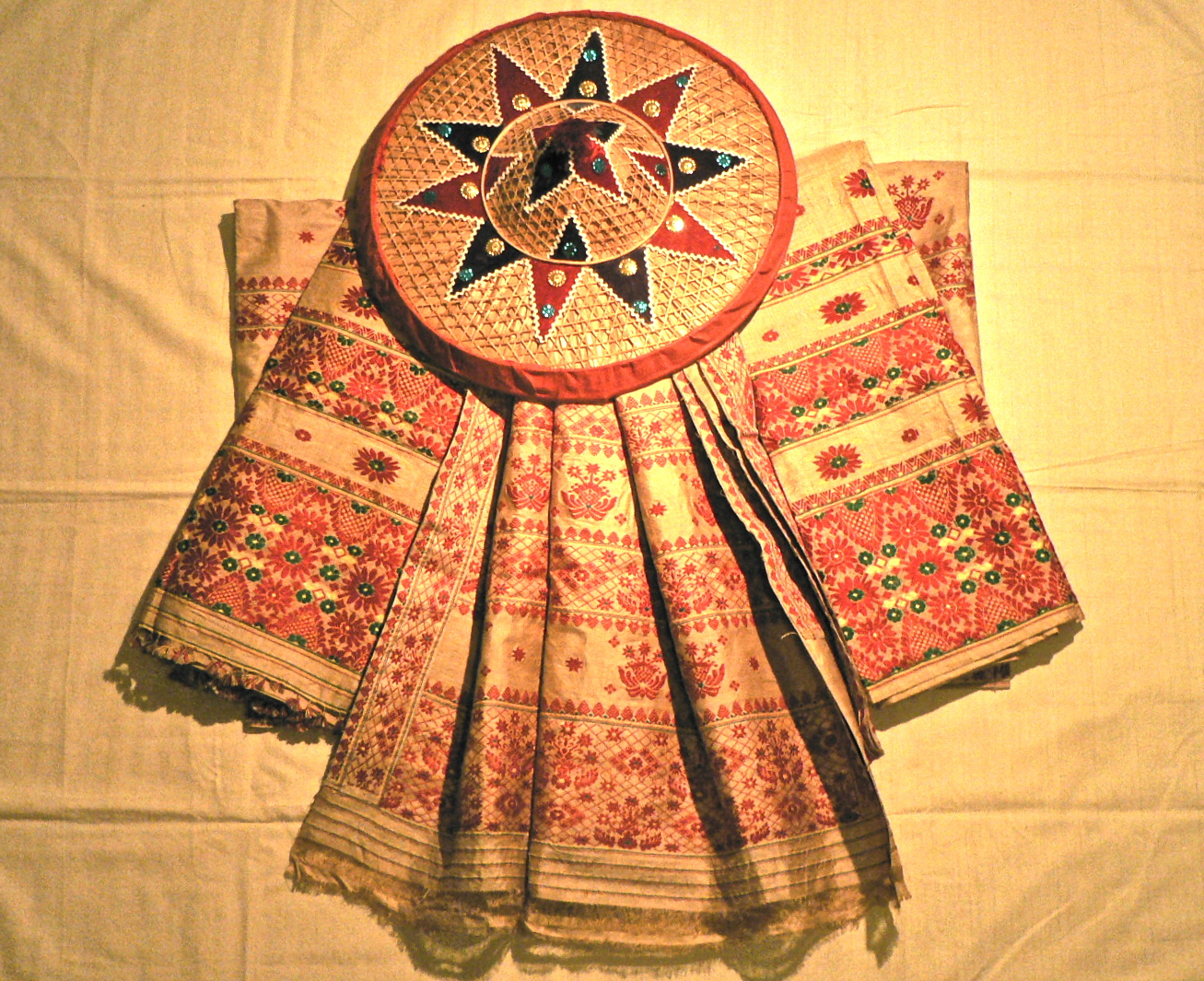
Produced by the silkworm Antheraea assamensis, found only in Assam, the Muga silk refers to the natural golden hue of the silk yarn derived from these silk worms. Known as the Golden Silk of Assam, the Muga silk is a delicately extracted silk which is very rare in the world and a characteristic of the well-preserved nature of Assam. Following an exhausting routine, the muga silk is delicately extracted from the silk worms to adorn the shape of its wearer or bearer.
With the characteristic golden threads weaved into exquisite fabrics with skilfully added motifs of contrasting colour adds great value to these silk which lasts longer than its weaver often becoming heirlooms of the natives. Apart from finding its utility in the traditional mekhela chadors, sarees, and dhotis, the garments from this silk are rapidly becoming symbolic of the high-end fashion from the Assamese region.
Himachal Pradesh Chamba Rumal
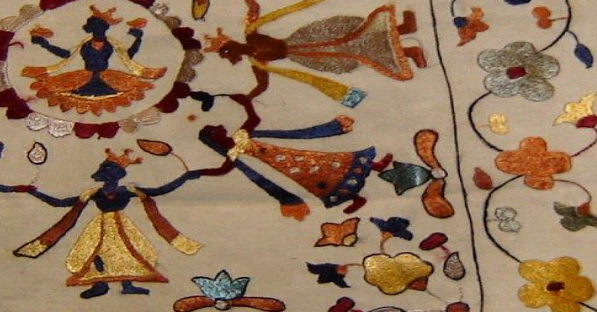
Symbolic of the delicate needlework and creative embroidery, the Himachal Pradesh’s Chamba rumaal is an exquisite piece of India’s heritage to honour. Originally used as ceremonial cloths for covering plates and bowls during feasts and weddings, these art forms have emerged to take their rightful place among one of the many unique and proud aritcrafts of the Indian subcontinent.
Directly translated as the Handkerchief of the rulers of Chamba of ancient India, the Chamba rumal are known for their embroidery craftsmanship. Personified through different techniques and skills of textiles, stitches and motifs, chamba rumal has evolved far beyond the display of skills on a handkerchief to dupattas, sarees, wall hangings and other decorations. Delicate work that involves various techniques of satin stitch, stem stitch, and chain stitch, Chamba rumal is truly a magnificent piece of artistry to own.
Gujarat’s Kutch embroidery
Gujarat’s Kutch Embroidery is a mirrored embroidery technique, a legacy of the western part of Gujarat carried on by the tribal women of the region. Rich mirror work, distinctive stitching, intricate designs and creative combination of patterns and colours are the USP’s of the craft and are sought out by art lovers across the world.
Finding base in the textiles of cotton, silk, and muslin, and inspired by nature, mythology, and everyday life, the Kutch embroidery is known for its exquisite needlework enhanced by the use of beads, mirrors, and sequins that adds beauty and grandeur to the already spectacular traditional art form. The Kutch Embroidered objects are every Indian tourist’s aspiration to take a part of Gujarat and India with them.

Uttar Pradesh’s Kannauj Attar
Famous as the perfume capital of India, Kannauj of Uttar Pradesh is home to artisans who have succeeded in capturing the scent of nature into their perfumes years immemorial. This flavour of craftsmanship is most used to make natural perfumes and often as agents in soap, shampoo, medicine and even incense sticks from the distillate of the process.
Flowers such as rose, kewra, chameli, bela, marigold, jasmine, lavender; herbs and spices such as cardamom, cloves, saffron, juniper berry, jatamansi and natural products like vetiver, are often used to manufacture the world famous attars in traditional methods passed down generations as legacy. A must have souvenir of the place is the shamama attar that is made from a secret recipe, a touch of thrill to the scent of the nation.

India is home to millions of such crafts that boggle the minds and tempt the rationales, and the government chose to preserve and value its traditions through the allocation of GI to protect both the art and the artisan. One can find a plethora of this inexhaustible talent under a single roof at the “GI tagged” website to own a bit of the diverse Indian art and culture.