
Startups Cleaning Ganga: Where Tech Meets Sacred Duty

Startups Cleaning Ganga: Where Tech Meets Sacred Duty

The Ganga is not just a river. She is a living goddess, a lifeline of civilization, a poetic symbol of purity, and paradoxically, a carrier of pollution. For centuries, her waters have cleansed the souls of pilgrims, nurtured fertile lands, and fed spiritual imaginations. But in modern India, the Ganga is choked by waste, neglect, and unfulfilled promises. Now, in an era where startups are disrupting everything from food delivery to fintech, a new generation of entrepreneurs is turning its gaze towards a nobler mission: cleaning the sacred river. DHANUSH KUMAR writes about the startups working towards restoring the Ganga’s glory.

The Ganga’s Crisis

Stretching over 2,500 kilometres, the Ganga flows through five states and supports more than 400 million people. Yet she is one of the most polluted rivers in the world. Industrial waste, untreated sewage, plastic, and religious offerings wrapped in non-biodegradable materials have contaminated sections of the river, rendering it a toxic drain. Despite massive government initiatives like the Namami Gange program, results have often lagged behind expectations. The reason? Bureaucratic red tape, fragmented accountability, and a lack of grassroots innovation. But where systems struggle, startups often thrive. And they are doing so with intelligence, grit, and heart.

Enter The Startups: Young Minds, Ancient Cause

1. HelpUsGreen: Turning Temple Waste into Wealth

Based in Kanpur, HelpUsGreen is collecting tons of floral waste from temples and converting it into organic incense sticks, compost, and biodegradable products. Rather than letting pesticide-laden flowers rot in the river, they are transformed into eco-friendly products through a process the founders call flower cycling. Over 11,000kg of waste is diverted from the Ganga daily, and employment opportunities are created for rural women. This is innovation rooted in reverence.

2.JalTara: Water Purification Meets AI

Using AI and IoT, JalTara monitors water quality in real time and alerts local authorities about pollutant spikes. It places solar-powered water purifiers at key ghats, ensuring pilgrims and locals alike access to clean, drinkable water. Their system also uses blockchain for data transparency, because sacred duties require sacred accountability.

3.Ganga Rejuvenation Lab: Youth, Data and Action

An initiative by a group of IITians, this startup focuses on data-driven river restoration. Their tech stack includes drones, satellite imaging, and machine learning algorithms to map pollutant sources and recommend actionable interventions. They work in partnership with local municipalities, offering them not just problems, but solutions.

Why This Matters: A River’s Soul and A Nation’s Future

Cleaning the Ganga is not just an ecological imperative. It’s a cultural resurrection. When startups enter their space, they challenge the myth that faith and science must be at odds. These efforts are living proof that dharma and data can walk hand in hand.

This new wave of startups brings:

  • Scalability: Their models are lean, adaptable, and replicable across other rivers and cities
  • Sustainability: Most are built around circular economies and low-carbon footprints
  • Community Engagement: Unlike top-down policies, these are grassroots-driven, involving local communities, volunteers, and youth.

The Way Forward

The need of the hour is a collaboration. Government agencies, corporations, non-profits, and spiritual institutions must rally behind these entrepreneurs. The solution is not just about smart sensors or waste collection; it’s about nurturing a national mindset shift. 

Conclusion

To clean the Ganga is not merely to remove filth, it is to reclaim our sense of sacred responsibility. These startups are not just cleaning a river; they are cleansing a conscience. With algorithms, and composters, sensors, and Samaritans, they are weaving a new kind of bhakti, one that honours tradition through transformation. The Ganga has waited long enough. Now, her children must rise not with empty rituals, but with radical action.


Leave a comment

Your email address will not be published. Required fields are marked *

Top AI Tools Everyone Must Use in 2026

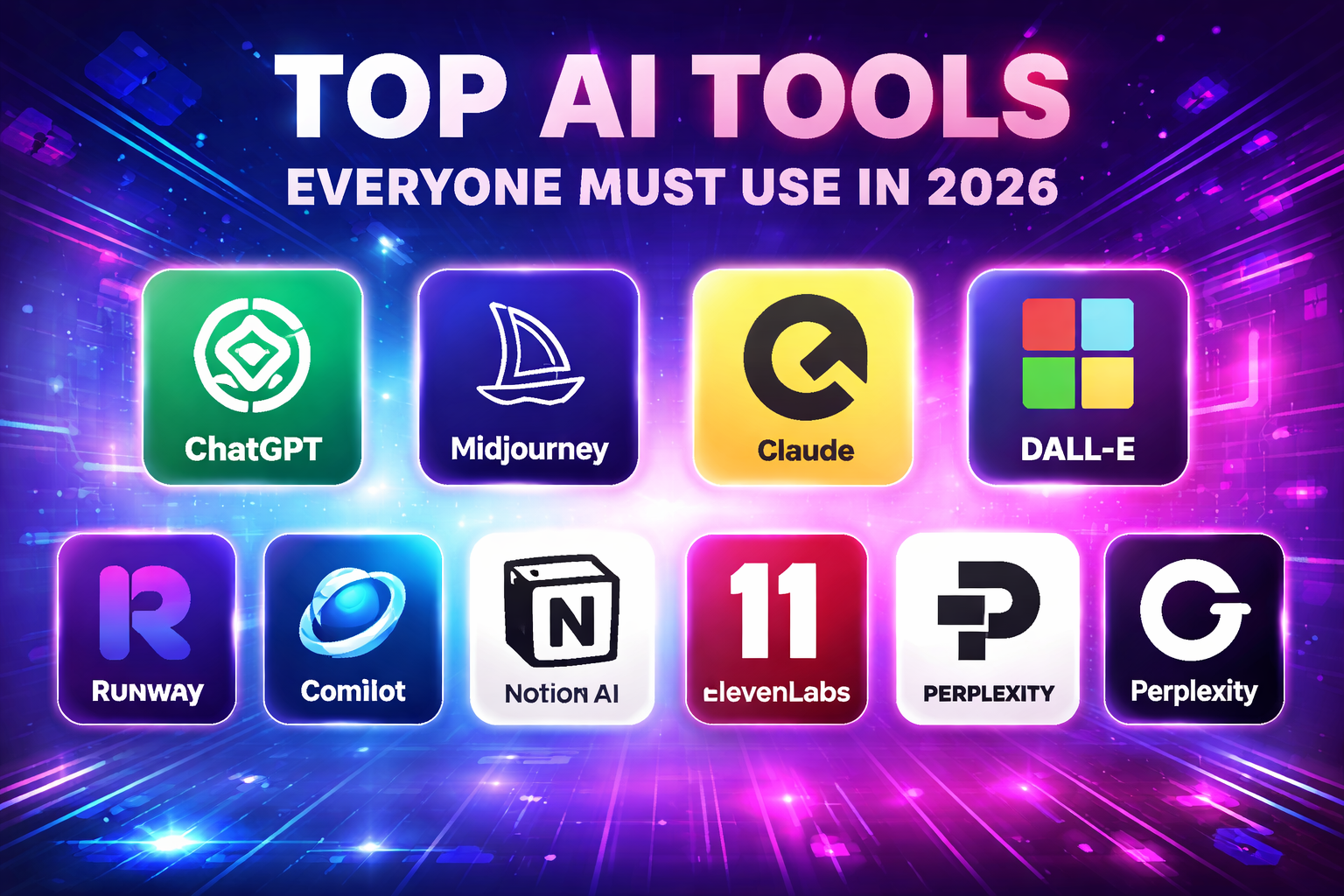
Artificial Intelligence is no longer limited to tech companies or programmers. In 2026, AI tools are becoming essential everyday companions for students, professionals, entrepreneurs, designers, and content creators. From writing emails and designing visuals to coding software and researching complex topics, AI-powered platforms are transforming how we work and create. Experts say generative AI tools now help automate repetitive tasks, speed up creativity, and improve productivity across industries. They allow users to produce content, analyze data, generate visuals, and even compose music within minutes. Here are some of the most powerful AI tools everyone should consider using in 2026. 1. ChatGPT – The All-Purpose AI Assistant ChatGPT remains one of the most widely used AI tools globally. It can help users write articles, generate ideas, summarize information, plan projects, and even assist with coding. Its conversational interface allows people to interact with AI as if they were talking to a colleague. Best for: Writing and editing content Brainstorming ideas Coding and debugging Learning new topics For many professionals, ChatGPT has become a daily productivity companion. 2. Google Gemini – AI for Research and Productivity Google Gemini is designed to integrate deeply with Google’s ecosystem, including Gmail, Docs, Sheets, and Android devices. It excels at analyzing large amounts of information, summarizing reports, and answering complex research questions. Best for: Research and information analysis Email drafting and document summaries Data insights and knowledge work Because of its integration with Google tools, Gemini is especially useful for students and professionals. 3. Microsoft Copilot – The Workplace AI Microsoft Copilot is embedded directly into Microsoft 365 apps like Word, Excel, Outlook, and Teams. It can generate reports, create presentations, summarize meetings, and analyze spreadsheets. Best for: Office productivity Data analysis in Excel Drafting professional emails and reports For businesses and corporate teams, Copilot acts

India’s New Digital Leisure Trends: From Streaming to Interactive Gaming

India is increasingly going digital in every facet imaginable. That should not be super surprising given that the country now has close to a billion Internet users and more than six hundred and fifty million active smartphone ones. According to many, the digital revolution in the world’s most populous nation began in the mid-2010s, when the Digital India platform launched, spreading fiber optic infrastructure across the nation, Reliance Jio activated 4G while lowering data transfer rates, and Chinese smartphones entered this market. These three things, along with the rise of UPI-powered payments, fueled a wave of digital adoption in The Golden Sparrow, which dramatically increased during the start of the 2020s, amidst the COVID pandemic and stay-at-home government-imposed measures. This was a time when people had to look for more modern forms of entertainment, and OTT streaming platforms posted record user numbers. People also turned to playing mobile games and enjoying sites like Casino Days in India. Hence, the 2020s marked a new era in leisure activities in this part of the world, and below, we explore the trends that have defined this new age characterized by novel ways to have fun. The JioHotstar and OTT Streaming Explosion At the start of this decade, India saw a massive expansion of OTT users, with the number of individuals subscribing to these platforms continuing to grow throughout today. As noted above, COVID-19 spurred many Indians to test streaming video entertainment. Because movie theaters were closed for months during the pandemic, some film studios decided they could not wait for them to open back up and chose to release their movies directly on streaming platforms. This further boosted the visibility of Over-the-Top services, as they are called here, which skyrocketed their subscriber counts. The fact that more people than ever had smartphones that

2026 Automotive Outlook: The Most Anticipated Cars, Bikes, & EVs

The wait-and-watch phase of the Indian automotive market is officially over. If you have been holding off on a new purchase, 2026 is the year the industry finally delivers on its biggest promises. We aren’t just looking at minor facelifts; we are looking at the return of icons, the entry of mass-market EV giants, and a shift toward experience-led cockpits. Whether you are a long-distance tourer or a city commuter looking to slash your fuel bill, the 2026 line-up is designed to solve specific pain points. Here is what you should expect to see in showrooms and on the streets. The Battle of the EV Titans: Tata Sierra Vs Maruti e-Vitara January 2026 is set to be the most consequential month for Indian EVs, as two of the most prominent players launch their flagship solutions. Tata Sierra.ev–This isn’t just a car, it’s a nostalgia trip. Look for the Lounge Seating in the rear and the panoramic sunroof. While the 500km claimed range is the headline, the real winner is the Gen 2 Acti.ev platform, which promises much better floor space and a flat rear floor for passengers. Maruti Suzuki e-Vitara–This is Maruti’s first serious move into EVs. Don’t just look at the battery, look for the AllGrip-e AWD system. It’s designed to provide the grip of a traditional SUV without the mechanical lag. Expect a real-world range of approximately 350-400 km from the larger 61kWh pack. The Tech Forward Family SUV: Mahindra XUV.e8 If you found the XUV700 impressive, the e8 is designed to turn the cabin into a command centre. The triple-screen Dashboard is the standout feature. We are talking about three 10.25-inch high-definition displays stretching across the entire width of the car. Beyond the screens, expect 175kW fast charging. This means a 20 to 80% charge in under

How Melbet Turns Digital Assets into Real-World Wins

On Melbet, crypto is treated like a working balance, not a side feature. A player can register, verify a profile, and fund the same account with Bitcoin or INR, then use it across sports, casino, and live tables. The key detail is simple: once coins land on the platform, they are converted into an internal currency, so odds, stakes, and payouts stay clear even when the original deposit was in BTC. That removes guesswork when a slip shows ₹2,000 while the user actually sent a fraction of a coin. Using the app to move crypto in and out Most Indian players now handle deposits on their phones, so the app flow matters more than the website. Installing the Android package through the melbet app gives direct access to crypto wallets, UPI deposits, and withdrawals in one place, without jumping between browsers and exchange apps. A typical pattern looks very practical: top up with BTC, bet on cricket or football, then withdraw part of the profit in INR to UPI and leave the rest in crypto for later. The same account is used, but the route in or out changes based on the user’s plan for that week. What actually happens to your coins When someone sends Bitcoin to Melbet, the system generates a unique address per account. After network confirmations, the platform credits the balance in the wallet section. For everyday play, users usually see an amount shown as rupees or dollars, not raw BTC. That helps when setting stake sizes for pre-match slips or live markets, especially on busy cards like IPL or Champions League days. For most active players, it is worth setting a personal structure for balances in the account, not just reacting to wins. A simple approach can look like this. One part for regular bets

You May Also Like

Connect with us