Spot the Difference: How to Identify Real and Fake Elaichi 

elaichi, is one of the most valuable and aromatic spices used in Indian kitchens

Cardamom, commonly known as elaichi, is one of the most valuable and aromatic spices used in Indian kitchens. From masala chai to rich curries and sweets, its flavour is unmatched. However, with rising prices and increasing demand, the market has seen a surge in adulterated or fake cardamom. Consuming such fakes can not only compromise flavour but also pose health risks. Hashtag Magazine tells you how to distinguish real elaichi from the counterfeit ones and what consumers and authorities can do about it.

1. Why Is Elaichi Being Faked?

Cardamom is one of the most expensive spices by weight. High-quality green cardamom from regions like Kerala and Karnataka fetches premium prices. To capitalise on this, unscrupulous traders often mix inferior or dyed cardamom pods, or even entirely fake seeds, into the supply chain. Some even dye old or dried pods green to make them look fresh.

2. How to Identify Real Elaichi

a) Colour and Appearance

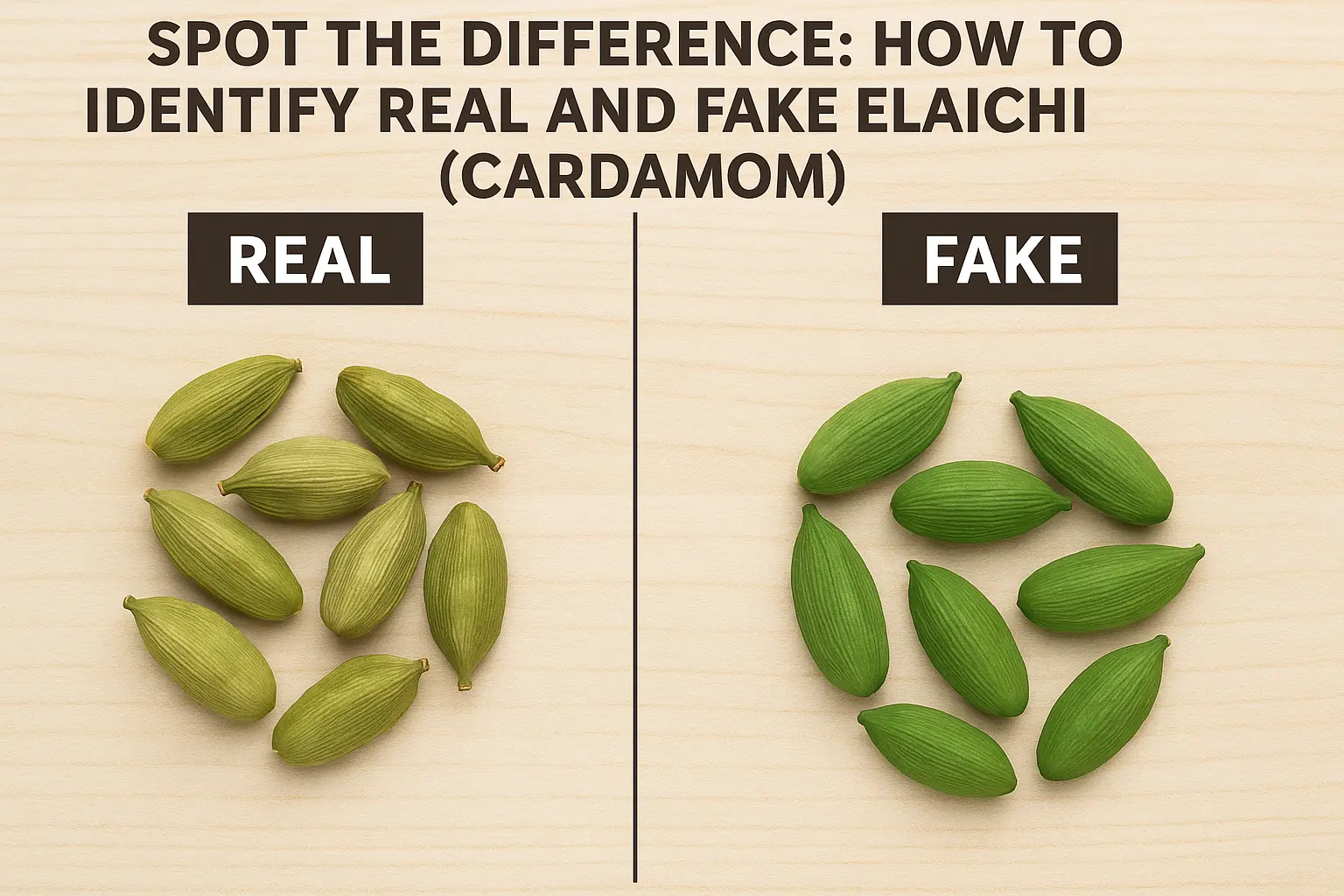
  • Real elaichi: Natural green, not overly shiny or unnaturally bright. The shade can range from pale green to deep forest green, depending on the region.
  • Fake elaichi: Often unnaturally bright or uniform in colour. If pods appear unusually shiny, it may be due to artificial colouring.

b) Smell

  • Real elaichi has a strong, sweet, aromatic smell. You’ll recognise it instantly as the typical elaichi fragrance.
  • Fake or dyed pods may lack fragrance or smell slightly chemical or artificial.

c) Texture

  • Gently press a pod.
    • Real pods are firm but may crack slightly to reveal tiny black seeds inside.
    • Fake pods may be unusually soft, hollow, or have empty or dried-out interiors.

d) Water Test

  • Drop a few pods into a glass of warm water.
    • Real elaichi: The pods may sink, and the water may slowly release the natural fragrance.
    • Fake or colored elaichi: May float due to hollowing or release a greenish tint indicating artificial dyes.
3. Health Risks of Fake Elaichi

Artificial dyes and chemicals used to make fake elaichi look fresh can be toxic. Continuous consumption may cause:

  • Headaches
  • Nausea or digestive issues
  • Long-term liver or kidney problems in extreme cases
4. What Can Consumers Do?

Buy from Trusted Brands

Purchase elaichi from reputed brands or certified organic sellers. Avoid loose products from unverified sources in local markets.

Check Packaging

Look for FSSAI-certified or organically labelled packaging. Check for harvest and expiry dates.

Do At-Home Tests

Perform simple visual checks and water tests at home. If in doubt, avoid consumption.

Report Adulteration

If you find adulterated spices, report them to local food safety authorities or consumer forums.

5. What’s Being Done About It?

Government Action

Food regulatory authorities, such as the FSSAI (Food Safety and Standards Authority of India), are tightening checks on spice adulteration. Random inspections and lab testing are being conducted, especially in wholesale markets.

Technological Intervention

Modern packaging and sourcing methods, such as QR codes for traceability, are being adopted by ethical spice brands to ensure transparency. Consumers can scan and verify the origin of the product.

Education & Awareness

Consumer awareness campaigns and media coverage have increased, encouraging people to be more mindful of their food sources.

Conclusion

Elaichi is more than just a spice it’s a part of Indian culture, tradition, and cuisine. But in a market where appearance often trumps authenticity, it’s crucial to stay vigilant. By learning to spot the difference between real and fake elaichi and supporting ethical producers, we protect both our health and our heritage. Always remember: a little awareness goes a long way when it comes to what’s on your plate.

Leave a comment

Your email address will not be published. Required fields are marked *

Como Agua Reimagined: Goa’s Freshest Culinary Escape

Tucked into Vagator’s lush tropical edge and gazing out at the Arabian Sea, Como Agua has always been one of Goa’s most striking venues. But this season, it has transformed from a beloved pizzeria and Negroni bar into a full-bodied culinary destination one that’s as committed to craft as it is to creativity. Ratna Vuppala gives a lowdown of this place. A Menu Built on Freshness — and You Can Taste It The refreshed menu, led by Chef Amit Kumar, is anchored by a simple, rare promise: no processed ingredients. Everything from the citrus infusions in the cocktails to the buttermilk in the fried chicken is made fresh, in-house, and handled with intention. My meal began with the Citrus Avocado Toast, an unassuming dish elevated by its creaminess and surprising brightness. The avocado was lush without being heavy, with citrus cutting through in all the right ways. The Fried Chicken Tenders were a standout juicy, crisp, and coated in a house-made buttermilk batter. The sweet chilli dip on the side delivered the perfect hint of warmth without overpowering the chicken’s tenderness. Then came the star of their new commitments: the Burrata with Garlic Chimichurri, served with warm focaccia. Light, fresh, fragrant and unmistakably high-quality. Their fresh mozzarella and burrata are made in-house using A2 milk, giving the cheese a rich yet clean flavour that sets it apart from anything you’ll usually find in Goa. Pasta That Surprises, Pizza That Comforts For mains, the Fettuccine was easily one of the best I’ve had in recent memory silky, perfectly cooked, and subtly indulgent without being overwhelming. The Spaghetti Aglio Olio was simple, bold, and executed with confidence: exactly how Italian classics should be. Of course, Como Agua’s heritage lies in its pizza and their Neapolitan-style pies, slow-fermented for 48 hours, continue to

India’s Hottest Food Trends For 2026: What’s On Every Menu

Food in India has never been just about taste, it’s about tradition, togetherness, and transformation. And as we step in 2026, the Indian palate is rewriting its story. This isn’t just about what’s served on our plates, it’s about why we eat, how we eat, and who we are becoming as a nation. The new year brings an explosion of innovation to our kitchens and menus. From hyper-local ingredients finding Michelin- star fame to Luxe Indian Desserts, India’s culinary scene is brimming with reinvention. It’s a delicious balance between ancestral wisdom and futuristic creativity. Dhanush Kumar takes you on a flavorful journey through the hottest food trends of 2026, the ones already shaping how India eats, cooks, and celebrates food. 1. Conscious & Climate-Smart Eating 2026 is the year Indians are eating with awareness. Sustainability isn’t a buzzword anymore, it’s a lifestyle. Chefs and households alike are turning to climate-friendly menus featuring millets, seasonal vegetables, and plant-based proteins. Restaurants in metros like Bengaluru, and Delhi are championing “Zero-waste cooking.’ Where every peel and stalk finds a purpose. Expect menus that proudly mention carbon footprint scores, ethically sourced grains, and farm-to-table origins. 2. Regional Indian Revival India’s culinary roots are deep, diverse, and now rediscovered. Luxury restaurants are now serving Heirloom Andhra pickles, Nagaland’s smoked meats, Kashmiri haakh, and Cheetinad kuzhambhu with five-star flair. 2026 is seeing a surge in hyper-regional pride, food that celebrates dialect, soil, and story. Chefs are collaborating with home cooks and village artisans, ensuring authenticity isn’t lost in translation. What was once humble “ghar ka khana’ is now the most desired plate in fine dining. 3.Fusion Thalis Fusion thalis are the talk of the town. Imagine a South Indian dosa paired with Thai Peanut chutney, or butter chicken sliders served with Korean kimchi. Restaurants across Mumbai,

Farzi Beach Goa: Cocktails, Sunset Vibes & Playful Plates by the Sea

If you’re looking for a beachside spot in Morjim that mixes sundowner energy with inventive cocktails, Farzi Beach Goa is worth a stop. Part of Zorawar Kalra’s ever-growing stable of Farzified concepts, this laid-back restaurant at Mayfair on the Sea brings Farzi’s trademark playfulness to a breezy coastal setting, complete with live music and a front-row view of the Arabian Sea. Sip: Creative Cocktails by the Shore The bar menu is where Farzi Beach really sparkles. The KitKat Picante featuring tequila, fresh watermelon, Tabasco, and lime is an instant mood-setter, balancing sweet heat with tropical freshness. Picante lovers can also try the Wasabi Fistron, a sharp kick of wasabi, mint, and cucumber, or the Habanero Picante for a deeper spice hit. From the Farzi style creations, the Kokum Collins (Goan kokum puree, gin, citrus) is tangy and refreshing, while the Chuski Margarita riffs on the classic with an aam panna chuski perched in the glass. With an extensive cocktail list covering everything from fruity spritzes to smoky infusions, there’s something for every palate and every Instagram story. Bite: Fusion Plates & Familiar Comforts Farzi Beach’s food menu is extensive, featuring a diverse range of Indian, Asian, European, and Middle Eastern flavours. Tapas like Dahi Puchka Shots and Hibiscus Pani Puri are playful and photogenic the latter comes with a rose-rimmed edge and the option of spiking it with vodka. The Asparagus & Edamame Dim Sum is soft and fresh, while the Dal Chawal Arancini cleverly fuses homestyle comfort with Italian crispness. For non-vegetarians, the Chicken Changrezi Quesadilla stands out with its juicy filling and a smoky red-pepper sauce. Pizzas are crowd-pleasers too: the Tropical Temptation is all about sunshine flavours, and the Jasper Chicken Pizza piles pulled chicken, red paprika, and spring onion over a thin crust. If you’re looking

The New Wave of Indian Fine Dining

From luxury ice cream to buzzy rooftop clubs, India’s dining scene is brimming with exciting new openings. Here’s a look at the freshest launches across Bengaluru, Hyderabad, Pune, and Mumbai. Nandhini Opens Grand New Outlet on St. Mark’s RoadWhere: Bangalore Bengaluru’s iconic Andhra dining destination, Nandhini, has unveiled its latest and most ambitious outlet yet on St. Marks Road, opening September 10th. Spanning 6,000 sq. ft. with a 250-seat capacity, this marks one of the brand’s most significant projects to date. Designed by Reshma Raju & Nishant Raju of Abstract Design Studio, the space blends tradition with contemporary flair, inspired by Bengaluru’s T2 Airport and its “Garden City” identity. The outlet offers thoughtful experiences, such as the Biryani Bell ritual and Polaroid giveaways, alongside two private dining rooms for intimate gatherings. Guests can enjoy Nandhini classics, including Andhra Meals, Chilli Chicken, and Nellore Biryani, as well as exclusive new dishes such as Gunpowder Popcorn, Paneer Ghee Roast Biryani, Appam with Mutton Chops, and more. A refreshed bar menu featuring beer on tap and signature cocktails complements the fiery Andhra flavours. With 18 outlets in Bengaluru, Nandhini now sets its sights on national and international expansion, bringing Andhra cuisine to the global stage. SALT Restaurant All Set To Launch Its Second Outlet Where: Hyderabad Adding to the city’s evolving dining scene, SALT is set to open its second outlet in Hyderabad, offering a fine-dining experience that celebrates Indian cuisine with a modern twist. Already loved in Chennai, Bengaluru, and Pune, SALT lives up to its tagline “Indian Food Made Interesting” with Chef Balachander leading the charge. The menu spans across India, from Galouti Kebabs and Butter Chicken Lollipops to Alleppey Fish Curry and Masaledar Prawn Biryani, complemented by inventive mocktails like Kala Khatta and Turmeric Maple Hot Toddy. The new space

You May Also Like

Connect with us