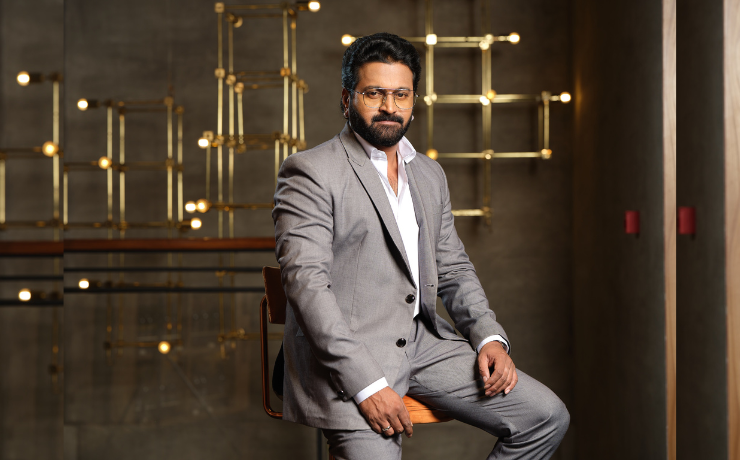
Rishabh Shetty – Dedicated to the craft of Filmmaking

Rishabh Shetty - Dedicated to the craft of Filmmaking - Hashtag Magazine

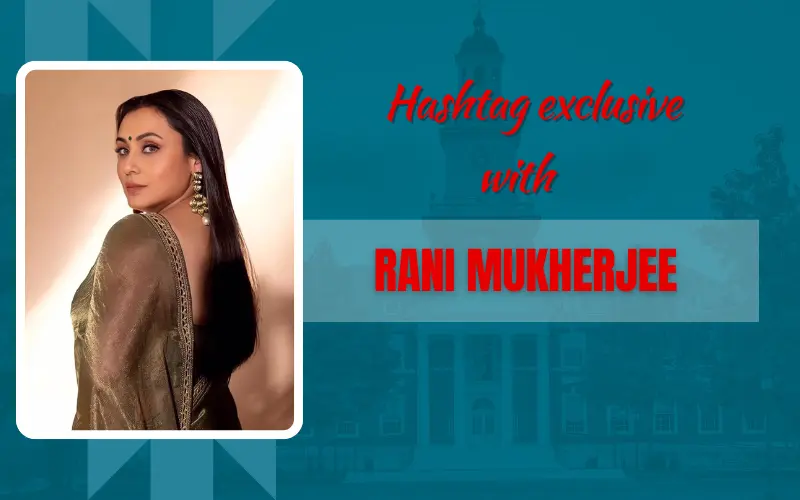
While the movie Kantara continues to make and break records at the box office, the lead actor and director Rishabh Shetty is grabbing eyeballs for all the right reasons. 

When some Government officials visited actor Rishabh Shetty to invite him to be a guest at an upcoming function and asked him how he was feeling, his answer was simple, “normal.” And this is exactly how this exclusive conversation with Bindu Gopal Rao flowed. The actor is amicable and has no baggage of being the face of the highest-grossing film in Karnataka, earning over Rs. 400 crores beating KGF: Chapter 2.  Born Prashant Shetty, he grew up in Kundapura and studied in Bengaluru. Doing all kinds of jobs from a mineral water business to dabbling in real estate and hotels, he armed himself with a diploma in film direction from Bengaluru’s Government Film and TV Institute.After acting in movies like Thuglak, Lucia, Sarkari Hi. Pra. Shaale, Harikathe Alla Girikathe among others, he has also directed movies like Kirik Party, Katha Sangama and Shivamma. His recent release that has been bankrolled by Hombale Films, Kantara which he has both acted and directed in, has made him a household name, and with the right reason. The movie that straddles a social issue using a traditional, spiritual practice strikes the right chords and gives the message without being preachy or trying too hard. And this is something that gives the audience an insight into Shetty’s deep-rooted love for the art and craft of filmmaking.

How do you look back at your decade plus journey in films?

It is just a journey – every film teaches you something and adds to your experience. We try to correct mistakes of the past and make new ones (laughs). It is a learning process for me as each movie teaches me an aspect of filmmaking.

It is just a journey – every film teaches you something and adds to your experience. We try to correct mistakes of the past and make new ones.

For someone who struggled with odd jobs to make it in the industry, what kept you motivated?

I do not think too much about anything and while I had a goal to do something in the film line, there is also a need to survive which means that I had to do odd jobs. While I come from a middle-class home, we are from a reputed family erstwhile Panchayat family. We lost a lot of agricultural lands but had enough to lead a comfortable life. But we all need to work for survival, and I saved a portion of what I earned so that I could make a career in the movies. I think my goal was clear, so I also happened to meet people from the industry.

How did you get your first break? Were you nervous or excited?

I never felt it was a break, for me it was just like the other job ended and this one started. I feel that is how things must be and while everyone is saying Kantara is a big success (we have a Tulu language release pending), for me it’s a job done, and I look at what next. You should not have baggage and in films as I know, neither success nor failure is permanent and it’s all about that one Friday.

In films as I know, neither success nor failure is permanent and it’s all about that one Friday.

As you dabble being an actor, director, writer, and producer, have you felt it is a lot to do or you like doing everything?

I do not look at it like that. I came to be an actor but there were different situations created. I thought of starting through the route of an assistant director and became enamoured by the filmmaking process that gave me a lot of happiness. This was also the time when I faced failures as an actor and in business and looking for a job was my job. At that time all I asked God was to give me so much work that I would not have time to even scratch myself. I just love being busy. When I met Rakshit (Shetty), there was a turning point as we had a good exchange of ideas being technical and I learnt a lot. This is when I started writing as well and had also made up my mind to direct. When I worked with Rakshit on Ulidavaru Kandante in 2014, it was a collaborative effort and he would make all the shot divisions and it gave me immense confidence about film making. And I like direction as I like stories and controlling the narration.

When writing Kantara, did you ever imagine that it would become so successful?

When I narrated the film to Ajaneesh Loknath (music composer), I told him, something will happen, I don’t know what but it will be something and will connect with the audience. I told him we must put our best efforts for the movie as this is something that is once in a lifetime. We started in April 2021, wrote in May 2021, and started shooting in parallel sets in September 2021. I felt there was some energy but never imagined it would become so big.

The subject of Kantara is very unusual. While you have said you grew up watching the Bhoota Kola performance, how did you prepare for the role?

The first thing when doing such a film is that you must believe in it, and I believe in Daiva Aradhane (the worship of spirits also called Bhoota Aradhane). I have seen the same growing up in Kundapara and it extends across Tulu Nadu (Dakshina Kannada district) till Kasargod and beyond. This is not an art form but a belief and a ritual and I had to do it under the lens of spirituality. I went to Dharmasthala and offered prayers to Manjunatah Swamy and Annappa Swamy. I went to the community of the daivaka nartakas (divine dancers), told them the story and had them with me when I did the movie. They were happy and they guided me through the movie until the release. When I was doing these scenes, I abstained from non-vegetarian food and would eat the prasad and start shooting through the night. Once I applied the paint, I would not eat anything till I removed it. 

I never felt it was a break, for me it was just like the other job ended and this one started. I feel that is how things must be and while everyone is saying Kantara is a big success, for me it’s a job done, and I look at what next.

Can you share some experiences you had when shooting this film?

I had many experiences that I will keep to myself but all I will say I had a protected feeling. There was an energy that protected us through the shooting.

Does the blockbuster success of the movie put unconscious pressure on you?

When the movie was about to be released, I had a sense of heaviness. When people saw the movie, some of them started seeing me differently. One of the women who is part of the family of the artists, fell on my legs and I did the same, but it felt too heavy, so I stopped visiting theaters after that. I do not want to be seen as God.

How do you choose scripts to act/direct?

When I am acting, if I like the story and character, I will say yes. When directing, I like social issues and when it is layered with storytelling and anything that talks of our culture. With Kantara also this is what I wanted to do, and I like to create new genres and work on different issues every time. 

What do awards mean to you?

Awards are good appreciation and there is always an attraction about it. Just like in our childhood when we were given a cup when we won something, there is always a good feeling when your work is appreciated.

What next for you?

As of now, I am not working on anything as I am on a break (half of which is done). I have spent time with my family on a holiday and am continuing with some temple runs. I will start in January next.

Leave a comment

Your email address will not be published. Required fields are marked *

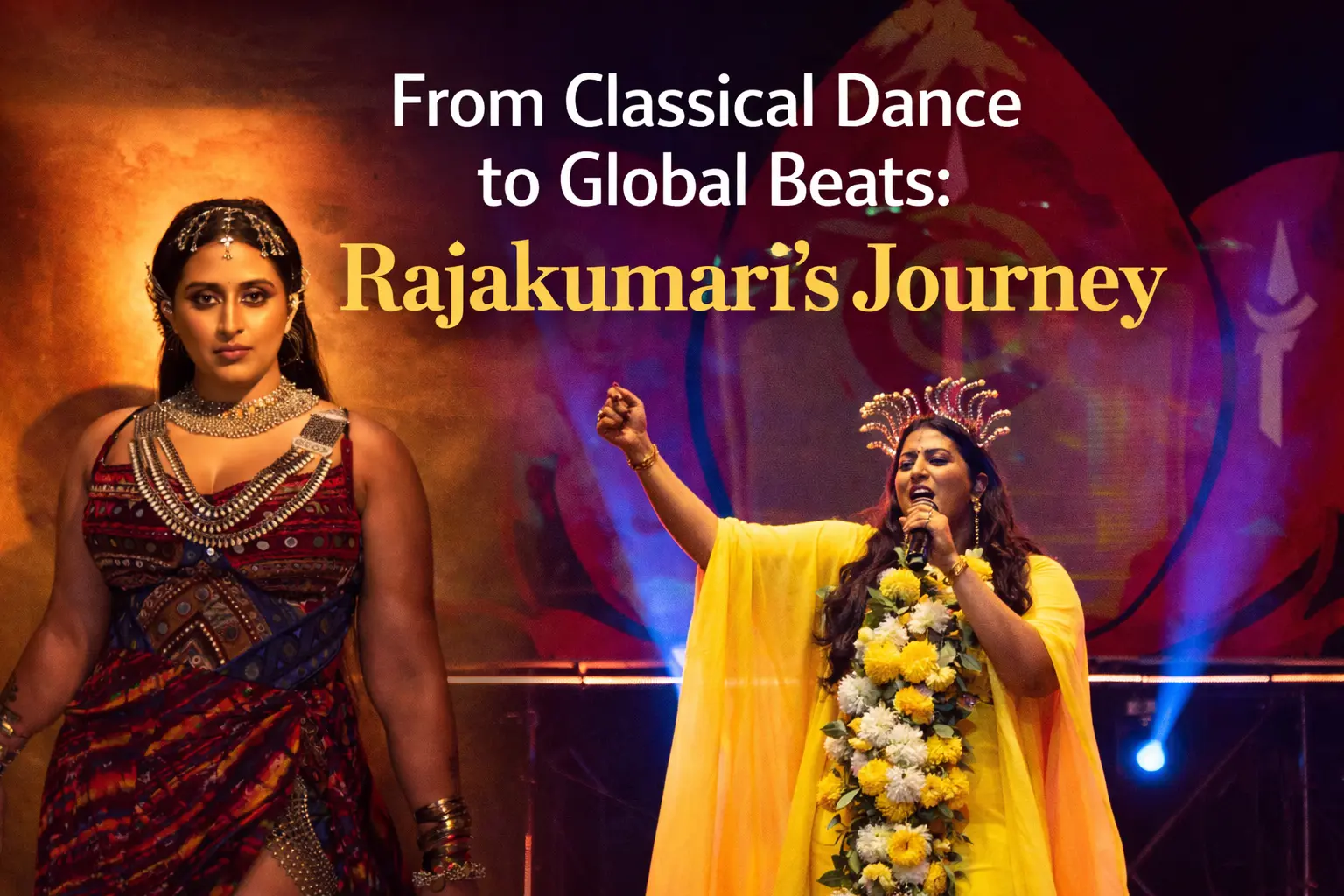
Rajakumari: The Artist Bridging Classical Heritage and Rap

Svetha Yallapragada Rao, professionally known as Rajakumari, is based in Mumbai. She holds a BA in Religious Studies and comes from a family of doctors, where education and discipline were deeply valued. However, it was Indian classical dance that shaped her most profoundly. She began training at a very young age, immersing herself in tradition, mythology, and devotion. Reflecting on those formative years, she says, “Classical dance didn’t just teach me technique, it taught me reverence, storytelling, and the sacred power of the stage.” The discipline of classical arts instilled in her both artistic rigour and spiritual grounding, foundations that continue to define her creative expression. Art with Cultural Responsibility Rajakumari chose her stage name intentionally. “I chose the identity of ‘Rajakumari’ as a vision, almost like embodying the energy of a goddess,” she explains. Having grown up inspired by Devi through classical dance, the divine feminine became central to her artistic identity. While growing up in America, she noticed the absence of Indian artists in mainstream spaces. “I wanted to become the artist I needed when I was younger, someone unapologetically Indian, modern, powerful, and visible.” Breaking into the American record label system in 2016 came with significant challenges. There were battles, resistance, and moments that demanded persistence. Yet, witnessing the cultural shift today validates that journey. “When I meet fans who proudly wear their bindis or celebrate their culture boldly, I understand the weight of the journey. We are all connected, and cultural pride is powerful.” THE RAJAKUMARI CODE Rajakumari believes authenticity is her defining strength. “Trends shift, genres evolve, and paths change, but I have always remained true to my vision and message.” She emphasises manifestation and cultural pride as pillars of her philosophy. “You don’t have to abandon any part of yourself to succeed.” Her work

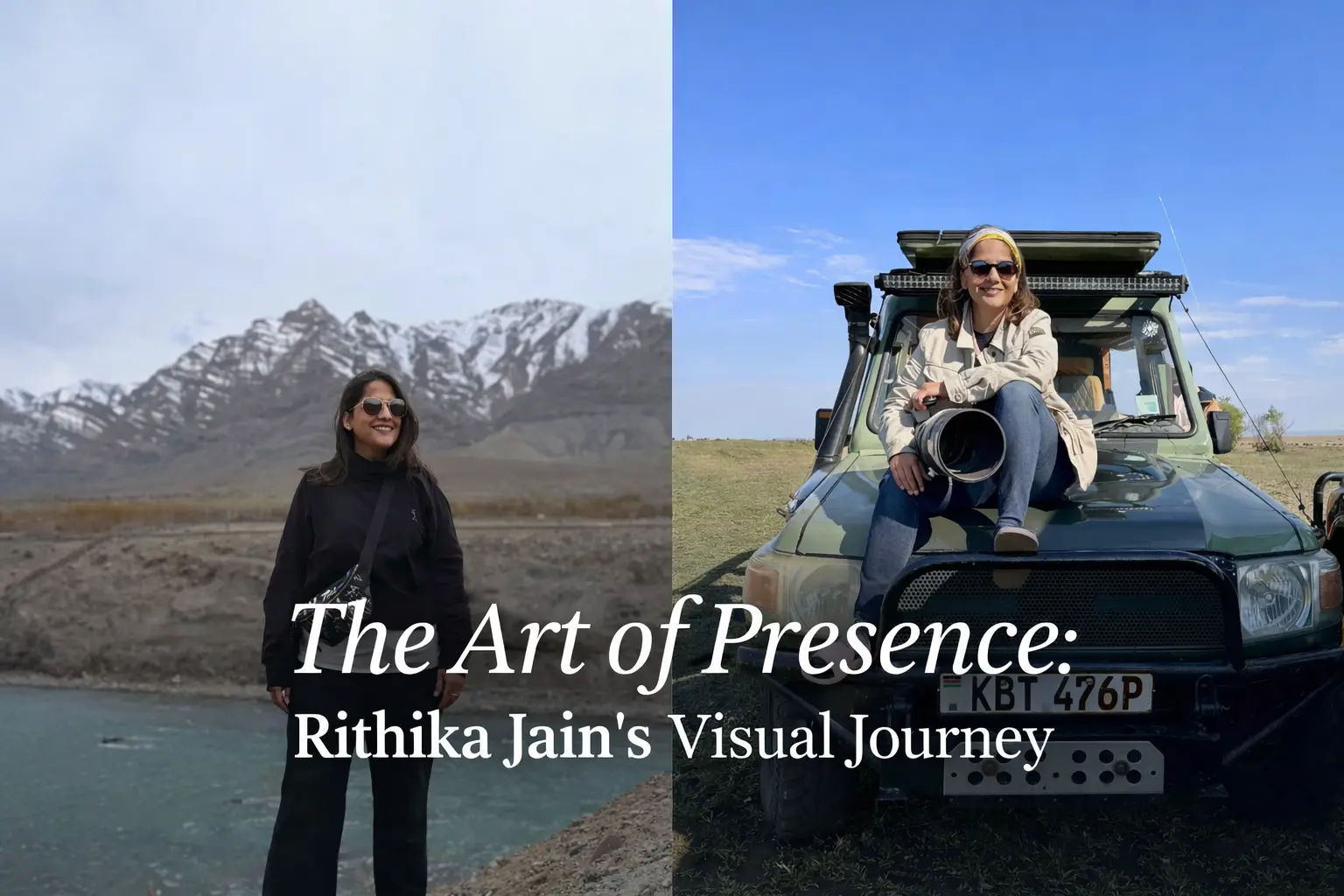
Rithika Jain: Wildlife & Architectural Photographer from Hyderabad

Rithika Jain is a wildlife and architectural photographer based in Hyderabad. She studied filmmaking at the London Film Academy, specialising in cinematography, a discipline that profoundly shaped her understanding of light, composition, and visual storytelling. Architecture taught her structure and discipline. The wild taught her presence. “The jungle became a space where I felt most attentive, stripped of noise, expectation, and vanity,” she reflects. Photography gradually evolved into her language, a way to translate emotion, observation, and stillness into something enduring. Over time, the landscapes she has worked in have shaped more than her portfolio. “They’ve shaped my way of seeing life, with more humility, patience, and respect for coexistence.” Creating Emotional Bridges Rithika describes herself as a visual storyteller focused on emotion, conservation, and presence. Her wildlife work centres on connection, capturing moments that reveal intelligence, care, and vulnerability within the natural world. “This path matters to me because images have the power to create empathy,” she says. A single photograph, she believes, can make someone pause long enough to care about something beyond their immediate reality. “That emotional bridge is my purpose.” Her work is not simply about documentation; it is about evoking feeling, because feeling is what ultimately drives awareness and conservation. The Quiet Side of the Wild Rithika is drawn to subtleties, fleeting expressions, nuanced behaviour, and the quieter emotional currents within the wild. “It’s less about capturing an event and more about preserving a feeling,” she explains. Her process is rooted in patience and observation, often requiring extensive travel through extreme conditions to reach remote environments. These expeditions inform not just what she photographs, but how she responds to a scene. The goal is immersion, allowing the viewer to step into a moment that might otherwise pass unnoticed. From Structure to Stillness Her journey began

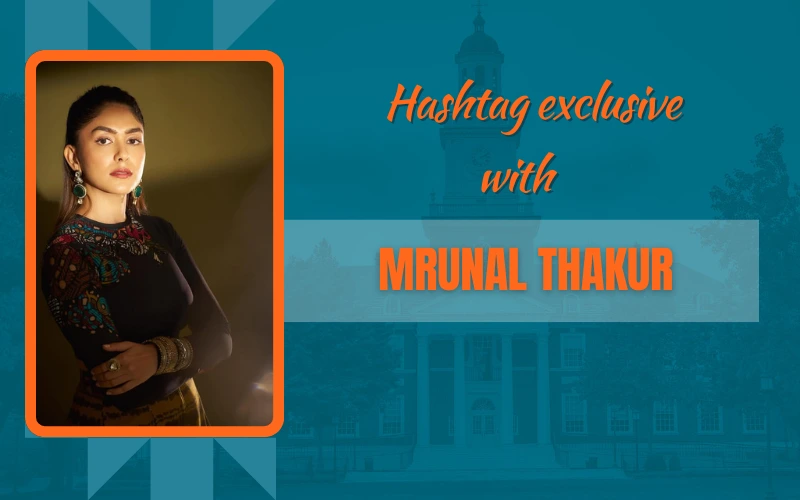
Mrunal Thakur on Do Deewane Seher Mein: Love, Insecurities and Finding Peace

With Do Deewane Seher Mein now released, Mrunal Thakur steps into a romance that celebrates vulnerability, emotional honesty and modern companionship. Produced under Sanjay Leela Bhansali’s banner, the film explores relationships through a lens of hope and self-discovery. In an exclusive conversation with Lipika Varma, the actor opens up about insecurities, beauty stereotypes, marriage, and the quiet confidence she has grown into over the years. You’ve spoken about insecurities before. What were your early struggles? Even after moving to Mumbai, I struggled with confidence. I couldn’t answer questions in class because I was insecure about my English and my Marathi accent. My name is unisex, and boys would make fun of it. When I entered the industry, I felt I needed to sound “elite.” I thought accent and diction defined you. Today, I realise insecurities only matter when you give them importance. I’m comfortable in my own skin now. I feel good the way I am. Have you ever faced challenges because of being considered “too beautiful”? Yes, sometimes people think that if you’re beautiful and successful, life must be easy. It’s not! There are moments when I wish I could just be normal. For Love Sonia, my audition was literally placed in a folder marked “Do Not Open.” Fortunately, the director opened it and felt I was right for the role. I had to convince the team that with prosthetics and makeup, we could make it work. People assume beauty makes everything easy. It doesn’t. Everyone struggles. Beauty alone cannot carry you forward. There are a lot of things that have to fall in place. I also remember attending a funeral and not being able to grieve freely because cameras were around. Sometimes you just want to be a daughter or sister, not an actor. How was it working

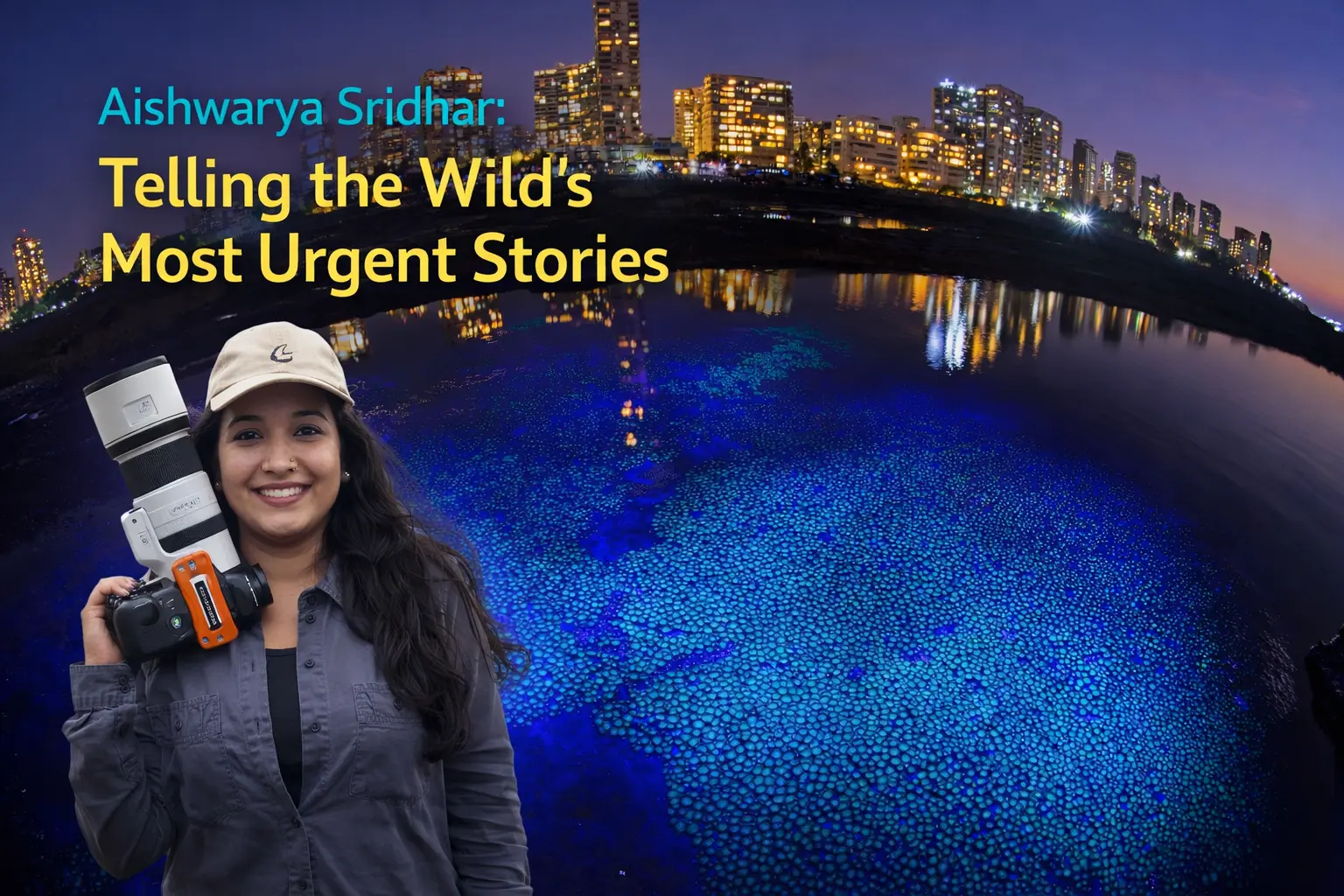
Aishwarya Sridhar: Telling the Wild’s Most Urgent Stories

Aishwarya Sridhar grew up in New Panvel, on the edge of the biodiverse foothills of Matheran, an ecosystem that holds nearly 7–8% of the world’s recorded species. A graduate in Mass Media, with Cambridge A Levels in Business and Accounting, she was raised in a family that balanced structure and creativity. Her father, Sridhar Ranganathan, a Chartered Accountant and former Vice President at Vodafone, taught her financial discipline while her mother, Rani Sridhar, an advertising professional and homemaker, nurtured storytelling instincts. Her earliest memories are of forests, fireflies, and quiet ecological change. “As I grew older, I watched that world slowly change, forests gave way to highways, and the fireflies disappeared.” That loss ignited a purpose in her. A turning point came when she watched Life with Sir David Attenborough. If a documentary could make her care about Komodo dragons from her living room, she reasoned, perhaps she could do the same for India’s wildlife. Conservation through Storytelling Today, Aishwarya is a National Geographic Explorer, Canon EOS Influencer, and Associate Fellow at the International League of Conservation Photographers (iLCP). As the co-founder and CEO of Bambee Studios, she leads a full-service production house specialising in natural history and environmental documentaries for global broadcast. “I don’t see my work as content creation, I see it as conservation through storytelling,” she says. “My camera is simply the bridge between two worlds, the wilderness and people who may never step into it.” Her productions have aired on National Geographic WILD, Arte, CuriosityStream, NHK, KBS, and Love Nature. Her photography has appeared in National Geographic magazine, BBC Wildlife, The Guardian, Mongabay, Digital Camera, The Times of India, and Sanctuary Asia. In 2020, she became the first Indian woman to win at the Wildlife Photographer of the Year Awards in London, and she has received

You May Also Like

Connect with us