Guidelines for Pandemic Travel

Travel

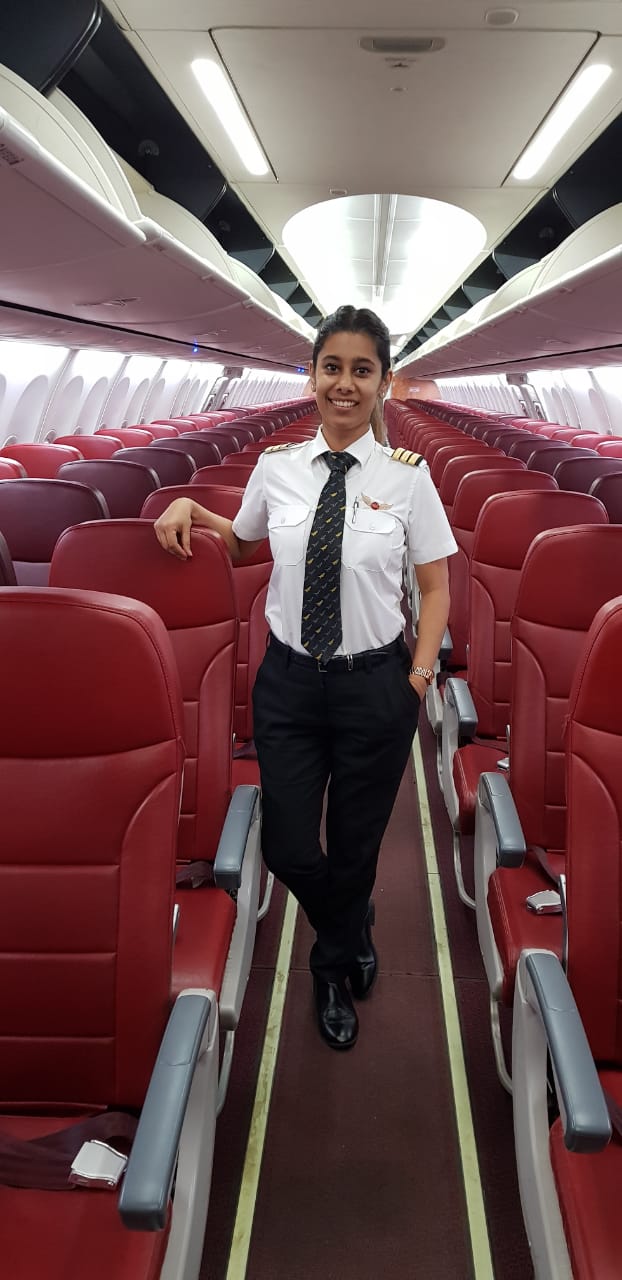
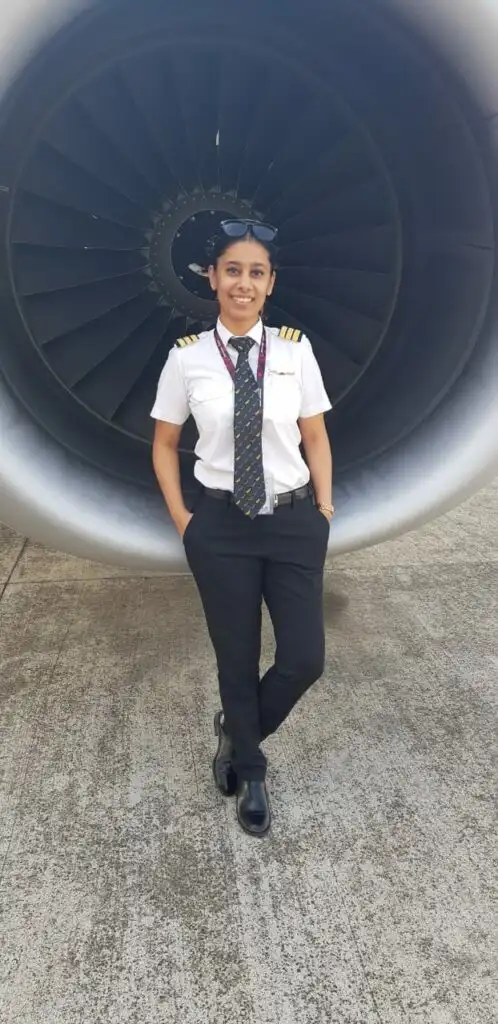
Travel was gradually crawling back to normal in the months since the first wave peaked in September, and the country was forced to shut down again thanks to the new wave. However in the few months that we did function, air travel established certain rules that help passengers feel safe as they traverse a pandemic-ridden world. Captain Rasika Singh, First Officer, Air India Express, shares her experience with Hashtag India

Air travel was inching back to its pre-pandemic days with officer travellers, stranded families, migrant workers, students, and  essential workers all boarding flights in and out of India. Domestic travel for one had seen a steep rise since the countrywide lockdown opened up with almost 2.5 lakh passengers this January. I personally got back to the cockpit in June ’20 owing to the Vande Bharat mission being carried out by Air India as one of the biggest repatriation missions ever undertaken.
The air travel landscape has changed and adapted to the pandemic world. The procedures that get you in and out of airports have seen a shift, as have the people who board airplanes. Here’s what we’re looking at in air travel this year: 

Step 1- The Airport : For most of you getting back to airports after a year will bring with a sense of excitement and curiosity. You will be greeted by substantial long lines at the entrance as everyone is temperature-checked before entering the airport apart from usual tickets checking by the CISF (airport police) 

Step 2- Check-in : As you walk towards your check in counters you will be surprised to see the number of people who are travelling along with you. Especially if you are boarding from a metro city, expect crowds—large masked crowds. Sanitisation stations are placed every hundred meters for you to clean your hands in case you touch any kiosks/stands. Check in counters have glass barriers to protect the staff from direct contact with any passengers. Your tickets and approvals (for entering certain states) are checked and boarding cards emailed to you, along with baggage tag to avoid hand contact. International travel requires negative covid tests as per country rules.

Step 3 – Security – That’s one thing which hasn’t changed. Long lines. Remove all your metal objects out in trays. Make sure you don’t carry any guns and bombs because pandemic or not that still is not allowed in an aircraft. 

Step 4 – Waiting Area – Here is where things get interesting. All alternate seats are blocked with stickers so people don’t sit too close. Restaurants have glass panels on all counters to avoid direct contact and you will see people walking around in various gears. Most shops and restaurants are open and thoroughly sanitised at frequent intervals. Prior to boarding you will be handed a safety kit comprising mask, faces shield and sanitisers which you must wear before boarding. Middle seat passengers are given PPE kits which are to be worn over their clothes.

Step 5- The Aircraft – Each airline is spending lakhs each day to ensure passenger safety and hygiene. All aircraft seats are sanitised prior to boarding and cabins fumigated to ensure clean air. Airlines are also adopting UV ray robots to sanitise their planes from every corner. Every modern airliner is equipped with HEPA filters (High Efficiency Particulate Air) which kill 99.9% virus in the aircraft. So no matter which airline you fly in India, be rest assured your aircraft has HEPA working all the time. 

Being an airline crew through the pandemic has had its share of benefits. We might have been risking our lives everyday but we did get to travel for work while most people were stuck inside their homes. It made us observe life from pre and post covid lockdown days.

With all these new rules and protocols, one cannot discount the human factor, and how people have been choosing to react to the steps they need to take. Typically, you’ll find five types of travellers during these times. Here’s my take on the kinds of people you will see at the airport if you choose to travel once the situation recovers. 

The Frequent Flier – Mask only. This guy has been flying since the skies opened up. He’s used so much sanitiser in the initial post lockdown days, his sweat smells of it. So now he walks around only with a thin paper mask on. Sometimes as a beard and sometimes as an ear accessory.

The Family Traveller – Groups of people travelling for a holiday or a wedding with the same undying travel spirit as before. Noisy, cheery, excited, masked. This time you find their snack bags filled with sanitiser, tissues, extra cloth masks made by a family member plus a face shield. Also, they keep reminding each other to keep their masks on and distributing sanitiser like prashad.

The Storm Trooper – These are the league of passengers who have decided to take their star wars fascination to the skies. They come equipped with Vizors from their bike helmets which they use as face shields and N95 face masks over a homemade cloth mask. Also found frequently equipped with surgical gloves and sanitisers to zap off any virus which comes close to their intercelestial being.

The First Timers – They come equipped with paranoia which manifests itself in the form of masks, shields, PPE kits, gloves, sanitisers (gel and spray) and wet wipes. You will find these people not eating or talking at the airport. They keep to themselves as seclusion wards off the virus. They don’t use the restrooms or eat at the restaurants. They only breathe, pray, sanitise. 

The Airline Crew – Many like myself who you will find in the waiting area of the airport or the emergency exit row seats in the aircraft. We fly passengers so much to connect to our destination that the virus is wary of us. So you will mostly find us with our masks & headphones on, staring into a screen unbothered by life and bothered by late departures!

Hopefully this gives a little idea of what to expect when you plan your travel to the next destination. Wishing everyone smooth skies and safe times ahead.

  • Boarding cards and baggage tags are emailed to avoid hand contact.
  • Every modern airliner is equipped with HEPA filters (high efficiency particulate air) which kill 99.9% virus in the aircraft.

Leave a comment

Your email address will not be published. Required fields are marked *

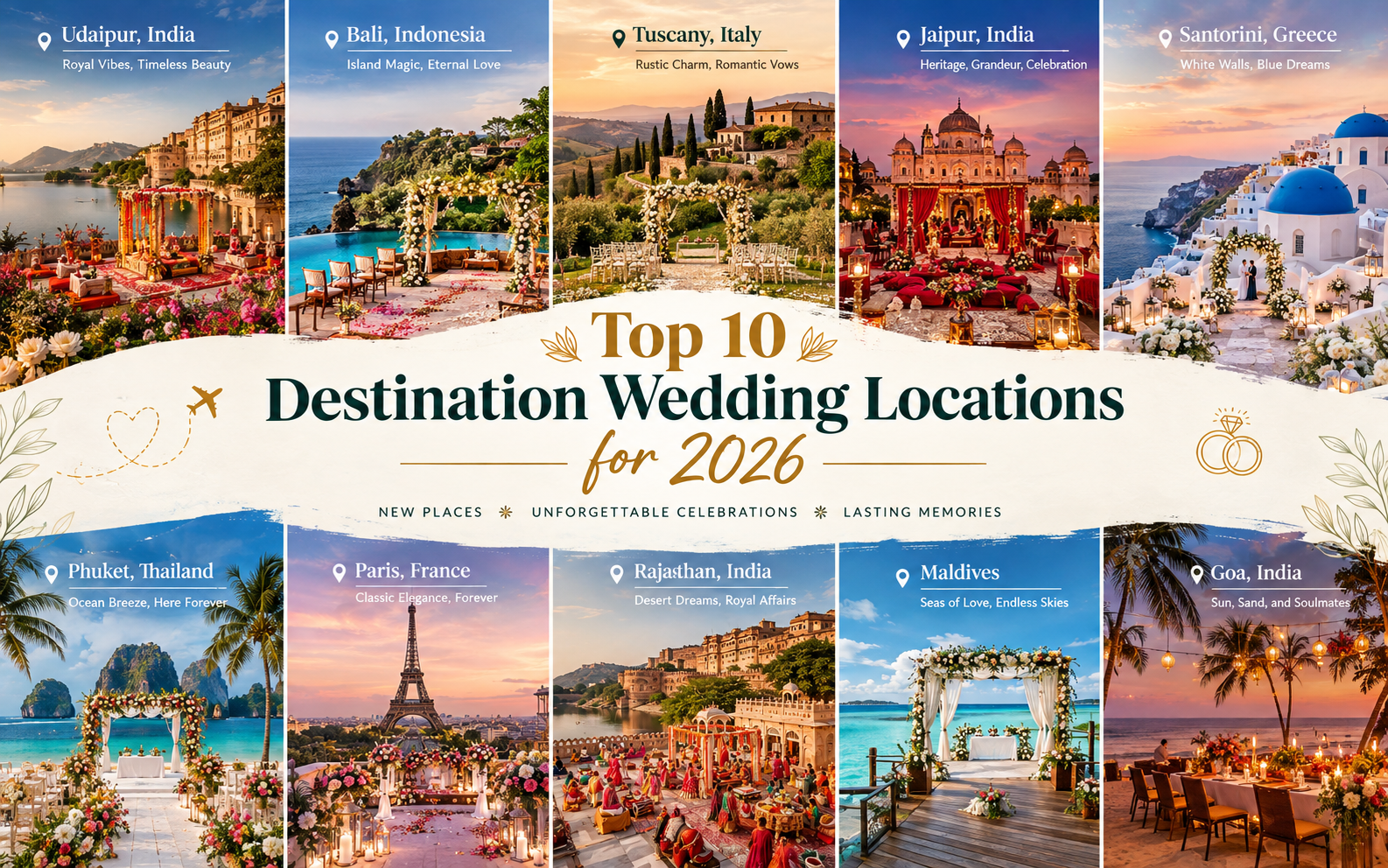
Top 10 Destination Wedding Locations for 2026

Explore the top wedding destinations in India and abroad, from the royal palaces of Udaipur and Jaipur to the beaches of Goa and the serene backwaters of Kerala. International favourites including Thailand, Bali, Dubai, Turkey and Sri Lanka offer spectacular settings for multi-day celebrations, luxury experiences and memorable ceremonies. This guide highlights the unique vibe, appeal and estimated budget ranges for each destination, helping couples and families compare options based on style, guest experience and overall wedding vision. Top Indian Destinations – Box Destination Vibe & Appeal Estimated Budget Range Udaipur Palaces, lakes, and royal heritage; Wedding Capital of India ₹50 lakh to ₹70 lakh (palace venues range from ₹70 lakh to ₹2.5 crore) Goa Beachfront luxury, sunset backdrops, and coastal resorts ₹40 lakh to ₹1 crore Jaipur Pink City fortresses, historic courtyards, and grand heritage properties ₹30 lakh to ₹70 lakh Jaisalmer Golden dunes and majestic desert fortress properties like Suryagarh Palace ₹50 lakh to ₹1.2 crore Kerala Peaceful backwater houseboats and palm-fringed lakeside resorts ₹35 lakh to ₹80 lakh Top 5 International Destinations: Destination Vibe & Operational Appeal Estimated Budget Range (100–150 Guests) Thailand (Phuket / Hua Hin) Tropical Beach Luxury: Easiest logistics, massive inventory of seasoned Indian caterers, and a highly optimised system for multi-day South Asian rituals. ₹50 lakh to ₹1.2 crore (Highly flexible packages) Bali, Indonesia (Uluwatu / Nusa Dua) Exotic Clifftops & Jungles: Breathtaking ocean backdrops and Hindu cultural synergy, though specialised Indian buffet menus often require bringing in outside culinary teams. ₹75 lakh to ₹1.8 crore (Luxury resorts command premium rates) Dubai / UAE (Ras Al Khaimah) Glamour & Ultra-Luxury: Unmatched skyline or desert resort backdrops. Phenomenal flight connectivity from all major Indian transit hubs makes guest transit completely seamless. ₹80 lakh to ₹2.5 crore+ (Can scale exponentially for ultra-luxe properties) Turkey (Bodrum

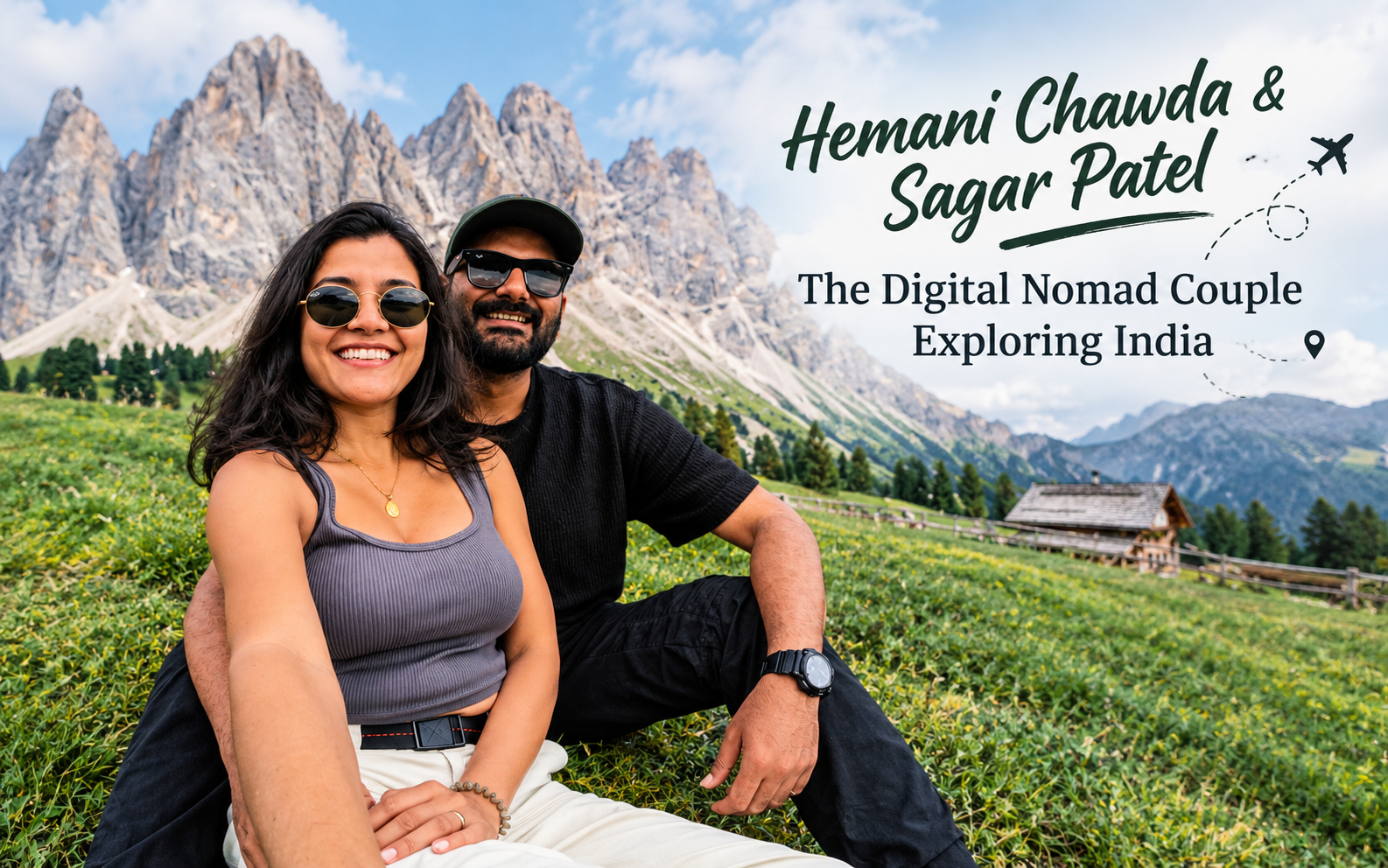
Hemani Chawda and Sagar Patel

Hemani Chawda and Sagar Patel are a travel-content-creator couple and digital nomads who chose a life of exploration over convention. Based between Jhabua, Madhya Pradesh, and Raipur, Chhattisgarh, the duo has built a journey around discovering new places, embracing different cultures, and sharing authentic travel stories. Hemani, a former Radio Jockey, left her career seven years ago to follow her passion for travel and storytelling. Sagar, a post-graduate engineer, later stepped away from the corporate world to join her in creating a life centred around experiences rather than routines. Through their content, they go beyond showcasing destinations to capture the emotions, challenges, connections, and everyday moments that shape life on the road. From ancient traditions to untouched landscapes, here are three countries that have left the deepest impression on their journey. 1. Japan — Where Tradition Meets Tomorrow “Japan holds a special place in our hearts for its incredible balance of ancient traditions, modern innovation, and breathtaking landscapes.” From the peaceful streets of Kyoto and its centuries-old temples to the vibrant energy of Tokyo, every experience feels like discovering a new story. What we love most about Japan is the way it preserves its cultural roots while embracing the future. Whether it is experiencing a quiet tea ceremony, exploring traditional neighbourhoods, or discovering local cuisine, Japan constantly inspires us with its attention to detail, warm hospitality, and endless storytelling possibilities. 2. Philippines — A Tropical Paradise Filled With Human Connections “The Philippines is a destination that feels magical at every turn, with turquoise waters, stunning islands, and some of the warmest people we have met during our travels.” From swimming alongside marine life and exploring hidden lagoons to discovering local communities and untouched beaches, the country offers the perfect blend of adventure and relaxation Beyond its natural beauty, what makes

Mehzabin Shaikh (Maahie) | Mumbai

Meet Maahie, a Mumbai-based travel content creator who transformed her passion for storytelling into a full-time career. After stepping away from engineering to follow her creative calling, she has spent the last 3.5 years building a journey around travel, exploration, and meaningful connections. For Maahie, travel goes beyond popular destinations; it is about discovering lesser-known places, meeting people, understanding their lifestyles, and experiencing cultures through local food, conversations, and everyday moments. Supported by her best friend and travel partner Rahul Yadav, Maahie continues to create stories that inspire people to step beyond their comfort zones and discover that every journey has a story worth sharing. 1. Bhadarwah, Jammu — A Hidden Paradise Beyond the Usual Kashmir Trail “When people think of snowfall and breathtaking Himalayan landscapes, Kashmir is often the first destination that comes to mind. But for me, Bhadarwah in Jammu is one of the most beautiful places I have ever experienced.” What makes Bhadarwah special is its untouched beauty. The snow-covered landscapes feel peaceful, personal, and far away from the crowds and commercialisation of popular hill stations. However, the real magic of Bhadarwah lies in its people. During my first visit, we stayed at a small homestay run by a family of three a husband, wife, and their young daughter. We instantly connected, and by the end of the trip, saying goodbye felt impossible. Over time, they became more than hosts; they became family. Today, visiting Bhadarwah has become an annual ritual. It is a place that reminds me that travel is not just about destinations; it is about the people and relationships you discover along the way. 2. Thailand — The Journey That Introduced Me to Freedom “Thailand will always hold a special place in my heart because it gave me a feeling I had never experienced

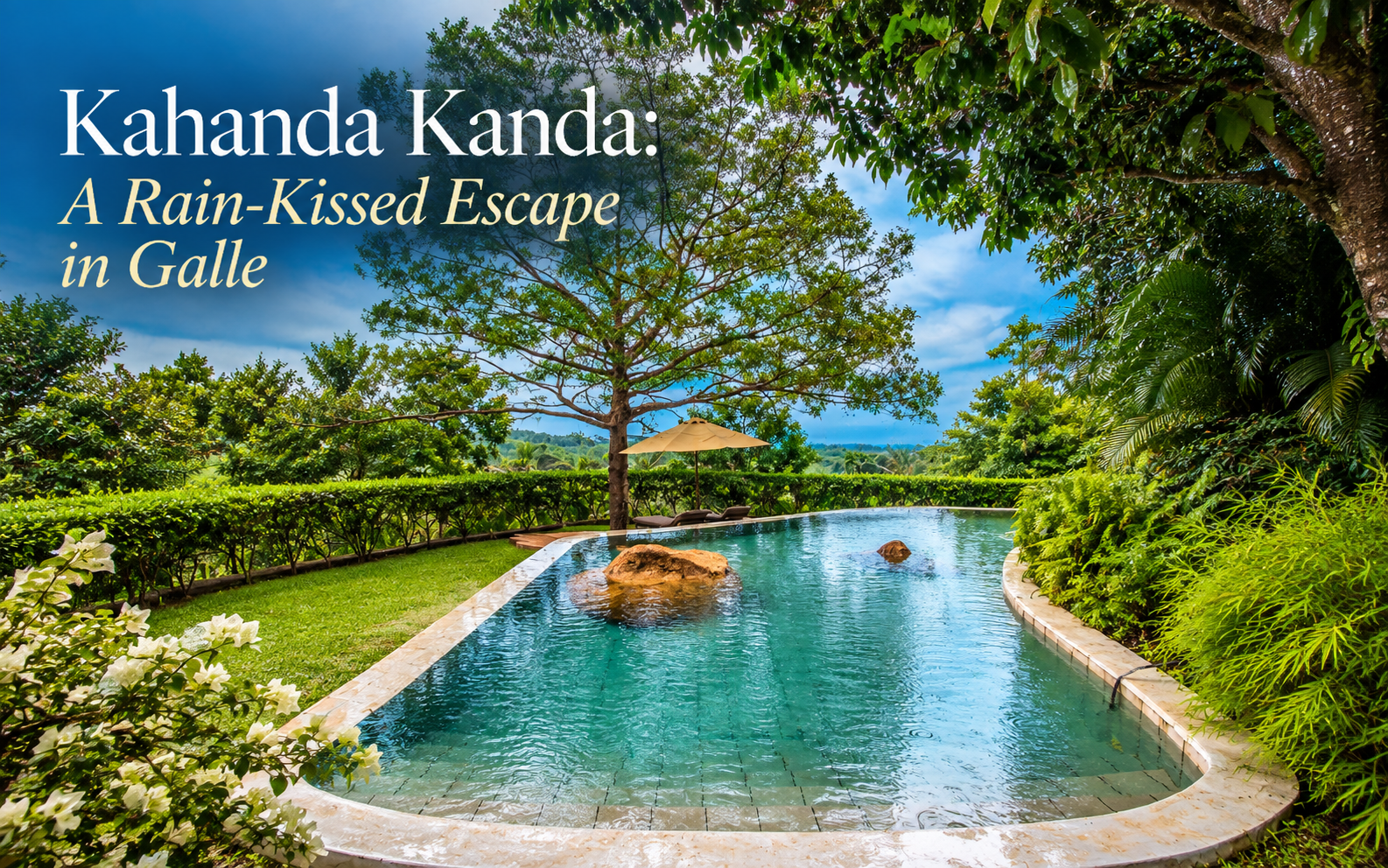
Kahanda Kanda: A Rain-Kissed Escape in Galle

Rain, mist and 17 villas that don’t look alike. Kahanda Kanda is a hidden gem above Koggala Lake in Galle, Sri Lanka. Spread across 14 acres of tea-fringed grounds, this intimate retreat is built around one simple idea: slowing down. Sinduri Vuppala spends a few unhurried days at the estate, discovering its distinctive design, fascinating history and the quiet luxury of doing very little. There’s a particular kind of luxury that has nothing to do with thread counts or infinity pools, and everything to do with being left alone in the best possible way. That’s the feeling that defines a stay at Kahanda Kanda, a boutique estate tucked into the hills above Koggala Lake in Galle, Sri Lanka. The journey there is part of the story. After a stint in the busier coastal town of Bentota, the drive inland feels like a decompression, roads turning greener and quieter, the pace of the island slowing with every mile. By the time the gates swing open onto a sweep of tea bushes, garlands, and a welcome glass of estate-grown lemongrass cordial, you’ve already left the “resort” mindset behind. We arrived off-season and were the only guests on the property. There’s something disorienting about having a place this beautiful entirely to yourself, mist over the tea plantation, no queue for breakfast, just birdsong somewhere in the canopy. When the rain came, it didn’t spoil anything; it turned the estate into something softer and more private. The Villas Kahanda Kanda comprises 17 stand-alone villas, and the property’s defining trick is that none of them looks alike. Rather than the interchangeable rooms you’d find at a larger resort, each villa here has its own layout, its own mix of antiques, and its own mood, a blend of European and Asian pieces alongside contemporary art, none

You May Also Like

Connect with us