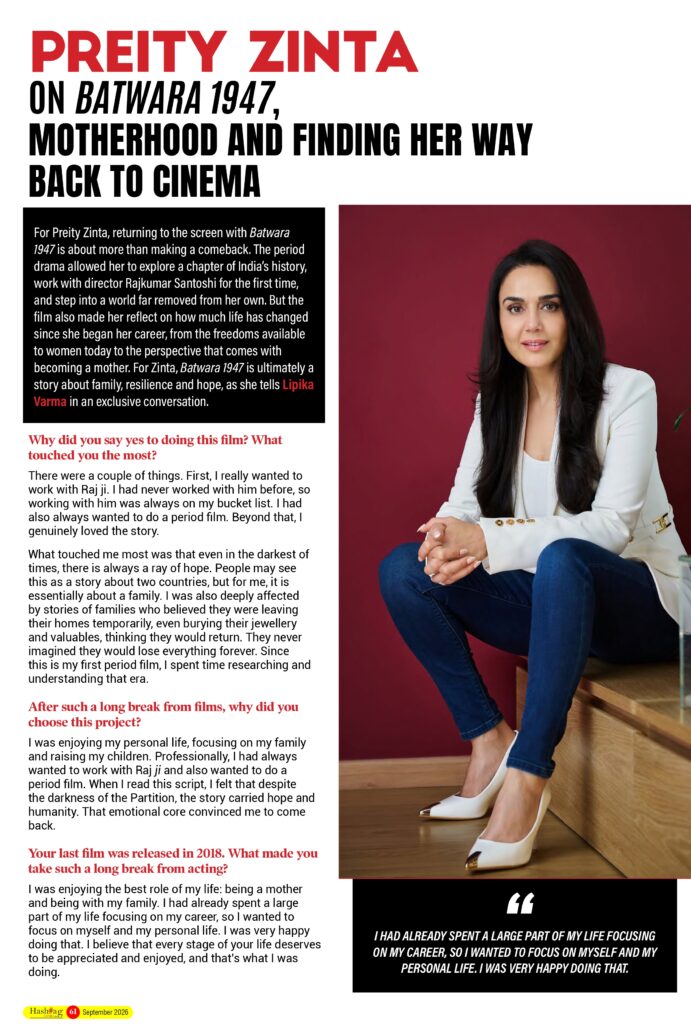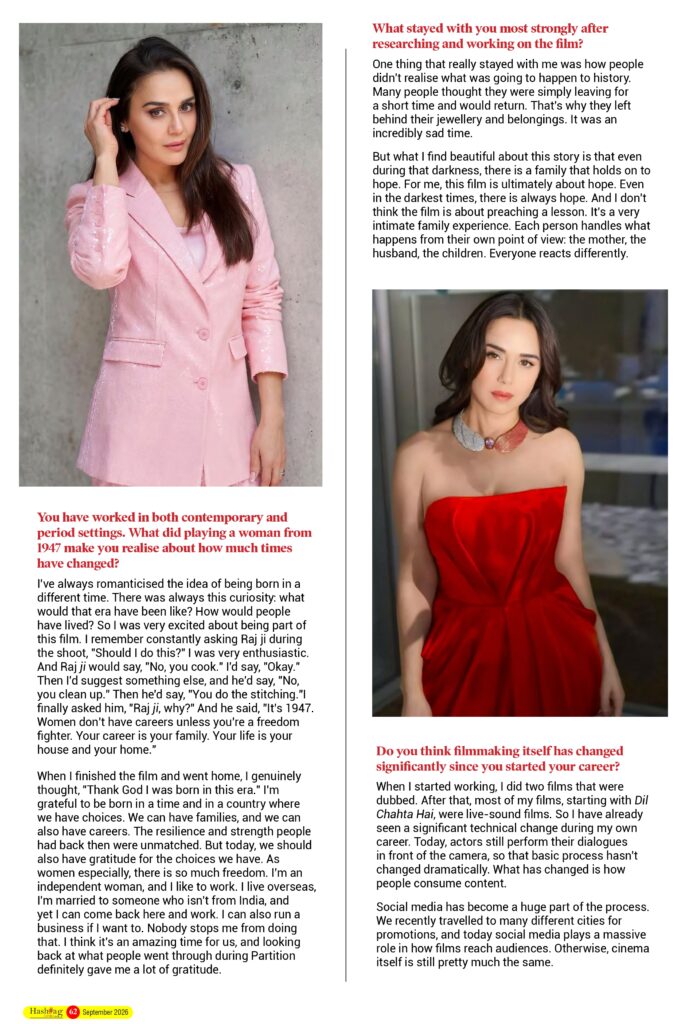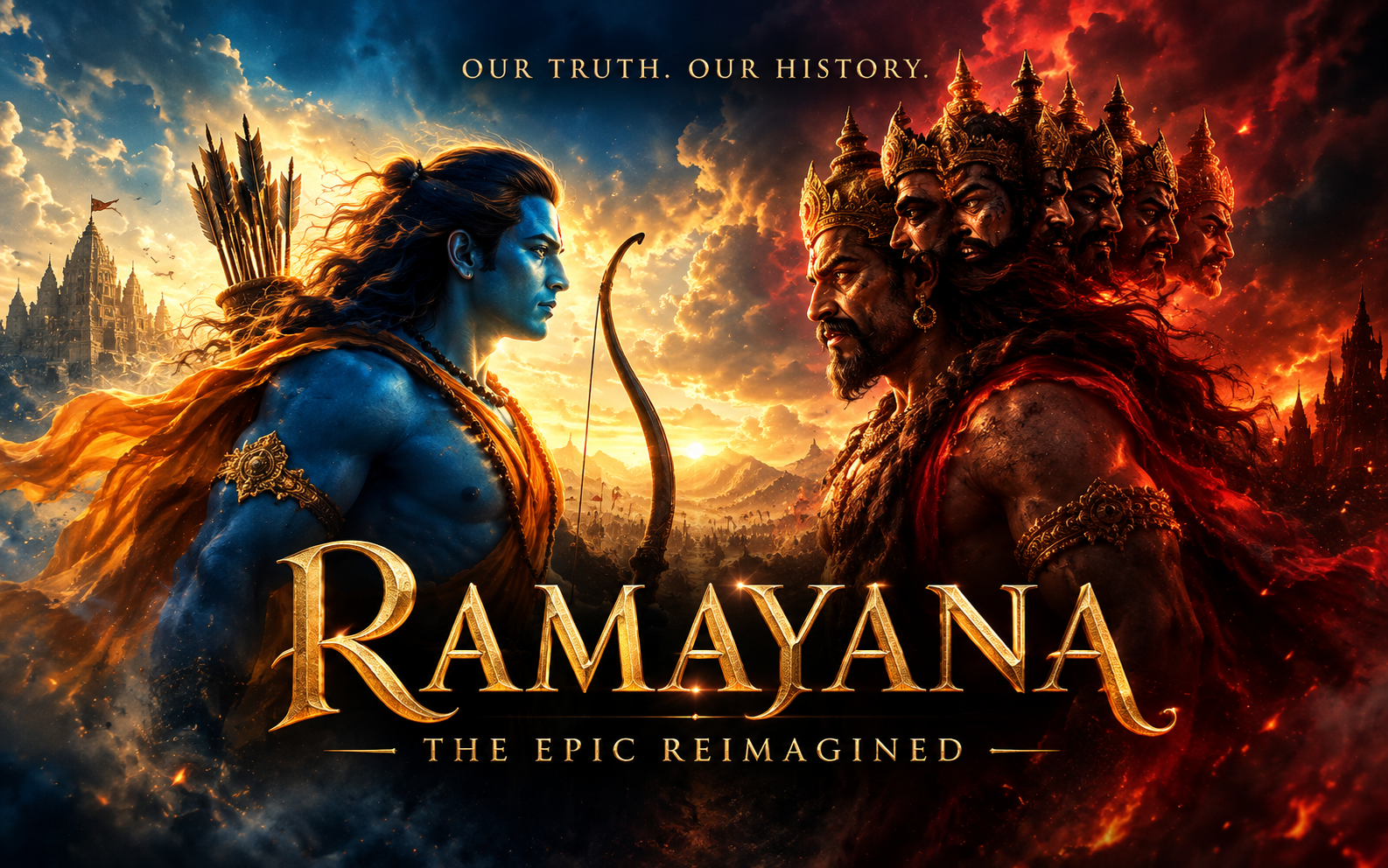
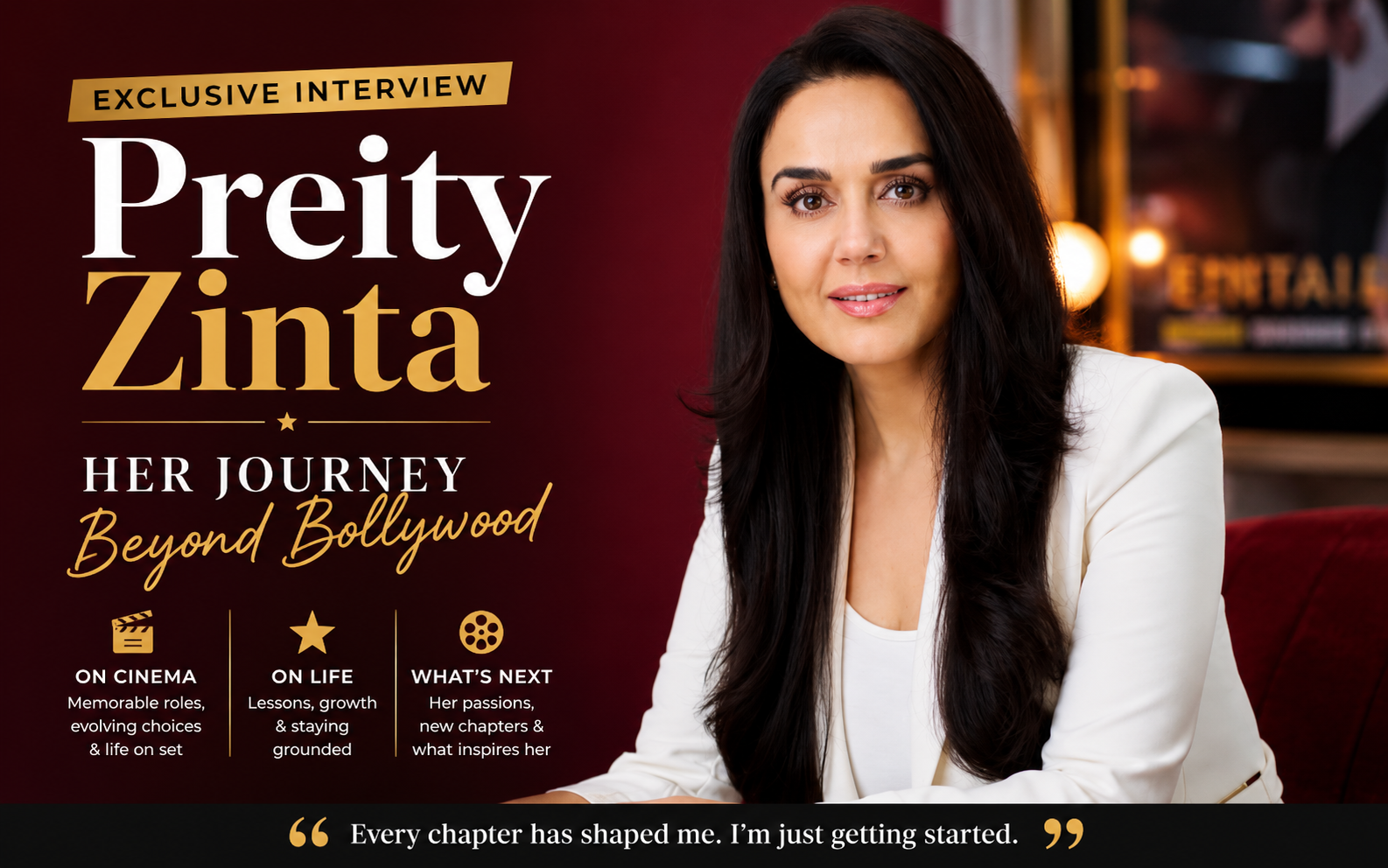
For Preity Zinta, returning to the screen with Batwara 1947 is about more than making a comeback. The period drama allowed her to explore a chapter of India’s history, work with director Rajkumar Santoshi for the first time, and step into a world far removed from her own. But the film also made her reflect on how much life has changed since she began her career, from the freedoms available to women today to the perspective that comes with becoming a mother. For Zinta, Batwara 1947 is ultimately a story about family, resilience and hope, as she tells Lipika Varma in an exclusive conversation.
Why did you say yes to doing this film? What touched you the most?
There were a couple of things. First, I really wanted to work with Raj ji. I had never worked with him before, so working with him was always on my bucket list. I had also always wanted to do a period film. Beyond that, I genuinely loved the story.
What touched me most was that even in the darkest of times, there is always a ray of hope. People may see this as a story about two countries, but for me, it is essentially about a family. I was also deeply affected by stories of families who believed they were leaving their homes temporarily, even burying their jewellery and valuables, thinking they would return. They never imagined they would lose everything forever. Since this is my first period film, I spent time researching and understanding that era.
After such a long break from films, why did you choose this project?
I was enjoying my personal life, focusing on my family and raising my children. Professionally, I had always wanted to work with Raj ji and also wanted to do a period film. When I read this script, I felt that despite the darkness of the Partition, the story carried hope and humanity. That emotional core convinced me to come back.
Your last film was released in 2018. What made you take such a long break from acting?
I was enjoying the best role of my life: being a mother and being with my family. I had already spent a large part of my life focusing on my career, so I wanted to focus on myself and my personal life. I was very happy doing that. I believe that every stage of your life deserves to be appreciated and enjoyed, and that’s what I was doing.
You have worked in both contemporary and period settings. What did playing a woman from 1947 make you realise about how much times have changed?
I’ve always romanticised the idea of being born in a different time. There was always this curiosity: what would that era have been like? How would people have lived? So I was very excited about being part of this film. I remember constantly asking Raj ji during the shoot, “Should I do this?” I was very enthusiastic. And Raj ji would say, “No, you cook.” I’d say, “Okay.” Then I’d suggest something else, and he’d say, “No, you clean up.” Then he’d say, “You do the stitching.”I finally asked him, “Raj ji, why?” And he said,
“It’s 1947. Women don’t have careers unless you’re a freedom fighter. Your career is your family. Your life is your house and your home.”
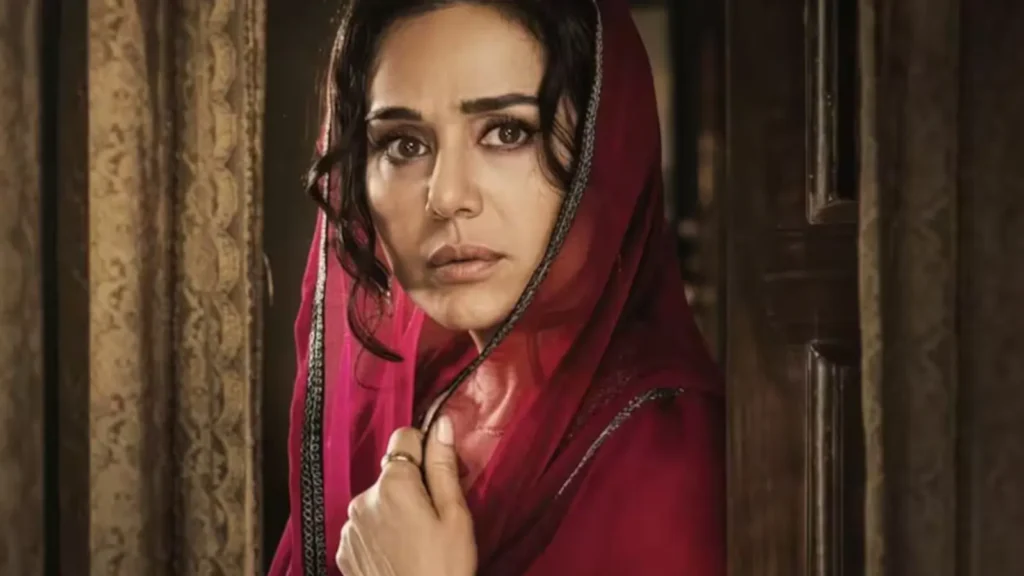
When I finished the film and went home, I genuinely thought, “Thank God I was born in this era.” I’m grateful to be born in a time and in a country where we have choices. We can have families, and we can also have careers. The resilience and strength people had back then were unmatched. But today, we should also have gratitude for the choices we have. As women especially, there is so much freedom. I’m an independent woman, and I like to work. I live overseas; I’m married to someone who isn’t from India, and yet I can come back here and work. I can also run a business if I want to. Nobody stops me from doing that. I think it’s an amazing time for us, and looking back at what people went through during Partition definitely gave me a lot of gratitude.
What stayed with you most strongly after researching and working on the film?
One thing that really stayed with me was how people didn’t realise what was going to happen to history. Many people thought they were simply leaving for a short time and would return. That’s why they left behind their jewellery and belongings. It was an incredibly sad time.
But what I find beautiful about this story is that even during that darkness, there is a family that holds on to hope. For me, this film is ultimately about hope. Even in the darkest times, there is always hope. And I don’t think the film is about preaching a lesson. It’s a very intimate family experience. Each person handles what happens from their own point of view: the mother, the husband, the children. Everyone reacts differently.
Do you think filmmaking itself has changed significantly since you started your career?
When I started working, I did two films that were dubbed. After that, most of my films, starting with Dil Chahta Hai, were live-sound films. So I have already seen a significant technical change during my own career. Today, actors still perform their dialogues in front of the camera, so that basic process hasn’t changed dramatically. What has changed is how people consume content. Social media has become a huge part of the process. We recently travelled to many different cities for promotions, and today social media plays a massive role in how films reach audiences. Otherwise, cinema itself is still pretty much the same.
What is the biggest change you see in Indian cinema today?
The biggest change I see is that India is finally feeling very proud of being Indian. There are so many stories today about our homes, our characters, local heroes, the Army and our own experiences. Earlier, there were a lot of NRI love stories, stories about going abroad and finding something there. Today, many stories are homegrown. We can talk about India going to Mars. We can talk about a famous general. We can tell stories rooted in our own country and culture, which is beautiful. Indians are doing amazing things around the world today, and that confidence and pride are reflected in our movies.
You live abroad. Do you see this change in the way Indians are perceived internationally?
Absolutely. When I started my career, I saw people from India doing smaller or more ordinary jobs abroad. Today, Indians are running some of the biggest corporations in the world. It’s wonderful to see that. We are one of the oldest civilisations, and we were incredibly advanced, but for a long time, we weren’t given the recognition we deserved. Today, we are claiming that recognition, and it feels great.
Preity, you have known the Deol family for a long time. What have you observed about the family?
I’ve always been very close to the family. Bobby is a very, very close friend of mine, and I’m also close to Abhay. I worked with Dharamji in a film that unfortunately never released. One thing I’ve always observed about this family is that, despite being such an illustrious family, there is so much genuine love and respect within it. Whenever an elder in the family enters the room, there is that respect and affection. And it doesn’t feel fake or like it’s just for appearances. It’s very natural and beautiful. I think a lot of that credit goes to Dharamji. I have tremendous respect for him and his family.
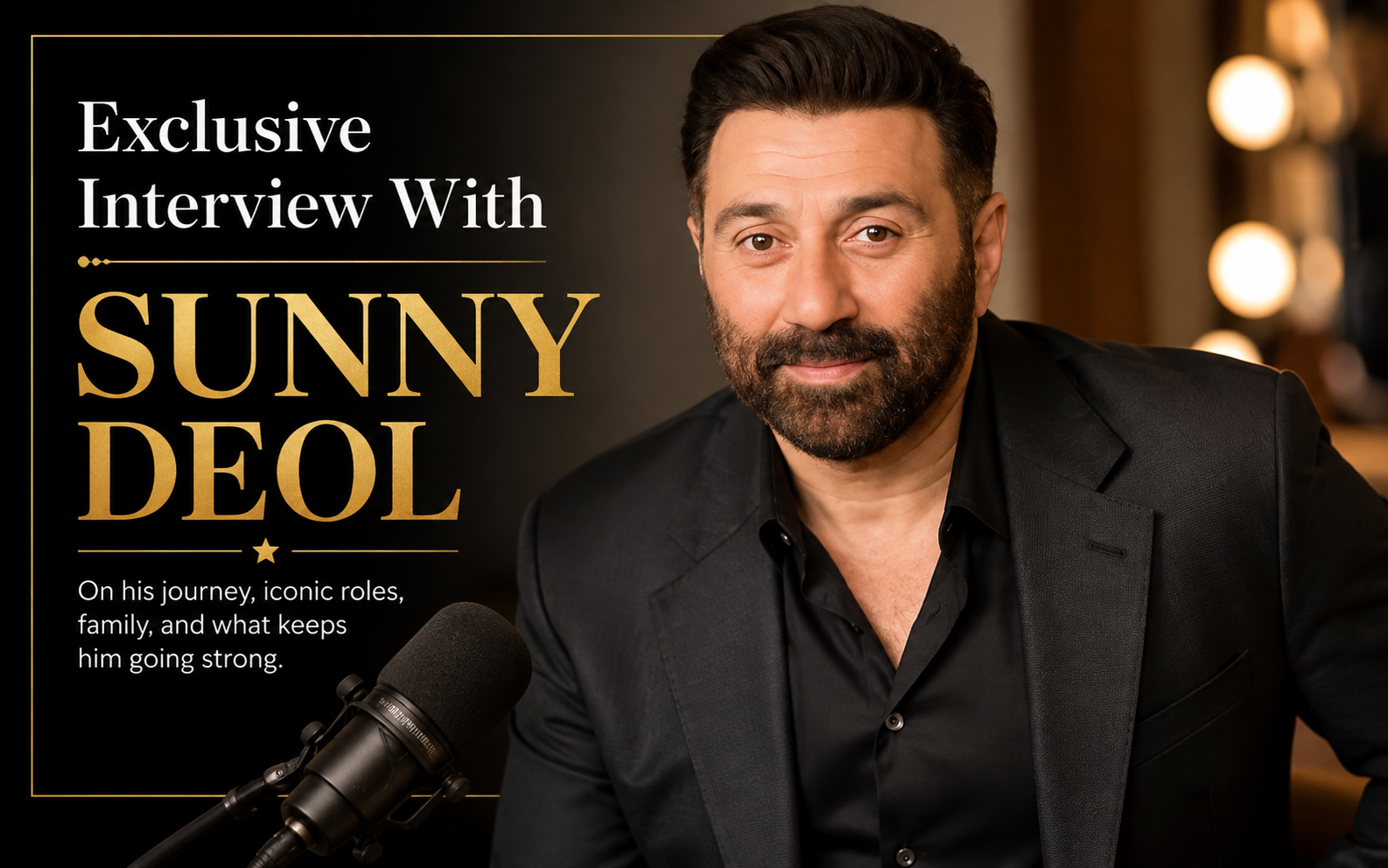
Preity, after being away from the industry for so long, what did you miss the most: India, acting or working with Sunny, Rajkumar Santoshi?
I missed Sunny first of all… and the lunch box! But yes, I definitely missed India.
However, before this film, I didn’t really miss acting because I was enjoying the best role of my life, being a mother and having a family.
You know, becoming a mother changes your perspective completely. Before having children, I was always number one in my own life. I would think about what I wanted, where I wanted to go, my choices, my rights and my life. If someone had told me that one day, by my own choice, I would willingly put somebody else before myself, I would never have believed them. But once you have your own child, everything changes.
You also start appreciating your own mother in a completely different way. I was a tough kid. I would tell my mom, “I’ll call you back,” and then call her two months later. I’d be like, “Oh, I’m so sorry, I forgot!” I’d even ask her, “I’m fine, why are you calling me again and again?” Now I understand why she did that, and I just hope my kids don’t do the same thing to me!
You and Sunny have worked together before. Was there still a comfort level when you reunited for Batwara 1947?
Definitely. When you work with someone for the first time, you don’t know each other well, so there is a certain hesitation in approaching one another. But once you’ve worked together, that comfort naturally develops. We’ve worked together in films before, so there is already an understanding between us.
While we were working on our first film together, I was actually quite scared of Sunny. I used to get very nervous around him. I don’t remember all the details, but he remembers them!
Before I started acting, and even before Bobby started acting, Bobby was already a very dear friend of mine. Bobby, a few others, and I had a little group. One day, someone asked me to call Bobby. At that time, I didn’t have a mobile phone, so I called the house. I think it was around 10:30 or 11 at night. I said, “Hi, can I speak to Bobby?” Sunny picked up the phone and said, “Is this the time to call?” I immediately put the phone down! Everyone started laughing and asking what had happened. I was so embarrassed that I actually wrote it down in my diary: “I got screamed at by Sunny Deol!”