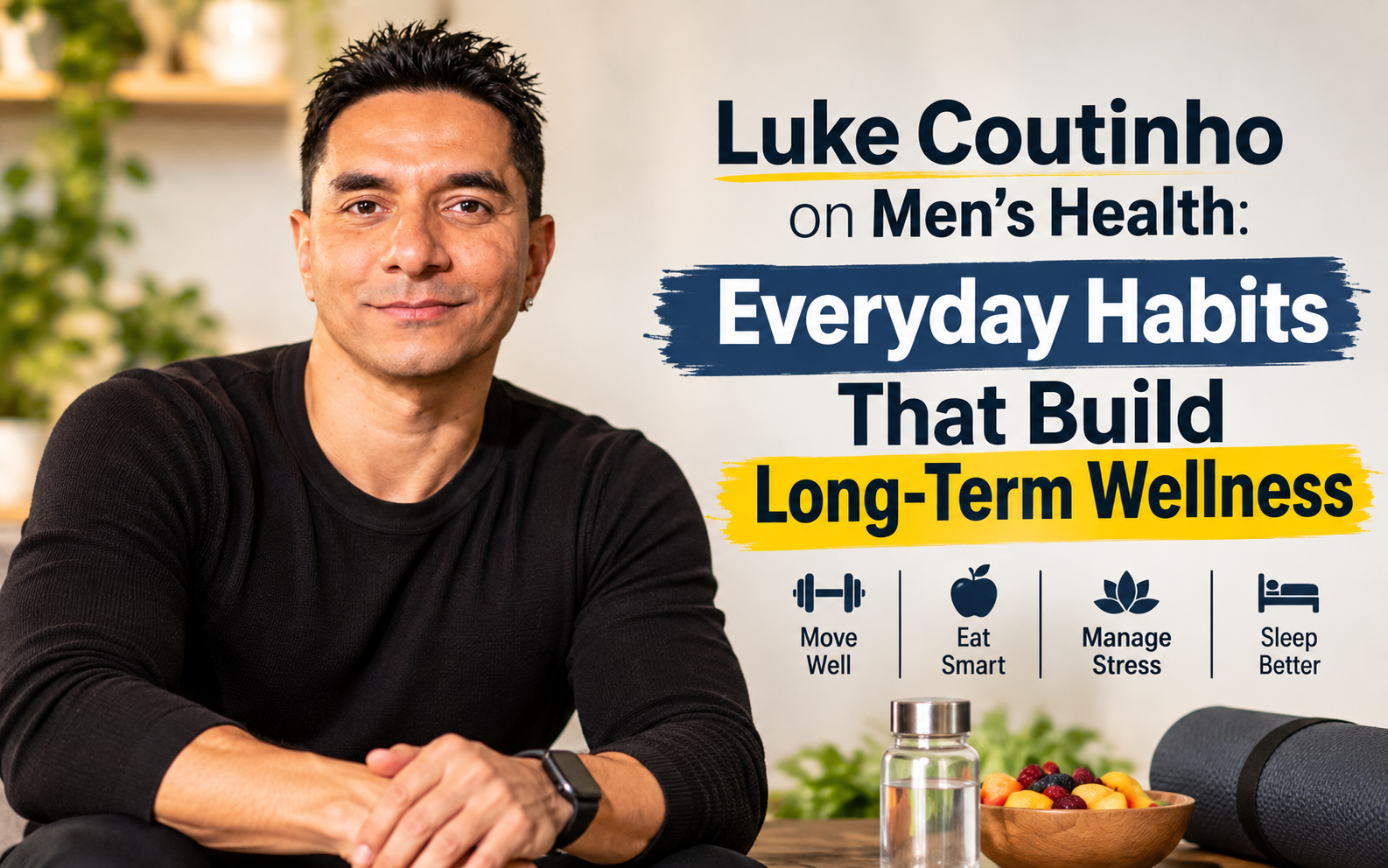
Luke Coutinho on Men’s Health: Everyday Habits That Build Long-Term Wellness

Luke Coutinho on Men's Health: Everyday Habits That Build Long-Term Wellness

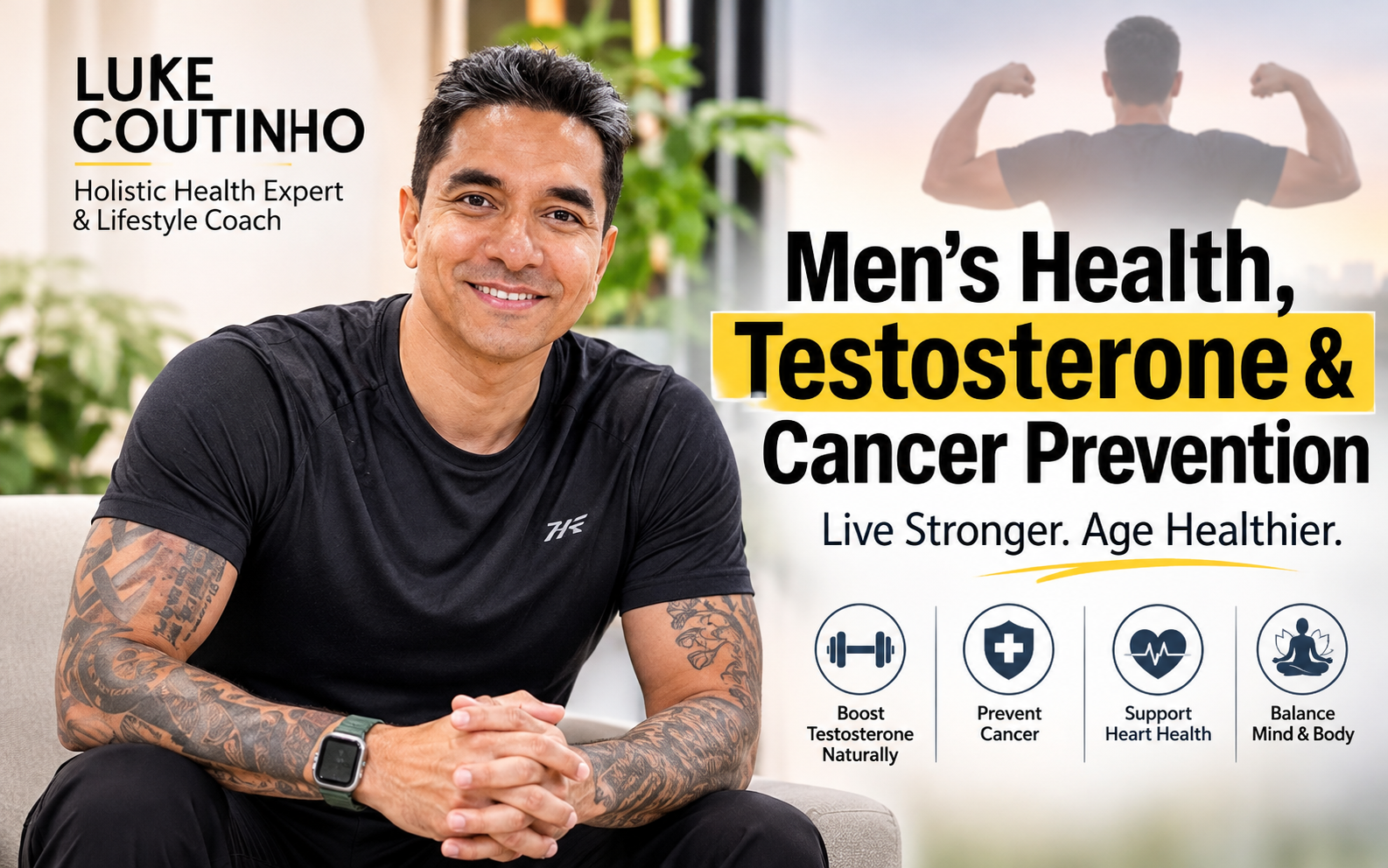
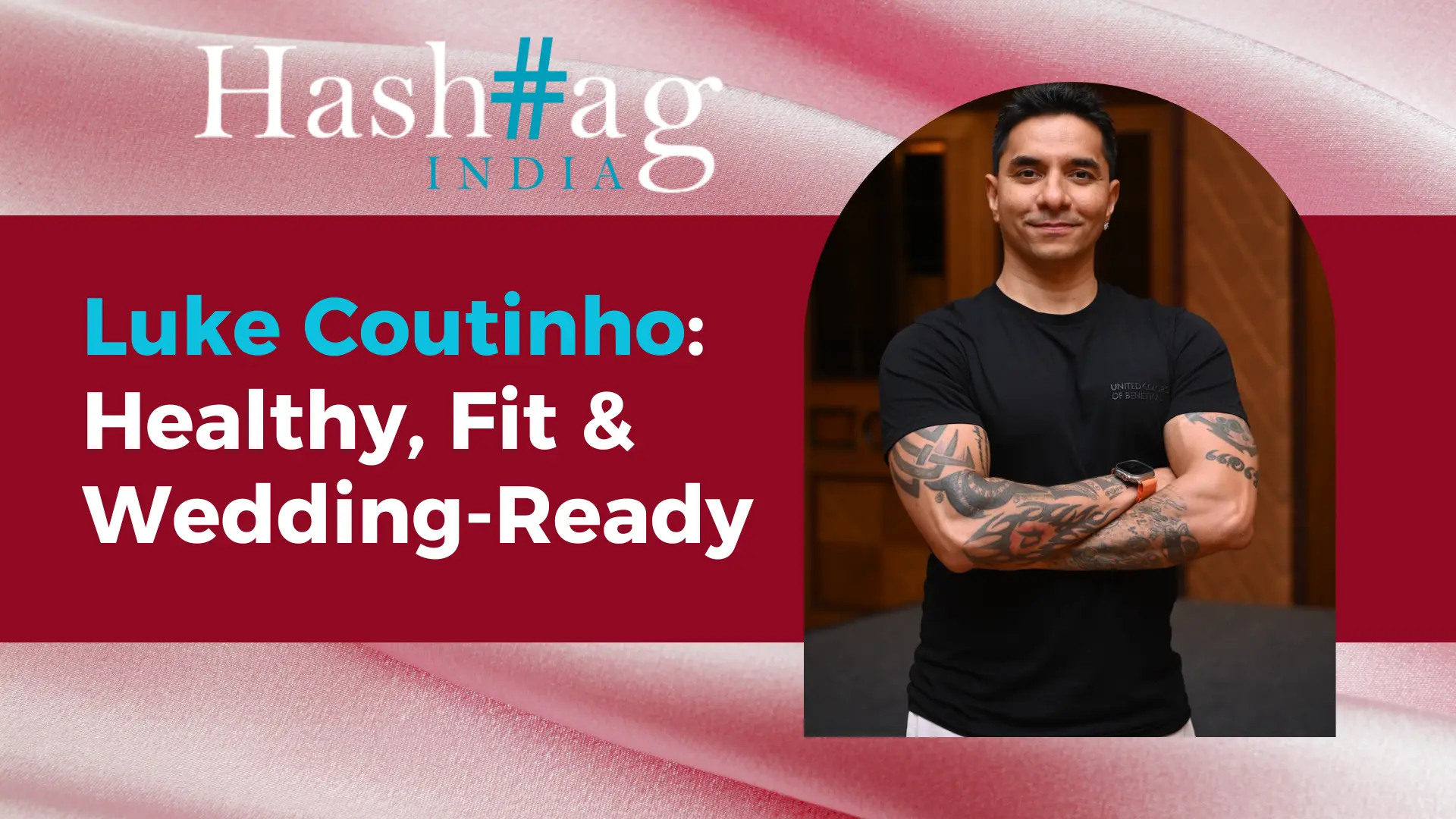
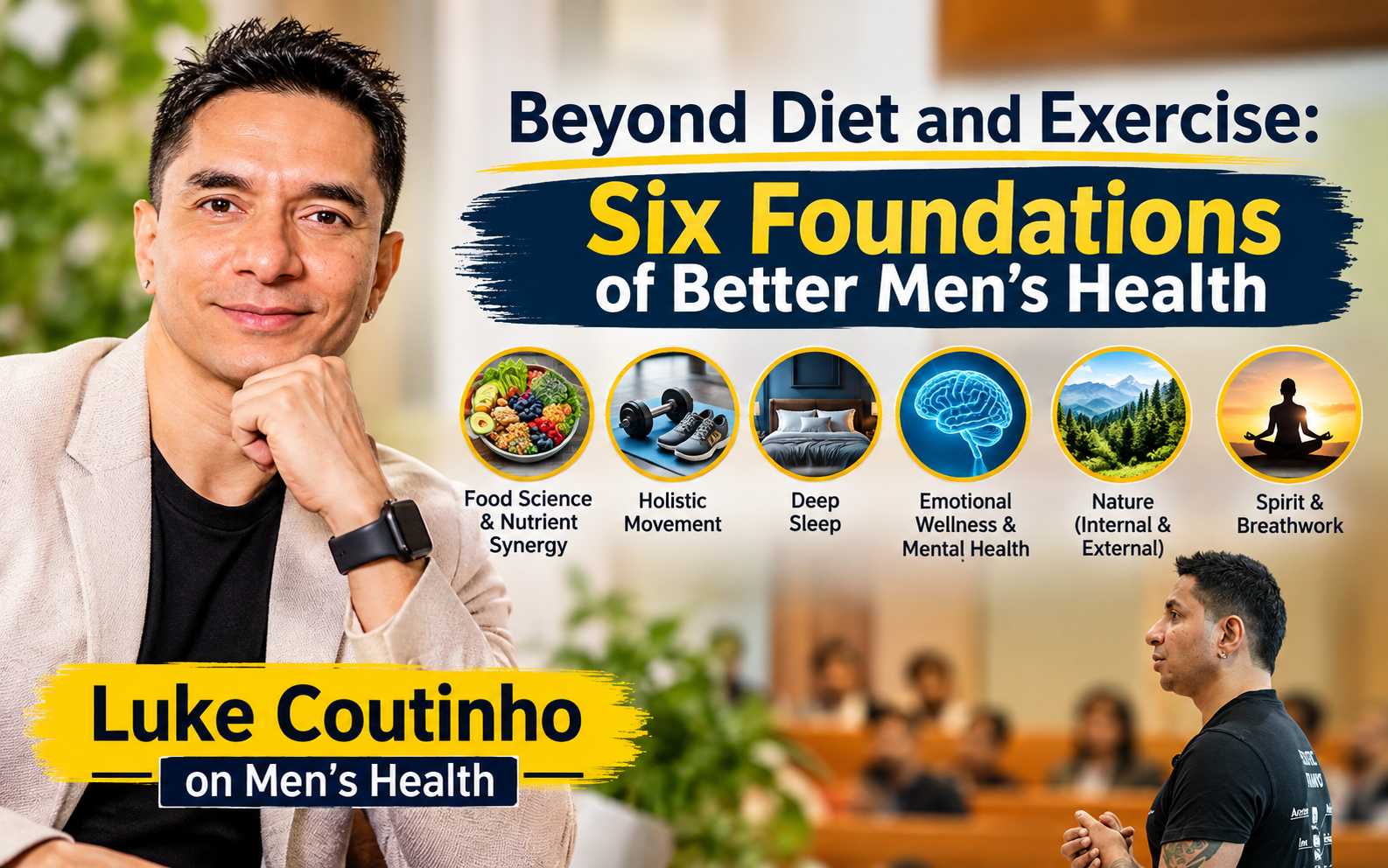
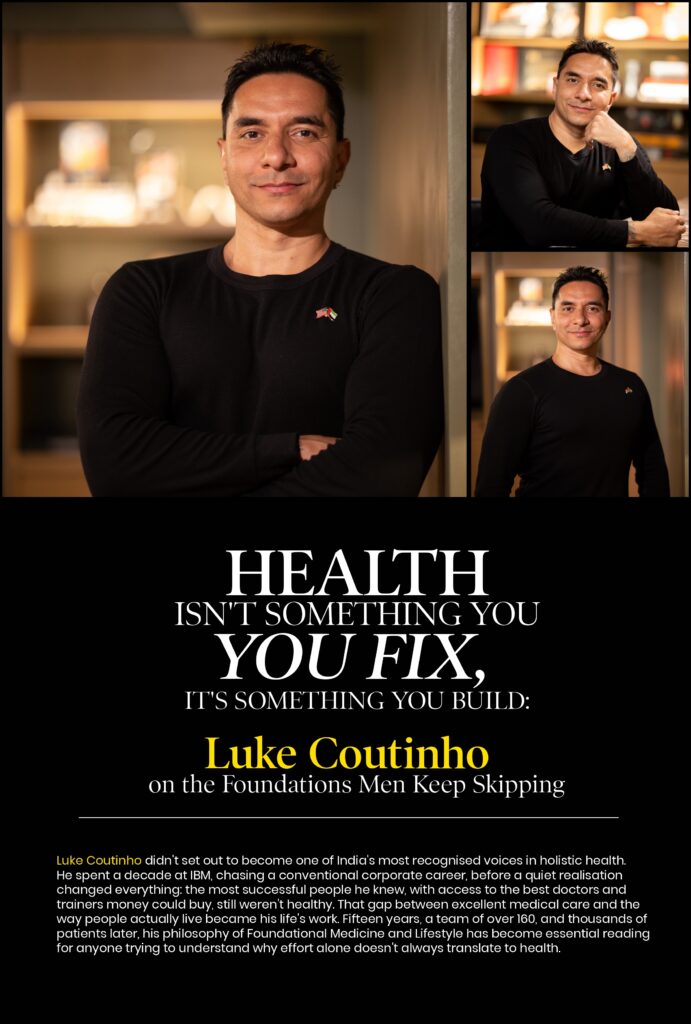
Luke Coutinho didn’t set out to become one of India’s most recognised voices in holistic health. He spent a decade at IBM, chasing a conventional corporate career, before a quiet realisation changed everything: the most successful people he knew, with access to the best doctors and trainers money could buy, still weren’t healthy. That gap between excellent medical care and the way people actually live became his life’s work. Fifteen years, a team of over 160, and thousands of patients later, his philosophy of Foundational Medicine and Lifestyle has become essential reading for anyone trying to understand why effort alone doesn’t always translate to health.

His Journey

From Goa to the corporate world

I grew up in Goa in the late 90s and early 2000s. Like most young people, I went through different phases, and I think that’s how it should be. Each chapter teaches you something and leads you to the next. During college, I worked weekends at my cousin’s restaurant, waiting tables, helping in the kitchen and sometimes running the bar. It was hard work, but it taught me a lot about people and service.

After college, I worked in hospitality before joining a multinational company that took me to Dubai, London and Qatar. When I returned to India, I spent 10 years at IBM. Throughout those years, nutrition remained a personal interest. I studied it out of curiosity, never imagining it would eventually become my career.

The realisation that changed my approach to health

My turning point came from what I saw in the corporate world. Many senior executives, people with impressive titles who travelled constantly, were neglecting their health. They had access to the best doctors, nutritionists, trainers and gyms. They could afford any superfood they wanted. And still, they weren’t healthy.

That didn’t add up to me. The missing piece, I realised, was lifestyle. For many of them, fitness was a box to tick: a yoga class here, a trainer session there, an annual check-up. No one was looking at how they actually lived day to day. The more I thought about it, the clearer it became that lifestyle is foundational medicine. Before any pill, supplement or procedure, there are the basics: what we eat, how we move, how well we sleep, and how we handle our emotions and stress. These are the roots.

Turning a philosophy into a career

I started small, offering guidance to a few people. Instead of handing them another plan to follow, I looked at their whole lives: their meals, sleep, stress and routines. Watching their health and lives change was incredibly rewarding. Then came the difficult decision: should I stay in a secure job with a good salary and position, or leave it to build something of my own in health? The future felt uncertain, but I chose to follow my heart and resigned to become a health coach. It was the best decision I’ve ever made.
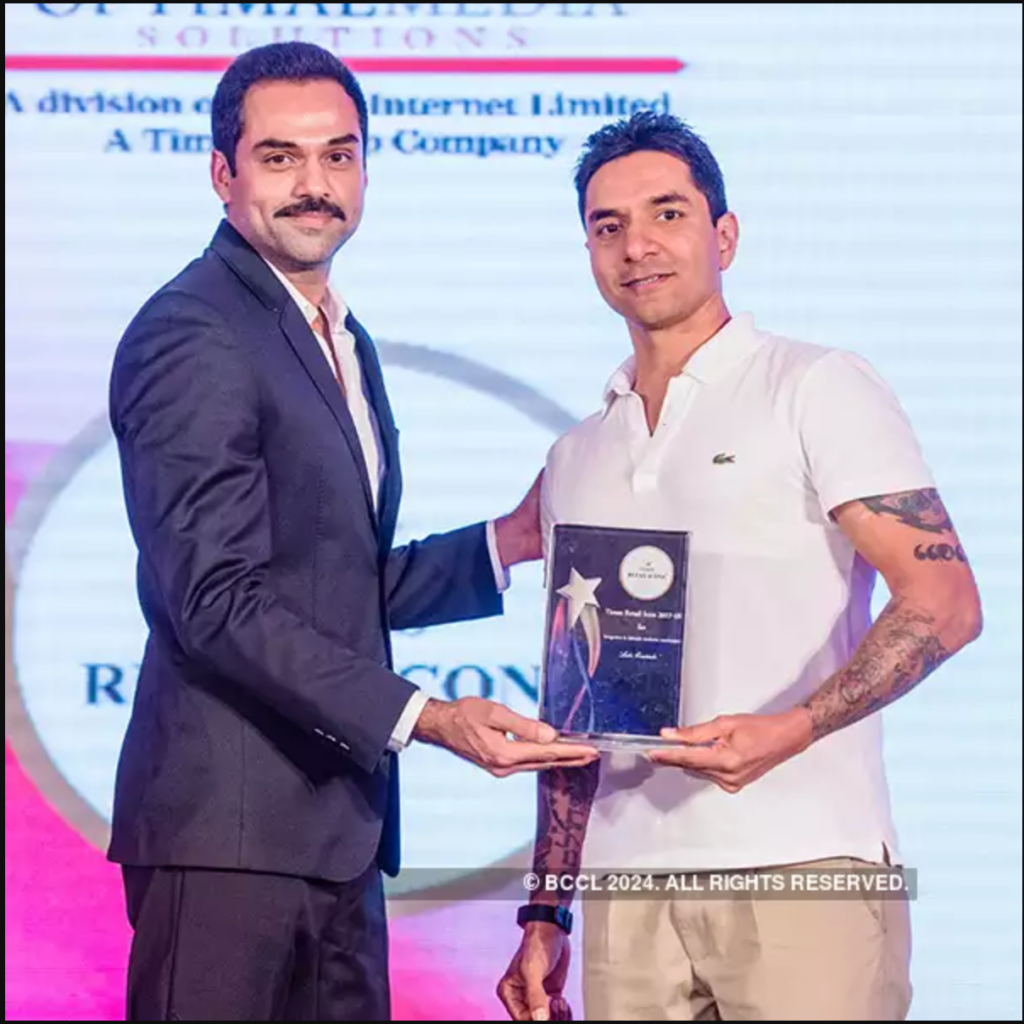
My father always told me to follow my heart, and that’s exactly what I did. I had no detailed business plan or grand strategy. I only knew I wanted to help people restore their health. Eventually, I began building a team that would work alongside doctors, not against them.

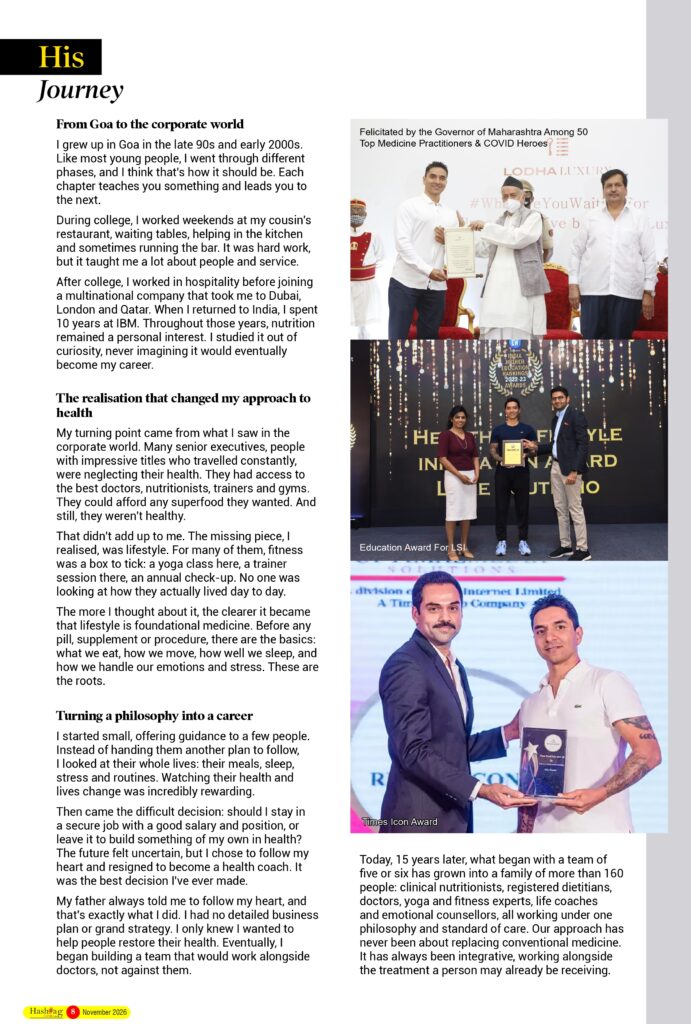
Today, 15 years later, what began with a team of five or six has grown into a family of more than 160 people: clinical nutritionists, registered dietitians, doctors, yoga and fitness experts, life coaches and emotional counsellors, all working under one philosophy and standard of care. Our approach has never been about replacing conventional medicine. It has always been integrative, working alongside the treatment a person may already be receiving.
Leave a comment

Your email address will not be published. Required fields are marked *

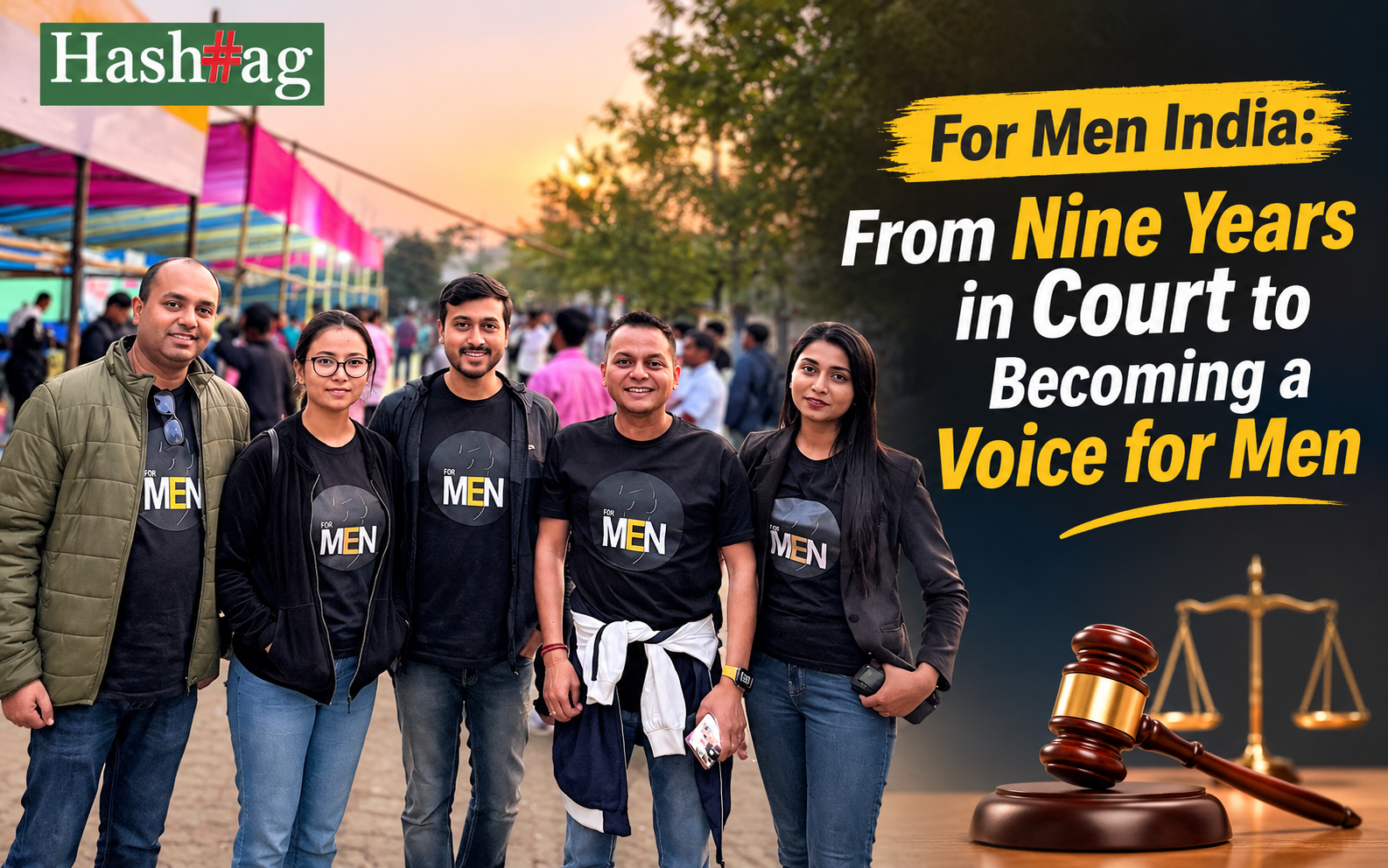
From Nine Years in Court to a Voice for Men: The Story Behind For Men India

In 2016, Dipankar Ghoshal and his mother were falsely implicated in a case under Section 498A of the IPC. What followed was nine years of legal battles, broken relationships and a presumption of guilt he says he faced simply for being a man. That experience led him to found For Men India in Guwahati, alongside co-founders Antara Das and Jayashree Singh, an NGO working on men’s rights, legal awareness, family law, men’s health and mental health. Here, Dipankar shares what pushed him to start the organisation, and the changes he believes society still needs to make. What inspired you to establish For Men India, and what is the organisation’s core mission?In 2016, my mother and I were falsely implicated in a case under Section 498A of the IPC. When I was called to the police station to record my statement, the investigating officer’s first words were, “It’s better that you confess, because a woman would never file a false case!” Despite repeatedly stating that I had no idea why the case had been filed, I felt judged simply because I was a man. Society, including my family, friends, neighbours and relatives, turned their back on me. Even my relationship with my father broke, causing me severe mental trauma. One complaint shattered my family and exposed the painful reality of gender bias and the presumption of guilt. That was when I decided to raise awareness about the issues faced by men, fight for men’s rights, and establish For Men India. I continued fighting my case and finally won after nine long years. Our core mission rests on four pillars: men’s rights advocacy, including campaigns around family law reform, divorce, child custody, male victims of harassment and the alleged misuse of laws like Section 498A of the IPC and BNS 69; legal

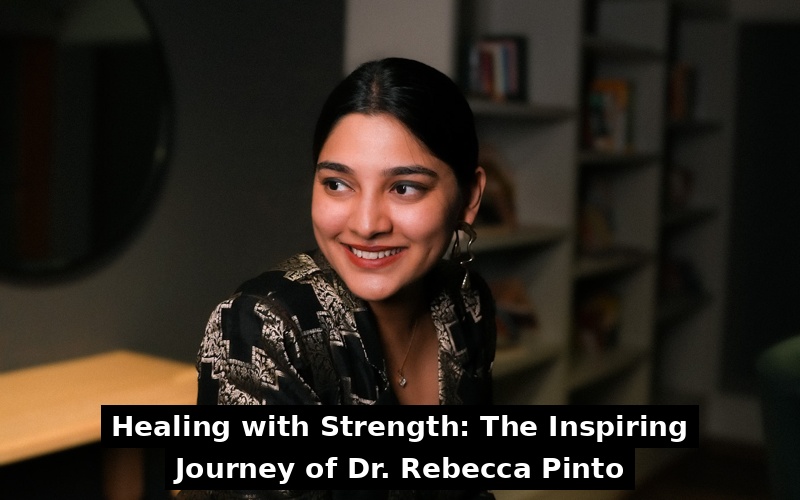
Healing with Strength: The Inspiring Journey of Dr. Rebecca Pinto

Based in Bangalore, Dr. Rebecca Pinto is a physiotherapist by qualification, but as she says, “My life has been shaped far more by experience than by textbooks.” Losing her mother at a young age, Rebecca grew up in a single-parent household with her father. Financial constraints were not abstract concepts; they were lived realities. “I saw what a lack of money really does, not just to your lifestyle, but to your peace, your choices, even your relationships,” she shares. That early exposure instilled two beliefs: financial independence creates freedom, but happiness remains a choice. Known among friends as vibrant and dependable, she describes herself as “caring, witty, and observant.” Her critics may call her detached, but she believes that detachment “has helped me survive more than anything else.” Health Beyond Information Today, Dr. Pinto wears multiple hats: physiotherapist, nutritionist, and content creator. But her mission extends beyond treatment plans. She challenges deeply ingrained habits. “When you understand health, you don’t just treat people, you change how they live,” she explains. Content creation began casually, a simple experiment. But the moment people began telling her, “This helped me,” the weight shifted. “That’s when it stopped being content and became responsibility.” For Rebecca, health isn’t about longevity alone. “It’s about living without constantly feeling tired, inflamed, or uncomfortable, which unfortunately has become normal.” Clarity Over Comfort In an industry flooded with trends, her voice stands out for its directness. “Most people don’t change because they lack information. They don’t change because no one has made them question their habits.” She positions herself deliberately between comfort and awareness. Her approach is simple, sometimes blunt, but always rooted in science. “If something is harming you, I’ll say it, even if it’s something you enjoy.” Her audience associates her with two defining qualities: clarity and

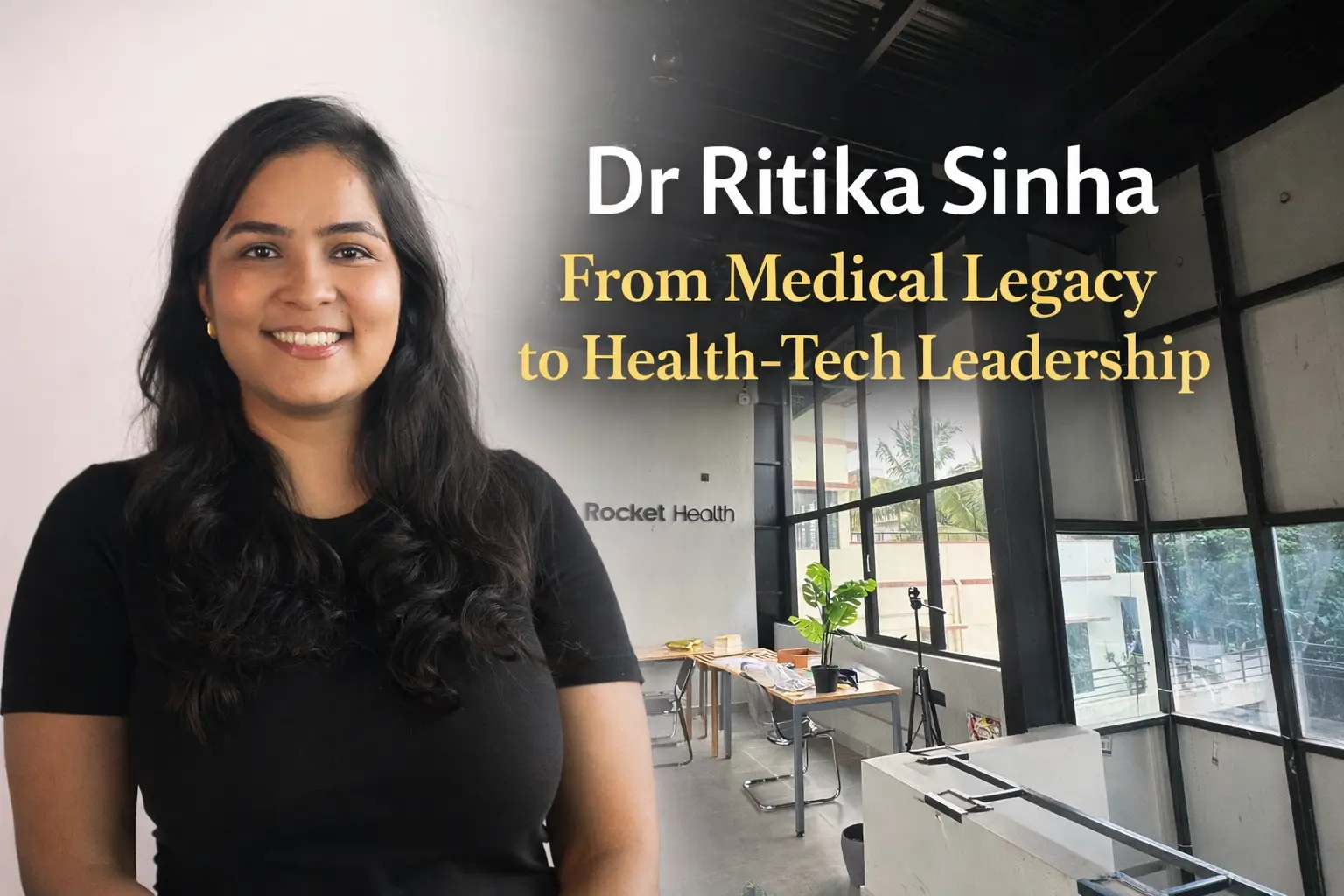
Dr Ritika Sinha: Transforming Healthcare with Rocket Health

Dr Ritika Sinha was born and raised in Gaya, Bihar, and is now based in Bangalore. She comes from a family of doctors, her mother a gynaecologist and her father a surgeon, who runs a hospital in Bihar. Growing up in a medical household meant early exposure to patient care, long hours, and the operational realities of healthcare delivery. “Healthcare was never abstract for me,” she reflects. “I saw firsthand what responsibility toward patients actually looks like.” A major turning point came during the COVID-19 pandemic, when she helped launch a pilot initiative to support patients across India. That experience exposed significant gaps in access and continuity of care, particularly in mental health. “It really opened my eyes to how broken the system can be,” she says. “It changed how I saw my role as a doctor.” In a bold move, she decided to step away from the traditional clinical path just before her postgraduate entrance exams to build Rocket Health full-time. “It was scary,” she admits, “but I had absolute clarity.” Normalising Mental Healthcare Dr Sinha is a doctor-turned-entrepreneur and co-founder of Rocket Health, a digital mental healthcare company focused on therapy, psychiatry, and integrated care. The motivation behind the company was clear: mental healthcare has long been misunderstood and stigmatised. “People think therapy is only for extreme situations,” she explains. “We want to normalise it, to make it as routine as going to the gym or seeing a physician. For her, the mission is deeply personal and systemic at the same time. Mental health, she notes, influences every dimension of life, relationships, work, confidence, and decision-making. “As more people are opening up to these conversations, the care available to them must be credible and high-quality,” she emphasises. Quality at Scale Dr. Sinha’s role centres on building healthcare systems

Decoding Modern Mental Health

In a world where stress, digital overload, and rising expectations shape our everyday lives, mental well-being has become more crucial than ever. Experts like Dr. Sarthak Dave and Dr. Era Dutta break down the modern pressures affecting our minds and offer clear, science-backed ways to cope. Understanding Anxiety TodayDr. Sarthak Dave Breaks Down Myths, Warning Signs & Everyday Coping Tools Dr. Sarthak Dave, MBBS, MD (Psychiatry), is one of India’s most trusted voices in mental health. Based in Ahmedabad, Gujarat, he is the founder of Vibha Healing Center, a safe, accessible space for individuals seeking support and guidance. In this conversation, he sheds light on anxiety what people misunderstand most, when stress becomes a clinical concern, and how simple, science-backed tools can help restore balance. 1. What’s the most misunderstood aspect of anxiety today? Two misconceptions stand out. First, many people believe their level of anxiety is the only “real” version of anxiety. So they often struggle to understand or accept that someone else might experience it far more intensely. Second, people assume anxiety must always have an external cause. But clinical anxiety often arises from internal factors hormonal changes, genetics, or neurotransmitter imbalances. In such cases, changing your environment won’t fix the issue. Addressing the biological changes is what helps. 2. When does “normal stress” turn into a clinical concern? Stress is a natural human response. But it becomes a clinical issue when it causes socio-occupational or socio-academic dysfunction meaning your ability to function in daily life is affected. If you’re unable to eat, sleep, concentrate, work, study, or connect with people the way you used to, that’s a red flag. Additionally, if symptoms persist for more than 2 weeks and continue to worsen rather than resolve, they should be taken seriously. In such situations, stress is no longer

You May Also Like

Connect with us