The pillars that often get overlooked
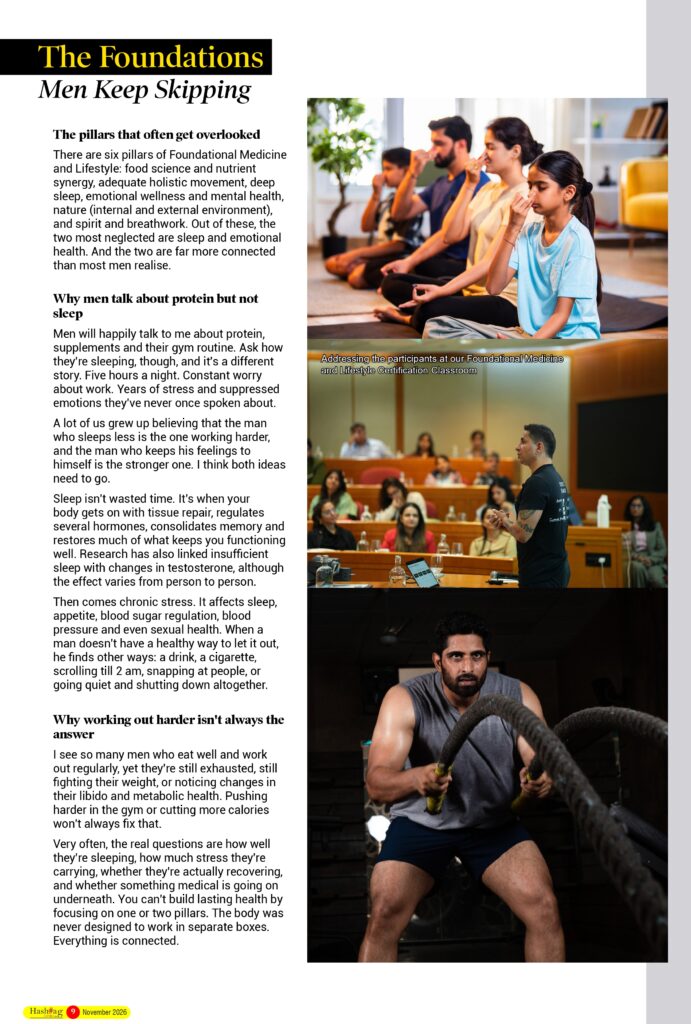
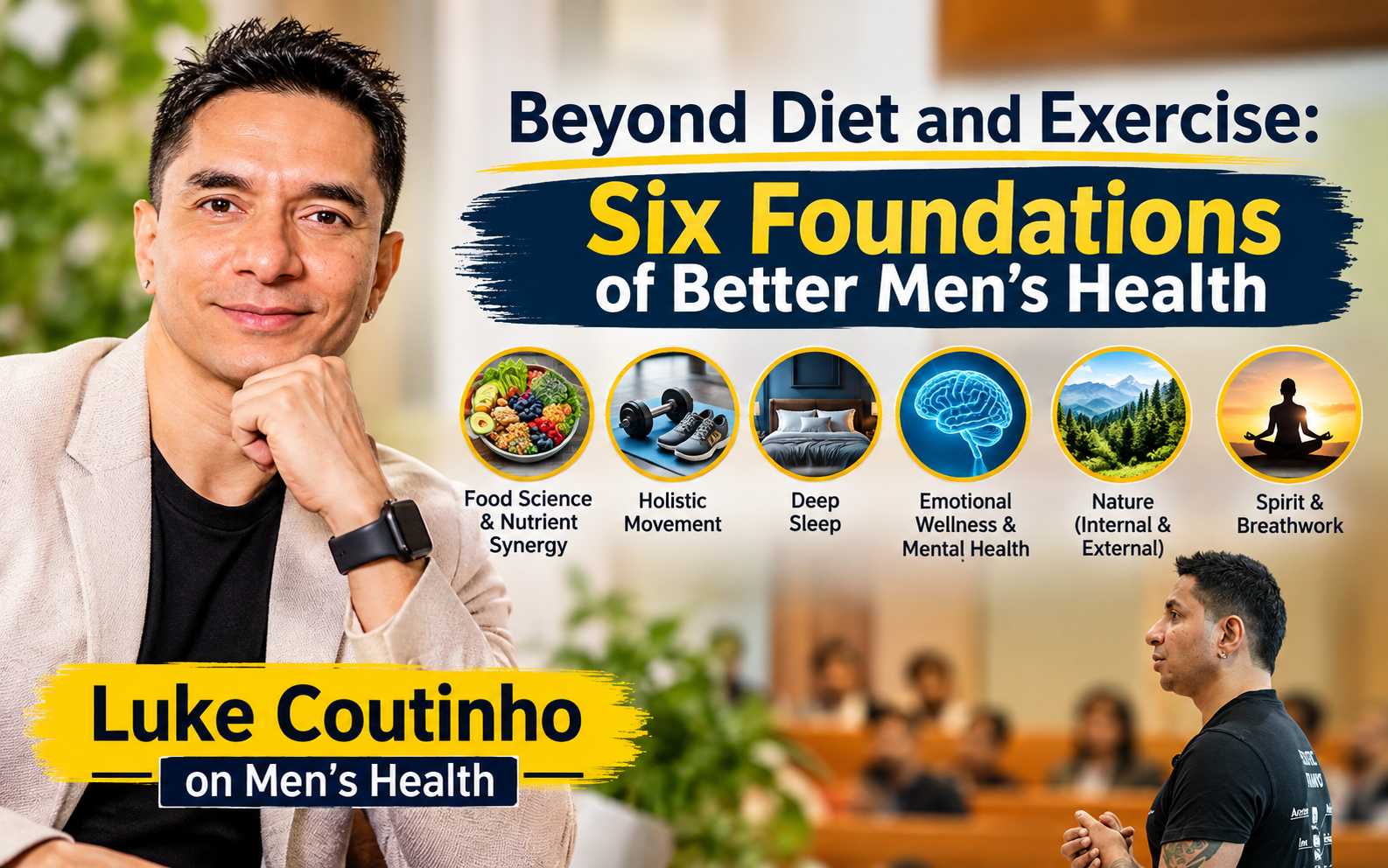
There are six pillars of Foundational Medicine and Lifestyle: food science and nutrient synergy, adequate holistic movement, deep sleep, emotional wellness and mental health, nature (internal and external environment), and spirit and breathwork. Out of these, the two most neglected are sleep and emotional health. And the two are far more connected than most men realise.
Why men talk about protein but not sleep
Men will happily talk to me about protein, supplements and their gym routine. Ask how they’re sleeping, though, and it’s a different story. Five hours a night. Constant worry about work. Years of stress and suppressed emotions they’ve never once spoken about. A lot of us grew up believing that the man who sleeps less is the one working harder, and the man who keeps his feelings to himself is the stronger one. I think both ideas need to go.
Sleep isn’t wasted time. It’s when your body gets on with tissue repair, regulates several hormones, consolidates memory and restores much of what keeps you functioning well. Research has also linked insufficient sleep with changes in testosterone, although the effect varies from person to person. Then comes chronic stress. It affects sleep, appetite, blood sugar regulation, blood pressure and even sexual health. When a man doesn’t have a healthy way to let it out, he finds other ways: a drink, a cigarette, scrolling till 2 am, snapping at people, or going quiet and shutting down altogether.
Why working out harder isn’t always the answer
I see so many men who eat well and work out regularly, yet they’re still exhausted, still fighting their weight, or noticing changes in their libido and metabolic health. Pushing harder in the gym or cutting more calories won’t always fix that. Very often, the real questions are how well they’re sleeping, how much stress they’re carrying, whether they’re actually recovering, and whether something medical is going on underneath. You can’t build lasting health by focusing on one or two pillars. The body was never designed to work in separate boxes. Everything is connected.

Feeding Your Body Beyond the Gym
What feeding your cells actually means?
You’re not just feeding your stomach. You’re handing your cells the raw material they need to make energy, keep themselves going and do their jobs. When nutrition falls short, sleep is poor, or there’s a deficiency nobody has picked up on, it can show up as tiredness, trouble focusing or taking longer to bounce back. But those same symptoms can come from many places, so food shouldn’t automatically get the blame.
Looking beyond what is on your plate
I start with three questions. Is your diet varied and balanced, with enough protein, fibre, healthy fats, vitamins and minerals? Are you actually digesting and absorbing what you eat? Digestive trouble and some medicines can interfere with absorption. And could there be a deficiency underneath?
Vitamin B12, iron and vitamin D deficiencies do occur in India, but we shouldn’t assume everyone has them. Persistent fatigue can also be linked to thyroid disorders, diabetes, anaemia or sleep disorders.
What to do when you’re tired every day?
Skip the energy drink and the random supplement for now. Go back to basics. Eat balanced meals with a suitable protein source, drink water regularly, get enough sleep and keep your body moving through the day. If the tiredness doesn’t lift, talk to a doctor about which tests make sense for you. And more isn’t always better. Supplements are useful when there’s a demonstrated need, not just because they’re available.