
VAMA: A one-stop shop for all your religious and spiritual needs

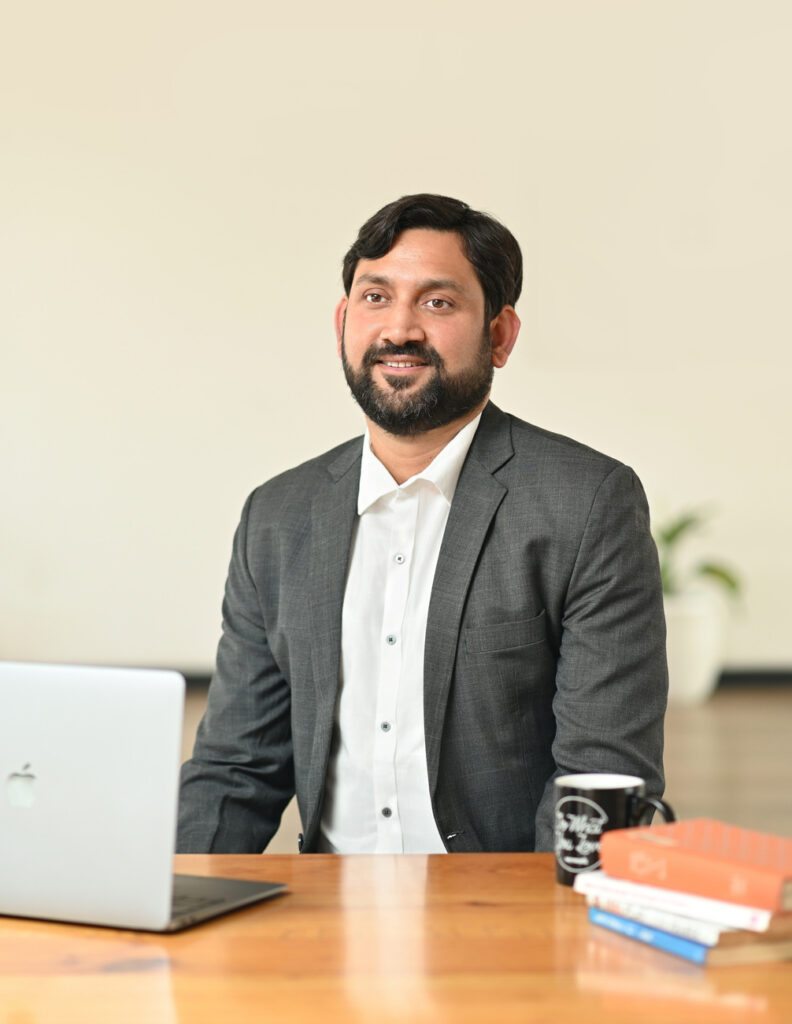
Rashmi Gopal Rao in conversation with Himanshu Semwal, cofounder of VAMA, a one-stop shop for all your religious and spiritual needs

For many of us, visiting temples is synonymous with long queues, large crowds and feeling rushed when you get a chance to view God.  It is not uncommon for one to have returned from a temple visit without obtaining the darshan of the deity. While this is certainly disappointing, it is key to note that this has become quite a norm due to a plethora of reasons including the exponential rise in the number of devotees and restrictions due to the recent coronavirus pandemic. That said, physically travelling to visit temples situated in far-off places may always not be feasible. Well, Himanshu Semwal, cofounder of VAMA has the answer to all such problems. Simply put VAMA (Virtual Astrology and Mandir App) is a one-stop virtual platform that offers a wide range of religious and spiritual services. 

VAMA offers a number of services like astrology, e-puja and e-darshan services to its users

Marrying Technology and Faith

Established by Himanshu Semwal, Manu Jain and Acharya Dev in late 2020, VAMA was conceived with a vision to bridge the gaps between the hectic, technology-dominated lifestyles of Gen Z and their unmet religious needs. While Himanshu Semwal has over 14 years of experience in Telecom Marketing, Business Strategy, Product Innovation and Sales, Aacharya Dev is a third-generation astrologer who has spent the last decade delivering and managing astrology services for Indian telecom providers. Himanshu Semwal is a seasoned professional with more than a decade of experience in the telecom sector and other industries. He has been closely involved in building and executing content strategies for leading corporates and start-ups.

VAMA is a comprehensive online platform that allows devotees to perform e-pujas and mandir darshans from the comfort of their homes. With an array of religious verticals in place, VAMA is marrying faith with technology in order to mitigate the logistic obstacles faced by youngsters who cannot visit temples physically. “We realised there was a need to organise the faith-tech segment and deliver 360-degree virtual spiritual solutions to devotees on a single platform. Prior to VAMA, devotees would receive e-puja services via WhatsApp video calls that were not well-organized or followed a strict set of rules and regulations. With VAMA, one can perform any puja of their choice in any of the registered temples with complete transparency and proper guidelines. With the number of physical visits in temples slowly declining over the recent threats and more devotees shifting to the online medium, VAMA aims to capitalise on this growth potential of virtual footfalls over the next few years,” says co-founder Himanshu Semwal.

The app has so far enabled over 50,000 online consultations and is growing at a rate of 100% on a month-on-month basis.

Services galore

VAMA offers a number of services like astrology, e-puja and e-darshan services to its users. Any end-user can download VAMA’s app or visit its website to avail of the desired virtual spiritual services they are looking for.  VAMA has partnered with over 30 temples which include some of the most popular temples such as Kashi Vishwanath in Varanasi, Shree Mangalnath in Ujjain, and Vindhyachal Devi Mandir, Naimisharanya Lalita Devi Mandir, Shiv Mandir all in Prayagraj and Hanuman Mandir in Ayodhya.

Devotees can avail the e-puja and e-darshan facility in these temples wherein they are allotted a time window during which the priest in the temple performs the ritual as per the booking for the specific puja or ritual. Devotees can attend this remotely through video call via the VAMA app or through the website. VAMA users have access to a number of virtual puja remedies and other services through the live-streaming feature on their app. 
Users can also avail the services of astrologers and Vaastu experts through VAMA.  The platform has over 300 experienced astrologers and other spiritual experts who offer genuine and customized consultations as well as best-in-class remedies to the users of the platform.

The journey so far and the future

The consumer app of VAMA was launched in August 2021 and since then it has witnessed an unprecedented increase in the monthly active users which is currently 1.5 lakh users per month.  VAMA’s app is currently available on Android devices and has witnessed over 500K downloads on the Google play store. VAMA will also be available on iOS devices by the end of June 2022. The app has so far enabled over 50,000 online consultations and is growing at a rate of 100% on a month-on-month basis. The team plans to introduce live-streaming of darshan and aartis as well as the option for users to make online donations towards temples. They also plan to broaden the scope of their services this year by collaborating with over 200 temples and venturing into international markets such as the Middle East, USA, and Canada.


Leave a comment

Your email address will not be published. Required fields are marked *

From Dam to Dish: How Dam Good Fish Is Transforming India’s Seafood Industry

With rising awareness around clean eating and traceable food sources, Dam Good Fish is rethinking how fresh seafood reaches urban consumers. Co-founders Shobhit Gaur and Shailesh Patel share how their unlikely partnership, built on complementary strengths in branding and aquaculture, led to a venture that prioritises natural sourcing, transparency, and freshness in India’s rapidly growing seafood market. Tell us a little about yourselves, your backgrounds, and personalities. Shobhit Gaur (Co-Founder & CEO):With a Master’s in Business Management and several years as National Head at a leading advertising agency, my career has always combined creativity with strategy. I see myself as a big-picture thinker who enjoys building disruptive ideas in traditionally unorganised markets. I’m naturally outgoing and enjoy exploring new concepts, whether in business or food culture. When I’m not working, I’m usually tracking food trends or spending time working out. Shailesh Patel (Co-Founder):My background is rooted in science, followed by a Master’s degree in business. Over the past decade, I’ve worked with multinational organisations and helped build ventures centred around sustainable solutions. I’m very hands-on and detail-oriented, someone who thrives on execution. For me, strategy must always be backed by strong ethics and measurable results. How did two people from different professional worlds come together to build a venture centred around fresh, natural seafood? Our paths crossed through shared sporting networks, where casual conversations gradually shifted toward food, health, and sustainability. Shobhit’s expertise in media and branding combined naturally with my background in aquaculture. As we discussed clean-label foods and the gaps in India’s seafood ecosystem, it became clear there was a real opportunity. In 2023, we decided to bootstrap Dam Good Fish. The idea was simple: combine strong storytelling and consumer awareness with operational expertise that ensures traceability and quality. Our complementary skill sets helped turn that idea into

Sujata & Taniya Biswas: Redefining the Everyday Indian Sari

A homegrown Indian fashion brand redefining the sari as an everyday, breathable, and expressive garment. Combining Sujata’s structured, systems-driven approach with Taniya’s creative vision, they work closely with artisan communities across India to create clothing rooted in comfort, honesty, and human connection. Their journey blends entrepreneurship with sisterhood, building a brand that values trust, craftsmanship, and mindful fashion. Taniya, you left a stable career with the Tata group and IBM after IIM Lucknow, and Sujata, you pivoted from IIFT Delhi and corporate life. What was the exact moment when both of you realised that the corporate path wasn’t enough and that Suta was waiting to happen? Taniya: It wasn’t a rebellion. It was recognition. I had done everything “right”: engineering, IIM, a Consulting role that looked perfect on paper. But somewhere between late-night presentations and early morning meetings, I realised I was living life from the neck up. My hands missed fabric. My heart missed stories. I kept returning mentally to memories of wet saris drying on clotheslines, of Maa moving through the house with her pallu tucked in. One evening, over chai, I said it aloud to Sujata: I don’t think this is it. The moment I spoke it, Suta was born. Sujata: For me, it came as the discomfort of becoming someone I wasn’t. The corporate world had given me growth, but it had also hardened me. I remember thinking: If success requires me to lose softness, I don’t want it. My PhD was an attempt to find meaning, but even that felt academic, distant. What we really wanted was to build something with our hands, our intuition, and our values. Suta didn’t arrive as planned. It arrived as relief. From travelling through remote weaving clusters in Meghalaya, Varanasi, MP, and Odisha to working directly with artisan families,

Blood, Bond & Business: The Real Equations behind Family-Driven Startups

February is the month of relationships, and at Hashtag, we’re celebrating the bonds that shape not just personal lives, but powerful businesses. This special edition explores entrepreneurs who share more than a company; they share roots. From siblings turning into strategic partnerships to spouses balancing love and leadership, we dive into the real dynamics behind relationship-driven ventures. This month, discover how strong relationships can become a business’s most valuable asset. Vijayaraghavan Venugopal is the Co-founder at Fast&Up and has been instrumental in building the brand in India. He has over 26 years of business experience in diverse fields, which includes pharmaceuticals, Healthcare and Information Technology. He has been responsible for business development in multiple geographies, including the Triad (USA, Europe and Japan). He has worked with TekFriday, Dr Reddy’s, Lupin and Emcure in different senior management roles. He was Lupin’s country head in China for three years between 2007 and 2010. He is a mechanical engineer and an MBA in International Business from the Indian Institute of Foreign Trade, Delhi. He is one of the fastest amateur marathoners in the country, having run in sub-3-hour marathons 12 times in major cities throughout the world, including Paris, Boston, Chicago, Berlin, London, Tokyo and New York, all while leading the growth of India’s fastest-growing nutrition brand, Fast&Up. He also has the distinction of being the first Indian to do all six world marathon majors under 3 hours, and is the winner of the recently held Tata Mumbai Marathon in his age group. Varun Khanna is the CEO of Fullife Healthcare Pvt. Ltd., a company he started at the age of 23 with the sole purpose to focus on healthy living. A relentless passion to do something innovative for the millennial need for an active life drove him to launch India’s first effervescent

Top 6 Startups Of 2025: The New Architects of India’s Future

From sustainable farming to EV mobility, discover six Indian startups shaping a cleaner, smarter, and more connected tomorrow. Every generation finds its dreamers, the ones who don’t just talk about change, but build it. In 2025, India’s startup scene feels less like a rush for valuation and more like a movement with a purpose. These founders aren’t chasing unicorn tags; they are chasing impact. They are solving what truly matters. This is the India that rolls up its sleeves and says ‘Let’s make it ourselves.’ Dhanush Kumar writes about the Top 6 Startups of 2025, born from soil, steel, and software, each shaping tomorrow with courage and conscience. 1.Handpickd: Fresh from Farm to Table When freshness becomes a luxury, Handpickd restores it to the everyday plate. This Bengaluru-based agritech startup has built a direct bridge between local farmers and urban consumers ensuring every tomato, mango, and millet travels fewer miles and earns farmers more smiles. Using tech-driven logistics and transparent sourcing, Handpickd doesn’t just deliver produce; it delivers trust. In an era of overprocessed everything, this is simplicity redefined clean food, honest pricing, and a system where farmers finally get their due.It’s not a brand. It’s a return to our roots literally. 2.Bambrew: Building a Plastic-free Future At a time when the planet gasps under plastic, Bambrew breathes innovation. The Bengaluru-based packaging pioneer crafts biodegradable, compostable alternatives made from bamboo, sugarcane, and cornstarch materials that love the earth back. Their vision isn’t just green, it’s bold. Bambrew’s eco-packaging now wraps products for top FMCG and e-commerce giants, proving sustainability doesn’t have to look boring or cost a fortune.This isn’t rebellion it’s reinvention. A reminder that small choices, multiplied by millions, can rewrite the story of our planet. 3.Eeki Foods: Vertical Farming for a Greener Tomorrow In the deserts of Rajasthan, where

You May Also Like

Connect with us