
India’s New Digital Leisure Trends: From Streaming to Interactive Gaming

India is increasingly going digital in every facet imaginable. That should not be super surprising given that the country now has close to a billion Internet users and more than six hundred and fifty million active smartphone ones. According to many, the digital revolution in the world’s most populous nation began in the mid-2010s, when the Digital India platform launched, spreading fiber optic infrastructure across the nation, Reliance Jio activated 4G while lowering data transfer rates, and Chinese smartphones entered this market.

These three things, along with the rise of UPI-powered payments, fueled a wave of digital adoption in The Golden Sparrow, which dramatically increased during the start of the 2020s, amidst the COVID pandemic and stay-at-home government-imposed measures. This was a time when people had to look for more modern forms of entertainment, and OTT streaming platforms posted record user numbers. People also turned to playing mobile games and enjoying sites like Casino Days in India.

Hence, the 2020s marked a new era in leisure activities in this part of the world, and below, we explore the trends that have defined this new age characterized by novel ways to have fun.

The JioHotstar and OTT Streaming Explosion

At the start of this decade, India saw a massive expansion of OTT users, with the number of individuals subscribing to these platforms continuing to grow throughout today. As noted above, COVID-19 spurred many Indians to test streaming video entertainment. Because movie theaters were closed for months during the pandemic, some film studios decided they could not wait for them to open back up and chose to release their movies directly on streaming platforms. This further boosted the visibility of Over-the-Top services, as they are called here, which skyrocketed their subscriber counts.

The fact that more people than ever had smartphones that could enjoy what these services had to offer, thanks to mobile apps, along with fast and affordable Internet bandwidth, OTT viewing quickly became all the rage, and was primarily consumed via smartphones, rather than through TV screens.

Going by an Ormax OTT Audience Report, the Indian OTT market had 547 million users in 2024. In 2026, the country’s leading streaming service, JioHotstar, claims to have somewhere in the neighborhood of 500 million users, far overshadowing its two top competitors, Amazon Prime and Netflix. This figure shows just how quickly Indians have adopted streaming video content, and how infrastructure changes have dramatically affected India’s entertainment arena as a whole.

The Booming Popularity of Short-Form Videos

Many thought that following India’s ban of TikTok, which was a fast-spreading global phenomenon around this time, short-form videos would not take off in India the same way they had around the globe. Boy, was that prediction wrong. Not only did Instagram Reels and YouTube Shorts fill the TikTok gap, but homegrown apps like Josh and Moj, which launched as an answer to TikTok’s absence in this robust market, carved out their own niche. This duo is now worth billions each, and they produce billions of daily views.

Without question, short-form videos have become the dominant daily time killer for younger demographics and for individuals who prefer mobile-first content. Going by an IPSOS study whose results went public in September 2025, commissioned by Facebook and Instagram parent company Meta, Instagram Reels are the most-watched short-form content format in India. Generation Z users especially seem to love them, and 97% of study respondents note that they watch at least one per day.

In a way, this format has become a cultural sensation of sorts, as Reels are riddled with viral challenges, beauty tutorials, and lifestyle transitions that have greatly affected not only online culture but the nation in general. They have also influenced people’s buying habits and how products get marketed in India to quite an impressive degree.

Mobile Gaming Dominating

Niko Partners, a leading game market data firm, claims that India has now exceeded half a billion mobile gamers, and its annual mobile gaming spend has gone over a billion dollars. Today, women represent 40% of the country’s total gamer pool, which is an impressive percentage by itself, but it becomes even more impressive when one learns that this figure stood at 22% in 2020.

eSports, or competitive gaming, is too a top sector driver, with 60% of people into gaming watching eSports events, or competing in them. Battle Royale ranks as the top genre, with PUBG Battleground, Call of Duty Mobile, and Free Fire Max being the most-enjoyed titles, all multiplayer arena-style options.

All that said, India still trails behind China, which is the slice of Earth with the most substantial player base at over seven hundred and thirty million. Nevertheless, according to some projections, India is on its way to hit this number by 2029, and in a few more years, it may confidently take over the number one spot. This market has the distinction that it is chiefly a mobile-first one, and because of this, most of the population focuses on games that do not have heavy hardware demands.

The Proliferation of Interactive Gaming

Teen Patti and Andar Bahar have a long history of getting used for betting in India, and in the late 2010s and the early 2020s, gaming platforms saw a rapid influx of Indian players. The country has a very limited gambling landscape, as only three of its states allow gaming fun. These have experimented with the Internet kind, but only a bit. Therefore, Indians mainly partake in games of chance for money at internationally regulated platforms that accept Indian customers, which are widely accessible.

Social media influencers advertise these sites freely, and they have distinct games that cater to Indians, such as the mentioned Teen Patti and Andar Bahar, in both the RNG and live dealer formats. The Digital India Foundation, in March 2025, reported that four popular gaming and betting platforms recorded 1.6 billion visits over three months from Indian IPs. That is evidence enough that these hubs and interactive gaming are now a well-established pastime in the birthplace of yoga.

Leave a comment

Your email address will not be published. Required fields are marked *

Top AI Tools Everyone Must Use in 2026

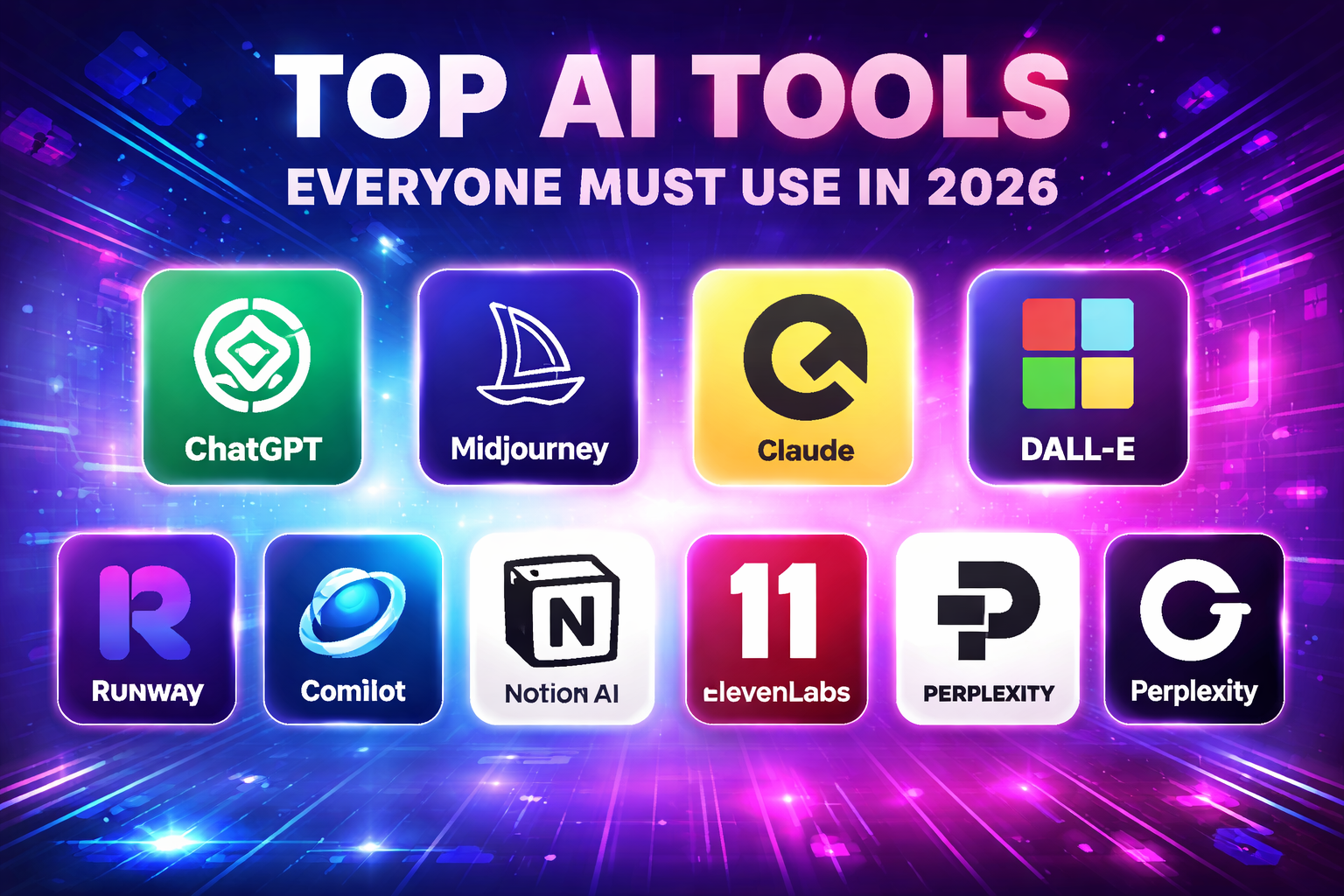
Artificial Intelligence is no longer limited to tech companies or programmers. In 2026, AI tools are becoming essential everyday companions for students, professionals, entrepreneurs, designers, and content creators. From writing emails and designing visuals to coding software and researching complex topics, AI-powered platforms are transforming how we work and create. Experts say generative AI tools now help automate repetitive tasks, speed up creativity, and improve productivity across industries. They allow users to produce content, analyze data, generate visuals, and even compose music within minutes. Here are some of the most powerful AI tools everyone should consider using in 2026. 1. ChatGPT – The All-Purpose AI Assistant ChatGPT remains one of the most widely used AI tools globally. It can help users write articles, generate ideas, summarize information, plan projects, and even assist with coding. Its conversational interface allows people to interact with AI as if they were talking to a colleague. Best for: Writing and editing content Brainstorming ideas Coding and debugging Learning new topics For many professionals, ChatGPT has become a daily productivity companion. 2. Google Gemini – AI for Research and Productivity Google Gemini is designed to integrate deeply with Google’s ecosystem, including Gmail, Docs, Sheets, and Android devices. It excels at analyzing large amounts of information, summarizing reports, and answering complex research questions. Best for: Research and information analysis Email drafting and document summaries Data insights and knowledge work Because of its integration with Google tools, Gemini is especially useful for students and professionals. 3. Microsoft Copilot – The Workplace AI Microsoft Copilot is embedded directly into Microsoft 365 apps like Word, Excel, Outlook, and Teams. It can generate reports, create presentations, summarize meetings, and analyze spreadsheets. Best for: Office productivity Data analysis in Excel Drafting professional emails and reports For businesses and corporate teams, Copilot acts

2026 Automotive Outlook: The Most Anticipated Cars, Bikes, & EVs

The wait-and-watch phase of the Indian automotive market is officially over. If you have been holding off on a new purchase, 2026 is the year the industry finally delivers on its biggest promises. We aren’t just looking at minor facelifts; we are looking at the return of icons, the entry of mass-market EV giants, and a shift toward experience-led cockpits. Whether you are a long-distance tourer or a city commuter looking to slash your fuel bill, the 2026 line-up is designed to solve specific pain points. Here is what you should expect to see in showrooms and on the streets. The Battle of the EV Titans: Tata Sierra Vs Maruti e-Vitara January 2026 is set to be the most consequential month for Indian EVs, as two of the most prominent players launch their flagship solutions. Tata Sierra.ev–This isn’t just a car, it’s a nostalgia trip. Look for the Lounge Seating in the rear and the panoramic sunroof. While the 500km claimed range is the headline, the real winner is the Gen 2 Acti.ev platform, which promises much better floor space and a flat rear floor for passengers. Maruti Suzuki e-Vitara–This is Maruti’s first serious move into EVs. Don’t just look at the battery, look for the AllGrip-e AWD system. It’s designed to provide the grip of a traditional SUV without the mechanical lag. Expect a real-world range of approximately 350-400 km from the larger 61kWh pack. The Tech Forward Family SUV: Mahindra XUV.e8 If you found the XUV700 impressive, the e8 is designed to turn the cabin into a command centre. The triple-screen Dashboard is the standout feature. We are talking about three 10.25-inch high-definition displays stretching across the entire width of the car. Beyond the screens, expect 175kW fast charging. This means a 20 to 80% charge in under

How Melbet Turns Digital Assets into Real-World Wins

On Melbet, crypto is treated like a working balance, not a side feature. A player can register, verify a profile, and fund the same account with Bitcoin or INR, then use it across sports, casino, and live tables. The key detail is simple: once coins land on the platform, they are converted into an internal currency, so odds, stakes, and payouts stay clear even when the original deposit was in BTC. That removes guesswork when a slip shows ₹2,000 while the user actually sent a fraction of a coin. Using the app to move crypto in and out Most Indian players now handle deposits on their phones, so the app flow matters more than the website. Installing the Android package through the melbet app gives direct access to crypto wallets, UPI deposits, and withdrawals in one place, without jumping between browsers and exchange apps. A typical pattern looks very practical: top up with BTC, bet on cricket or football, then withdraw part of the profit in INR to UPI and leave the rest in crypto for later. The same account is used, but the route in or out changes based on the user’s plan for that week. What actually happens to your coins When someone sends Bitcoin to Melbet, the system generates a unique address per account. After network confirmations, the platform credits the balance in the wallet section. For everyday play, users usually see an amount shown as rupees or dollars, not raw BTC. That helps when setting stake sizes for pre-match slips or live markets, especially on busy cards like IPL or Champions League days. For most active players, it is worth setting a personal structure for balances in the account, not just reacting to wins. A simple approach can look like this. One part for regular bets

Which Home Services App Truly Simplifies Your Life

For decades, the foundation of a comfortable home relied on a Rolodex full of scattered contacts. The temperamental electrician, the hard-to-schedule parlour lady, and the elusive plumber. Today, that chaotic system has been replaced by a single, elegant solution: the Home Services App. But with a growing market, which app reigns supreme for your specific needs? Dhanush Kumar conducts a meticulous deep dive into the four major players Urban Company, Yes Madam, Broomies, and Hit A Cook to help you master the modern, hassle-free home. 1. Urban Company: If you are looking for an all-in-one solution, Urban Company is the dominant market leader and the go-to platform. The app operates on a fixed price service model for most categories. You select a service, for example: AC Repair or Deep Cleaning. Choose specific tasks within that category, select your time slot, and the app instantly provides the final, non-negotiable price. A verified professional is then assigned to your job. Core Services Offered: Home Repairs & Maintenance: Electricians, Plumbers, Carpenters, AC Servicing & Repair, Geyser Repair. Cleaning & Pest Control: Deep Home Cleaning, Sofa/Carpet Cleaning, Pest Control. Beauty & Wellness: Salon at Home (for men and women), Massage Therapy. Others: Appliance Repair (Washing Machine, Refrigerator, etc.). 2.Yes Madam Yes Madam has risen as a strong competitor, particularly in the beauty and wellness space, focusing on cost-effectiveness and a unique product-transparency model. The app’s core difference from UC lies in its product transparency. For beauty and salon services, they charge only for the service and allow customers to keep any unused product from the single-use kits. You book your service, choose your time, and the professional arrives with the sealed, pre-packaged kits. Core Services Offered: Beauty & Wellness: Salon at Home (Waxing, Manicure, Pedicure, Facial, Hair Spa), Makeup Artists. Men’s Grooming: Haircut and

You May Also Like

Connect with us