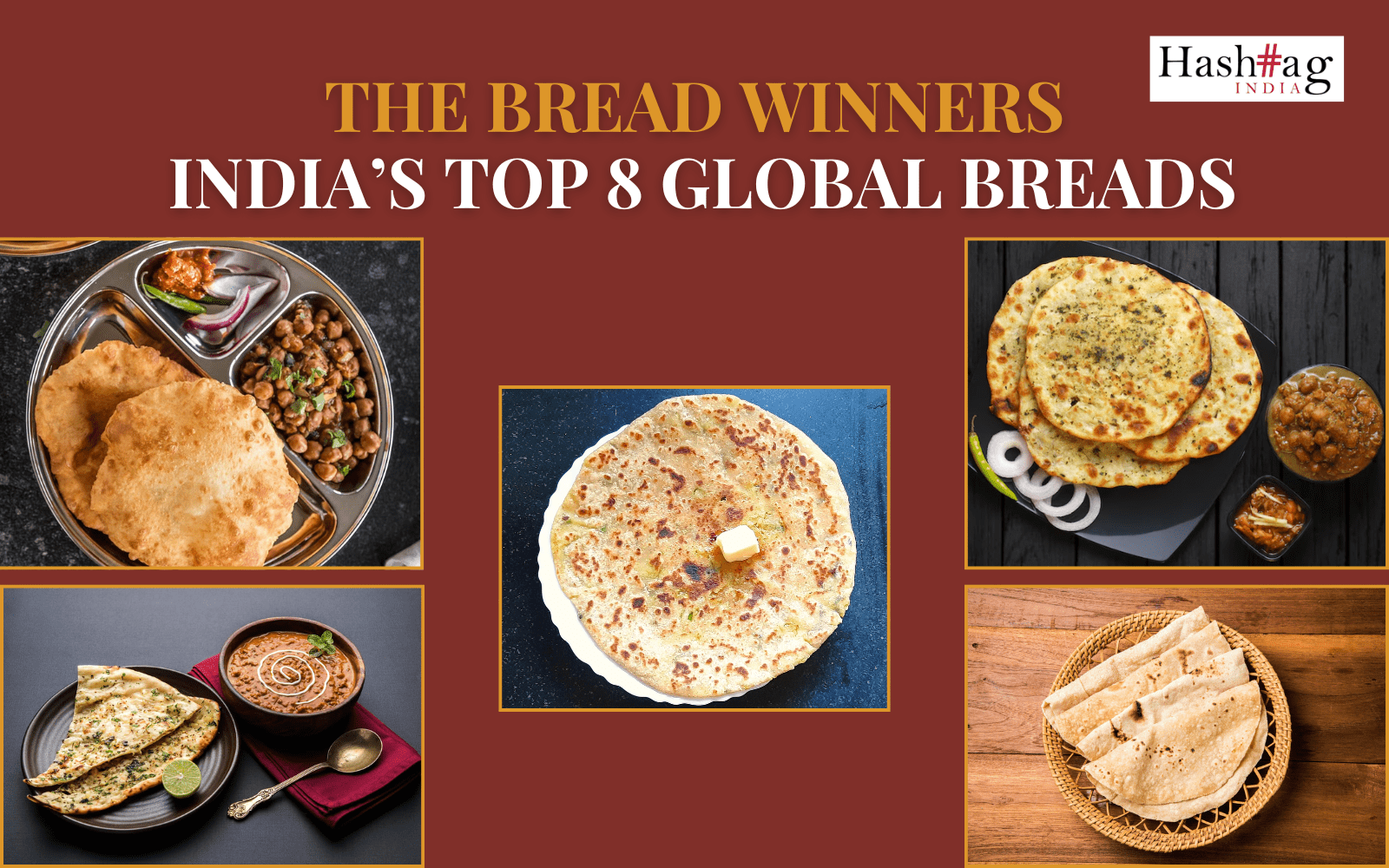
The Bread Winners: India’s Top 8 Global Breads

India's Top 8 Global Breads

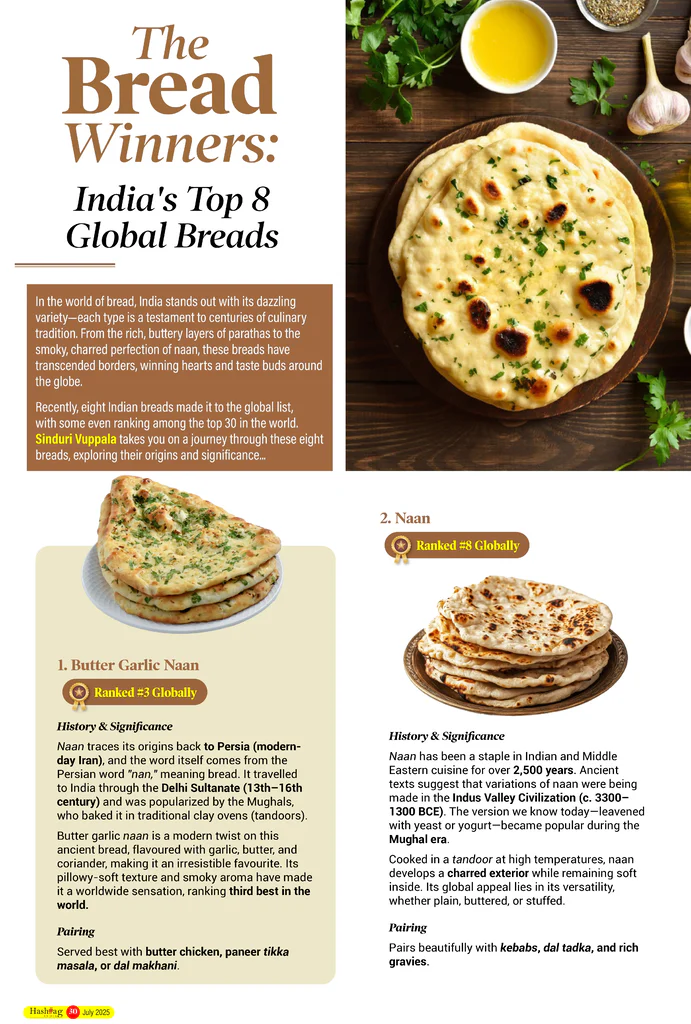
In the world of bread, few countries can boast of India’s diversity and richness. From the buttery, flaky layers of paratha to the crispy, smoky texture of naan, Indian breads have captured the hearts and taste buds of people around the globe. 

Recently, eight Indian breads made it to the global list, with some even ranking among the top 30 in the world. SINDURI VUPPALA takes you on a journey through these eight breads, exploring their origins and significance…

1. Butter Garlic Naan – Ranked #3 Globally

History & Significance

Naan traces its origins back to Persia (modern-day Iran), and the word itself comes from the Persian word “nan,” meaning bread. It travelled to India through the Delhi Sultanate (13th–16th century) and was popularized by the Mughals, who baked it in traditional clay ovens (tandoors).

Butter garlic naan is a modern twist on this ancient bread, flavoured with garlic, butter, and coriander, making it an irresistible favourite. Its pillowy-soft texture and smoky aroma have made it a worldwide sensation, ranking third best in the world.

Pairing

Served best with butter chicken, paneer tikka masala, or dal makhani.

2. Naan – Ranked #8 Globally

History & Significance

Naan has been a staple in Indian and Middle Eastern cuisine for over 2,500 years. Ancient texts suggest that variations of naan were being made in the Indus Valley Civilization (c. 3300–1300 BCE). The version we know today—leavened with yeast or yogurt—became popular during the Mughal era.

Cooked in a tandoor at high temperatures, naan develops a charred exterior while remaining soft inside. Its global appeal lies in its versatility, whether plain, buttered, or stuffed.

Pairing

Pairs beautifully with kebabs, dal tadka, and rich gravies.
hashtag magazine

3. Amritsari Kulcha – Ranked #26 Globally

History & Significance

Next we take off to the bustling streets of Amritsar, Punjab, where the aroma of freshly baked kulchas wafts through the air. The Amritsari kulcha, ranked 26th in the world, is a flavourful flatbread that’s a speciality of this region. Made with a mixture of all-purpose flour, yeast, and spices, kulchas are baked in a tandoor, giving them a crispy crust and a soft, fluffy interior.  The kulcha dates back to the Mughal period but found its true home in Amritsar, Punjab. Traditionally stuffed with spiced mashed potatoes, onions, or paneer, this bread is baked in a tandoor, giving it a crispy yet fluffy texture.Amritsari kulcha is a festival and street food favourite, served with chole (chickpea curry) and a side of pickles or raita. Its flaky layers and explosion of flavors make it one of India’s best-loved breads.

Pairing

Best enjoyed with chole, butter, and pickled onions.

4. Roti – Ranked #27 Globally

History & Significance

Ranked 27th in the world, Roti is simple yet  flavourful. Archaeological evidence suggests that ancient Indians baked flatbreads made from wheat, barley, and millet flours over 4,000 years ago and dates to the Harappan Civilization. The word “roti” is derived from the Sanskrit word “rotika,” meaning “bread.” Over time, roti spread throughout the Indian subcontinent, with different regions developing their own unique variations. In North India, roti is often made with whole wheat flour, while in South India, it’s made with rice flour. Despite its variations, roti remains a staple in Indian cuisine, often served with a variety of curries, lentils, and vegetables. In many Indian households, roti is made fresh every day, often by hand, using traditional techniques passed down through generations. Roti is nutritious, easy to digest, and a daily staple in most Indian households. It forms the foundation of a balanced meal, eaten with vegetables, lentils, and meats.

Pairing

Served with dal, sabzi, and homemade pickles.

5. Paratha – Ranked #29 Globally

History & Significance

The word paratha comes from the Sanskrit words “parat” (layers) and “atta” (flour), meaning layered bread. This bread has been a staple in North Indian and Punjabi households for centuries, gaining popularity during the Mughal period.

Made by folding dough multiple times with ghee, it develops a crispy, flaky texture. It can be eaten plain or stuffed with a variety of fillings like potatoes, paneer, cauliflower, or even spiced meats.

Pairing

Enjoy with yogurt, butter, or spicy pickles.

Some of the other top-ranked Indian breads are.
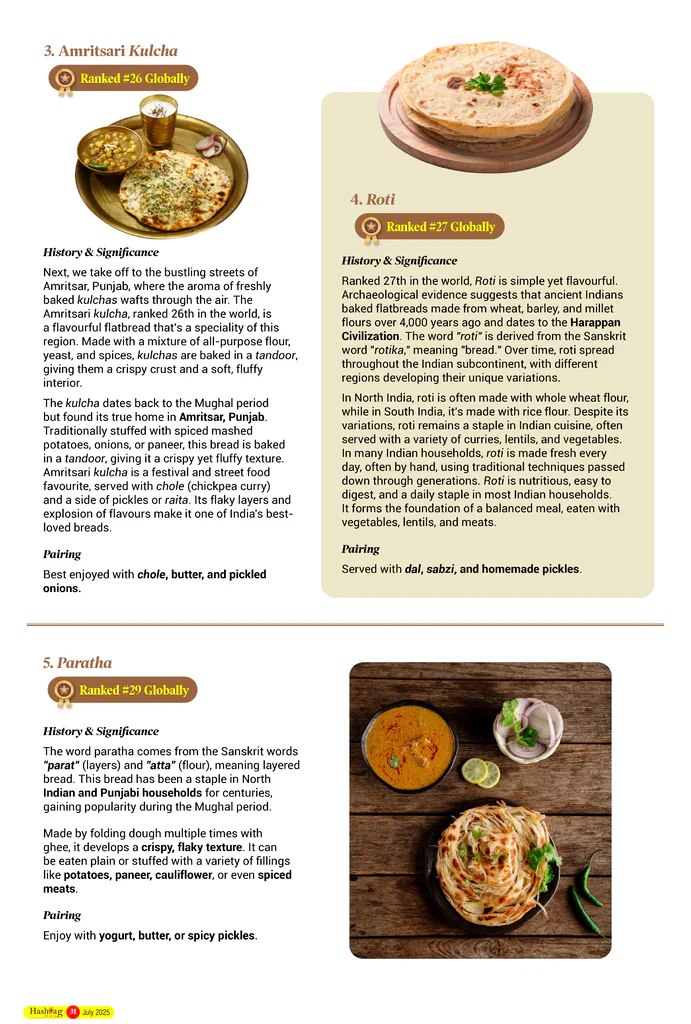
hashtag magazine 

Luchi 

History & Significance

Luchi is a beloved Bengali bread that traces its roots to the royal kitchens of Bengal. It is a traditional Bengali deep-fried bread that holds a special place in the culinary heritage of Eastern India. Unlike puris, which are made with whole wheat flour (atta), luchi is crafted from refined flour (maida), giving it a distinct soft texture and white appearance. It is believed to have been a staple in the royal kitchens of Bengal, eventually making its way into everyday Bengali households. It is particularly associated with festive occasions, religious ceremonies, and grand feasts. 

 Luchi is an integral part of Bengali cuisine, often served during Durga Puja, weddings, and Sunday brunches. The bread is loved for its versatility, pairing exceptionally well with rich and flavorful dishes such as kosha mangsho (spicy mutton curry), scholar dal (Bengali-style chana dal), and aloo dumPairing

Best with aloo dum, cholar dal, or kosha mangsho.

Puri 

History & Significance

Puri has been a part of Indian cuisine for over 2,000 years, mentioned in ancient Sanskrit texts like the Manasollasa (12th century). Unlike luchi, puri is made with whole wheat flour, making it heartier.

Deep-fried until golden brown, puris puff up beautifully and are an essential part of festivals, weddings, and temple offerings. Puri is a traditional offering in Hindu temples, particularly in Jagannath Puri (Odisha), where it is served as Mahaprasad along with dal and sabzi.

Pairing

Traditionally eaten with aloo sabzi, chana masala, or suji halwa.

Bhatura 

History & Significance

Bhatura, a popular deep-fried bread, originates from the Punjab region of India and Pakistan. It is believed to have been influenced by Persian and Central Asian cuisines. Traditionally made from all-purpose flour, yogurt, oil, salt, and sugar, the dough is left to ferment before being rolled out and fried until golden brown and puffy.

Bhatura is most commonly paired with chole (spicy chickpea curry), making the well-loved dish chole bhature a staple of North Indian cuisine. This dish is popular as a street food and is often served at weddings and special occasions. Over time, variations of bhatura have emerged, including smaller versions like puri, and recipes incorporating spices such as cumin or ajwain for extra flavor​

Pairing

Perfect with chole (spiced chickpeas) and raw onions.

Thepla 

History & Significance

Thepla is believed to have originated in Gujarat, particularly in the Saurashtra region. The word “thepla” is derived from the Gujarati word “theplu,” which means “flatbread.” Thepla has been a staple in Gujarati cuisine for centuries, and its history dates back to ancient times when Gujarat was a major trading hub. During the medieval period, Gujarat was a major centre for trade and commerce, and merchants and travelers from all over the world would visit the state. Thepla was a staple food for these travellers, as it was easy to make, nutritious, and could be stored for several days. Over time, thepla became a popular bread throughout Gujarat, and its recipe was passed down from generation to generation.

Pairing

Perfect with a variety of vegetables, lentils, and pickles.

From the smoky naan to the crispy paratha, India’s bread-making heritage spans centuries and cultures. The fact that eight Indian breads made it to the global top rankings proves their universal appeal.

Which Indian bread is your favourite? Let us know in the comments!
Leave a comment

Your email address will not be published. Required fields are marked *

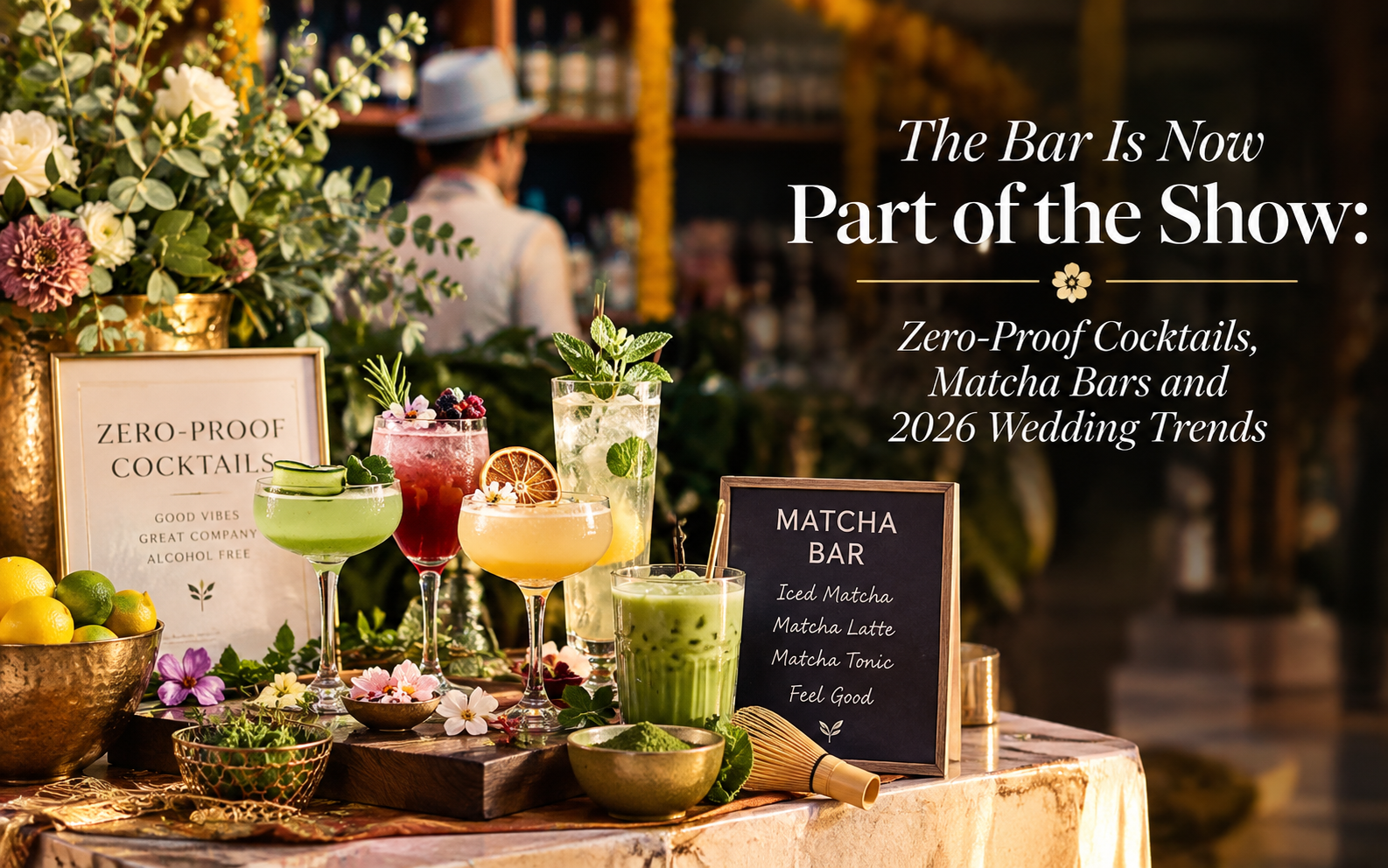
The Bar Is Now Part of the Show: Zero-Proof Cocktails, Matcha Bars and 2026 Wedding Trends

Founded in Bangkok in 2010 by a group of hotel bartenders, FLAIRMIX Thailand began with a single Indian wedding and has grown into a bar and beverage service company working across Thailand, India, Indonesia, Oman, Bahrain and Qatar. Their belief is that a bar is more than a place to pick up a drink: it can shape the atmosphere, the entertainment and the guest experience. Here is what they see changing behind the bar in 2026. Wellness Drinks and Zero-Proof CocktailsThe clearest change from 2025 is in what guests are asking for. Last year still centred on customised cocktails, classics with a twist and drinks with a fancy, luxurious presentation. In 2026, weddings are going beyond the traditional cocktail and mocktail, with hydration bars, electrolyte drinks, kombucha and fully developed zero-proof cocktails joining the menu. What sets this trend apart is the standard. These drinks are no longer treated as a secondary option for guests who don’t drink. They are designed with the same attention to flavour, ingredients, glassware and presentation as alcoholic cocktails. The principle is simple: a guest who chooses not to drink alcohol should enjoy the same level of creativity and experience as everyone else, and a zero-proof menu should be developed to the same standard as the main one. For multi-day Indian weddings, where guests move through a welcome party, haldi, mehendi, sangeet, ceremony, reception and after-party, a bar that offers refreshing, well-crafted options at every stage is a real upgrade for the guest experience. The Rise of the Matcha BarThe second trend is more surprising: Japanese matcha has grown steadily in popularity over the past year, particularly among younger consumers in Asia and internationally, and FLAIRMIX’s clients are now asking for dedicated matcha bars as part of the wedding experience.It also opens up new creative

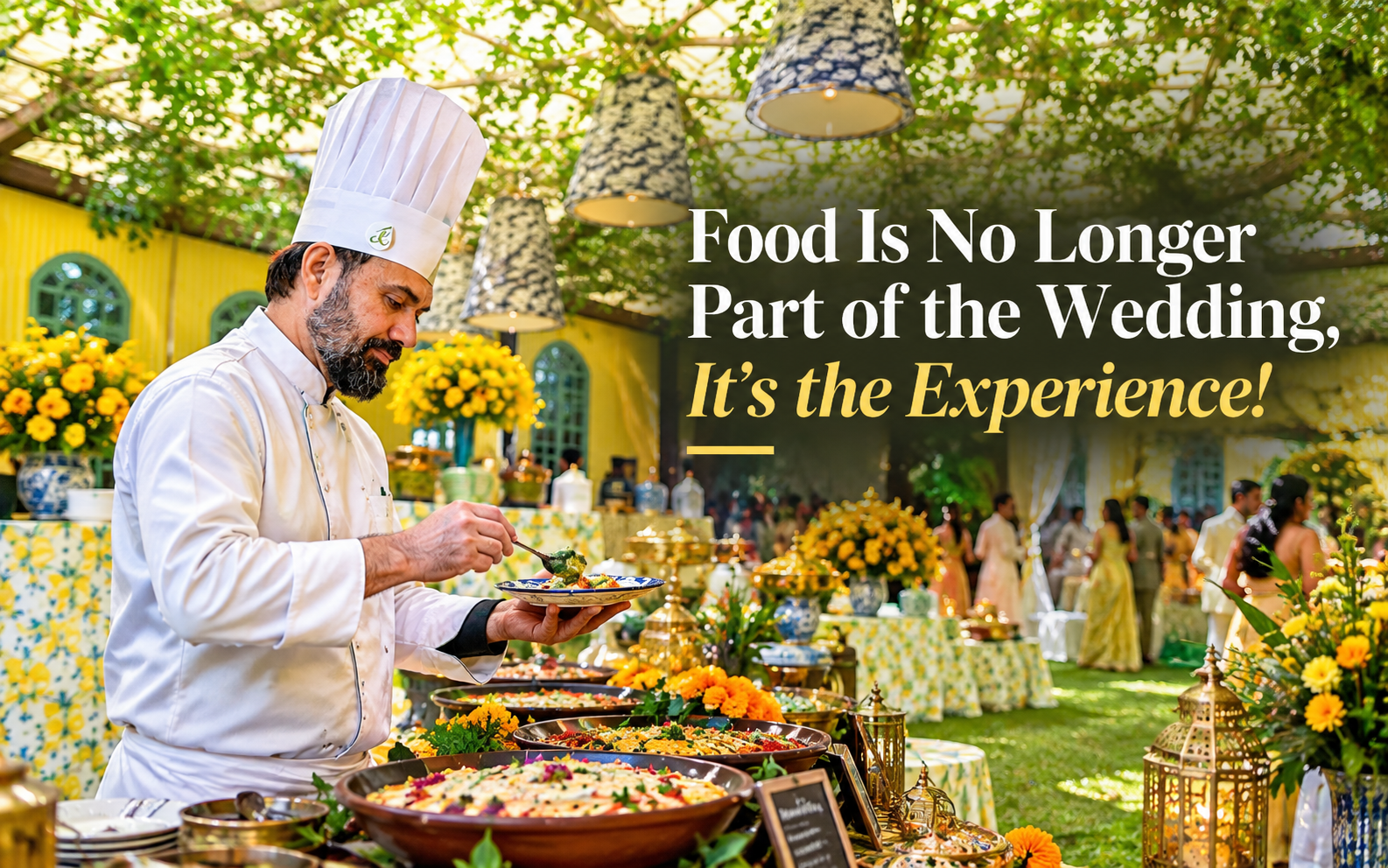
Food Is No Longer Part of the Wedding, It’s the Experience!

Sanjay Vazirani, Chairman & Managing Director of Foodlink Group, has curated menus for some of India’s most talked-about celebrations, including Deepika Padukone and Ranveer Singh’s Lake Como wedding, Allu Sirish’s celebrations and Arjun Tendulkar’s too. His view for 2026: couples no longer judge catering by the size of the spread, but by how well the food tells their story. Here’s what he sees defining the plate this wedding season. Food as the Defining ExperienceFood has moved from being an important part of a wedding to one of its defining experiences. Couples aren’t counting dishes anymore; they’re asking how the menu can tell their story and create moments guests remember. Hyper-PersonalisationMenus are being built from family traditions, regional heritage, travel memories and favourite cuisines, with growing interest in micro-regional and community-specific Indian cuisines presented with contemporary finesse. At Deepika and Ranveer’s Lake Como wedding, the menus drew on Sindhi and Kannada culinary traditions, brought to an Italian setting with an elevated presentation. Personalisation isn’t adding a few favourite dishes to a standard menu; it’s a culinary narrative that feels intrinsic to the couple. Experiential, Multi-Sensory DiningLive culinary theatres, interactive stations, artisanal grazing tables, regional food trails, bespoke beverage experiences and dessert ateliers are turning dining into entertainment. Aroma, presentation, live preparation and chef interaction are all part of the experience. Allu Sirish’s celebration showed this in action, with Mutton Brishta Dumplings in a bone-broth reduction, Smash Paratha Burgers and a Dal Makhani flambéed live with a Jack Daniel’s tadka. Nostalgia, ReimaginedThe best menus balance nostalgia and innovation. For Arjun Tendulkar, Foodlink curated a traditional Maharashtrian Pangat with aamras, puran poli, handmade modak and varan bhaat, alongside undhiyo and ghughra nodding to Anjali Tendulkar’s Gujarati roots. At a Maldives wedding, Mumbai Misal Pav and Dal Khichdi shared the table with Cannoli and

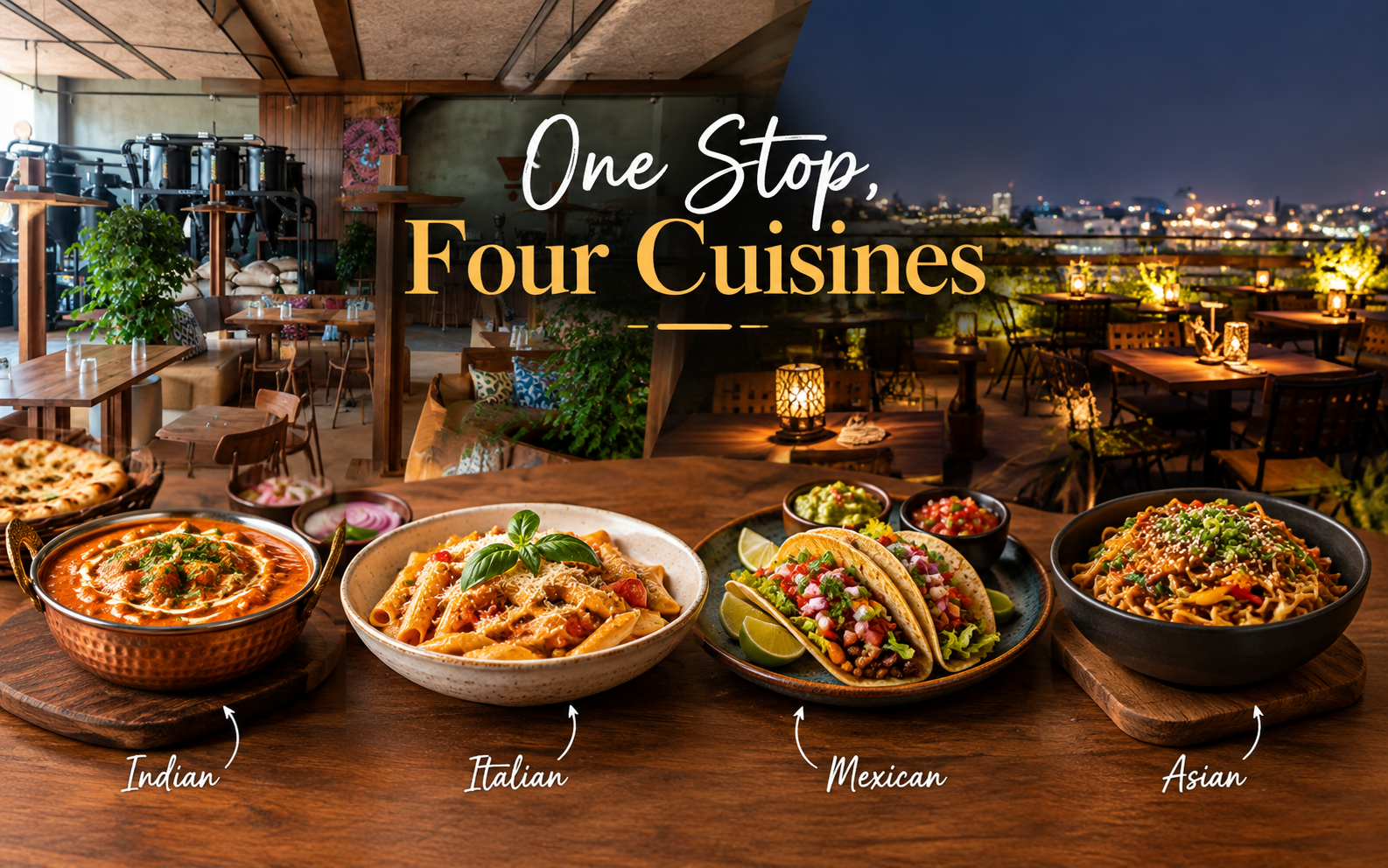
One Stop, Four Cuisines

A F&B revolution of sorts is quietly brewing in a building opposite Hyderabad’s landmark Durgam Cheruvu Cable Bridge, and the city of Nizams is approving wholeheartedly. Interestingly, the four F&B properties spawned by hospitality start-up Viksit Hospitality have distinct identities, ranging from regional cuisines showcased at Orlo (derived from our Indian hospitality anthem, Aur Lo Beta!), artisanal coffees from India at Naad, immersive nightlife experiences at Kadamba, to the latest addition of fine dining Japanese restaurant Izumi, in partnership with founder Nooresha Kably. Kadamba Cultural Compound A rooftop terrace bar, Kadamba has, arguably, the grandest ringside views of Durgam Cheruvu, with the night sights of an illuminated cable bridge and the city lights twinkling away on the distant horizon being a definite crowd-puller. The vibe is breezy (literally!) and informal, with the ambience highlights being the kadamba trees with pristine-white ‘chaupals’ (a la village panchayats) around them, where you can sit around and enjoy your drinks. The Japanese izakaya-styled bar promotes the concept of an easy, interactive experience with the team of mixologists. The cocktails are a rage, with colloquial names such as Rambha Ho, a rum-based offering with pineapple, lime juice and chilli pickle; a nod-to-Hyderabad-Kya Toh Bhi, a vodka drink; T-loop, which is tequila, mezcal, muskmelon cordial, caper foam, and Maska made with whisky, brown butter and lime cordial. The cuisine is Indian, including both comfort food and gourmet. Some of the iconic dishes here are the Chelo Kebabs platter; Compound walla Ceviche, which is steamed seabass topped with pani puri dressing, and 50-50, which is corn or bhutta in three different avatars. Orlo Orlo has, at its core, the idea of a Great Indian Dining table where everyone sits together for a relaxed meal, peppered with conversations and slow eating. The distinct aspect of dining at Orlo

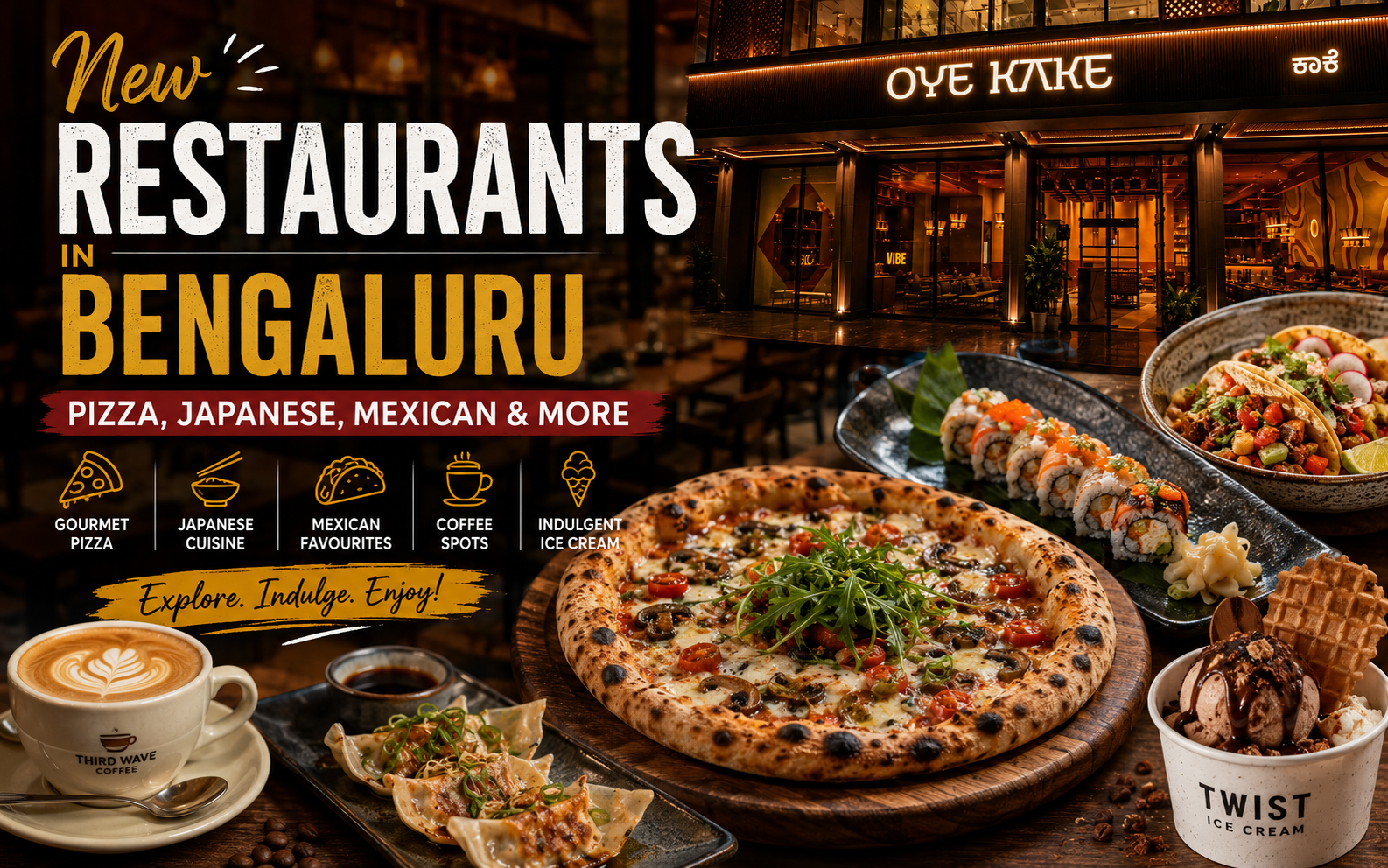
Bookmark these Bengaluru restaurants

The culinary scene of Bengaluru has got a spanking new makeover with several new restaurants that offer a range of cuisines that are sure to make every palate happy. Known for its vibrant gastronomy, the city continues to offer plenty for food lovers to discover, as Bindu Gopal Rao explores these new dining destinations. Oye Kake, Bengaluru Oye Kake is Mumbai’s beloved 100% vegetarian Amritsari restaurant brand, founded in 2020 by Pankaj Gupta and Avinash Gupta under Flavour Pot Foods. The new space in Bengaluru on MG Road brings the soul of Amritsar, built around three pillars of Punjab’s food culture: the langar, the street, and the home kitchen. Pankaj Gupta, Co-founder, Flavour Pot Foods says, “The food is cooked by Amritsari-trained Ustaads using live tandoor cooking, hand-rolled breads, slow-cooked dals, and clay/iron-based methods, staying true to time-honoured recipes rather than experimenting.” Designed with RAD Co + Lab, the restaurant is a sensory tribute to Punjab and Bengaluru. Every Thursday, the restaurant hosts the Guru Seva Ki Thali, an unlimited community-style feast inspired by the Sikh concept of Seva. Must try: Amritsari De Kulche: classic Bharwan Kulche (Aloo, Pyaaz, Gobi, and Mooli) plus loaded versions like Paneer, Methi Masala, Cheese Garlic, and Nutree Wale Kulcha. Kalpaney Kalpaney is a modern vegetarian dining destination built around the idea of ‘kalpana’, or imagination. Conceptualised by Avinash Kapoli, Co-Founder, Kompany Hospitality, and Chef Sombir Chaudary, Co-Founder, Kompany Hospitality, the restaurant brings together familiar flavours, childhood memories and global culinary influences in unexpected ways. “What makes Kalpaney special is its ability to make vegetarian dining feel playful and contemporary while retaining the comfort and nostalgia of Indian food. The spaces extend this philosophy through carefully curated Indian art and craftsmanship, including Kalamkari-inspired elements and Kavi artwork at the Indiranagar restaurant, created by one of

You May Also Like

Connect with us