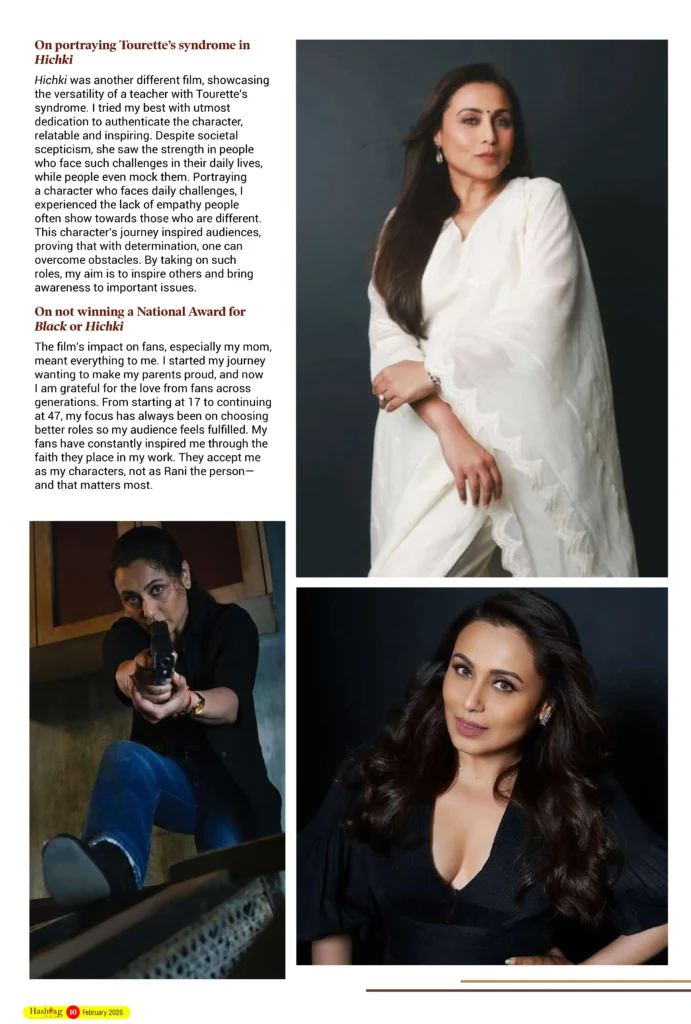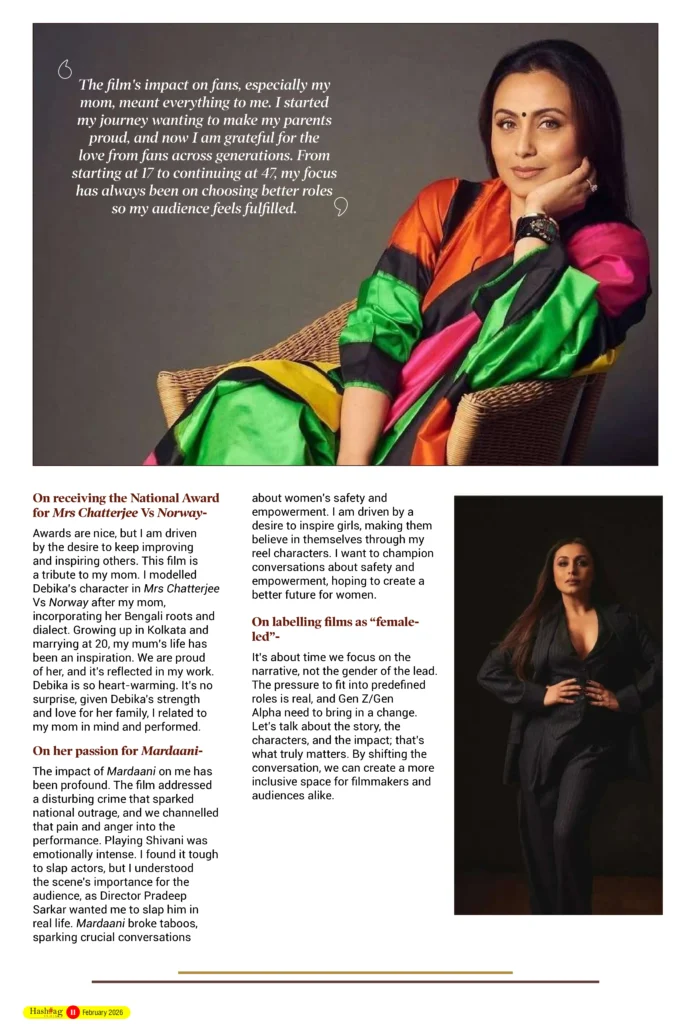
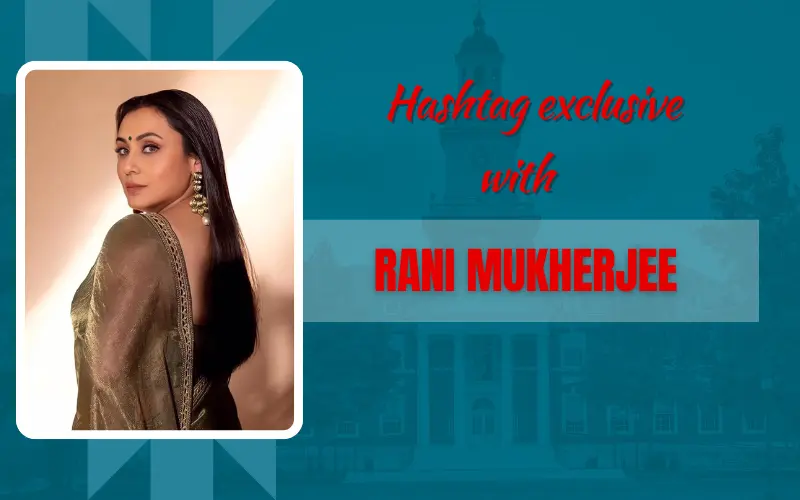
As Rani Mukherjee completes 30 remarkable years in Indian cinema, her journey stands as a masterclass in longevity, courage, and conscious choices. From becoming one of Bollywood’s most recognisable romantic leads to redefining female-led storytelling with powerful, socially rooted performances, Rani’s career has been driven by instinct, integrity, and an unwavering commitment to meaningful cinema. In a candid reflection on her career with LIPIKA VARMA, she opens up about finding her voice, literally and creatively, embracing challenging roles, the joy of recognition, and why stories should always matter more than labels.
Excerpts
On retaining her voice while distributors wanted her voice to be dubbed
My experience working with Karan Johar on Kuch Kuch Hota Hai is particularly memorable. I remember how Karan trusted me to dub my own lines despite distributors’ concerns about my voice. “I love your voice”—those words from Karan made me stand my ground. That confidence helped me retain my unique voice and paved the way for future roles.
On taking challenging roles that inspire and empower women
I’m all about taking on roles that challenge me and inspire women. My characters in Hum Tum, Kabhi Alvida Naa Kehna and Saathiya are examples of strong, progressive women who break stereotypes. My approach to acting is simple: I immerse myself in each character, leaving my personal biases aside. I am passionate about portraying women who make their own choices, reflecting the evolving Indian woman empowering themselves. My goal is to inspire audiences, especially women, with stories that resonate.
On working with Sanjay Leela Bhansali in Black
It was transformative. I was inspired by his direction, particularly how he captured scenes with a unique energy. Bhansali’s attention to detail pushed me to give my best performance. Learning sign language for Black, was a challenging yet rewarding experience. I totally immersed myself in the character, becoming a different person on screen. I learned alongside physically challenged people. Portrayal of a physically challenged woman remains one of my most iconic roles.
On portraying Tourette’s syndrome in Hichki
Hichki was another different film, showcasing the versatility of a teacher with Tourette’s syndrome. I tried my best with utmost dedication to authenticate the character, relatable and inspiring. Despite societal scepticism, she saw the strength in people who face such challenges in their daily lives, while people even mock them. Portraying a character who faces daily challenges, I experienced the lack of empathy people often show towards those who are different. This character’s journey inspired audiences, proving that with determination, one can overcome obstacles. By taking on such roles, my aim is to inspire others and bring awareness to important issues.
On not winning a National Award for Black or Hichki
The film’s impact on fans, especially my mom, meant everything to me. I started my journey wanting to make my parents proud, and now I am grateful for the love from fans across generations. From starting at 17 to continuing at 47, my focus has always been on choosing better roles so my audience feels fulfilled. My fans have constantly inspired me through the faith they place in my work. They accept me as my characters, not as Rani the person and that matters most.
On receiving the National Award for Mrs Chatterjee Vs Norway
Awards are nice, but I am driven by the desire to keep improving and inspiring others. This film is a tribute to my mom. I modelled Debika’s character in Mrs Chatterjee Vs Norway after my mom, incorporating her Bengali roots and dialect. Growing up in Kolkata and marrying at 20, my mum’s life has been an inspiration. We are proud of her, and it’s reflected in my work. Debika is so heart-warming. It’s no surprise, given Debika’s strength and love for her family, I related to my mom in mind and performed.
On her passion for Mardaani
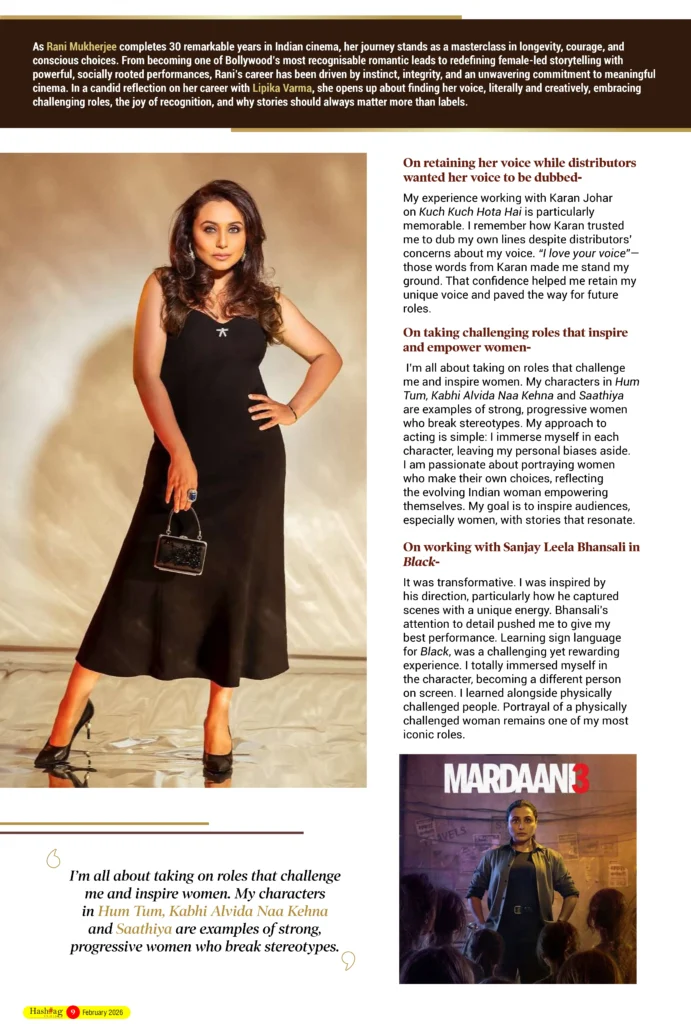
The impact of Mardaani on me has been profound. The film addressed a disturbing crime that sparked national outrage, and we channelled that pain and anger into the performance. Playing Shivani was emotionally intense. I found it tough to slap actors, but I understood the scene’s importance for the audience, as Director Pradeep Sarkar wanted me to slap him in real life. Mardaani broke taboos, sparking crucial conversations about women’s safety and empowerment. I am driven by a desire to inspire girls, making them believe in themselves through my reel characters. I want to champion conversations about safety and empowerment, hoping to create a better future for women.
On labelling films as “female-led”
It’s about time we focus on the narrative, not the gender of the lead. The pressure to fit into predefined roles is real, and Gen Z/Gen Alpha need to bring in a change. Let’s talk about the story, the characters, and the impact; that’s what truly matters. By shifting the conversation, we can create a more inclusive space for filmmakers and audiences alike.