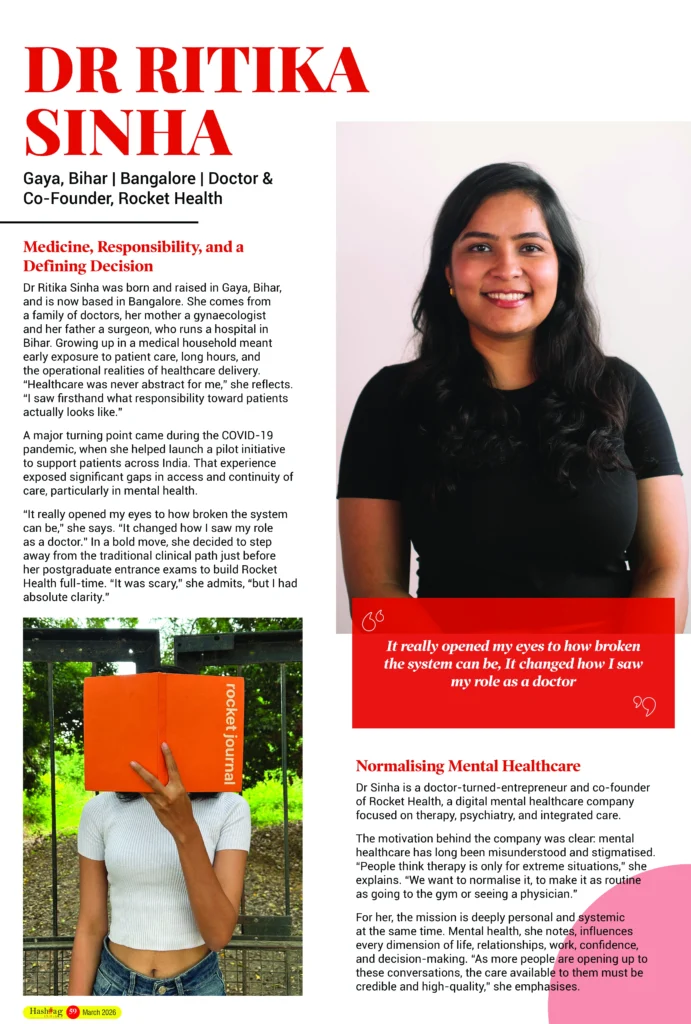
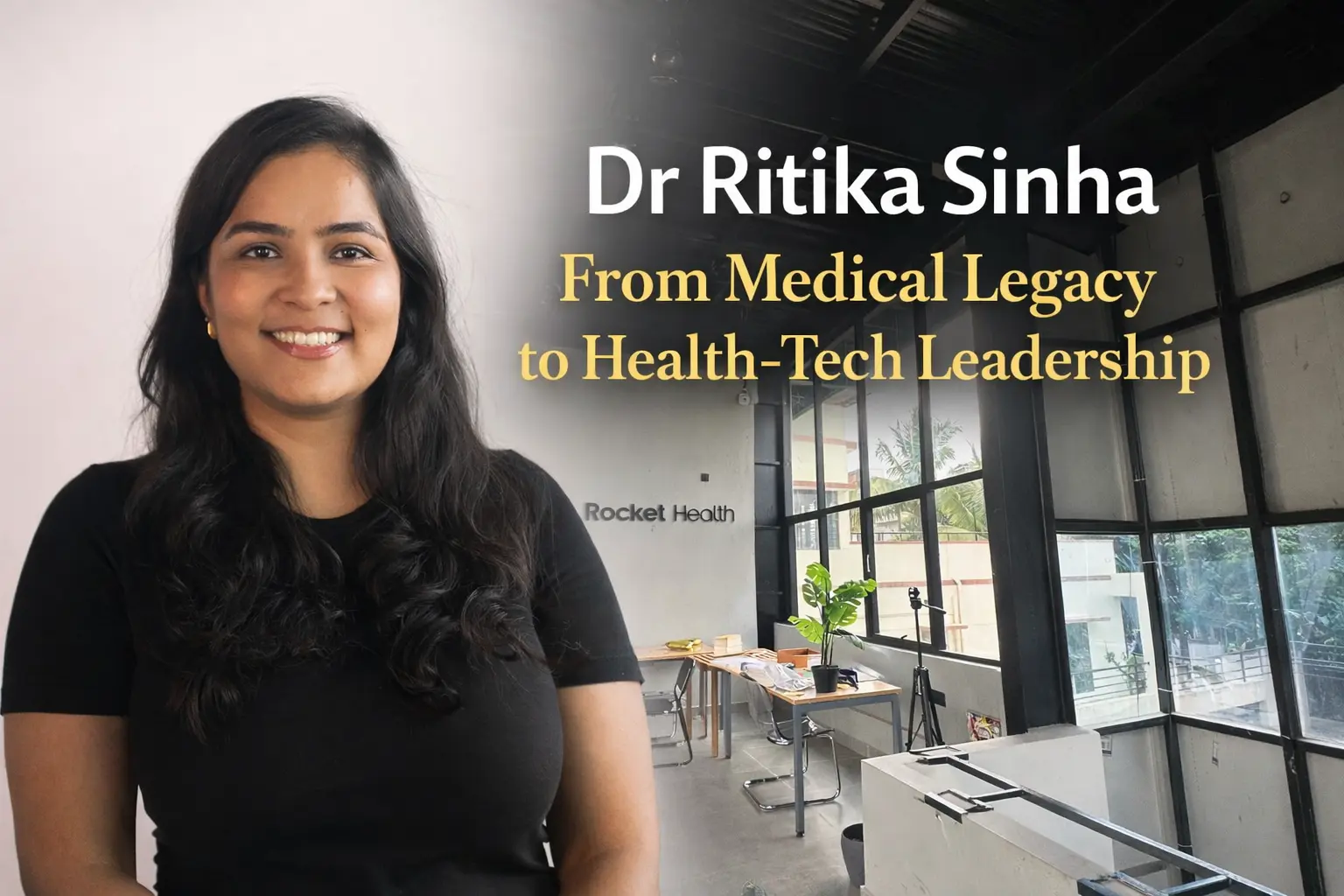
Dr Ritika Sinha was born and raised in Gaya, Bihar, and is now based in Bangalore. She comes from a family of doctors, her mother a gynaecologist and her father a surgeon, who runs a hospital in Bihar. Growing up in a medical household meant early exposure to patient care, long hours, and the operational realities of healthcare delivery. “Healthcare was never abstract for me,” she reflects. “I saw firsthand what responsibility toward patients actually looks like.”
A major turning point came during the COVID-19 pandemic, when she helped launch a pilot initiative to support patients across India. That experience exposed significant gaps in access and continuity of care, particularly in mental health. “It really opened my eyes to how broken the system can be,” she says. “It changed how I saw my role as a doctor.” In a bold move, she decided to step away from the traditional clinical path just before her postgraduate entrance exams to build Rocket Health full-time. “It was scary,” she admits, “but I had absolute clarity.”
Normalising Mental Healthcare
Dr Sinha is a doctor-turned-entrepreneur and co-founder of Rocket Health, a digital mental healthcare company focused on therapy, psychiatry, and integrated care.
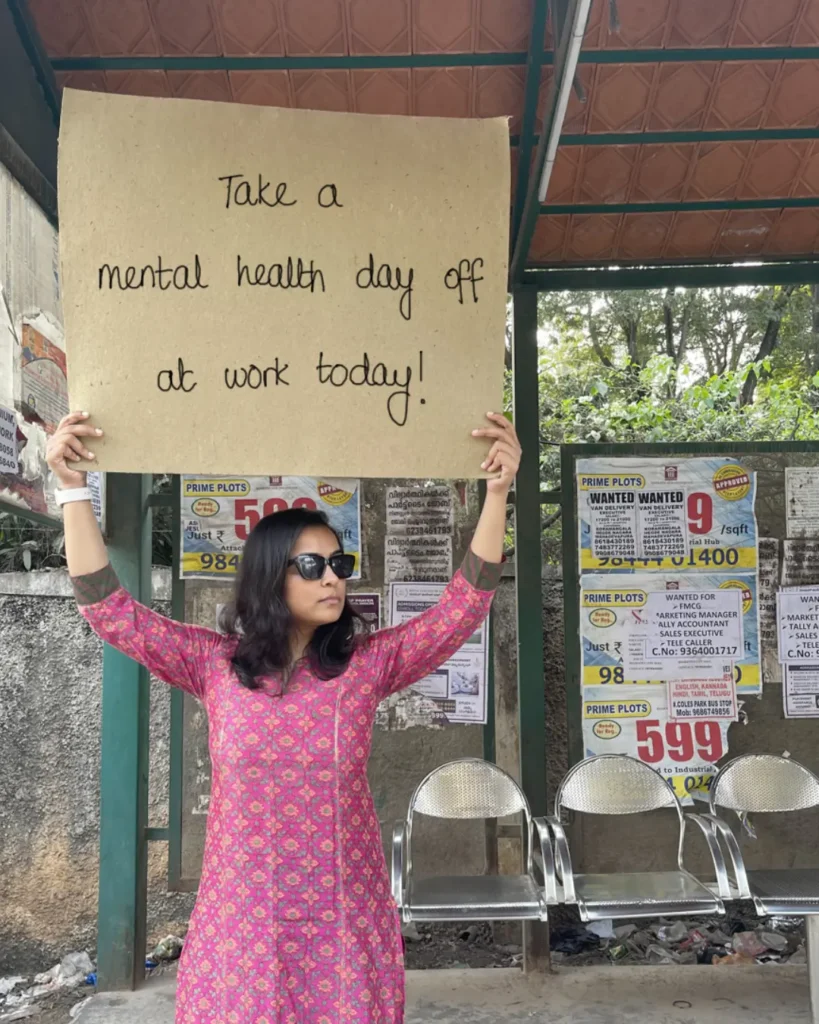
The motivation behind the company was clear: mental healthcare has long been misunderstood and stigmatised. “People think therapy is only for extreme situations,” she explains. “We want to normalise it, to make it as routine as going to the gym or seeing a physician. For her, the mission is deeply personal and systemic at the same time. Mental health, she notes, influences every dimension of life, relationships, work, confidence, and decision-making. “As more people are opening up to these conversations, the care available to them must be credible and high-quality,” she emphasises.
Quality at Scale
Dr. Sinha’s role centres on building healthcare systems that can deliver consistent, high-quality care at scale. “What sets us apart is that we are quality-first, while still making care easy to access,” she explains.
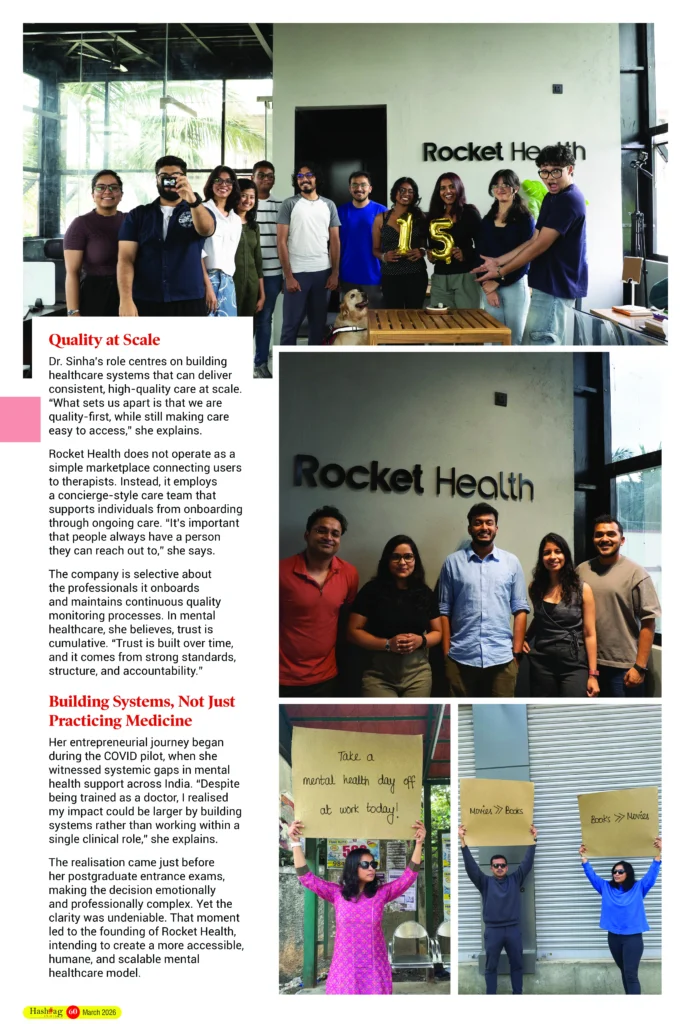
Rocket Health does not operate as a simple marketplace connecting users to therapists. Instead, it employs a concierge-style care team that supports individuals from onboarding through ongoing care. “It’s important that people always have a person they can reach out to,” she says. The company is selective about the professionals it onboards and maintains continuous quality monitoring processes. In mental healthcare, she believes, trust is cumulative. “Trust is built over time, and it comes from strong standards, structure, and accountability.”
Building Systems, Not Just Practicing Medicine
Her entrepreneurial journey began during the COVID pilot, when she witnessed systemic gaps in mental health support across India. “Despite being trained as a doctor, I realised my impact could be larger by building systems rather than working within a single clinical role,” she explains. The realisation came just before her postgraduate entrance exams, making the decision emotionally and professionally complex. Yet the clarity was undeniable. That moment led to the founding of Rocket Health, intending to create a more accessible, humane, and scalable mental healthcare model.
Scaling Responsibly
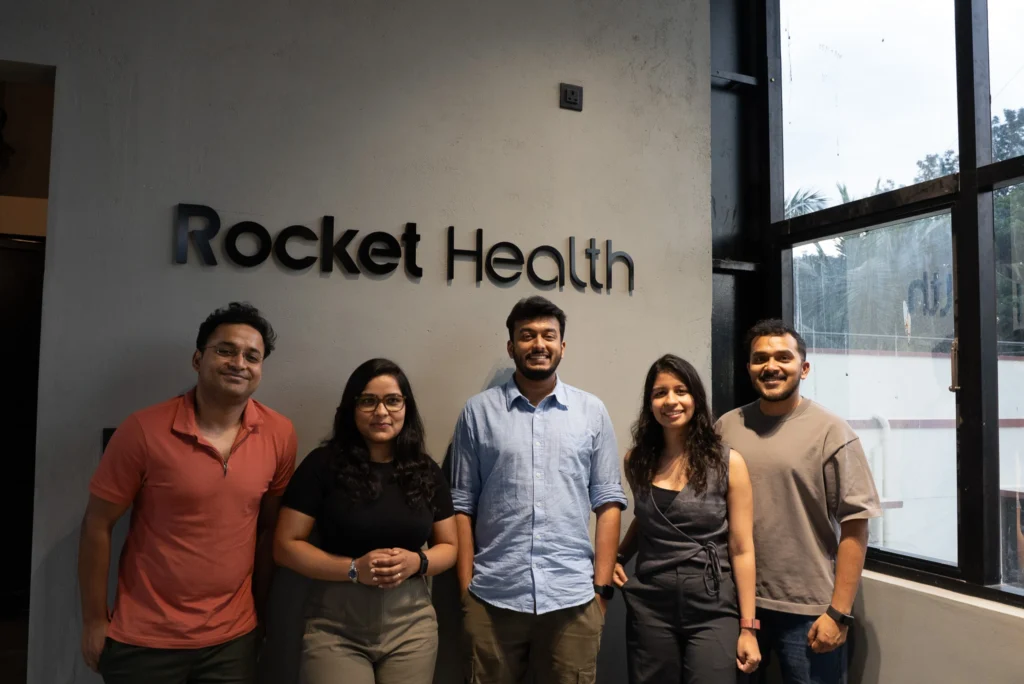
Rocket Health has grown from a small pilot experiment into a team of over 120 professionals across clinical, operations, technology, and care roles. Today, the company offers integrated mental healthcare services while maintaining a strong emphasis on training, quality, and long-term outcomes.
“One of our biggest challenges has been scaling responsibly,” she notes. “In this sector, speed often compromises care.” The company has consciously prioritised sustainable growth over rapid expansion, a strategic decision rooted in ethics rather than optics.
Looking ahead, the focus is on deepening care models, expanding thoughtfully into new verticals, and building technology that supports clinicians and improves outcomes.
Quality Over Speed
“The one value I will never compromise on is quality of care, even if it slows down growth,” Dr. Sinha states firmly. “Especially in healthcare, if you are not proud of the work you are doing, you should not be doing it.” She believes in failing fast rather than failing late. Experimentation, quick learning, and iteration are core to her leadership philosophy. At the same time, she emphasises enabling people. “People perform at their best when they have the right systems, support, and belief,” she says. This principle guides how she builds teams and structures decision-making.
Belief + Execution
Her message to the next generation of women entrepreneurs is direct: “Do not let anyone stop you.”
She believes the difference between ideas and outcomes lies in belief combined with execution. Healthcare, in particular, needs more women leaders.
“Women bring empathy, resilience, and long-term thinking into leadership, and that is essential for building meaningful organisations,” she says.
Today, she defines success not by external validation, but by internal alignment. “Success is building something I am proud of, creating real impact at scale, and staying aligned with my values.”