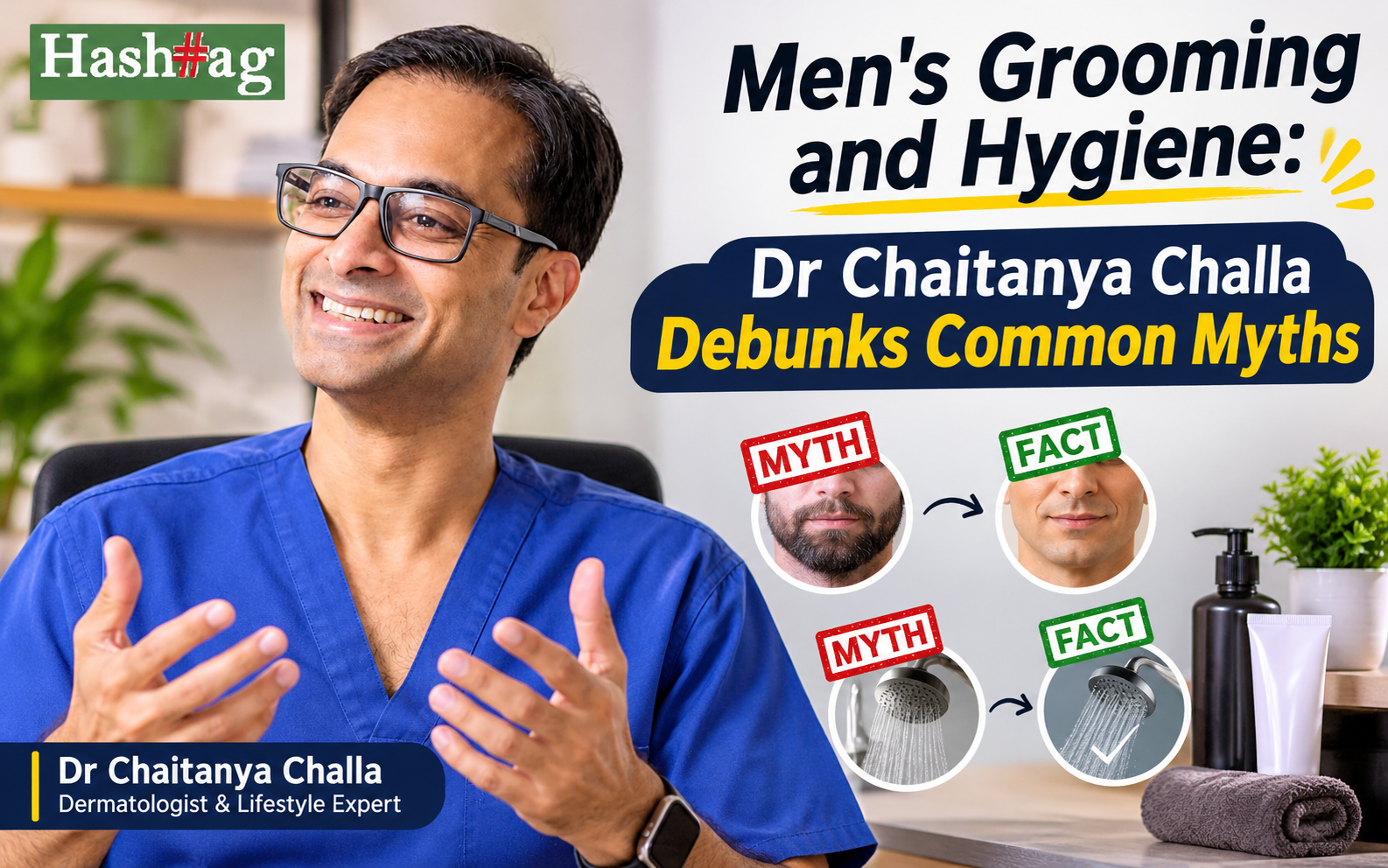
Dr Chaitanya Challa is a Hyderabad-based physician specialising in Internal Medicine and Critical Care, with a focus on preventive healthcare and lifestyle-related disorders. He believes good health starts with everyday choices, including the ones men tend to overlook or get wrong. Here, he breaks down common hygiene mistakes, persistent myths and the essentials of a practical daily routine.
Does sweating actually cause body odour, and what’s the risk of staying in sweaty clothes for too long?
One of the most common mistakes is assuming that sweating itself causes body odour. Sweat is largely odourless; the smell develops when bacteria on the skin break down components of sweat. Areas like the underarms and groin are particularly prone to this. Staying in sweaty clothes for too long, especially after exercise, creates a warm, moist environment that encourages skin irritation and fungal infections. Men should change out of sweaty clothing, dry themselves thoroughly after bathing, and pay attention to areas where moisture accumulates.
What should a basic daily grooming routine look like, including underarm and oral care?
It doesn’t have to be complicated or expensive. Consistency matters far more than the number of products you use. Bathe regularly, paying attention to the underarms, groin, feet and other areas that accumulate sweat. Use a gentle cleanser, rinse thoroughly and dry properly, particularly between the toes and in skin folds. Change your underwear and socks daily, and change out of damp clothing after exercise.
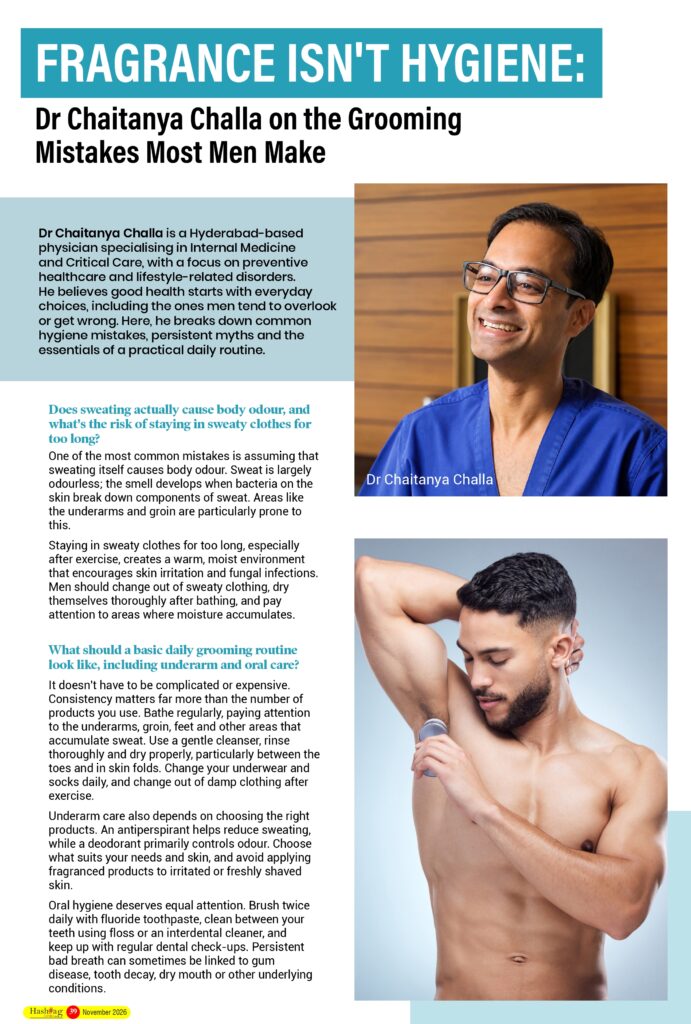
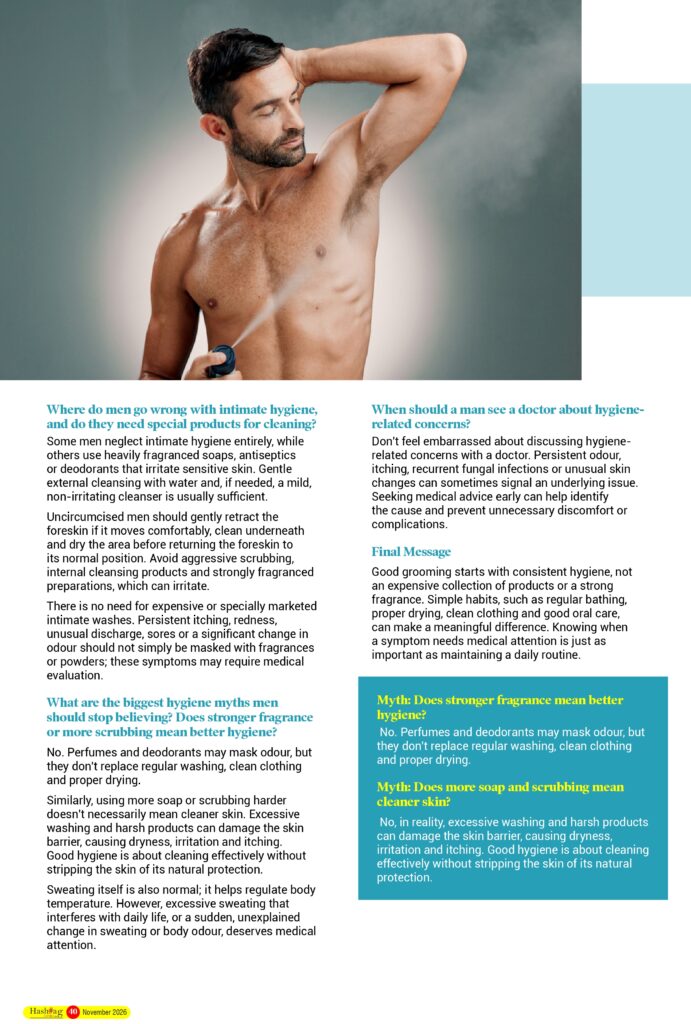
Underarm care also depends on choosing the right products. An antiperspirant helps reduce sweating, while a deodorant primarily controls odour. Choose what suits your needs and skin, and avoid applying fragranced products to irritated or freshly shaved skin. Oral hygiene deserves equal attention. Brush twice daily with fluoride toothpaste, clean between your teeth using floss or an interdental cleaner, and keep up with regular dental check-ups. Persistent bad breath can sometimes be linked to gum disease, tooth decay, dry mouth or other underlying conditions.

Where do men go wrong with intimate hygiene, and do they need special products for cleaning?
Some men neglect intimate hygiene entirely, while others use heavily fragranced soaps, antiseptics or deodorants that irritate sensitive skin. Gentle external cleansing with water and, if needed, a mild, non-irritating cleanser is usually sufficient.
Uncircumcised men should gently retract the foreskin if it moves comfortably, clean underneath and dry the area before returning the foreskin to its normal position. Avoid aggressive scrubbing, internal cleansing products and strongly fragranced preparations, which can irritate. There is no need for expensive or specially marketed intimate washes. Persistent itching, redness, unusual discharge, sores or a significant change in odour should not simply be masked with fragrances or powders; these symptoms may require medical evaluation.
What are the biggest hygiene myths men should stop believing? Does stronger fragrance or more scrubbing mean better hygiene?
No. Perfumes and deodorants may mask odour, but they don’t replace regular washing, clean clothing and proper drying. Similarly, using more soap or scrubbing harder doesn’t necessarily mean cleaner skin. Excessive washing and harsh products can damage the skin barrier, causing dryness, irritation and itching. Good hygiene is about cleaning effectively without stripping the skin of its natural protection. Sweating itself is also normal; it helps regulate body temperature. However, excessive sweating that interferes with daily life, or a sudden, unexplained change in sweating or body odour, deserves medical attention.
When should a man see a doctor about hygiene-related concerns?
Don’t feel embarrassed about discussing hygiene-related concerns with a doctor. Persistent odour, itching, recurrent fungal infections or unusual skin changes can sometimes signal an underlying issue. Seeking medical advice early can help identify the cause and prevent unnecessary discomfort or complications.
Final Message
Good grooming starts with consistent hygiene, not an expensive collection of products or a strong fragrance. Simple habits, such as regular bathing, proper drying, clean clothing and good oral care, can make a meaningful difference. Knowing when a symptom needs medical attention is just as important as maintaining a daily routine.
Box:
Myth: Does stronger fragrance mean better hygiene?
No. Perfumes and deodorants may mask odour, but they don’t replace regular washing, clean clothing and proper drying.
Myth: Does more soap and scrubbing mean cleaner skin?
No, in reality, excessive washing and harsh products can damage the skin barrier, causing dryness, irritation and itching. Good hygiene is about cleaning effectively without stripping the skin of its natural protection.