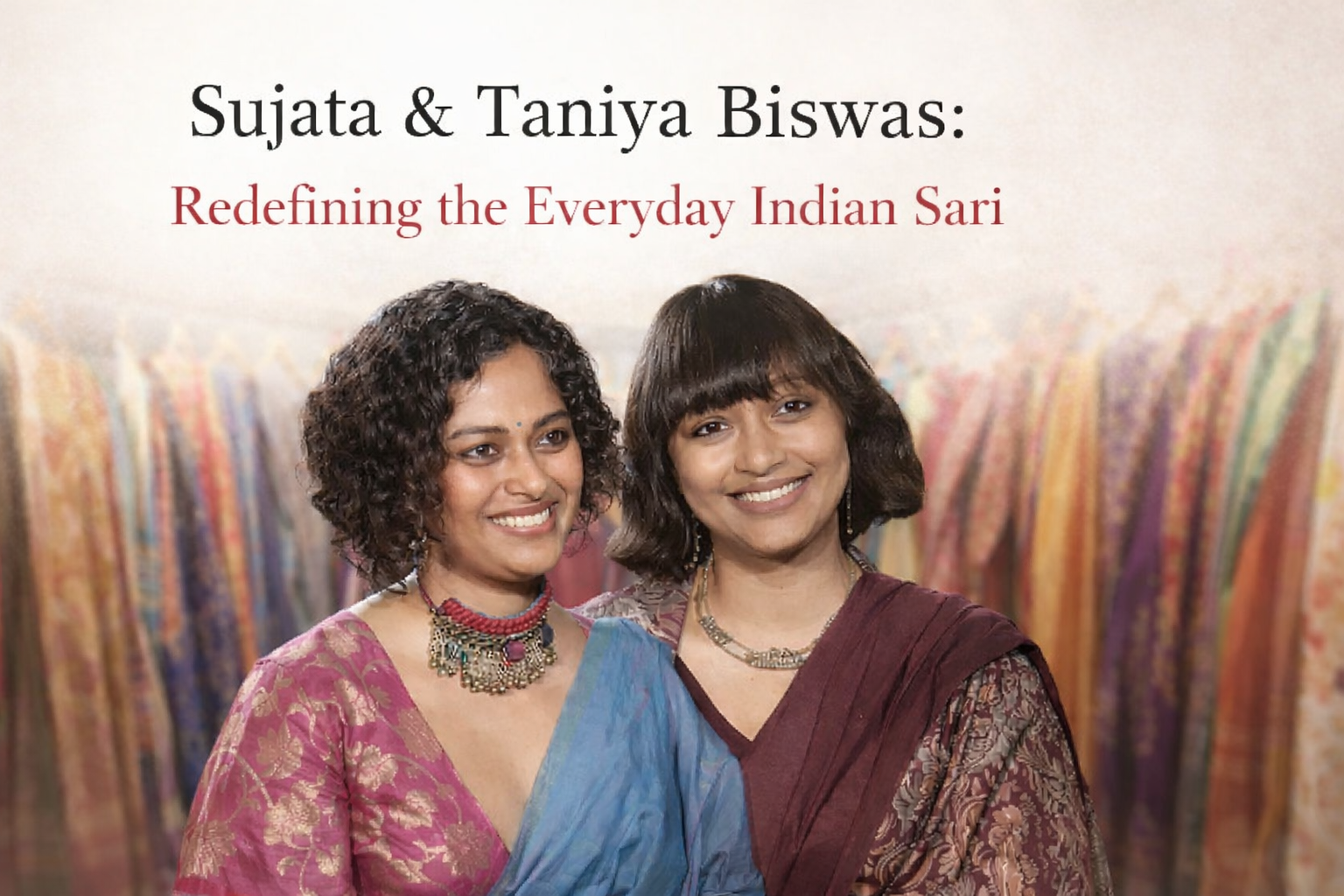
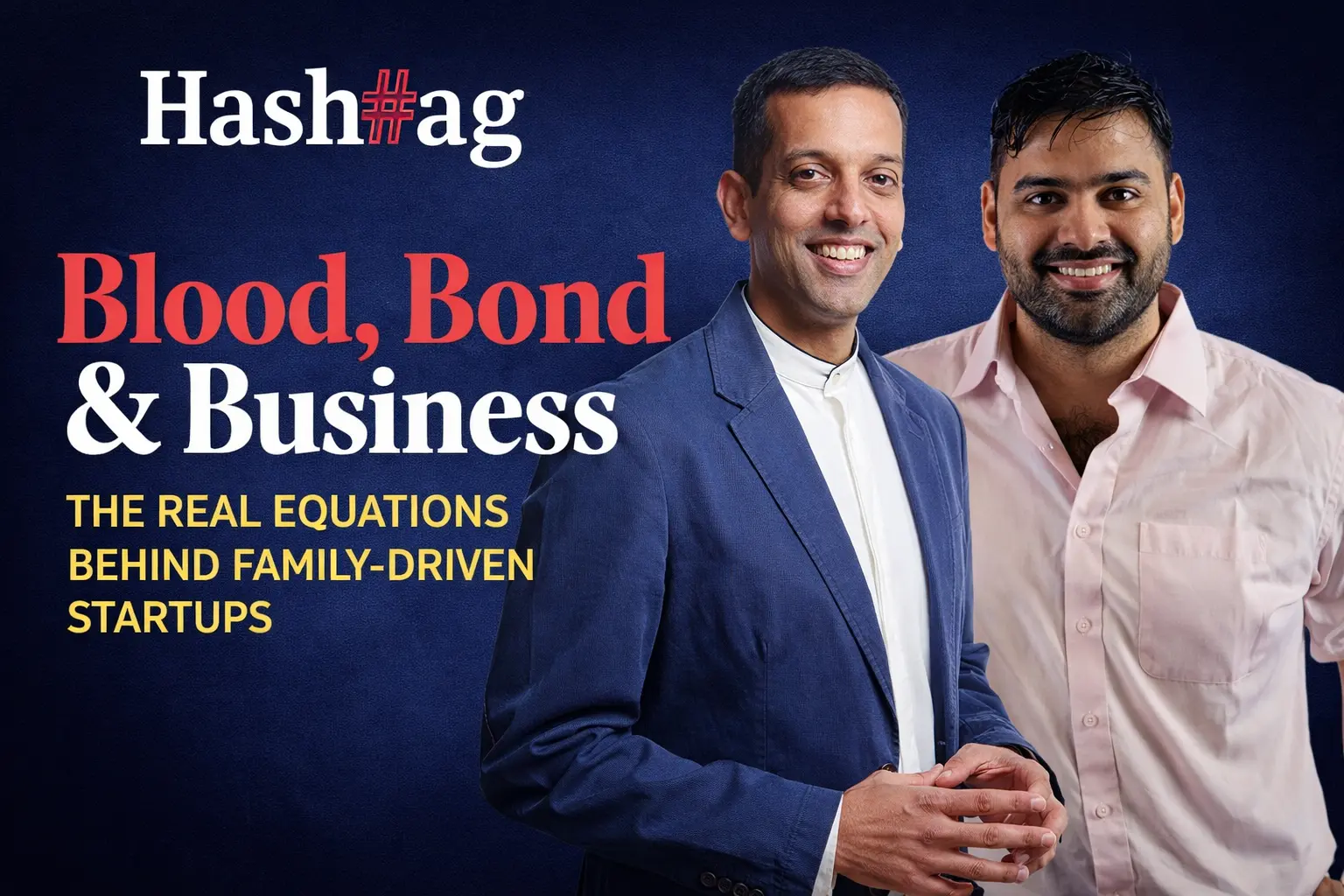
February is the month of relationships, and at Hashtag, we’re celebrating the bonds that shape not just personal lives, but powerful businesses. This special edition explores entrepreneurs who share more than a company; they share roots. From siblings turning into strategic partnerships to spouses balancing love and leadership, we dive into the real dynamics behind relationship-driven ventures. This month, discover how strong relationships can become a business’s most valuable asset.

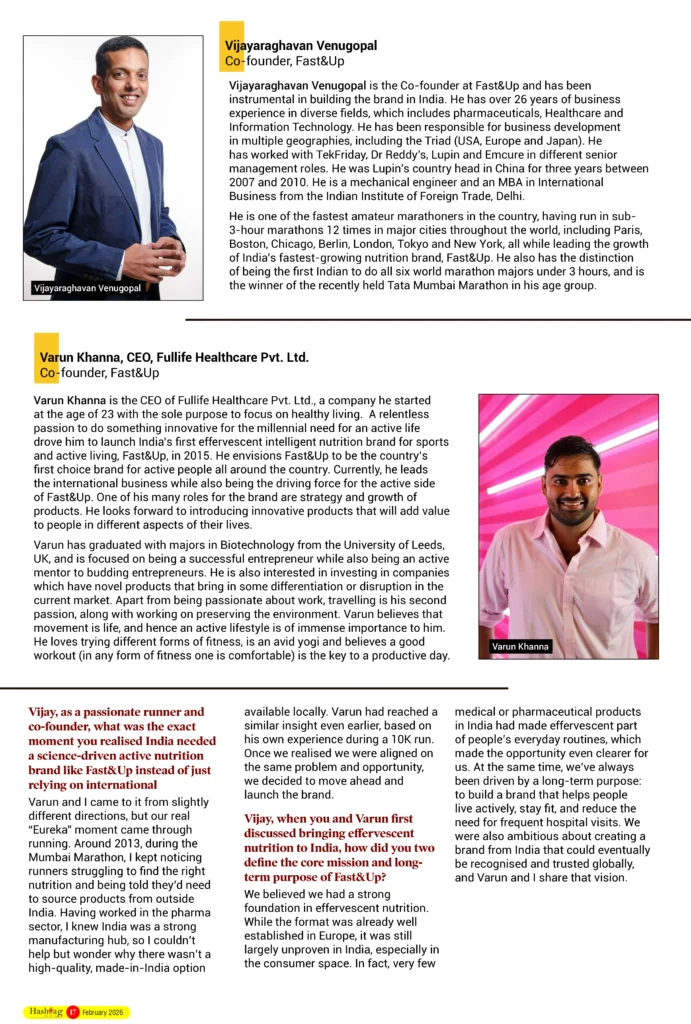
Vijayaraghavan Venugopal is the Co-founder at Fast&Up and has been instrumental in building the brand in India. He has over 26 years of business experience in diverse fields, which includes pharmaceuticals, Healthcare and Information Technology. He has been responsible for business development in multiple geographies, including the Triad (USA, Europe and Japan). He has worked with TekFriday, Dr Reddy’s, Lupin and Emcure in different senior management roles. He was Lupin’s country head in China for three years between 2007 and 2010. He is a mechanical engineer and an MBA in International Business from the Indian Institute of Foreign Trade, Delhi.
He is one of the fastest amateur marathoners in the country, having run in sub-3-hour marathons 12 times in major cities throughout the world, including Paris, Boston, Chicago, Berlin, London, Tokyo and New York, all while leading the growth of India’s fastest-growing nutrition brand, Fast&Up. He also has the distinction of being the first Indian to do all six world marathon majors under 3 hours, and is the winner of the recently held Tata Mumbai Marathon in his age group.
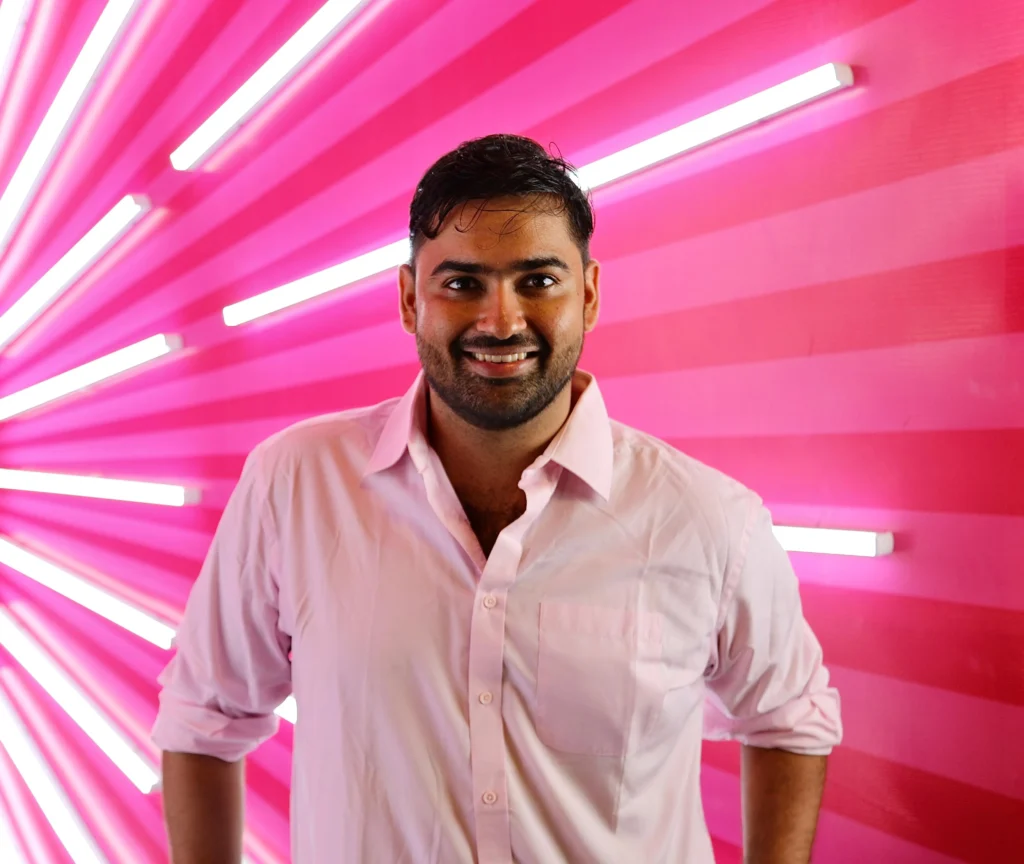
Varun Khanna is the CEO of Fullife Healthcare Pvt. Ltd., a company he started at the age of 23 with the sole purpose to focus on healthy living. A relentless passion to do something innovative for the millennial need for an active life drove him to launch India’s first effervescent intelligent nutrition brand for sports and active living, Fast&Up, in 2015. He envisions Fast&Up to be the country’s first choice brand for active people all around the country. Currently, he leads the international business while also being the driving force for the active side of Fast&Up. One of his many roles for the brand are strategy and growth of products. He looks forward to introducing innovative products that will add value to people in different aspects of their lives.
Varun has graduated with majors in Biotechnology from the University of Leeds, UK, and is focused on being a successful entrepreneur while also being an active mentor to budding entrepreneurs. He is also interested in investing in companies which have novel products that bring in some differentiation or disruption in the current market. Apart from being passionate about work, travelling is his second passion, along with working on preserving the environment. Varun believes that movement is life, and hence an active lifestyle is of immense importance to him. He loves trying different forms of fitness, is an avid yogi and believes a good workout (in any form of fitness one is comfortable) is the key to a productive day.
Vijay, as a passionate runner and co-founder, what was the exact moment you realised India needed a science-driven active nutrition brand like Fast&Up instead of just relying on international products?
Varun and I came to it from slightly different directions, but our real “Eureka” moment came through running. Around 2013, during the Mumbai Marathon, I kept noticing runners struggling to find the right nutrition and being told they’d need to source products from outside India. Having worked in the pharma sector, I knew India was a strong manufacturing hub, so I couldn’t help but wonder why there wasn’t a high-quality, made-in-India option available locally. Varun had reached a similar insight even earlier, based on his own experience during a 10K run. Once we realised we were aligned on the same problem and opportunity, we decided to move ahead and launch the brand.
Vijay, when you and Varun first discussed bringing effervescent nutrition to India, how did you two define the core mission and long-term purpose of Fast&Up?
We believed we had a strong foundation in effervescent nutrition. While the format was already well established in Europe, it was still largely unproven in India, especially in the consumer space. In fact, very few medical or pharmaceutical products in India had made effervescent part of people’s everyday routines, which made the opportunity even clearer for us. At the same time, we’ve always been driven by a long-term purpose: to build a brand that helps people live actively, stay fit, and reduce the need for frequent hospital visits. We were also ambitious about creating a brand from India that could eventually be recognised and trusted globally, and Varun and I share that vision.
Fast&Up started in a niche category. What was the biggest early challenge in educating Indian consumers about the importance of active nutrition, and how did you overcome it?
Yes, we started in a relatively niche category, but within India’s nutrition landscape, it was a practical place to begin. Our biggest hurdle was awareness: many people didn’t see a need for nutrition unless it was prescribed by a doctor. On top of that, the effervescent format was unfamiliar. Since most nutrition products in India are associated with tablets, we also had to educate consumers on how an effervescent product is consumed and why it works. To bridge both gaps, we invested significant time and effort on the ground. We conducted small-group education sessions in key cities, partnered with events, and focused on getting people to experience the product firsthand. Over time, many early users organically became advocates and began spreading the word themselves.
Fast&Up has now partnered with major sports leagues and marathons. What strategic decisions or mindset shifts were key to earning trust in elite sporting and everyday fitness communities?
Partnering with sports leagues and athletes felt like a natural step for us. It’s been part of our journey from the beginning and aligned with how the brand has evolved. Another major advantage is that we’re one of the very few companies that manufacture in-house, which gives us strong control over quality, regulatory compliance, and consistency. These are non-negotiables in elite sport, and the same standards matter to the everyday fitness community as well. Ultimately, people want a product that truly delivers results and is supported by robust quality systems. That’s where Fast&Up stands apart from many other brands.
As founders navigating rapid growth and category expansion, what’s the most important leadership lesson Fast&Up has taught you about building a consumer-centric brand?
As we’ve grown through our expansion and category journey, it has reinforced something deeply important to me: the customer must be at the centre of everything you do. The way you treat customers stays with them, and when you do right by them, they repay that trust many times over for years to come. A great example is our early customer base. We’ve had our share of ups and downs, yet some customers who’ve been with us since 2016 have remained consistently loyal. There have been moments when they were unhappy or frustrated, but they stayed engaged, gave us the benefit of the doubt, and even reasoned with us. And when we acknowledged issues and corrected the course, they noticed, appreciated it, and often became even stronger supporters. That’s why I truly believe in building with the customer at the heart of everything we do.
Looking ahead, how do you envision Fast&Up’s role in shaping the future of nutrition and active lifestyles in India and beyond over the next five years?
Fast&Up has always been focused on nutrition, and when we launched in 2016, we were early to the category. COVID likely accelerated awareness, but even today, we’re only scratching the surface of what nutrition can do for India. More people are becoming active and prioritising fitness, and at the same time, new technologies are advancing quickly. Wearables are tracking more about what’s happening inside the body, and AI is helping people interpret those signals more effectively. As those insights highlight new gaps, nutrition has a critical role to play in bridging them. For us, that means Fast&Up will become even more relevant over the next decade, especially as wearable data, AI-driven insights, and nutrition converge to help people monitor their bodies more closely and support performance and health in a more integrated way.