In an age of reels, trends, and skincare hacks, it’s harder than ever to separate beauty facts from fiction. Hashtag Magazine turned to dermatologists and skincare experts to decode what truly benefits your skin, and what belongs in the bin. Here’s the expert-approved truth your skin has been waiting for.
Dr Anupriya Goel is an Aesthetic Dermatologist and Medical Director of Berkowits Hair and Skin Clinics. She is the author of the book, How to Get Glass Skin, published by Penguin House. She actively writes articles in medical journals and newspapers and has more than 20 million views on her YouTube videos. She is a National trainer of anti-ageing procedures like Botox, fillers and threadlift and an international trainer for hair growth treatments.
Can climate and pollution directly affect skin health and trigger skin problems?
Yes. Climate and pollution have a direct impact on skin health. Extreme temperatures, low humidity, and UV exposure can disrupt the skin barrier, leading to dryness, sensitivity, pigmentation, acne, and premature ageing. Pollution particles generate free radicals that increase oxidative stress, damage collagen, worsen inflammation, and aggravate conditions like acne, eczema, and melasma.
Is it necessary to change skincare products when the seasons change?
In many cases, yes. Skin needs change with the weather. During colder or drier months, the skin tends to lose moisture faster and may require richer moisturisers and gentler cleansers. In hot or humid seasons, lighter formulations, non-comedogenic products, and better oil control are often needed. Adjusting skincare helps maintain a healthy skin barrier year-round.
Can a damaged skin barrier cause multiple skin issues at the same time?
Absolutely. The skin barrier is essential for retaining moisture and protecting against irritants, allergens, and microbes. When it is compromised, the skin becomes more prone to dryness, redness, acne, sensitivity, infections, and flare-ups of conditions like eczema or rosacea, all simultaneously. Repairing the barrier is often the first step in treating multiple skin concerns.
Are scalp problems like dandruff and itching always related to hair products?
Not always. While certain hair products can irritate the scalp or worsen symptoms, dandruff and itching are commonly linked to scalp conditions such as seborrheic dermatitis, fungal overgrowth, dry scalp, stress, hormonal changes, or weather conditions. Treating the underlying scalp issue is more important than simply changing products.
Can skin conditions like eczema or rosacea start later in life?
Yes. Although these conditions often begin earlier, they can develop at any age. Adult-onset eczema or rosacea may be triggered by stress, hormonal changes, environmental factors, underlying medical conditions, or long-term skin barrier damage. Proper diagnosis is essential, as adult presentations may differ from childhood cases.
Is patch testing important before trying new skincare or cosmetic products?
Yes, especially for people with sensitive or allergy-prone skin. Patch testing helps identify potential allergic or irritant reactions before full application. Applying a small amount of the product to a discreet area for 24–48 hours can significantly reduce the risk of contact dermatitis, rashes, or flare-ups.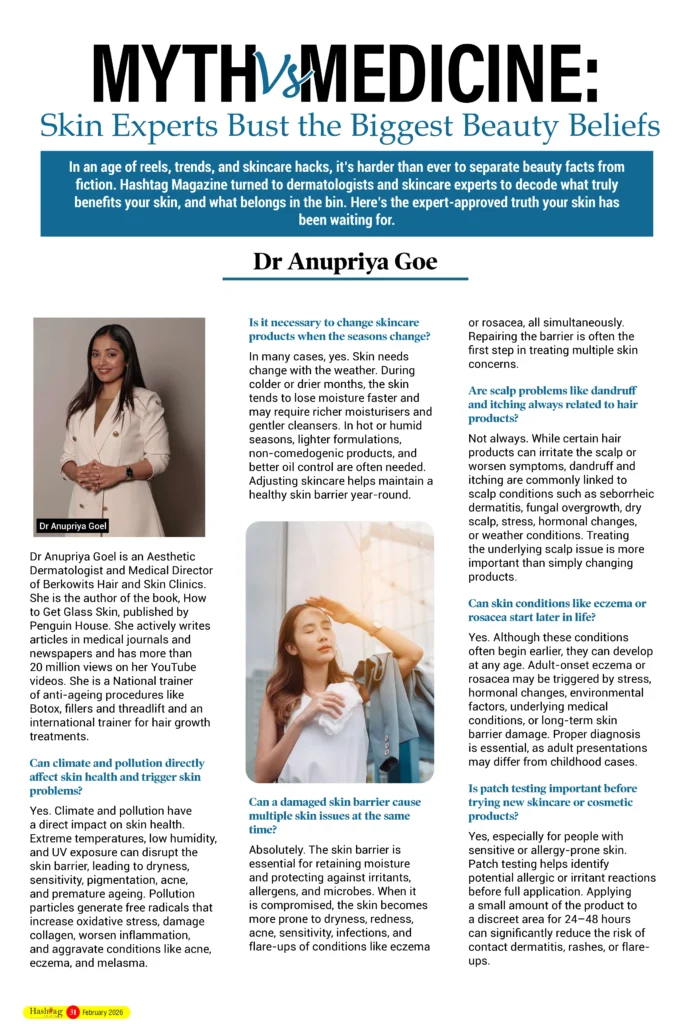
Dr Sneha Nambiar is a Dermatologist from Kerala with a keen interest in aesthetic dermatology. Through her clinical practice and educational content, she focuses on simplifying dermatology for the public, busting popular skin and hair myths and promoting safe, science-backed skincare.
Do all skin types really need sunscreen every day?
Yes. Every skin type, oily, dry, acne-prone, or sensitive, needs sunscreen daily. UV rays don’t just cause tanning; they accelerate ageing, trigger pigmentation (especially melasma, common in Indian skin), worsen acne marks, and increase skin cancer risk. Even indoors or on cloudy days, UV exposure occurs, so daily sunscreen is non-negotiable.
Is acne always related to food and poor hygiene, or are there other causes?
Acne is not a hygiene problem. Over-cleansing can actually worsen it. While certain foods may aggravate acne in some individuals, the main causes are hormones, excess oil production, clogged pores, bacteria, genetics, stress, and improper skincare or cosmetics. Acne is a medical condition and should be treated as one, not blamed on “dirty skin.”
Can overusing skincare products damage the skin more than help it?
Absolutely. Overusing or layering too many actives can disrupt the skin barrier, leading to irritation, sensitivity, breakouts, and pigmentation, something Indian skin is particularly prone to. More products do not mean better skin. Targeted, well-chosen products used correctly are far more effective.
Are professional skin treatments like peels and lasers safe for Indian skin when done correctly?
Yes, they are safe and effective when performed by trained dermatologists using the right settings and protocols. Indian skin requires a specialised understanding to prevent complications like post-inflammatory pigmentation. The key is proper patient selection, correct technique, and good pre- and post-procedure care.
Does hair fall always mean a serious problem, or can it be temporary?
Hair fall is often temporary. Stress, illness, childbirth, weight loss, nutritional deficiencies, or hormonal changes can cause increased shedding (telogen effluvium), which is usually reversible. However, persistent or progressive hair loss needs evaluation to rule out conditions like pattern hair loss or medical causes.
Is it better to follow a simple skincare routine consistently rather than keep changing products?Yes. Consistency beats complexity. A simple routine like cleanser, moisturiser, sunscreen, and a few targeted treatments, used regularly, gives better results than frequently switching products. Skin needs time to respond, and constant changes often lead to irritation rather than improvement.
Dr Tanvi Vaidya is a Consultant Dermatologist, Trichologist, and Aesthetic Physician with over a decade of experience in clinical dermatology and advanced aesthetic medicine. With a strong academic and research background, she has contributed to multiple publications, presented at national and international conferences, and received international scholarships, including recognition at the World Congress of Dermatology, Milan.
Beyond clinical practice, Dr Tanvi is deeply committed to public education and actively leverages social media to spread evidence-based awareness. Through her English and Marathi Instagram platforms, she simplifies complex skin and hair concepts for everyday understanding, reaching a combined community of over 1.5 lakh followers. Her clinical expertise includes hair loss treatments, anti-ageing procedures such as Botox, fillers, PRP & skin boosters, pigmentation therapies, and comprehensive acne and acne scar management. She is known for her ethical approach, natural-looking results, and patient-first philosophy.
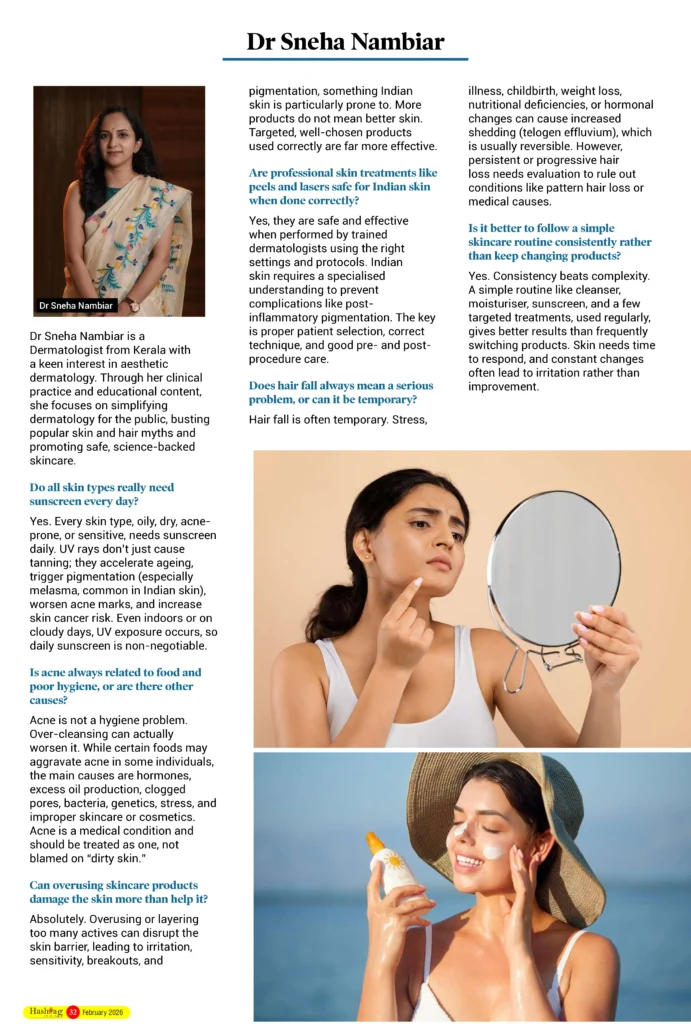
Can big moles on the face be removed by laser without leaving even a small scar?
Not all big moles can be safely removed using a laser. The treatment depends on the type, depth, and nature of the mole. While lasers can help remove certain superficial pigmented lesions, deeper or raised moles often require surgical excision for safe and complete removal. Some degree of scarring is always possible, but with advanced techniques and proper aftercare, scars can be minimal and cosmetically acceptable.
Do skin problems always show early signs before becoming serious?
Not always. Some skin conditions may start subtly and go unnoticed, while others can progress silently before becoming evident. This is why regular skin checks and early dermatological consultation are important. Identifying changes early helps in faster diagnosis, simpler treatments, and better outcomes.
Is sensitive skin a medical condition or just a skin type?
Sensitive skin is more of a skin type than a medical condition, but it can sometimes indicate an underlying skin barrier dysfunction or inflammatory tendency. People with sensitive skin may experience burning, itching, redness, or discomfort more easily. Proper skincare, trigger avoidance, and professional guidance can significantly help manage it.
Do moles, freckles, or skin spots need regular medical monitoring?
Yes, especially moles that change in size, colour, shape, or texture. Regular monitoring helps detect early warning signs of potentially serious conditions like skin cancer. While these are larger concerns in Caucasian skin, where these cancers are more common, they can also appear on Indian skin and need to be monitored. Even freckles and spots should be evaluated if they change or appear unusual. Annual skin check-ups are advisable for long-term skin health.
Can hormonal changes at different life stages affect skin health?
Absolutely. Hormonal fluctuations during puberty, pregnancy, the postpartum phase, and menopause can significantly impact skin, causing acne, pigmentation, dryness, sensitivity, or ageing concerns. Understanding hormonal influence allows dermatologists to design customised treatment and skincare plans for each life stage.
Is early treatment more effective than waiting for skin problems to worsen?Yes, early treatment is always more effective. Addressing skin concerns at an early stage often leads to faster results, simpler treatments, fewer complications, and better long-term outcomes. Delaying treatment can make conditions more difficult and expensive to manage.