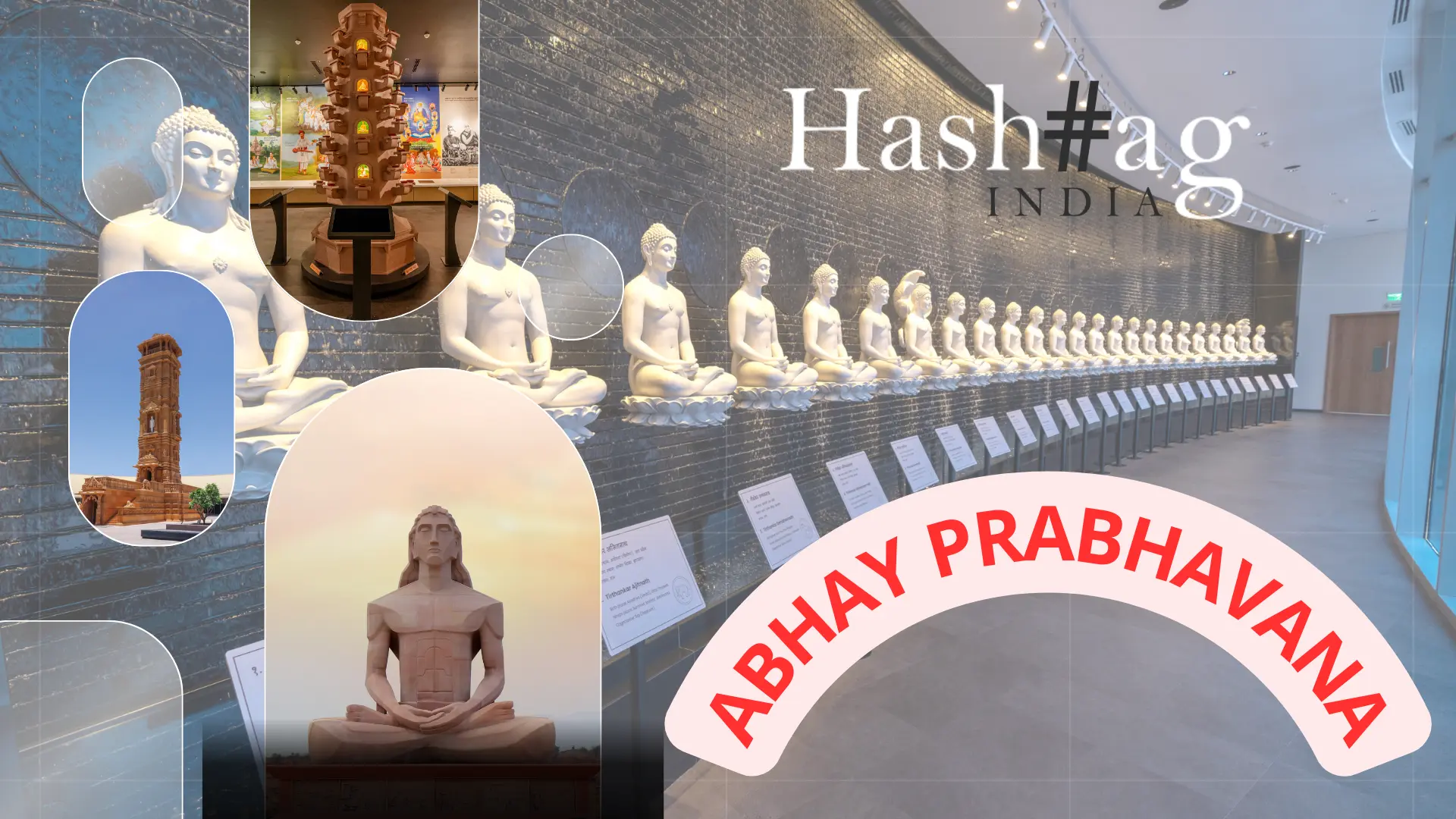
What if a museum didn’t just show you history, but revealed the very values that built India as a civilisation?
Abhay Prabhavana is a remarkable museum nestled far away from the rush and noise of the city. Surrounded by peaceful rural landscapes and open skies, the place feels deliberately distanced from distractions, almost as if silence itself is part of the experience. As Vonteru Aarthi Reddy explores, this space offers far more than visual exhibits.
Unlike any museum I’ve visited, Abhay Prabhavana does not rely on ancient artefacts or recycled displays. Instead, it invites you on a carefully crafted journey to understand India’s values, evolution, and inner wisdom. What makes it even more extraordinary is that the museum took nearly ten years to build researching, writing, sculpting, designing, revising, and refining all dedicated to presenting India’s civilisation with clarity and integrity.
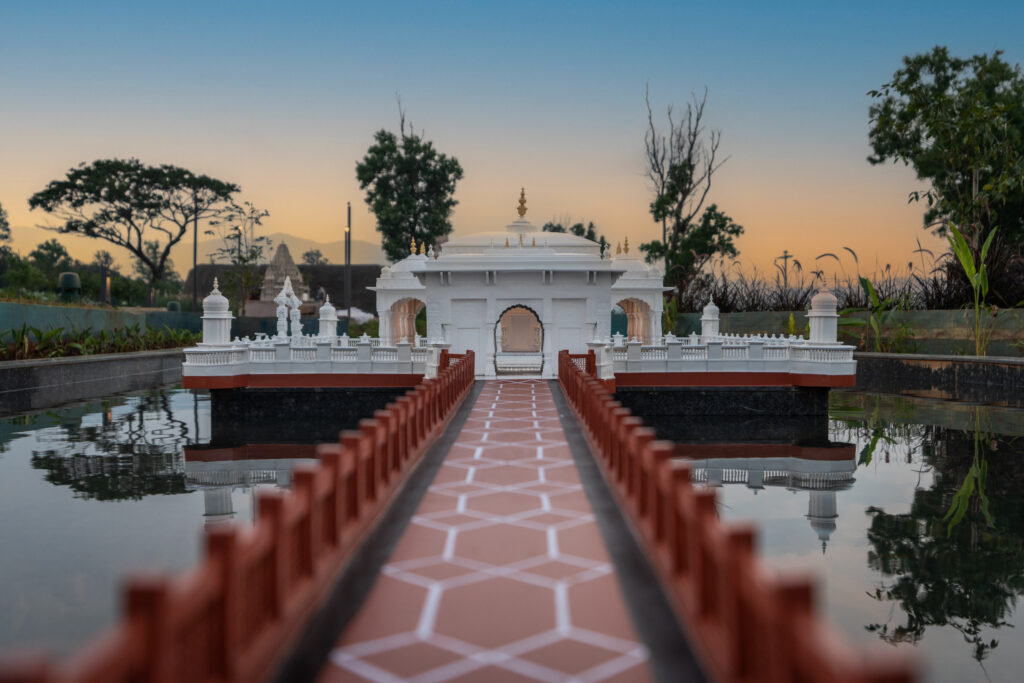
A Museum Built Like a Civilisation — Layer by Layer
The first thing that struck me was how thoughtfully everything is structured. This is not a place that overwhelms you with dates and artefacts. Instead, the museum unfolds like a narrative, a story of who we are, where we came from, and why our civilisation stood firm for thousands of years.
The journey begins with India’s ancient values. Concepts like Atma, Karma, restraint, truthfulness, compassion, and discipline, often misunderstood or oversimplified, are explained here with remarkable clarity. Visual storytelling blends seamlessly with philosophy. As you move forward, the museum transitions into India’s civilizational story. You witness how our earliest cultures formed along the rivers, how Jain, Buddhist, and Vedic traditions shaped thought, and how ideas circulated freely in ancient India. The narrative is honest and balanced; it explains prosperity, decline, resilience, and transformation without exaggeration or omission.
Everything inside the museum is freshly created: every sculpture, every painting, every animation, and every mural. Nothing is borrowed. Nothing is copied. The centrepiece, a striking contemporary depiction of Rishabhdev, stands tall as a symbol of India’s earliest civilizational leadership. Its Art Deco-inspired form reflects both strength and serenity, a perfect representation of India’s value-driven evolution. 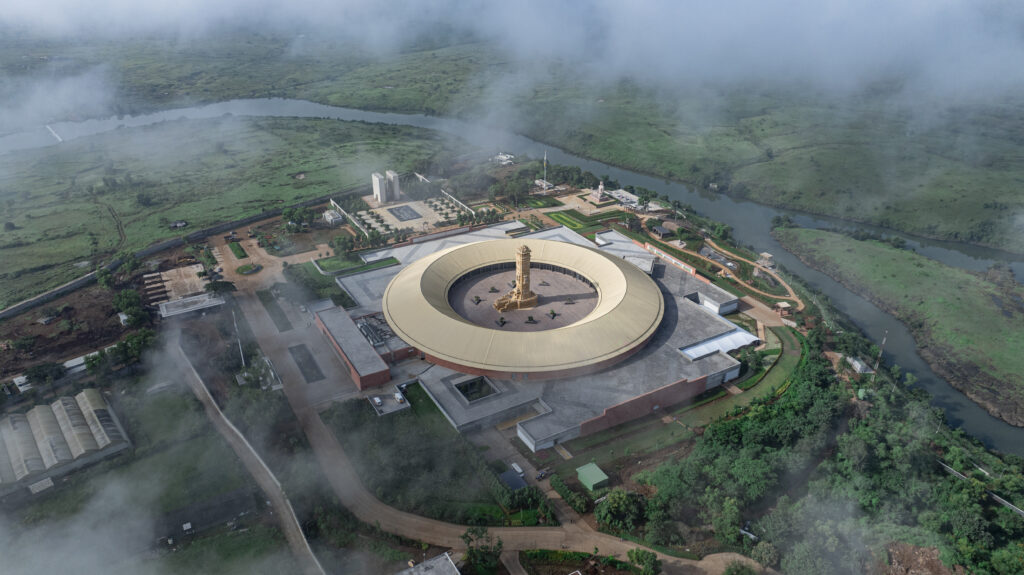 And then there is the setting. Far from city traffic, surrounded by nature, the museum offers a place to reflect physically and mentally. During my visit, I barely touched my phone. It felt natural to unplug, to breathe slowly, and to absorb the environment. In today’s hyper-digital world, this alone makes Abhay Prabhavana worth visiting. I spent nearly four hours exploring the museum, yet it never felt long. Instead, it felt necessary. It offered something I rarely find on the road: clarity.
Abhay Prabhavana explains India not as a nation-state, but as a civilisation shaped by timeless ideas. It reveals how deeply our ancestors understood human behaviour, health, society, discipline, and emotional intelligence. It shows that India’s strength was never in power or conquest, but in values that encouraged collaboration, respect, and coexistence.
The experience is peaceful, engaging, and surprisingly modern. Everything feels designed for today’s generation, especially students and young adults. Families can walk through together and actually learn something meaningful. Schools can bring students here to understand values beyond textbooks. And travellers, like me, leave with a stronger sense of identity not because we are told to feel proud, but because the truth itself is powerful.
7 QUESTIONS WITH SHRI ABHAY FIRIODIA
During my visit, I had the privilege of speaking with the founder, Shri Abhay Firodia, whose vision brought this museum to life. His responses were friendly, thoughtful, and wonderfully clear, a reflection of the museum itself.
Q: What inspired you to create Abhay Prabhavana?
A: I felt that India’s civilizational values were not reaching the younger generation in a meaningful way. I wanted to present these ideas in a modern, relatable form that anyone could understand.
Q: Why did the project take nearly ten years?
A: Because we built everything from the ground up, the research, the content, the sculptures, the visuals. Accuracy takes time, and we didn’t want to compromise on quality.
Q: How do you describe the Indian value system?
A: It is rooted in collaboration, coexistence, and inner discipline. These values shaped our society for centuries and remain relevant even today.
Q: Why was the museum built in a rural location?
A: Reflection requires peace. Being away from the city allows visitors to slow down, disconnect, and truly absorb the experience.
Q: Which element of the museum reflects your vision most clearly?
A: The values galleries. They simplify complex ideas without losing depth. For me, clarity is the essence of this entire project.
Q: Who is the museum designed for?
A: For everyone, but especially for the youth. Understanding values early creates a strong foundation for life.
Q: What impact do you hope visitors experience?
A: I hope they leave with a clearer sense of India’s civilizational wisdom and a deeper understanding of themselves.