
“Sometimes failure teaches you more than success can ever do”: Kriti Sanon

Sometimes failure teaches you more than success can ever do Kriti Sanon

Mimi has been making waves since its release. The film sets out to stir a conversation within the Indian audience on the still taboo topic of surrogacy. To this extent, KRITI SANON aka Mimi performs with great aplomb. She speaks to LIPIKA VARMA on the challenges of the role and gives us an insight into the ever-transforming industry.

With an early release on Jio Cinema and Netflix, Mimi has opened the audience to a much-awaited discourse on often hushed topics such as abortion, surrogacy, and the ethics of parenthood. The film, directed by Laxman Utekar and produced by Dinesh Vijan under his banner Maddock Films, classifies as a comedy-drama owing to how it chooses to approach the topics at hand. The film, which is a remake of the National Award-winning Marathi film Mala Aai Vhhaychy!, has led to being dubbed as Kriti Sanon’s best performance to date. Learn more about the film and its process in her own words.

ON MIMI

We see you play the role of a surrogate mother in Mimi. What kinds of preparation did this role require of you?
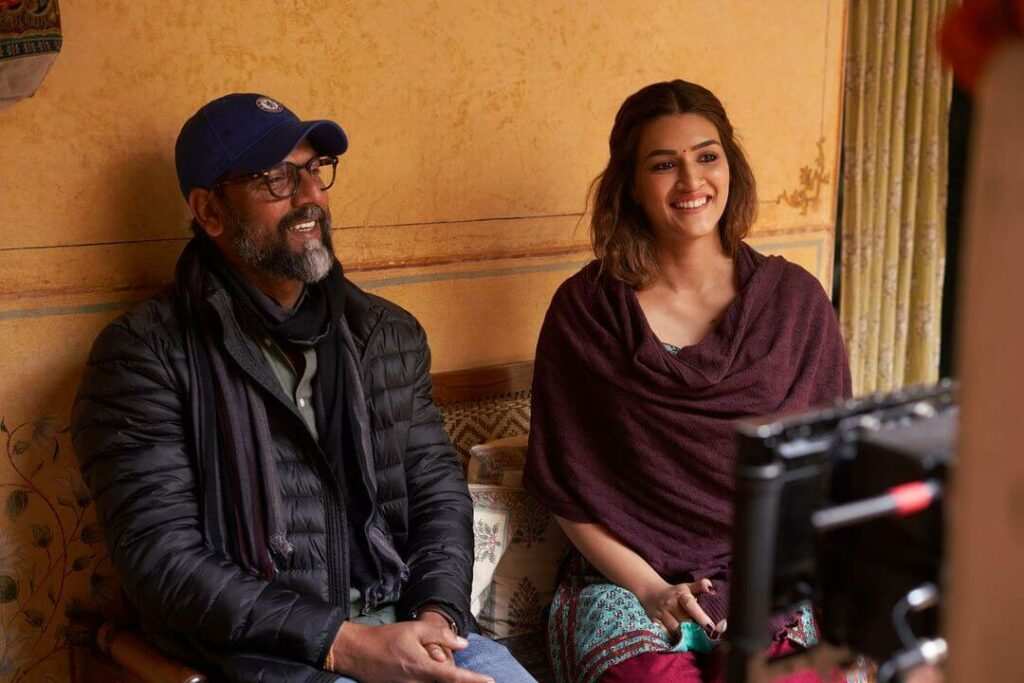
There was a lot of mental as well as physical preparation involved. I had to gain 15 kilos to look the part. Laxman Sir was clear about what he wanted the closeups to look like. I have thankfully been blessed with a strong metabolism, so it’s not easy to gain so much weight so quickly. Once I did however, other problems arose. I was not allowed to do yoga or exercise, and the lifestyle change took a toll on me. The character also has a strong emotional journey. To truly get into the spirit of a girl who does not want to be a mother and has extenuating circumstances, I chewed my director’s brains for everything, from how she would speak, react, and respond to certain situations. The role made me explore aspects I have never done before. The film is multifaceted; one of the most interesting ‘shades’ of my character was how she gets angry since I am very different when angry myself. I think by the time we neared the end of filming I had completely leaned into Mimi.

Mimi brings up quite a few pertinent questions, especially surrounding the topic of abortion. Why do you think this is so contested? 

The movie is inspired by the Marathi film Mala Aai Vhhaychay! and is based on a true incident. About 12 years ago, a foreign couple had come to India to find a surrogate and then left soon after she got pregnant. After that, the laws for surrogacy became much more stringent, and only recently have been revised. The laws should be strict on both the parties where a surrogate mother should not be left mid-way and after the birth, the surrogate mother should also not refuse to hand over her baby. It is a beautiful thing to do, where you hand over your surrogate baby to a couple who cannot have a child of their own, but it is also complicated! Both the parties interested should be protected. I think Mimi has a beautiful message to give out. I hope, once people watch the film and go through the character’s journey, they understand why she did what she did and end up saying “Oh, she did the right thing!

“I think by the time we neared the end of filming I had completely leaned into Mimi.”

THE PERILS OF STARDOM

Since you have entered the industry, you have taken your strides carefully. How do you look at stardom and fame?
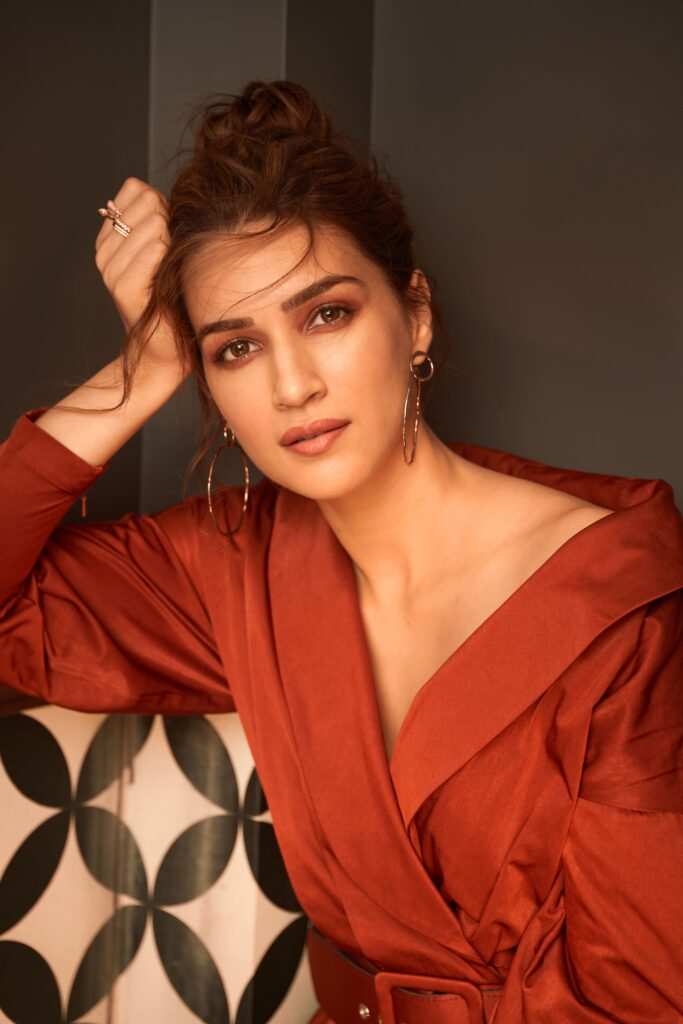
It means a lot. Since the time I have entered the industry, I have craved for both! First, for people to recognize the work I do. I want to be known as a good actor. I want people to come and tell me that I made them cry or I made them laugh in a particular scene. When you can generate emotions with your work that is the most satisfying thing ever. I want stardom and fame to come along. People love my work, and appreciation in whatever form uplifts me.  I feel I have a lot more potential than what has been explored and I will continue to feel that way. I am very ambitious. I am glad, I am in a great phase of my life because I am getting to these diverse roles for which I have always craved. Stardom also comes with a lot of responsibility; you have a lot of power to inspire people and you have a voice where you can motivate people to do better.

“There’s a quote that I abide by: ‘Never let the success go into your brain and never let the failure go into your heart’.”

With the success of Luka Chuppi, you gained recognition as an exuberant comedy actor. Mimi also falls within comedy-drama. Do you find yourself establishing a stronger foothold through such roles? What does comedy mean to you?

My favourite genre is a situational comedy. I love how people’s reactions change based on the situation. In our everyday situations, there is so much comedy. I love when an intensely emotional situation is shown comically. One moment you’re laughing and in the next moment there’s a lump in your throat and then with the next scene, you burst into tears. There’s so much stress in our lives! So if I can make someone laugh or smile then that’s a big thing for me. For me, situational comedy is my favourite! Whether it is Bareilly Ki Barfi or Luka Chuppi, I feel like there should be humour in some way or another.

How do you look at the success that is fluctuating in an industry like Bollywood where one film does well and another subsequently tanks? 

For me, it is very temporary. There’s a quote that I abide by: ‘Never let the success go into your brain and never let the failure go into your heart’. Success and failure are part of your journey and a part of your life. The one thing you should be consistent about is whether you are growing and evolving from the situation or not. Sometimes failure teaches you more than success can ever do. I want to constantly evolve and grow. I always want to evolve as a better actor and become a better person. With every experience I have gone through, I have learnt something valuable from them.

FUTURE PROJECTS

Tell us a little something about your upcoming projects. Where can we see you next?

All the films that I am doing are very different and I feel lucky that I took up all these diverse projects. Hum Do Hamare Do is based on a very different concept, a kind of adoption completely contradictory to what is shown in Mimi. It is going to be a very warm film, a complete family entertainer. Bachchan Pandey is has action and romance packed in a comedy-drama. The chemistry between Akshay Sir and I is working well for such a meaty role and an interesting script. Bhediya will be my first horror-comedy; my look in the film is very different from what people have seen before. Working with Varun after such a long time since Dilwale (2015) was fun.  I loved working with director Amar Kaushik as well; I love his energy and enthusiasm on the set, and I think he has very young-positive energy on the set which is very infectious.

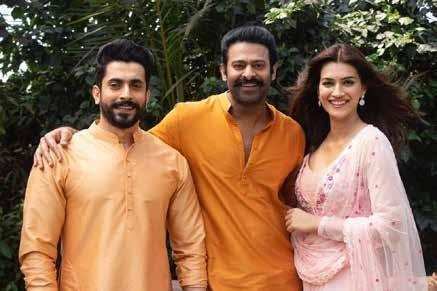
Adi-Purush is yet again a unique story and comes with a lot of responsibility. Director Om Raut is technically very sound; he is also an engineer, from what I have got to know! He is very clear with what he wants, his research is on point and his vision is what makes the film stand apart. I have shot for some portions of the film, and it is something shaping to be larger than life. We shot it on Croma with a different world that was created. Adipurush is an expensive film. I am working with Prabhas and Saif [Ali Khan]. I will follow up on the upcoming schedules in the coming months.

“All the films that I am doing are very different and I feel lucky that I took up all these diverse projects.”

Adipurush is a Hindi/Telugu film. Your debut was with Sukumar’s Telugu psychological thriller Nenokkadine. Will we see you speak in Telegu again?

Yes! I did that film long back. I will be speaking in Telugu in Adipurush since it is a bilingual film.
Leave a comment

Your email address will not be published. Required fields are marked *

Exclusive Bollywood Interview: Varun Dhawan, Mrunal Thakur & Pooja Hegde

Varun Dhawan, Mrunal Thakur and Pooja Hegde step into a world of love triangles, high-voltage comedy and classic Bollywood chaos, where every scene is designed to make audiences laugh out loud. Behind the madness of Hai Jawani Toh Ishq Hona Hai lies a fast-paced entertainer shaped by humour, music and family drama in true David Dhawan style. Hashtag Magazine brings you a glimpse into the energy, spontaneity and comic rhythm that powers the film. Varun Dhawan Q: How is this film different from your earlier David Dhawan comedies? Every film has its own madness. This one has double the confusion and double the fun. In a David Dhawan film, you have to stay alert all the time because he can suddenly change a scene, a reaction or even the way you say a dialogue. As an actor, you are always on your toes. You have to fully surrender to the comedy and conviction of the character. Q: Did you feel pressure working with your father again?Working with him is never easy because he pushes me the most. He won’t go easy on me just because I’m his son. In fact, he becomes stricter. There’s pressure, because I know the audience has expectations from a David Dhawan comedy and from our combination as well. He’s very clear on set. If something is wrong, he says it immediately. There’s no sugarcoating. Q: What was the toughest part of the film?Comedy timing is the toughest thing. People think comedy is easy because everyone is laughing, but it’s actually very technical. One second early or late, and the joke dies. Maintaining energy through chaotic scenes while keeping the rhythm correct was the hardest part. David Sir’s comedy looks effortless on screen, but while shooting, it’s extremely demanding physically and mentally. Q: Salman Khan joked

Turning Pages, Building Communities: Nidhi Gupta on the Evolving World of Reading

In a time when attention spans are shrinking and digital content dominates, the enduring power of books continues to find new ways to resonate. At the helm of Crossword Bookstores, Nidhi Gupta has spent over 15 years shaping not just a retail brand, but a thriving reading culture. In this conversation, she reflects on her personal relationship with books, the shifting habits of modern readers, and why bookstores today are as much about community as they are about commerce. You’ve spent over 15 years shaping Crossword’s journey. What role have books played in your own life, and which titles or authors have deeply influenced you personally and professionally? I’ve always shared a deep connection with books. They hold many roles in our lives, serving as companions, guiding us as teachers, and opening windows to perspectives we might never otherwise experience. Growing up, reading helped shape my curiosity and empathy, and over the years, it’s become integral to how I think and make decisions. I’ve been deeply influenced by authors who combine storytelling with insight, whether it’s literary fiction that explores human complexity or business writing that sharpens perspective. Professionally, books have taught me the importance of staying adaptable and constantly learning, which is essential in an ever-evolving industry like ours. In an age of short-form digital content and shrinking attention spans, how do you see the culture of reading evolving, especially among younger audiences in India? While it’s true that attention spans are being challenged, I don’t believe the desire to read has diminished. Younger audiences today are discovering stories in new ways, whether through curated recommendations, social media, or genre-driven communities. What’s encouraging is that when the right book reaches the right reader, the engagement is still deeply immersive. We’re also seeing a shift toward more accessible formats, relatable

Movies to Watch This Summer May 2026

From high-fashion drama to gritty psychological thrillers and action-driven regional cinema, this summer’s big-screen lineup offers something for every kind of moviegoer. Whether you’re in the mood for a nostalgic sequel, an intense character study, or a gripping continuation of a beloved franchise, these upcoming releases promise compelling stories, standout performances, and plenty of cinematic spectacle. The Devil Wears Prada 2 Language: English Drama, Comedy The Devil Wears Prada 2 is the much-anticipated sequel to the iconic 2006 fashion drama, set to release on May 1, 2026. Directed by David Frankel and written by Aline Brosh McKenna, the film revisits the high-stakes world of fashion journalism in a rapidly evolving media landscape. The original star-studded cast returns, including Meryl Streep as the formidable Miranda Priestly, Anne Hathaway as Andy Sachs, Emily Blunt as Emily Charlton, and Stanley Tucci as Nigel. New additions like Justin Theroux and Kenneth Branagh bring fresh dynamics to the story. The sequel follows Andy’s return to Runway magazine as Miranda struggles to keep the publication relevant. With Emily now leading a luxury brand holding the key to Runway’s future, the film promises drama, power shifts, and a stylish look at modern media. BandarLanguage: HindiPsychological thriller Bandar is a crime thriller directed by Anurag Kashyap, known for his raw, unfiltered storytelling. The film follows Samar, an ageing television star whose life spirals after a scandal lands him in prison, forcing him to confront both external brutality and internal demons.Premiering at the Toronto International Film Festival (TIFF) 2025, the film has already generated buzz for its dark, character-driven narrative and intense performances, particularly Bobby Deol’s transformative role. Sanya Malhotra is expected to bring emotional depth, adding another layer to the story. True to Kashyap’s style, the film explores themes of power, downfall, and survival within a harsh, claustrophobic

Between Film Sets and Mountain Escapes: Kayadu Lohar’s Journey

Long before the Tamil film Dragon became a cultural moment, Kayadu Lohar was quietly building her career across industries. A winner of the Everyuth Fresh Face, Kayadu stepped into cinema in her teens and gradually explored Kannada, Malayalam, Telugu, and Tamil industries with projects like Mugilpete, Pathonpatham Noottandu, Alluri, and Funky. But it was Dragon, opposite Pradeep Ranganathan, that turned her into a viral sensation, bringing widespread recognition and positioning her as one of the emerging pan-South talents to watch. In a candid conversation with Priyanka Goud, Kayadu opens up about sudden fame, navigating multiple film industries, and finding peace away from the spotlight through travel. Acting Was Always the Plan For Kayadu, acting wasn’t a coincidence; it was always the goal. “I always knew I wanted to be an actor,” she says. Winning the Fresh Face title during college became the first big push. “It gave me visibility, auditions, and belief. At just 18, I found myself travelling across cities for auditions, sometimes attending three to four in a single day. As a newcomer, you don’t always get full narrations. Many times, you say yes based on the production house or the hero attached.” Navigating Languages and Cultures Born into a North Indian family, speaking Nepali at home, fluent in Hindi and Marathi, and raised in Pune, entering South Indian cinema came with its own challenges. “South Indian languages aren’t my first language, so understanding the rhythm and culture initially took time,” she says. But over the years, she developed her own process. For Kayadu, learning a language goes beyond memorising lines. “If I’m doing a Malayalam film, I’ll only listen to Malayalam songs during that phase. Music helps me understand the emotion and culture behind the language.” The Dragon Effect Her performance as Pallavi in Dragon proved to

You May Also Like

Connect with us