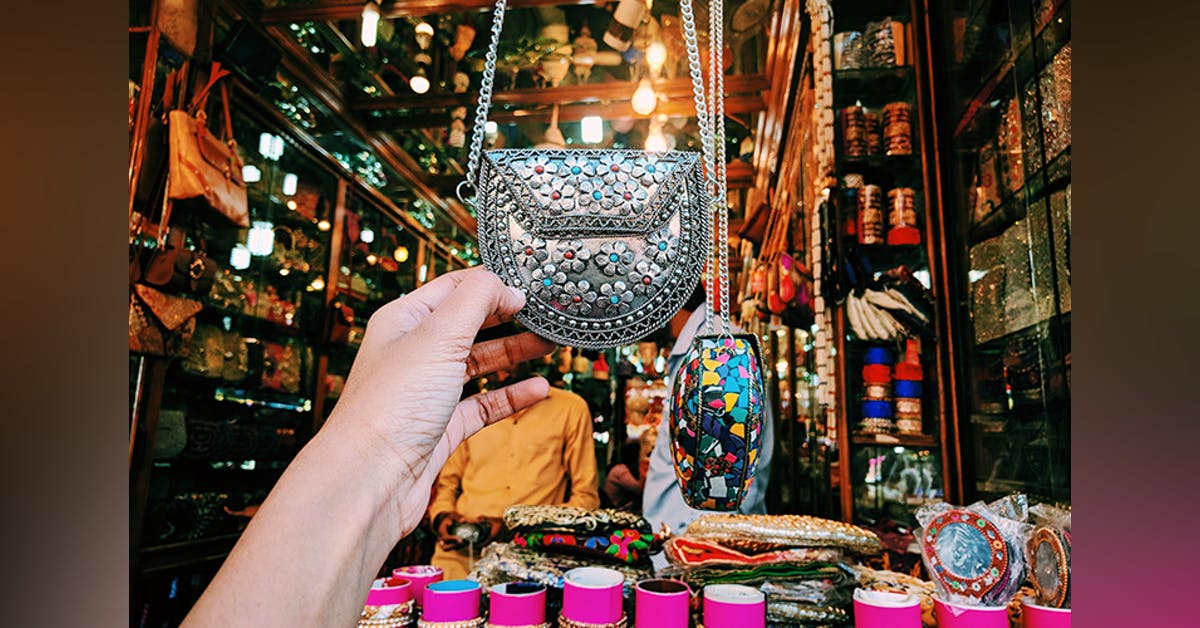
MUST VISIT BAZAARS IN HYDERABAD

Must Visit Bazaars in Hyderabad

Online shopping saves time and money, but walking on the streets to buy that one accessory that matches your dress, or that one fancy home decor, brings so much more joy. We are completely relying on online shopping and forgot how we used to shop on the streets. I can’t describe it in words but I can tell from my experience it is `the happiness in exhaustion.

Here are a few vibrant and some of the oldest bazaars to visit in Hyderabad to rediscover the spirit of street shopping.

CHUDI BAZAAR OR LAAD BAZAAR:
Chudi Bazaar is famous for Chudi or bangles, also called laad bazaar, has a history of 200 years, and is a bridge to the past and present. One doesn’t just find bangles here, you can also find earrings, accessories, and crockery. If you like ethnic silverware you should visit laad bazaar. Traditional Khara dupattas (wedding dress of Hyderabadi Muslim women) are one of the specialties of laad bazaar. My suggestion is to wear comfortable footwear, carry a bag and shop till you drop in the evening hours.
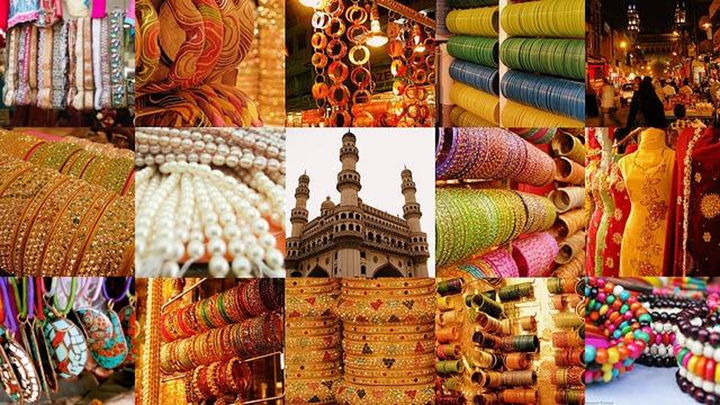
laad bazaar in hyderabad

Location: Char Kaman, on the west corner of Charminar. Timings: 11 AM to 10.30 PM every day.

PERFUME MARKET:
People remember you with your fragrance. It plays a huge role in showcasing your personality. If you are looking for a scent that creates such an impact, you must go shopping in the perfume market. The perfume here is called itar. It has a strong scent, so buy only if you are resistant to such scents. The fragrances are divergent, like jasmine, chocolate, saffron and many more. Some of the shops here are centuries old and the businesses have been passed down through many generations in the family.
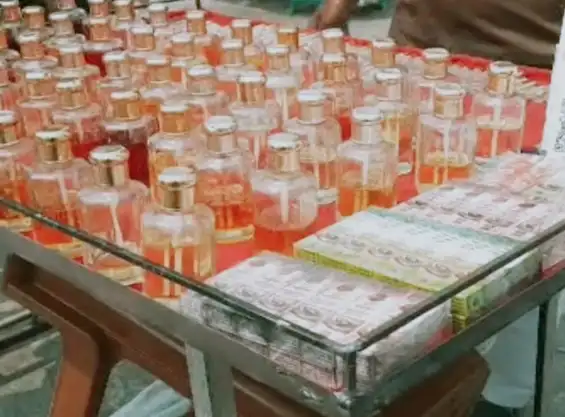
perfume market hyderabad

Location: between the Laad Bazaar and Moti Chowk.
Timings: 11 AM to 10.30 PM

SULTAN BAZAAR:
Sultan Bazaar is one of the oldest bazaars of Hyderabad, it is named after the nawab of that area Syed Sultanuddin. It is famous for women’s clothing and jewelry, especially silver jewelry. It offers almost everything, ranging from the latest trends in clothing to traditional attires, from street vendors to big showrooms sultan bazaar surprises you with its charm and beauty.
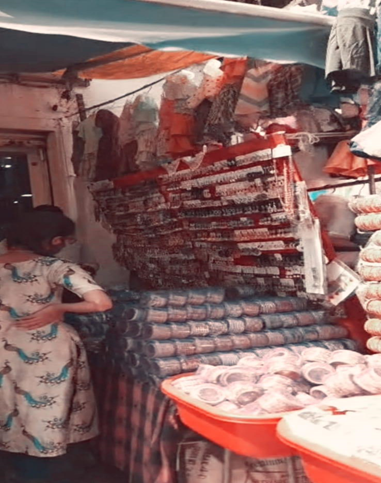
sultan bazaar hyderabad

Location: Koti
Timing: 10 AM to 6 PM.

BEGUM BAZAAR:
It is the busiest bazaar I have ever visited! It sells articles at wholesale prices which attracts individual buyers and wholesale dealers from all over the country to visit this bazaar. From household items and kitchenware, to perfumes and cosmetics, from dry fruits to gold and silver, name it you can find it in this Bazaar.
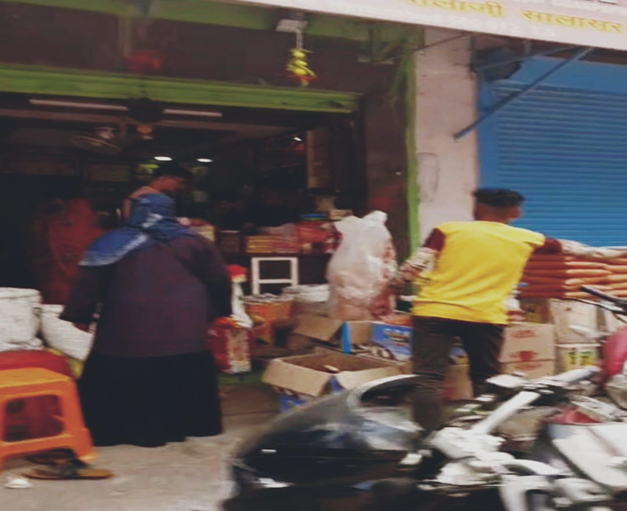
BEGUM BAZAAR

Location: near Afzal Gunj, Begum
Timings: 10 AM to 11 PM

JAMBAGH FLOWER MARKET
The Jambagh market is not just a market, it is a garden full of fresh flowers of almost every kind, ranging from roses to lilies and other flowers. You can get flowers for any occasion at a wholesale price and a little bit of bargain will do the job. Visiting in the morning hours might help, as it is prime time and the prices are low.

Location: Jam Bagh
Timings: 6:00 AM to 6:00 PM.

SUNDAY BOOK BAZAAR AT ABIDS:
A paradise for book lovers, the prices of books here begin at INR 20. Some of these books are gems and cost as little as INR 50. Though most of the books are second hand, they are in a good condition. But, check the book thoroughly before buying it. The market is filled with books on Sundays, and it is a delight to walk on the streets and find amazing books.

Location: Footpath stretching from Chermas, Abids towards General Post Office.
Timings: 11 AM to 6.30 PM

JUMMERAT BAZAAR:
Jummerat bazaar is an 80-year-old flea market. Literally, you can find anything here, from safety pins to electronics, to antique watches, shoes, furniture, 2000s video games, and many more. This bazaar opens every Thursday, in Muslim Jung Pul and Purana Pul of the old city. People from across the city come here to buy things. Though most of them are second hand, they are a decent deal. It is also called as chor market because they also sell stolen things here. Be careful while shopping here and try to carry a limited amount of cash with you.
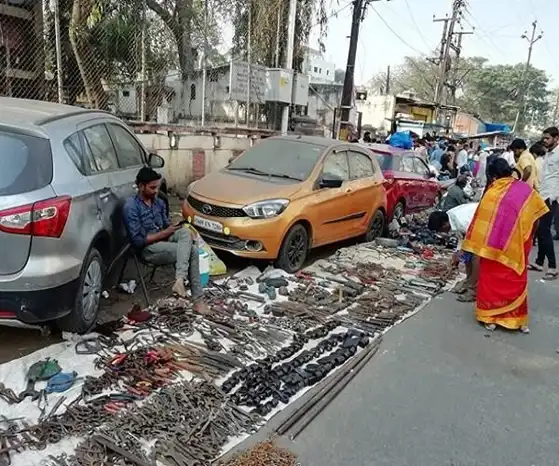
Location: Muslim Jung Pul and Purana Pul of the old city
Timings: 6AM to 10.30 PM

Antique Market, Murghi Chowk:
The antique market at Murghi Chowk is another gem to visit, every article sold here has a history and a story to tell. The articles sold here are crockery from the Nizam era, you can also find old coins, pots, chandeliers, and many more from the British and Nizam period. When you look at these items on the road, you are transported to different eras.
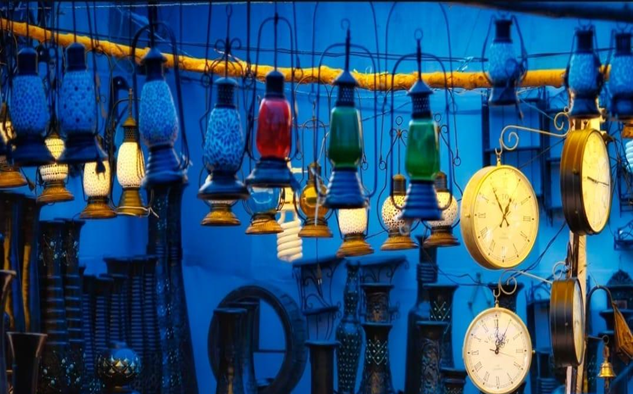
location: near Clock tower, Murgi Chowk.
Timings: 11 AM to 9.30 PM

POT MARKET:
If you are looking for necklaces, bracelets, chains, and imitation jewelry, then the Pot market is the place to visit. It also sells unique jewelry, beautiful pots, and other Hyderabadi accessories like bidari craft (designing on an iron article with gold and silver).
Location: near Monda Market, Shivaji Nagar, Hyderabad.
Timings: 11 AM to 10.30 PM

General bazaar:
The general bazaar is in Secunderabad, it is your one-stop destination if you want to buy clothes, handbags, footwear, household items, and many more. The huge collection of chiffon, brocade and Pochampally fabrics make General Bazaar one of the best places to shop for dress materials. The things here are affordable and durable.
Location: Secunderabad

Nampally Market:
If you love ethnic stuff then Nampally market is your go-to place, it is pocket friendly too. You can indulge yourself in shopping without overthinking. Bags, purses, jewelry, and footwear are some of the items that you can buy here.
During January and mid-February every year, Numaish exhibition is held in Nampally, which is known for its unique designs and pocket-friendly articles.

Conclusion: Bazaars are the soul of the city, they are old and they keep the city alive, so go shopping and discover the rich culture of Hyderabad in the bazaars.

Leave a comment

Your email address will not be published. Required fields are marked *

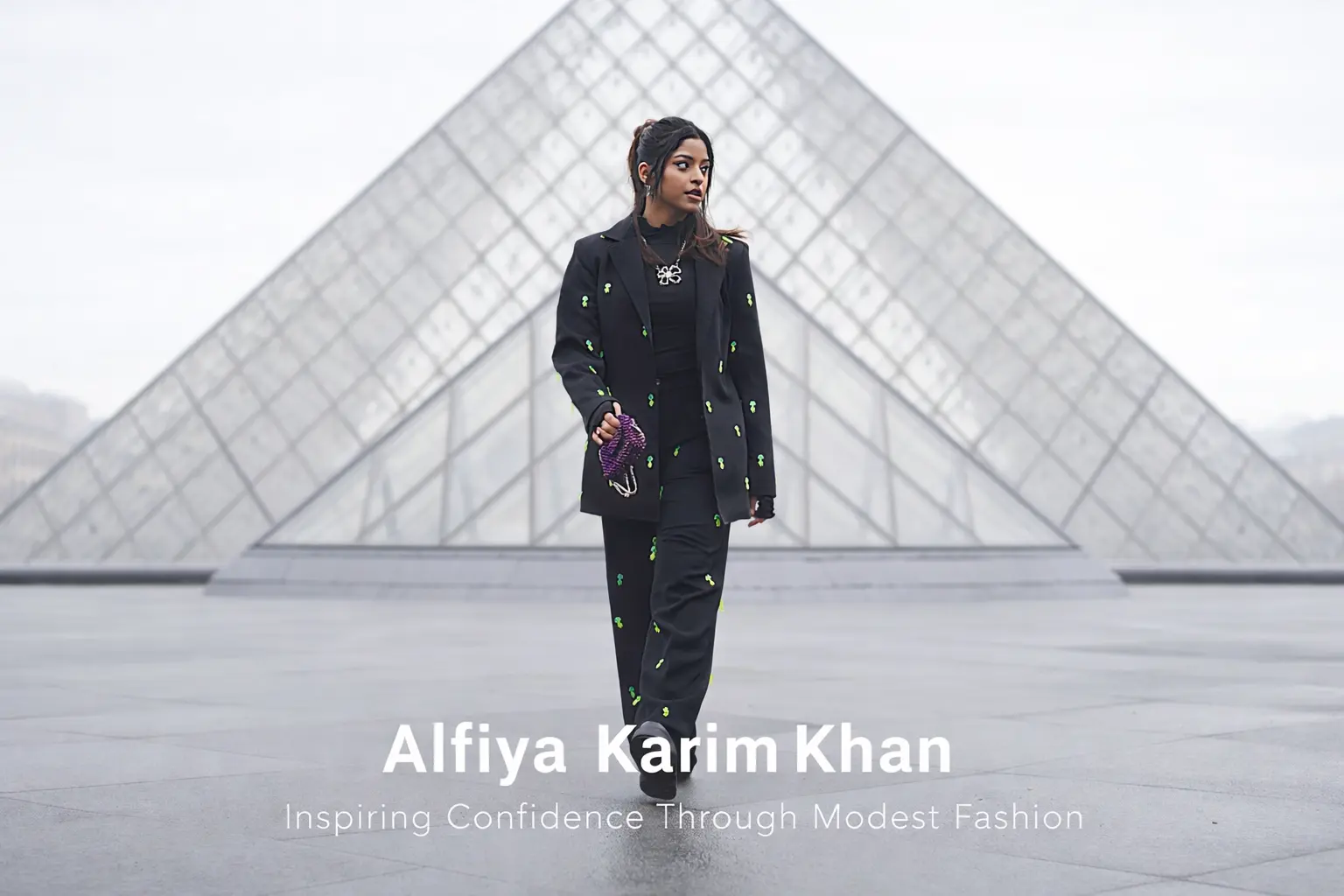
Alfiya Karim Khan: Mumbai YouTuber Redefining Modest Fashion and Digital Influence

Alfiya Karim Khan grew up in Mumbai in a family where education was non-negotiable, and ambition was encouraged, so long as it followed a conventional path. Academically strong, medicine seemed almost predetermined for her. But internally, she felt drawn elsewhere. “Deep down, I always knew my life did not belong in a hospital corridor,” she says. “It belonged in the creative industry.” Choosing to pursue a Bachelor’s degree in Mass Media instead of medicine was met with hesitation and doubt. Coming from a background where most women were financially dependent, she had rarely seen female entrepreneurship firsthand. That absence became fuel. “Every time someone questioned whether content creation was serious, it pushed me to take it more seriously,” she reflects. What began quietly in her bedroom evolved into financial independence and professional stability. Today, her work represents more than a career; it symbolises “choosing conviction over comfort.” A Cultural Voice in Modest Fashion Alfiya identifies as a digital entrepreneur and a cultural voice within the modest fashion space. A decade ago, the online fashion landscape felt misaligned with her personal style. “I did not want to shape-shift just to belong,” she explains. “I decided to build around my authenticity instead of bending away from it.” Over the past 10 years, she has collaborated with global and legacy brands, been recognised among Forbes’ Top 100 Digital Stars, and represented modest fashion at Paris Couture Week. For her, these milestones represent more than visibility; they signal representation. “This is not just fashion content,” she says. “It is about showing that ambition and values can coexist.” Reinterpreting, Not Rejecting At its core, her work reinterprets mainstream fashion through a modest lens. Rather than rejecting trends, she modifies them, layering strategically and reshaping silhouettes. “Fashion does not have to be abandoned to align with

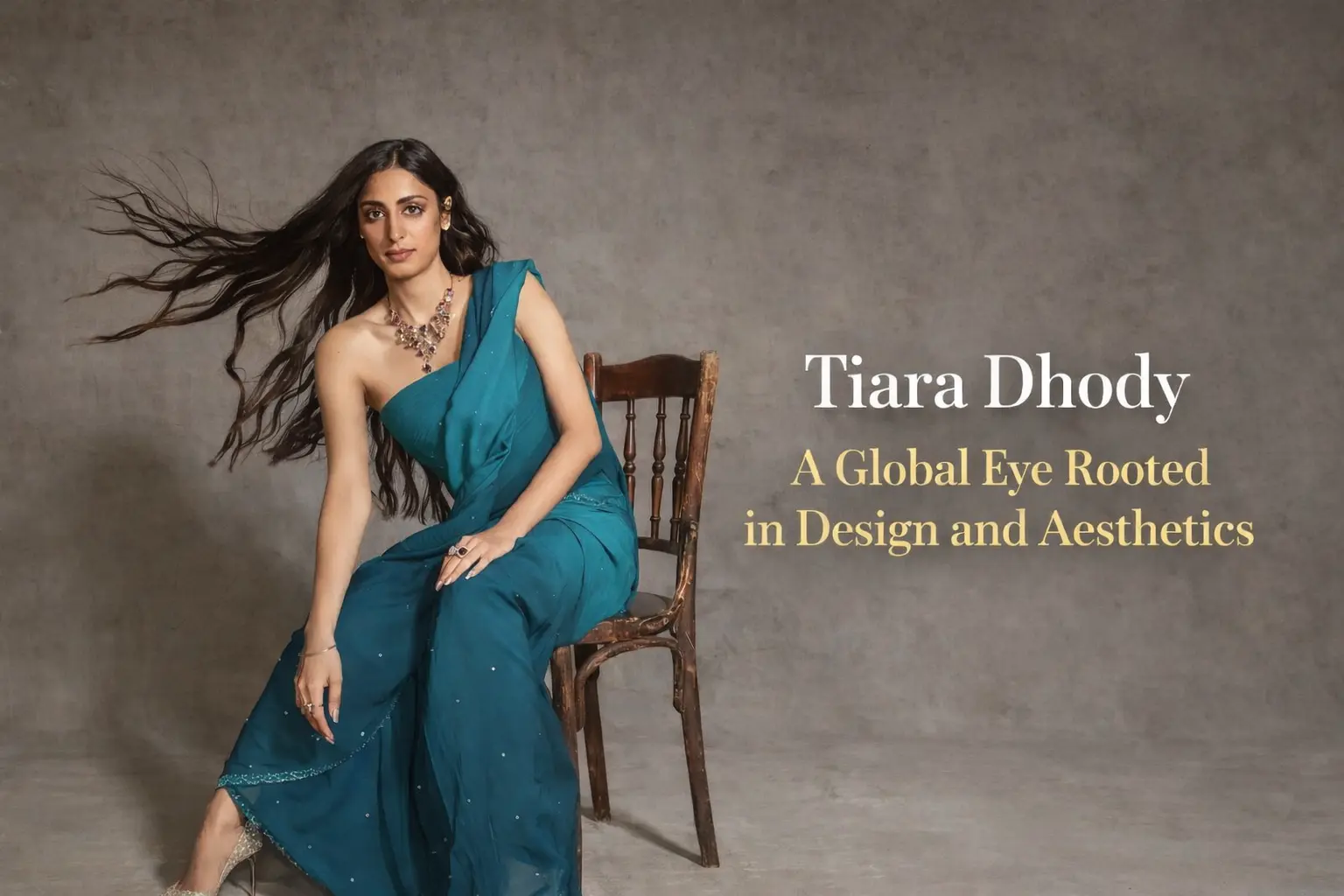
Tiara Dhody: Inspired by Heritage, Driven by Design

Tiara Dhody is a Mumbai-based founder and the creative force behind Treasures by Tiara. She studied at Cathedral and John Connon School, the United World College in Singapore, and later at Sarah Lawrence College, experiences that shaped her global perspective and independent thinking. Growing up in a household where fashion and design were part of everyday conversation, she was naturally immersed in aesthetics. Influenced by her mother, Queenie Dhody, and Raja Dhody, she absorbed a visual language early on. Yet, she credits her broader worldview to quieter influences. “Beyond formal education, I feel most shaped by the books I read, the films I watch, the places I travel to, and the people I surround myself with,” she says. “All of it quietly filters into my work.” Jewellery as Intimate Expression Tiara has chosen the path of self-expression, and for her, jewellery is one of the most intimate mediums through which to access it. “It’s something you can wear, feel, and move with; it becomes part of your story,” she explains. She also describes a more intangible element: “There’s something cosmic about it, the way certain pieces seem to find you at the right time.” In India, jewellery carries memory. It is passed down, inherited, gifted, layered with sentiment and history. That cultural weight deeply informs her design philosophy. “What sets my work apart is the balance between meaning and wearability,” she notes. The pieces are expressive without being loud, crafted to feel personal and enduring rather than purely ornamental. Many associate her designs with strong feminine energy, detailed craftsmanship, and jewellery that feels lived-in rather than showcased. Designed to Be Lived In Treasures by Tiara approaches jewellery differently. It is not created to be stored away for weddings or rare occasions; it is designed to be worn daily. “The idea

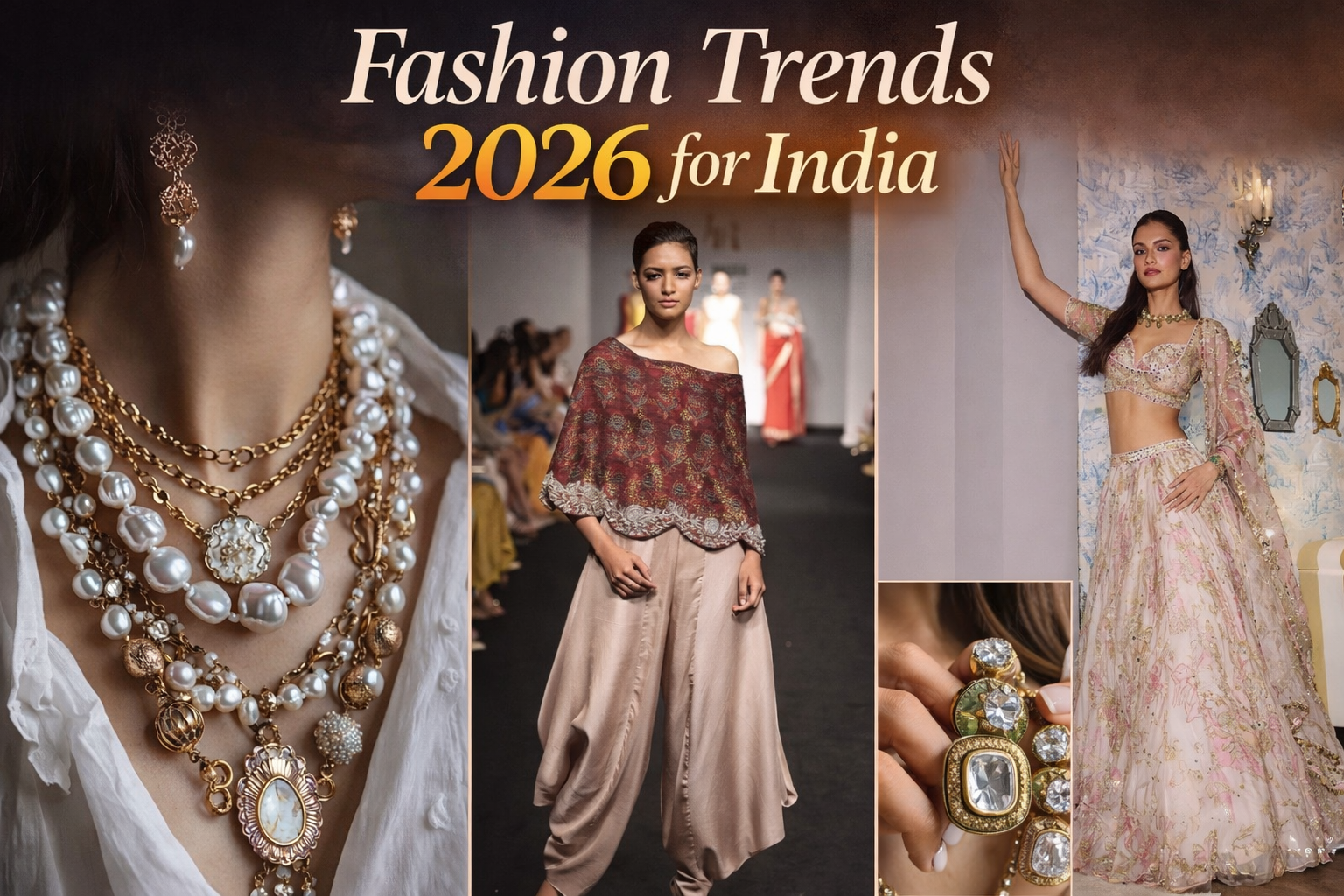
Fashion Trends 2026 for India

As India’s fashion ecosystem matures at the intersection of culture, technology, and sustainability, 2026 is poised to be a defining year. Below is a structured outlook on the key fashion trends expected to shape India this year… Sustainable Fashion Becomes the Default, Not the Differentiator By 2026, sustainability will no longer be a niche or premium positioning in India—it will be an expectation. Materials: Increased adoption of organic cotton, bamboo blends, banana fibre, hemp, and recycled polyester. Practices: Circular fashion models—resale, repair, and upcycling, and rental— gain mainstream traction. Consumer mindset: Shoppers demand transparency around sourcing, labour practices, and carbon footprint. Brands that fail to integrate sustainability at the core level risk losing relevance, particularly among Gen Z and urban millennials. Indian Craft Revival with a Modern Lens Indian fashion in 2026 doesn’t abandon tradition; it reinvents it: Handloom fabrics and artisanal textiles such as khadi, chanderi, and bandhani are being updated with modern cuts and silhouettes.   Ethnic pieces like sharara and gharara bottoms return with drama and movement, balanced by shorter kurtas or attached cape drapes.   Indo-western blends—co-ord sets, dhoti pants with crop tops, and sari gowns—continue to appeal to younger gen.  This trend reflects India’s fashion duality: honouring heritage while embracing global styling sensibilities. Fluid Fashion and Gender-Inclusive Design Gender boundaries in Indian fashion continue to dissolve, becoming more visible and commercially viable in 2027 Silhouettes: Kurta dresses, dhoti pants, oversized shirts, co-ord sets, and draped forms designed without gender labels. Retail evolution: Gender-neutral sections in both online and offline stores. Cultural impact: Particularly strong among urban youth and creative professionals. This shift reflects broader social acceptance and a move toward personal expression over conformity. Statement Accessories and Maximalist Flourishes While minimalism remains influential, accessories in 2027 are loud and expressive: Brooches, once relegated to formals, have made

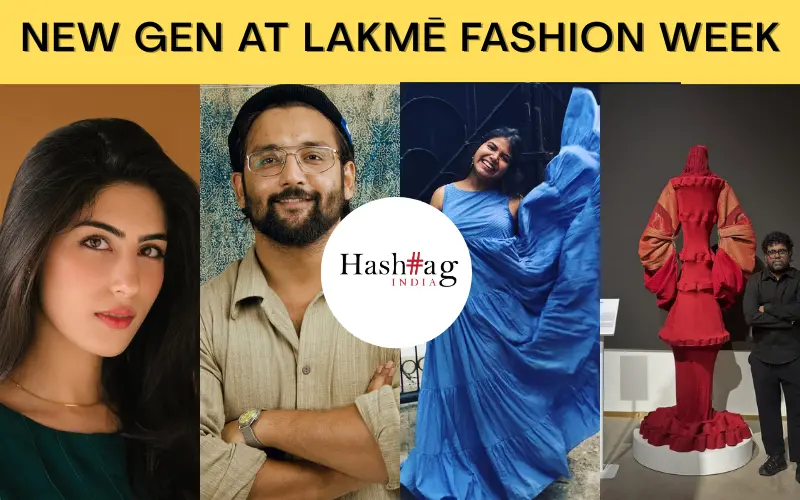
The Rise of the New Gen at Lakmē Fashion Week 2025

A new wave of designers is redefining the landscape of Indian fashion one that values purpose as much as aesthetics. At Lakmē Fashion Week x FDCI’s GenNext 2025, presented by NIF Global, we recently saw emerging talents that are fusing storytelling, sustainability, and cultural heritage to craft a more conscious, expressive future for design. Hashtag Magazine spotlights the rising stars who are weaving purpose into every thread the designers shaping not just what we wear, but why we wear it. This year’s GenNext 2025 cohort proves that the next generation isn’t just creating clothes they’re crafting conversations. From denim rebirths and handcrafted heritage to poetic sustainability and textile innovation, these visionaries are transforming Indian fashion into an art form rooted in authenticity, emotion, and soul. 1. Designer: Anam Hussain Label: Anam HussainCollection: Cut-PutlyUSP: A conceptual, sustainable exploration of empowerment through design. Inspired by Rajasthan’s Kathputlis the puppets that dance between control and liberation Anam Hussain’s Cut-Putly examines power, agency, and freedom through geometry and form. Structured, angular silhouettes represent restraint, while oversized shapes express release and individuality. The collection’s strength lies in its sustainability: over 1,000 kilograms of post-consumer denim waste was transformed through patchwork, crocheting, and hand-weaving into sculptural garments that balance grit with grace. For Hussain, waste isn’t discarded matter it’s creative potential. With hints of crochet handbags and accessories in development, Cut-Putly sets the tone for a label that is as thoughtful as it is experimental. 2. Designer: Mohammed Anas Sheikh Label: 23°N 69°ECollection: Unnamed (Kachchh-Inspired)USP: A poetic revival of Kachchh’s indigenous craft, rooted in minimalism and authenticity. Mohammed Anas Sheikh’s collection celebrates Kachchh’s artisanal spirit weaving its heritage into modern silhouettes that exude quiet strength. Centered around Kala cotton, a rain-fed indigenous fibre, his pieces highlight broken Ajrakh block prints, mirror work embroidery, and hand-dyed hues

You May Also Like

Connect with us