Sustainability and Fashion, an ode to Climate Change

Sustainability and Fashion

PRIYASMITA DUTTA in conversation with sustainable fashion brands BUNAVAT and DORJI SHANTINIKETAN, who curate garments that are consciously produced, woven by remote weavers and artisans, altogether ensuring authentic products with minimum waste.

India has had a rich history of textiles and weaving that can be traced back to Vedas. With the onset of globalisation, there has been a boost in technological advancement and global investment for major sectors of the industry. The subsequent influx of power looms led to a massive change in the handloom industry. 
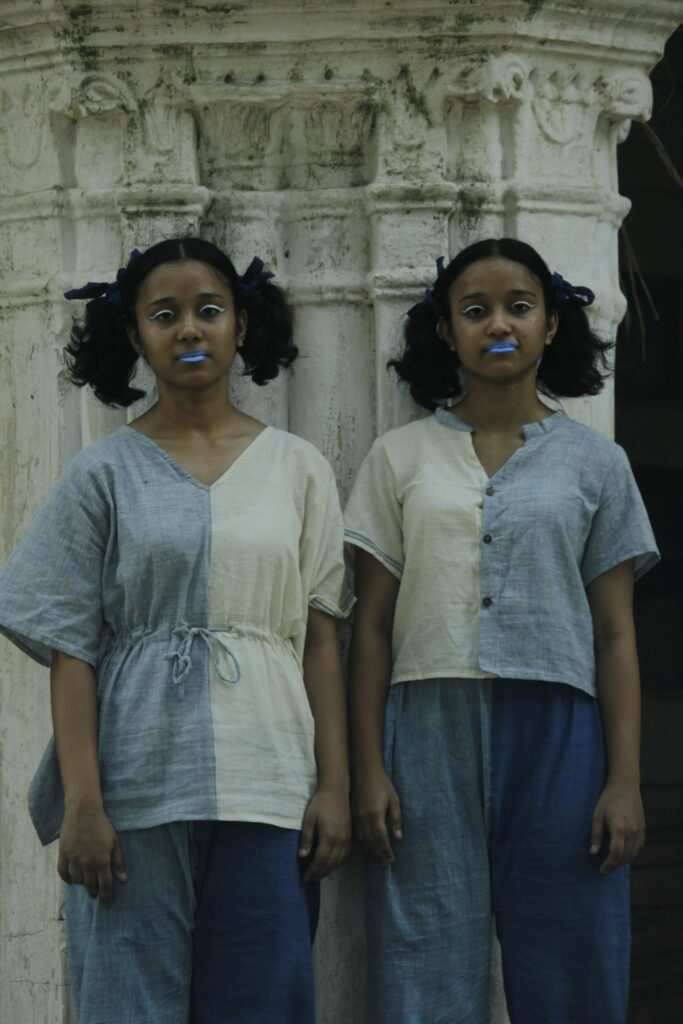
In conjunction is the fast fashion industry, which thrives on underpaid workers and leaves a huge trail of ecological dump that can no longer be overlooked. However, there still exists a ray of hope. The rise of sustainable fashion has led to an active discourse around conscious clothing. For many, it is a lifestyle to empower homegrown products and not engage in overconsumption to help maintain an ecological balance. We learn more from Sumon and Sanyati, founders of Dorji Shantiniketan and Avipsha Thakur, founder of Bunavat, about how such labels make a difference.

Dorji Shantiniketan 

Why was it essential to open conversations about sustainable clothing

In India the consumption of fabric is high. We gift fabrics as part of our culture. The higher the production, the greater the waste chemical colours that are poured into our lands and rivers. Textiles also use a lot of water for production. It is important now more than ever to talk about how clothes shopping is directly affecting the environment.
Do you see sustainable fashion having a scope for growth in India?

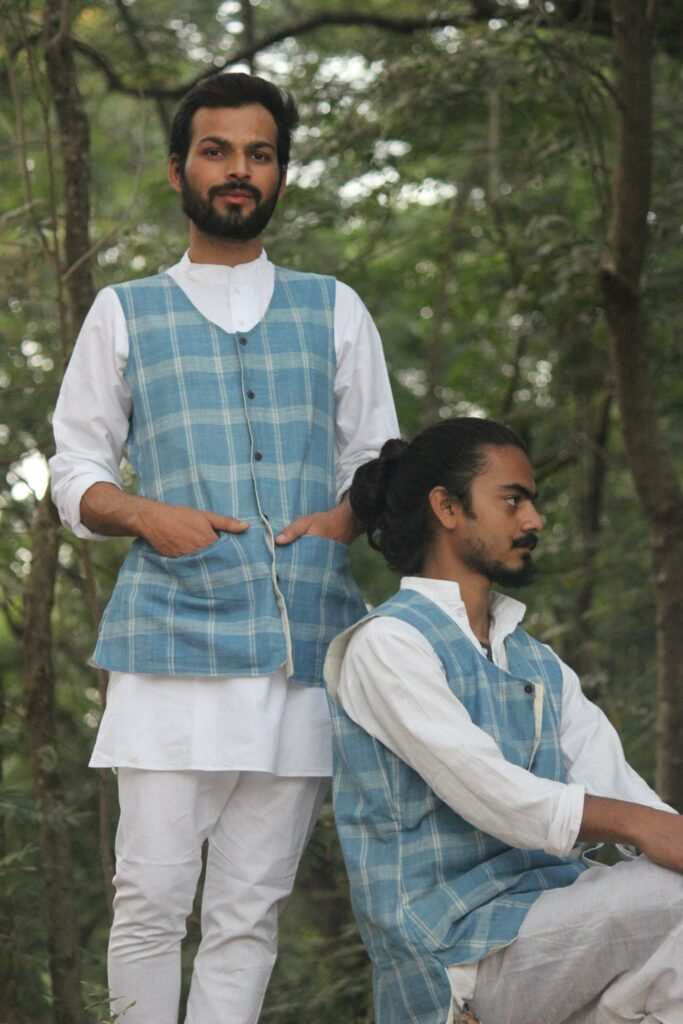
Most of our customers buy our stuff not only because of their trendy looks and prettiness but also because of our stand for the environment. Often, we show them our process; some environmental influencers share our stories not because we pay them, but because they support our cause, and this process makes us friends too. So yes, it’s growing big in India.

What are the ways to increase the reach of remote artisans and weavers both financially and creatively?

There was a gap between the maker and the consumer in the classical system, where people buy from sellers, not makers. In today’s world, it’s not very difficult to show your artists to people. It makes the process very transparent and encourages the artists as well as opens new avenues for them. At Dorji Shantiniketan, we don’t hide our artists. They are independent and work with clients apart from us. We find this practice as boosting confidence and trust and it doesn’t affect our business graph. 

What are your favourite pattern(s) to work with?

We are from Bengal, and we are mostly exploring our traditional patterns and philosophy. Tagore introduced Batik in Bengal which he saw in the Indonesian subcontinent. There is also “jamdani”. India had a very rich tradition of weaving and Bengal has many patterns to offer. We also delve into Southeast Asian and Japanese designs for inspiration – there are a lot of similarities in culture and textile. Our patterns range from Bengal right to the far East!
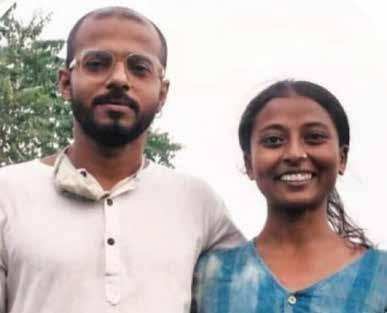
Founders: Sumon and Sanyati

Where: Shantinektan. West Bengal

Aims: Gender Equality, Organic Work, Exquisite Designs

Highlights: Natural Dyeing Studio and Upcycling initiative @dorjiupcycle

IG: @dorji.shantiniketan

Website: https://dorjishantiniketan.business.site/
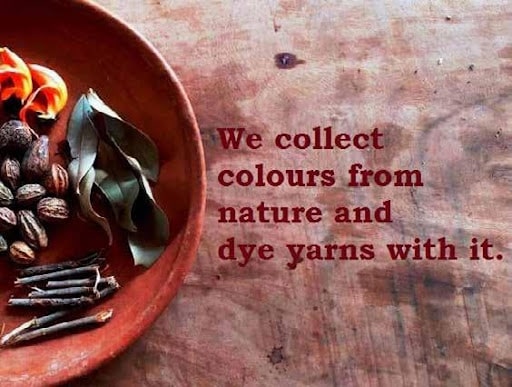
Bunavat

Do the consumers interested in sustainable clothing fully understand the nuances of something so intricately curated? 

The aspects of sustainability from farm to produce are still not fully understood by most. Sometimes even the difference between handwoven and handcrafted is not clear. This is true for both consumers and sellers. There is a lot of misinformation online. However, owing to the rise of the Fashion Revolution many are now trying to ask the right questions to brands and want more information to make mindful purchases. Recycling and upcycling are also gaining fast attention. While there is still a long way to go, the journey has surely begun for many.
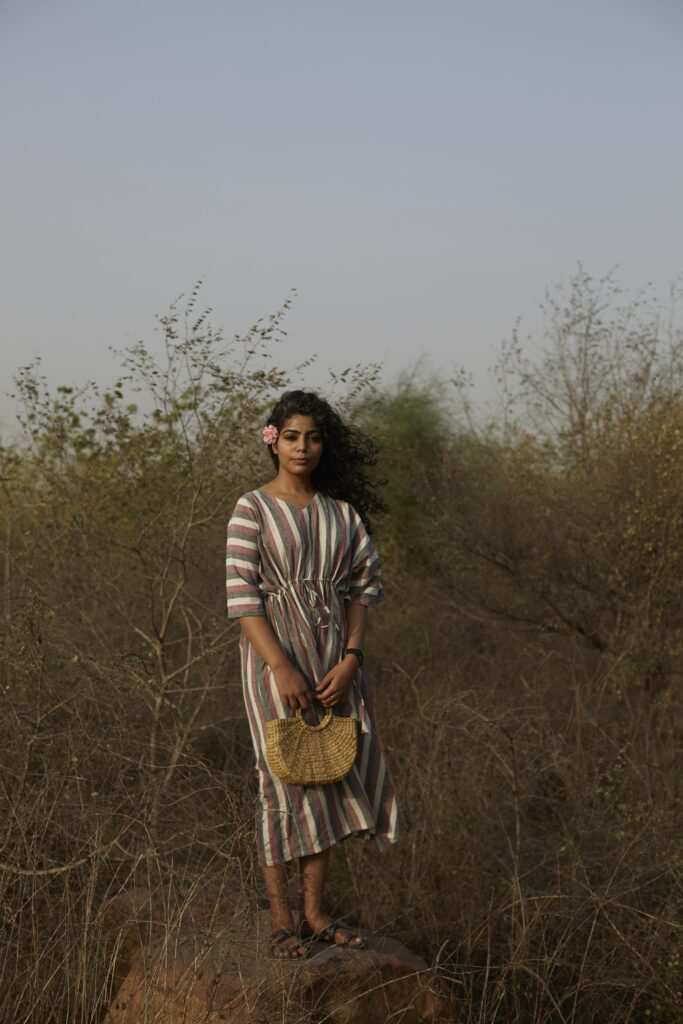
Bunavat

Remote weavers often don’t have enough financial resources. How do organizations like Bunavat empower them?

At Bunavat our efforts have always been on telling the story of the weaver and the community that makes the products so that customers can connect better and take more pride in handmade clothing. The supply chain in the case of most handwoven/handcrafted products is extremely long – in between the weavers/artisans and the end consumers there are master weavers, wholesalers, distributors, retailers and sometimes even resellers. The amount that usually reaches the individual weaver/artisan is thus often meagre. Many organizations today are cutting out the middlemen and directly bridging the gap between the weaver/artisan and consumer, including Bunavat. We have a travelogue on our website, called ‘Kathik’ that gives a peek into our weaving communities. We also try to get our weavers/artisans on live sessions where they share their journeys. 

What are the methods that you have incorporated to increase their reach both financially and creatively?
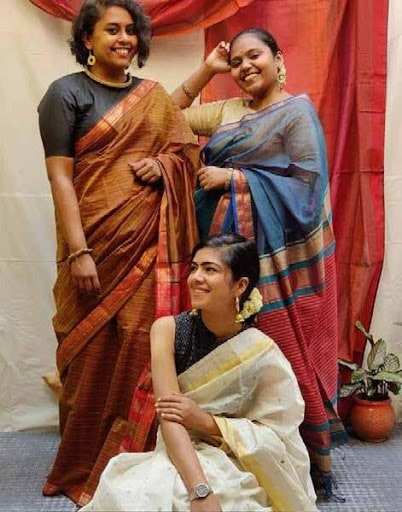
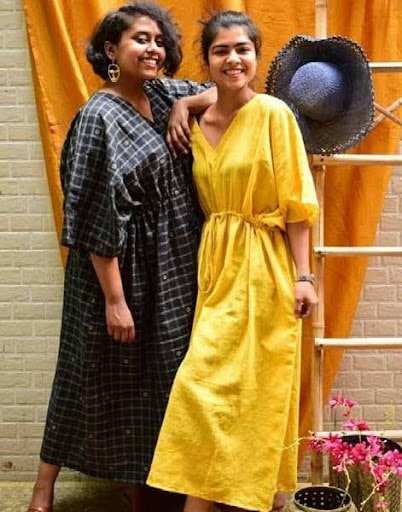
The pandemic has resulted in cancelled orders and stalled exhibitions, with weavers and artisans now having loads of unsold inventory and no access to the market. With markets (both B2C and B2B) moving online, weavers and artisans must have a digital presence to reach retailers online who can procure their products. At Bunavat, we conducted a digital skilling and photography training program with young weavers of Maheshwar in February 2020 and realised the success of the program during the pandemic when these weavers continued to sell their products successfully online. In April 2021 we deployed another program with the same set of weavers through online mediums helping them with the next steps like creating lookbooks, creative posters, international shipments, etc. and this has helped them increase sales by at least 15%. Further, for elderly weavers in Maheshwar, we have conducted programs on colour inspiration and motivation to help them excel in their work. We are committed to our communities and their holistic development is at the core of our work. We hope to replicate this across our other communities soon.

What are some of your favourite patterns or weaves?
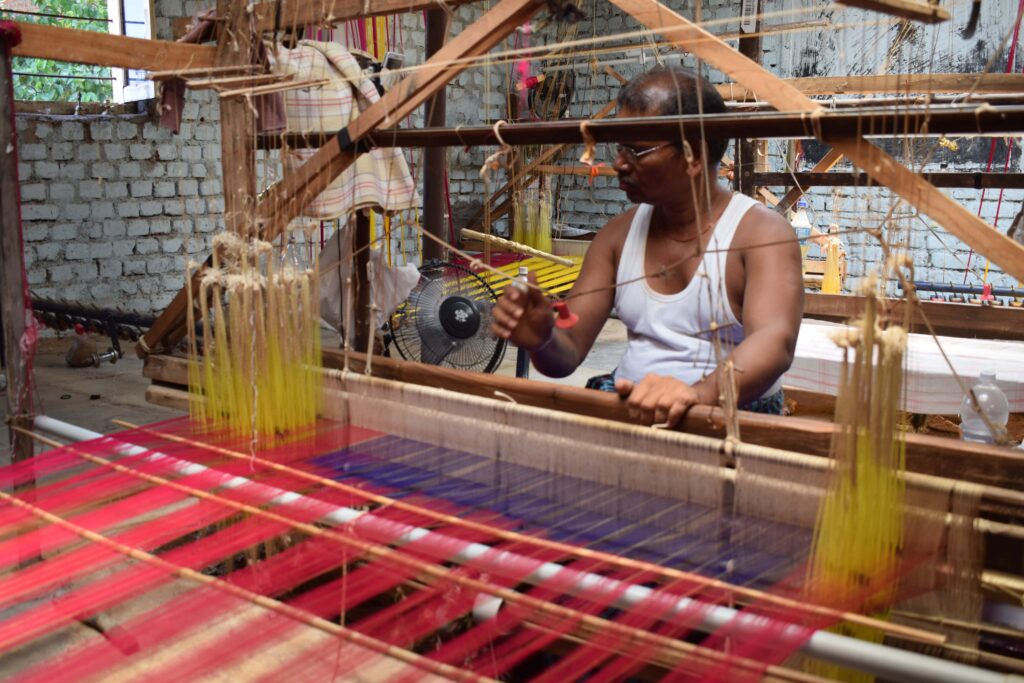
As a team, we started our journey with the Ajrakh block print cluster in 2018 and hence Ajrakh remains a forever favourite craft form for us. Ajrakh has a shared cultural heritage owing to its presence in Kutch, Gujarat and Sindh, Pakistan and is a testimony to the fact that art transcends all boundaries and unites us across geographies.

Founder: Avinash Thakur

Where: Haryana

Aims: Digital Education Programmes for Weavers/Artisans, Traditional Weave Revival

Highlight: Kathik, the weaver focused travel blog

IG: @bunavat.weaves

Website: https://bunavat.com/

Leave a comment

Your email address will not be published. Required fields are marked *

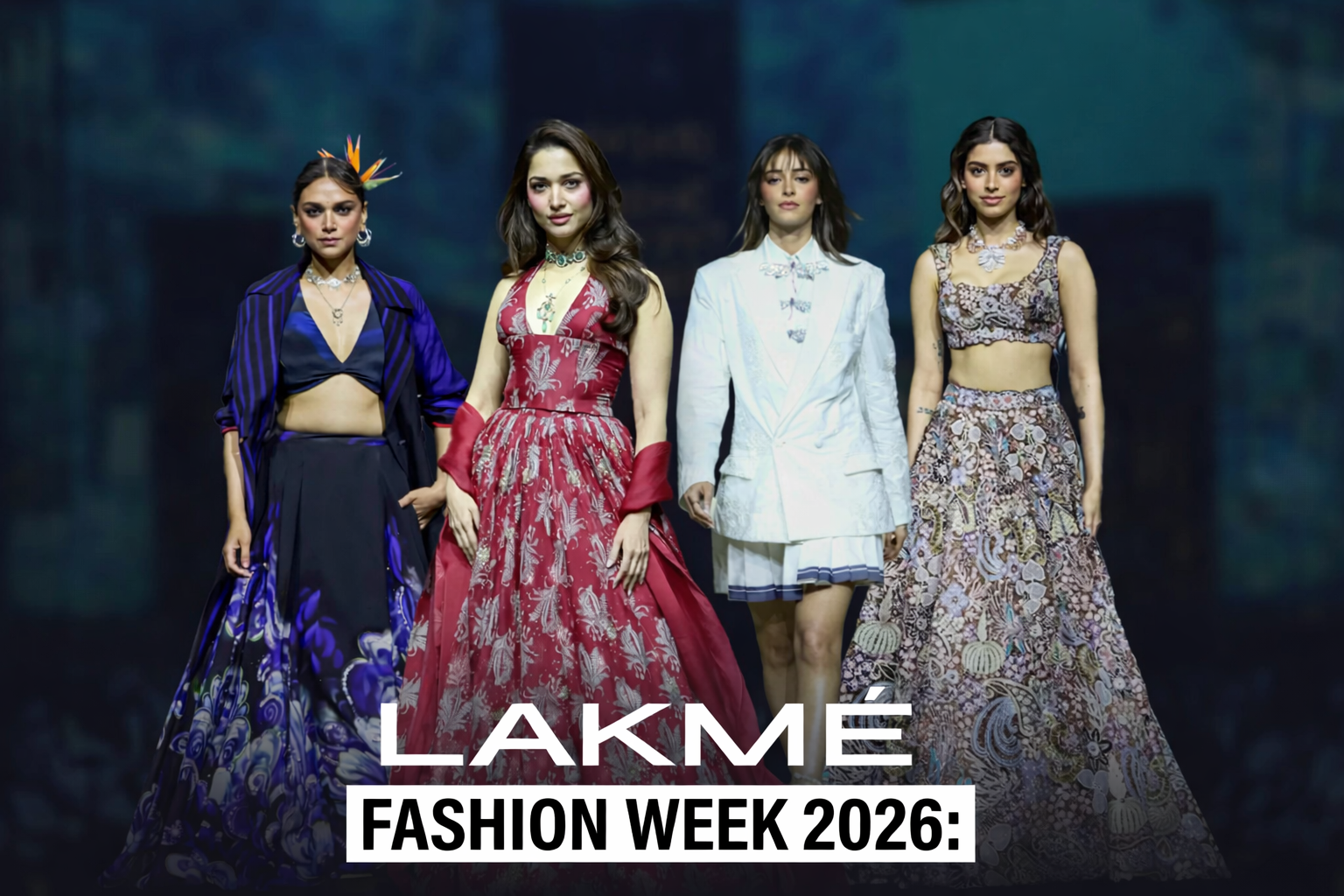
Lakmé Fashion Week 2026: Designers Shaping the Future of Indian Fashion

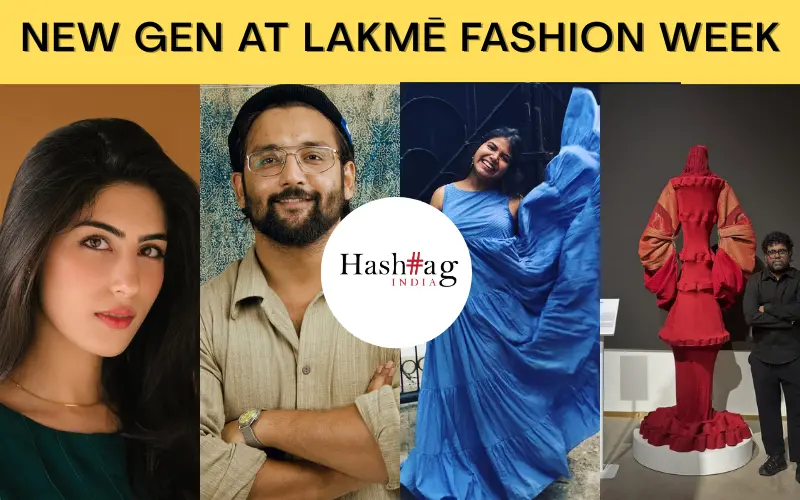
At Lakmé Fashion Week March 2026, Indian fashion moved beyond spectacle into a more process-driven, thoughtful era. This season wasn’t just about trends; it was about how clothes are made, who makes them, and why they matter. From artisanal revival to futuristic textiles, designers showcased a powerful blend of sustainability and innovation. Hashtag magazine gives you the key highlights Péro by Aneeth Arora: Out of Office Background: Known for “international clothing with an Indian heart,” Aneeth Arora focuses on artisanal, handmade textiles. Collection Spotlight: The runway was transformed into a theatrical office space complete with desks and telephones. The collection used a strict palette of blue and white to reimagine rigid workwear as playful, comfortable attire. USP: Sartorial theatre that addressed the modern work-life balance through hand-embroidered, “carefree” garments. Manish Malhotra: Luxury Prêt & Accessories Debut Background: India’s premier bridal couturier, Malhotra, is famous for his cinematic glamour and association with Bollywood. Collection Spotlight: This show marked his first dedicated luxury prêt (ready-to-wear) line and the launch of MM Accessories. The collection focused on “Quiet Luxury”, multi-wear separates and travel-ready couture. USP: Lifestyle Branding. A pivot from heavy bridal couture to a versatile, modern wardrobe that maintains his signature “timeless glamour”. AFEW by Rahul Mishra: White Gold Background: Mishra is a global pioneer in sustainable luxury and was the first Indian to win the International Woolmark Prize. Collection Spotlight: In partnership with SUPIMA, this collection explored the ecology of cotton. Motifs included dragonflies, marigolds, and insects, all hand-embroidered on fine cotton and Chanderi weaves. USP: “Cotton into Couture.” Repositioning humble cotton as a high-luxury fibre through artisanal density and a quieter, more restrained aesthetic. Amit Aggarwal: Orizon Background: A master of structured, architectural fashion who uses recycled materials and signature metallic polymer strips. Collection Spotlight: In collaboration with Indriya Jewels,

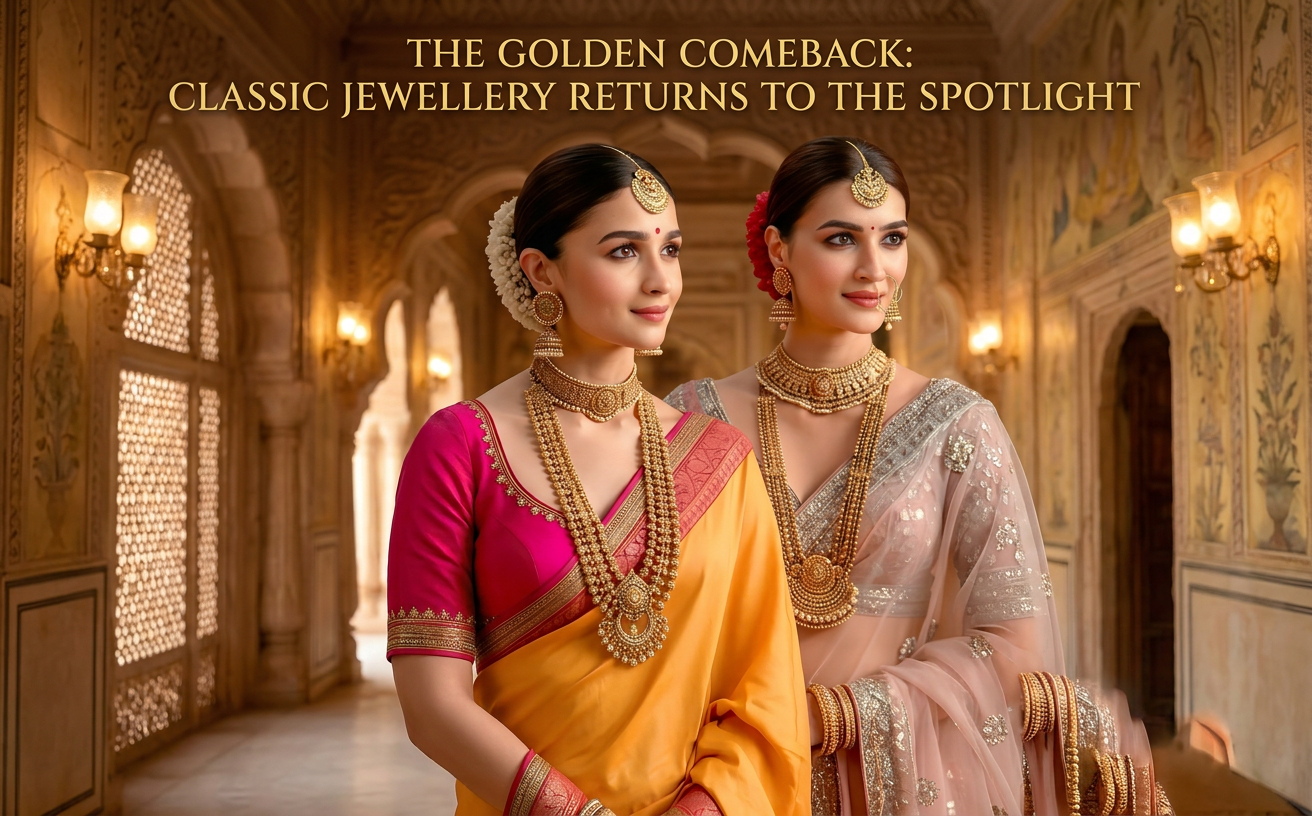
Gold Is Back: Why Classic Jewellery Is Regaining Its Shine in 2026

For the past decade, the jewellery industry has seen waves of change. Artificial jewellery, minimalist designs, and the rapid rise of lab-grown diamonds have transformed consumer preferences, especially among younger buyers looking for affordable luxury. Yet in 2026, gold jewellery is quietly reclaiming its throne. From weddings to everyday fashion and even men’s accessories, gold is experiencing a powerful resurgence not just as ornamentation, but as a trusted investment. The Investment Factor One of the biggest reasons for gold jewellery’s comeback is simple: stability. While diamonds and lab-grown alternatives have gained popularity due to affordability, they often lack strong resale value. Gold, on the other hand, remains a tangible asset that can be sold, exchanged, or passed down generations. This financial security has made gold increasingly attractive to modern buyers who want jewellery that doubles as an investment. During recent wedding seasons in India, jewellers have reported rising demand for plain gold jewellery in 22K, 18K and 14K forms as buyers prioritise long-term value over heavily diamond-studded pieces. With gold prices steadily climbing in recent years, many consumers now view gold jewellery as a form of wearable wealth something that carries emotional significance while also retaining monetary value. Celebrity Influence and the Wedding Effect Celebrity culture continues to play a major role in shaping jewellery trends. A recent example is the high-profile wedding of actors Rashmika Mandanna and Vijay Deverakonda, which sparked widespread discussion about heritage jewellery. The couple’s wedding looks prominently featured elaborate handcrafted gold pieces inspired by South Indian temple architecture. Rashmika reportedly wore eleven pieces of traditional gold jewellery, while Vijay made headlines for embracing bold groom jewellery including layered necklaces, ear studs, cuffs and other royal-inspired ornaments. Their wedding highlighted something significant: gold jewellery is no longer just for brides. Men Are Embracing Jewellery Again Historically,

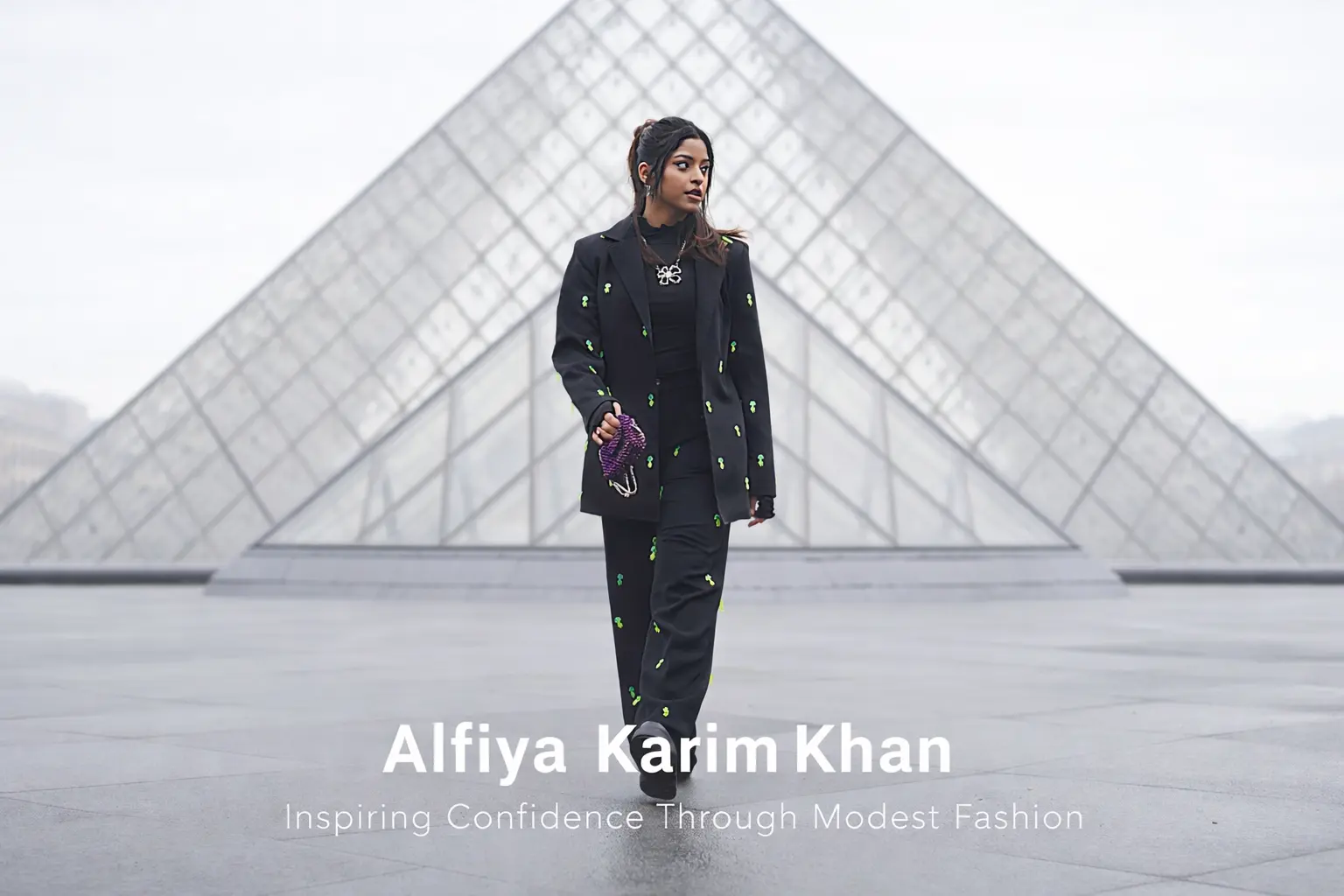
Alfiya Karim Khan: Mumbai YouTuber Redefining Modest Fashion and Digital Influence

Alfiya Karim Khan grew up in Mumbai in a family where education was non-negotiable, and ambition was encouraged, so long as it followed a conventional path. Academically strong, medicine seemed almost predetermined for her. But internally, she felt drawn elsewhere. “Deep down, I always knew my life did not belong in a hospital corridor,” she says. “It belonged in the creative industry.” Choosing to pursue a Bachelor’s degree in Mass Media instead of medicine was met with hesitation and doubt. Coming from a background where most women were financially dependent, she had rarely seen female entrepreneurship firsthand. That absence became fuel. “Every time someone questioned whether content creation was serious, it pushed me to take it more seriously,” she reflects. What began quietly in her bedroom evolved into financial independence and professional stability. Today, her work represents more than a career; it symbolises “choosing conviction over comfort.” A Cultural Voice in Modest Fashion Alfiya identifies as a digital entrepreneur and a cultural voice within the modest fashion space. A decade ago, the online fashion landscape felt misaligned with her personal style. “I did not want to shape-shift just to belong,” she explains. “I decided to build around my authenticity instead of bending away from it.” Over the past 10 years, she has collaborated with global and legacy brands, been recognised among Forbes’ Top 100 Digital Stars, and represented modest fashion at Paris Couture Week. For her, these milestones represent more than visibility; they signal representation. “This is not just fashion content,” she says. “It is about showing that ambition and values can coexist.” Reinterpreting, Not Rejecting At its core, her work reinterprets mainstream fashion through a modest lens. Rather than rejecting trends, she modifies them, layering strategically and reshaping silhouettes. “Fashion does not have to be abandoned to align with

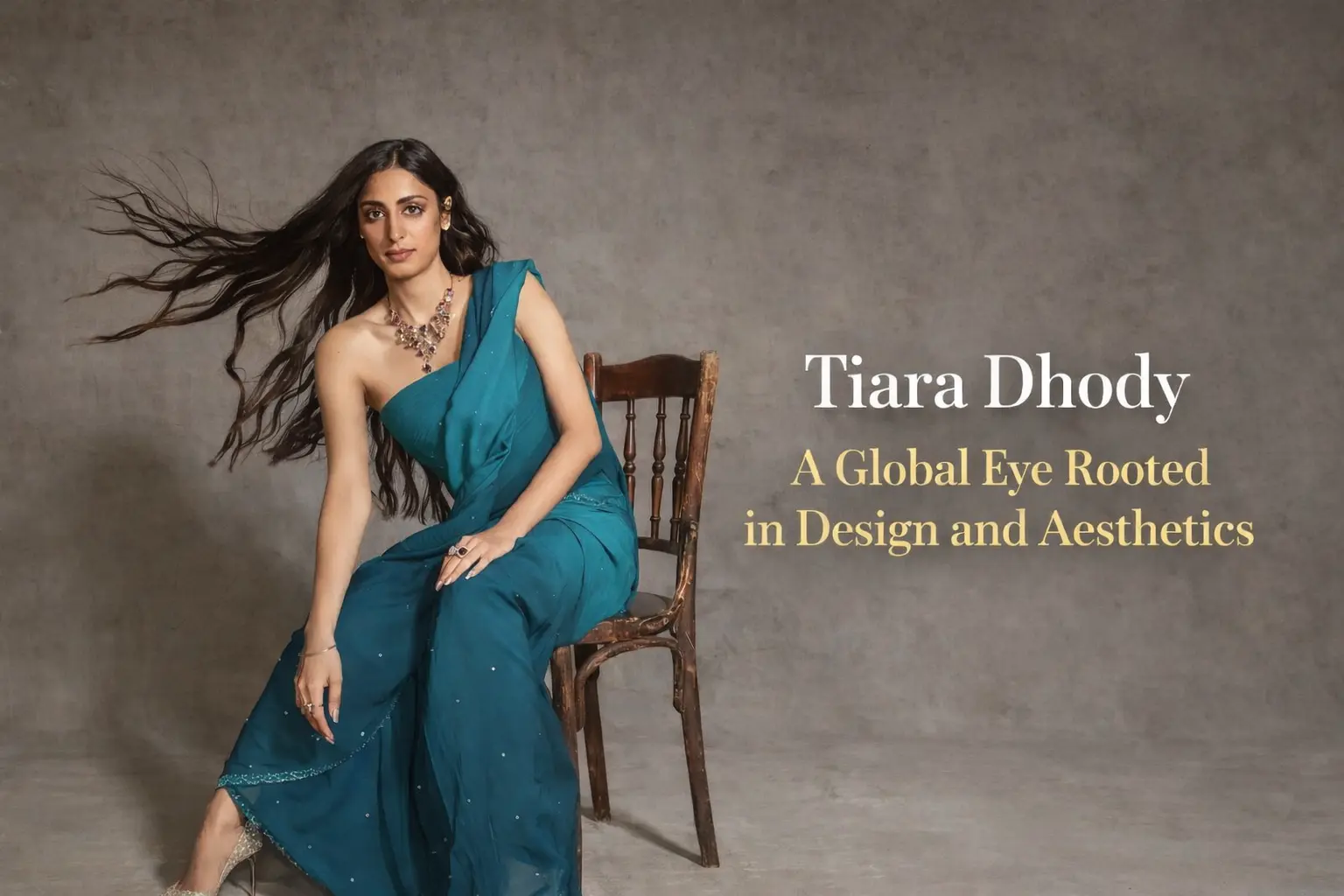
Tiara Dhody: Inspired by Heritage, Driven by Design

Tiara Dhody is a Mumbai-based founder and the creative force behind Treasures by Tiara. She studied at Cathedral and John Connon School, the United World College in Singapore, and later at Sarah Lawrence College, experiences that shaped her global perspective and independent thinking. Growing up in a household where fashion and design were part of everyday conversation, she was naturally immersed in aesthetics. Influenced by her mother, Queenie Dhody, and Raja Dhody, she absorbed a visual language early on. Yet, she credits her broader worldview to quieter influences. “Beyond formal education, I feel most shaped by the books I read, the films I watch, the places I travel to, and the people I surround myself with,” she says. “All of it quietly filters into my work.” Jewellery as Intimate Expression Tiara has chosen the path of self-expression, and for her, jewellery is one of the most intimate mediums through which to access it. “It’s something you can wear, feel, and move with; it becomes part of your story,” she explains. She also describes a more intangible element: “There’s something cosmic about it, the way certain pieces seem to find you at the right time.” In India, jewellery carries memory. It is passed down, inherited, gifted, layered with sentiment and history. That cultural weight deeply informs her design philosophy. “What sets my work apart is the balance between meaning and wearability,” she notes. The pieces are expressive without being loud, crafted to feel personal and enduring rather than purely ornamental. Many associate her designs with strong feminine energy, detailed craftsmanship, and jewellery that feels lived-in rather than showcased. Designed to Be Lived In Treasures by Tiara approaches jewellery differently. It is not created to be stored away for weddings or rare occasions; it is designed to be worn daily. “The idea

You May Also Like

Connect with us