
POWER TALK: INSPIRING WOMEN IN BIZ |Niketa Sharma

Niketa Sharma is a passionate entrepreneur who began her career as the CEO of her family’s hospitality firm. Coming from a financial background, she pursued her interest in the business field. Initially, the now-restaurateur aspired to be a journalist because she wanted to “make things and give meaning to them.” She then moved on to hotel management school, where she learned how to manage and administer a hotel. Niketa shares with Bidisha Barik how her business path since early age was driven by her desire to establish a magnificent hotel.

When she was 22 years old, the restaurateur decided to enter the business world. Niketa received a lot of support from her parents as an investor in her idea to start her own business in the early years. She expresses appreciation while highlighting the success of the parent company’s four eateries. As the family’s eldest daughter, she was granted unlimited financial independence as well as power and responsibility in pursuing her own profession. “My parents always taught me that it’s up to me to make it or break it,” Niketa explains.
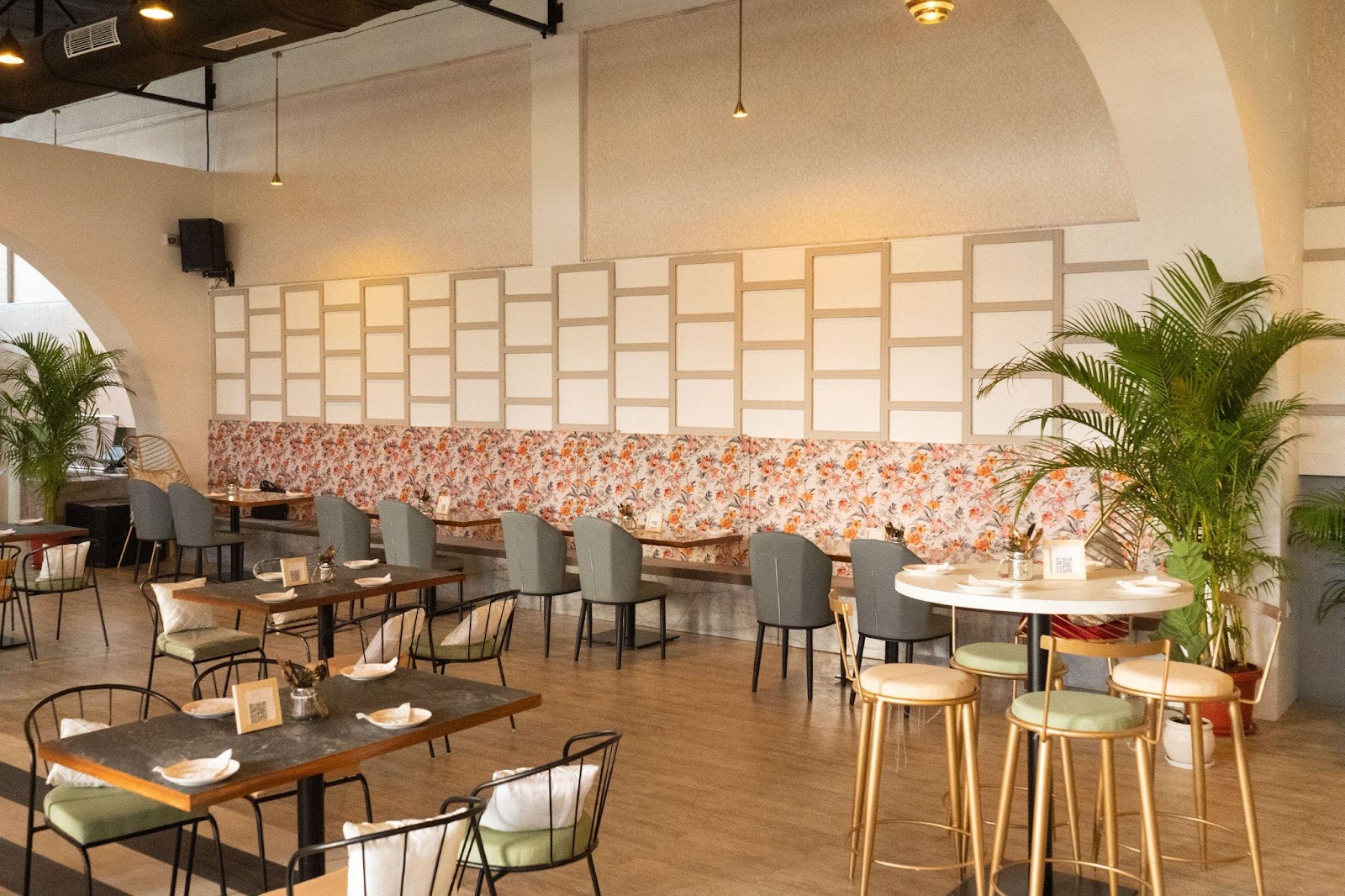
Niketa developed the Magna Cafe and Bar venture in 2022, which was delayed due to the COVID pandemic, but was successfully launched in the evolving and growing city right on time. She shares the importance of demand and supply, “If I had opened Magna seven years ago, people would have received a cultural shock. As a result, I feel this is a good moment to shatter preconceptions,” she says. Her goal of opening a stylish and stunning boutique hotel and a chain of restaurants keeps her going. She has shown a strong desire to work in a position that allows her to meet new people and connect with fresh ideas on a daily basis.

Her belief is that maintaining a strong connection with coworkers and respecting others’ opinions while working in a team is the key to dealing with bad days, and while she encourages her employees to be vocal about their ideas, she also ensures that she brings the emotional connection to the workplace. “

If my chef believes a certain ingredient brings out a greater flavour, I have to follow his opinion and look into the alternative, because he is trained in it,” Niketa adds.

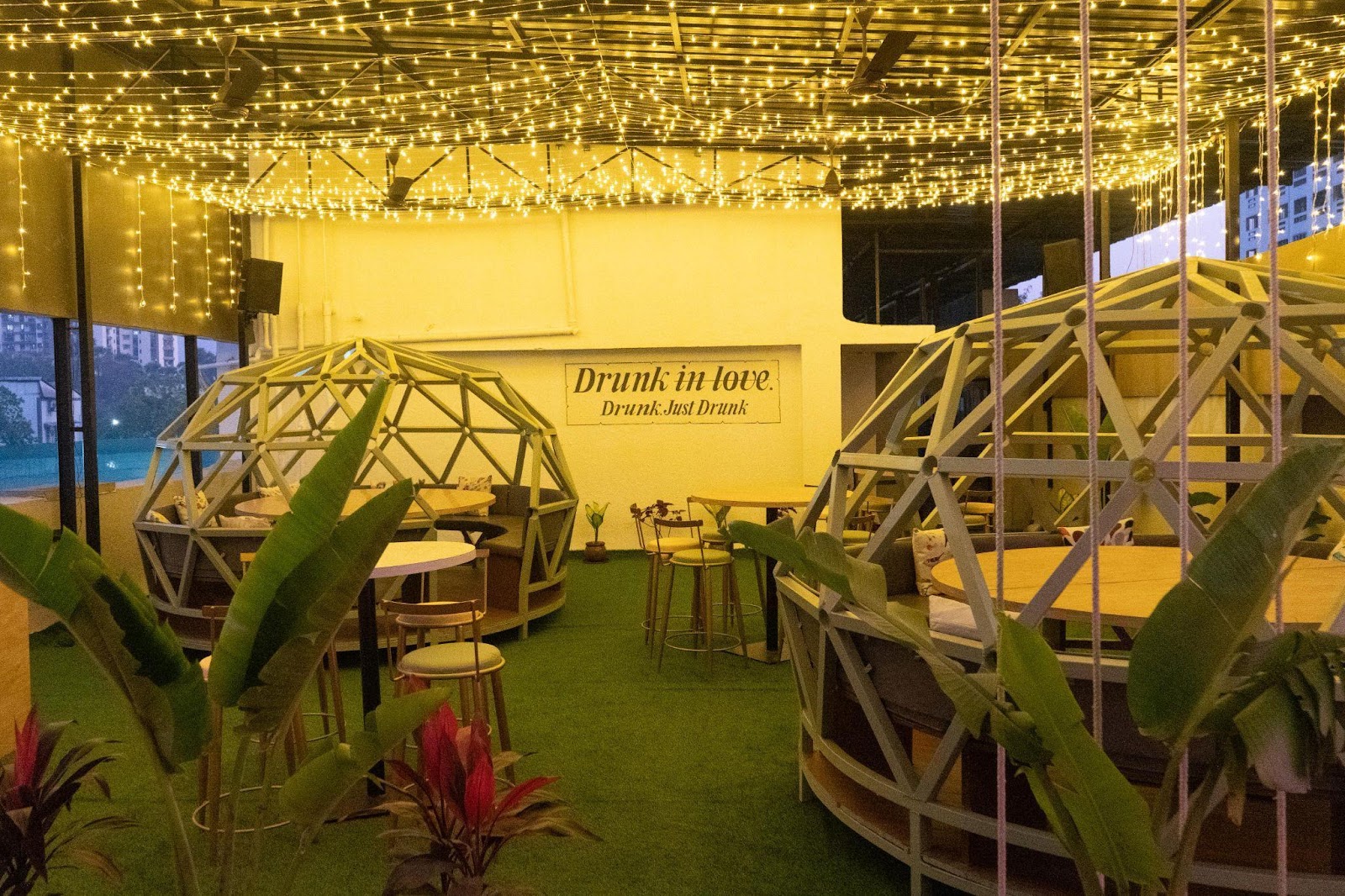
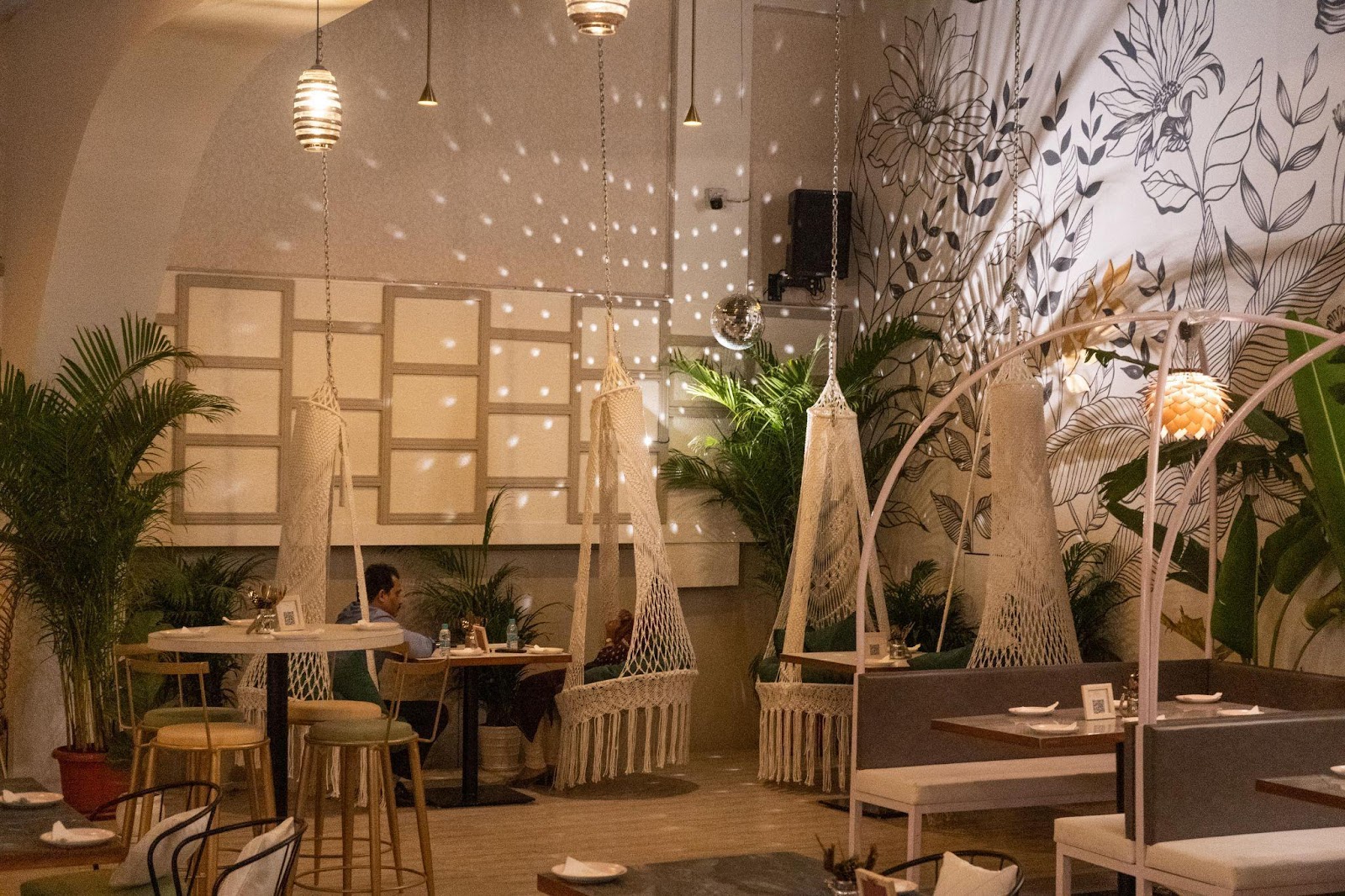
The creator discussed how meticulous she is about décor and ambience, stating that everyone wants to be in a location that gives off a positive feeling while enjoying wonderful food. Magna Cafe and Bar will be expanded by Niketa in Mumbai and Pune, as well as other locations where the cuisine is loved and new venues are discovered. Good cuisine that is also affordable is a difficult nut to crack, and her goal is to reach out to all of those establishments to create a premium atmosphere.

Quick Take:

Believe in your concept and do it. Don’t let the fear take over!
One quote to live by?

One piece of advice to women entrepreneurs struggling in the male-dominant industry?

I live by this quote by Ratan Tata, “First take the decision and then make it right.”
Leave a comment

Your email address will not be published. Required fields are marked *

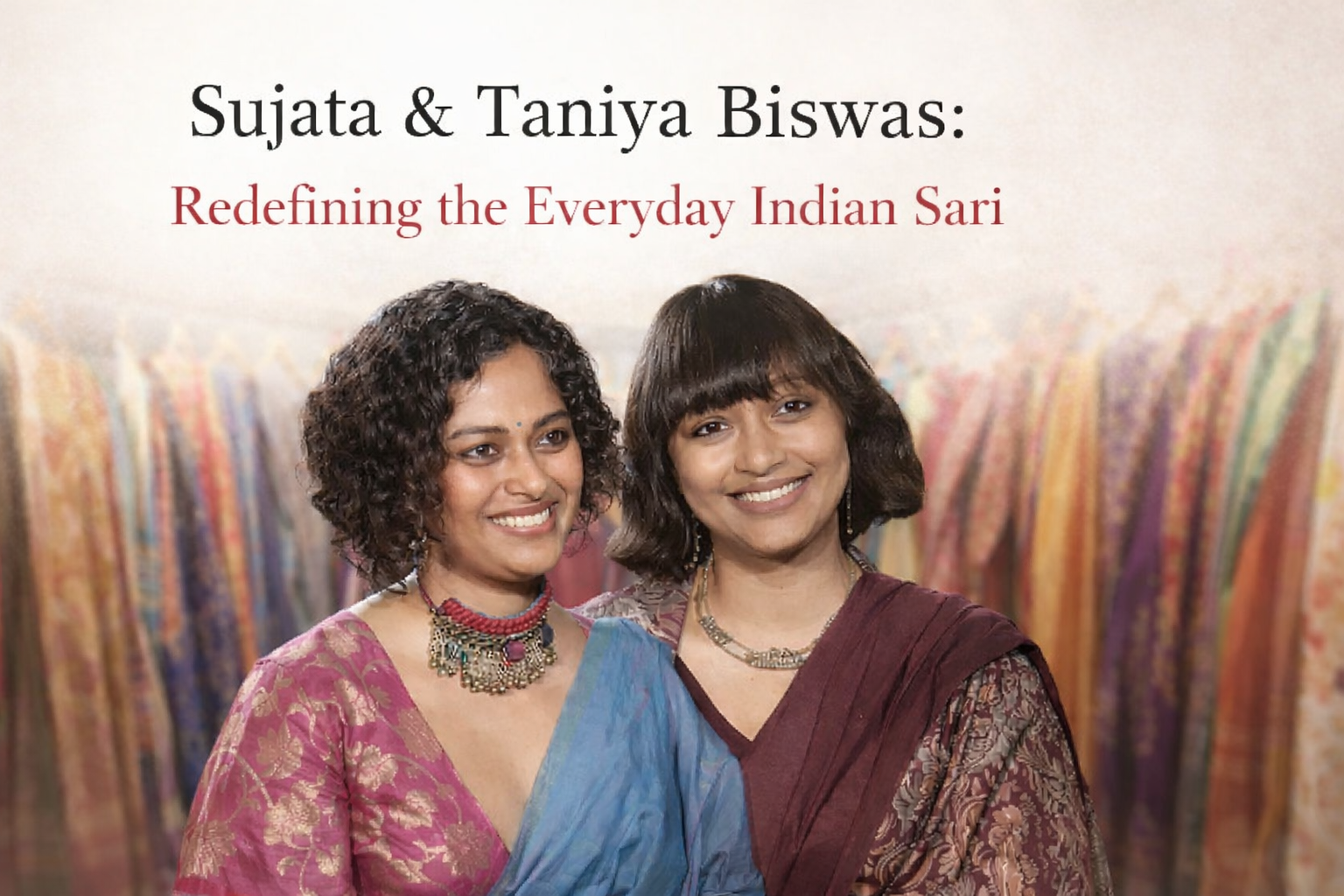
Sujata & Taniya Biswas: Redefining the Everyday Indian Sari

A homegrown Indian fashion brand redefining the sari as an everyday, breathable, and expressive garment. Combining Sujata’s structured, systems-driven approach with Taniya’s creative vision, they work closely with artisan communities across India to create clothing rooted in comfort, honesty, and human connection. Their journey blends entrepreneurship with sisterhood, building a brand that values trust, craftsmanship, and mindful fashion. Taniya, you left a stable career with the Tata group and IBM after IIM Lucknow, and Sujata, you pivoted from IIFT Delhi and corporate life. What was the exact moment when both of you realised that the corporate path wasn’t enough and that Suta was waiting to happen? Taniya: It wasn’t a rebellion. It was recognition. I had done everything “right”: engineering, IIM, a Consulting role that looked perfect on paper. But somewhere between late-night presentations and early morning meetings, I realised I was living life from the neck up. My hands missed fabric. My heart missed stories. I kept returning mentally to memories of wet saris drying on clotheslines, of Maa moving through the house with her pallu tucked in. One evening, over chai, I said it aloud to Sujata: I don’t think this is it. The moment I spoke it, Suta was born. Sujata: For me, it came as the discomfort of becoming someone I wasn’t. The corporate world had given me growth, but it had also hardened me. I remember thinking: If success requires me to lose softness, I don’t want it. My PhD was an attempt to find meaning, but even that felt academic, distant. What we really wanted was to build something with our hands, our intuition, and our values. Suta didn’t arrive as planned. It arrived as relief. From travelling through remote weaving clusters in Meghalaya, Varanasi, MP, and Odisha to working directly with artisan families,

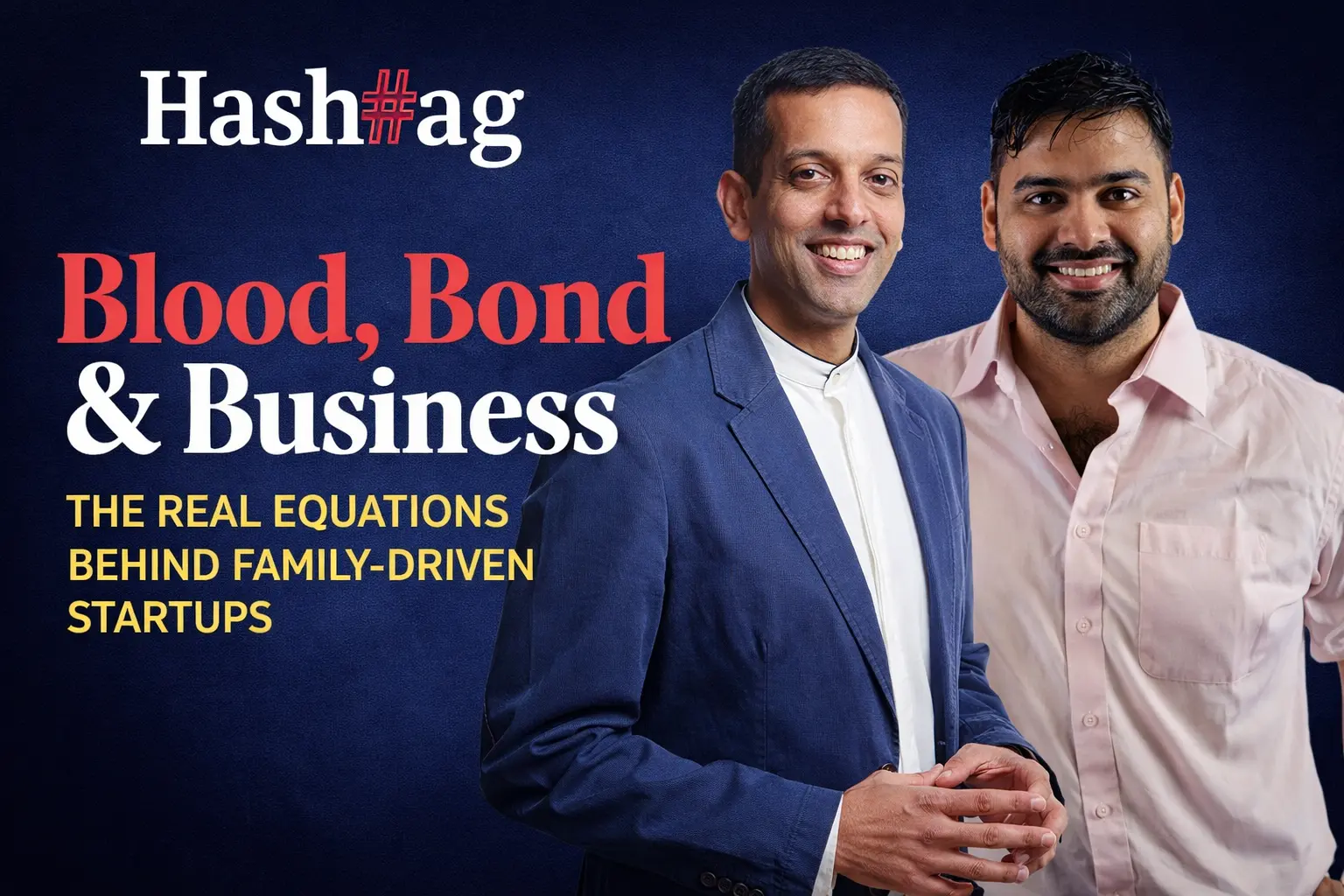
Blood, Bond & Business: The Real Equations behind Family-Driven Startups

February is the month of relationships, and at Hashtag, we’re celebrating the bonds that shape not just personal lives, but powerful businesses. This special edition explores entrepreneurs who share more than a company; they share roots. From siblings turning into strategic partnerships to spouses balancing love and leadership, we dive into the real dynamics behind relationship-driven ventures. This month, discover how strong relationships can become a business’s most valuable asset. Vijayaraghavan Venugopal is the Co-founder at Fast&Up and has been instrumental in building the brand in India. He has over 26 years of business experience in diverse fields, which includes pharmaceuticals, Healthcare and Information Technology. He has been responsible for business development in multiple geographies, including the Triad (USA, Europe and Japan). He has worked with TekFriday, Dr Reddy’s, Lupin and Emcure in different senior management roles. He was Lupin’s country head in China for three years between 2007 and 2010. He is a mechanical engineer and an MBA in International Business from the Indian Institute of Foreign Trade, Delhi. He is one of the fastest amateur marathoners in the country, having run in sub-3-hour marathons 12 times in major cities throughout the world, including Paris, Boston, Chicago, Berlin, London, Tokyo and New York, all while leading the growth of India’s fastest-growing nutrition brand, Fast&Up. He also has the distinction of being the first Indian to do all six world marathon majors under 3 hours, and is the winner of the recently held Tata Mumbai Marathon in his age group. Varun Khanna is the CEO of Fullife Healthcare Pvt. Ltd., a company he started at the age of 23 with the sole purpose to focus on healthy living. A relentless passion to do something innovative for the millennial need for an active life drove him to launch India’s first effervescent

Top 6 Startups Of 2025: The New Architects of India’s Future

From sustainable farming to EV mobility, discover six Indian startups shaping a cleaner, smarter, and more connected tomorrow. Every generation finds its dreamers, the ones who don’t just talk about change, but build it. In 2025, India’s startup scene feels less like a rush for valuation and more like a movement with a purpose. These founders aren’t chasing unicorn tags; they are chasing impact. They are solving what truly matters. This is the India that rolls up its sleeves and says ‘Let’s make it ourselves.’ Dhanush Kumar writes about the Top 6 Startups of 2025, born from soil, steel, and software, each shaping tomorrow with courage and conscience. 1.Handpickd: Fresh from Farm to Table When freshness becomes a luxury, Handpickd restores it to the everyday plate. This Bengaluru-based agritech startup has built a direct bridge between local farmers and urban consumers ensuring every tomato, mango, and millet travels fewer miles and earns farmers more smiles. Using tech-driven logistics and transparent sourcing, Handpickd doesn’t just deliver produce; it delivers trust. In an era of overprocessed everything, this is simplicity redefined clean food, honest pricing, and a system where farmers finally get their due.It’s not a brand. It’s a return to our roots literally. 2.Bambrew: Building a Plastic-free Future At a time when the planet gasps under plastic, Bambrew breathes innovation. The Bengaluru-based packaging pioneer crafts biodegradable, compostable alternatives made from bamboo, sugarcane, and cornstarch materials that love the earth back. Their vision isn’t just green, it’s bold. Bambrew’s eco-packaging now wraps products for top FMCG and e-commerce giants, proving sustainability doesn’t have to look boring or cost a fortune.This isn’t rebellion it’s reinvention. A reminder that small choices, multiplied by millions, can rewrite the story of our planet. 3.Eeki Foods: Vertical Farming for a Greener Tomorrow In the deserts of Rajasthan, where

The Fresh Faces of India’s Clean Eating Revolution

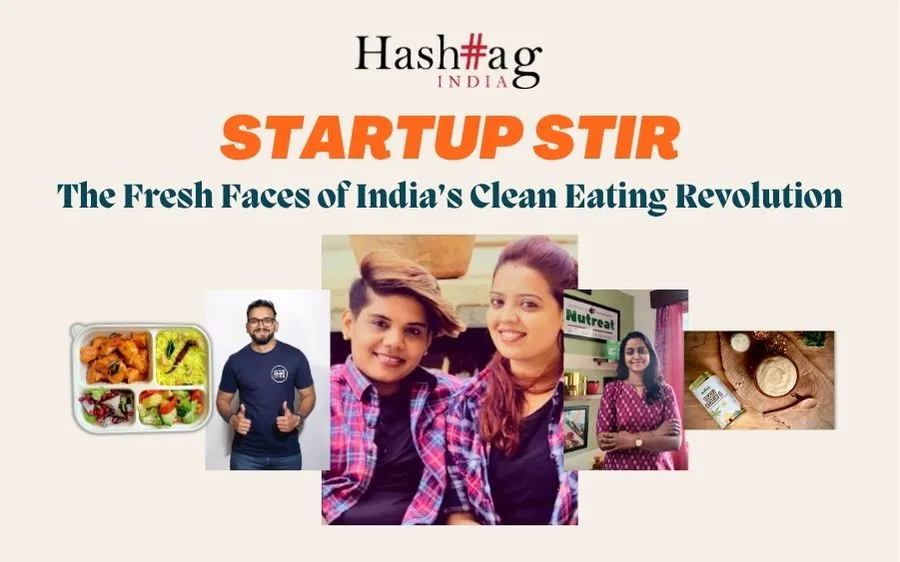
Eat Right Clean eating is no longer a fad but a necessity in the times we live in, and several startups are making sure this is a choice that is easy to make. As people take charge of their health and well-being, eating clean is one of the most important priorities. BINDU GOPAL RAO features seven startups that are helping make this change, one plate at a time. Nutreat Hyderabad-based Nutreat was born in 2014 out of a personal need to provide clean, wholesome food for the founder’s son. Over time, this evolved into a deeper mission: to craft handmade, customised nutrition rooted in ancestral Indian food wisdom. “We handcraft each product using our signature four-step process sprouting, sun-drying, slow roasting, and stone grinding and tailor it to the individual’s age, health condition, and dietary needs. Nutreat promotes clean eating not just by avoiding processed ingredients, but by ensuring every spoonful is mindfully made and consciously consumed. In 2023, when our business was at its peak with franchise opportunities, foreign collaborations, and incubation offers we made a bold decision. We stepped back. We refused to bulk produce because it was creating false demand, pressuring both our team and consumers to buy more than they needed. That turning point reaffirmed our belief in nooverbuying and consciousconsumerism. Clean eating, we believe, must also be mindful free of waste, hype, or excess. While the wellness industry grows, we often see food wastage even in the name of healthy eating. Our model of customisation ensures that we make only what’s needed, drastically reducing waste while offering personalised nutrition,” says Jyothi Sri Pappu, Founder & CEO, Nutreat. Moving forward, their goal is to scale impact, not volume, by nurturing conscious consumers, supporting women artisans, and creating a food culture rooted in purpose. The Kenko Life

You May Also Like

Connect with us