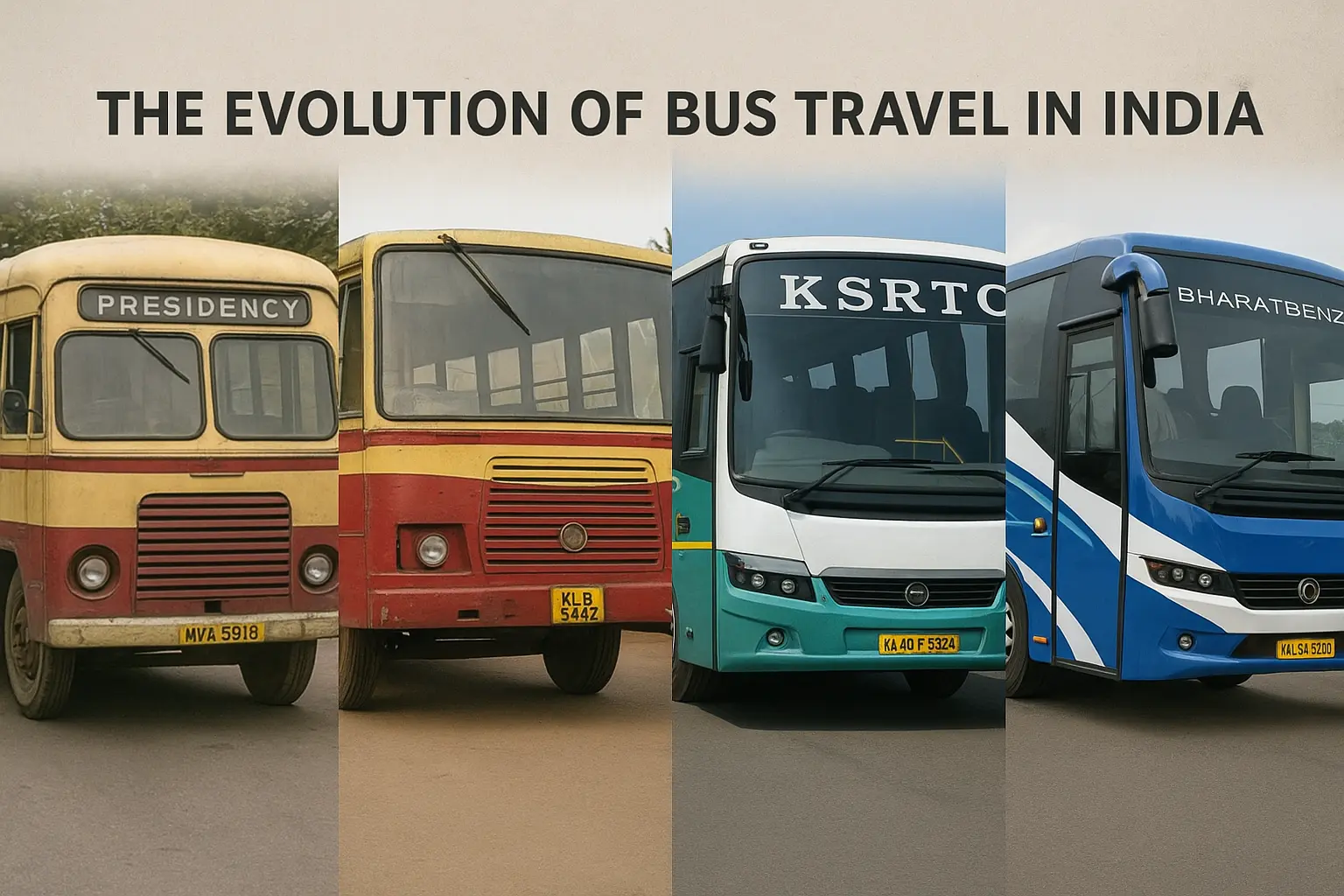
The Evolution of Bus Travel in India

The Evolution of Bus Travel in India

Bus travel in India has transformed dramatically over the years. What once served primarily as a feeder mode of transport or even a basic long-distance travel option has evolved into a sophisticated industry. The rise of powerful luxury buses, coupled with the rapid development of highways, has fueled this remarkable growth. In Part 1 of this series, I explored the early changes in bus designs and operations. The last two decades, in particular, have been a thrilling period for bus travel in India.

Memories of Long-Distance Buses Before 2000

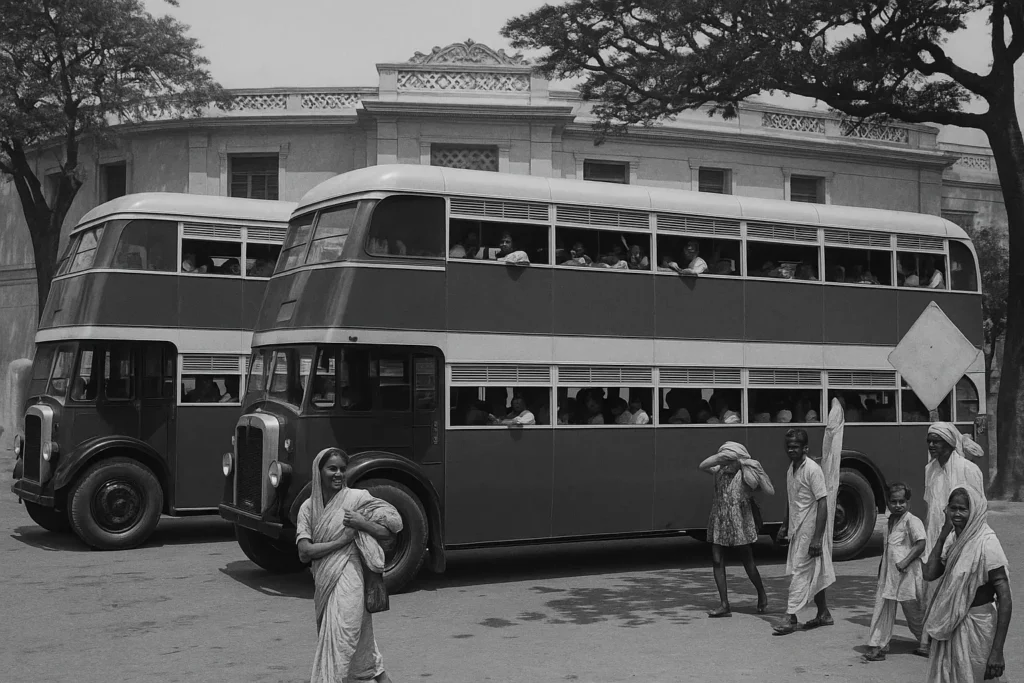
Before diving into recent changes, let me take you back to the late 1990s. During 1999-2000, my daily observations included long-distance buses running between Mumbai and Mangalore operators like CPC and Ballal. These buses took about 24 hours to cover the route, often carrying bulky cargo on their roofs. At that time, the Mumbai-Pune Expressway was not yet operational, so these buses took routes passing through the outskirts of Mumbai, where I lived. These were all seater buses, and I often wondered how passengers could endure such long journeys sitting upright.
Memories of Long-Distance Buses Before 2000
The First Sleeper Bus Encounter – Early 2000s

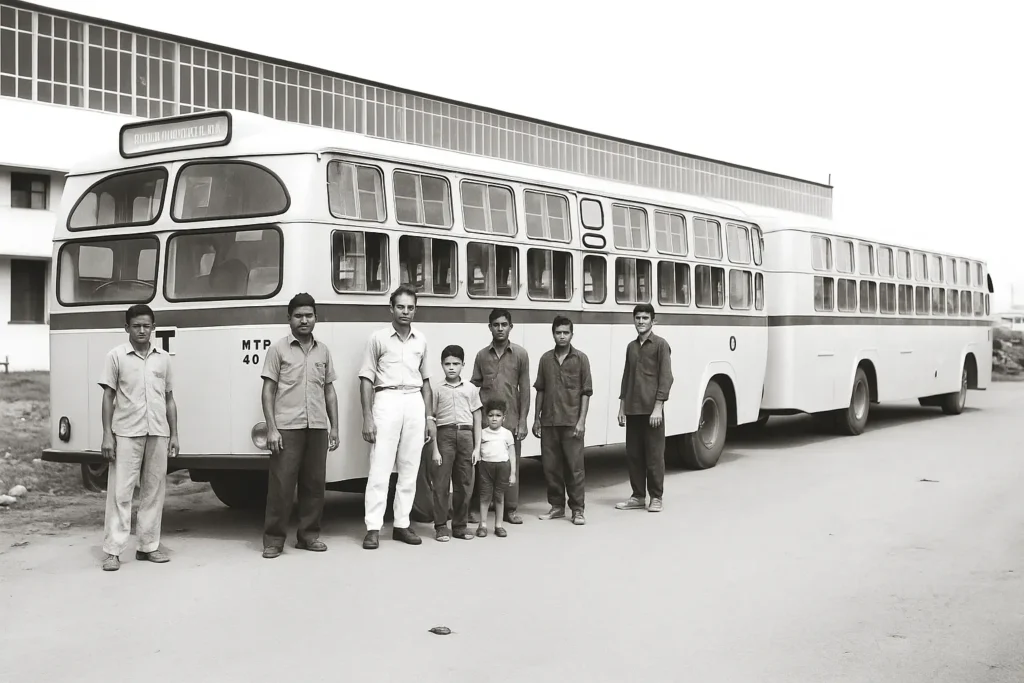
In the early 2000s, during a school outing to Mumbai’s Fort area, I spotted a unique bus operated by Paulo Holiday Makers from Goa. This bus had its entrance in the middle and featured a hybrid seating arrangement: one half with seats and the other half with sleeping berths aligned along the direction of travel, similar to Indian Railways’ side berths. Though I couldn’t enter the bus, it left a strong impression as the first sleeper bus I had ever seen. The body was built by a Goan manufacturer called Damodar.
The First Sleeper Bus Encounter – Early 2000s
The Rise of Sleeper Buses (Mid-2000s to 2010)

Fast forward a few years to around 2005, sleeper buses became more common, moving beyond Paulo’s initial design to fully-fledged sleeper coaches. Around 2007-08, I spotted an AC sleeper bus from NWKRTC named “Corona.” This rear-engine bus resembled a Volvo and marked the arrival of a new commercial vehicle manufacturer in India that imported technology from MAN Neoplan coaches.

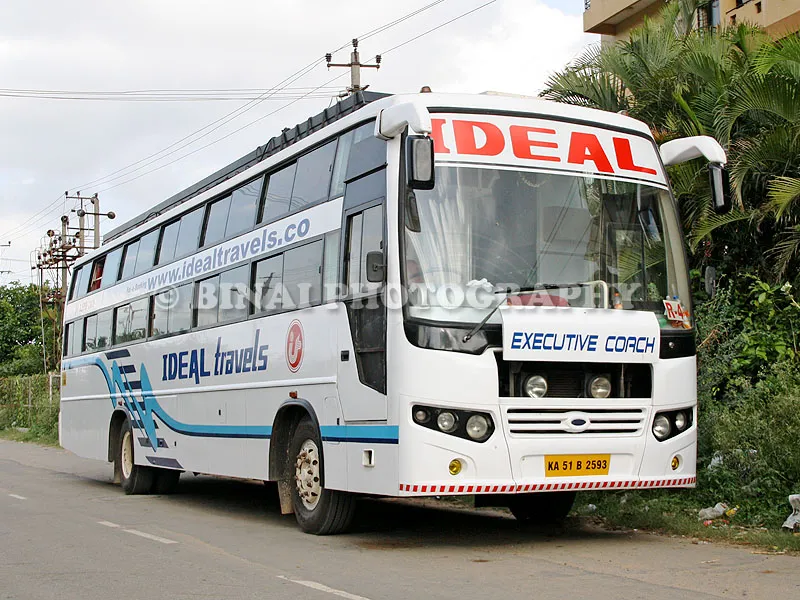
By 2008, after moving to Bengaluru, I saw sleeper buses dominating many routes, with some even outnumbering seater buses. Operators offered seater-cum-sleeper options, especially on routes to Kerala. KSRTC launched a Corona sleeper service to Ernakulam in 2010, which, despite initial setbacks, was eventually upgraded to a Volvo sleeper model and continues today.
Sleeper Buses Gain Market Share

Sleeper buses gained popularity quickly due to their cost-effectiveness: an operator could buy two sleeper coaches for the price of one multi-axle seater coach. Lower taxes and operating expenses added to their appeal, along with the ability to charge higher fares. Manufacturers like Mercedes-Benz (through Sutlej) and Isuzu also introduced sleeper models, while Volvo began offering unfinished shells designed for sleeper conversions around 2012-13.

KPN, a prominent operator, was among the first in South India to adopt these converted sleeper coaches. Following them, many others like Kallada, Sharma, and VRL jumped on the bandwagon, converting older seater buses to sleepers, often charging a premium.

Sleeper Coach Configurations Around 2015

Around 2015, two main types of sleeper layouts dominated the market:

  • Longitudinal berth arrangement (2×1 configuration) — one berth on the left and two on the right side, common across most states.
  • Railway-style cabin arrangement — four-berth cabins, mostly seen in Andhra Pradesh.

However, regulations varied widely by state. Tamil Nadu and Kerala, for example, did not allow sleeper bus registrations, while Karnataka only issued Contract Carriage permits. This led operators to register buses in more permissive states like Odisha or even northeastern states such as Nagaland and Arunachal Pradesh, where regulations were lax. These distant registrations sometimes compromised vehicle inspections and fitness certifications.
Standardization and Regulatory Changes

In 2015, the Automobile Research Association of India (ARAI) introduced a standardized bus body code (AIS:052) for seater coaches, followed by an amended code for sleeper coaches (AIS:119) in 2016. These regulations came into effect from 2018 onward, prompting more states to allow sleeper bus registrations. However, permit issues and concerns over lax regulations in northeastern states led to crackdowns.

The revised code phased out the cabin-style sleeper layout in favor of longitudinal berth arrangements, improving safety and uniformity.
Registration Havens and Market Dynamics

Puducherry remains a key hub for sleeper bus registrations in South India, thanks to its All India Tourist Omni Bus Permit, allowing wide access across states. However, recent tax hikes and stricter office requirements have increased the cost of registration there.

Kerala permits sleeper bus registrations, while Tamil Nadu does not allow private operators to register them, only the state transport corporation. Consequently, many private operators register buses in Puducherry or Kerala to serve Tamil Nadu routes. Interestingly, Tamil Nadu passengers show a strong preference for sleeper buses, which dominate the market there.
Evolution of Sleeper Bus Amenities

Early sleeper buses provided minimal comfort—non-AC coaches offered just a bedspread, while AC coaches added a blanket. Berths lacked proper backrests, allowing only short sitting periods with limited support. Online portals like redBus are now allowing people to book bus ticket seamlessly. 

Modern sleeper buses have come a long way. They now feature:

  • Ergonomic backrests enable passengers to sit comfortably with their legs stretched.
  • Charging points at every berth.
  • Blankets, pillows, snack boxes, and bottled water.
  • Individual LED screens and on-demand entertainment in premium coaches

Riding Experience and Driving Adaptations

Sleeping in a bus differs from a train due to road unpredictability potholes, curves, and abrupt braking are common. Most sleeper berths are aligned longitudinally, which I find more comfortable than transverse berths.

Initially, drivers treated sleepers like sleeper buses, leading to rough rides. With market maturity, drivers adapted to slower, smoother driving styles to enhance passenger comfort. Passengers have accepted slightly longer travel times for this improved ride quality.
Chassis and Coach Builders

Early sleeper buses mostly ran on front-engine chassis from Ashok Leyland and Tata Motors. Eicher later entered with a 12-meter chassis, and Daimler (through BharatBenz) introduced front-engine sleeper chassis with air suspension on both axles.

BharatBenz partnered with MG Bus & Coach in Belgaum to offer fully built sleeper coaches, which are available especially in Kerala.

Multi-Axle Sleeper Coaches and Premium Offerings

Multi-axle coaches became popular in the sleeper market as well. Volvo pioneered custom-built sleeper coaches via Prakash Bus Corporation, starting with the B9R platform and later moving to the B11R under the “Celeste” brand.

Although early Celeste models faced issues like heavy body and poor finish, the product has matured into a premium luxury coach, commanding a price premium willingly paid by passengers.

MG Bus & Coach also offers multi-axle sleepers on Volvo (“Starz”) and Mercedes-Benz (“Dreamz”) platforms, with up to 42 premium berths.
Coach Builders and Personal Preferences

Among front-engine sleeper coaches, Prakash and Veera dominate South India, while Damodar leads on the western coast. Damodar is widely regarded for producing the most comfortable and widest berths with excellent ride quality, followed by Veera and Prakash.

For multi-axle sleepers, Volvo remains the top choice unless Scania or Mercedes-Benz launch updated models.
Final Thoughts

The bus travel landscape in India has evolved from basic seater buses to sophisticated, luxury sleeper coaches offering unprecedented comfort and convenience. Regulatory challenges persist, but the market continues to innovate and grow, catering to passengers’ increasing expectations.


Leave a comment

Your email address will not be published. Required fields are marked *

Mehzabin Shaikh (Maahie) | Mumbai

Meet Maahie, a Mumbai-based travel content creator who transformed her passion for storytelling into a full-time career. After stepping away from engineering to follow her creative calling, she has spent the last 3.5 years building a journey around travel, exploration, and meaningful connections. For Maahie, travel goes beyond popular destinations; it is about discovering lesser-known places, meeting people, understanding their lifestyles, and experiencing cultures through local food, conversations, and everyday moments. Supported by her best friend and travel partner Rahul Yadav, Maahie continues to create stories that inspire people to step beyond their comfort zones and discover that every journey has a story worth sharing. 1. Bhadarwah, Jammu — A Hidden Paradise Beyond the Usual Kashmir Trail “When people think of snowfall and breathtaking Himalayan landscapes, Kashmir is often the first destination that comes to mind. But for me, Bhadarwah in Jammu is one of the most beautiful places I have ever experienced.” What makes Bhadarwah special is its untouched beauty. The snow-covered landscapes feel peaceful, personal, and far away from the crowds and commercialisation of popular hill stations. However, the real magic of Bhadarwah lies in its people. During my first visit, we stayed at a small homestay run by a family of three a husband, wife, and their young daughter. We instantly connected, and by the end of the trip, saying goodbye felt impossible. Over time, they became more than hosts; they became family. Today, visiting Bhadarwah has become an annual ritual. It is a place that reminds me that travel is not just about destinations; it is about the people and relationships you discover along the way. 2. Thailand — The Journey That Introduced Me to Freedom “Thailand will always hold a special place in my heart because it gave me a feeling I had never experienced

Kahanda Kanda: A Rain-Kissed Escape in Galle

Rain, mist and 17 villas that don’t look alike. Kahanda Kanda is a hidden gem above Koggala Lake in Galle, Sri Lanka. Spread across 14 acres of tea-fringed grounds, this intimate retreat is built around one simple idea: slowing down. Sinduri Vuppala spends a few unhurried days at the estate, discovering its distinctive design, fascinating history and the quiet luxury of doing very little. There’s a particular kind of luxury that has nothing to do with thread counts or infinity pools, and everything to do with being left alone in the best possible way. That’s the feeling that defines a stay at Kahanda Kanda, a boutique estate tucked into the hills above Koggala Lake in Galle, Sri Lanka. The journey there is part of the story. After a stint in the busier coastal town of Bentota, the drive inland feels like a decompression, roads turning greener and quieter, the pace of the island slowing with every mile. By the time the gates swing open onto a sweep of tea bushes, garlands, and a welcome glass of estate-grown lemongrass cordial, you’ve already left the “resort” mindset behind. We arrived off-season and were the only guests on the property. There’s something disorienting about having a place this beautiful entirely to yourself, mist over the tea plantation, no queue for breakfast, just birdsong somewhere in the canopy. When the rain came, it didn’t spoil anything; it turned the estate into something softer and more private. The Villas Kahanda Kanda comprises 17 stand-alone villas, and the property’s defining trick is that none of them looks alike. Rather than the interchangeable rooms you’d find at a larger resort, each villa here has its own layout, its own mix of antiques, and its own mood, a blend of European and Asian pieces alongside contemporary art, none

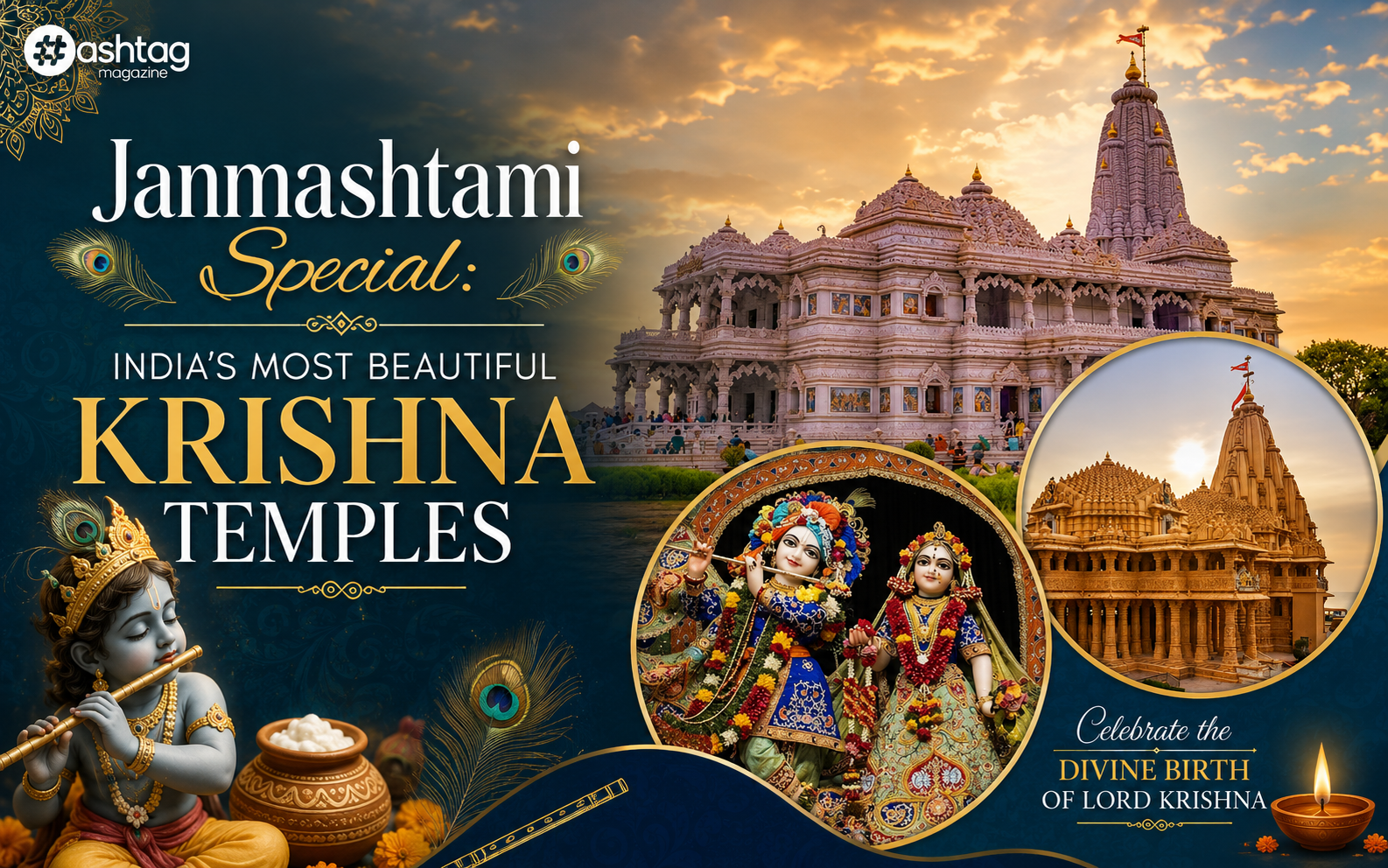
Janmashtami Special: India’s Most Beautiful Krishna Temples

Every year, as the monsoon clouds part and the fragrance of tulsi and jasmine fills temple courtyards across India, millions of devotees prepare to celebrate the birth of Lord Krishna, the playful cowherd, the divine statesman, the eternal beloved, Janmashtami is more than a festival, it is a nationwide outpouring of devotion, music, and midnight joy, marking the moment Krishna was born in a Mathura prison cell over 5,000 years ago. While Krishna’s story unfolds across the length and breadth of India, a handful of temples stand out not just for their spiritual significance, but for their sheer visual splendour. Marble carvings that seem to breathe, gold-plated domes that catch the sunrise, silver windows through which only a sliver of the deity is visible. This Janmashtami, Dhanush Kumar writes about eight of India’s most beautiful Krishna temples worth adding to your pilgrimage list. Banke Bihari Temple, Vrindavan: Tucked into the narrow lanes of Vrindavan, Banke Bihari is famous for its curtained deity; the eyes of Banke Bihari are considered so powerful that the curtain is drawn and redrawn constantly to prevent devotees from being overwhelmed. On Janmashtami, the temple performs its once-a-year Mangala Aarti at dawn, drawing enormous crowds who believe witnessing it wards off financial hardship. Prem Mandir, Vrindavan: Built entirely from Italian marble, Prem Mandir is arguably the most photogenic Krishna temple in India. Every surface is carved with scenes from Krishna’s life, and the temple’s evening fountain and light show transform the complex into a shimmering spectacle. During Janmashtami, the grounds glow with thousands of lamps, making it a favourite for both pilgrims and photographers. Dwarkadhish Temple, Dwarka, Gujarat: Perched on the banks of the Gomti River where it meets the Arabian Sea, this temple marks the site of Krishna’s legendary kingdom. Its soaring five-story spire, visible

Sanya Batra: From Corporate Career to Travel Storyteller

Sanya Batra is a Delhi-based travel content creator and storyteller who traded a decade-long corporate career for a life driven by exploration and creativity. With experience across marketing, sales, innovation, and entrepreneurship, Sanya brings a unique perspective to travel storytelling. Through her content, she goes beyond showcasing destinations, sharing experiences of personal growth, cultural discoveries, and the transformative impact of stepping outside one’s comfort zone. Her journey inspires others to embrace independence, pursue their passions, and create a life that feels truly fulfilling. 1. Thailand — A Destination for Every Kind of Traveller “Thailand holds a special place in my heart because it offers the perfect balance of adventure, relaxation, culture, and discovery.” From pristine beaches and scenic mountains to thrilling activities, vibrant nightlife, luxury experiences, and incredible local cuisine, Thailand has something for every traveller. As a solo female traveller, I also find Thailand to be one of the safest and most accessible destinations, making it an ideal choice for those looking to explore independently while experiencing a warm and welcoming culture. 2. Switzerland — A Real-Life Postcard “Switzerland feels like stepping into a dream. The snow-covered mountains, charming villages, crystal-clear lakes, and breathtaking train journeys make every moment feel magical.” What makes Switzerland truly special is its beauty in every season. Whether surrounded by winter landscapes or exploring its lush summer countryside, every corner offers a picture-perfect experience. It is a destination that captures the imagination and leaves you with memories that feel almost unreal. 3. Spiti Valley, India — A Journey of Transformation “Spiti Valley is unlike any other destination I have experienced. Raw, rugged, and untouched, it offers a sense of adventure and introspection that stays with you long after the journey ends.” From dramatic mountain landscapes and ancient monasteries to remote villages and endless star-filled