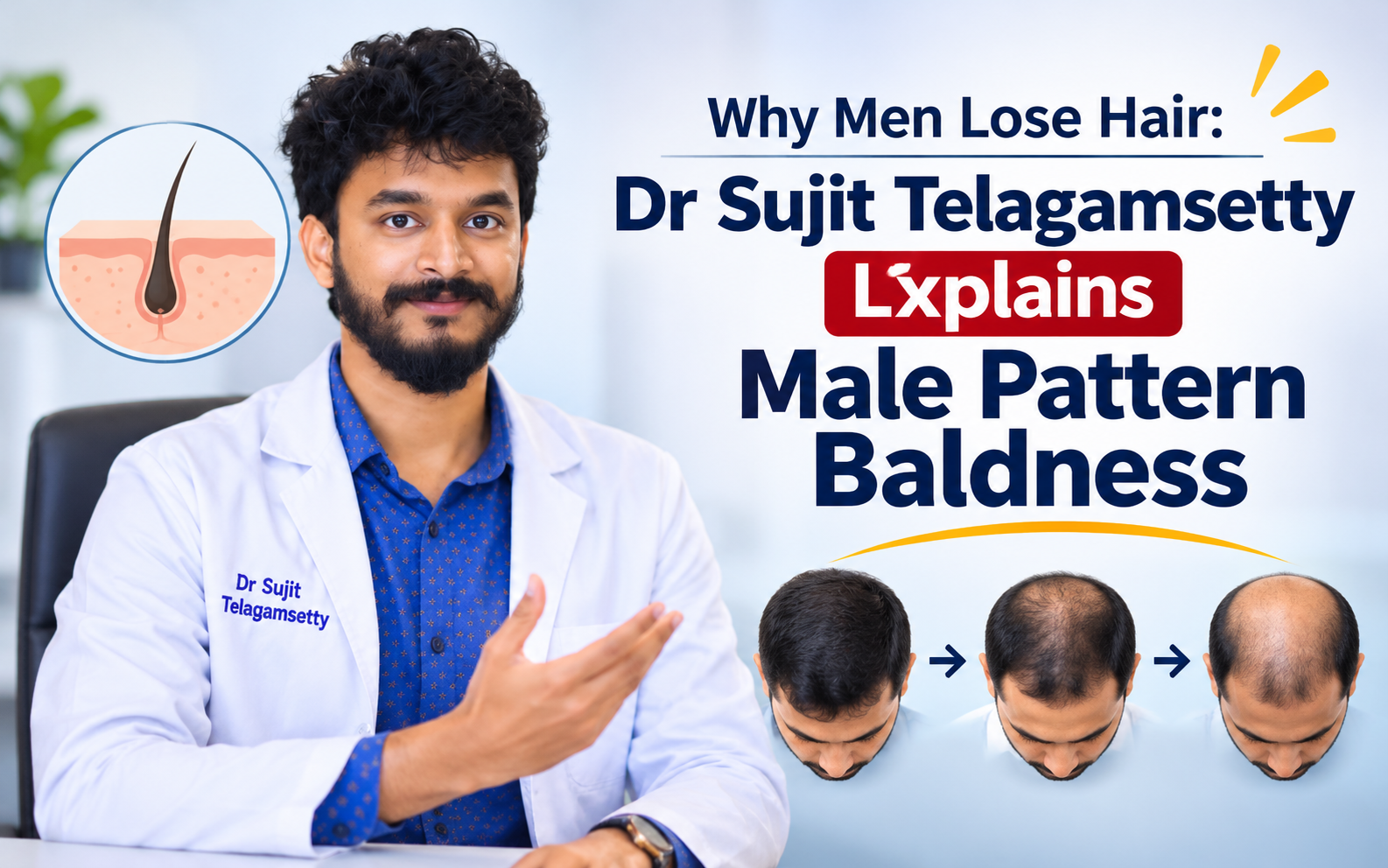
Why Men Lose Hair: Dr Sujit Telagamsetty Explains Male Pattern Baldness

Why Men Lose Hair: Dr Sujit Telagamsetty Explains Male Pattern Baldness

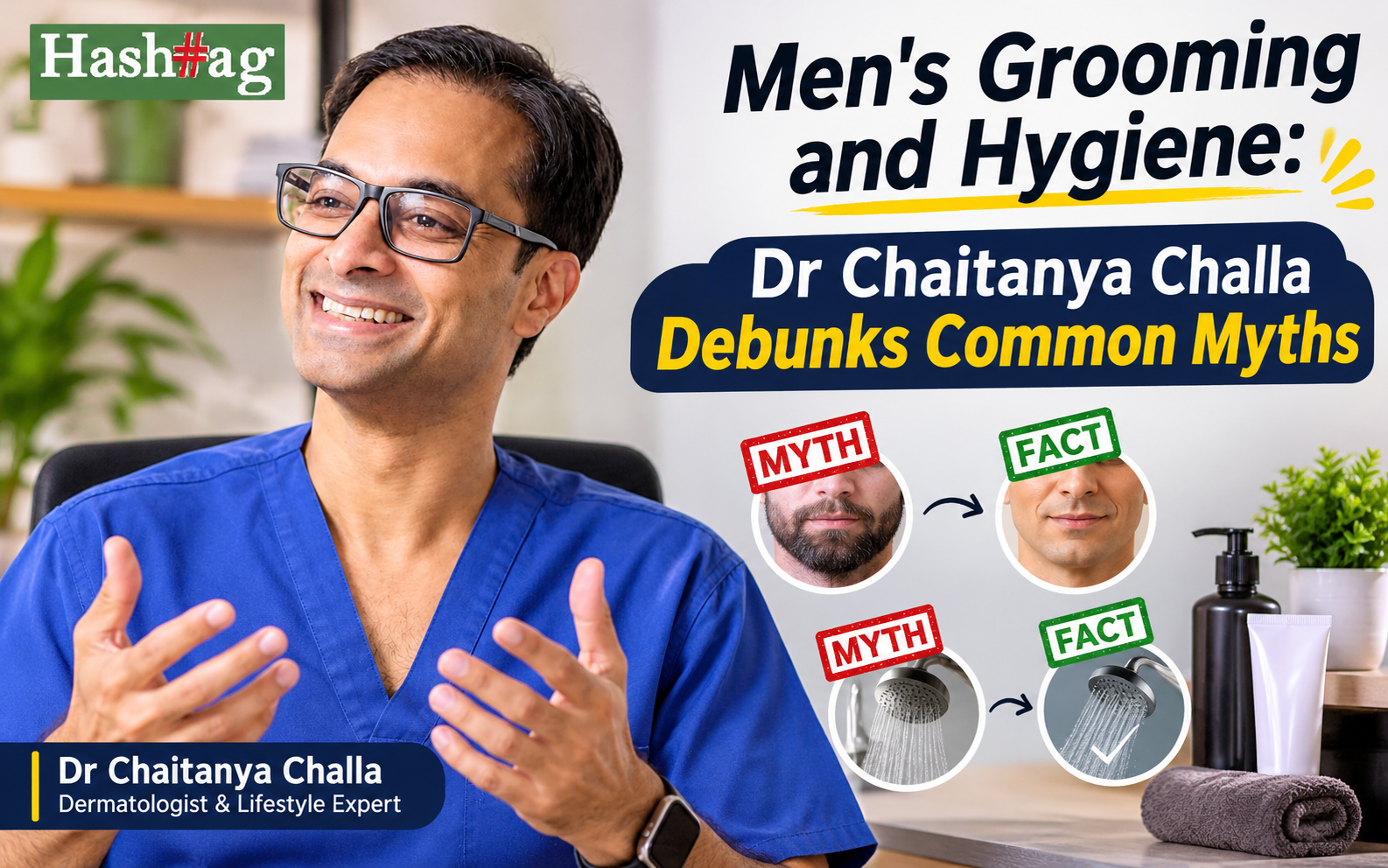
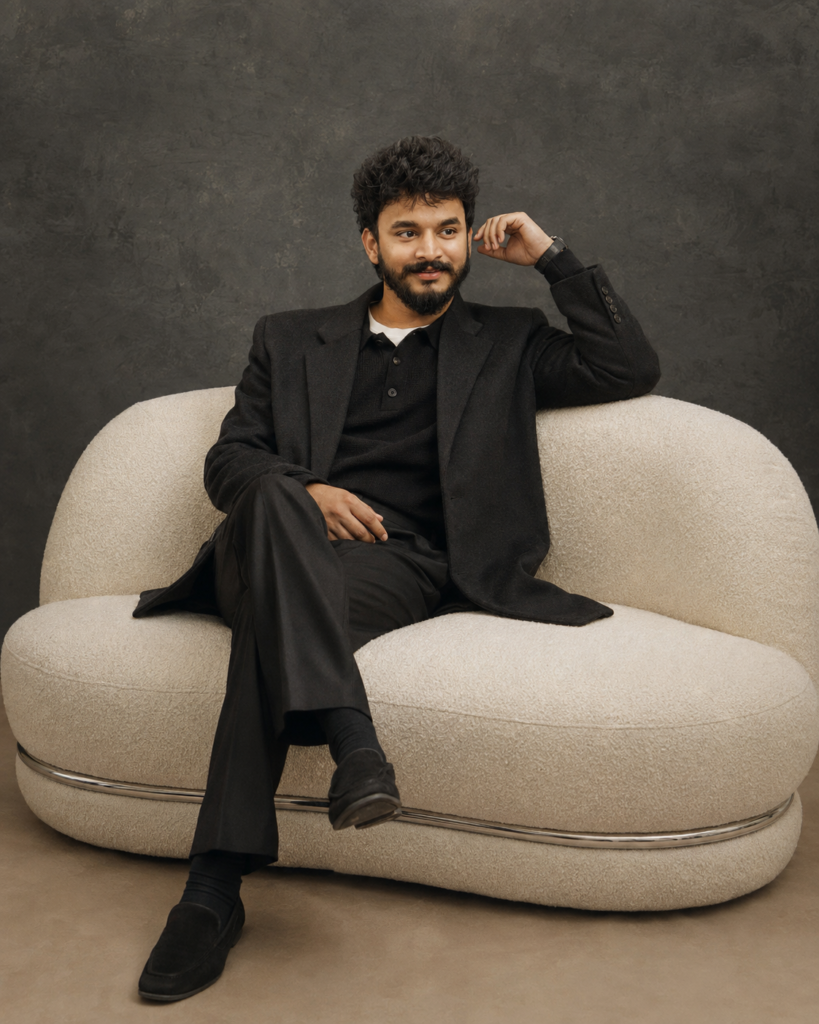
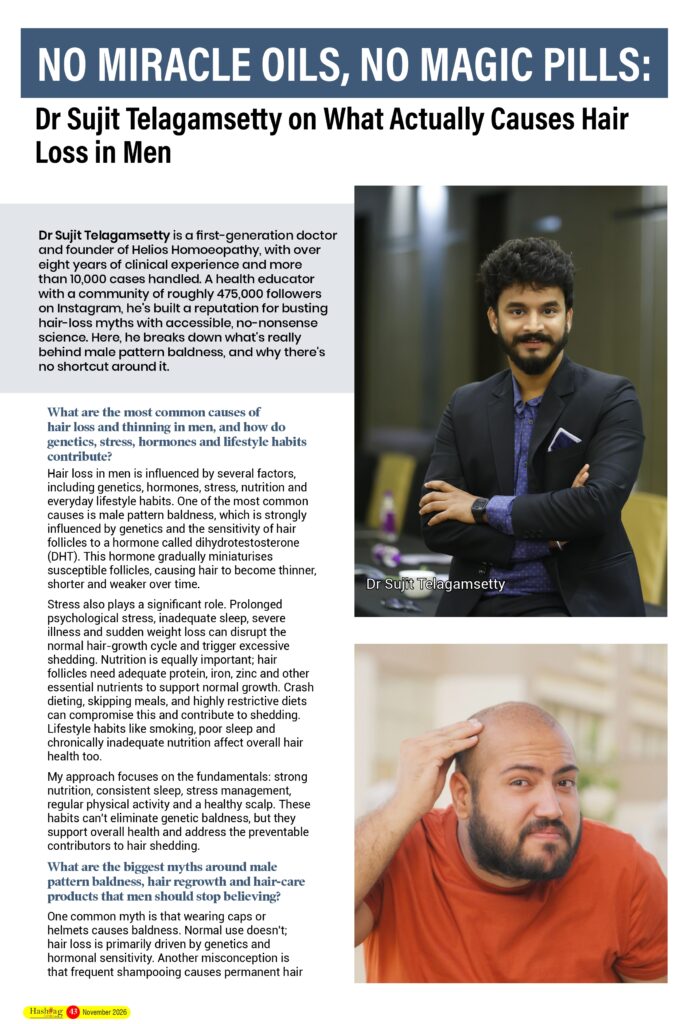
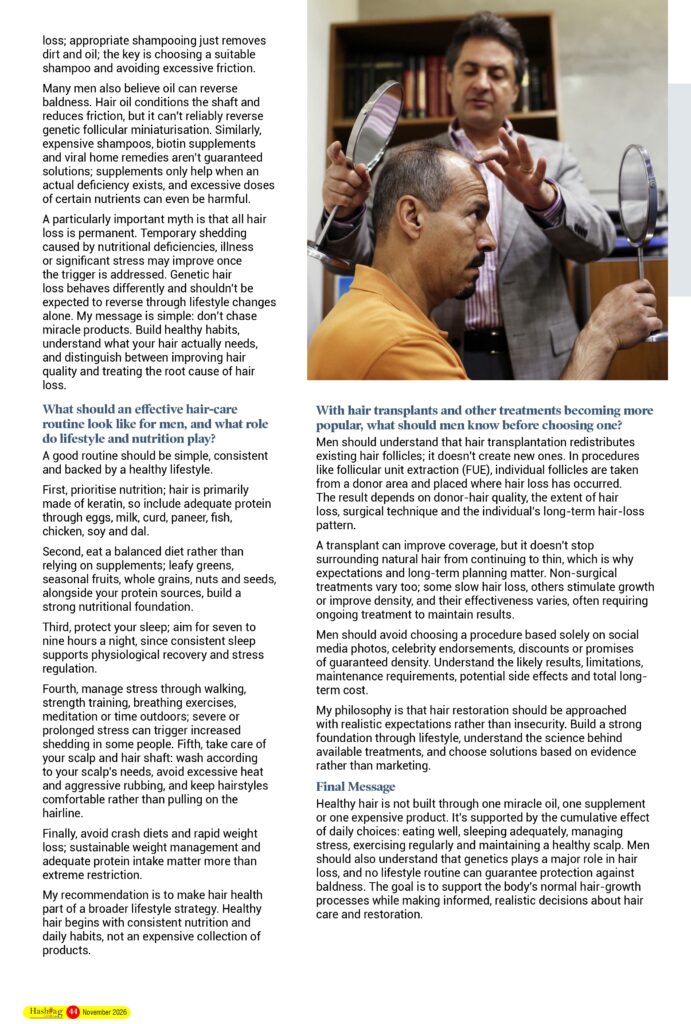
Dr Sujit Telagamsetty is a first-generation doctor and founder of Helios Homoeopathy, with over eight years of clinical experience and more than 10,000 cases handled. A health educator with a community of roughly 475,000 followers on Instagram, he’s built a reputation for busting hair-loss myths with accessible, no-nonsense science. Here, he breaks down what’s really behind male pattern baldness, and why there’s no shortcut around it.

What are the most common causes of hair loss and thinning in men, and how do genetics, stress, hormones and lifestyle habits contribute?
Hair loss in men is influenced by several factors, including genetics, hormones, stress, nutrition and everyday lifestyle habits. One of the most common causes is male pattern baldness, which is strongly influenced by genetics and the sensitivity of hair follicles to a hormone called dihydrotestosterone (DHT). This hormone gradually miniaturises susceptible follicles, causing hair to become thinner, shorter and weaker over time.

Stress also plays a significant role. Prolonged psychological stress, inadequate sleep, severe illness and sudden weight loss can disrupt the normal hair-growth cycle and trigger excessive shedding. Nutrition is equally important; hair follicles need adequate protein, iron, zinc and other essential nutrients to support normal growth. Crash dieting, skipping meals, and highly restrictive diets can compromise this and contribute to shedding. Lifestyle habits like smoking, poor sleep and chronically inadequate nutrition affect overall hair health too.

My approach focuses on the fundamentals: strong nutrition, consistent sleep, stress management, regular physical activity and a healthy scalp. These habits can’t eliminate genetic baldness, but they support overall health and address the preventable contributors to hair shedding.
What are the biggest myths around male pattern baldness, hair regrowth and hair-care products that men should stop believing?
One common myth is that wearing caps or helmets causes baldness. Normal use doesn’t; hair loss is primarily driven by genetics and hormonal sensitivity. Another misconception is that frequent shampooing causes permanent hair loss; appropriate shampooing just removes dirt and oil; the key is choosing a suitable shampoo and avoiding excessive friction.

Many men also believe oil can reverse baldness. Hair oil conditions the shaft and reduces friction, but it can’t reliably reverse genetic follicular miniaturisation. Similarly, expensive shampoos, biotin supplements and viral home remedies aren’t guaranteed solutions; supplements only help when an actual deficiency exists, and excessive doses of certain nutrients can even be harmful.

A particularly important myth is that all hair loss is permanent. Temporary shedding caused by nutritional deficiencies, illness or significant stress may improve once the trigger is addressed. Genetic hair loss behaves differently and shouldn’t be expected to reverse through lifestyle changes alone. My message is simple: don’t chase miracle products. Build healthy habits, understand what your hair actually needs, and distinguish between improving hair quality and treating the root cause of hair loss.

What should an effective hair-care routine look like for men, and what role do lifestyle and nutrition play?
A good routine should be simple, consistent and backed by a healthy lifestyle.

First, prioritise nutrition; hair is primarily made of keratin, so include adequate protein through eggs, milk, curd, paneer, fish, chicken, soy and dal.
Second, eat a balanced diet rather than relying on supplements; leafy greens, seasonal fruits, whole grains, nuts and seeds, alongside your protein sources, build a strong nutritional foundation.
Third, protect your sleep; aim for seven to nine hours a night, since consistent sleep supports physiological recovery and stress regulation.
Fourth, manage stress through walking, strength training, breathing exercises, meditation or time outdoors; severe or prolonged stress can trigger increased shedding in some people. Fifth, take care of your scalp and hair shaft: wash according to your scalp’s needs, avoid excessive heat and aggressive rubbing, and keep hairstyles comfortable rather than pulling on the hairline.
Finally, avoid crash diets and rapid weight loss; sustainable weight management and adequate protein intake matter more than extreme restriction.

My recommendation is to make hair health part of a broader lifestyle strategy. Healthy hair begins with consistent nutrition and daily habits, not an expensive collection of products.

With hair transplants and other treatments becoming more popular, what should men know before choosing one?
Men should understand that hair transplantation redistributes existing hair follicles; it doesn’t create new ones. In procedures like follicular unit extraction (FUE), individual follicles are taken from a donor area and placed where hair loss has occurred. The result depends on donor-hair quality, the extent of hair loss, surgical technique and the individual’s long-term hair-loss pattern.

A transplant can improve coverage, but it doesn’t stop surrounding natural hair from continuing to thin, which is why expectations and long-term planning matter. Non-surgical treatments vary too; some slow hair loss, others stimulate growth or improve density, and their effectiveness varies, often requiring ongoing treatment to maintain results.

Men should avoid choosing a procedure based solely on social media photos, celebrity endorsements, discounts or promises of guaranteed density. Understand the likely results, limitations, maintenance requirements, potential side effects and total long-term cost.
My philosophy is that hair restoration should be approached with realistic expectations rather than insecurity. Build a strong foundation through lifestyle, understand the science behind available treatments, and choose solutions based on evidence rather than marketing.

Final Message
Healthy hair is not built through one miracle oil, one supplement or one expensive product. It’s supported by the cumulative effect of daily choices: eating well, sleeping adequately, managing stress, exercising regularly and maintaining a healthy scalp. Men should also understand that genetics plays a major role in hair loss, and no lifestyle routine can guarantee protection against baldness. The goal is to support the body’s normal hair-growth processes while making informed, realistic decisions about hair care and restoration.
Leave a comment

Your email address will not be published. Required fields are marked *

The Secret to Wedding-Ready Skin? Start Six Months Before the Big Day

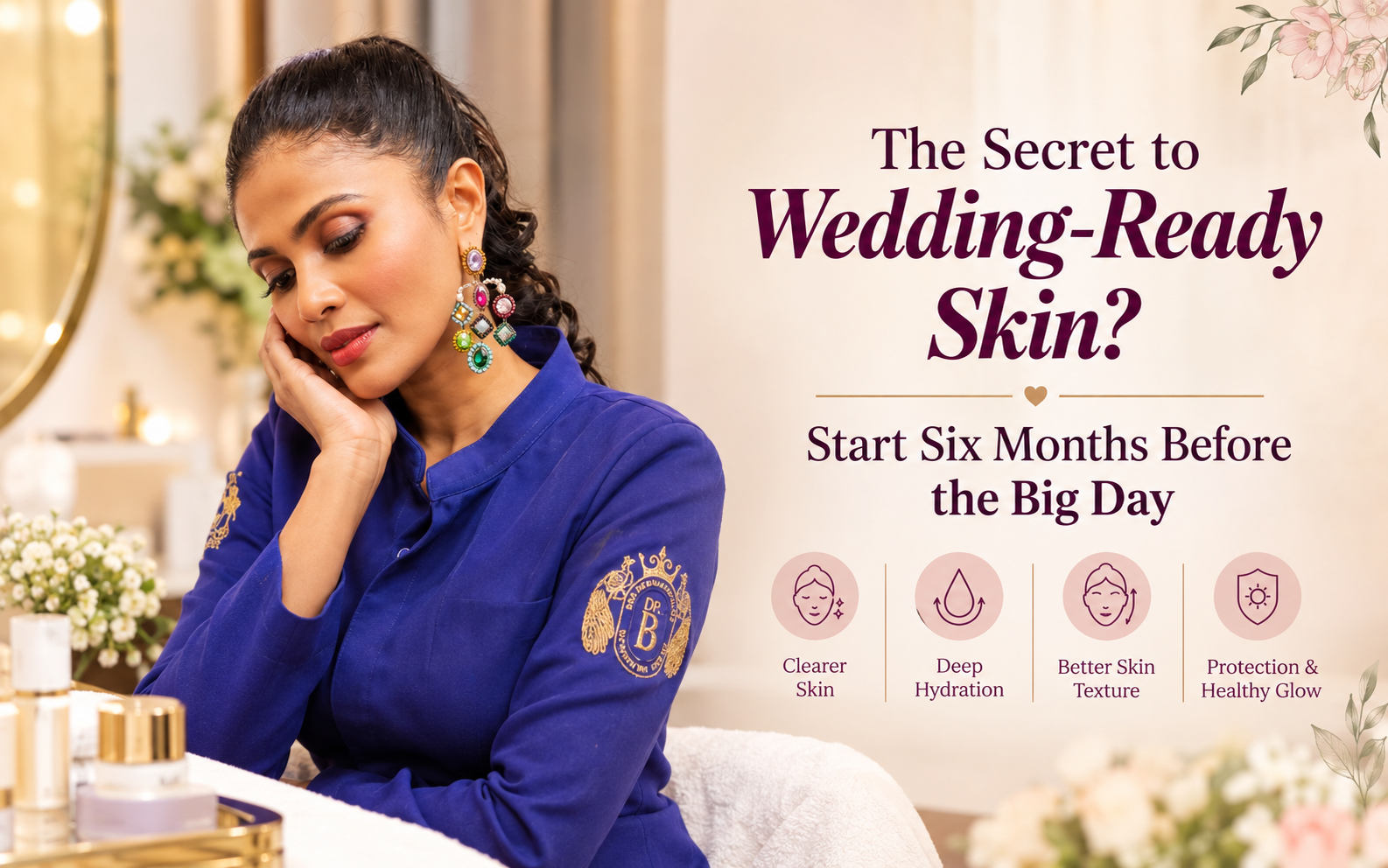
Dr Bhairavi Senthil is a Chennai-based dermatologist and founder of The Dr B 360 Dermatology Experiential Centre. Her advice for 2026 couples: skip the last-minute “bridal glow” fix; real results come from starting six months ahead, and the final few weeks should be about stability and hydration, not experimenting with something new. Skincare Trends 2026Couples are moving away from a last-minute glow and toward skin preparation as a long-term process. Brides want to look like themselves, just healthier and more even-toned; not heavily treated or made up. Grooms are becoming far more proactive about skincare and grooming too. There’s also a shift toward personalised, science-led routines over viral trends, and a growing focus on prevention and maintenance rather than dramatically changing how skin looks. Pre-Wedding Treatments & TimelineThere’s no universal best treatment; it depends on your skin and timeline. Ideally, meet a dermatologist six months before the wedding, earlier if there’s active acne, pigmentation or hair concerns, since collagen remodelling and barrier repair can’t be rushed. Peels, lasers, microneedling and injectables like botulinum toxin or fillers may all be options depending on the concern, but they all need proper consultation and time to settle. The golden rule: don’t experiment close to the wedding; the final weeks should focus on stability and hydration. Customising Skincare PlansIt starts with one question: what do you want your skin to look and feel like on your wedding day? From there, the plan factors in barrier health, pigmentation, acne, hydration, the wedding timeline, climate and even travel plans. A bride with pigmentation needs a completely different approach from someone dealing with acne or sensitivity, and sometimes the healthiest skin needs no procedures at all, just maintenance. The goal isn’t perfection. It’s healthy, balanced skin that lets you feel confident without hiding behind makeup.

Skin That Still Looks Like Skin: Bridal Beauty in 2026

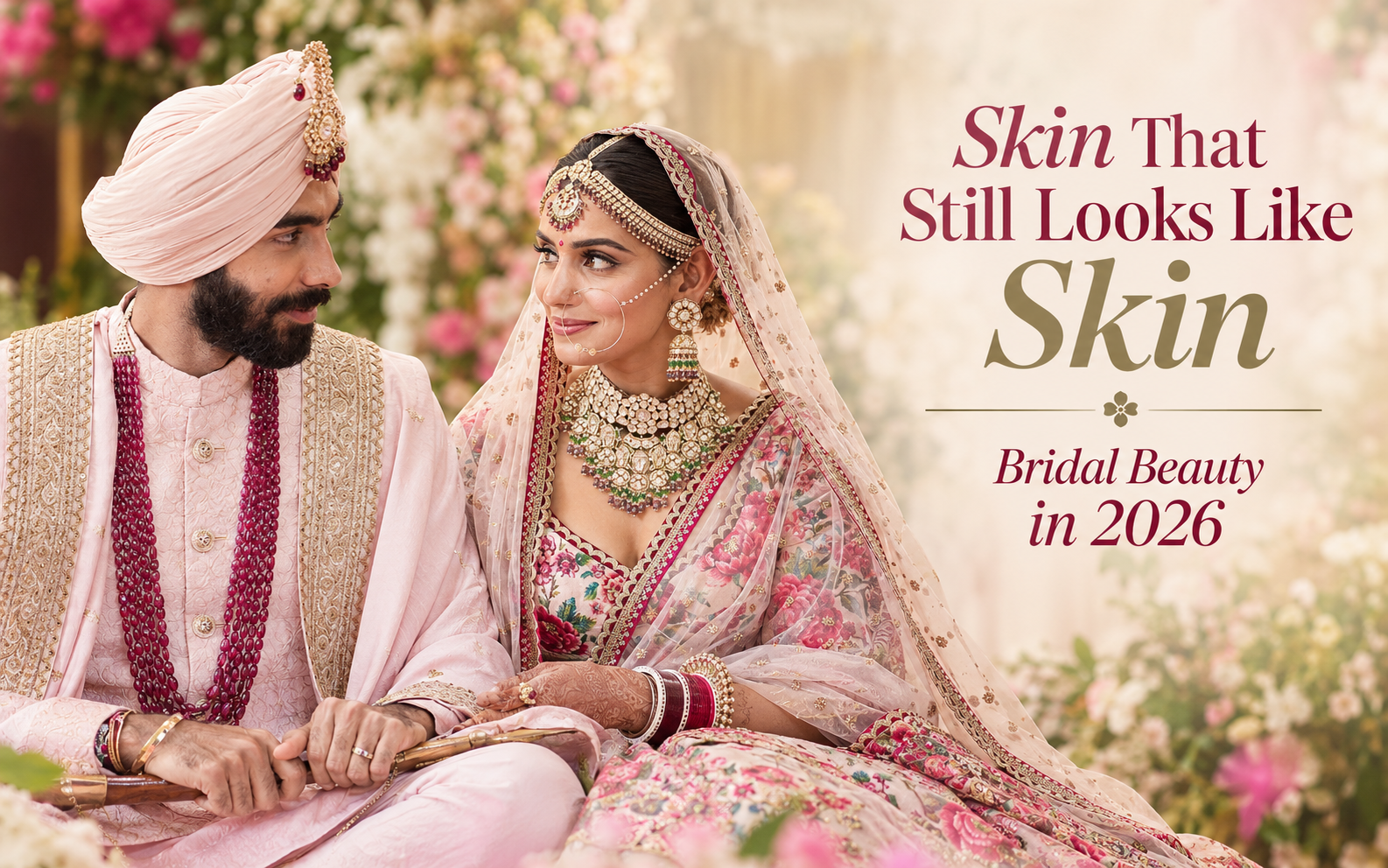
Celebrity makeup artist Bianca Louzado has spent over two decades in Indian beauty, from her start at India Couture Week working on Manish Malhotra to becoming one of the country’s most trusted names in luxury bridal makeup, with a portfolio that includes Jasprit Bumrah and Sanjana Ganesan, Randeep Hooda and Lin Laishram, and Radhika Ambani’s pre-wedding event. She breaks down why real bridal beauty starts weeks before the wedding, not the morning of, and why 2026 brides are choosing skin that still looks like skin over heavy, “done-up” makeup. What skin prep should brides start ahead of the wedding?Skin prep is about healthy, balanced skin, not last-minute transformation. Start a consistent routine 6–8 weeks out: gentle cleanser, moisturiser, daily SPF, and any new actives introduced early enough to see how skin responds. No experimenting in wedding week. In the final week, simplify: hydration, sleep, water, and skip aggressive treatments or picking at breakouts. Well-prepped skin means less product and a complexion that looks like skin, not a mask. What’s the biggest mistake brides make choosing their look?Picking a look because it worked on someone else, rather than one that suits their own features, outfit and personality. Chasing every trend at once is another; bridal makeup needs to photograph beautifully today and still feel elegant years later. References are useful, but they’re a starting point, not a blueprint. And don’t wait until the wedding morning to find your look; the trial is where that conversation happens. How has airbrush vs. traditional makeup evolved for 2026?The debate itself is outdated! It’s about what the skin needs. Brides want longevity without heaviness, especially for long Indian wedding days. Traditional techniques now allow thin, strategic layering with more control and natural dimension, and unlike airbrush, they can be touched up rather than redone entirely.
Less Face, More You: The Restraint-First Approach to Bridal Beauty

Mumbai-based makeup and hair artist Elton J Fernandez has spent nearly 25 years across fashion, advertising, celebrity, bridal and film work, from a nine-year run as Maybelline India’s spokesperson to backstage seasons at New York Fashion Week and India Fashion Week. Here, he makes the case for a very different kind of bridal beauty in 2026: less about a prescribed “bridal face” and more about restraint, identity and letting the woman herself remain present in the frame. What bridal makeup trends are defining 2026, versus 2025?The biggest shift is away from a prescribed bridal face. For years, trends travelled uniformly: the same brow, the same contour, accelerated by social media. Now brides want to recognise themselves in their photographs. That means skin that still behaves like skin, colour that responds to the person rather than the trend, and enough restraint to let the woman remain present. 2025 was about the look; 2026 is about the person wearing it. Has grooming for grooms become mainstream?Yes, but the bigger shift is that men are less afraid of being seen to care. Grooming today often means correcting fatigue or balancing skin rather than looking visibly “made up”; the best work is often invisible. The principle stays the same as with brides: understand who’s in front of you before deciding how much intervention is actually needed. How do you approach daytime ceremonies versus evening receptions?Daylight doesn’t automatically mean less makeup, and evening doesn’t mean more; context matters more than the clock. Light, climate, photography, jewellery and ceremony all shape the decision. Indian bridal beauty already carries so much visual information: textiles, jewellery, ritual- that makeup doesn’t need to compete for attention. Sometimes the most sophisticated choice is knowing what to leave alone. After 25 years, what’s changed most in how you see a face?Early
From Creator to Founder: Sarah Sarosh’s Impulse Journey

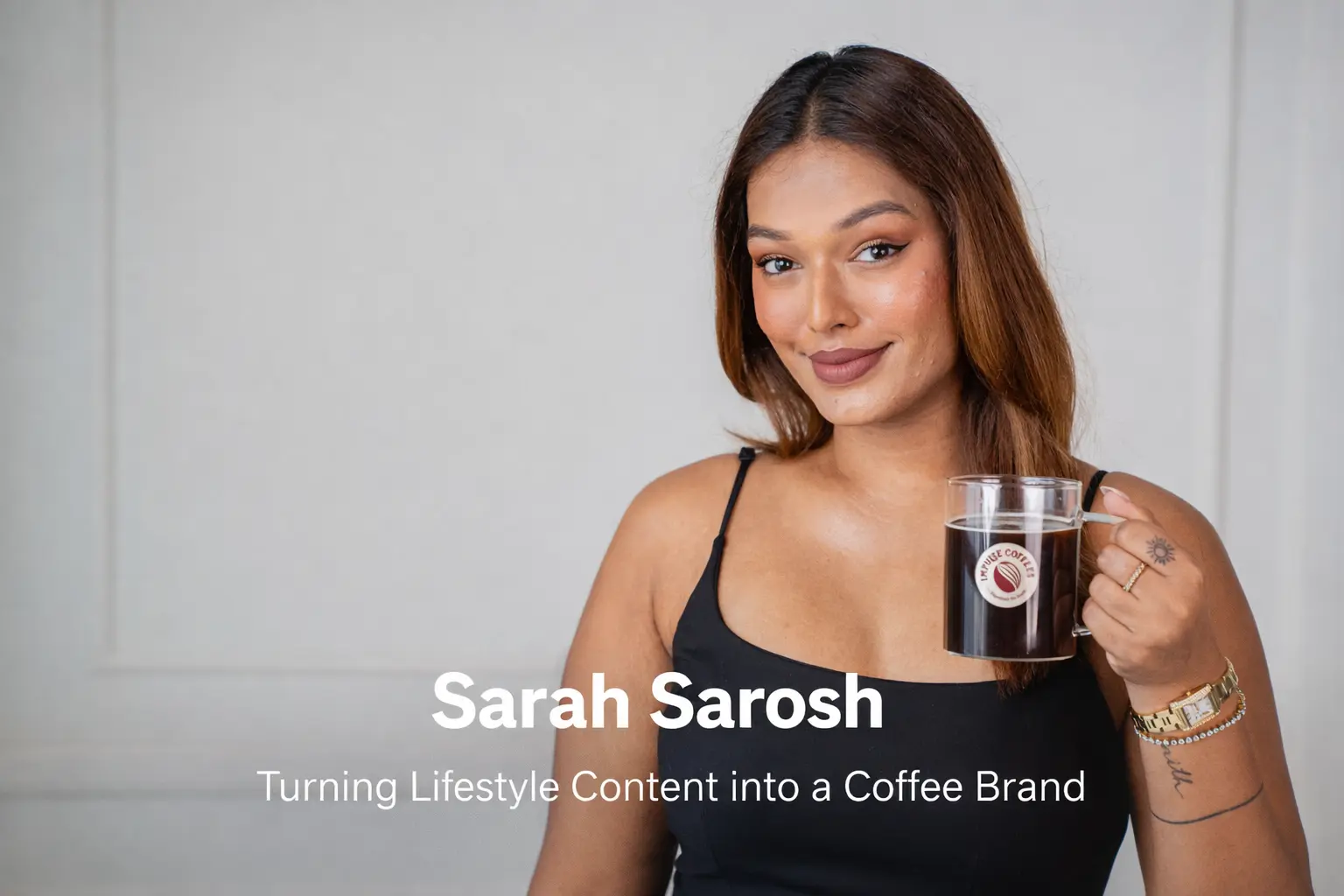
Sarah Sarosh’s foundation lies in her training in Occupational Therapy at KEM, Mumbai, a discipline that shaped her understanding of behaviour, confidence, and well-being far beyond textbooks. “It trained me to look at self-image and lifestyle as more than surface-level experiences,” she explains. That holistic lens continues to influence how she creates and builds today. Raised in a middle-class household, she learned early that stability comes from discipline, not shortcuts. There was no predefined creative roadmap or safety net, which meant resilience and independence were cultivated organically. Her personal struggles with acne and self-image also played a defining role. “It made me more observant of how deeply appearance is tied to confidence and belonging,” she says. That sensitivity now informs her approach to beauty, representation, and storytelling. Where Storytelling Meets Building Sarah describes her work as a blend of storytelling and entrepreneurship. “Content and business may look separate from the outside, but for me they stem from the same instinct, the desire to create something meaningful.” Her content journey began while she was still a student, documenting beauty, health, and self-image through lived experience. Entrepreneurship followed with the launch of Impulse Coffees, born from identifying a gap in how instant coffee was positioned in India. “It was widely consumed but rarely treated with care or storytelling,” she notes. Building Impulse introduced her to sourcing, product development, packaging, and customer experience, expanding her role from creator to founder. “Storytelling helps me understand people. Building helps me translate that understanding into something tangible.” Real, Not Remote “At its core, my work is about documenting life as it unfolds,” she says. Rather than presenting polished perfection, Sarah has consistently allowed her audience to witness transitions, uncertainties, and growth in real time. “It feels less like performance and more like continuity.” She is most

You May Also Like

Connect with us