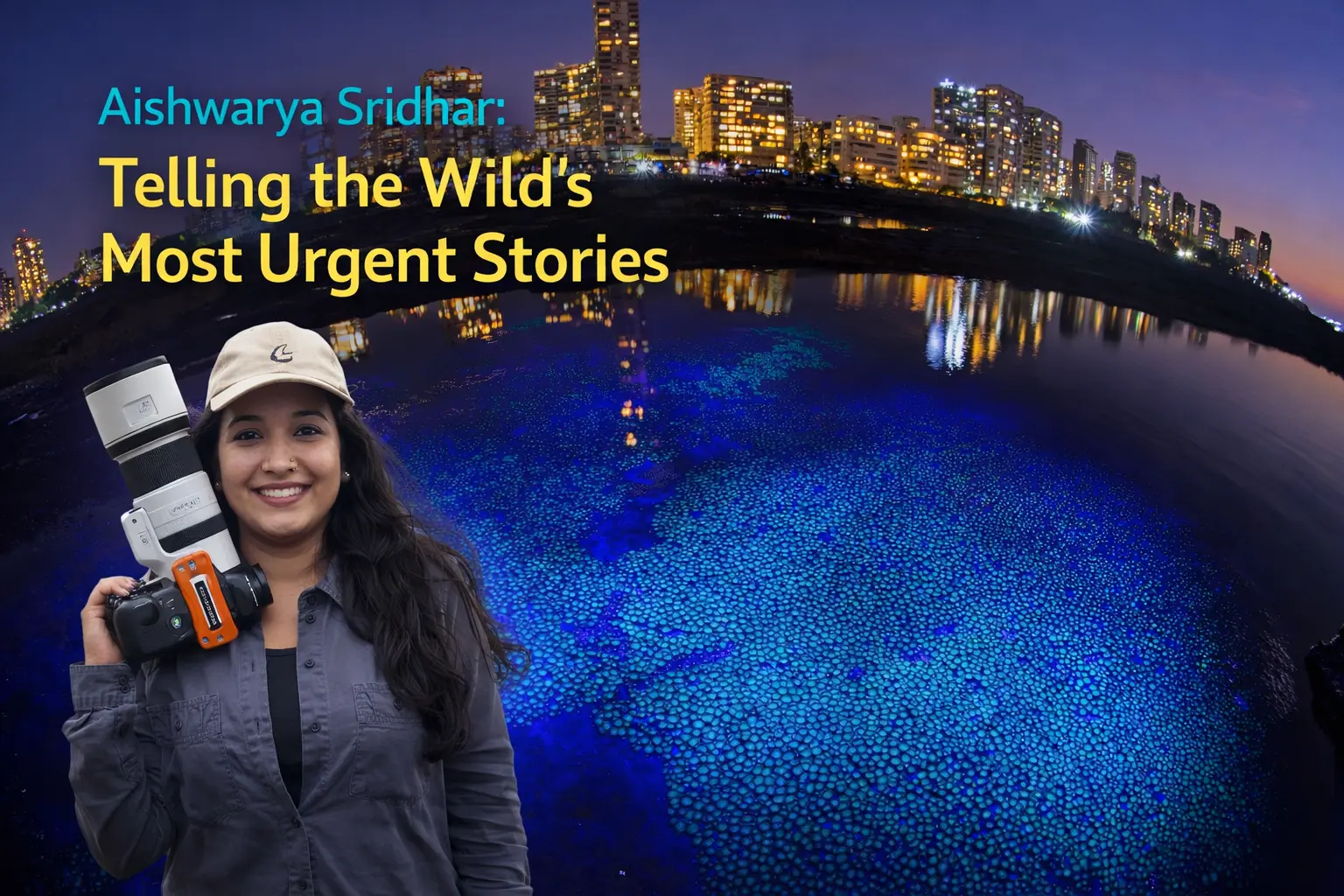
Aishwarya Sridhar: Telling the Wild’s Most Urgent Stories

Aishwarya Sridhar: Telling the Wild’s Most Urgent Stories

Aishwarya Sridhar grew up in New Panvel, on the edge of the biodiverse foothills of Matheran, an ecosystem that holds nearly 7–8% of the world’s recorded species. A graduate in Mass Media, with Cambridge A Levels in Business and Accounting, she was raised in a family that balanced structure and creativity. Her father, Sridhar Ranganathan, a Chartered Accountant and former Vice President at Vodafone, taught her financial discipline while her mother, Rani Sridhar, an advertising professional and homemaker, nurtured storytelling instincts.

Her earliest memories are of forests, fireflies, and quiet ecological change. “As I grew older, I watched that world slowly change, forests gave way to highways, and the fireflies disappeared.” That loss ignited a purpose in her. A turning point came when she watched Life with Sir David Attenborough. If a documentary could make her care about Komodo dragons from her living room, she reasoned, perhaps she could do the same for India’s wildlife.

Conservation through Storytelling

Today, Aishwarya is a National Geographic Explorer, Canon EOS Influencer, and Associate Fellow at the International League of Conservation Photographers (iLCP). As the co-founder and CEO of Bambee Studios, she leads a full-service production house specialising in natural history and environmental documentaries for global broadcast.

“I don’t see my work as content creation, I see it as conservation through storytelling,” she says. “My camera is simply the bridge between two worlds, the wilderness and people who may never step into it.”

Her productions have aired on National Geographic WILD, Arte, CuriosityStream, NHK, KBS, and Love Nature. Her photography has appeared in National Geographic magazine, BBC Wildlife, The Guardian, Mongabay, Digital Camera, The Times of India, and Sanctuary Asia. In 2020, she became the first Indian woman to win at the Wildlife Photographer of the Year Awards in London, and she has received honours including the Princess Diana Award and recognition as one of 50 Explorers Changing the World by The Explorers Club, NYC. Her latest film, The Fading Star, earned a 2025 Wildscreen Panda Awards nomination for Emerging Talent.

For Aishwarya, impact is deeply personal. “When someone tells me a photograph changed how they see wildlife, I know the work has served its purpose.”
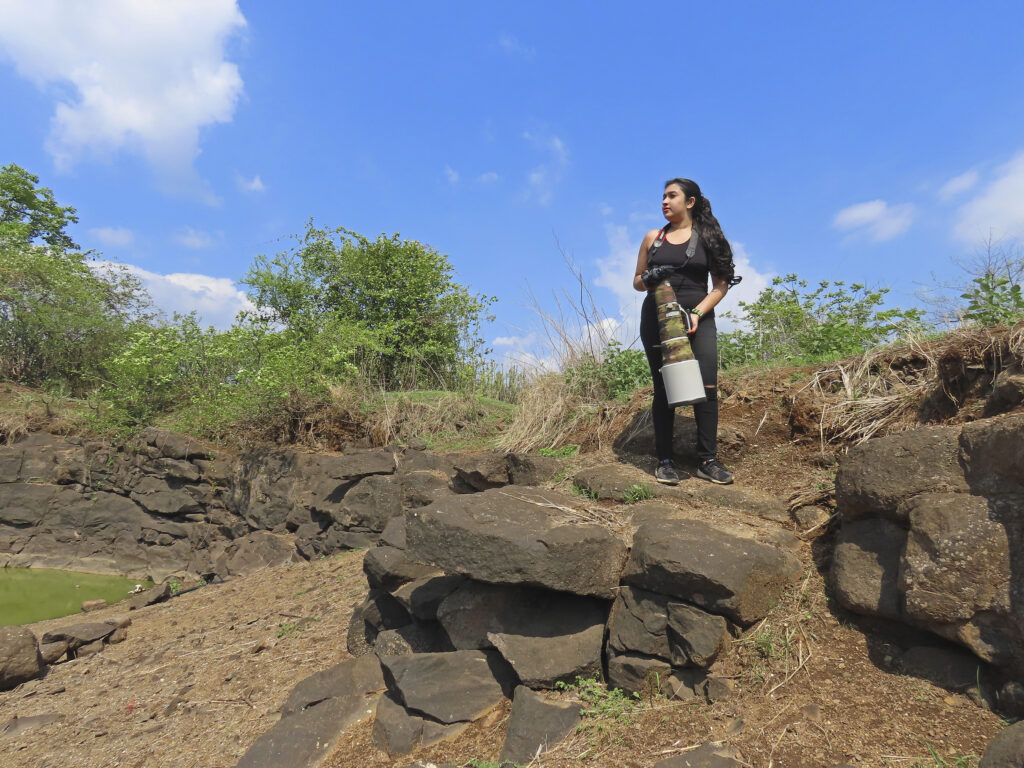
Depth Over Spectacle

“What I do goes beyond documenting wildlife,” she explains. “I translate the lives of animals and ecosystems into emotional, visual narratives that help people connect with nature in a deeply personal way.”

Her philosophy rejects spectacle. Wildlife, she insists, is not a subject but a character, requiring patience, sensitivity, and respect. Through Bambee Studios, she combines cinematic craft with conservation storytelling, bringing fragile ecosystems right into people’s living rooms.’ Her leadership style is rooted in empathy and purpose. “Filmmaking is not about speed or volume; it is about depth, authenticity, and impact.”

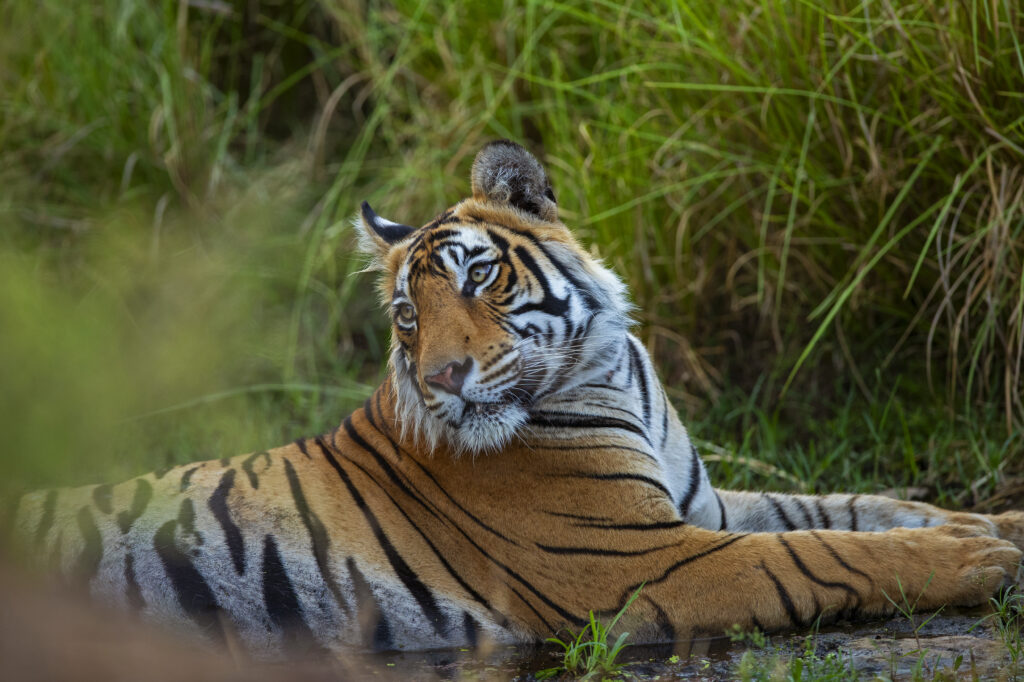
A Tigress Named Maya

Her journey began not with a business plan, but with wonder, and a tigress named Maya. From 2012 to 2018, she documented Maya in Tadoba. Watching the tigress defend herself against a gaur and later employ a survival strategy to protect her cubs became the foundation of Queen of Taru, her breakout film. “That film validated my belief that storytelling could be a powerful tool for conservation.” Four years later, Bambee Studios was born, an evolution of that belief into an enterprise.

Leading Without Apology

Breaking into a male-dominated field brought bias and doubt. “There were moments when my creative input was dismissed,” she recalls. Being young and female in physically demanding, technical environments required resilience. “I let my work speak.”

Her academic grounding in business enabled her to navigate contracts, budgeting, and co-productions with confidence. Over time, results replaced skepticism with respect. “The challenges taught me to build a career not by fitting into the system, but by changing it from within.”

Looking ahead, she is developing a slate of feature documentaries and series that push the boundaries of natural history storytelling, projects rooted in the wild, elevated by human emotion and innovation.
Respect Above All

“At the heart of everything I do is one belief: storytelling can change how people feel, and feelings can change how people act.”

She refuses to rush stories or disturb wildlife for a shot. “The forest works on its own time.” Authenticity and community inclusion remain non-negotiable. “Local voices must be heard, not as background, but as storytellers.”

Her grounding rituals are simple: quiet time in nature, revisiting old footage, and remembering the balcony in Matheran where fireflies once blinked.

“The one value I will never compromise on is respect, for the wild, for the truth of the story, and for the people whose lives are intertwined with these landscapes.”

Build Legacies

“To the next generation of women entrepreneurs: Don’t let gender limit your dreams.”

She urges women to pair passion with financial literacy. “Understand budgets. Know the value of your work. Creativity needs sustainability to survive.”

“Do not wait for permission. Start where you are. Stay authentic. Because when women lead with purpose and clarity,” she says, “they don’t just build businesses, they build legacies.”

Leave a comment

Your email address will not be published. Required fields are marked *

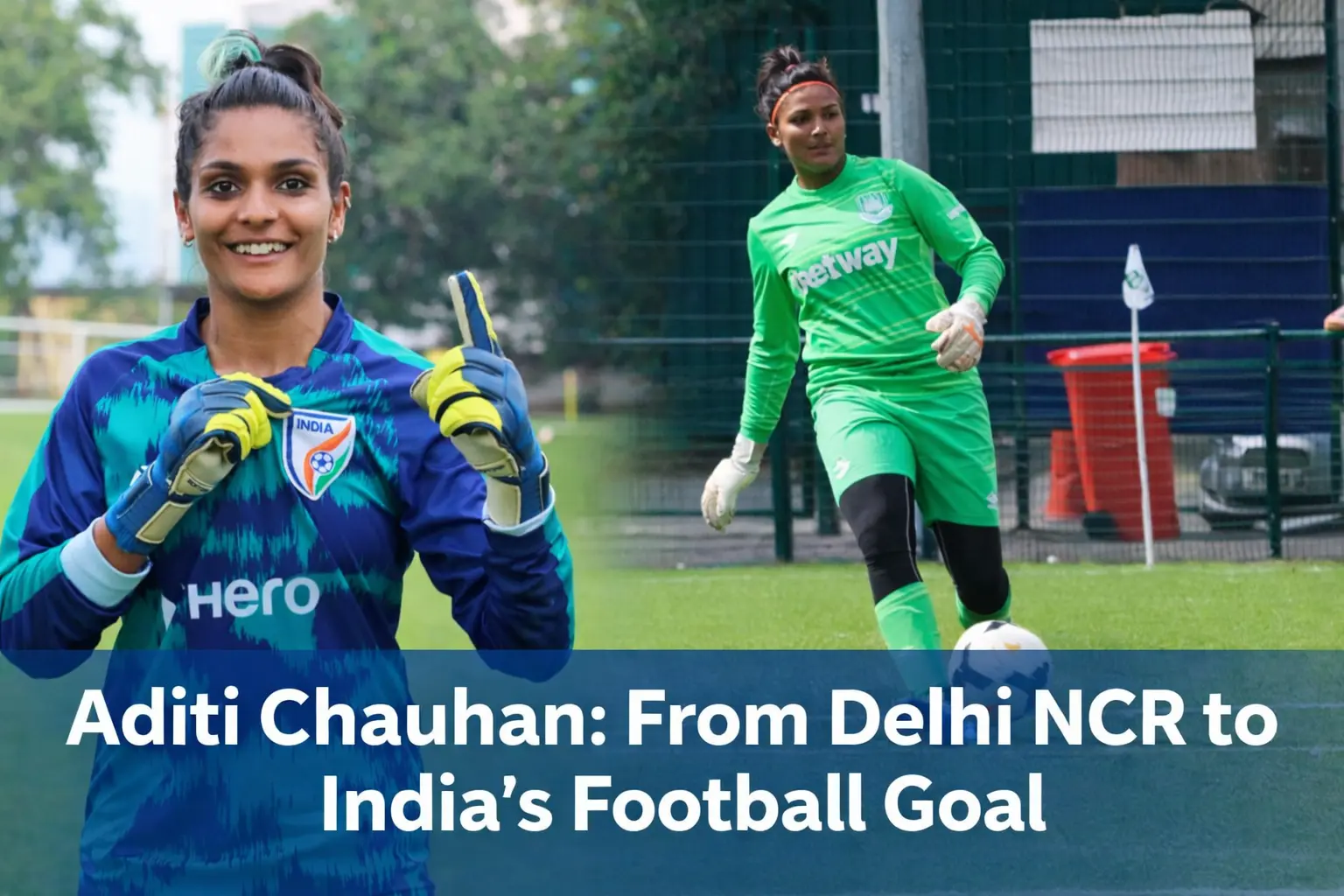
Delhi NCR | Professional Footballer, Founder of She Kicks & Aditi Chauhan Foundation

This March, Hashtag Magazine celebrates the spirit of International Women’s Day with a special feature that puts the spotlight where it truly belongs, on women who are chasing their dreams and building their own success stories. Across fashion, food, sports, tech, and beyond, women today are breaking barriers, redefining industries, and proving that ambition has no single path. This edition brings together 25 inspiring stories of women who dared to start, lead, create, and persist, each journey unique, yet united by courage, resilience, and purpose. We present Next-Gen Women: Bold, Brilliant, Unstoppable. Learning to Stand Alone Aditi Chauhan was raised in Delhi NCR in a defence family that valued discipline and education. She was an active, competitive child who loved sports. “I didn’t grow up thinking I would become a professional footballer, because honestly, that wasn’t something girls around me were shown as possible.” She first started playing basketball before discovering football at the age of 15. “Once I stood in goal for the first time, something just clicked. I loved the responsibility of it. I loved that when everyone else panicked, I had to stay calm.” Moving abroad to pursue sports management while chasing football required convincing people, managing finances, and carrying expectations, all at a young age. Her parents’ quiet support made all the difference. “They never told me I couldn’t try.” Growing up as one of the only girls on the pitch shaped her resilience early. “It teaches you two things very quickly: how to fight for space, and how to stand alone,” she says. More than a Career Football gave her more than a profession. “It gave me confidence and an identity when I was still figuring myself out. It gave me strength in moments when I felt invisible.” When she signed with West Ham United

Rani Mukherjee: Three Decades of Purpose, Power, and Reinvention

As Rani Mukherjee completes 30 remarkable years in Indian cinema, her journey stands as a masterclass in longevity, courage, and conscious choices. From becoming one of Bollywood’s most recognisable romantic leads to redefining female-led storytelling with powerful, socially rooted performances, Rani’s career has been driven by instinct, integrity, and an unwavering commitment to meaningful cinema. In a candid reflection on her career with LIPIKA VARMA, she opens up about finding her voice, literally and creatively, embracing challenging roles, the joy of recognition, and why stories should always matter more than labels. Excerpts On retaining her voice while distributors wanted her voice to be dubbed My experience working with Karan Johar on Kuch Kuch Hota Hai is particularly memorable. I remember how Karan trusted me to dub my own lines despite distributors’ concerns about my voice. “I love your voice”—those words from Karan made me stand my ground. That confidence helped me retain my unique voice and paved the way for future roles. On taking challenging roles that inspire and empower women I’m all about taking on roles that challenge me and inspire women. My characters in Hum Tum, Kabhi Alvida Naa Kehna and Saathiya are examples of strong, progressive women who break stereotypes. My approach to acting is simple: I immerse myself in each character, leaving my personal biases aside. I am passionate about portraying women who make their own choices, reflecting the evolving Indian woman empowering themselves. My goal is to inspire audiences, especially women, with stories that resonate. On working with Sanjay Leela Bhansali in Black It was transformative. I was inspired by his direction, particularly how he captured scenes with a unique energy. Bhansali’s attention to detail pushed me to give my best performance. Learning sign language for Black, was a challenging yet rewarding experience. I totally

Riddhi Kumar on Raja Saab, Chemistry with Prabhas, and Life in the Spotlight

From the ramp at the Miss Universe pageant to the big screen, Riddhi Kumar has been quietly building a diverse career with films like Pranaya Meenukalude Kada in Malayalam, Superboys of Malegaon in Hindi, and acclaimed web series, Candy and Crash Course. She made her Telugu debut with Lover and later impressed audiences with a small role in Radhe Shyam. Now, after three years, she returns with the Prabhas-starrer Raja Saab, marking a key milestone in her journey. In this candid chat with Priyanka Goud, Riddhi opens up about her evolution as an actor, her on-screen chemistry with Prabhas, and the dream roles she’s eager to bring to life. On her journey from Lover, web series to Raja Saab Honestly, I’d describe it as a beautiful ride filled with exploration, experiences, and constant learning. I started with Telugu cinema, then worked in the Malayalam, Hindi, and Marathi industries, which taught me so much about different cultures, creativity, and languages. I’ve been fortunate to collaborate with incredible filmmakers and actors like Prabhas, Adarsh Gaurav, Reema Kagti, and Kamal sir. Now, being back in Telugu cinema with Prabhas for Raja Saab feels like a full-circle moment. I’m truly excited to see how this new chapter unfolds. On her bond with Prabhas, creating a huge buzz among audiences I’m really glad audiences are loving our bond. The gift he gave me, which I wore in The Raja Saab, is just one small example of his big heart. As everyone knows, he’s a real foodie and loves feeding the people around him. Once, he even sent a whole carriage to the set with three types of biryani, non-veg curries, and fried items, all homemade, packed with flavour and absolutely scrumptious! I’ll always cherish the fun moments we had on set, and one beautiful quality

Kites, Food & Family: Celebs share what makes Sankranti special

Sankranti is more than just a festival it’s a feeling rooted in memories, traditions, and togetherness. For celebrities juggling packed schedules, the festival offers a rare pause to reconnect with family, roots, and simpler joys. From festive food and kite flying to early-morning rituals and childhood nostalgia, actors Sundeep Kishan, Eesha Rebba, Rahul Sipligunj, and others open up about how they celebrate Sankranti and what makes it one of the most cherished times of the year. Sundeep Kishan: Among all the festivals we celebrate, Sankranti has always been my absolute favourite. It’s that one time of the year when life truly slows down, and everyone comes together like one big family. The festive mornings, flying kites with friends, spending time with loved ones, and reliving childhood memories, it’s pure joy. And Sankranti is never complete without food: hot garelu, ariselu, traditional sweets, and home-cooked delicacies made with so much love. While cockfighting is a big part of the festival in many parts of Andhra Pradesh, that’s something I’ve only witnessed once. Eesha Rebba: Sankranti feels like a beautiful reset for me every single year. No matter how busy life gets, this festival gently reminds me to pause and reconnect with my roots. From cooking together at home and bonding over delicious festive meals to flying kites with my niece and sharing unhurried, happy conversations with family these simple moments are what genuinely make Sankranti special for me. It’s a time filled with warmth, laughter, and togetherness. And of course, Sankranti also comes with its own little indulgence I happily treat it as a cheat day where I eat as much pulihora as I want, because that’s one dish I can never resist. My mom makes the best ariselu and bobbatlu; my mouth waters just thinking about them. Rahul Sipligunj: This

You May Also Like

Connect with us