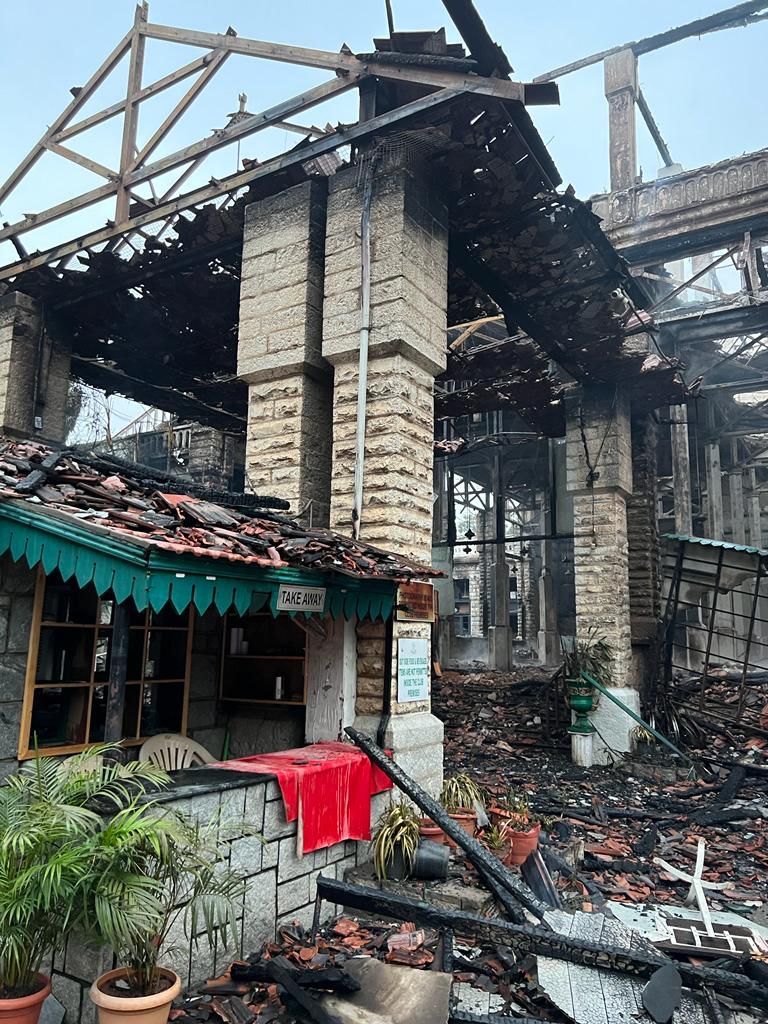
Fire engulfed Secunderabad Club

FIRE ENGULFED SECUNDERABAD CLUB

The Secunderabad Club one of the oldest clubs in India was brought down to ashes in a fire accident. Hashtag Magazine gives you a lowdown on this heritage building which is very dear to the members. 

Built by the  British in 1878, The Secunderabad Club is one of the oldest clubs in India. It is one of the five oldest Clubs in India, the oldest club being the Bengal Club of Calcutta. The club went through two name changes before the name Secunderabad Club finally chosen. The club was established on 26 April 1878 and was originally known as the Secunderabad Public Rooms. It was renamed the Secunderabad Garrison Club, the Secunderabad Gymkhana Club and the United Services Club.
The earliest records state that this Club was formed by the British Army Garrisons that were stationed in Secunderabad under an agreement with the 3rd Nizam – Sikandar Jah. The Club was then known as Garrison Club.

Over a period of 15 to 20 years the British presence in Hyderabad increased and the British brought in their civilian officers to look after the Nizam’s Railways, as well as the judicial system to administer the cantonment area.
The Nizam also requisitioned the British Officers to help him set up the electrical, waterworks and various revenue reforms in the state. During the late 19th century, the name of Garrison Club was changed to United Services Club representing the membership from all parts of the services. The Club was no longer an army club and it served all the services represented by the British.
As time went by, the officers later changed the name to Secunderabad Club since it was situated in Secunderabad. This name change coincided with the presentation by Salar Jung I who was the Prime Minister of Hyderabad State to the resident at that point of time of his hunting lodge. The club came to the current location on March 1903.
The story goes that the Club was situated in a small run down building and when the Resident desired to come to the Club, Salar Jung got to know of it and offered his hunting lodge as a fitting building to house the club where the Resident could come in and spend his evening.
Accordingly, the rules of the Secunderabad Club mention that the Salar Jungs lineal descendants will be made members of Secunderabad Club without ballot or admission fee which is followed to this day. The Club is situated in the Tokatta village, which was Salar Jung’s Jagir.

The historical papers and documents speak of Cantonment Area which is most of Secunderabad, but when the areas were handed over for Administration purpose only to the Britishers, the farwans or law promulgated by the Nizam states that those areas, which are under the occupation of his Nawabs and Jagirdhars, will not be disturbed by the Britishers.
Until 1947, there were only British Presidents of the Club and a few high-ranking nobility were offered membership and were members of the Secunderabad Club.
The First Indian President was Major General El Edross who was in the Hyderabad Army. After that when the Indian Armed forces overran Hyderabad in September 1948, General Choudary commander of the Indian Armed Forces became the President for a few months. Immediately thereafter the Club went into the Indian hands and Mirza Najaf Alikhan an ICS Officer was elected as the President of the Club in 1948 and then became the receiver of Salar Jung estate when Salar Jung III died in 1950.
The Club has some of the finest facilities. The food courts and restaurants in the club have something for everyone’s palate – be it continental food or traditional Indian fare. An exotic Lebanese food stall is the latest addition. For those inclined for a full course meal, a well-appointed dinner lounge is the place to visit. No description of the Club will be complete without a word about its well-appointed bars. The prime bar, the AC Bar, is a cosy air conditioned cocoon.The Club used to have Bollarum Golf Course and a Sailing Club as Annexes to the Main Club which was nearly 21 acres (85,000 m2) in area. The Golf Club was eventually taken over by the army in 1983 after expiry of the lease period. The Hyderabad Sailing Week organised every July throws the Club into sharp focus for supporting the city’s tryst with sailing.
The Club has a busy social calendar, with musical nites, tambola evenings, plays and movies. There are extensive facilities for indoor and outdoor games. The swimming pool is the focal point of the hot Indian summers. Basketball, squash and tennis courts abound. A well maintained cricket ground is host to many an interesting cricket game – apart from being the training ground for many of the city’s future cricketer who learn the ropes in the Club’s coaching camps organised specially during the summer holidays.
Membership to the Club is extremely difficult to get these days. The Club has slowed down on granting new memberships due to a large member – base. Memberships are bequeathed across generations by the members, much like family heirlooms.

Leave a comment

Your email address will not be published. Required fields are marked *

Between Film Sets and Mountain Escapes: Kayadu Lohar’s Journey

Long before the Tamil film Dragon became a cultural moment, Kayadu Lohar was quietly building her career across industries. A winner of the Everyuth Fresh Face, Kayadu stepped into cinema in her teens and gradually explored Kannada, Malayalam, Telugu, and Tamil industries with projects like Mugilpete, Pathonpatham Noottandu, Alluri, and Funky. But it was Dragon, opposite Pradeep Ranganathan, that turned her into a viral sensation, bringing widespread recognition and positioning her as one of the emerging pan-South talents to watch. In a candid conversation with Priyanka Goud, Kayadu opens up about sudden fame, navigating multiple film industries, and finding peace away from the spotlight through travel. Acting Was Always the Plan For Kayadu, acting wasn’t a coincidence; it was always the goal. “I always knew I wanted to be an actor,” she says. Winning the Fresh Face title during college became the first big push. “It gave me visibility, auditions, and belief. At just 18, I found myself travelling across cities for auditions, sometimes attending three to four in a single day. As a newcomer, you don’t always get full narrations. Many times, you say yes based on the production house or the hero attached.” Navigating Languages and Cultures Born into a North Indian family, speaking Nepali at home, fluent in Hindi and Marathi, and raised in Pune, entering South Indian cinema came with its own challenges. “South Indian languages aren’t my first language, so understanding the rhythm and culture initially took time,” she says. But over the years, she developed her own process. For Kayadu, learning a language goes beyond memorising lines. “If I’m doing a Malayalam film, I’ll only listen to Malayalam songs during that phase. Music helps me understand the emotion and culture behind the language.” The Dragon Effect Her performance as Pallavi in Dragon proved to

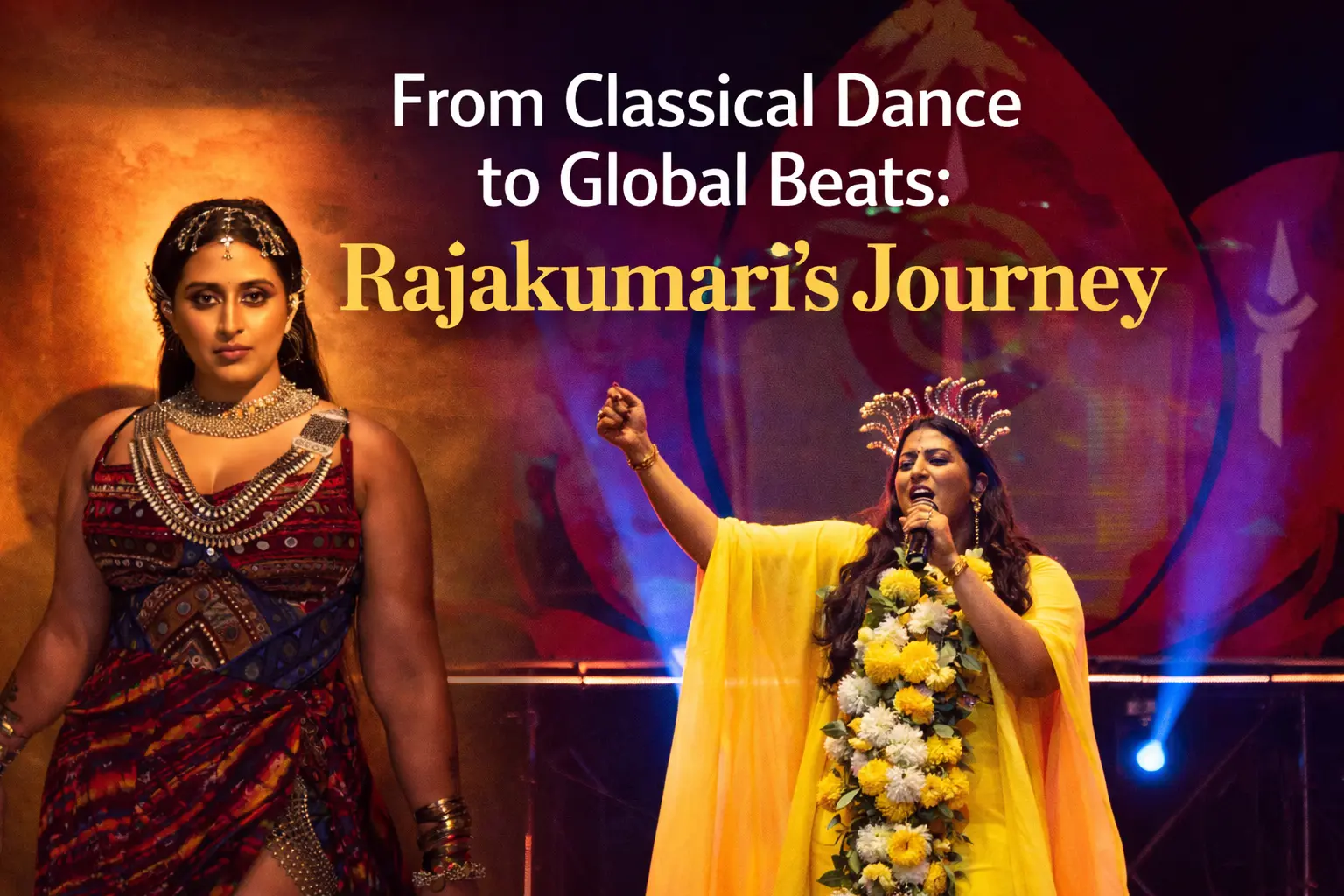
Rajakumari: The Artist Bridging Classical Heritage and Rap

Svetha Yallapragada Rao, professionally known as Rajakumari, is based in Mumbai. She holds a BA in Religious Studies and comes from a family of doctors, where education and discipline were deeply valued. However, it was Indian classical dance that shaped her most profoundly. She began training at a very young age, immersing herself in tradition, mythology, and devotion. Reflecting on those formative years, she says, “Classical dance didn’t just teach me technique, it taught me reverence, storytelling, and the sacred power of the stage.” The discipline of classical arts instilled in her both artistic rigour and spiritual grounding, foundations that continue to define her creative expression. Art with Cultural Responsibility Rajakumari chose her stage name intentionally. “I chose the identity of ‘Rajakumari’ as a vision, almost like embodying the energy of a goddess,” she explains. Having grown up inspired by Devi through classical dance, the divine feminine became central to her artistic identity. While growing up in America, she noticed the absence of Indian artists in mainstream spaces. “I wanted to become the artist I needed when I was younger, someone unapologetically Indian, modern, powerful, and visible.” Breaking into the American record label system in 2016 came with significant challenges. There were battles, resistance, and moments that demanded persistence. Yet, witnessing the cultural shift today validates that journey. “When I meet fans who proudly wear their bindis or celebrate their culture boldly, I understand the weight of the journey. We are all connected, and cultural pride is powerful.” THE RAJAKUMARI CODE Rajakumari believes authenticity is her defining strength. “Trends shift, genres evolve, and paths change, but I have always remained true to my vision and message.” She emphasises manifestation and cultural pride as pillars of her philosophy. “You don’t have to abandon any part of yourself to succeed.” Her work

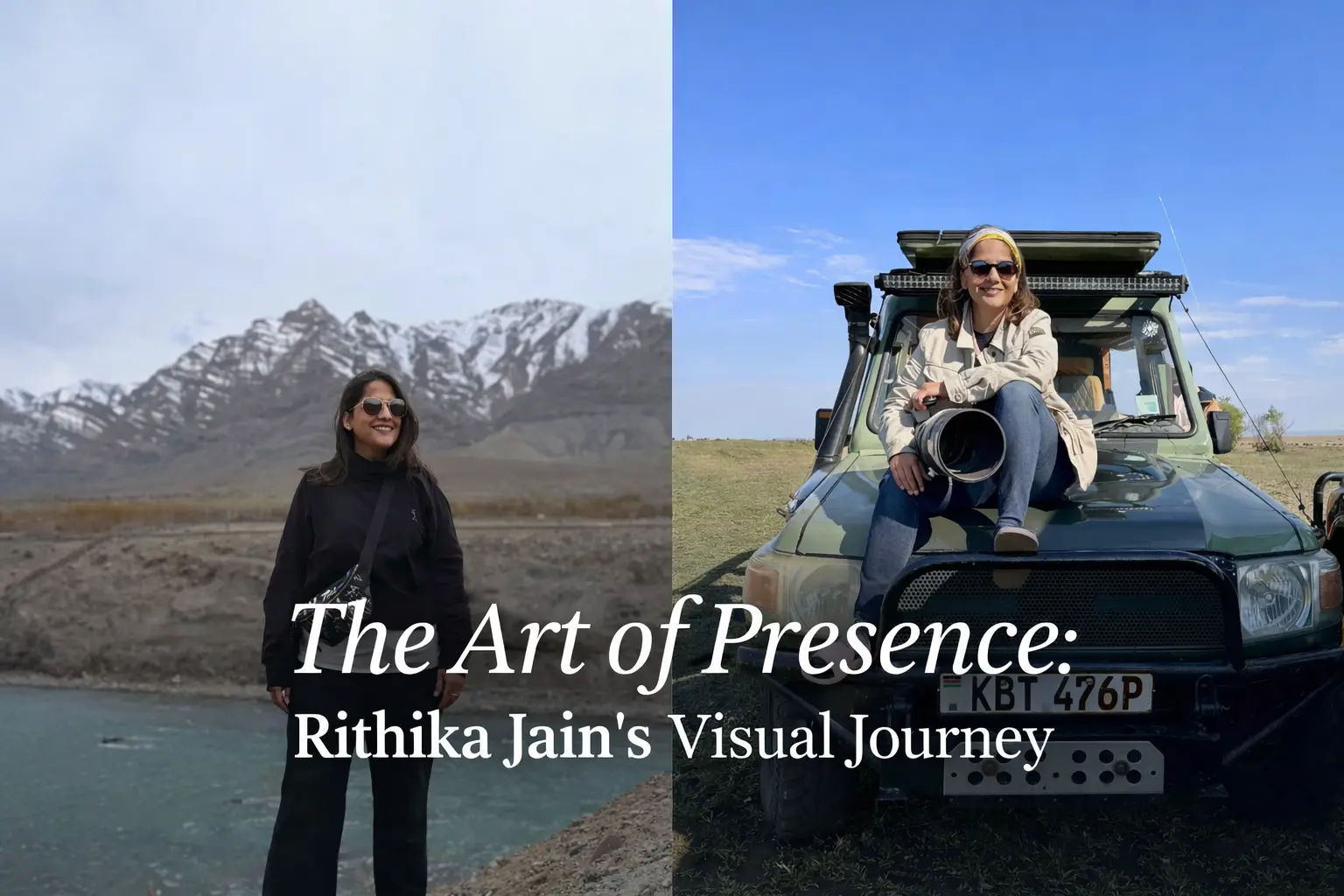
Rithika Jain: Wildlife & Architectural Photographer from Hyderabad

Rithika Jain is a wildlife and architectural photographer based in Hyderabad. She studied filmmaking at the London Film Academy, specialising in cinematography, a discipline that profoundly shaped her understanding of light, composition, and visual storytelling. Architecture taught her structure and discipline. The wild taught her presence. “The jungle became a space where I felt most attentive, stripped of noise, expectation, and vanity,” she reflects. Photography gradually evolved into her language, a way to translate emotion, observation, and stillness into something enduring. Over time, the landscapes she has worked in have shaped more than her portfolio. “They’ve shaped my way of seeing life, with more humility, patience, and respect for coexistence.” Creating Emotional Bridges Rithika describes herself as a visual storyteller focused on emotion, conservation, and presence. Her wildlife work centres on connection, capturing moments that reveal intelligence, care, and vulnerability within the natural world. “This path matters to me because images have the power to create empathy,” she says. A single photograph, she believes, can make someone pause long enough to care about something beyond their immediate reality. “That emotional bridge is my purpose.” Her work is not simply about documentation; it is about evoking feeling, because feeling is what ultimately drives awareness and conservation. The Quiet Side of the Wild Rithika is drawn to subtleties, fleeting expressions, nuanced behaviour, and the quieter emotional currents within the wild. “It’s less about capturing an event and more about preserving a feeling,” she explains. Her process is rooted in patience and observation, often requiring extensive travel through extreme conditions to reach remote environments. These expeditions inform not just what she photographs, but how she responds to a scene. The goal is immersion, allowing the viewer to step into a moment that might otherwise pass unnoticed. From Structure to Stillness Her journey began

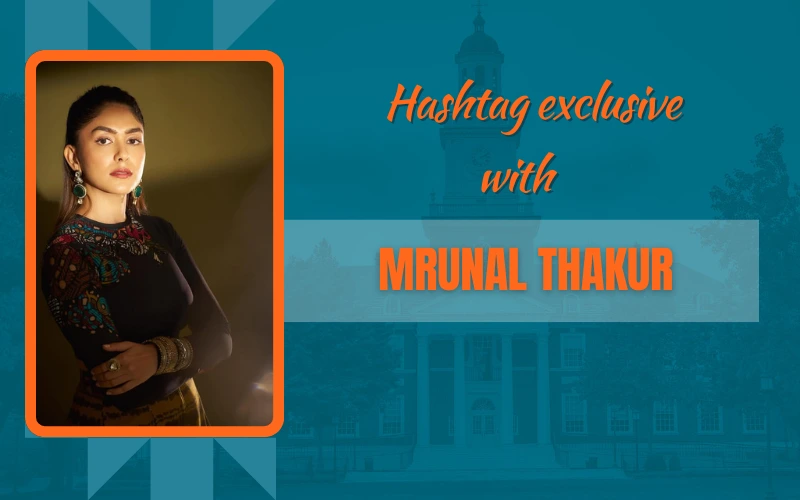
Mrunal Thakur on Do Deewane Seher Mein: Love, Insecurities and Finding Peace

With Do Deewane Seher Mein now released, Mrunal Thakur steps into a romance that celebrates vulnerability, emotional honesty and modern companionship. Produced under Sanjay Leela Bhansali’s banner, the film explores relationships through a lens of hope and self-discovery. In an exclusive conversation with Lipika Varma, the actor opens up about insecurities, beauty stereotypes, marriage, and the quiet confidence she has grown into over the years. You’ve spoken about insecurities before. What were your early struggles? Even after moving to Mumbai, I struggled with confidence. I couldn’t answer questions in class because I was insecure about my English and my Marathi accent. My name is unisex, and boys would make fun of it. When I entered the industry, I felt I needed to sound “elite.” I thought accent and diction defined you. Today, I realise insecurities only matter when you give them importance. I’m comfortable in my own skin now. I feel good the way I am. Have you ever faced challenges because of being considered “too beautiful”? Yes, sometimes people think that if you’re beautiful and successful, life must be easy. It’s not! There are moments when I wish I could just be normal. For Love Sonia, my audition was literally placed in a folder marked “Do Not Open.” Fortunately, the director opened it and felt I was right for the role. I had to convince the team that with prosthetics and makeup, we could make it work. People assume beauty makes everything easy. It doesn’t. Everyone struggles. Beauty alone cannot carry you forward. There are a lot of things that have to fall in place. I also remember attending a funeral and not being able to grieve freely because cameras were around. Sometimes you just want to be a daughter or sister, not an actor. How was it working

You May Also Like

Connect with us