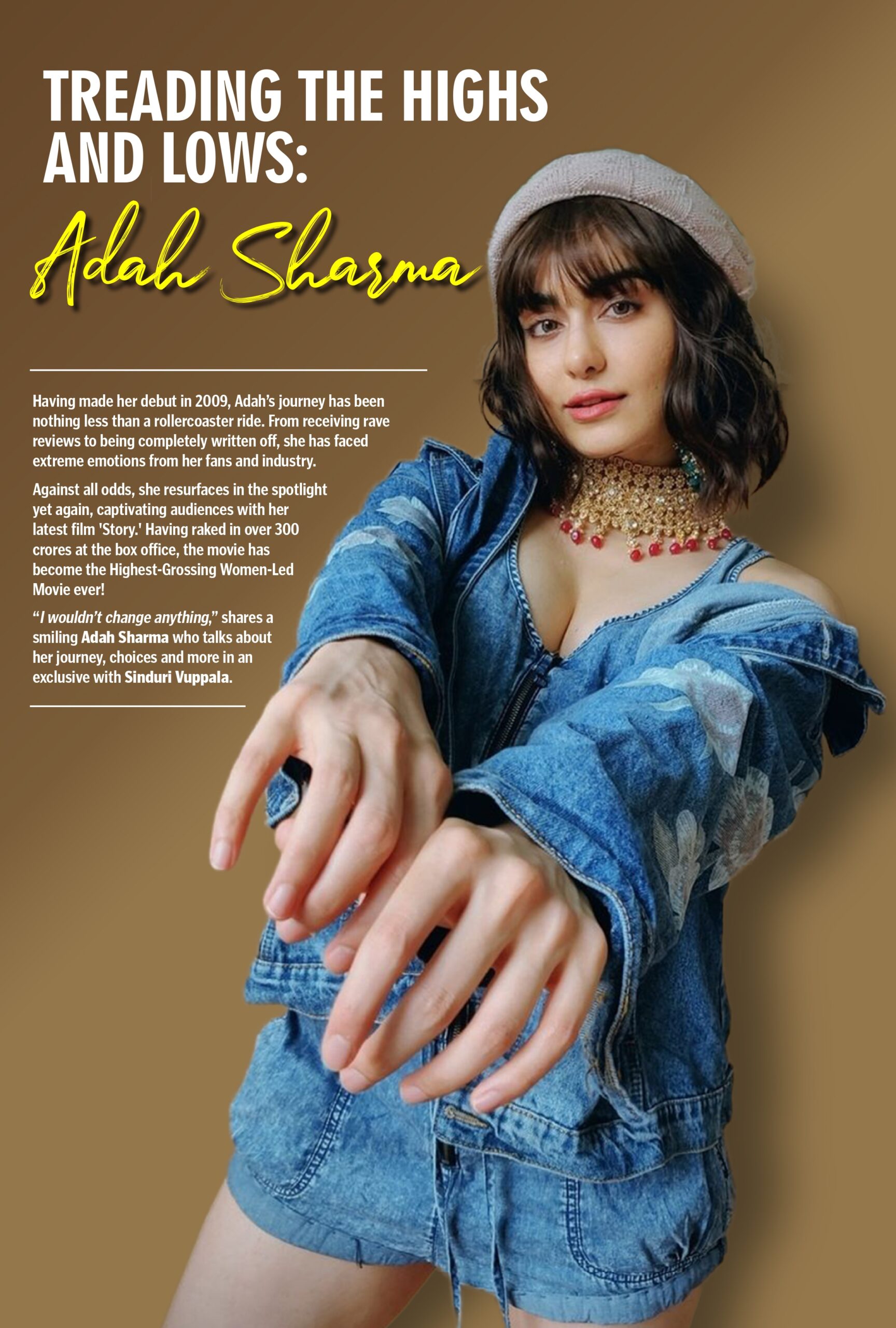
Treading the highs and lows: Adah Sharma

When the going gets tough, Adah gets going…

Having made her debut in 2009, Adah’s journey has been nothing less than a rollercoaster ride. From receiving rave reviews to being completely written off, she has faced extreme emotions from her fans and industry. Against all odds, she resurfaces in the spotlight yet again, captivating audiences with her latest film ‘Kerala Stories.’ In this film, witness her transformative portrayal as a protagonist radicalized and coerced into joining ISIS.

“I wouldn’t change anything,” shares a smiling Adah Sharma who talks about her journey, choices and more in an exclusive with Sinduri Vuppala.

Adah, your journey in the industry has been quite remarkable. You have experienced numerous successes as well as challenges, but you have persevered through it all. Tell us a little about your journey.

It’s been about 15 years, since my first film, ‘1920’. I love acting, I love working on all these cool skills. Low points or high points, it’s all been fun! I wouldn’t change anything!

In a recent interview, you mentioned how you feel that every film you do would be your last… does that change after Kerala Story?

No, that should never change! I can’t predict the future and I don’t wish to. I don’t know who will give me my next movie and trust me with a project that I would also be equally excited to do. But after Kerala Story, I’ve been offered some really exciting projects and scripts, so looks like I’ll be around for a bit.

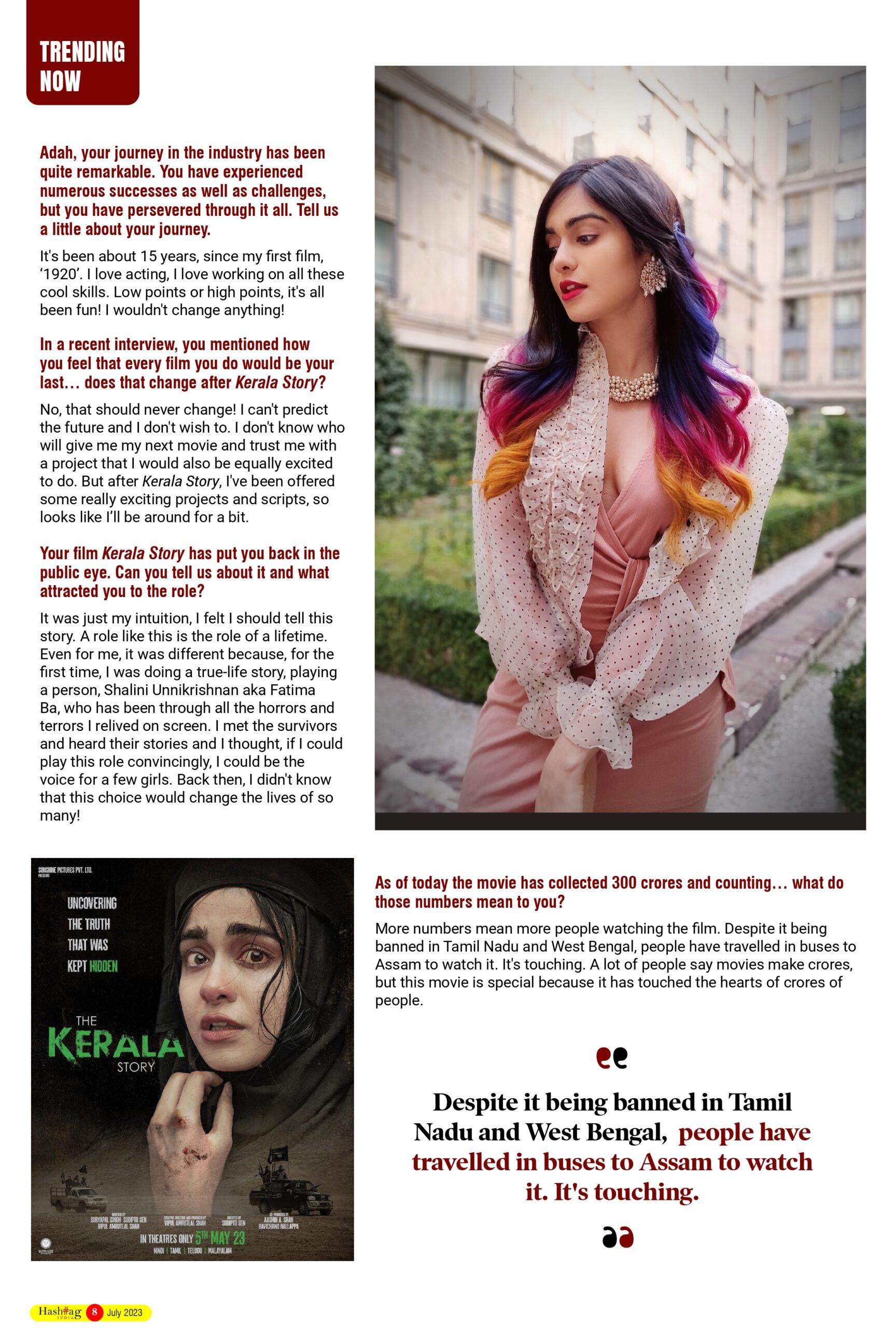
Your film Kerala Story has put you back in the public eye. Can you tell us about it and what attracted you to the role?

It was just my intuition, I felt I should tell this story. A role like this is the role of a lifetime. Even for me, it was different because, for the first time, I was doing a true-life story, playing a person, Shalini Unnikrishnan aka Fatima Ba, who has been through all the horrors and terrors I relived on screen. I met the survivors and heard their stories and I thought, if I could play this role convincingly, I could be the voice for a few girls. Back then, I didn’t know that this choice would change the lives of so many!

As of today the movie has collected 300 crores and counting… what do those numbers mean to you?

More numbers mean more people watching the film. Despite it being banned in Tamil Nadu and West Bengal, people have travelled in buses to Assam to watch it. It’s touching. A lot of people say movies make crores, but this movie is special because it has touched the hearts of crores of people.
Even the success of this film has been a little bittersweet, while you were appreciated for your role; you were also doled out death threats. How does this make you feel?

I’ve made space in the hearts of millions of people around the world. Speaking the truth would anger a few, after all, we are exposing a huge terrorism nexus. A lot of the anger is from people who haven’t watched the film. For me actually, it isn’t bitter. I am overwhelmed by the incredible amount of respect and love I have received. I haven’t witnessed such immense support for a film in recent times. People have embraced this film as their own and actively promoted it. I am thrilled to be included in their celebration of success.

What’s next for you? Do you think the success of this film will get you the kind of roles you have been looking for? Is it true that you have been offered an international project where you play a superhero?

I wish to work with people who are charged to make great cinema.

Yes it is true, I am playing a superhero, and I like to talk about films when the trailer is out. It’s nicer that way, like we did for the Kerala Story or like I do for all my films. My next set of films is very different and I play very contrasting characters from what I did in Kerala Story. To know more you will simply have to wait a few more months.

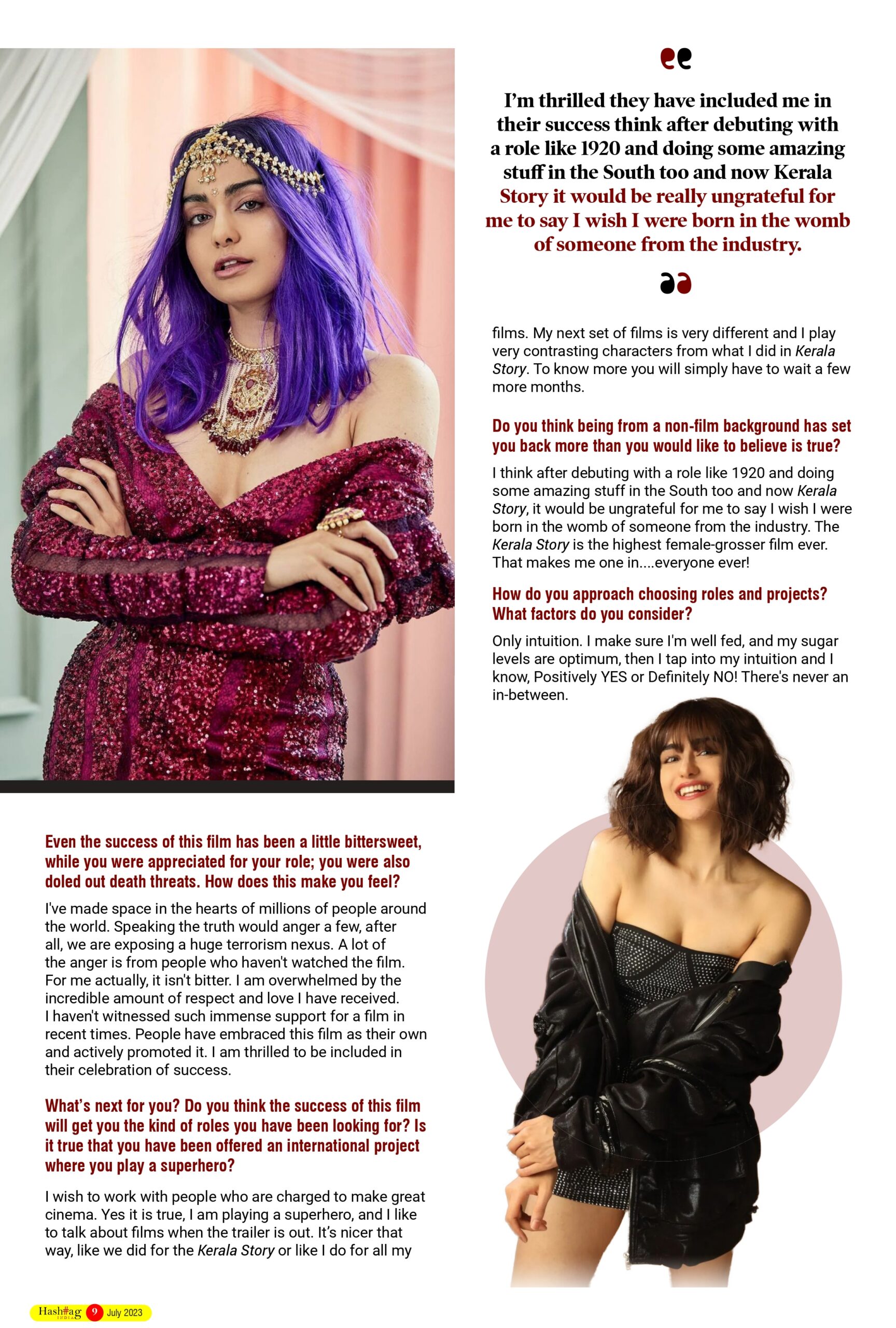
Do you think being from a non-film background has set you back more than you would like to believe is true?

I think after debuting with a role like 1920 and doing some amazing stuff in the South too and now Kerala Story, it would be ungrateful for me to say I wish I were born in the womb of someone from the industry. The Kerala Story is the highest female-grosser film ever. That makes me one in….everyone ever!
How do you approach choosing roles and projects? What factors do you consider?

Only intuition. I make sure I’m well fed, and my sugar levels are optimum, then I tap into my intuition and I know, Positively YES or Definitely NO! There’s never an in-between.

You have done a lot of films down South, any interesting projects in the pipeline?

Yes, several. I’m planning to clone myself first, want to do all of them and more.

What’s your take on OTT, OTT is now opening up opportunities for better roles and better performances…

I agree. With OTT more stuff is being made, and more actors are getting a chance. I’m very happy OTT exists; I hope all the talented actors get opportunities and raise the bar so high that mediocrity becomes obsolete.

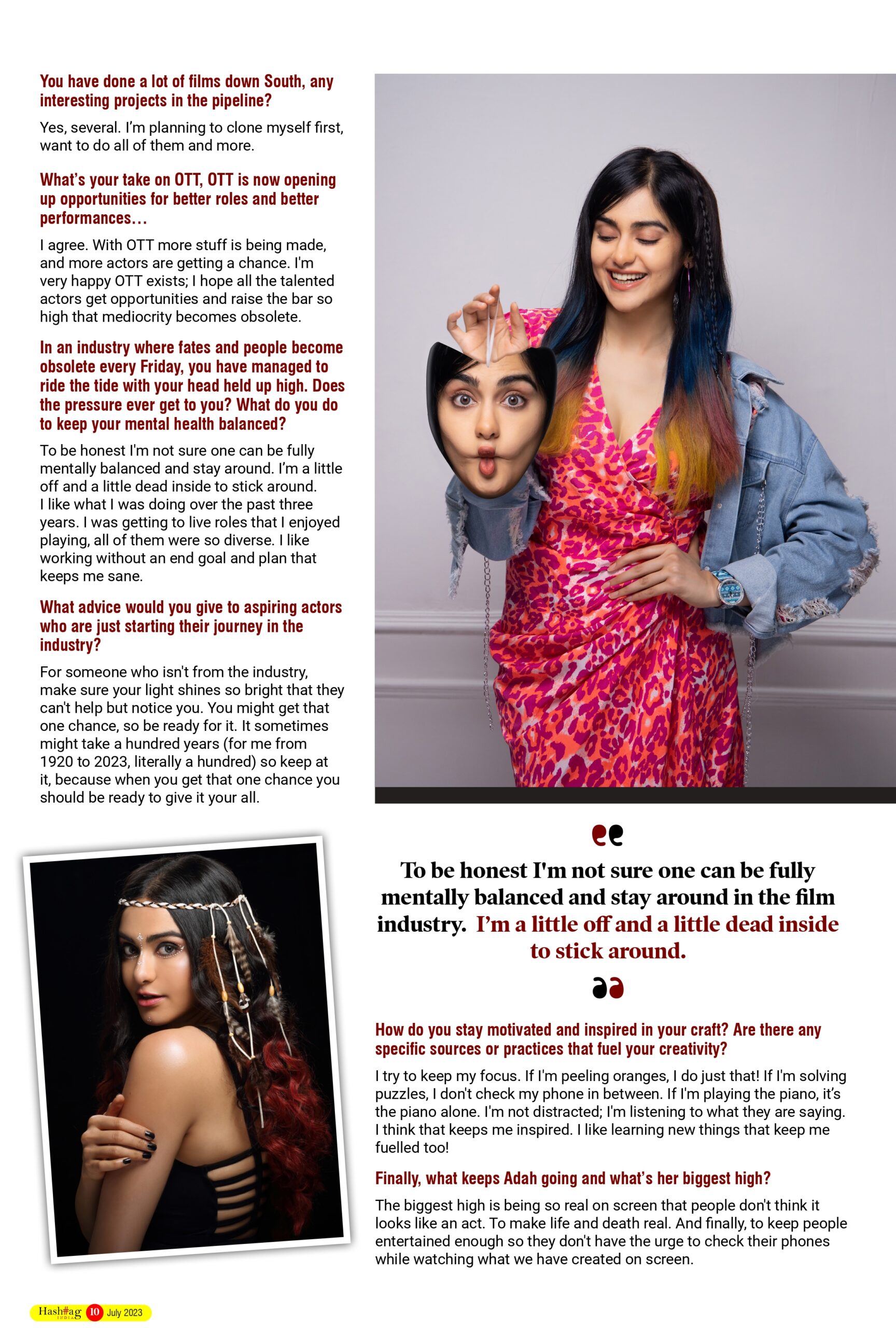
In an industry where fates and people become obsolete every Friday, you have managed to ride the tide with your head held up high. Does the pressure ever get to you? What do you do to keep your mental health balanced?

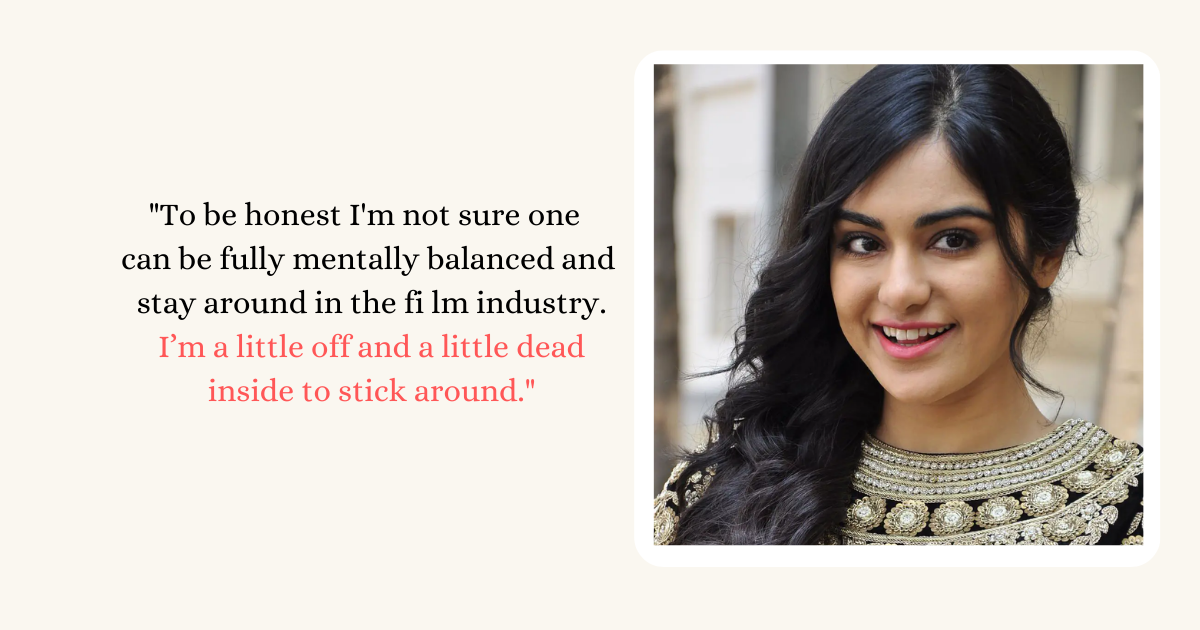
To be honest I’m not sure one can be fully mentally balanced and stay around. I’m a little off and a little dead inside to stick around.  I like what I was doing over the past three years. I was getting to live roles that I enjoyed playing, all of them were so diverse. I like working without an end goal and plan that keeps me sane.

What advice would you give to aspiring actors who are just starting their journey in the industry?

For someone who isn’t from the industry, make sure your light shines so bright that they can’t help but notice you. You might get that one chance, so be ready for it. It sometimes might take a hundred years (for me from 1920 to 2023, literally a hundred) so keep at it, because when you get that one chance you should be ready to give it your all.

How do you stay motivated and inspired in your craft? Are there any specific sources or practices that fuel your creativity?

I try to keep my focus. If I’m peeling oranges, I do just that! If I’m solving puzzles, I don’t check my phone in between. If I’m playing the piano, it’s the piano alone. I’m not distracted; I’m listening to what they are saying. I think that keeps me inspired. I like learning new things that keep me fuelled too!

Finally, what keeps Adah going and what’s her biggest high?

The biggest high is being so real on screen that people don’t think it looks like an act. To make life and death real. And finally, to keep people entertained enough so they don’t have the urge to check their phones while watching what we have created on screen.

Blurbs:

I am overwhelmed by the incredible amount of respect and love I have received. I haven’t witnessed such immense support for a film in recent times. People have embraced this film as their own and actively promoted it. I am thrilled to be included in their celebration of success.

 I’m thrilled they have included me in their success think after debuting with a role like 1920 and doing some amazing stuff in the South too and now Kerala Story it would be really ungrateful for me to say I wish I were born in the womb of someone from the industry.

To be honest I’m not sure one can be fully mentally balanced and stay around in the film industry. I’m a little off and a little dead inside to stick around. 
Leave a comment

Your email address will not be published. Required fields are marked *

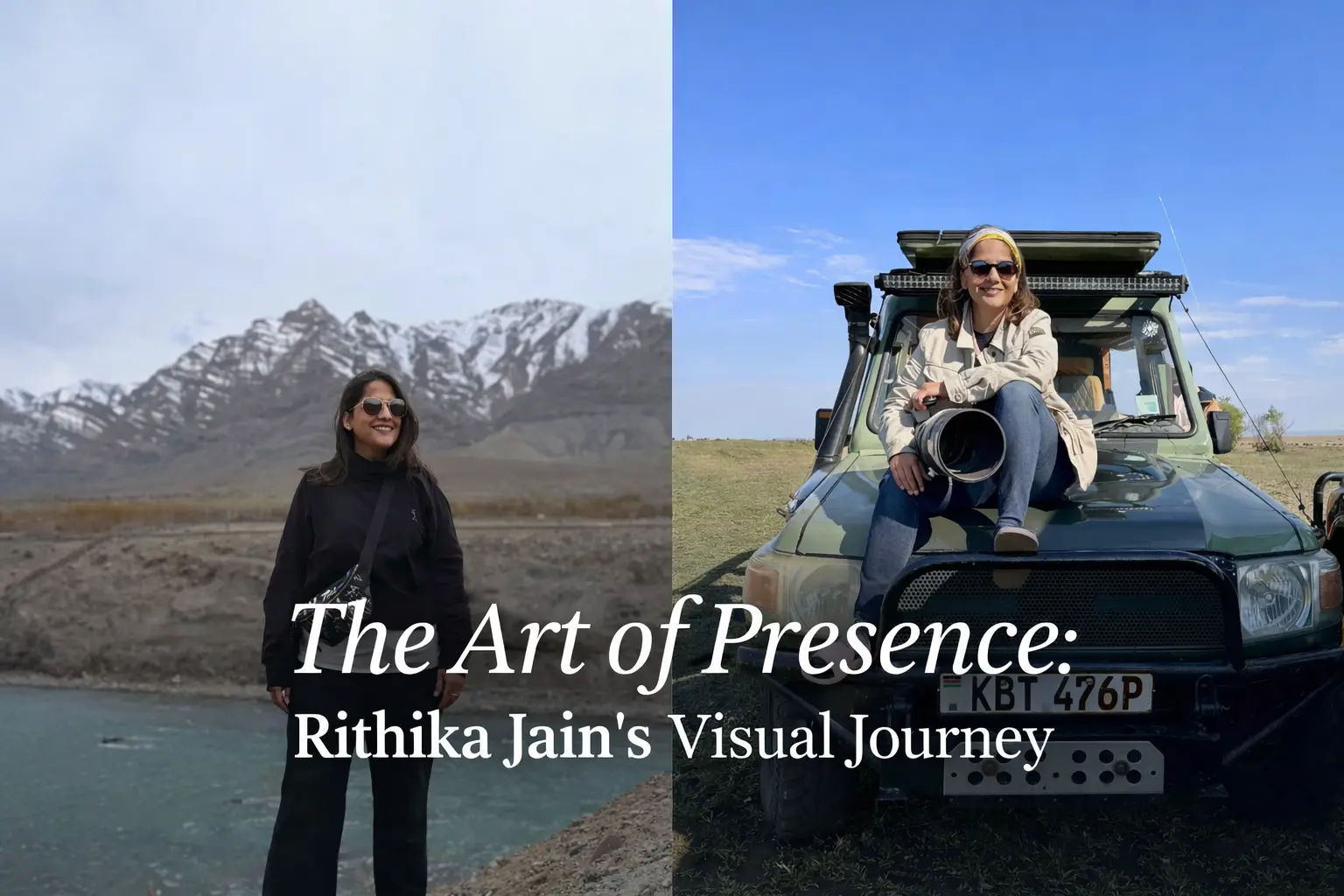
Rithika Jain: Wildlife & Architectural Photographer from Hyderabad

Rithika Jain is a wildlife and architectural photographer based in Hyderabad. She studied filmmaking at the London Film Academy, specialising in cinematography, a discipline that profoundly shaped her understanding of light, composition, and visual storytelling. Architecture taught her structure and discipline. The wild taught her presence. “The jungle became a space where I felt most attentive, stripped of noise, expectation, and vanity,” she reflects. Photography gradually evolved into her language, a way to translate emotion, observation, and stillness into something enduring. Over time, the landscapes she has worked in have shaped more than her portfolio. “They’ve shaped my way of seeing life, with more humility, patience, and respect for coexistence.” Creating Emotional Bridges Rithika describes herself as a visual storyteller focused on emotion, conservation, and presence. Her wildlife work centres on connection, capturing moments that reveal intelligence, care, and vulnerability within the natural world. “This path matters to me because images have the power to create empathy,” she says. A single photograph, she believes, can make someone pause long enough to care about something beyond their immediate reality. “That emotional bridge is my purpose.” Her work is not simply about documentation; it is about evoking feeling, because feeling is what ultimately drives awareness and conservation. The Quiet Side of the Wild Rithika is drawn to subtleties, fleeting expressions, nuanced behaviour, and the quieter emotional currents within the wild. “It’s less about capturing an event and more about preserving a feeling,” she explains. Her process is rooted in patience and observation, often requiring extensive travel through extreme conditions to reach remote environments. These expeditions inform not just what she photographs, but how she responds to a scene. The goal is immersion, allowing the viewer to step into a moment that might otherwise pass unnoticed. From Structure to Stillness Her journey began

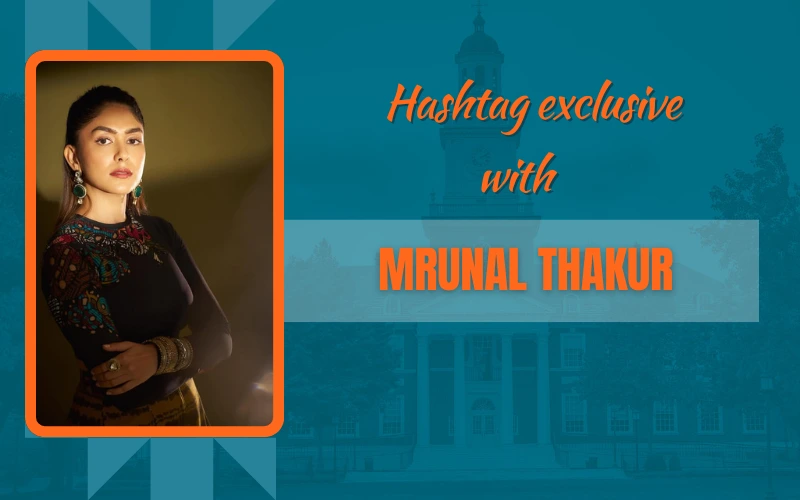
Mrunal Thakur on Do Deewane Seher Mein: Love, Insecurities and Finding Peace

With Do Deewane Seher Mein now released, Mrunal Thakur steps into a romance that celebrates vulnerability, emotional honesty and modern companionship. Produced under Sanjay Leela Bhansali’s banner, the film explores relationships through a lens of hope and self-discovery. In an exclusive conversation with Lipika Varma, the actor opens up about insecurities, beauty stereotypes, marriage, and the quiet confidence she has grown into over the years. You’ve spoken about insecurities before. What were your early struggles? Even after moving to Mumbai, I struggled with confidence. I couldn’t answer questions in class because I was insecure about my English and my Marathi accent. My name is unisex, and boys would make fun of it. When I entered the industry, I felt I needed to sound “elite.” I thought accent and diction defined you. Today, I realise insecurities only matter when you give them importance. I’m comfortable in my own skin now. I feel good the way I am. Have you ever faced challenges because of being considered “too beautiful”? Yes, sometimes people think that if you’re beautiful and successful, life must be easy. It’s not! There are moments when I wish I could just be normal. For Love Sonia, my audition was literally placed in a folder marked “Do Not Open.” Fortunately, the director opened it and felt I was right for the role. I had to convince the team that with prosthetics and makeup, we could make it work. People assume beauty makes everything easy. It doesn’t. Everyone struggles. Beauty alone cannot carry you forward. There are a lot of things that have to fall in place. I also remember attending a funeral and not being able to grieve freely because cameras were around. Sometimes you just want to be a daughter or sister, not an actor. How was it working

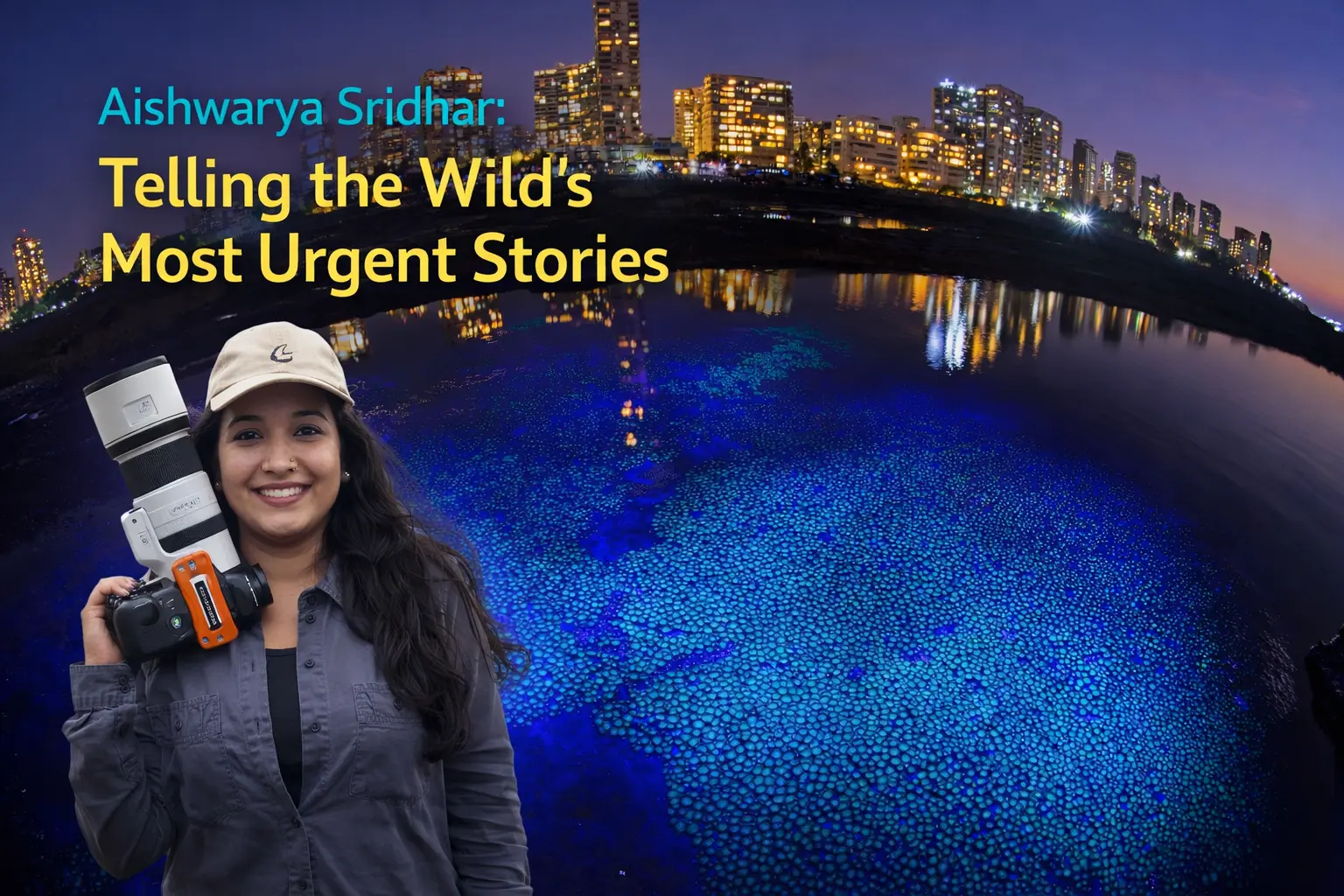
Aishwarya Sridhar: Telling the Wild’s Most Urgent Stories

Aishwarya Sridhar grew up in New Panvel, on the edge of the biodiverse foothills of Matheran, an ecosystem that holds nearly 7–8% of the world’s recorded species. A graduate in Mass Media, with Cambridge A Levels in Business and Accounting, she was raised in a family that balanced structure and creativity. Her father, Sridhar Ranganathan, a Chartered Accountant and former Vice President at Vodafone, taught her financial discipline while her mother, Rani Sridhar, an advertising professional and homemaker, nurtured storytelling instincts. Her earliest memories are of forests, fireflies, and quiet ecological change. “As I grew older, I watched that world slowly change, forests gave way to highways, and the fireflies disappeared.” That loss ignited a purpose in her. A turning point came when she watched Life with Sir David Attenborough. If a documentary could make her care about Komodo dragons from her living room, she reasoned, perhaps she could do the same for India’s wildlife. Conservation through Storytelling Today, Aishwarya is a National Geographic Explorer, Canon EOS Influencer, and Associate Fellow at the International League of Conservation Photographers (iLCP). As the co-founder and CEO of Bambee Studios, she leads a full-service production house specialising in natural history and environmental documentaries for global broadcast. “I don’t see my work as content creation, I see it as conservation through storytelling,” she says. “My camera is simply the bridge between two worlds, the wilderness and people who may never step into it.” Her productions have aired on National Geographic WILD, Arte, CuriosityStream, NHK, KBS, and Love Nature. Her photography has appeared in National Geographic magazine, BBC Wildlife, The Guardian, Mongabay, Digital Camera, The Times of India, and Sanctuary Asia. In 2020, she became the first Indian woman to win at the Wildlife Photographer of the Year Awards in London, and she has received

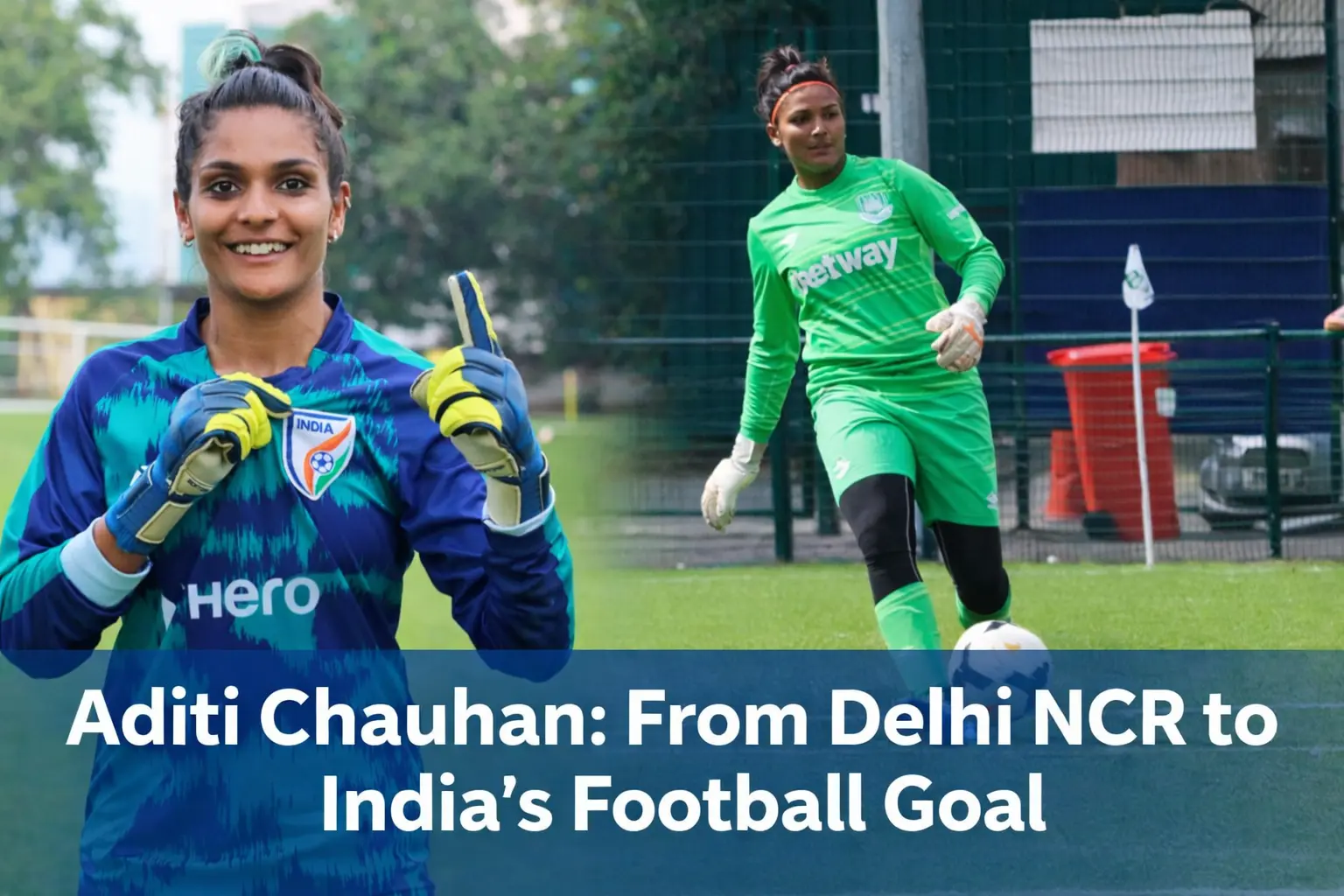
Delhi NCR | Professional Footballer, Founder of She Kicks & Aditi Chauhan Foundation

This March, Hashtag Magazine celebrates the spirit of International Women’s Day with a special feature that puts the spotlight where it truly belongs, on women who are chasing their dreams and building their own success stories. Across fashion, food, sports, tech, and beyond, women today are breaking barriers, redefining industries, and proving that ambition has no single path. This edition brings together 25 inspiring stories of women who dared to start, lead, create, and persist, each journey unique, yet united by courage, resilience, and purpose. We present Next-Gen Women: Bold, Brilliant, Unstoppable. Learning to Stand Alone Aditi Chauhan was raised in Delhi NCR in a defence family that valued discipline and education. She was an active, competitive child who loved sports. “I didn’t grow up thinking I would become a professional footballer, because honestly, that wasn’t something girls around me were shown as possible.” She first started playing basketball before discovering football at the age of 15. “Once I stood in goal for the first time, something just clicked. I loved the responsibility of it. I loved that when everyone else panicked, I had to stay calm.” Moving abroad to pursue sports management while chasing football required convincing people, managing finances, and carrying expectations, all at a young age. Her parents’ quiet support made all the difference. “They never told me I couldn’t try.” Growing up as one of the only girls on the pitch shaped her resilience early. “It teaches you two things very quickly: how to fight for space, and how to stand alone,” she says. More than a Career Football gave her more than a profession. “It gave me confidence and an identity when I was still figuring myself out. It gave me strength in moments when I felt invisible.” When she signed with West Ham United

You May Also Like

Connect with us