Met Gala 2025: Tailoring, Tradition & Trailblazers How Indian Stars Redefined the Red Carpet

The 2025 Met Gala dazzled with its theme “Superfine: Tailoring Black Style, a celebration of precision tailoring, cultural identity, and the elegance of Black dandyism. From custom sherwanis to futuristic corsets, Hashtag Magazine shares some standout moments and key style takeaways from a night where tailoring met timelessness.

 Key Fashion Takeaways from the 2025 Met Gala

Theme: “Superfine: Tailoring Black Style”

The 2025 Met Gala red carpet was a masterclass in tailored elegance, artistry, and personal expression. Celebrating Black dandyism and the power of tailoring, this year’s looks blended historical homage with modern flair, resulting in a parade of bold silhouettes, precision cuts, and inventive interpretations of classic menswear.

Tailoring as Art

Tailoring took centre stage, not just in the form of suits but as a vehicle for storytelling. Think asymmetrical lapels, reimagined tuxedos, and sculptural drapes. Both men and women leaned into sharply cut silhouettes with exaggerated shoulders, nipped waists, and dramatic fabric plays.

Menswear Reimagined

Menswear wasn’t just for men. Female celebrities, too, embraced power dressing through androgynous ensembles blazers, wide-leg trousers, and three-piece suits, often styled with pearls, hats, and luxe textures like velvet and silk.

 Hyper-Personalised Couture

Custom-fitted, one-of-a-kind garments were the norm. Designers focused on craftsmanship and personal narrative every stitch, pleat, and detail tailored to the wearer’s identity and story.

Ethical Fashion

The red carpet dress code, aptly titled “Tailored For You,” encouraged guests to embrace sharp suiting, personalised silhouettes, and expressive detail. True to the spirit, Indian celebrities brought their A-game merging tradition, innovation, and individuality on one of the world’s most-watched fashion stages.
Met Gala 2025
Met Gala 2025

Indian Celebrities Who Stole the Spotlight

Shah Rukh Khan
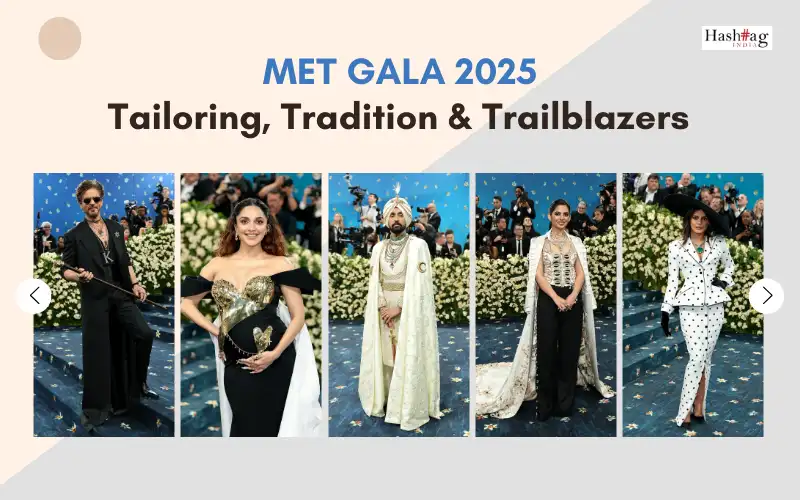
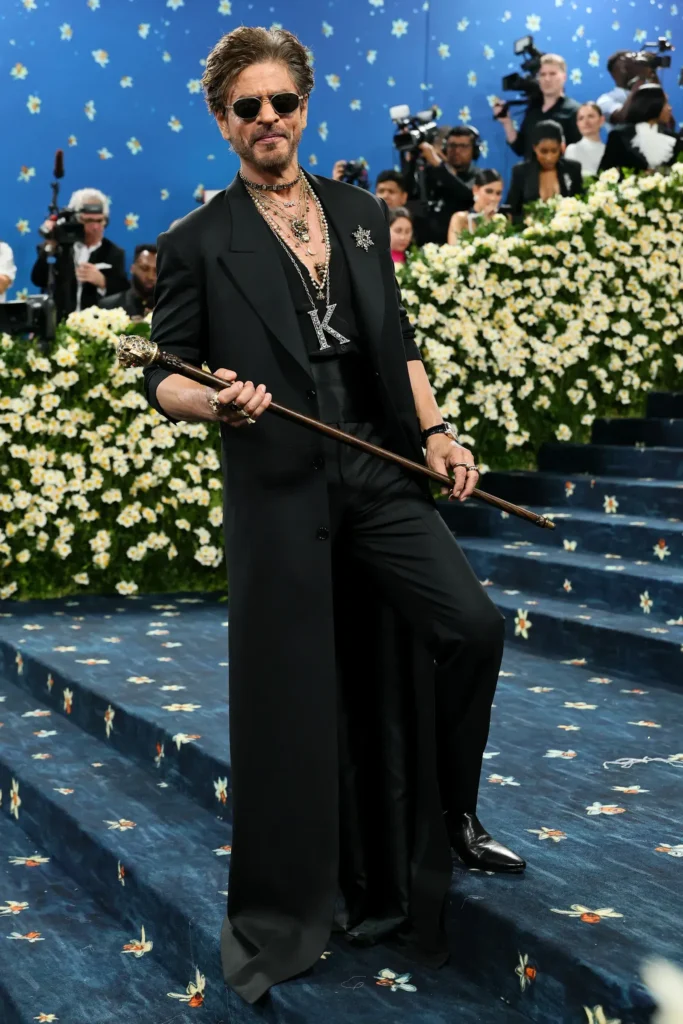
Making history as the first Indian male actor to walk the Met Gala red carpet, SRK arrived in a regal black Sabyasachi sherwani updated with futuristic accents. A rhinestone studded ‘K’ pendant, layered jewels, leather boots, and a cane added an air of theatrical charm. The tousled hair and signature sunglasses sealed the look of classic SRK with a twist of dandy.

 Priyanka Chopra Jonas
A Met Gala veteran, Priyanka channelled vintage glamour in a polka-dotted Balmain gown with power shoulders and a cinched waist. She topped it with a dramatic wide-brimmed hat and Bvlgari’s 241-carat Magnus Emerald necklace, the largest gem ever set by the brand. In an earlier appearance, she also turned heads in a futuristic Ralph Lauren mesh dress, hand-set with 50,000 crystals and a sweeping cape, capturing the essence of fashion-forward elegance.

 Diljit Dosanjh
For his Met debut, Diljit exuded royal Punjabi pride in a custom Prabal Gurung sherwani, complete with Golecha jewels, a perfectly coordinated turban, and a Kripan in hand. His look balanced tradition and modernity, effortlessly fusing cultural depth with contemporary tailoring.

Kiara Advani
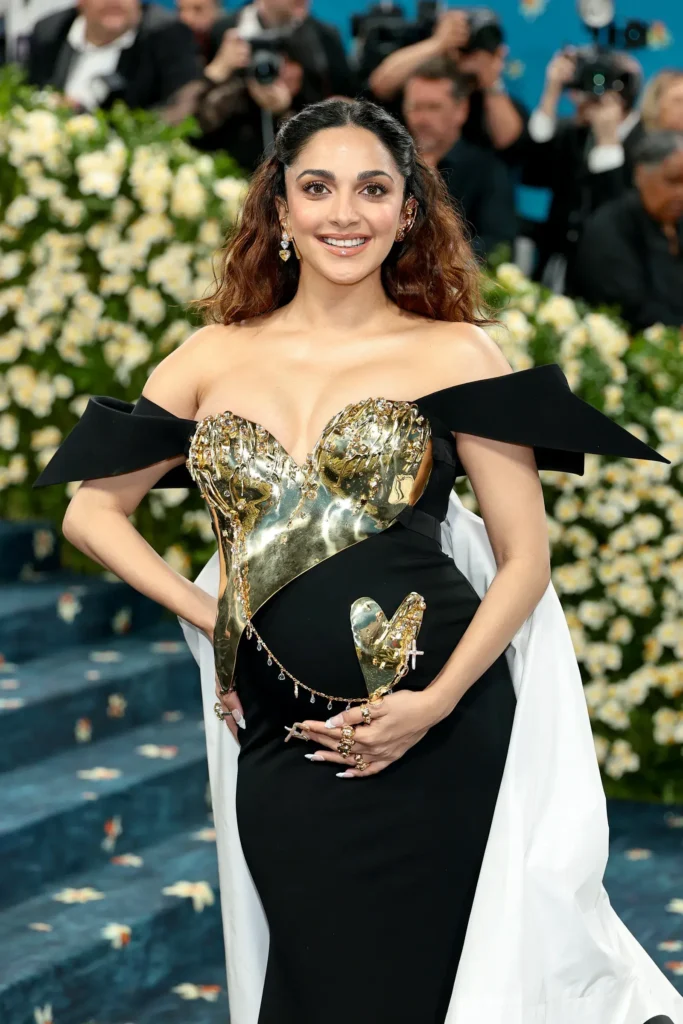
Glowing in more ways than one, Kiara made her first Met Gala appearance in a custom Gaurav Gupta off-shoulder gown, accentuated by a gold sculptural corset. Proudly showcasing her baby bump, she redefined maternity style, blending strength and softness in a look that celebrated modern motherhood.

Isha Ambani
A staple on global fashion carpets, Isha dazzled in a custom hand-embroidered ensemble that effortlessly combined Indian artistry with avant-garde tailoring. Her look, crafted in collaboration with an Indian designer, added further weight to the growing global presence of South Asian fashion.

Sabyasachi Mukherjee
The legendary designer made his presence felt without stepping onto the carpet himself. His creations were worn by multiple attendees, including SRK, reinforcing his position as a torchbearer of Indian design on the international stage. The fusion of heritage silhouettes and futuristic detailing cemented his mastery of modern Indian couture.

Fashion Takeaways & What’s Next

  • Tailoring Takes Over: Suits, sherwanis, and gowns with strong structural elements dominated, emphasising clean cuts and custom fits.
  • Cultural Storytelling: Indian attendees embraced their heritage through thoughtful detailing, like Diljit’s Kripan and Kiara’s gold corset, symbolising protection and strength.
  • Menswear for All: Both men and women leaned into androgynous styling and power dressing, pointing to a rising trend in gender-fluid fashion.
  • Craft Meets Innovation: From intricate embroidery to futuristic textiles, the focus was on artisan techniques reimagined for the now.
  • Global South Rising: With designers like Sabyasachi and Gaurav Gupta commanding attention, Indian fashion is no longer peripheral it’s leading conversations on global red carpets.

The 2025 Met Gala once again proved that fashion is far more than clothing it’s cultural commentary, identity, and vision. And the Indian contingent? They didn’t just participate. They defined the moment.
Leave a comment

Your email address will not be published. Required fields are marked *

Gold Is Back: Why Classic Jewellery Is Regaining Its Shine in 2026

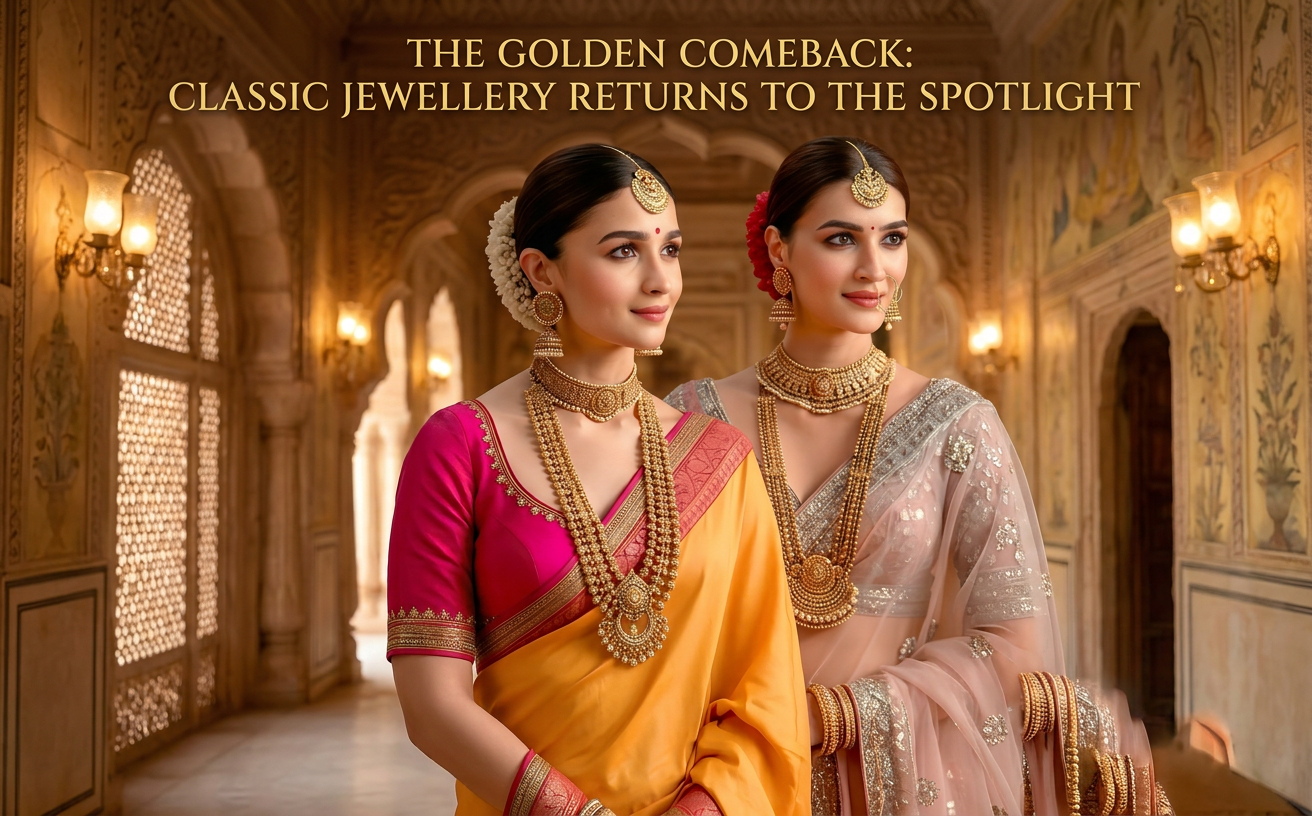
For the past decade, the jewellery industry has seen waves of change. Artificial jewellery, minimalist designs, and the rapid rise of lab-grown diamonds have transformed consumer preferences, especially among younger buyers looking for affordable luxury. Yet in 2026, gold jewellery is quietly reclaiming its throne. From weddings to everyday fashion and even men’s accessories, gold is experiencing a powerful resurgence not just as ornamentation, but as a trusted investment. The Investment Factor One of the biggest reasons for gold jewellery’s comeback is simple: stability. While diamonds and lab-grown alternatives have gained popularity due to affordability, they often lack strong resale value. Gold, on the other hand, remains a tangible asset that can be sold, exchanged, or passed down generations. This financial security has made gold increasingly attractive to modern buyers who want jewellery that doubles as an investment. During recent wedding seasons in India, jewellers have reported rising demand for plain gold jewellery in 22K, 18K and 14K forms as buyers prioritise long-term value over heavily diamond-studded pieces. With gold prices steadily climbing in recent years, many consumers now view gold jewellery as a form of wearable wealth something that carries emotional significance while also retaining monetary value. Celebrity Influence and the Wedding Effect Celebrity culture continues to play a major role in shaping jewellery trends. A recent example is the high-profile wedding of actors Rashmika Mandanna and Vijay Deverakonda, which sparked widespread discussion about heritage jewellery. The couple’s wedding looks prominently featured elaborate handcrafted gold pieces inspired by South Indian temple architecture. Rashmika reportedly wore eleven pieces of traditional gold jewellery, while Vijay made headlines for embracing bold groom jewellery including layered necklaces, ear studs, cuffs and other royal-inspired ornaments. Their wedding highlighted something significant: gold jewellery is no longer just for brides. Men Are Embracing Jewellery Again Historically,

Alfiya Karim Khan: Mumbai YouTuber Redefining Modest Fashion and Digital Influence

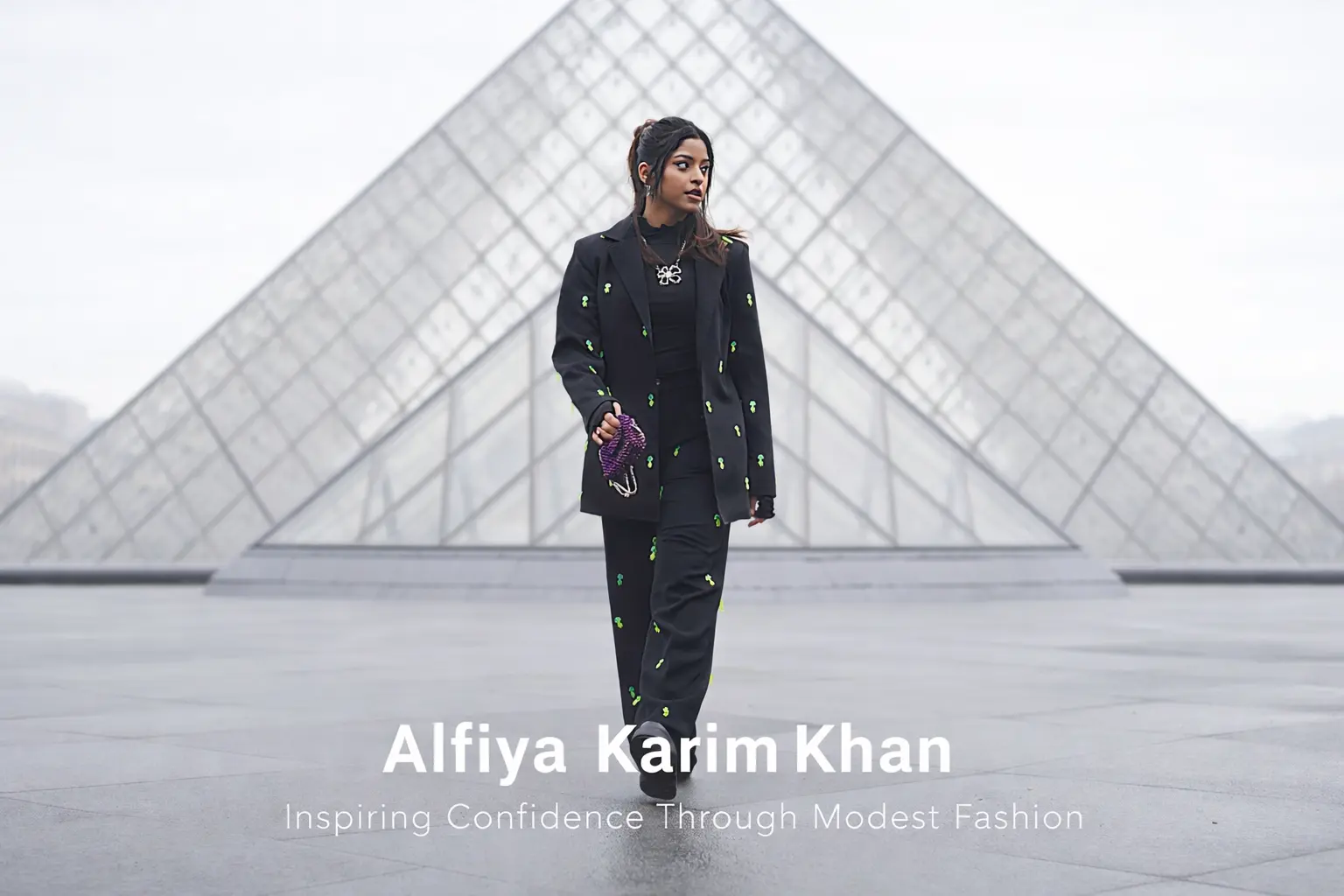
Alfiya Karim Khan grew up in Mumbai in a family where education was non-negotiable, and ambition was encouraged, so long as it followed a conventional path. Academically strong, medicine seemed almost predetermined for her. But internally, she felt drawn elsewhere. “Deep down, I always knew my life did not belong in a hospital corridor,” she says. “It belonged in the creative industry.” Choosing to pursue a Bachelor’s degree in Mass Media instead of medicine was met with hesitation and doubt. Coming from a background where most women were financially dependent, she had rarely seen female entrepreneurship firsthand. That absence became fuel. “Every time someone questioned whether content creation was serious, it pushed me to take it more seriously,” she reflects. What began quietly in her bedroom evolved into financial independence and professional stability. Today, her work represents more than a career; it symbolises “choosing conviction over comfort.” A Cultural Voice in Modest Fashion Alfiya identifies as a digital entrepreneur and a cultural voice within the modest fashion space. A decade ago, the online fashion landscape felt misaligned with her personal style. “I did not want to shape-shift just to belong,” she explains. “I decided to build around my authenticity instead of bending away from it.” Over the past 10 years, she has collaborated with global and legacy brands, been recognised among Forbes’ Top 100 Digital Stars, and represented modest fashion at Paris Couture Week. For her, these milestones represent more than visibility; they signal representation. “This is not just fashion content,” she says. “It is about showing that ambition and values can coexist.” Reinterpreting, Not Rejecting At its core, her work reinterprets mainstream fashion through a modest lens. Rather than rejecting trends, she modifies them, layering strategically and reshaping silhouettes. “Fashion does not have to be abandoned to align with

Tiara Dhody: Inspired by Heritage, Driven by Design

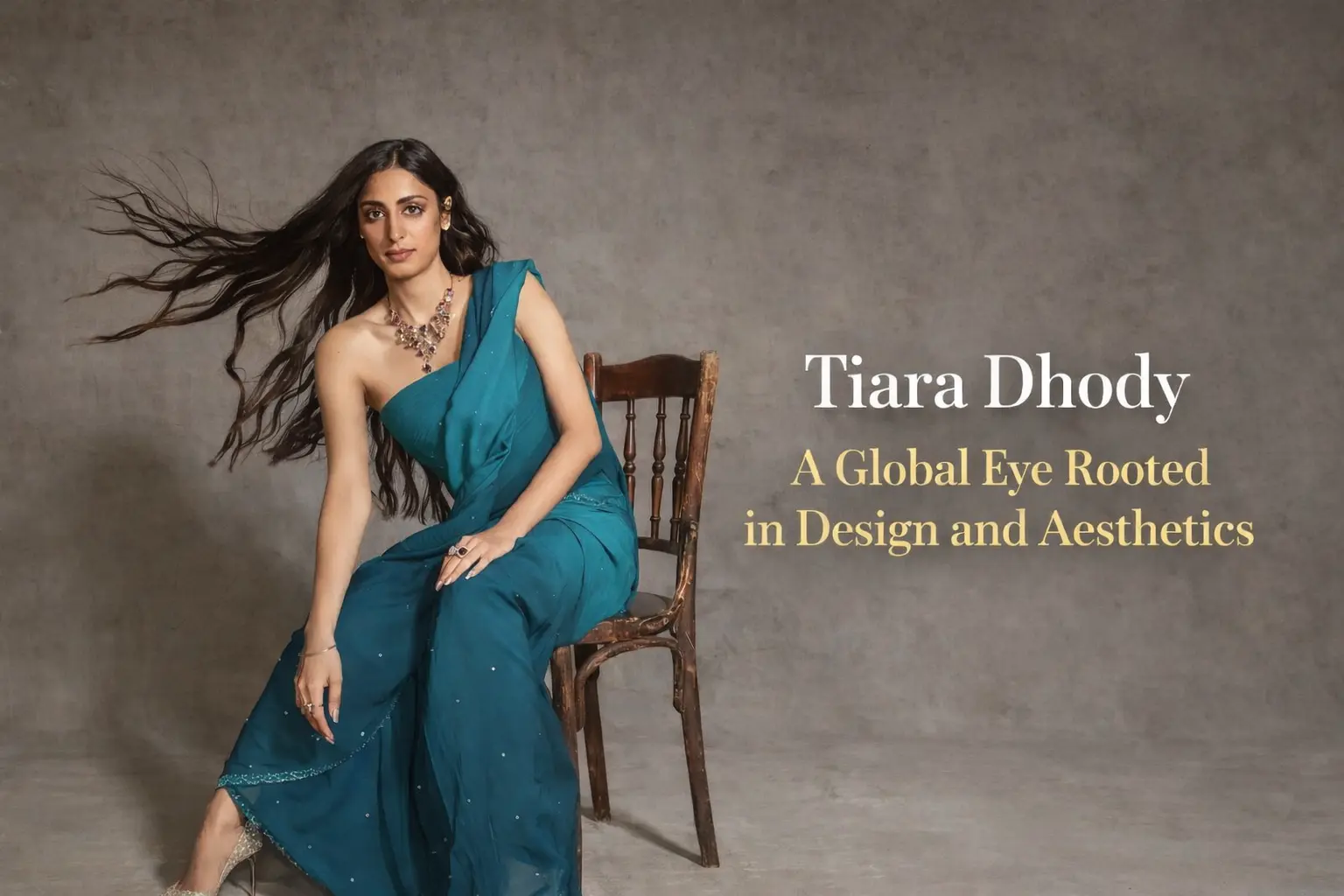
Tiara Dhody is a Mumbai-based founder and the creative force behind Treasures by Tiara. She studied at Cathedral and John Connon School, the United World College in Singapore, and later at Sarah Lawrence College, experiences that shaped her global perspective and independent thinking. Growing up in a household where fashion and design were part of everyday conversation, she was naturally immersed in aesthetics. Influenced by her mother, Queenie Dhody, and Raja Dhody, she absorbed a visual language early on. Yet, she credits her broader worldview to quieter influences. “Beyond formal education, I feel most shaped by the books I read, the films I watch, the places I travel to, and the people I surround myself with,” she says. “All of it quietly filters into my work.” Jewellery as Intimate Expression Tiara has chosen the path of self-expression, and for her, jewellery is one of the most intimate mediums through which to access it. “It’s something you can wear, feel, and move with; it becomes part of your story,” she explains. She also describes a more intangible element: “There’s something cosmic about it, the way certain pieces seem to find you at the right time.” In India, jewellery carries memory. It is passed down, inherited, gifted, layered with sentiment and history. That cultural weight deeply informs her design philosophy. “What sets my work apart is the balance between meaning and wearability,” she notes. The pieces are expressive without being loud, crafted to feel personal and enduring rather than purely ornamental. Many associate her designs with strong feminine energy, detailed craftsmanship, and jewellery that feels lived-in rather than showcased. Designed to Be Lived In Treasures by Tiara approaches jewellery differently. It is not created to be stored away for weddings or rare occasions; it is designed to be worn daily. “The idea

Fashion Trends 2026 for India

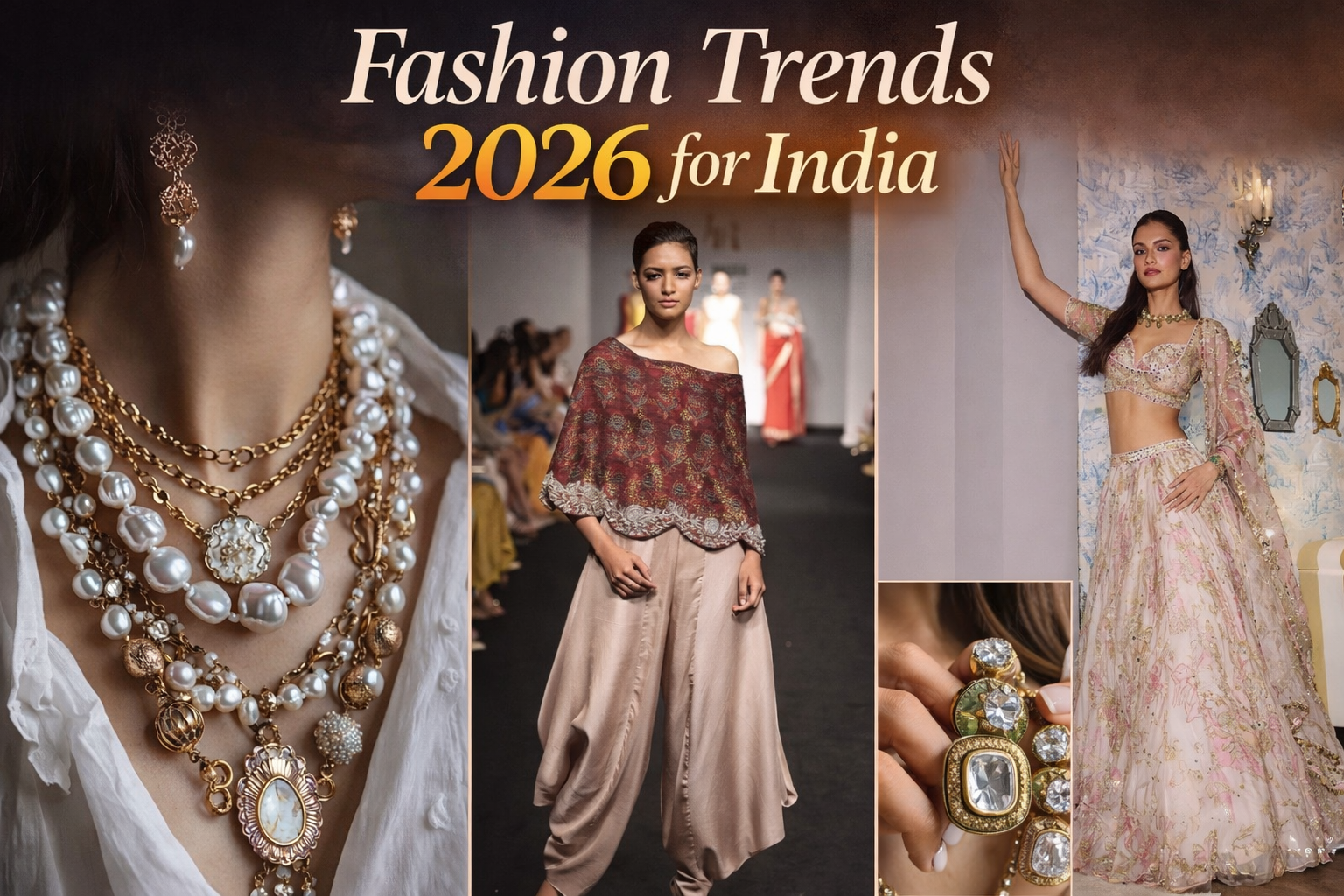
As India’s fashion ecosystem matures at the intersection of culture, technology, and sustainability, 2026 is poised to be a defining year. Below is a structured outlook on the key fashion trends expected to shape India this year… Sustainable Fashion Becomes the Default, Not the Differentiator By 2026, sustainability will no longer be a niche or premium positioning in India—it will be an expectation. Materials: Increased adoption of organic cotton, bamboo blends, banana fibre, hemp, and recycled polyester. Practices: Circular fashion models—resale, repair, and upcycling, and rental— gain mainstream traction. Consumer mindset: Shoppers demand transparency around sourcing, labour practices, and carbon footprint. Brands that fail to integrate sustainability at the core level risk losing relevance, particularly among Gen Z and urban millennials. Indian Craft Revival with a Modern Lens Indian fashion in 2026 doesn’t abandon tradition; it reinvents it: Handloom fabrics and artisanal textiles such as khadi, chanderi, and bandhani are being updated with modern cuts and silhouettes.   Ethnic pieces like sharara and gharara bottoms return with drama and movement, balanced by shorter kurtas or attached cape drapes.   Indo-western blends—co-ord sets, dhoti pants with crop tops, and sari gowns—continue to appeal to younger gen.  This trend reflects India’s fashion duality: honouring heritage while embracing global styling sensibilities. Fluid Fashion and Gender-Inclusive Design Gender boundaries in Indian fashion continue to dissolve, becoming more visible and commercially viable in 2027 Silhouettes: Kurta dresses, dhoti pants, oversized shirts, co-ord sets, and draped forms designed without gender labels. Retail evolution: Gender-neutral sections in both online and offline stores. Cultural impact: Particularly strong among urban youth and creative professionals. This shift reflects broader social acceptance and a move toward personal expression over conformity. Statement Accessories and Maximalist Flourishes While minimalism remains influential, accessories in 2027 are loud and expressive: Brooches, once relegated to formals, have made

You May Also Like

Connect with us