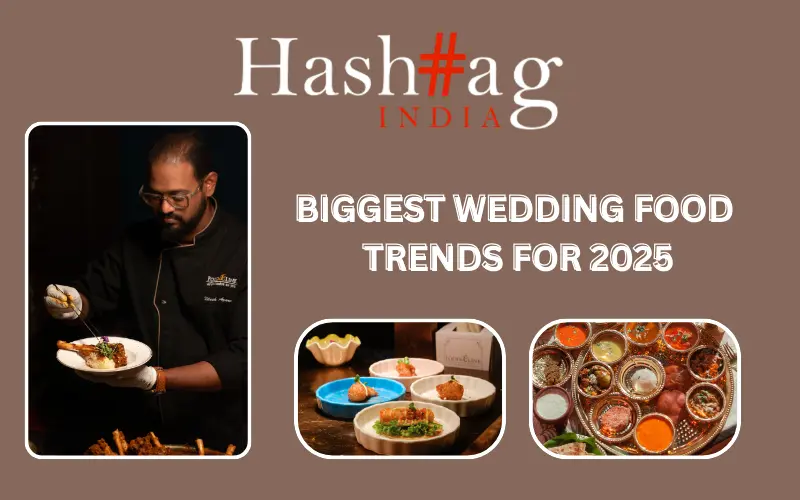
Feasting into the Future:Biggest Wedding Food Trends for 2025

Biggest Wedding Food Trends for 2025

Hashtag Magazine explores the biggest wedding food trends for 2025, where tradition meets innovation. From sustainable menus to immersive dining experiences, discover how couples are redefining wedding celebrations with unforgettable culinary delights.

1.What are the biggest wedding food trends you’re seeing for 2025?

Weddings in 2025 are all about minimal elegance and pastel-inspired setups, with menus that balance global influences and progressive Indian cuisine. Couples are seeking innovation with comfort, familiar dishes presented with a fresh twist alongside interactive experiences like live stations and sustainable, seasonal menus.

2.Are couples leaning more towards traditional Indian menus or global fusion cuisine?

Couples aren’t choosing between traditional Indian and global fusion, they’re blending both. Classics anchor the rituals, while progressive Indian and global flavors elevate cocktail nights and receptions, creating a menu that feels both rooted and modern.

3.What are the top three “wow factor” food presentations or setups couples are asking for?

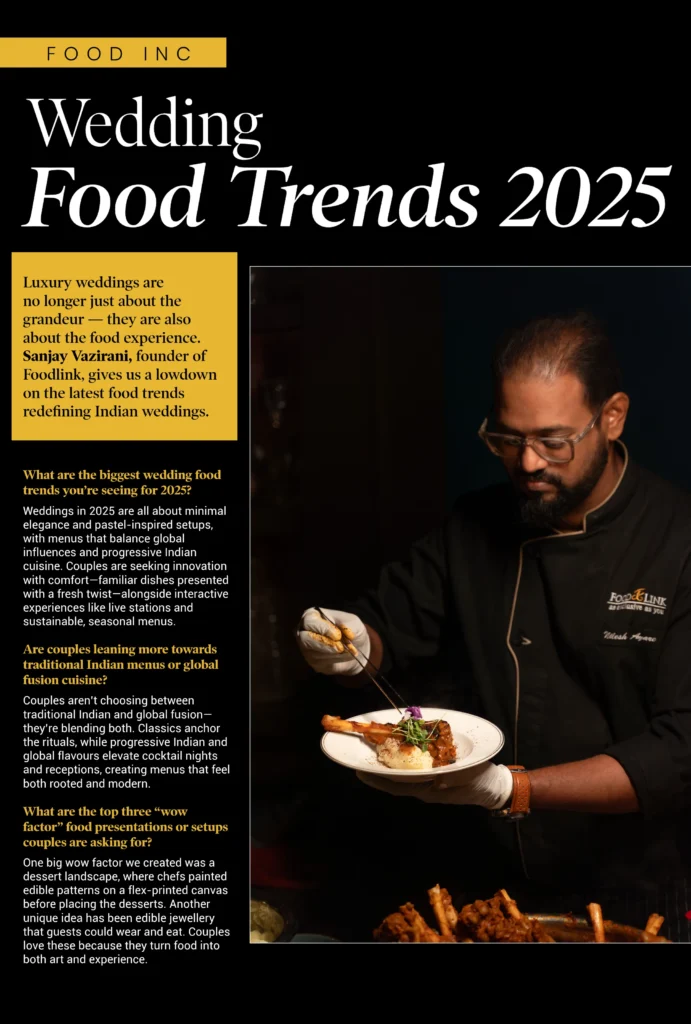
One big wow factor we created was a dessert landscape, a flex printed with circles as placeholders where chefs designed patterns using edible paints, sauces, and garnishes before placing the desserts. Another unique idea has been edible jewellery, where guests could actually wear and eat the creations. Couples love these because they turn food into both art and experience. 

4.How are sustainability and locally sourced ingredients influencing wedding menus this year?

Couples today are embracing seasonal, locally sourced ingredients, not only for their freshness, but also to support farmers, reduce waste, and pair them with eco-friendly packaging and serve ware. It’s a mindful shift that makes weddings feel both luxurious and responsible.
5.What’s trending in wedding desserts?

Plated dinners are generally reserved for VIP sections and remain an option, but at weddings, live and interactive counters continue to be the highlight. They bring energy, engagement, and variety, which is why guests always love them.

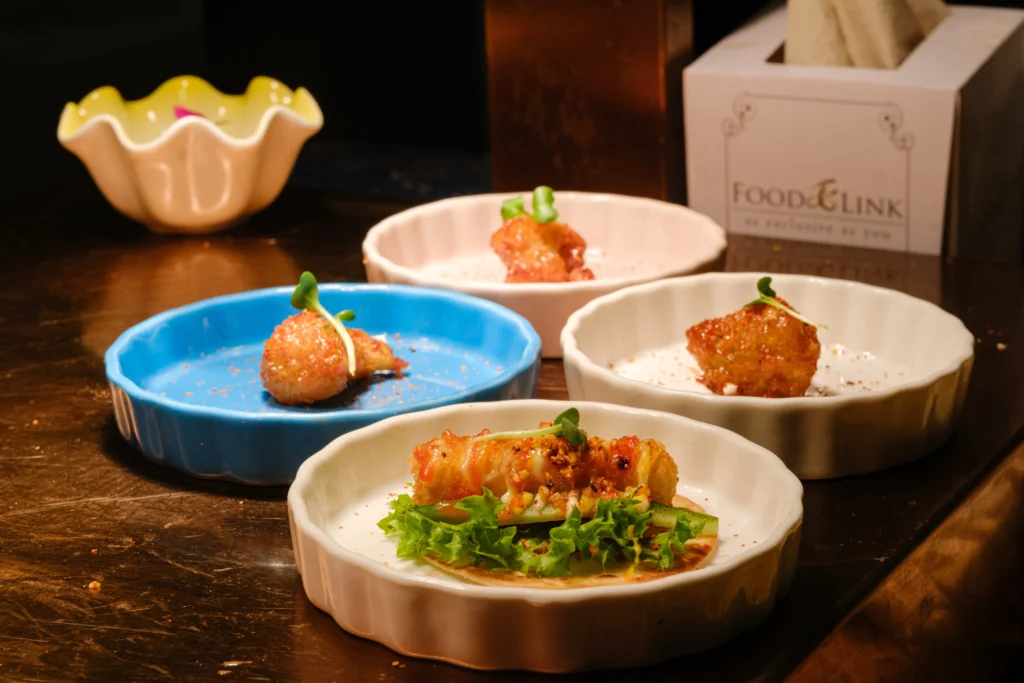
When it comes to desserts, the trend is all about creativity and presentation. Couples are choosing sweets that match the theme of each function, traditional mithai for wedding rituals, and modern or western desserts for cocktail nights. Fusion desserts are also a big hit, like rasgulla with coffee syrup or tiramisu gulab jamun. Healthier stations with jaggery-based or fruit-based desserts are gaining popularity too. And for something unique, we’ve even created dessert landscapes like a canvas painted with edible paints that guests could scoop and enjoy, along with playful twists such as jalebi churros.

6.What’s the most memorable food trend you’ve executed recently? (Chef Input)

One of the most memorable trends we executed recently was ‘fire-to-plate’ dining, where everything is cooked right in front of the guests and served instantly. Live cooking stations make the whole experience interactive and exciting. For example, hot biryani served in mini matkas, (straight from the sigdi) or flying buffets where there’s no traditional buffet setup instead, it feels like an à la carte service, with dishes prepared fresh and served within minutes. This format works especially well for intimate gatherings with a smaller guest list.

7.How are caterers making food an interactive experience for guests?

Creating an interactive dining experience requires intention and careful planning. It’s almost like directing a play, from the welcoming aroma as guests walk in, to the sound of kebabs sizzling or golgappas crunching, to the cool feel of a ceramic bowl in hand, the visual storytelling on the plate, and finally the burst of flavour on the palate. Not every dish needs to engage all five senses, but the overall journey should  and that’s what truly sets us apart. 

8.What are the common mistakes couples make while planning their wedding menu?

A common mistake couples make while planning their wedding menu is not keeping their guests in mind. That’s where Foodlink steps in, we dive into the details and even conduct thorough guest profiling to ensure the menu truly connects with everyone attending. Another mistake is overloading the menu on a single day, too many dishes can feel overwhelming and often lead to unnecessary waste. We usually recommend creating a different menu for each event to keep things fresh and exciting, and always suggest including a counter of local comfort food, which guests really appreciate.

9.What’s your tip for making late-night snacks memorable at weddings?

Late-night snacks are best when they’re light and comforting, the kind of munchies you’d crave after a night out. Couples are adding fun touches like Maggi stalls, pizzas, rolls, kebabs, or even egg bhurji and omelette counters. Some go a step further with homely khichdi or indulgent treats like kulfi and warm brownies.
10.How are global flavours influencing Indian wedding menus this year?

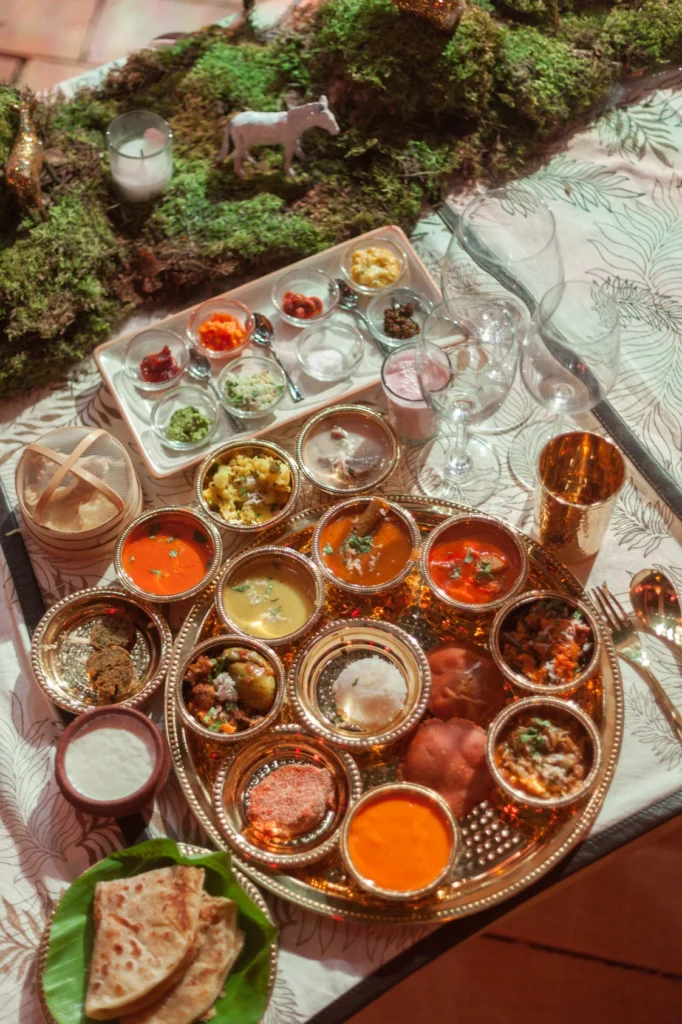
Global flavours are no longer just add-ons, they’re being woven seamlessly into Indian wedding menus. We’re seeing sushi bars next to chaat counters, Middle Eastern grills paired with Indian kebabs, and Italian pastas with desi twists. Couples today want their menus to reflect their travels and personalities, so the food feels both familiar and adventurous at the same time. Fusion is an area we truly enjoy experimenting with for instance, at an event in Ahmedabad we created khandvi noodles and dhokla sushi, and the guests were absolutely delighted.

11.What are some creative presentation ideas you’re using to make food Instagram-worthy?

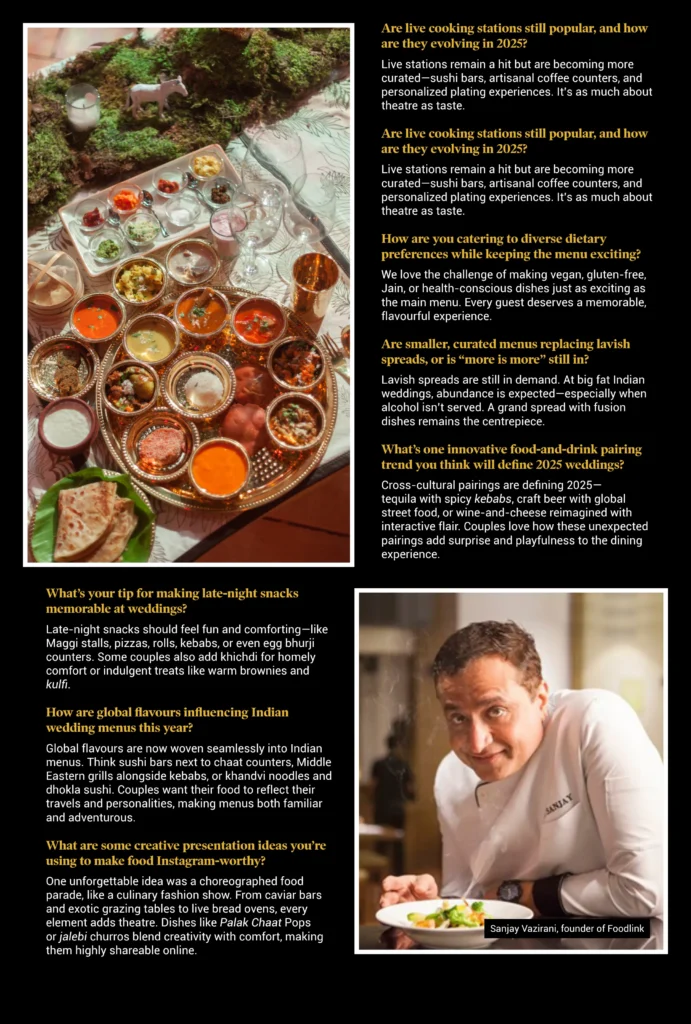
One of our most unforgettable ideas was a choreographed food parade designed like a culinary fashion show. Gourmet creations were served in motion, presented on bespoke platters by elegantly dressed servers, turning the act of service into performance. Our signature stations also add theatre from a caviar bar and a grazing table with exotic vegetables and aged cheeses, to a live bread oven and grill trolleys. Dishes like Palak Chaat Pops, Pomegranate Caviar with edible spoons, Raclette, and Malai Broccoli blend creativity with comfort. It’s not just about the food, it’s about drama, surprise, and delight at every turn, making it truly Instagram-worthy.

12.Are live cooking stations still popular, and how are they evolving in 2025?

Live stations are still a hit, but in 2025 they’re more curated, sushi bars, artisanal coffee counters, even chefs doing personalized plating. It’s about theatre as much as taste.

13.How are you catering to diverse dietary preferences while keeping the menu exciting?

Making healthy or dietary-specific food exciting can be a challenge, but that’s the kind of challenge Foodlink loves. We design vegan, gluten-free, Jain, or health-focused dishes that are just as creative and flavourful as the rest of the menu, so no one feels left out, and every guest still gets a memorable dining experience.

14.Are smaller, curated menus replacing lavish spreads, or is “more is more” still in?

Lavish spreads are still very much in demand. At big fat Indian weddings, especially in a flamboyant market, guests expect abundance. And for events without alcohol, the entire focus shifts to food, so a grand spread, fusion options, and a plethora of dishes almost go without saying.

15.What’s one innovative food-and-drink pairing trend you think will define 2025 weddings?

2025 is all about cross-cultural pairings. We’re seeing tequila with spicy kebabs, local craft beers paired with global street food, and even classic wine-and-cheese experiences being reimagined in fun, interactive ways. Red wine with slow-cooked meats is another trend couples are embracing, it feels indulgent yet timeless. Guests love how these unexpected pairings surprise the palate and add a playful twist to the dining experience.
Leave a comment

Your email address will not be published. Required fields are marked *

Suzann Homan: A Corporate Lawyer Crafting Goa’s Premium Spirits

Suzann Homan is a Corporate Lawyer and a proud Bandra-born Bombay Goan, whose identity blends Mumbai’s urban sensibility with deeply rooted family values. Raised in a home where food, flavour, and togetherness were sacred rituals, her worldview was shaped by culture and community. At the heart of that influence was her mother, Grace Fernandes, whose quiet strength and intuitive craft left a lasting imprint. From her, Suzann inherited an appreciation for taste, detail, and intentional living, values that would later define her entrepreneurial journey. Turning Ritual into Brand As Founder–Director of Kantala Spirits and the visionary behind Gracia Viva Agave, Suzann did not set out to merely launch a beverage. Gracia was born as a tribute, inspired by her mother’s small-batch infused agave recipe, long shared at intimate family gatherings. For Suzann, the mission was clear: transform a deeply personal ritual into an experience others could access, without losing its soul. Purpose, she believes, lies in honouring origin while allowing thoughtful evolution. Precision Meets Emotion What distinguishes Suzann’s leadership is the seamless blend of emotional authenticity and professional discipline. Where many brands pursue fleeting trends, Gracia is anchored in storytelling, flavour memory, and intention. Her legal background ensures structural rigour and compliance, while heritage guides creativity. She champions balance and mindful indulgence over excess, a philosophy increasingly aligned with modern consumer values. A Family Table in Bandra Gracia’s roots trace back to intimate family rituals. Agave spirit, sourced through family ties in Mexico, was infused at home by Grace Fernandes with fruits, spices, and chocolate, guided entirely by instinct. These bottles were never commercial. They were tokens of celebration, shared among loved ones. The shift from private ritual to public offering was gradual and deliberate, anchored in respect for its origins. Expanding the Table The defining moment came when Suzann

How Walking Away from CA Led to a Life in the Kitchen

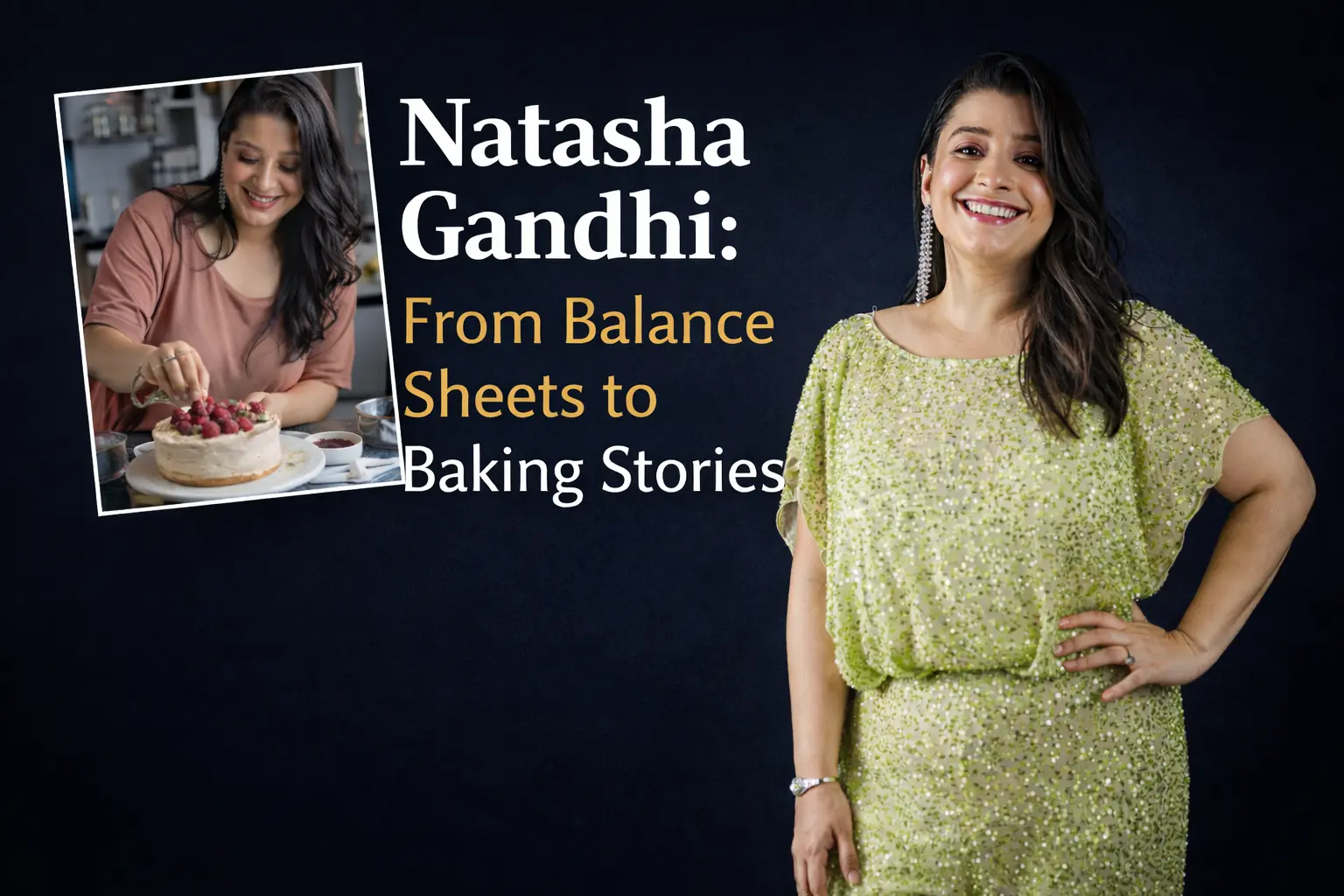
Natasha Gandhi’s journey into food was anything but predictable. Once on the path to becoming a Chartered Accountant, she attempted the exams five times before confronting a difficult truth: her heart wasn’t in it. “Walking away from CA was terrifying,” she admits, but that leap of faith led her back to her kitchen, where she began experimenting with healthy, gluten-free, vegan desserts. What started as curiosity soon deepened into a calling. A defining moment came when she stepped onto MasterChef India, finishing as a top finalist. The platform sharpened her confidence and creative voice, introducing her to a national audience. From there, she began sharing recipes online, building a community around wholesome, hearty food rooted in story. Today, many know her as the ‘Biryani Queen,’ a title born from her ability to honour tradition while reimagining comfort food in nourishing, accessible ways. Food as Memory and Medicine Natasha describes her work as culinary storytelling. She documents traditions, reinterprets classics, and brings regional and community-driven recipes into modern kitchens. “Food, for me, is both memory and medicine,” she says. Her philosophy challenges the idea that healthy eating must feel restrictive. Instead, she champions balance, dishes that are satisfying, flavourful, and mindful without sacrificing soul. Heritage with a Modern Lens What distinguishes her voice is her focus on lesser-known regional dishes, from diverse biryanis to India’s pasta-like traditions, presented in ways that feel approachable for home cooks. She avoids chasing fleeting trends, choosing instead to create from curiosity and passion. Her signature strength lies in transforming indulgent favourites into healthier versions without compromising on depth. That blend of heritage, innovation, and mindful cooking defines her identity. Breakthrough Moments Growing up in a Punjabi household where food was celebration and identity, Natasha was surrounded by rich flavours and vibrant conversations. Influenced by chefs

Hunaaan Indiranagar: A Contemporary Pan-Asian Dining Experience

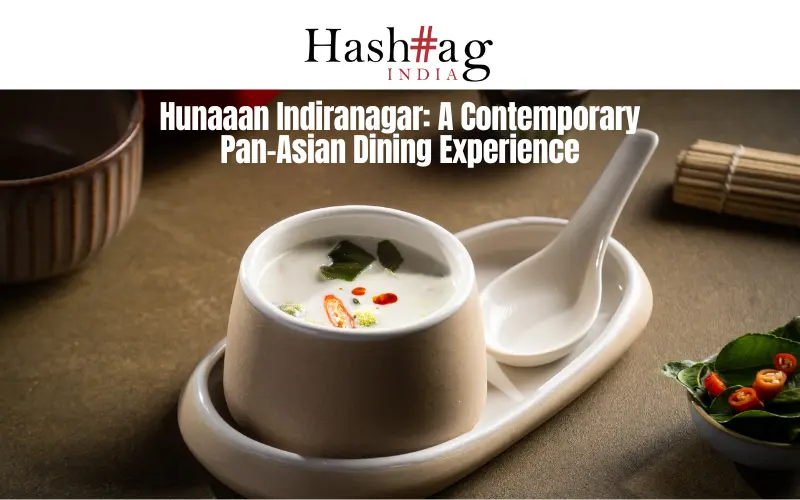
From bold spices that make you question every meal you’ve ever had to dishes that taste like they’ve travelled the world, Hunaaan delivers flavours that refuse to play it safe. Neha Dua gives a lowdown of the place. This contemporary Pan-Asian restaurant in Indiranagar packs the heat of Thai food, the heartiness of Korean cuisine, delicate Japanese dishes, and wholesome Chinese fare. Step into the 40-seater cosy place for a meal that will slap you awake and then lull you into a food coma. Plates exploding with personality Not having sushi here would be nothing short of criminal. The Ebi Tempura and Avocado Maki is everything one expects from Japanese cuisine. The prawn tempura comes alive in a riot of colours and flavours. Vegetarians, fret not, you can indulge in the Avocado Garden. Their dumplings are delectable, with very fine wrappers and perfectly balanced flavours. The Chilli Coriander Chicken Dumpling is a sight for sore eyes and hits you with a kind of balanced chaos that you can’t have enough of. And if you like your dumplings soupy, the Basil Flavoured Curry Dumpling won’t disappoint. Raise a glass to excellence A smooth Virgin Pina Colada, featuring creamy coconut milk, has the potential to teleport you to a tropical destination, while the Soju Picanté, a Hunaaan Signature Cocktail, is aptly described as “Everything you want from a picanté: Spicy, lemony, and we dare you to have just one.” Shaken. Stirred. Sipped. A little oink, a little sugar, and a lot of swagger Hunaaan’s imported pork belly deserves a mention. Doesn’t melt in your mouth, but is definitely less fatty than several other places. If you’re a tofu fan, don’t skip the tofu sizzler. But be prepared to share it with one or two others, for the portion size is HUGE. Although

Pure Kitchen to SOL55: Café Hops Across India

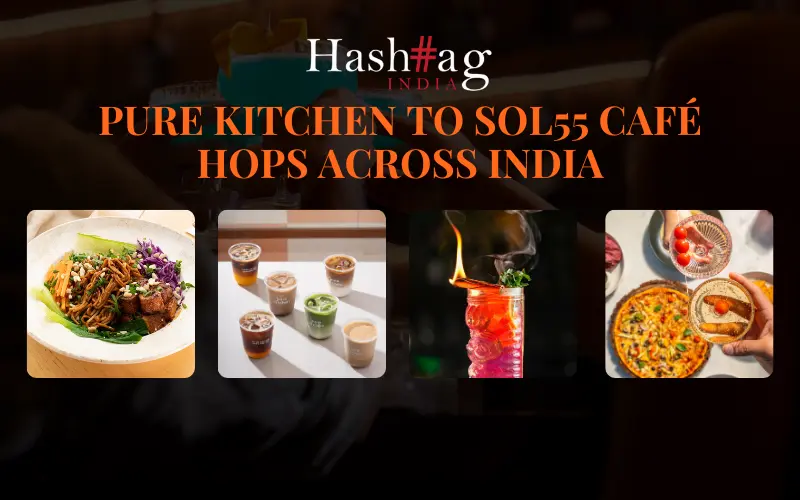
What: The Pure KitchenWhere: Bandra The Pure Kitchen brings a refreshing, honest take on clean eating to Bandra, one that feels warm, approachable, and rooted in real nourishment. Founded by Aaliya Ahuja of Oleander Farms and Saltt Karjat, the brand reflects her belief that healthy food shouldn’t feel like a punishment. Instead of restricting ingredients, The Pure Kitchen champions better alternatives: monk fruit instead of refined sugar, unprocessed honey over syrups, and clean, mindful swaps that elevate nutrition without compromising flavour. What truly sets the space apart is its transparency; every dish arrives with a protein count and calorie breakdown, empowering diners to make choices that serve their lifestyle. From low-carb bowls and vibrant vegan plates to guilt-free desserts, the menu balances comfort with consciousness. The Bandra outlet itself is a cosy, calm reprieve, ideal for mindful lunches, post-workout meals, or a quick grab-and-go treat from the charming coffee window. Pure, fuss-free, and thoughtfully crafted, The Pure Kitchen makes eating clean feel genuinely delightful. What: Dynamo, Vagator Hilltop Where: Goa Dynamo, located on the scenic Vagator Hilltop in Goa, is redefining the state’s sundowner culture with a seamless transition from laid-back sunset moods to an energetic, music-driven nightlife atmosphere. The Cliffside restro-lounge offers uninterrupted sea views, a curated cocktail program by internationally acclaimed consultants, and a menu shaped by chefs trained under award-winning culinary leaders. Signature plates such as Chaap & Chokha, Chilaquiles, Falafel Mezze Platter, and Korean Wings pair effortlessly with cocktails like Special Train to Goa, Spirit of the West, and Calico: The Painted Horse, each crafted with depth, flavour, and narrative. The interiors combine rustic Wild West cues with contemporary metal accents, creating a warm yet edgy aesthetic across its terrace, lounge seating, VIP sections, and bar-side tables. As the sun dips and the music builds, Dynamo

You May Also Like

Connect with us