
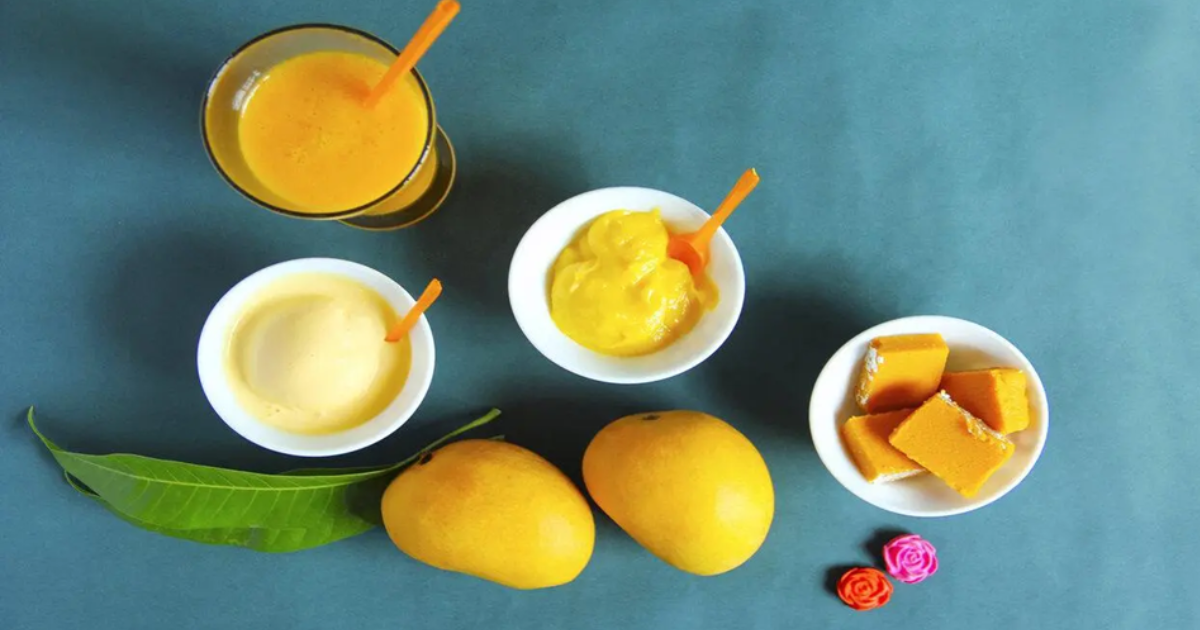
As the mercury rises, so does the allure of the king of fruits- the mango. This season, let your taste buds embark on a tropical journey with an array of mango dishes crafted by the culinary expertise of Chefs Padma Mohan, Sourabh, and Anupama. From the sweet tang of a perfectly ripe mango to the subtle spices that enhance its flavour, these recipes promise refreshment and joy in every bit. Dhanush Kumar dives into the summer spirit with these irresistible mango creations that are delightful to the palate.
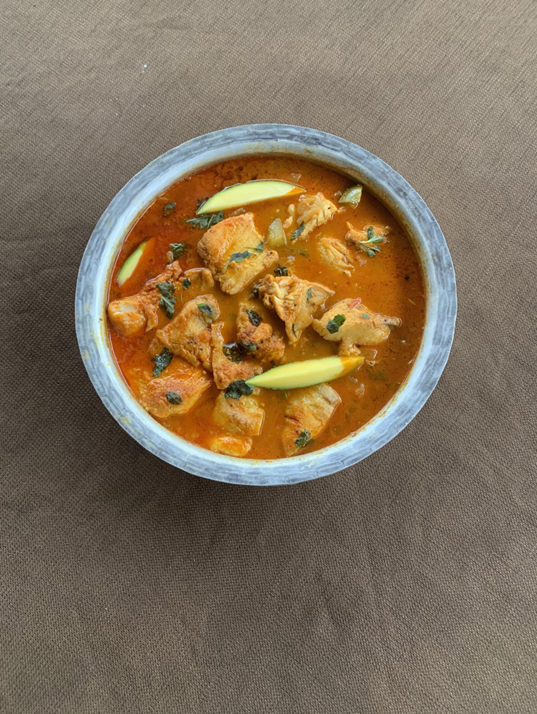
- Anupama’s Mamidikaya Chapa Pulusu– A Nellore Tradition
Elevate your summer dining with a traditional Andhra delicacy. Mamidaya Chapa pulusu is a harmonious blend of tangy green mango and fish, simmered to perfection with a medley of aromatic spices. This Nellore specialty, renowned for its generous use of fenugreek in the tadka, offers a unique, bold, and comforting flavour profile.
Ingredients:
- Firm fish with bone: 750g to 1kg (or 500g boneless), cut into pieces
- Medium onions, finely chopped: 2
- Ginger-Garlic paste: 1 tbsp.
- Green mango, adjust for sourness: 50 to 80g
- Green chillies to taste
- Cooking oil: 2 to 3 tbsp.
- Tamarind paste from a lemon-sized ball
- Garam masala powder: ½ tbsp.
- Coriander (Dhaniya) Powder: 1 tbsp.
- Chilli powder and salt, to taste
For the Tadka
- Mustard seeds, cumin (jeera), dry chilies, fenugreek seeds, curry leaves
- Fresh Coriander leaves
Instructions:
- Season the fish pieces with salt, chili powder, and a teaspoon of ginger-garlic paste.
- In a wide pan, heat oil and gently sear the fish pieces to lock in the flavours. Remove and set aside.
- Add more oil to the pan and initiate the tadka with mustard seeds, cumin, dry chilies, fenugreek seeds, and curry leaves.
- Add green chilies and onions and cook them until the onions are translucent.
- Add the remaining ginger-garlic paste and cook for a minute to eliminate the raw aroma.
- Stir in the green mango and cook briefly before adding chili powder, salt, tamarind paste, and water. Bring the mixture to a boil.
- Gently place the fish back into the pan, sprinkle with garam masala and coriander powder, then cover and simmer until the fish is thoroughly cooked and the flavours are well–integrated.
- Garnish with fresh coriander leaves, then remove from heat and let it rest, covered, for 5 minutes before serving.
This dish celebrates Andhra’s culinary heritage. The use of methi in the tadka elevates the taste to a new level. Serve this pulusu and watch as it becomes the centrepiece of your summer feast.
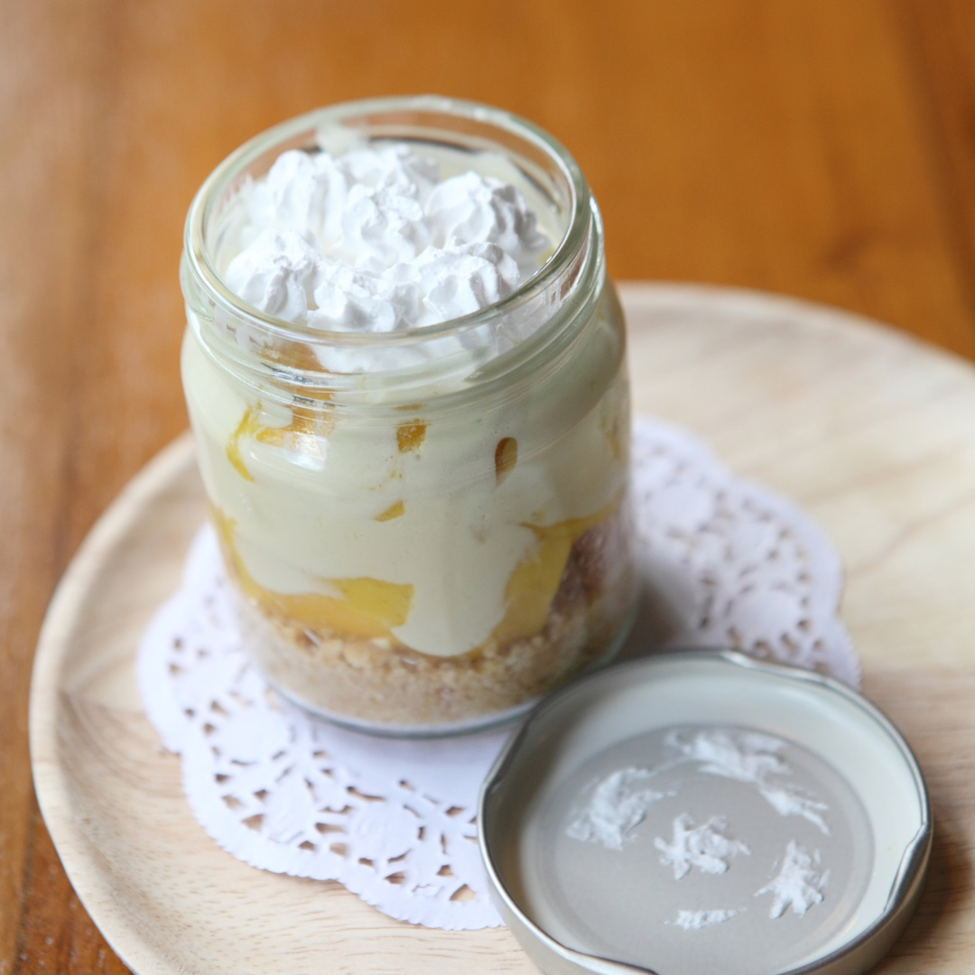
2. Padma Mohan’s Mango Compote Jar Cake
Step into a world of buttery bliss with this Mango Compote Jar Cake recipe, a timeless treasure perfect for the summer.
The Summer Pound Cake
Ingredients:
- 1 cup unsalted butter (2 sticks), room temperature
- 1 ½ cups granulated sugar
- 4 large eggs, room temperature
- 2 cups all-purpose flour
- 1 teaspoon baking powder
- ½ teaspoon salt
- 1 teaspoon pure vanilla extract
- ½ cup whole milk, room temperature
Instructions:
- Begin by preheating your oven to a gentle 160 degrees. Grease a 9×5-inch loaf pan with butter, dust with flour, and line with parchment paper.
- Sift the flour, baking powder, and salt in a separate bowl, whisking them into a fine, airy mixture.
- Whisk the softened butter and sugar in a mixing bowl until pale and fluffy, which takes about 3-4 minutes.
- Add the eggs to the mixture and whisk to make a creamy mixture.
- Alternating between the dry ingredients and the milk mixed with vanilla extract, stir the batter until combined. Do not overmix.
- Pour the golden batter into the prepared pan, smoothing the top to create an even surface.
- Allow the cake to bake for 60-70 minutes. If the cake begins to tan too quickly, shield it with foil.
- Let the cake cool in its pan for 10-15 minutes before transferring it to a wire rack.
Next, we will prepare the mango compote, which pairs beautifully with the cake.
Ingredients
- 2 ripe mangoes, peeled, pitted, and diced
- ¼ cup granulated sugar (adjust based on mango sweetness)
- 1 tablespoon fresh lemon juice
- Pinch of salt for balance.
Instructions:
- Begin by peeling the mangoes and dicing them into small, bite-sized cubes.
- In a saucepan, marinate the mangoes with sugar, lemon juice, and salt. Let the mixture dance over medium heat until it reaches a gentle simmer.
- Reduce the heat and let the compote thicken slightly, about 10-15 minutes, as the mangoes tenderize and the kitchen fills with its fragrant aroma.
- Give the mangoes a gentle mash or a quick blend for a smoother compote.
- Once the compote is correct, remove it from the heat and let it cool at room temperature.
Assembling the Jar cake:
Ingredients:
- Slices of the cake we just made
- Chilled mango compote
- Whipped cream for a cloud-like layer
- Fresh mango slices or berries for a vibrant garnish.
Instructions:
- Slice the pound cake to fit snugly at the bottom of a clear glass jar.
- Spoon a generous layer of mango compote over the cake, followed by a swirl of whipped cream.
- Continue the layering until the jar is a tapestry of cake, compote, and cream, crowned with a garnish of fresh fruit.
- Seal the jar and let it chill, allowing the flavours to deepen.
Serve this chilled Mango Compote Jar Cake as a refreshing end to a summer meal or as a sweet companion to a lazy afternoon. With its balance of sweetness, the mango compote is not just a treat for the palate but also a delight for the eyes.
3. Sourabh Aravind’s Mango Meal
Since its mango season, let’s peel back the layers of creativity and whip up some irresistible recipes that will have your taste buds dancing in delight. Get ready to give your menu a mango makeover this season! Remember, when life gives you mangoes, make a meal to remember.
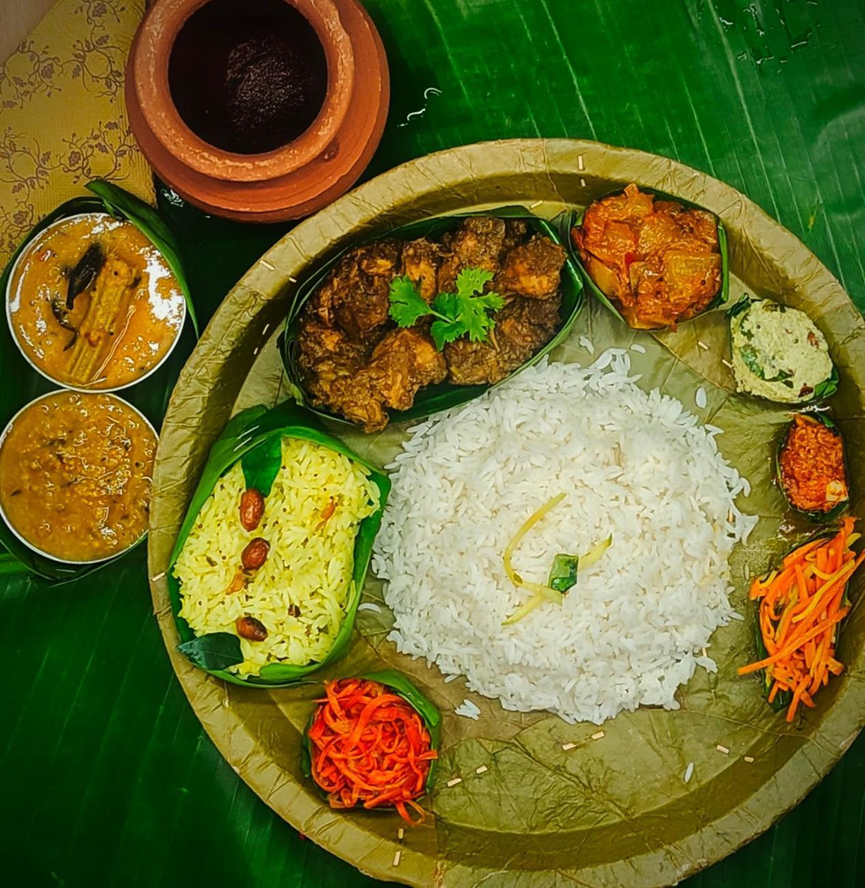
In the picture—Clockwise from 7 to 4—carrot mango spicy, tangy dessert, mango pulihora, coriander mango chicken, mango curry, mango coconut chutney, grated mango pickle, mango carrot salad.
Top left – Mango dal and Moong dal mango sambar
Carrot mango spicy, tangy dessert
- To prepare the carrot mango spicy, tangy dessert, cut the mango and carrot into thin julienne strips in a 1:3 ratio and set them aside.
- Heat some desi ghee in a pan and add the julienned mixture and some small cardamom pods; cook until they are 50% cooked.
- Add 1 cup of sugar to the pan and cook until everything is well combined. Before removing it from the heat, add a pinch or two of red chili powder, mix properly, and take it off the flame.
- Once it cools down to room temperature, refrigerate for 1 hour. Serve it cold.
Mango pulihora
- In a pan, heat some oil. Add some groundnuts, mustard seeds, chana dal, urad dal, dried red chilies, curry leaves, and asafoetida. Sauté until the pulses turn golden brown.
- Add a pinch of turmeric to the pan and set it aside.
- Finely grate 1 mango (sour) in a mixing bowl. Add salt to taste.
- To this, add 2 cups of cooked rice and the prepared seasoning. Mix everything thoroughly. Check the sourness and salt, and adjust according to your preference, if necessary.
Coriander mango chicken
- For the pre-preparation, wash 500 grams of chicken and drain excess water.
- Blend 3 small bunches of coriander, 1 small bunch of mint, 6 to 7 green chilies, 1 cardamom, 1-inch piece of cinnamon, 1 tablespoon of coriander seeds, 2 cloves, 1-inch pieces of ginger, 6 cloves of garlic, and 2 medium-sized onions into a fine paste. Grate 1 whole raw mango.
- Add 5 tablespoons of oil over medium heat in a pan, and sauté the prepared mixture until the raw smell dissipates.
- Next, add the chicken and cook on high for a minute, reducing to medium heat with the lid closed until most water evaporates.
- Finally, add salt, grated mango, cumin powder, and coriander powder, cooking until the desired consistency is reached. Before removing it from the flame, garnish with fresh coriander leaves before serving.
Mango curry
- Cut 1 raw mango into 1-inch chunks and finely chop 1 onion.
- In a pan on medium heat, add oil, mustard seeds, and cumin seeds until they start spluttering, then add curry leaves and finely chopped onion, sautéing until golden brown.
- Next, add the mango chunks to the pan and sauté until partially cooked. Cover and let it cook for 5 minutes. Once the mango is 60% cooked, add chili powder and salt to taste, along with cumin powder and coriander powder, mixing thoroughly. Cook for a minute.
- Splash some water to combine everything well. Let it cook for some more time until the desired consistency is reached.
- Finally, garnish with fresh coriander before serving.
Mango coconut chutney
- Combine 1 portion of mango, 2 portions of coconut, and 1/4 portion of coriander; blend them coarsely with water and salt to taste.
- Heat oil in a pan for seasoning, and add jeera, mustard seeds, chana dal, dried red chilies, and curry leaves. Mix the seasoning with the blended coarse paste, and the chutney is ready to serve.
Grated mango pickle
- Peel off one sour mango and grate it properly.
- In a pan, dry roast 1 teaspoon of mustard and fenugreek seeds until they release some aroma, then pound them into a fine powder.
- Add the grated mango, pounded powder, 1/2 tablespoon of salt, 2 tablespoons of red Guntur chili powder, 4 to 5 tablespoons of groundnut oil, and about 10 peeled garlic cloves.
- Mix everything properly, taste it, and adjust the seasoning if needed. Refrigerate; it can be used for up to a month.
Raw Mango Carrot Salad
- Cut the mango and carrot into thin julienne strips in a 1:3 ratio and set them aside.
- In a pan, heat some olive oil. Add mustard seeds, chopped green chilies, and curry leaves; let them splutter.
- Now, add a little turmeric powder to the pan. Add the desired seasoning to the cut carrots and mango in a salad bowl.
- Add salt according to your taste and mix properly. Our raw mango salad is ready.
Mango dal
- To prepare Mango dal, boil 1/3 cup of toor dal with 6 green chilies, a pinch of turmeric, a teaspoon of jeera, and 3 garlic pods in water until cooked up to 80%.
- Then, add raw mango puree (half mango) and cook until the dal reaches a smooth consistency. Finally, temper with mustard seeds, cumin seeds, asafoetida, red dry chilies, and curry leaves in oil.
- Garnish the dal with fresh coriander leaves before serving it piping hot.
Moong dal mango sambar
- Dry roast 1/3 cup of moong dal in a pan until it turns golden brown and fragrant. Then, boil the same moong dal with 3 green chilies, a pinch of turmeric, and a teaspoon of jeera in water until its soft and set aside.
- In a separate pan, temper mustard seeds, cumin seeds, asafoetida, red dry chilies, chopped garlic, chopped ginger, and curry leaves in oil, followed by sautéing finely chopped shallots until golden brown.
- Add assorted vegetables like carrots, potatoes, drumsticks, and tomatoes stir-frying until slightly tender. Cook them with water until the vegetables are cooked properly.
- Then, incorporate the cooked moong dal, sambar powder, 1 raw mango pulp, and salt, allowing it to simmer until the vegetables are fully cooked and the flavours blend.
- Finally, garnish the sambar with fresh coriander leaves before serving it piping hot.
Plating with precision and serving with passion, these meticulously crafted recipes come together on a thali, offering a mango feast fit for the most discerning fruit enthusiasts this season.
Conclusion
From traditional Andhra flavours to innovative culinary twists, each recipe celebrates the essence of summer. These recipes catch the essence of summer, promising an unforgettable culinary experience.