
India’s food culture is vast, layered, and unapologetically flavour-forward. Every region brings its own mix of spices, textures, and cooking techniques, which makes pairing beverages with Indian cuisine both exciting and challenging. Beer, however, has a unique ability to hold its own. Its versatility, carbonation, and balance of malt and hops make it a surprisingly effective partner for Indian food.
A Night in Hyderabad That Proved the Point
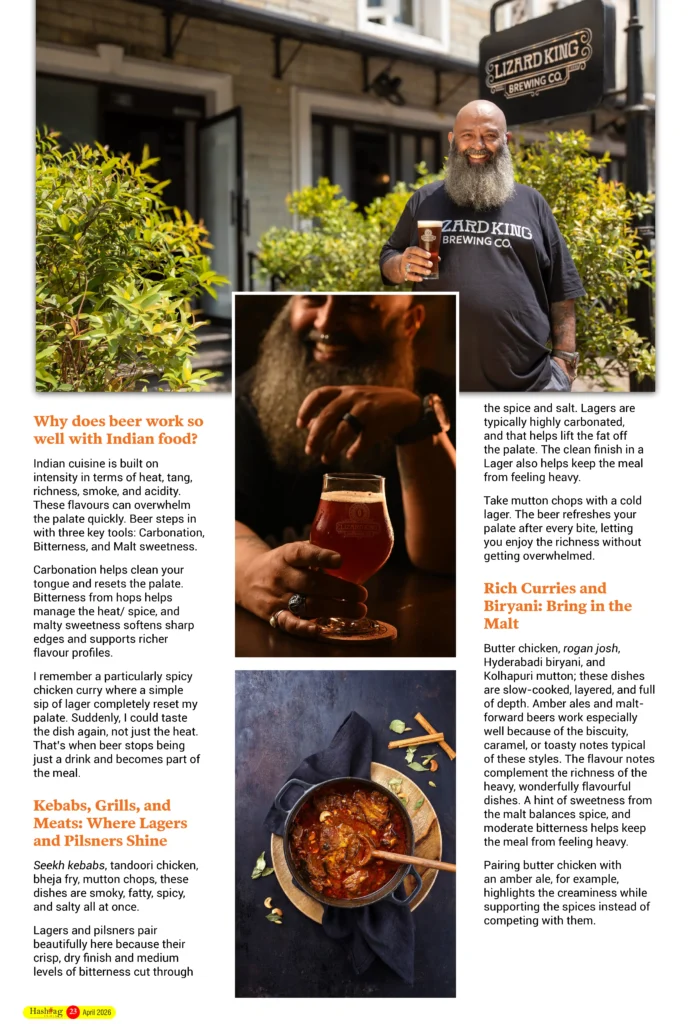
On one of my visits to Hyderabad, I found myself at Zero40 Brewing with a group of friends. The table was overflowing with spicy chicken wings, tangy paneer masala, and a fragrant biryani that could have been a meal in itself.
Everyone was drinking my Munich Helles, the Go Swam–Light, crisp, and refreshing. It did a great job cooling the heat and giving us a clean palate between bites. But as the dishes got richer and more complex, the Helles didn’t quite elevate them. It refreshed, but it didn’t enhance. That evening reminded me of something I’ve noticed repeatedly: beer can transform an Indian meal, but only when the style matches the dish.
Why does beer work so well with Indian food?
Indian cuisine is built on intensity in terms of heat, tang, richness, smoke, and acidity. These flavours can overwhelm the palate quickly. Beer steps in with three key tools: Carbonation, Bitterness, and Malt sweetness.
Carbonation helps clean your tongue and resets the palate. Bitterness from hops helps manage the heat/ spice, and malty sweetness softens sharp edges and supports richer flavour profiles.
I remember a particularly spicy chicken curry where a simple sip of lager completely reset my palate. Suddenly, I could taste the dish again, not just the heat. That’s when beer stops being just a drink and becomes part of the meal.
Kebabs, Grills, and Meats: Where Lagers and Pilsners Shine
Seekh kebabs, tandoori chicken, bheja fry, mutton chops, these dishes are smoky, fatty, spicy, and salty all at once.
Lagers and pilsners pair beautifully here because their crisp, dry finish and medium levels of bitterness cut through the spice and salt. Lagers are typically highly carbonated, and that helps lift the fat off the palate. The clean finish in a Lager also helps keep the meal from feeling heavy.
Take mutton chops with a cold lager. The beer refreshes your palate after every bite, letting you enjoy the richness without getting overwhelmed.
Rich Curries and Biryani: Bring in the Malt
Butter chicken, rogan josh, Hyderabadi biryani, and Kolhapuri mutton; these dishes are slow-cooked, layered, and full of depth. Amber ales and malt-forward beers work especially well because of the biscuity, caramel, or toasty notes typical of these styles. The flavour notes complement the richness of the heavy, wonderfully flavourful dishes. A hint of sweetness from the malt balances spice, and moderate bitterness helps keep the meal from feeling heavy. Pairing butter chicken with an amber ale, for example, highlights the creaminess while supporting the spices instead of competing with them.
Indian Street Food: Light, Crisp, and Sessionable
Pani puri, vada pav, pav bhaji, and samosas, street food is bold, fried, tangy, and often layered with sweet, sour, and spicy notes. Crisp lagers and session beers are ideal because carbonation will cut through the oil, the light body keeps you from feeling too full too quickly, and lower alcohol lets you enjoy the flavours of the food without dulling your palate. A hot samosa with a crisp lager is a simple but perfect pairing.
Coastal Cuisine: Let Hops Meet the Sea
Goan and coastal dishes often feature fresh seafood, coconut, vinegar, kokum, and curry leaves. Pale ales and citrus-forward beers pair beautifully due to the aromatic hop character that echoes the herbal notes in the food. Citrus is a beautiful pairing for any kind of seafood, and the bitterness balances coconut richness and vinegar heat. A Goan fish curry with a hoppy pale ale creates a bright, refreshing contrast that brings out the best in both.
Pairing is about curiosity, not rules.
India’s culinary landscape is incredibly diverse, yet the beer choices people reach for often remain the same. As brewers, we think constantly about balance, bitterness, sweetness, aroma, mouthfeel, and those same principles apply when pairing beer with food.
“The best advice I can offer is simple – Experiment!”
Try different styles with everyday meals. Notice what works and what doesn’t. Let the food guide the beer, and let the beer guide the experience. When done thoughtfully, beer doesn’t just accompany Indian food; it elevates it.