Pink Soil Organics-An Unconventional Approach to Farming

 Shraddha Reddy delves into the details of organic farming and environment-friendly practices with Chakrapani Singh Rathore. 
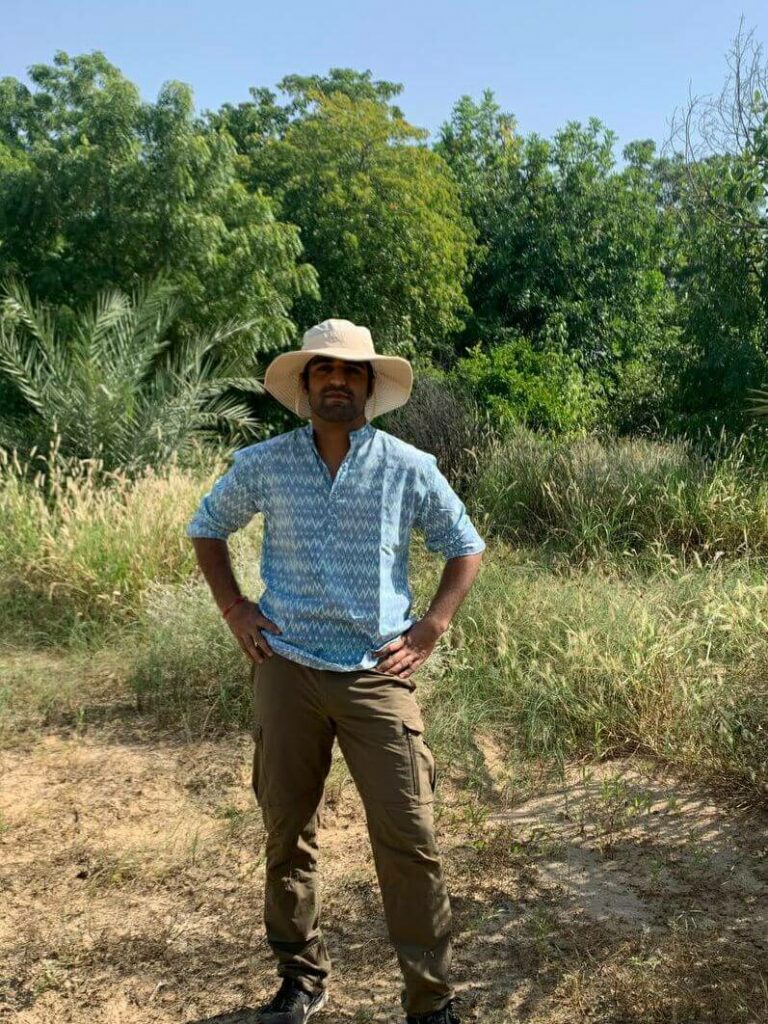
Alumni of Mayo college and a graduate of St. Stephens, Delhi, 26-year-old Chakrapani Singh Rathore has set about revolutionizing farming practices in Bikaner. Soon after the pandemic hit, he shifted back to his paternal village from Spain to start organic farming in a region that is typically very old school and conventional. Shraddha Reddy gets him talking about his passion project and how he is going about it despite much resistance.

What gave you the nudge to start organic farming in your village?

Coming from a noble family, my forefathers were into farming all their lives, but I grew up in a city with no knowledge of farming whatsoever. During lockdown, when I went back to my ancestral home, I realized that what I perceived as farming was in fact mono-cropping agriculture that does more damage than good by depleting the soil of nutrients and organic matter and causing significant erosion over time. It was during the lockdown when I came across the concept of permaculture and realized how exciting and limitless farming can be. I immersed myself in researching the effects of chemical pesticides and weedicides on human and environmental health and educated myself about organic models of farming. In a nutshell, the love for the environment and a sense of duty towards the community was my motivation to start this venture.
What are the main obstacles you’ve faced in terms of infrastructure and the support/criticism from other farmers in the region?

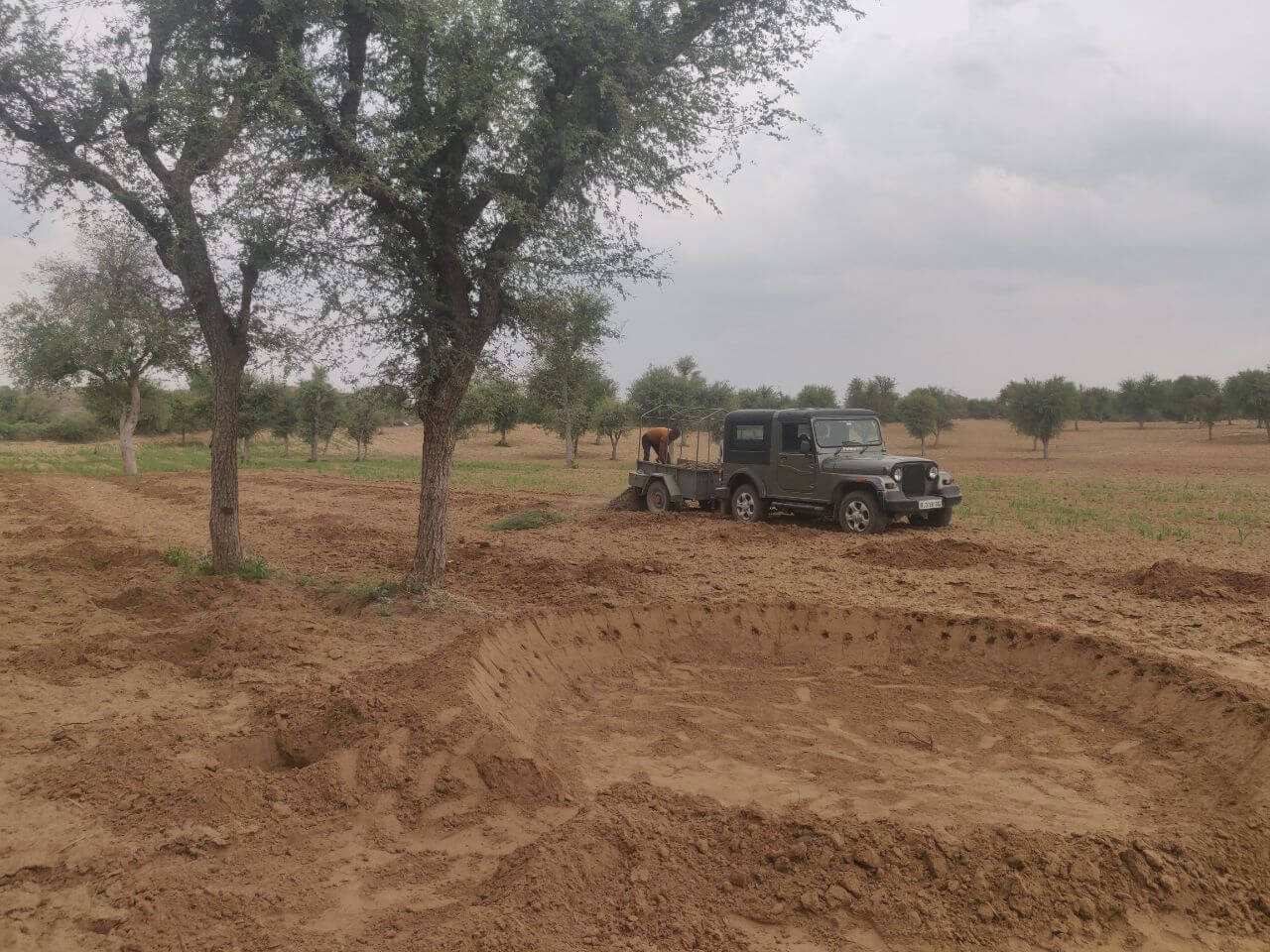
The infrastructure at our farm was in tatters as the land has been leased out for the past 30 years. Our pump and motor burned out within the first few months, there was a shortage of good pipes and sprinklers, and there was no proper fencing around the farm. To add to all that, the nutrition in the soil had depleted with there being virtually no organic carbon left in it. The farmers in the region are very sceptical about my approach and they have made no effort to hide their doubts. But, seeing is believing, and I hope witnessing the many benefits of organic farming will change their minds soon, one farmer at a time.

How has your family helped you in this venture?

When it comes to the support of family, my father has been the staunchest critic of them all as he doesn’t find farming financially viable. He eventually got on board, albeit reluctantly. That being said, this project would not have been possible without him. My brother and his wife have been hands-on in terms of brand identity and marketing, so it definitely feels good to have them on my side.

Tell us how you are going about executing the operation?

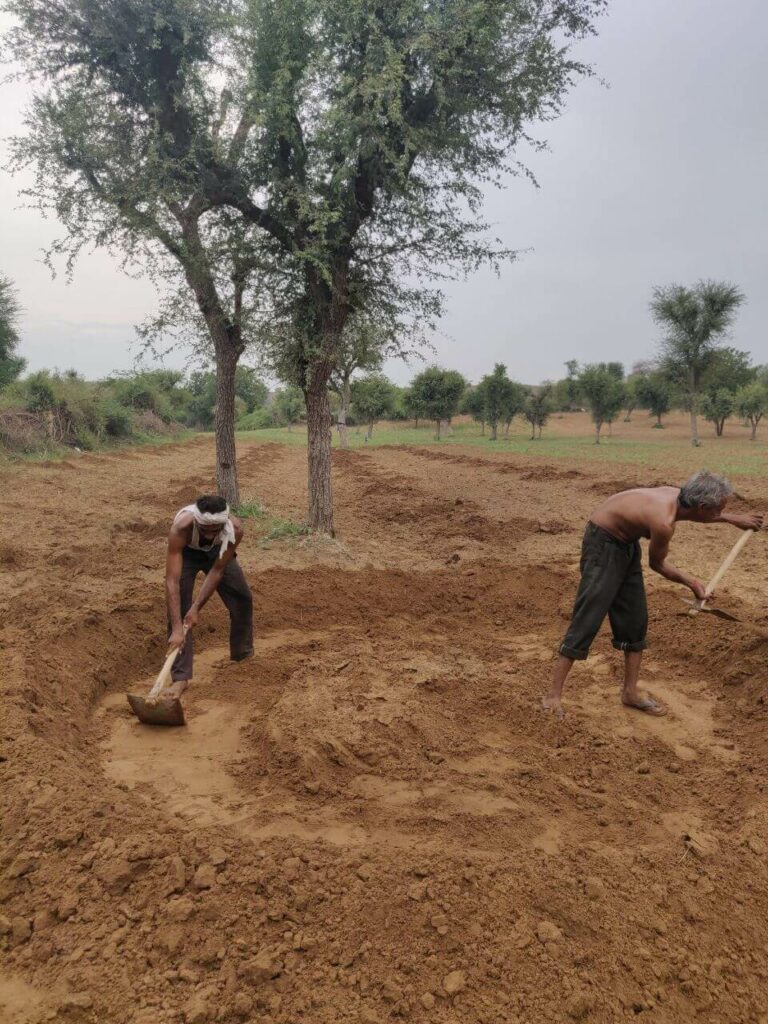
I’ve only just started the operation in May 2021. For this first year, I’ve decided to share half the yield with the farmer as I’m putting in the capital and he’s putting in the labour. In terms of farming, I am incorporating 3 models simultaneously. The first is cow-based farming propounded by Mr. Subhash Palekar. This is a low-cost farming method that involves the application of a mixture of fresh indigenous cow dung and urine along with jaggery, pulses, and flour on the soil to be cultivated. The second method is the waste decomposer application of Mr. Krishan Chandra; lastly, we’re using organic fertilizers by this excellent company called Terra Agro Biotech. We’re also mixing the leftover crop residue into the soil as opposed to other farmers who sell it off as fodder or firewood to brick factories.
What do you eventually hope to achieve with this risky but brave venture?

The goal is to change the farming practices of my village slowly yet surely and those around us. I hope our organic model motivates farmers to take the leap and make the change that is needed so desperately for our environment. The fact of the matter right now is that over 80% of farmers in my village have debt on their lands and struggle to make ends meet. This only goes to show that the current system of farming has clearly failed financially and environmentally, while also having adverse effects on the health of consumers.
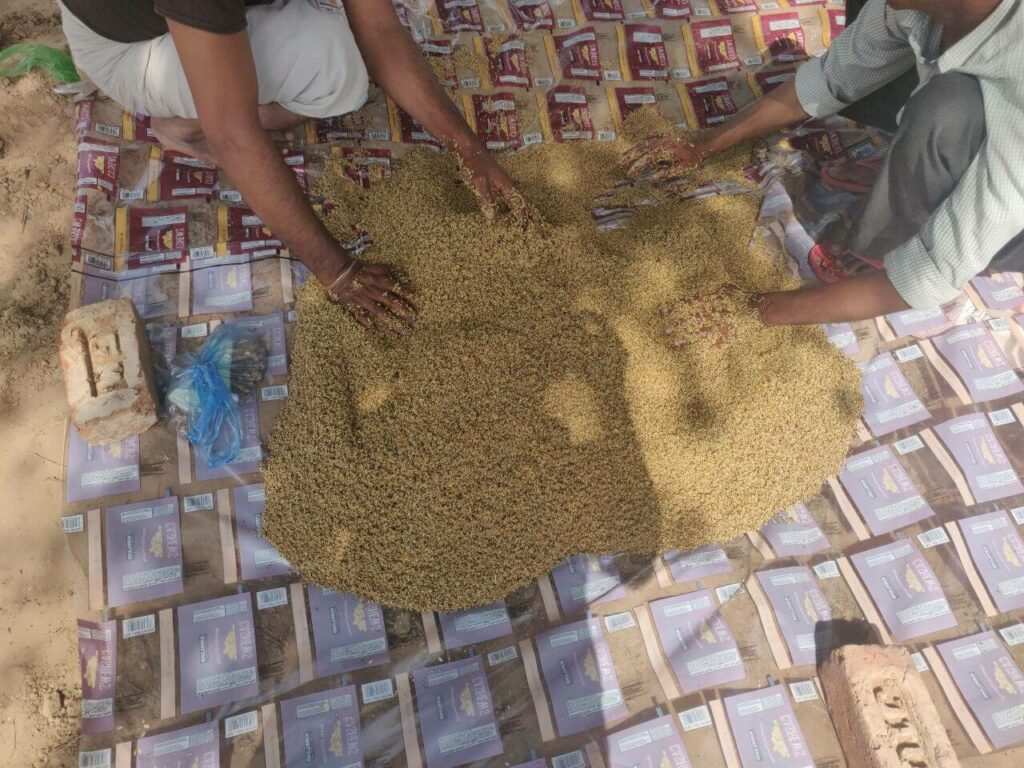
People have these set notions about organic farming. Tell us something interesting that people may not typically know about organic farming.

The classic argument against organic farming is that it is too expensive a proposition and that it does not yield as much as conventionally grown crops with chemical fertilizers. These arguments couldn’t be further from the truth. After the initial few years of improving the soil health and using heirloom varieties of seeds, growing costs reduce drastically, the soil and crop become resilient to pests and diseases, and yield becomes at par, eventually growing to be better than conventional farming. Not to state the obvious, but the joy and fulfilment experienced when you’re doing your bit to keep your family, community, and immediate environment healthy is priceless!

Leave a comment

Your email address will not be published. Required fields are marked *

Dr. Geetanjali Chopra: Leading Wishes and Blessings NGO

Dr. Geetanjali Chopra is the Founder and President of the Delhi-based NGO Wishes and Blessings. Educated at Convent of Jesus and Mary School, Lady Shri Ram College, and later at Jawaharlal Nehru University, where she completed her Master’s and Doctorate in International Relations, her academic journey was further shaped by specialised training in International Law in the Netherlands and Italy. Raised in a family where service was embedded as a way of life, she recalls visiting a school for visually impaired children with her grandfather. One moment continues to define her path. “A little girl tugged my pant and asked, ‘Didi, mera birthday kab hota hai?’” she shares. The innocence of that question revealed a deeper truth, that deprivation is also about invisibility. “That question stayed with me,” she says, “and it continues to shape who I am today.” PURPOSE | Beyond Comfort, Toward Calling Before founding Wishes and Blessings, Dr. Chopra describes her life as “perfect, secure and stable.” She was writing policy papers, authoring books, and speaking at global forums. Yet a Holi celebration with visually impaired children shifted her perspective. “I realised my purpose extended beyond personal comfort or professional achievement,” she says. Established in 2014, the organisation works without discrimination of age, gender, religion or background. “For me, service is not charity, but partnership, listening first, and then responding.” DIFFERENCE | Leadership Through Presence Personal involvement defines her leadership. While dedicated teams manage projects, she remains closely engaged. “Service is much more than providing support; it is about building meaningful relationships,” she explains. Her approach centres on dignity and continuity. “It’s about standing beside them, not only in moments of need, but through every step of their lives.” THE BEGINNING | A Festival of Belonging After her grandfather’s passing, she returned to the school that shaped

Home-grown Sustainable Brands to look out for in 2025

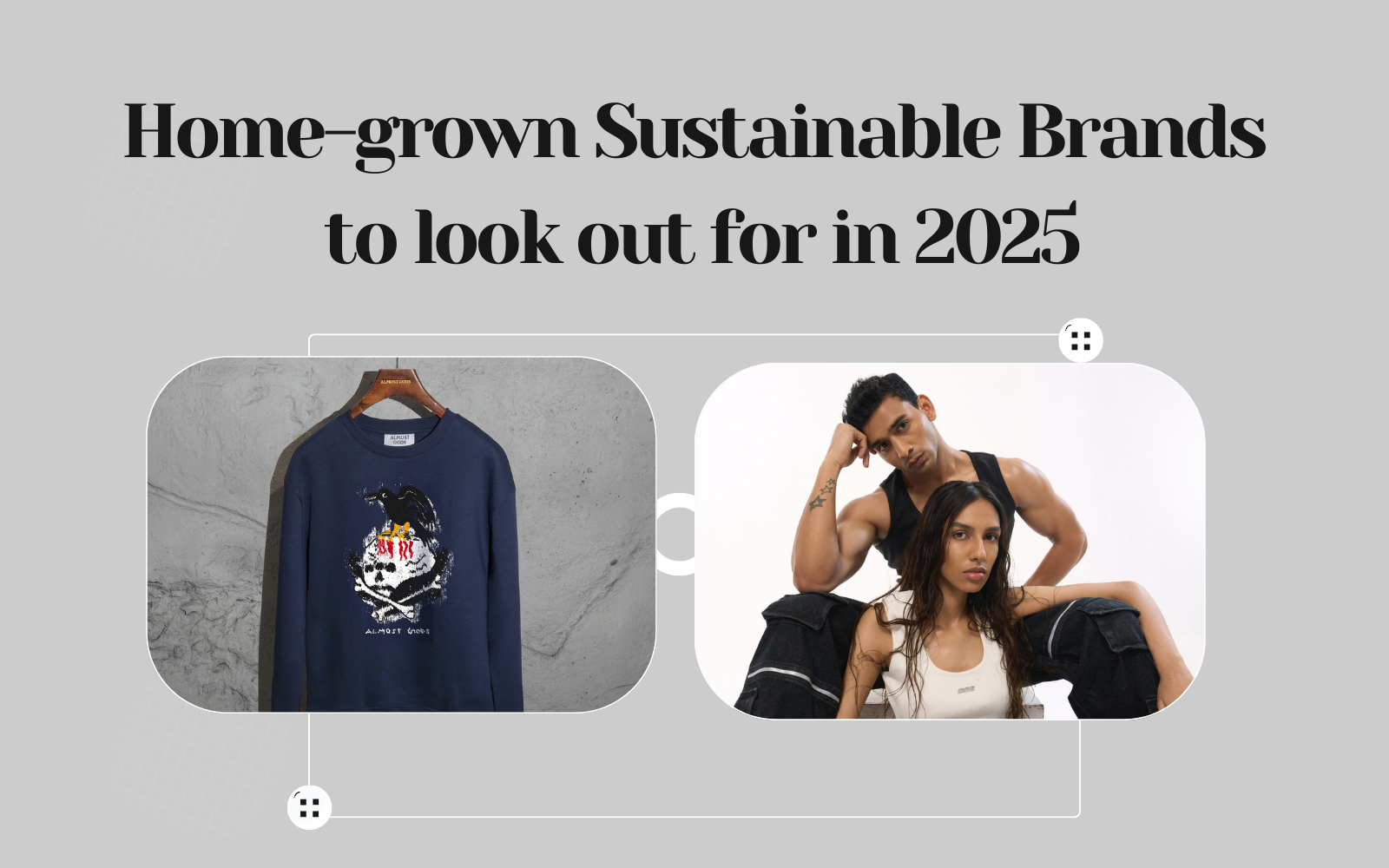
With enterprises taking sustainability seriously, green business is no longer just a keyword. Whether sourcing fair-trade raw materials, creating a circular value chain, giving employment opportunities to locals, or reducing net zero emissions, these enterprises are going full throttle to ensure we do not need another planet, reviews Ketki Gadre. Sustainable Brands No Nasties No Nasties represents the perfect blend of style and sustainability, offering expressive and ethically responsible fashion. The brand is dedicated to making climate-conscious choices fashionable, ensuring its products are committed to trendsetting design and environmental stewardship. True to its name, No Nasties promises that its items are free from harmful components—no genetically modified seeds, carcinogenic pesticides, toxic dyes, or unethical business practices are involved in their production. The brand is one of the pioneering Indian enterprises that prioritizes transparency and offers detailed information about its supply chain. It uses soft and sustainable materials, such as 100% organic cotton terry fabric. Moreover, every product includes detailed information on its environmental impact—highlighting its carbon footprint, carbon offset, and water savings—all easily accessible on the website alongside each product description. The brand aims to create a consumer movement encouraging conscious choices for a better future. No Nasties has been certified by PETA, Good on You, and Green Story, and their factories are Fairtrade-certified. About the Founder: Apurva Kothari founded No Nasties in 2011. With a background in software engineering, Apurva transitioned into the ethical fashion space after recognizing the devastating environmental and social impacts of conventional fashion. Under his guidance, the company has championed using sustainable materials, ethical labour practices, and environmental impact awareness. Apurva’s vision extends beyond fashion, as he is a strong advocate for fair-trade principles and a circular economy, aiming to positively impact both people and the planet. Website: https://www.nonasties.in/ Instagram: https://www.instagram.com/nonasties/ Coco Leni Coco Leni

The Ultimate Social Media Guide for 2024

In the ever-evolving social media landscape, cracking the code to optimal posting time can be elusive. Fear not, wandering content creators, for this article shall serve as your guiding light through the maze of algorithms and audience engagement. Brace yourselves as we embark on a journey to master the art of social media timing for the year 2024. Social Media Post Guide Chapter 1: The Rhythm of Engagement Like a symphony, social media platforms thrive on the harmonious interplay of content and audience. To conduct this symphony with finesse, one must understand the rhythm of user activity. For example, let us take India, where the daily routines and cultural nuances paint a unique tapestry that influences when users are most receptive to your posts. Chapter 2: The Golden Hours Like the hidden treasures, the golden hours of social media promise maximum engagement. For Social media creators, these golden windows of opportunity appear strategically throughout the day. One important tip: As these are the highly engaging times to post your content on Social Media, many competitors will also post simultaneously. So schedule your post half an hour before the golden hours, which will put your post on the top when the golden hours start ticking. Chapter 3: The Art of Content Creation You have half the battle now that you know the best posting times. To truly conquer the complete kingdom of social media, one must master the power of content creation. Tailor your content to the diverse tapestry of audiences, catering to their interests, aspirations, and cultural nuances. Take India as an example and consider how we can create various types of content based on its locations. Chapter 4: The Art of Scheduling While timing and content are essential, scheduling cannot be overlooked. Let’s focus on scheduling tools to ensure

Rural Healthcare Solutions

Medyseva, a healthcare start-up dedicated to serving rural India, is led by Rachita Kasliwal, an alumna of Mayo College Girls School, Ajmer. Following her academic journey with a B.Com (Hons.) from Shri Ram College of Commerce and a PGDM from the Loyola Institute of Business Administration, Chennai, Rachita immersed herself in her family’s healthcare business. As the driving force behind Medyseva’s Marketing and Operations, Rachita champions the mission to provide accessible medical services to rural communities. Since July 2021, Medyseva has conducted over 3000 consultations, emphasizing preventive healthcare and hygiene practices for societal well-being. In conversation with Surabhi Goel, Rachita Kasliwal of Medyseva discusses bridging healthcare gaps in rural India through telemedicine. What motivated Medyseva’s creation, and how does it tackle rural healthcare challenges? When COVID-19 hit, people struggled to see doctors in person. As friends and relatives reached out for help consulting doctors remotely, initially to my husband, the scale of the issue dawned on us. Rural areas faced a severe shortage of healthcare resources, leaving residents with no viable options for medical consultations. Witnessing this, we recognized the potential to address this challenge through telemedicine solutions. In rural regions, limited access to qualified medical professionals often leads to residents seeking assistance from unqualified practitioners or enduring lengthy and costly journeys to nearby cities for treatment. Seeing how technology helped with online classes, we also decided to use it for healthcare. That’s how Medyseva was born, aiming to bring medical help to rural areas through telemedicine. As a female entrepreneur in health tech, what hurdles did you face founding Medyseva? The main challenge I faced was changing people’s mind set about telemedicine. Many still believe a doctor must see or touch them for a diagnosis. Consulting a doctor remotely seemed foreign in rural areas, where generations have relied on

You May Also Like

Connect with us