
POWER TALK: INSPIRING WOMEN IN BIZ |Piya Bose

Piya Bose who went on to complete a five-year legal degree and was hired by India’s premier law firm left a lucrative profession as a lawyer where she worked roughly for a year, to pursue her passion for travel, and in 2008, she founded the women-only Girls on the Go Travel Club, which began with a zero-cash business plan. Though her parents anticipated this adventurous traveller to be working in an engineering firm today, she has chased her calling while working at a legal business without having prepared her options. Bidisha Barik talks to Piya Bose, the founder of Girls on the Go about how women in travel have evolved in the past few decades.

As the most profound insights occur in the air, Piya’s desk job had her questioning her way of life while she worked graveyard hours. This travel consultant’s adventure began when she had to overland from Lucknow to Nepal and then Tibet on an unexpected vacation. During her tour, she encountered a number of difficulties relating to oppression and other fundamental issues. Standing on the highest Everest mountain near a hamlet in Tibet, unsure of where her life was heading, she realised she wished to “not only make a living but also genuinely live.”

Piya worked for travel firms for a short time at the age of 24 and acquired a connection with the clients as well as learned about the lack of originality in travel companies. Through the hoops, the route of discovery outshined her notion of creating a Women Travel Agency as a midnight fuel. Being a solo wanderer since she was 16 years old, when she took her first solo trip to Brazil, Piya has seen few Indian women travel around the world, which has fueled her desire to bring the thrilling and life-changing experiences she has witnessed through her trips to the Girls on the Go travel club.

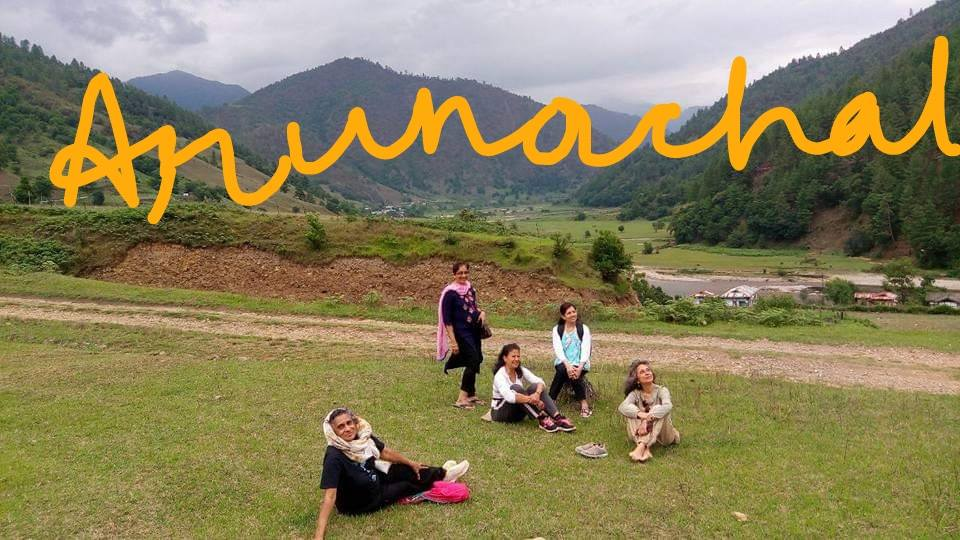
In 2008, she rolled the dice by organising her first planned trip to Ladakh, promising more trips if the initial trip was successful. Since then, she has led women on Antarctic expeditions, photographed the Northern Lights in the Arctic, stayed with Nagaland’s headhunters, camped in Mongolia, trekked up a volcano and to the Everest Base Camp, and much more. The fundamental emphasis of the GOTG club has always been to encourage women to travel, but Piya has recently seen a lot of preconceptions women face when it comes to travel. Her work on growing and reforming women for the better when travelling has led her to explore the history of women travelling.

“It’s intriguing to realise that the account of women in travel dates back to the 1880s-90s, yet we’re encountering identical challenges now in the modern world,” she says.

Quick take:

How did your life change as an entrepreneur?

I learnt how to deeply engrave solitude.

One best quote you live by?

“If you are leading the orchestra, you have to turn your back to the crowd.”
Leave a comment

Your email address will not be published. Required fields are marked *

Top 6 Startups Of 2025: The New Architects of India’s Future

From sustainable farming to EV mobility, discover six Indian startups shaping a cleaner, smarter, and more connected tomorrow. Every generation finds its dreamers, the ones who don’t just talk about change, but build it. In 2025, India’s startup scene feels less like a rush for valuation and more like a movement with a purpose. These founders aren’t chasing unicorn tags; they are chasing impact. They are solving what truly matters. This is the India that rolls up its sleeves and says ‘Let’s make it ourselves.’ Dhanush Kumar writes about the Top 6 Startups of 2025, born from soil, steel, and software, each shaping tomorrow with courage and conscience. 1.Handpickd: Fresh from Farm to Table When freshness becomes a luxury, Handpickd restores it to the everyday plate. This Bengaluru-based agritech startup has built a direct bridge between local farmers and urban consumers ensuring every tomato, mango, and millet travels fewer miles and earns farmers more smiles. Using tech-driven logistics and transparent sourcing, Handpickd doesn’t just deliver produce; it delivers trust. In an era of overprocessed everything, this is simplicity redefined clean food, honest pricing, and a system where farmers finally get their due.It’s not a brand. It’s a return to our roots literally. 2.Bambrew: Building a Plastic-free Future At a time when the planet gasps under plastic, Bambrew breathes innovation. The Bengaluru-based packaging pioneer crafts biodegradable, compostable alternatives made from bamboo, sugarcane, and cornstarch materials that love the earth back. Their vision isn’t just green, it’s bold. Bambrew’s eco-packaging now wraps products for top FMCG and e-commerce giants, proving sustainability doesn’t have to look boring or cost a fortune.This isn’t rebellion it’s reinvention. A reminder that small choices, multiplied by millions, can rewrite the story of our planet. 3.Eeki Foods: Vertical Farming for a Greener Tomorrow In the deserts of Rajasthan, where

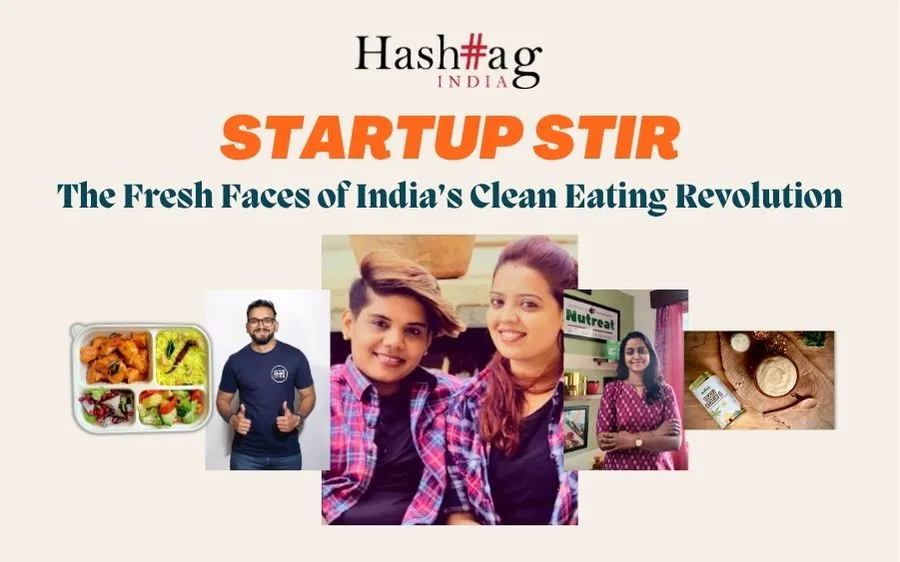
The Fresh Faces of India’s Clean Eating Revolution

Eat Right Clean eating is no longer a fad but a necessity in the times we live in, and several startups are making sure this is a choice that is easy to make. As people take charge of their health and well-being, eating clean is one of the most important priorities. BINDU GOPAL RAO features seven startups that are helping make this change, one plate at a time. Nutreat Hyderabad-based Nutreat was born in 2014 out of a personal need to provide clean, wholesome food for the founder’s son. Over time, this evolved into a deeper mission: to craft handmade, customised nutrition rooted in ancestral Indian food wisdom. “We handcraft each product using our signature four-step process sprouting, sun-drying, slow roasting, and stone grinding and tailor it to the individual’s age, health condition, and dietary needs. Nutreat promotes clean eating not just by avoiding processed ingredients, but by ensuring every spoonful is mindfully made and consciously consumed. In 2023, when our business was at its peak with franchise opportunities, foreign collaborations, and incubation offers we made a bold decision. We stepped back. We refused to bulk produce because it was creating false demand, pressuring both our team and consumers to buy more than they needed. That turning point reaffirmed our belief in nooverbuying and consciousconsumerism. Clean eating, we believe, must also be mindful free of waste, hype, or excess. While the wellness industry grows, we often see food wastage even in the name of healthy eating. Our model of customisation ensures that we make only what’s needed, drastically reducing waste while offering personalised nutrition,” says Jyothi Sri Pappu, Founder & CEO, Nutreat. Moving forward, their goal is to scale impact, not volume, by nurturing conscious consumers, supporting women artisans, and creating a food culture rooted in purpose. The Kenko Life

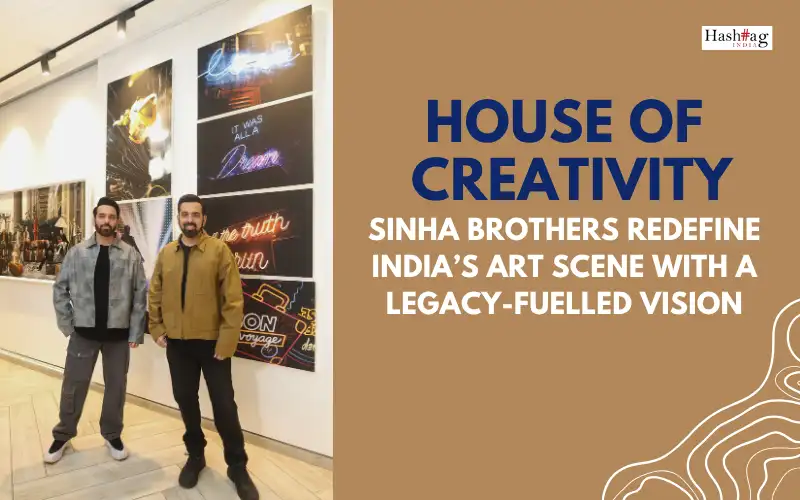
House of Creativity: Sinha Brothers Redefine India’s Art Scene with a Legacy-Fuelled Vision

In a world where creativity often competes with commerce, LUV and KUSSH SINHA are merging both purpose and passion. Drawing from their rich cinematic heritage and a lifelong connection to the arts, the Sinha twins have launched The House of Creativity (HOC) a platform dedicated to showcasing and supporting contemporary Indian artists. Their goal is to democratize access to visual art, giving emerging talents a space to thrive while also expanding the reach of Indian artistry on a global stage. In conversation with SINDURI VUPPALA, the duo shares how their entrepreneurial journey is not just about art, but about creating a movement that celebrates originality, honours legacy, and nurtures the future of India’s creative community. 1. Can you take us back to when your relationship with visual art truly began? Luv: My relationship with visual art began at a very young age. I was deeply influenced by Hindi cinema the films my father acted in, those of Mr. Bachchan, and other legends. As I grew older, Japanese animation, video games, and comic books also left a huge impression on me. Each artist, every inker, has their own style those differences fascinated me. Film too, being a moving image, played a huge role. Pause it, and it becomes a photograph. That connection influenced me tremendously. 2. What led to the birth of the House of Creativity? Was there a defining moment or conversation? Luv: It started with conversations at home during the lockdown. I kept thinking about the number of immensely talented artists who just don’t have a platform. Art can be an exclusive world, but coming from the film industry, I felt we could help expand its reach. The idea of starting digital-first made sense due to restrictions, but our long-term vision is definitely to open physical galleries and make

Why Piyush Goyal’s Note Strikes a Chord with Many

In a fast-paced economy where entrepreneurship is often glamorized and unicorn status is considered the ultimate goal, Union Minister Piyush Goyal’s recent cautionary note to start-ups has sparked conversation across boardrooms, social media feeds, and co-working spaces alike. At a time when headlines celebrate billion-dollar valuations and multi-million funding rounds, Goyal’s reminder to prioritize sustainability over vanity metrics comes as both a wake-up call and a much-needed dose of realism. What Did Piyush Goyal Say? While addressing a forum of young entrepreneurs and start-up founders, the Commerce and Industry Minister highlighted the growing trend of start-ups focusing more on valuation than value creation. He advised founders to stay grounded, reminding them that real impact lies in solving problems, building sustainable models, and creating employment — not just in raising capital or reaching the next funding milestone. Why It Resonates 1. The Valuation Bubble India has witnessed a boom in the start-up ecosystem over the last decade, becoming the third-largest start-up hub in the world. However, this rapid rise has also led to the emergence of overvalued unicorns, many of which struggle to generate profits or even break even. Goyal’s words hit home because several start-ups that once shone brightly have now either shut down or drastically downsized. 2. Funding Winter & Layoffs In the past year, a noticeable funding winter has taken a toll on many start-ups. With VC purse strings tightening, companies have been forced to lay off thousands of employees, scale back operations, and rethink their business models. Goyal’s comment serves as a timely reminder that blind growth can be dangerous without a stable foundation. 3. Founders Facing Burnout The hustle culture in start-up circles often glorifies 20-hour workdays and constant “grind” mentality. However, a growing number of founders are speaking out about mental health challenges, anxiety, and burnout. Goyal’s emphasis on sustainable growth also indirectly supports a healthier entrepreneurial mindset — one that doesn’t chase

You May Also Like

Connect with us