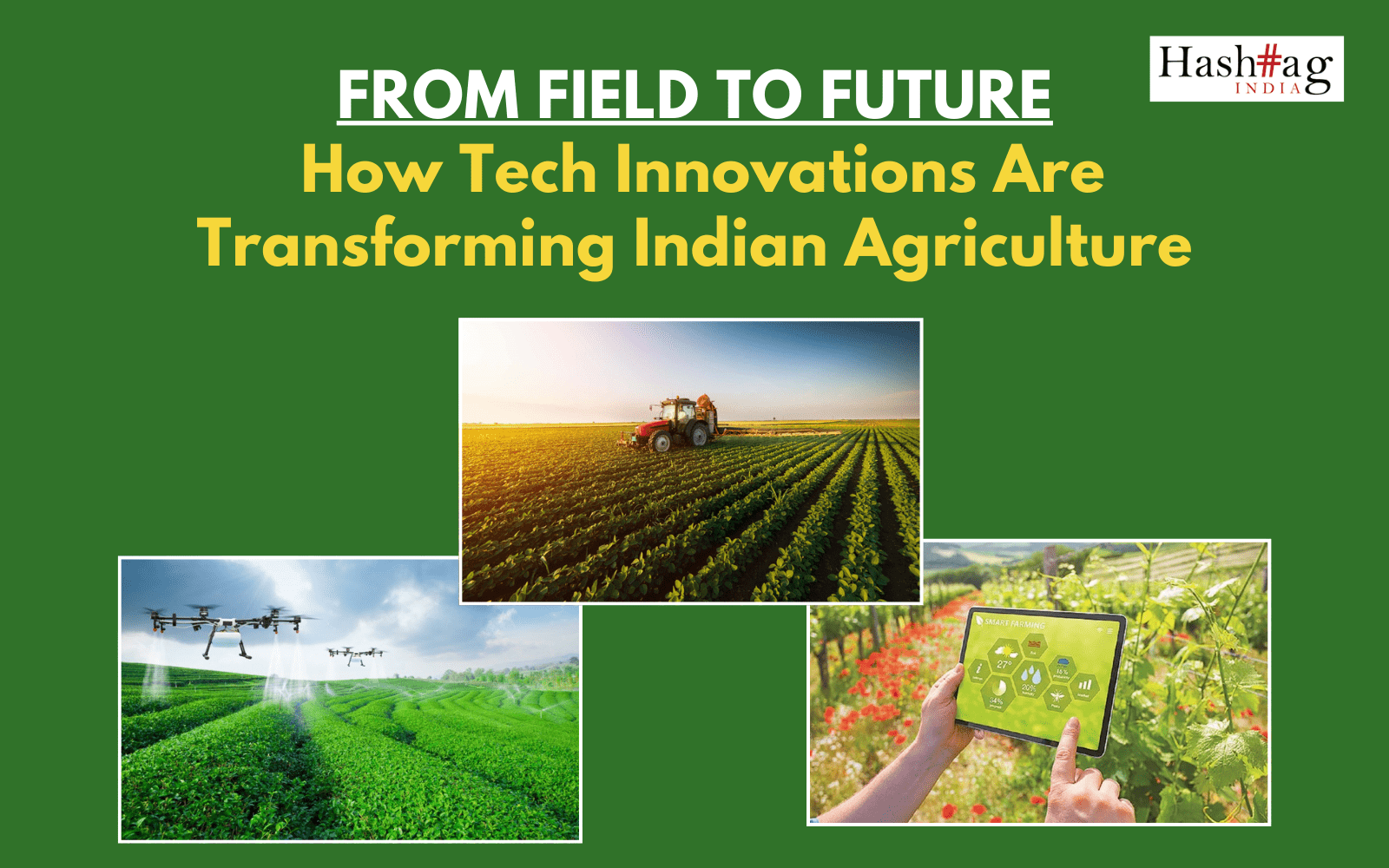
From Field to Future: How Tech Innovations Are Transforming Indian Agriculture

future of Indian agriculture

India, a land deeply rooted in agriculture, stands at the cusp of a transformative era. The traditional image of a farmer toiling under the sun is rapidly evolving, thanks to the surge in technological innovations. As we look towards the future in agriculture in India, it’s clear that technology is not just an add-on, but a vital part for sustainable growth and prosperity. From smart irrigation to AI-powered crop monitoring, these advancements are reshaping the landscape, offering a new hope and opportunities for the backbone of our nation. Dhanush Kumar delves into how tech innovations for farmers in India are paving the way for a brighter agricultural future.

Tractorisation in India high, but agriculture mechanisation low - CNBC TV18

The heart of India beats in its villages, and the lifeblood of these villages is agriculture. However, the challenges faced by Indian farmers are immense. They have to face unpredictable weather patterns, water scarcity, pest infestations, and market rates. These hurdles have long hindered the potential of Indian agriculture. But, with the advent of cutting-edge technologies, a new damn is breaking, promising a more efficient sustainable, and profitable future.

One of the most significant advancements is the integration of precision agriculture. This involves using sensors, drones, and satellite imagery to collect real-time data on soil health, crop growth, and weather conditions. This data is analyzed to provide farmers with actionable insights, enabling them to make informed decisions about irrigation, fertilization, and pest control. For example, smart irrigation systems utilize soil moisture sensors and weather forecasts to deliver water only when and where it’s needed, conserving precious water resources and minimizing wastage. This is crucial in a country where water scarcity is a growing concern.

Drones are also playing a important role in revolutionizing farming practices. They can be used to monitor large fields, identify crop diseases, and even apply pesticides and fertilizers with precision. This not only reduces the need for manual labor but also minimizes the environmental impact of chemical applications. The ability to quickly assess crop health and identify potential farmers allows farmers to take timely action, preventing significant losses. When looking at the future agriculture in India, the implementation of drones is a strong factor.

Why precision agriculture is essential in combating climate change

Artificial Intelligence and machine learning are further transforming the agricultural landscape. AI-powered platforms can analyze vast amounts of data to predict crop yields, identify disease outbreaks, and provide personalized recommendations to farmers. These platforms can also connect farmers with markets, enabling them to get fair prices for their produce. Mobile apps are another game-changer. These apps provide farmers with access to real-time information on weather forecasts, market prices, and best farming practices. They also facilitate communication between farmers, experts, and suppliers, creating a more connected and supportive agricultural ecosystem.
The future of agriculture in India also hinges on the adoption of sustainable farming practices. Organic farming, hydroponics, and vertical farming are gaining popularity, offering alternatives to traditional farming methods. Hydroponics, for example, allows crops to be grown in nutrient-rich water solutions without soil, conserving water and reducing the need for pesticides. Vertical farming, on the other hand maximizes land use by growing crops in stacked layers, making it ideal for urban and peri-urban areas.
Furthermore, the introduction of biotechnology and genetic engineering is opening up new possibilities for crop improvement. Genetically modified crops can be developed to be more resistant to pests, diseases, and harsh weather conditions, ensuring food security and reducing crop losses. However, it’s essential to ensure that these technologies are used responsibility and with proper regulatory oversight.

The role of agricultural startups and entrepreneurs cannot be overlooked. They are developing innovative solutions to address the challenges faced by Indian farmers. From developing affordable farm machinery to creating sustainable packaging solutions, these startups are driving the adoption of latest innovations in agriculture. Their agility and innovative spirit are crucial for accelerating the pace of technological adoption in the agricultural sector.

24 agri startups recommended for support from pool of Rs 20 cr: Govt |  India News - Business Standard

Access to credit and financial services has been challenge for small and marginal farmers. Agri-fintech startups are bridging this gap by offering instant loans, crop insurance, and digital payment solutions. Platforms like Samunnati and Ja Kisan use AI to assess farmer’s creditworthiness and provide financial support without lengthy paperwork.

Mechanization is transforming Indian agriculture by reducing dependency on manual labor. Self-driving tractors, robotic weeders, and automated harvesters are helping farmers increase efficiency and reduce operational costs. Companies like Mahindra & Mahindra are developing smart tractors with GPS and AI capabilities to enhance productivity.

The government is also playing a significant role in promoting the adoption of technology in agriculture. Initiatives like National Mission for Sustainable Agriculture and the Pradhan Mantri Kisan Samman Nidhi are providing financial support and technical assistance to farmers. The government is also investing in research and development to develop new technologies and solutions for the agricultural sector.

Challenges and the Road Ahead

While technology is revolutionizing Indian agriculture, several challenges remain:

  1. High Initial costs: Many small-scale farmers struggle to afford advanced agricultural technologies
  2. Lack of Digital Literacy: Farmers need training and awareness to use smart farming tools effectively.
  3. Infrastructure Gaps: Poor interest connectivity and logistics in rural areas hinder seamless technology adoption.

To address these challenges, collaborations between the government, private sector, and agricultural institutions are essential. Providing subsidies, training programs, and affordable access to technology will ensure that even small and marginal farmers can benefit from these advancements.

Conclusion

The future of Indian agriculture is undoubtedly tech-driven. Innovations in precision farming, AI, blockchain, robotics, and digital marketplaces are empowering farmers to overcome challenges and enhance productivity. As technology adoption increases, Indian agriculture is set to become more sustainable, profitable, and resilient. By embracing these innovations, farmers can not only secure their livelihoods but also contribute to the nations’ food security and economic growth.


Leave a comment

Your email address will not be published. Required fields are marked *

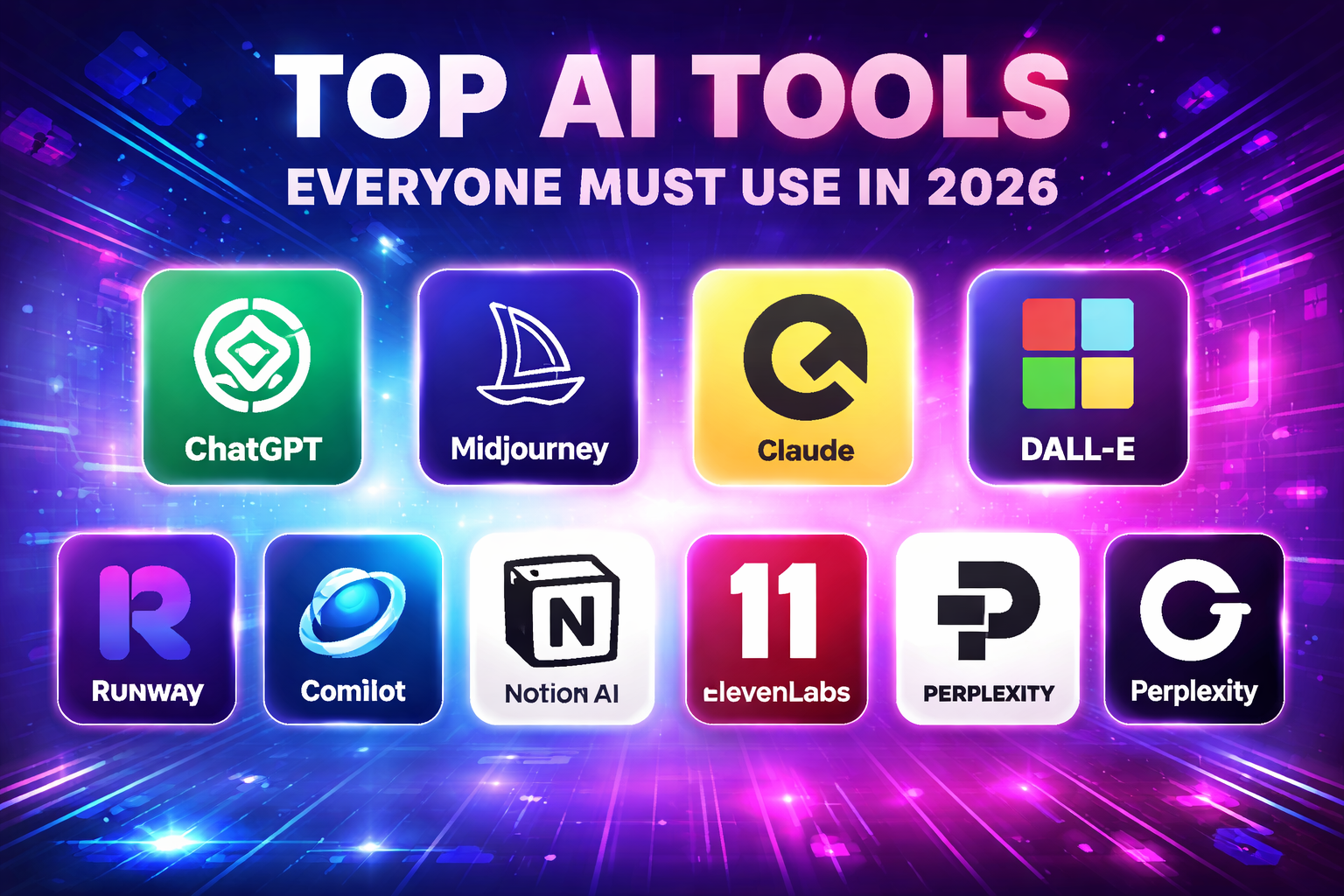
Top AI Tools Everyone Must Use in 2026

Artificial Intelligence is no longer limited to tech companies or programmers. In 2026, AI tools are becoming essential everyday companions for students, professionals, entrepreneurs, designers, and content creators. From writing emails and designing visuals to coding software and researching complex topics, AI-powered platforms are transforming how we work and create. Experts say generative AI tools now help automate repetitive tasks, speed up creativity, and improve productivity across industries. They allow users to produce content, analyze data, generate visuals, and even compose music within minutes. Here are some of the most powerful AI tools everyone should consider using in 2026. 1. ChatGPT – The All-Purpose AI Assistant ChatGPT remains one of the most widely used AI tools globally. It can help users write articles, generate ideas, summarize information, plan projects, and even assist with coding. Its conversational interface allows people to interact with AI as if they were talking to a colleague. Best for: Writing and editing content Brainstorming ideas Coding and debugging Learning new topics For many professionals, ChatGPT has become a daily productivity companion. 2. Google Gemini – AI for Research and Productivity Google Gemini is designed to integrate deeply with Google’s ecosystem, including Gmail, Docs, Sheets, and Android devices. It excels at analyzing large amounts of information, summarizing reports, and answering complex research questions. Best for: Research and information analysis Email drafting and document summaries Data insights and knowledge work Because of its integration with Google tools, Gemini is especially useful for students and professionals. 3. Microsoft Copilot – The Workplace AI Microsoft Copilot is embedded directly into Microsoft 365 apps like Word, Excel, Outlook, and Teams. It can generate reports, create presentations, summarize meetings, and analyze spreadsheets. Best for: Office productivity Data analysis in Excel Drafting professional emails and reports For businesses and corporate teams, Copilot acts

India’s New Digital Leisure Trends: From Streaming to Interactive Gaming

India is increasingly going digital in every facet imaginable. That should not be super surprising given that the country now has close to a billion Internet users and more than six hundred and fifty million active smartphone ones. According to many, the digital revolution in the world’s most populous nation began in the mid-2010s, when the Digital India platform launched, spreading fiber optic infrastructure across the nation, Reliance Jio activated 4G while lowering data transfer rates, and Chinese smartphones entered this market. These three things, along with the rise of UPI-powered payments, fueled a wave of digital adoption in The Golden Sparrow, which dramatically increased during the start of the 2020s, amidst the COVID pandemic and stay-at-home government-imposed measures. This was a time when people had to look for more modern forms of entertainment, and OTT streaming platforms posted record user numbers. People also turned to playing mobile games and enjoying sites like Casino Days in India. Hence, the 2020s marked a new era in leisure activities in this part of the world, and below, we explore the trends that have defined this new age characterized by novel ways to have fun. The JioHotstar and OTT Streaming Explosion At the start of this decade, India saw a massive expansion of OTT users, with the number of individuals subscribing to these platforms continuing to grow throughout today. As noted above, COVID-19 spurred many Indians to test streaming video entertainment. Because movie theaters were closed for months during the pandemic, some film studios decided they could not wait for them to open back up and chose to release their movies directly on streaming platforms. This further boosted the visibility of Over-the-Top services, as they are called here, which skyrocketed their subscriber counts. The fact that more people than ever had smartphones that

2026 Automotive Outlook: The Most Anticipated Cars, Bikes, & EVs

The wait-and-watch phase of the Indian automotive market is officially over. If you have been holding off on a new purchase, 2026 is the year the industry finally delivers on its biggest promises. We aren’t just looking at minor facelifts; we are looking at the return of icons, the entry of mass-market EV giants, and a shift toward experience-led cockpits. Whether you are a long-distance tourer or a city commuter looking to slash your fuel bill, the 2026 line-up is designed to solve specific pain points. Here is what you should expect to see in showrooms and on the streets. The Battle of the EV Titans: Tata Sierra Vs Maruti e-Vitara January 2026 is set to be the most consequential month for Indian EVs, as two of the most prominent players launch their flagship solutions. Tata Sierra.ev–This isn’t just a car, it’s a nostalgia trip. Look for the Lounge Seating in the rear and the panoramic sunroof. While the 500km claimed range is the headline, the real winner is the Gen 2 Acti.ev platform, which promises much better floor space and a flat rear floor for passengers. Maruti Suzuki e-Vitara–This is Maruti’s first serious move into EVs. Don’t just look at the battery, look for the AllGrip-e AWD system. It’s designed to provide the grip of a traditional SUV without the mechanical lag. Expect a real-world range of approximately 350-400 km from the larger 61kWh pack. The Tech Forward Family SUV: Mahindra XUV.e8 If you found the XUV700 impressive, the e8 is designed to turn the cabin into a command centre. The triple-screen Dashboard is the standout feature. We are talking about three 10.25-inch high-definition displays stretching across the entire width of the car. Beyond the screens, expect 175kW fast charging. This means a 20 to 80% charge in under

How Melbet Turns Digital Assets into Real-World Wins

On Melbet, crypto is treated like a working balance, not a side feature. A player can register, verify a profile, and fund the same account with Bitcoin or INR, then use it across sports, casino, and live tables. The key detail is simple: once coins land on the platform, they are converted into an internal currency, so odds, stakes, and payouts stay clear even when the original deposit was in BTC. That removes guesswork when a slip shows ₹2,000 while the user actually sent a fraction of a coin. Using the app to move crypto in and out Most Indian players now handle deposits on their phones, so the app flow matters more than the website. Installing the Android package through the melbet app gives direct access to crypto wallets, UPI deposits, and withdrawals in one place, without jumping between browsers and exchange apps. A typical pattern looks very practical: top up with BTC, bet on cricket or football, then withdraw part of the profit in INR to UPI and leave the rest in crypto for later. The same account is used, but the route in or out changes based on the user’s plan for that week. What actually happens to your coins When someone sends Bitcoin to Melbet, the system generates a unique address per account. After network confirmations, the platform credits the balance in the wallet section. For everyday play, users usually see an amount shown as rupees or dollars, not raw BTC. That helps when setting stake sizes for pre-match slips or live markets, especially on busy cards like IPL or Champions League days. For most active players, it is worth setting a personal structure for balances in the account, not just reacting to wins. A simple approach can look like this. One part for regular bets

You May Also Like

Connect with us