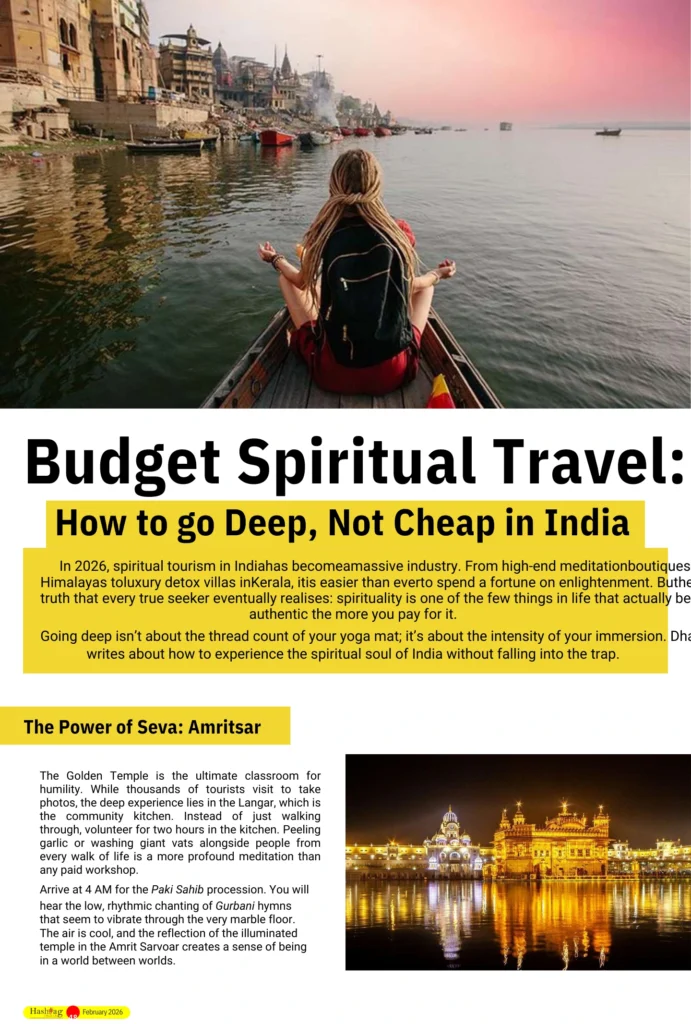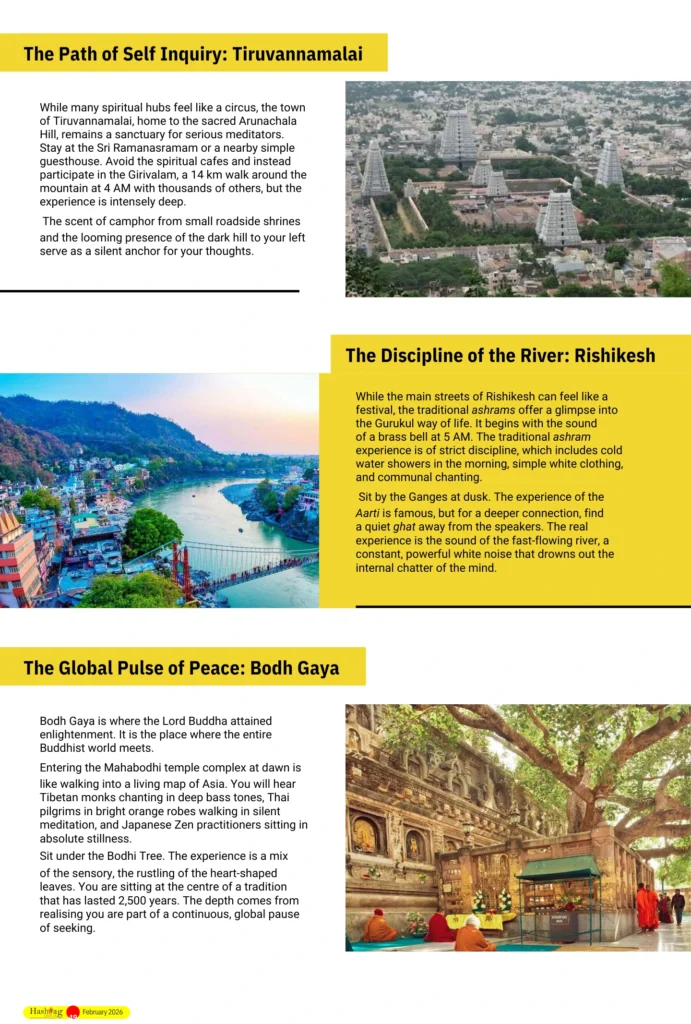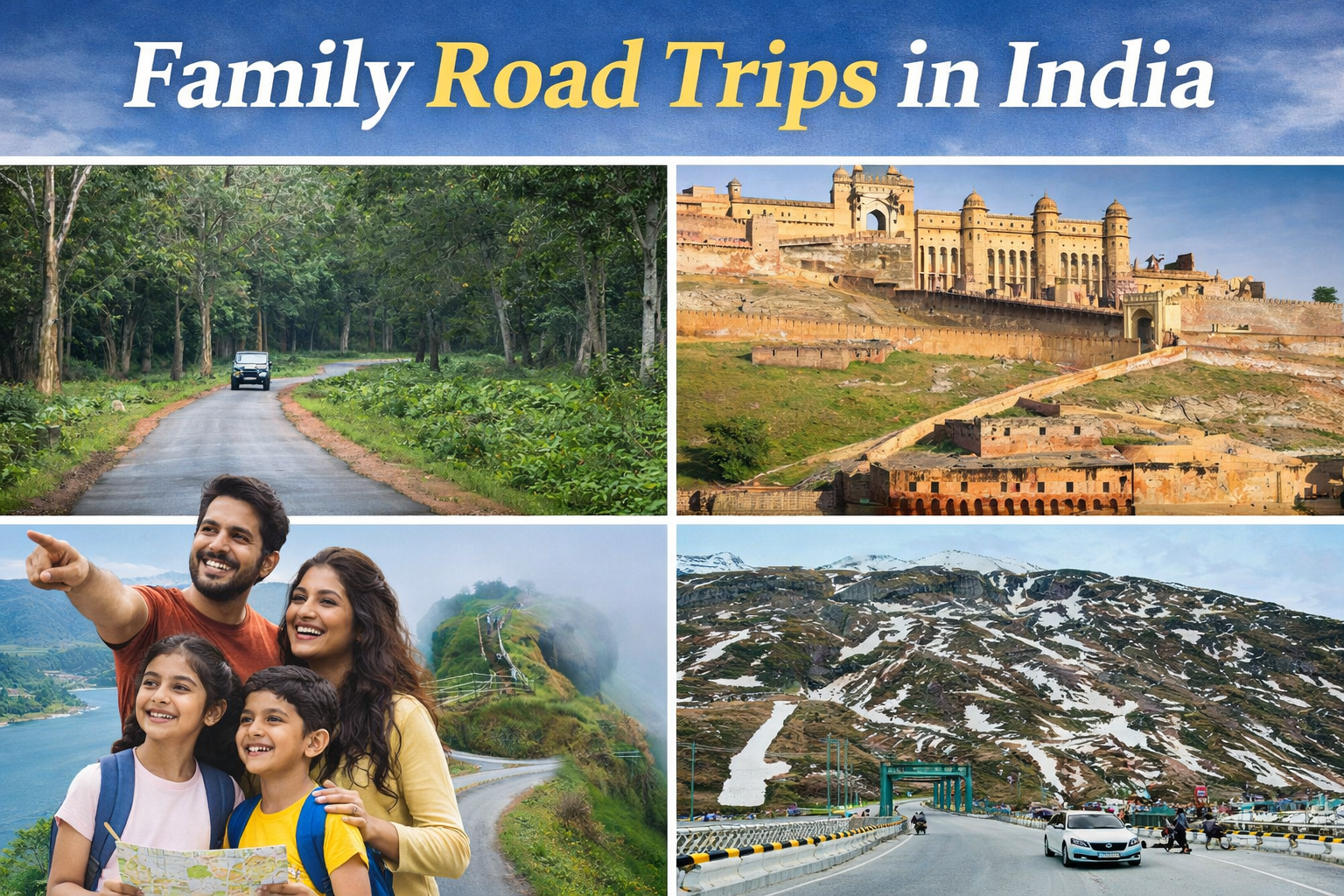
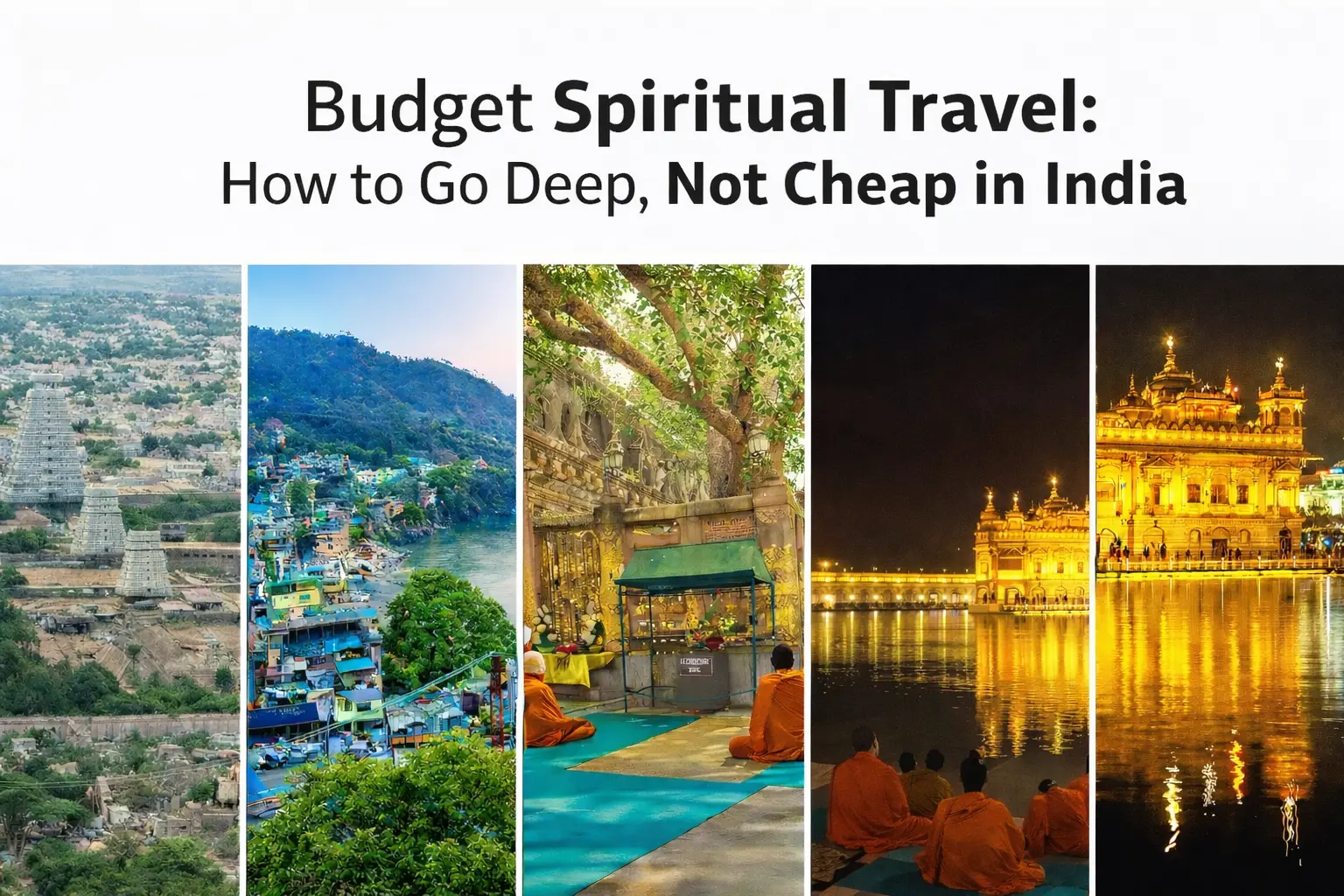
In 2026, spiritual tourism in India has become a massive industry. From high-end meditation boutiques in the Himalayas to luxury detox villas in Kerala, it is easier than ever to spend a fortune on enlightenment. But here is the truth that every true seeker eventually realises: spirituality is one of the few things in life that actually becomes less authentic the more you pay for it.
Going deep isn’t about the thread count of your yoga mat; it’s about the intensity of your immersion. Dhanush Kumar writes about how to experience the spiritual soul of India without falling into the trap.
The Power of Seva: Amritsar
The Golden Temple is the ultimate classroom for humility. While thousands of tourists visit to take photos, the deep experience lies in the Langar, which is the community kitchen. Instead of just walking through, volunteer for two hours in the kitchen. Peeling garlic or washing giant vats alongside people from every walk of life is a more profound meditation than any paid workshop.
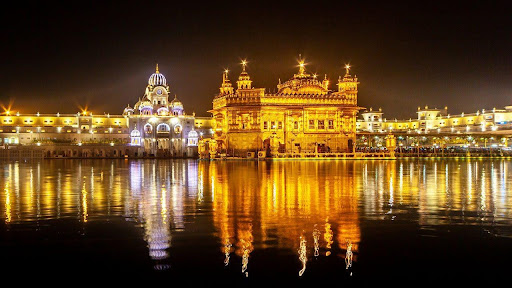
Arrive at 4 AM for the Paki Sahib procession. You will hear the low, rhythmic chanting of Gurbani hymns that seem to vibrate through the very marble floor. The air is cool, and the reflection of the illuminated temple in the Amrit Sarvoar creates a sense of being in a world between worlds.
The Path of Self Inquiry: Tiruvannamalai
While many spiritual hubs feel like a circus, the town of Tiruvannamalai, home to the sacred Arunachala Hill, remains a sanctuary for serious meditators. Stay at the Sri Ramanasramam or a nearby simple guesthouse. Avoid the spiritual cafes and instead participate in the Girivalam, a 14 km walk around the mountain at 4 AM with thousands of others, but the experience is intensely deep.
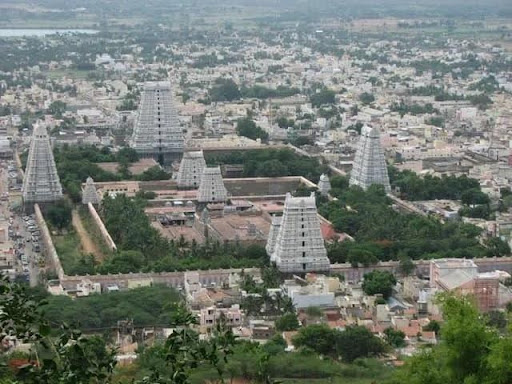
The scent of camphor from small roadside shrines and the looming presence of the dark hill to your left serve as a silent anchor for your thoughts.
The Discipline of the River: Rishikesh
While the main streets of Rishikesh can feel like a festival, the traditional ashrams offer a glimpse into the Gurukul way of life. It begins with the sound of a brass bell at 5 AM. The traditional ashram experience is of strict discipline, which includes cold water showers in the morning, simple white clothing, and communal chanting
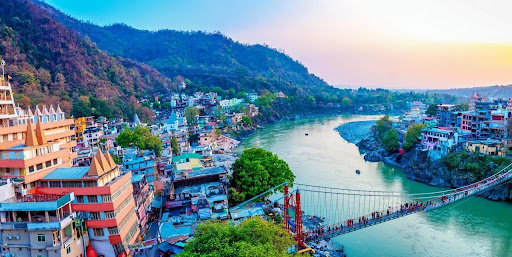
Sit by the Ganges at dusk. The experience of the Aarti is famous, but for a deeper connection, find a quiet ghat away from the speakers. The real experience is the sound of the fast-flowing river, a constant, powerful white noise that drowns out the internal chatter of the mind.
The Global Pulse of Peace: Bodh Gaya
Bodh Gaya is where the Lord Buddha attained enlightenment. It is the place where the entire Buddhist world meets.
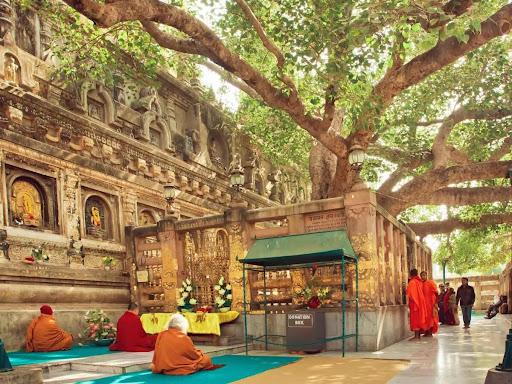
Entering the Mahabodhi temple complex at dawn is like walking into a living map of Asia. You will hear Tibetan monks chanting in deep bass tones, Thai pilgrims in bright orange robes walking in silent meditation, and Japanese Zen practitioners sitting in absolute stillness.
Sit under the Bodhi Tree. The experience is a mix of the sensory, the rustling of the heart-shaped leaves. You are sitting at the centre of a tradition that has lasted 2,500 years. The depth comes from realising you are part of a continuous, global pause of seeking.
Conclusion
Spiritual travel in India is a journey of stripping away. You don’t need a luxury villa to find peace; you need a willingness to participate in the ancient rhythms of Seva, silence, and discipline. The deep experience is always available to those who are willing to sit on the floor and listen.