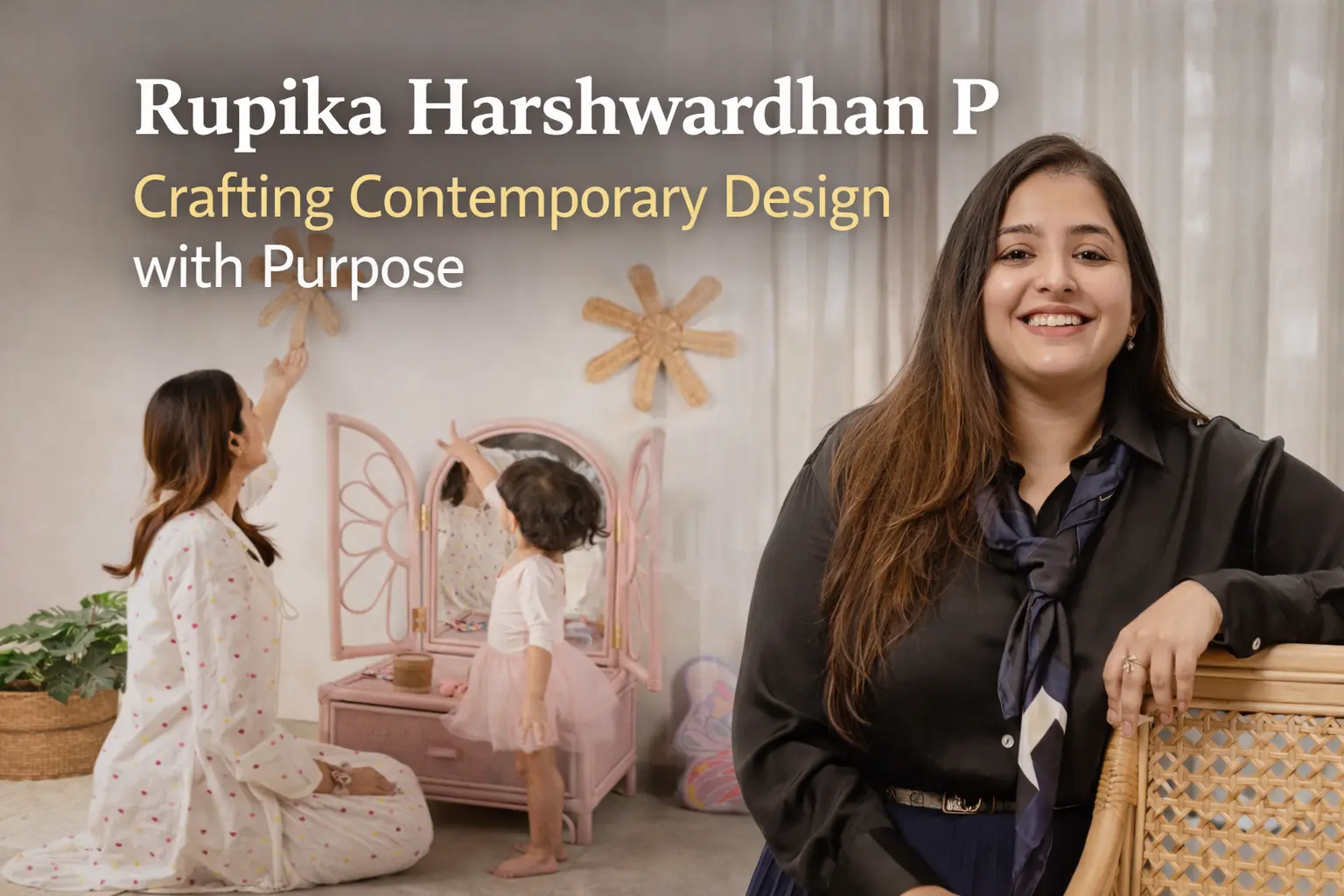
For Rupika Harshwardhan P, design has never been merely aesthetics; it is emotional architecture. A graduate of Srishti School of Art and Design, with further studies in art history at Chitrakala Parishad, her education trained her to see spaces as layered narratives shaped by material, form, and feeling.
An early internship at Elle Decor India proved pivotal. It offered her an insider’s view of the design industry and crystallised a quiet but firm decision: she would not simply participate in design, she would build something of her own. Drawn instinctively to craft traditions and handmade objects, Rupika’s understanding of “home” is rooted in belonging. For her, furniture is not functional; it is memory made tangible.
Brands Built on Meaning
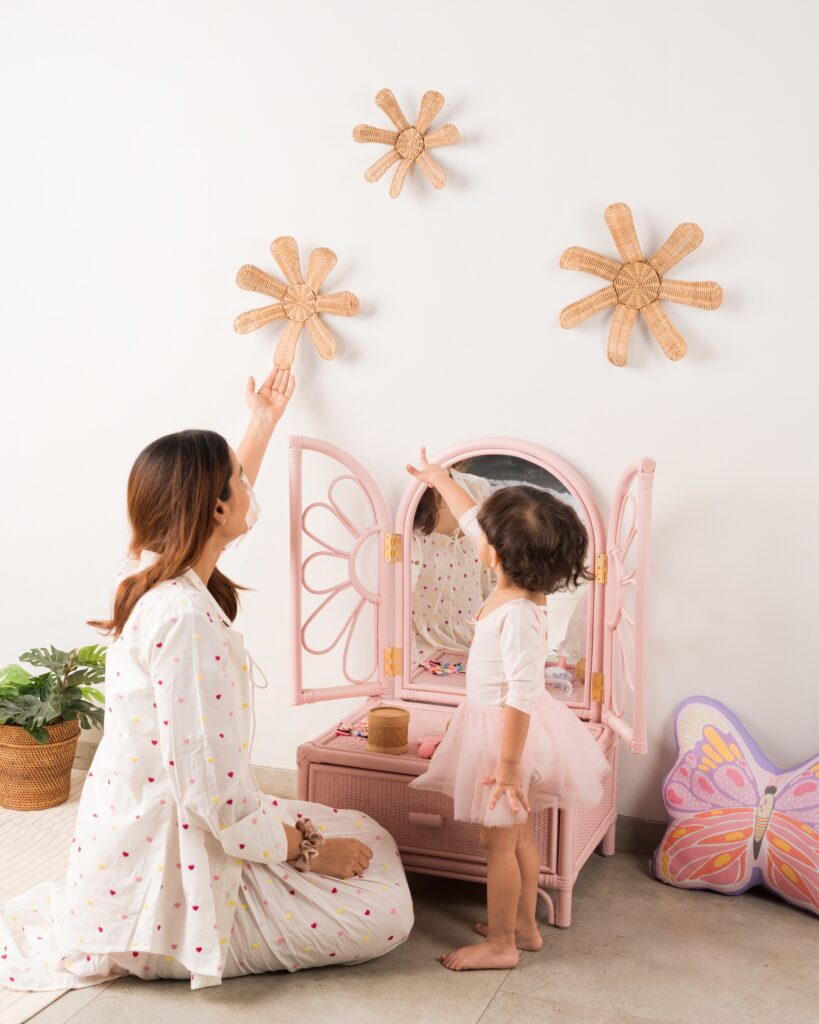
Rupika is the Founder and Creative Director of CINTA and Pantai Pura. CINTA, meaning “love,” is a children’s home décor brand centred on imagination and family bonds. Pantai Pura, “Sacred Beach,” explores natural harmony and mindful living.
“I didn’t create these brands just to sell furniture,” she explains. “I wanted to change how we see materials and craftsmanship.”
Her work bridges tradition and modernity, connecting artisan communities with contemporary homes. Particularly through CINTA, she reflects on how a child’s first furniture piece can become part of their emotional blueprint.
Reimagining Rattan
At the core of her practice is rattan, a material she champions for its agility, durability, and quiet elegance. Challenging misconceptions that it is dated or interchangeable with bamboo, Rupika reinterprets rattan through a contemporary lens while honouring traditional craft. Her approach rests on three pillars: craftsmanship, co-creation, and community. Designs are developed collaboratively with artisans, resulting in bespoke pieces that respond to real homes rather than fleeting trends. “Design is a conversation, not a monologue,” she says.
From Online Beginnings to Experiential Spaces
Both brands began online, where one of the greatest challenges was translating tactile craftsmanship through screens. Confusion around materials often diluted the narrative she was building. Rather than retreat, Rupika responded by creating experience centres, spaces where customers could physically engage with the pieces. That shift reframed conversations from price to value, from trend to longevity.
Growth with Clarity
Her breakthrough came when clients began viewing her work as heirloom objects rather than furniture. Exhibitions and workshops further strengthened that connection. Today, growth is intentional. CINTA is expanding into new experiential spaces, while Pantai Pura is investing in research and bespoke material innovation. For Rupika, transformation is not about scale, but clarity.
Principles and Perspective
Authenticity, sustainability, and community anchor her decisions. Craftsmanship is non-negotiable; if a piece lacks integrity, it does not leave the studio. Inspired by the bold curves and expressive materiality of Italian 1970s design, she balances playfulness with structure. Discipline and strong team collaboration keep her grounded.
A Message to Women
Her advice to aspiring women entrepreneurs is measured and clear: trust your instinct more than external noise. “You don’t need to build loudly to build meaningfully.”
Success, for Rupika, is alignment, building brands that reflect her values, empower craft communities, and create objects that become part of someone’s memory.
“If I can create with love and stand by my values,” she says, “that, to me, is success.”