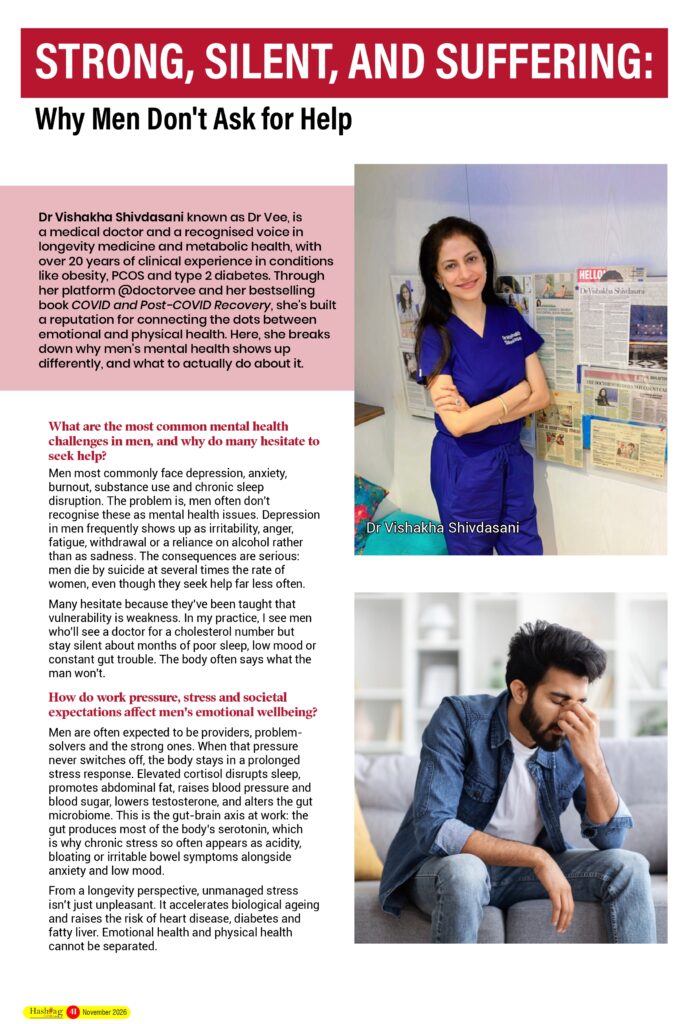
Dr Vishakha Shivdasani, known as Dr Vee, is a medical doctor and a recognised voice in longevity medicine and metabolic health, with over 20 years of clinical experience in conditions like obesity, PCOS and type 2 diabetes. Through her platform @doctorvee and her bestselling book COVID and Post-COVID Recovery, she’s built a reputation for connecting the dots between emotional and physical health. Here, she breaks down why men’s mental health shows up differently, and what to actually do about it.

What are the most common mental health challenges in men, and why do many hesitate to seek help?
Men most commonly face depression, anxiety, burnout, substance use and chronic sleep disruption. The problem is, men often don’t recognise these as mental health issues. Depression in men frequently shows up as irritability, anger, fatigue, withdrawal or a reliance on alcohol rather than as sadness. The consequences are serious: men die by suicide at several times the rate of women, even though they seek help far less often.
Many hesitate because they’ve been taught that vulnerability is weakness. In my practice, I see men who’ll see a doctor for a cholesterol number but stay silent about months of poor sleep, low mood or constant gut trouble. The body often says what the man won’t.
How do work pressure, stress and societal expectations affect men’s emotional wellbeing?
Men are often expected to be providers, problem-solvers and the strong ones. When that pressure never switches off, the body stays in a prolonged stress response. Elevated cortisol disrupts sleep, promotes abdominal fat, raises blood pressure and blood sugar, lowers testosterone, and alters the gut microbiome. This is the gut-brain axis at work: the gut produces most of the body’s serotonin, which is why chronic stress so often appears as acidity, bloating or irritable bowel symptoms alongside anxiety and low mood.
From a longevity perspective, unmanaged stress isn’t just unpleasant. It accelerates biological ageing and raises the risk of heart disease, diabetes and fatty liver. Emotional health and physical health cannot be separated.

What practical steps can men take to protect their mental health, and when should they seek professional help?
I advise my patients to start with the fundamentals:
- Sleep: Protect 7-8 hours a night; it’s one of the most important foundations of mental wellbeing.
- Movement: Combine strength training with daily walking.
- Nutrition: Eat whole foods, fibre and protein, and cut back on ultra-processed food and alcohol.
- Connection: Maintain a few friendships where you can speak honestly.
- Recovery: Build in breaks, time outdoors and regular screen-free time.
- Check-ups: Include mood, sleep and stress in your annual health review, not just blood work.
Seek professional support if low mood, anxiety, irritability or sleep problems last more than two weeks, interfere with work or relationships, or if you rely on alcohol to cope. Any thought of self-harm needs immediate help. Seeking help is not a sign of weakness; it’s the same discipline that makes a man look after his heart or his blood sugar.
Final Message
Men’s mental health deserves the same attention as physical health. Stress, poor sleep, emotional struggles and burnout should not be ignored or treated as signs of weakness. By prioritising healthy habits, building supportive relationships and seeking professional help when needed, men can take meaningful steps towards better wellbeing and healthier ageing. Emotional health and physical health are deeply connected; taking care of both is essential not only for a longer life, but for a healthier and more fulfilling one.