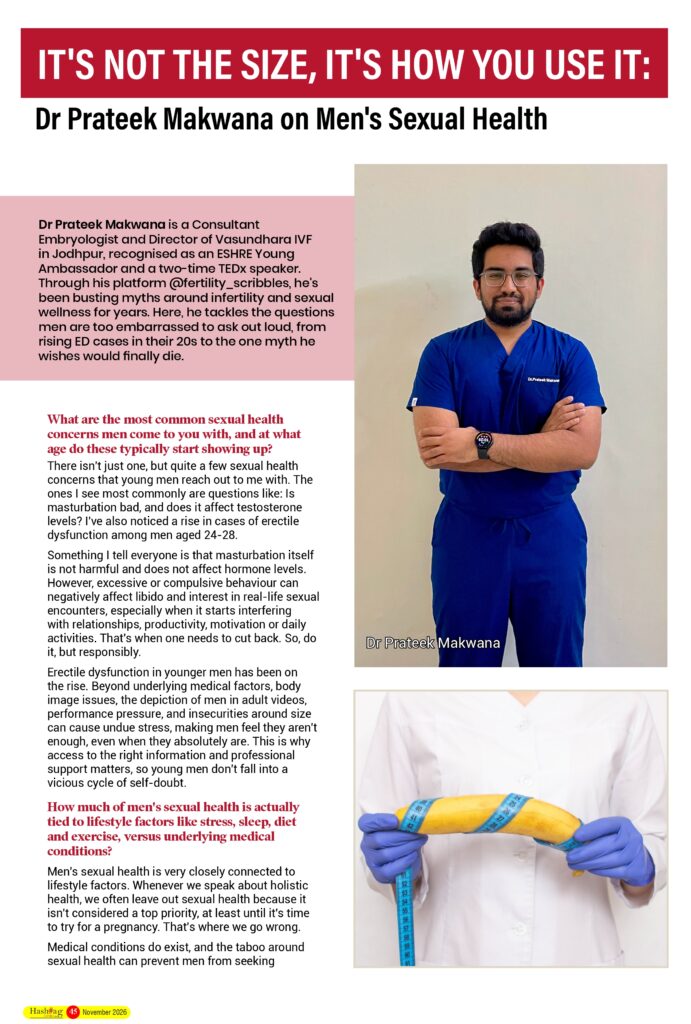
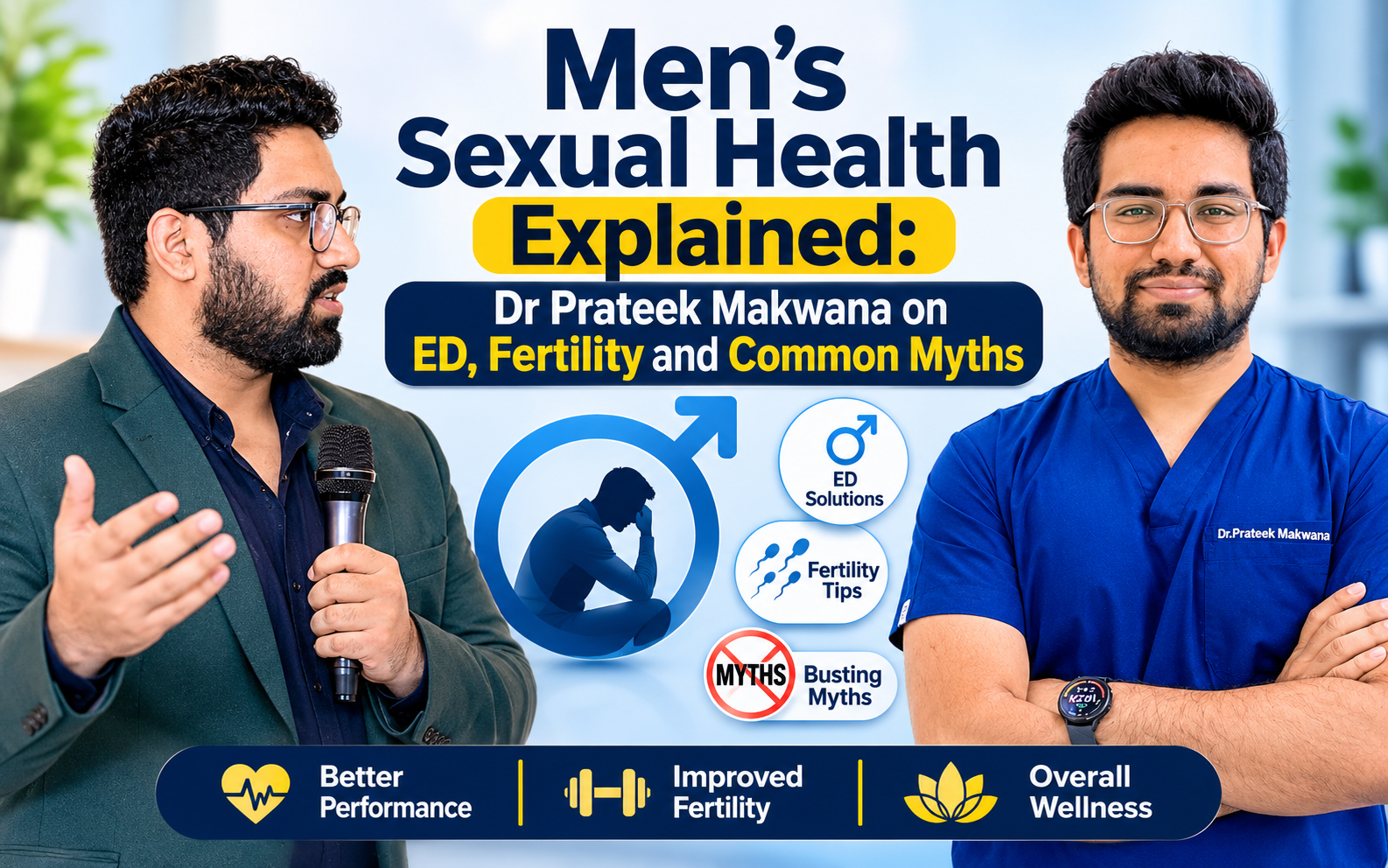
Dr Prateek Makwana is a Consultant Embryologist and Director of Vasundhara IVF in Jodhpur, recognised as an ESHRE Young Ambassador and a two-time TEDx speaker. Through his platform @fertility_scribbles, he’s been busting myths around infertility and sexual wellness for years. Here, he tackles the questions men are too embarrassed to ask out loud, from rising ED cases in their 20s to the one myth he wishes would finally die.

What are the most common sexual health concerns men come to you with, and at what age do these typically start showing up?
There isn’t just one, but quite a few sexual health concerns that young men reach out to me with. The ones I see most commonly are questions like: Is masturbation bad, and does it affect testosterone levels? I’ve also noticed a rise in cases of erectile dysfunction among men aged 24-28.
Something I tell everyone is that masturbation itself is not harmful and does not affect hormone levels. However, excessive or compulsive behaviour can negatively affect libido and interest in real-life sexual encounters, especially when it starts interfering with relationships, productivity, motivation or daily activities. That’s when one needs to cut back. So, do it, but responsibly.
Erectile dysfunction in younger men has been on the rise. Beyond underlying medical factors, body image issues, the depiction of men in adult videos, performance pressure, and insecurities around size can cause undue stress, making men feel they aren’t enough, even when they absolutely are. This is why access to the right information and professional support matters, so young men don’t fall into a vicious cycle of self-doubt.
How much of men’s sexual health is actually tied to lifestyle factors like stress, sleep, diet and exercise, versus underlying medical conditions?
Men’s sexual health is very closely connected to lifestyle factors. Whenever we speak about holistic health, we often leave out sexual health because it isn’t considered a top priority, at least until it’s time to try for a pregnancy. That’s where we go wrong.
Medical conditions do exist, and the taboo around sexual health can prevent men from seeking treatment until it becomes necessary. Delaying care has consequences, which is why we need to break the stigma and reinforce the connection between a healthy lifestyle and sexual wellness. Poor sexual health can also affect mental wellbeing, so it’s important not to ignore it. Stress, poor sleep, unhealthy dietary habits and a sedentary lifestyle can affect sexual function and contribute to hormonal and metabolic problems.
My emphasis would be on the seemingly simple advice: eat well, stay active, get enough sleep, and manage stress in a way that works for you. Your body will thank you, and you may notice the benefits across different aspects of your life.

Erectile dysfunction is often treated as a taboo topic. What would you want every man to know about it, especially when it starts happening occasionally rather than consistently?
Erectile dysfunction is a concern more young men are discussing now. One of the barriers to seeking treatment, whether for psychological or medical reasons, is the stigma surrounding it and the way masculinity is portrayed in our patriarchal society: the fear of log kya kahenge. This is a structural issue that may take years to resolve, but there are steps men can take right now. I want men to understand that seeking the right help is important. Consulting a urologist can help identify the underlying cause. If it’s medical, it can be treated accordingly; if psychological factors are involved, appropriate counselling can help.
Occasional difficulties don’t automatically mean something is seriously wrong, but persistent, recurring or distressing symptoms shouldn’t be ignored. Seeking professional advice early can help men understand the cause and find the right support without unnecessary shame or self-doubt.
What’s one myth about men’s sexual health you wish would finally go away?
Myth: size matters. Remember, it’s not the size; it’s how you use it. Men often feel insecure about their size, which can lead to feelings of inadequacy and performance pressure. So let it be known, loud and clear: size alone does not determine sexual satisfaction. Communication, comfort, mutual respect and understanding your partner matter far more than unrealistic expectations.
Final Message
Men’s sexual health deserves the same attention as physical and mental wellbeing. Concerns such as erectile dysfunction, performance anxiety and reproductive health should not be surrounded by shame or misinformation. Open conversations, reliable information, healthy lifestyle choices and timely professional support can help men make informed decisions about their health. Breaking the stigma starts with recognising that seeking help is a sign of responsibility, not weakness.