Water Wise: How a Bangalore-based couple is fighting the rising water crisis

Tankerwala Founders

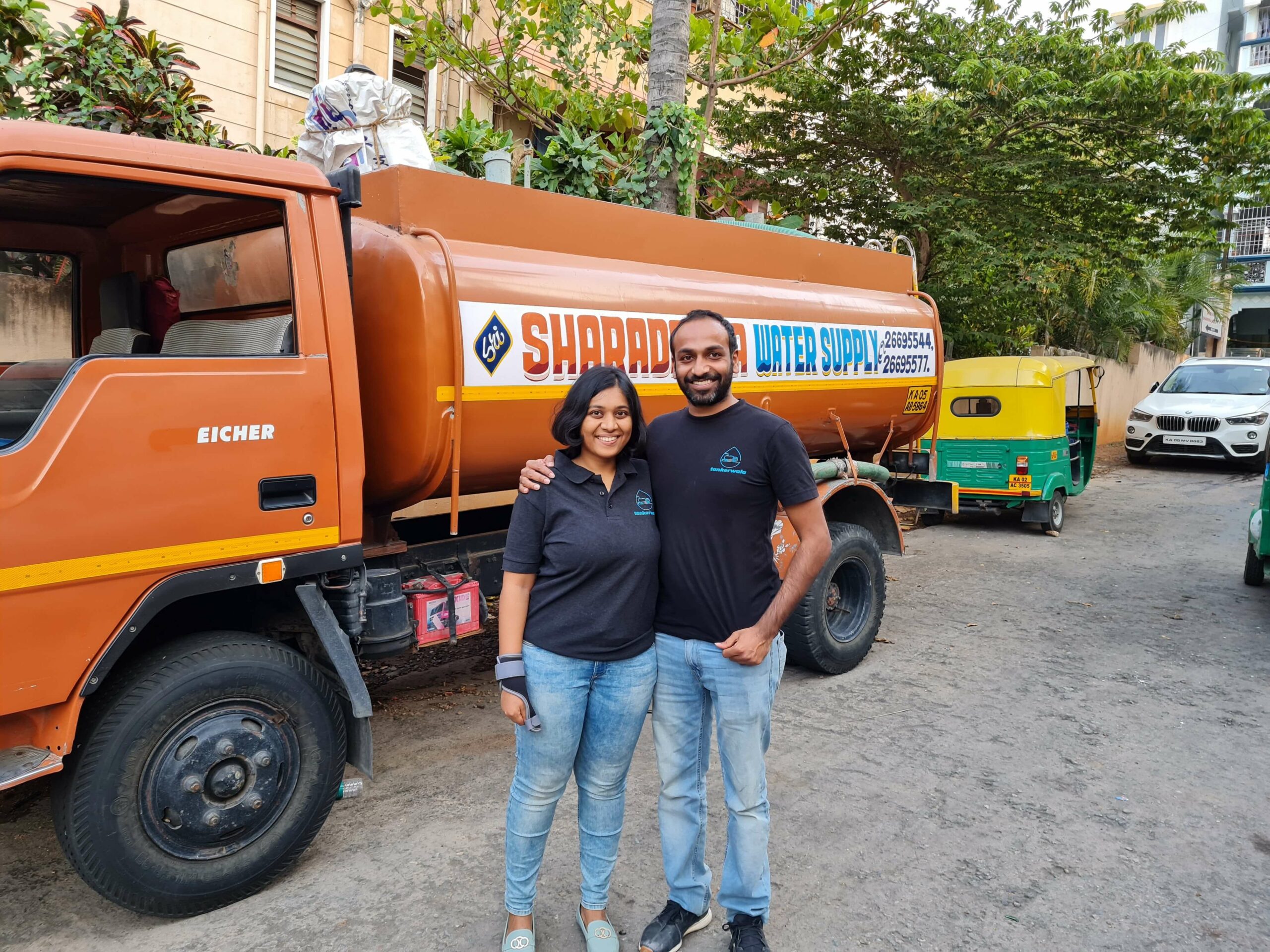
Cognizant of the rising crisis of water in Bangalore, husband-wife duo MOULYA AMAR NATH and SHRAVANTH DONTHI began Tankerwala to tackle the problem. BINDU GOPAL RAO talks to the couple and brings to us their refreshing perspective.

When Moulya Amar Nath and Shravanth Donthi were expecting their child, they moved to Moulya’s parent’s home in Banashankari in South Bangalore. This was an apartment complex with eight flats. The municipality water was not enough for all, leading them to order water from tankers frequently.

This is when they realized that things were not as expected. “We were very upset with the service of getting water on tankers and paranoid about the quality of water we used to bathe our baby. We realized this problem was very evident and widespread across the country. So, we decided to address these problems by starting Tankerwala in December 2020,” explained the couple.

“Moulya and I, both are continuously identifying problems within our environment and trying to make a better way of life.”
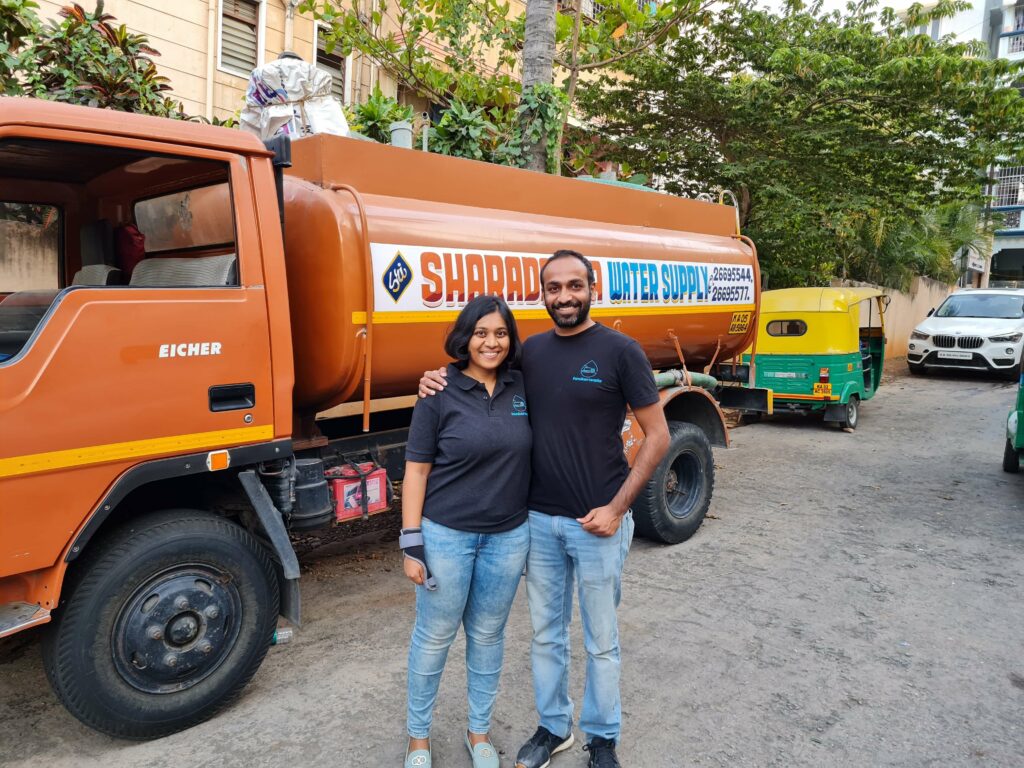
Moulya Amar Nath holds a Bachelor’s degree in Computer Science, following which she began to work on community projects that created a better impact on our society. Her husband Shravanth Donthi is a commercial pilot who has worked as a flight instructor, an aerial fire-fighter and a charter pilot. In 2014, he moved back to Bangalore, India to work on projects that tackle water scarcity and went on to co-found Green Lantern Engineering to recycle water using Sewage Treatment Plants and convert waste-to-energy. In 2020, the couple came together to co-found Tankerwala, joining their skills for a better future for all. The company’s mentor is Dr Ravi Shankar, who comes with an experience of over 40 years to the board and has been part of the Bangalore Water Supply & Sewerage Board for over 29 years.

The couple began Tankerwala in December 2020, hoping to create an impact in conserving water.

Tankerwala is currently a mobile app that allows you to book water tankers on-demand across the city. “It works very similar to cab aggregators like Ola and Uber. With a network of more than 1300 water tankers across Bangalore, we will ensure that a water tanker reaches you within 60 minutes,” says Shravanth. With three simple clicks on the app, you can place an order for a hyper-local delivery of water on tankers. All you need is to choose location, choose capacity and delivery slot and finally pay for the delivery.

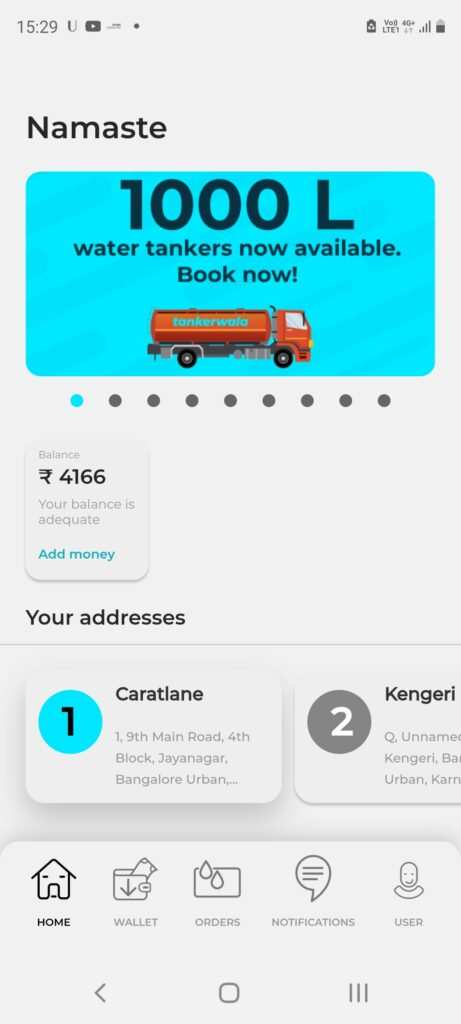
Keeping in mind the urgent need to reform the water crisis, Tankerwala has also branched out into a second wing of operations, delving into water recycling. “The company has licensed technology for sewage treatment/water reclamation – BioHYBRID™. The company engages in setting up and operating such plants across the country, be it in apartments, offices, schools, hotels and hospitals. The BioHYBRID™ technology is a highly advanced and indigenously developed process with many advantages over the conventional systems in the current market,” says Moulya.

The company currently has access to over 55 million litres of treated water every day and is aiming to transport this water for secondary applications like irrigation and construction using the strong network of water tankers. 

Tankerwala is aiming to create a great experience around ordering a water tanker. The mobile app has a live tracking feature to inform the user about the order status. With India’s largest network of tankers, the team maintains quality control by having verified suppliers and periodic water quality testing. Pricing is regulated through geofenced localities/region, maintaining a uniformity in price. They also have a 24×7 customer and supplier support line that ensures there is someone available for any help at any time.

Commenting on their success, Shravanth says, “Moulya and I, both are continuously identifying problems within our environment and trying to make a better way of life. We both read a wide range of books, ranging from Bhagavad Gita to Sapiens and business focused books like The Hard Thing About Hard Things. We derive motivation and inspiration from each other every day and consciously try to be better versions of ourselves.”

Tankerwala has plans to expand operations in Chennai, Coimbatore, Mysore, Delhi and Hyderabad in the upcoming years. Tankerwala will soon be delivering recyclable treated water across the city for secondary applications like irrigation and construction. Charting out their future plans, the duo let us know, “This will enable a user to not only buy fresh water, but also have a choice to buy recyclable water. This will create a significant impact in conserving water.”

“The company has licensed technology for sewage treatment/water reclamation – BioHYBRID™.”

While water is an important aspect for the environment, here is a start-up that is not just ensuring safe water but is also doing its bit to recycle water and make that accessible.

For details and bookings check out: https://tankerwala.in/

Leave a comment

Your email address will not be published. Required fields are marked *

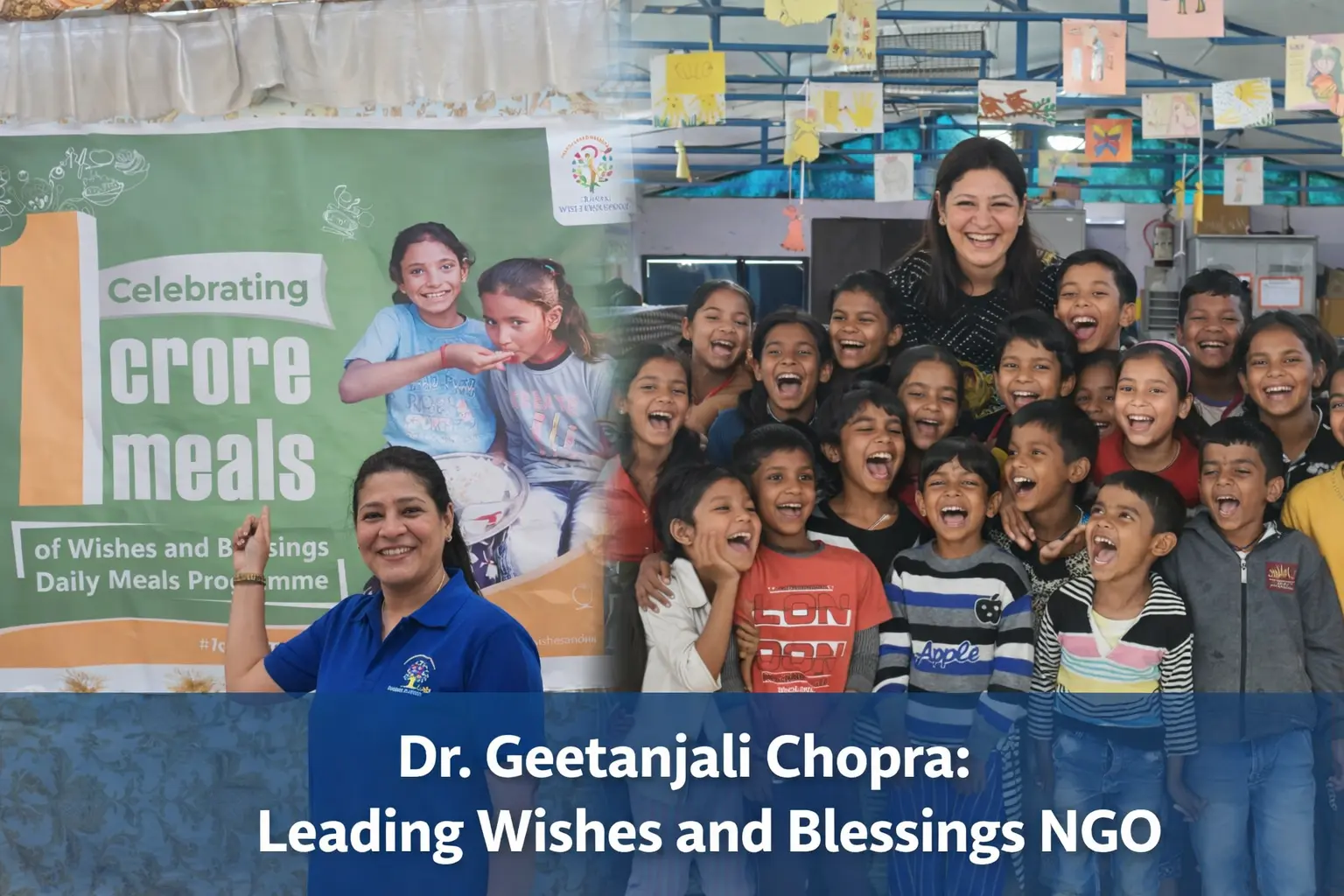
Dr. Geetanjali Chopra: Leading Wishes and Blessings NGO

Dr. Geetanjali Chopra is the Founder and President of the Delhi-based NGO Wishes and Blessings. Educated at Convent of Jesus and Mary School, Lady Shri Ram College, and later at Jawaharlal Nehru University, where she completed her Master’s and Doctorate in International Relations, her academic journey was further shaped by specialised training in International Law in the Netherlands and Italy. Raised in a family where service was embedded as a way of life, she recalls visiting a school for visually impaired children with her grandfather. One moment continues to define her path. “A little girl tugged my pant and asked, ‘Didi, mera birthday kab hota hai?’” she shares. The innocence of that question revealed a deeper truth, that deprivation is also about invisibility. “That question stayed with me,” she says, “and it continues to shape who I am today.” PURPOSE | Beyond Comfort, Toward Calling Before founding Wishes and Blessings, Dr. Chopra describes her life as “perfect, secure and stable.” She was writing policy papers, authoring books, and speaking at global forums. Yet a Holi celebration with visually impaired children shifted her perspective. “I realised my purpose extended beyond personal comfort or professional achievement,” she says. Established in 2014, the organisation works without discrimination of age, gender, religion or background. “For me, service is not charity, but partnership, listening first, and then responding.” DIFFERENCE | Leadership Through Presence Personal involvement defines her leadership. While dedicated teams manage projects, she remains closely engaged. “Service is much more than providing support; it is about building meaningful relationships,” she explains. Her approach centres on dignity and continuity. “It’s about standing beside them, not only in moments of need, but through every step of their lives.” THE BEGINNING | A Festival of Belonging After her grandfather’s passing, she returned to the school that shaped

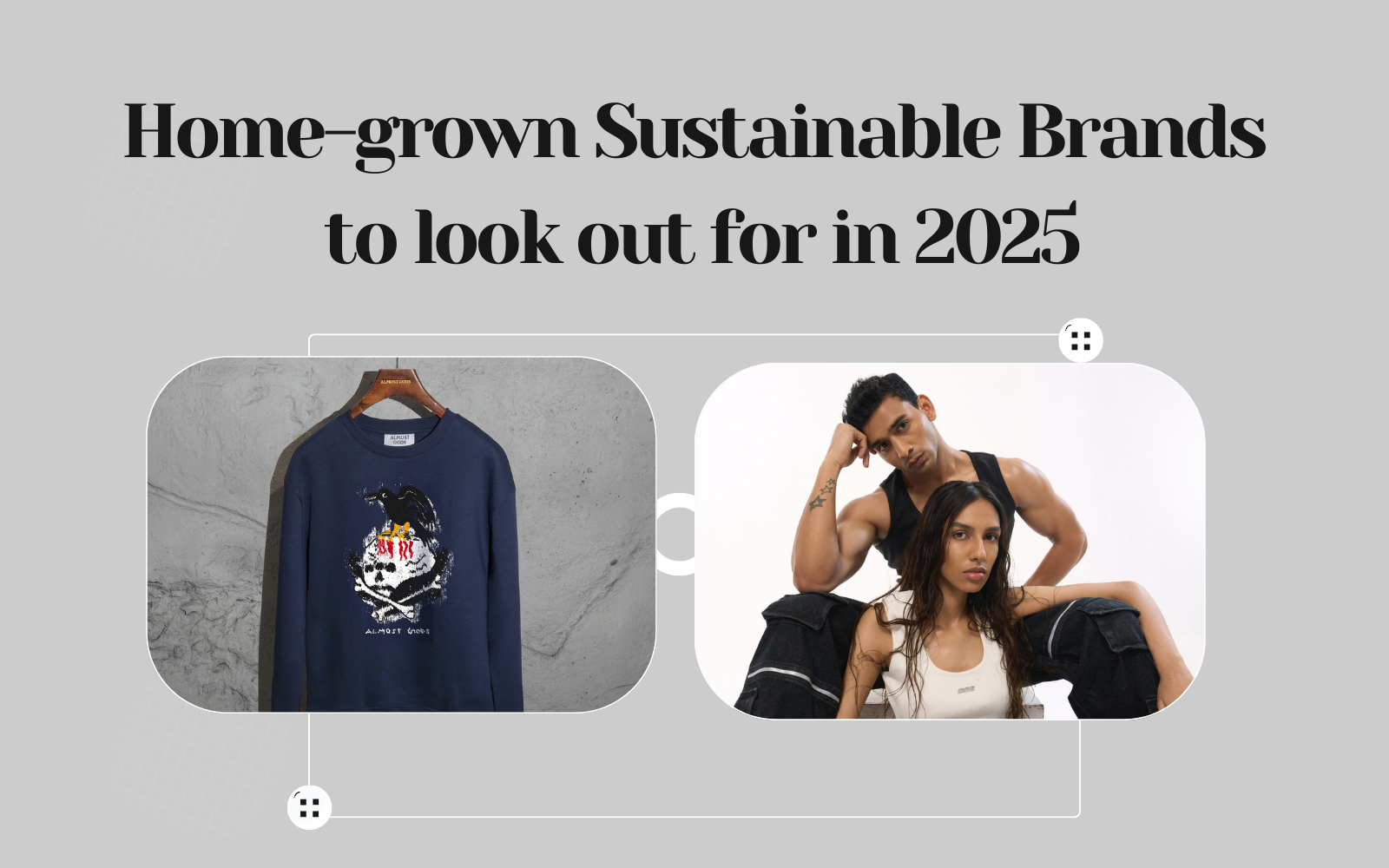
Home-grown Sustainable Brands to look out for in 2025

With enterprises taking sustainability seriously, green business is no longer just a keyword. Whether sourcing fair-trade raw materials, creating a circular value chain, giving employment opportunities to locals, or reducing net zero emissions, these enterprises are going full throttle to ensure we do not need another planet, reviews Ketki Gadre. Sustainable Brands No Nasties No Nasties represents the perfect blend of style and sustainability, offering expressive and ethically responsible fashion. The brand is dedicated to making climate-conscious choices fashionable, ensuring its products are committed to trendsetting design and environmental stewardship. True to its name, No Nasties promises that its items are free from harmful components—no genetically modified seeds, carcinogenic pesticides, toxic dyes, or unethical business practices are involved in their production. The brand is one of the pioneering Indian enterprises that prioritizes transparency and offers detailed information about its supply chain. It uses soft and sustainable materials, such as 100% organic cotton terry fabric. Moreover, every product includes detailed information on its environmental impact—highlighting its carbon footprint, carbon offset, and water savings—all easily accessible on the website alongside each product description. The brand aims to create a consumer movement encouraging conscious choices for a better future. No Nasties has been certified by PETA, Good on You, and Green Story, and their factories are Fairtrade-certified. About the Founder: Apurva Kothari founded No Nasties in 2011. With a background in software engineering, Apurva transitioned into the ethical fashion space after recognizing the devastating environmental and social impacts of conventional fashion. Under his guidance, the company has championed using sustainable materials, ethical labour practices, and environmental impact awareness. Apurva’s vision extends beyond fashion, as he is a strong advocate for fair-trade principles and a circular economy, aiming to positively impact both people and the planet. Website: https://www.nonasties.in/ Instagram: https://www.instagram.com/nonasties/ Coco Leni Coco Leni

The Ultimate Social Media Guide for 2024

In the ever-evolving social media landscape, cracking the code to optimal posting time can be elusive. Fear not, wandering content creators, for this article shall serve as your guiding light through the maze of algorithms and audience engagement. Brace yourselves as we embark on a journey to master the art of social media timing for the year 2024. Social Media Post Guide Chapter 1: The Rhythm of Engagement Like a symphony, social media platforms thrive on the harmonious interplay of content and audience. To conduct this symphony with finesse, one must understand the rhythm of user activity. For example, let us take India, where the daily routines and cultural nuances paint a unique tapestry that influences when users are most receptive to your posts. Chapter 2: The Golden Hours Like the hidden treasures, the golden hours of social media promise maximum engagement. For Social media creators, these golden windows of opportunity appear strategically throughout the day. One important tip: As these are the highly engaging times to post your content on Social Media, many competitors will also post simultaneously. So schedule your post half an hour before the golden hours, which will put your post on the top when the golden hours start ticking. Chapter 3: The Art of Content Creation You have half the battle now that you know the best posting times. To truly conquer the complete kingdom of social media, one must master the power of content creation. Tailor your content to the diverse tapestry of audiences, catering to their interests, aspirations, and cultural nuances. Take India as an example and consider how we can create various types of content based on its locations. Chapter 4: The Art of Scheduling While timing and content are essential, scheduling cannot be overlooked. Let’s focus on scheduling tools to ensure

Rural Healthcare Solutions

Medyseva, a healthcare start-up dedicated to serving rural India, is led by Rachita Kasliwal, an alumna of Mayo College Girls School, Ajmer. Following her academic journey with a B.Com (Hons.) from Shri Ram College of Commerce and a PGDM from the Loyola Institute of Business Administration, Chennai, Rachita immersed herself in her family’s healthcare business. As the driving force behind Medyseva’s Marketing and Operations, Rachita champions the mission to provide accessible medical services to rural communities. Since July 2021, Medyseva has conducted over 3000 consultations, emphasizing preventive healthcare and hygiene practices for societal well-being. In conversation with Surabhi Goel, Rachita Kasliwal of Medyseva discusses bridging healthcare gaps in rural India through telemedicine. What motivated Medyseva’s creation, and how does it tackle rural healthcare challenges? When COVID-19 hit, people struggled to see doctors in person. As friends and relatives reached out for help consulting doctors remotely, initially to my husband, the scale of the issue dawned on us. Rural areas faced a severe shortage of healthcare resources, leaving residents with no viable options for medical consultations. Witnessing this, we recognized the potential to address this challenge through telemedicine solutions. In rural regions, limited access to qualified medical professionals often leads to residents seeking assistance from unqualified practitioners or enduring lengthy and costly journeys to nearby cities for treatment. Seeing how technology helped with online classes, we also decided to use it for healthcare. That’s how Medyseva was born, aiming to bring medical help to rural areas through telemedicine. As a female entrepreneur in health tech, what hurdles did you face founding Medyseva? The main challenge I faced was changing people’s mind set about telemedicine. Many still believe a doctor must see or touch them for a diagnosis. Consulting a doctor remotely seemed foreign in rural areas, where generations have relied on

You May Also Like

Connect with us